

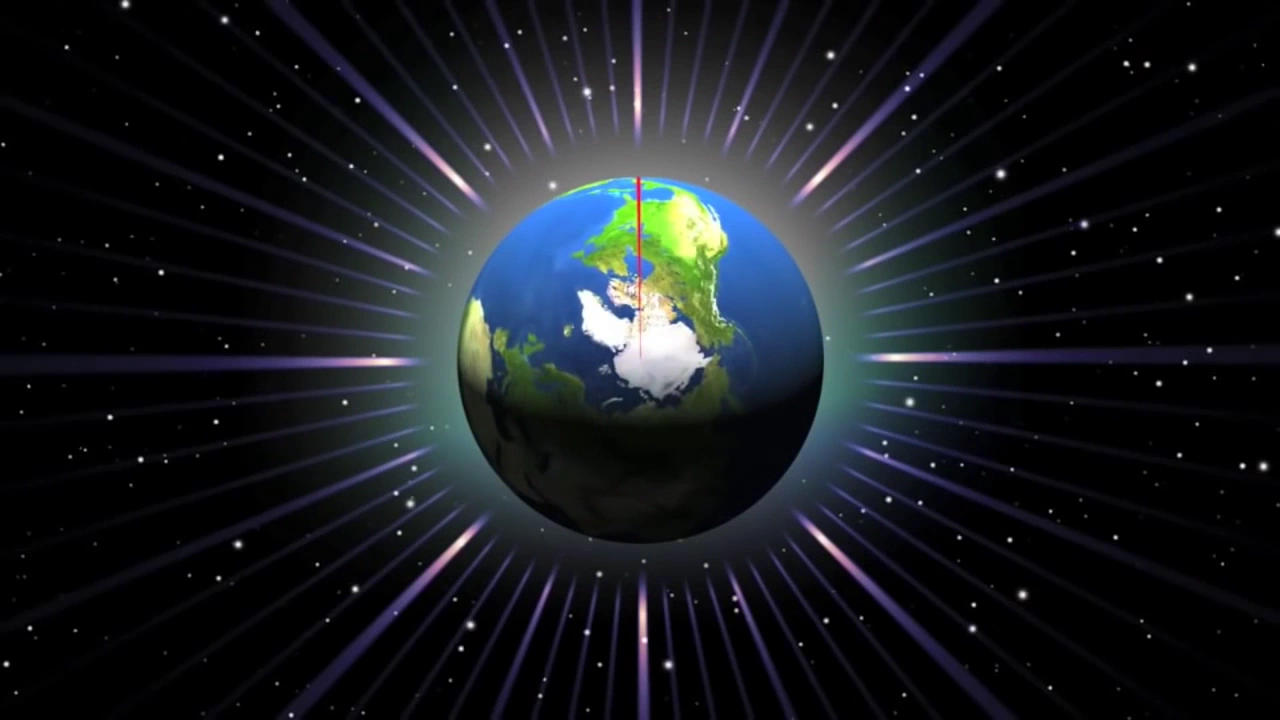










![Journey to the Edge of the Universe [4K]](https://i.ytimg.com/vi_webp/QhM5zAVvOI4/maxresdefault.webp)








The Lyman Alpha Forest is a phenomenon where light from distant quasars passes through neutral hydrogen gas clouds distributed throughout the universe, creating absorption lines at the Lyman alpha wavelength (121.6 nm) that allow astronomers to map the distribution of matter between galaxies and study how cosmic structure formed over time.
Decoding the Lyman Alpha Forest: Quasar Light & Cosmic Structure
Added:The atomic structure of hydrogen and the physics of the Lyman-alpha spectral line, representing the electron transition between the ground state (n=1) and the first excited state (n=2).
The concept of cosmological redshift and Hubble's Law, describing how the expansion of space stretches the wavelength of traveling electromagnetic radiation.
The nature of Quasars (Quasi-Stellar Objects) as highly luminous, distant active galactic nuclei that serve as cosmic beacons.
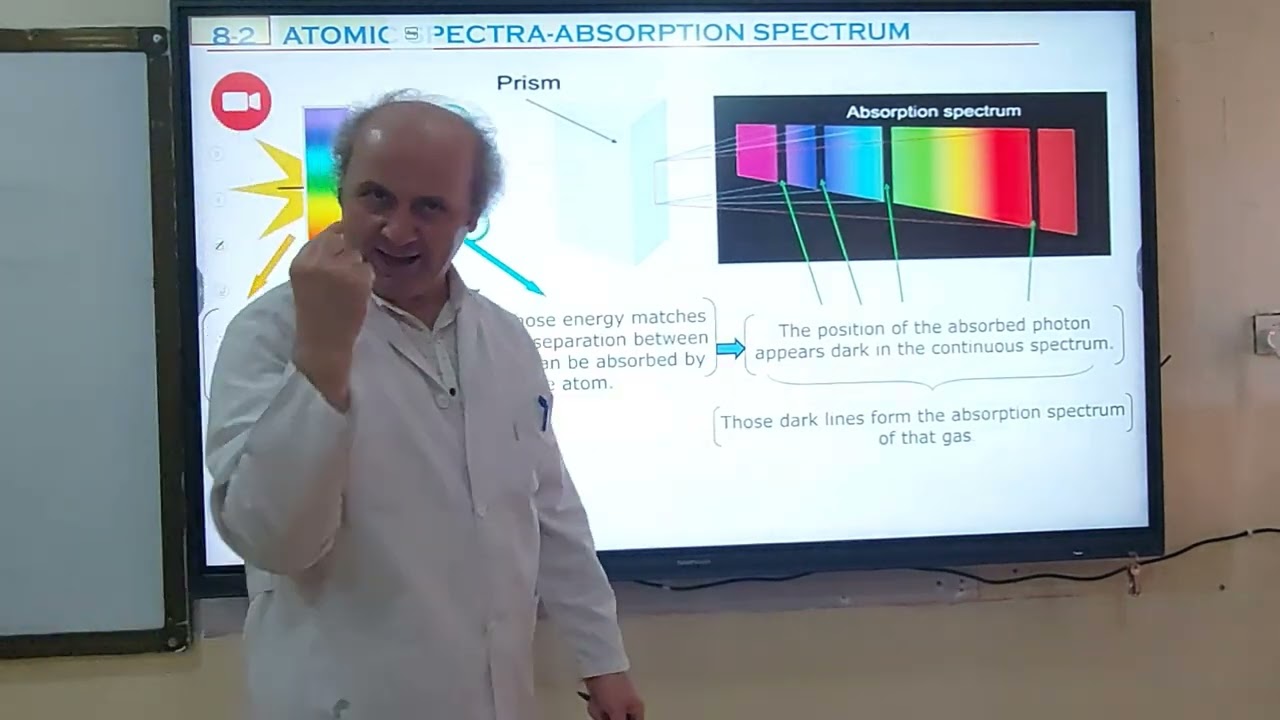
The basics of astronomical spectroscopy, specifically how absorption lines are formed when a continuous spectrum of light passes through intervening gas clouds.
Mapping the Cosmic Web: Using Lyman-alpha absorption systems to reconstruct the three-dimensional distribution of intergalactic baryonic and dark matter.
The Epoch of Reionization: Exploring how the early universe transitioned from neutral hydrogen to its current ionized state, guided by Lyman-alpha forest observations at high redshifts.
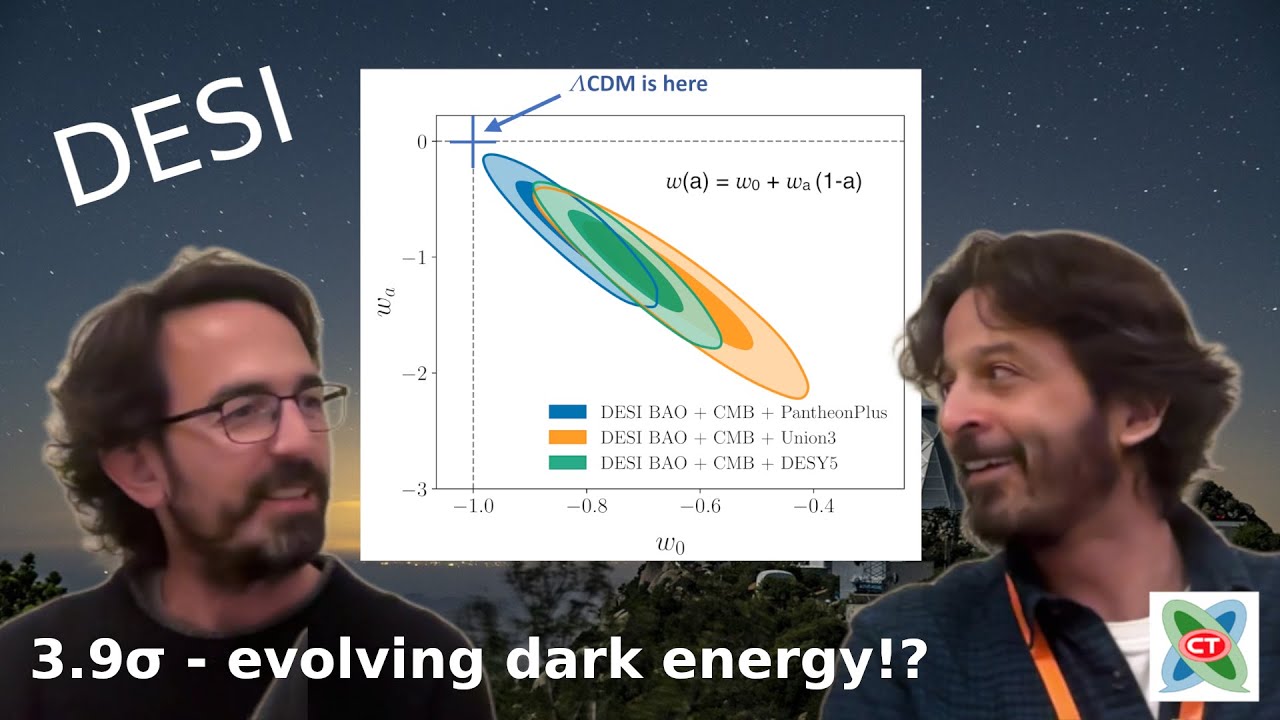
Baryon Acoustic Oscillations (BAO) in the Lyman-alpha forest: Analyzing gas distribution data to measure the expansion rate of the universe and constrain dark energy models.
Hydrodynamical Cosmological Simulations: Studying how supercomputer models simulate the intergalactic medium (IGM) to match and interpret observed spectroscopic data.
2.9K views117likes27:31Original Release: 2021-04-07
another week uh i think it's time that we talk about a couple of topics today so nicely lumped together we want to talk about some of the brightest objects in the universe so these are quasars these are you know these supermassive black holes we're creating lots of matter etc we can see them right across the universe and everybody loves a quasar but i know you did your phd in this i'm sure you're going to talk about it um yeah so so quasars of course they are also powerful um probes i hate the word pro but they they basically reveal a lot about what is between us and them in the universe so when you look at the light that's travel across the universe from a quasa it gets imprinted with a signature and that signature tells us something about the universe so why didn't you tell people a little bit of background about this thing called the lyman alpha forest the lyman alpha forest yeah one of my favorite things every uh everyone who's got a phd is just dying for it to somehow come up in conversation so if it has to come up like this then then that'll do so as you said we've got these things called quasars we can see them at enormous distances and the great thing about that is uh again what they show along the line of sight usually if you want to see something out there in the universe it has to be really bright you need you know a trillion stars to fire up in a little region and then you see a galaxy a little region um so what what the lyman alpha forest allows us to do is a bit like you said it it's seeing bits of the universe but in silhouette is one way of thinking about it it's not quite a perfect analogy but it's not bad so imagine it's a moonlit night and ordinarily you wouldn't be able to see the the black cat that's moving across your fence but if it walks in front of the moon suddenly you can see its shadow and then you can see the cat so the one of the keys here is is the lyman alpha in the lyman alpha forest so what this refers to is an interesting fact about all atoms and especially in this case about hydrogen so if we have a little picture of an atom with the nucleus at the center and the electrons going around the outside when we describe that using quantum mechanics we find that the electron is allowed to orbit in certain specific orbits and not just wherever it likes and so if it wants to change its orbit it can't just smoothly deform its orbit into another orbit it's got to jump between them and in that jump there's a difference in energy and that energy will be either needs to be supplied by or will be released as a a photon of light so here's our you know here's a it does have a hydrogen atom here uh which is just a proton and there's an electron going around the outside and let's put it in its lowest energy state where it just likes to hang out okay if i put in a particle of light at exactly the right frequency uh the right energy in that light uh particle i can make that electron jump up to the next level from you know level number one to level number two and uh once it's up at level number two there's some probability that in a certain amount of time actually pretty quickly it will jump back to level one where it kind of wants to be and it will release a a photon with the same amount of energy so can i ask a a silly question here so so are you telling me that the universe is full of hydrogen atoms sitting in their lowest energy level waiting to jump to between one level and the other is that the sort of normal state of hydrogen in the universe for the most part except that there's always an except that's if the hydrogen nucleus that proton has an electron around it there's a certain amount of energy you can put in which is a bit more than just to jump from one to two where it completely jumps free you can just knock an electron off the the proton entirely and then you just have a free electron and a free proton that's called ionized ionized yes that's the word it's good uh you can do that with any atom as long if it's got an electron there's the these the number of electrons that it needs around it in order to be electrically neutral so to have the same charge in electrons as protons uh that's a neutral atom and then if you throw light at it hard enough or you smash it into something hard enough or whatever you can start knocking those electrons off and then you get ionized uh you know ions basically ionized versions of those atoms as well as that you can of course start putting hydrogen into molecules with other hydrogen or with something else to make water and all those sorts of chemistry things but basically hydrogen is the most abundant element in the universe so it was thought some of it's got to be out there neutral somewhere right i mean we do see evidence of it in our galaxy there's a way to see it directly from uh in radio waves which you know we can discuss in a bit more detail and so the thought is as follows okay i've got a a quasar over there you know miles and miles and miles away you know lots of miles away because it's space and all that um and it's going to send a whole bunch of light towards me because quasars have a very broad spectrum of of light they send out that when they send out photons they send out photons with lots of different amounts of energy and some of those are going to have just that right amount of energy to interact with a hydrogen atom so a a good way to think about this is there's there's something called the cross section and all that is is if i have a a a nucleus here and a a hydrogen atom here and then i throw a light particle at it and how big does the atom look to the light particle so imagine it's the bull's eye of of you know the dart board how big is the bullseye how how hard is it for me to throw it just right so that the light interacts with the atom and that depends on how much energy there is in that particle of light and if you get the the amount of energy that equals one of these jumps say from one to two right from the ground level up to the to the first excited state suddenly that that hydrogen atom looks really big that's a nice big target it knows what to do with that that photon with that amount of energy in a bit of light and so it wants to interact with that if you want to put it that way and so now it looks like a really big target um as an aside um i'm not sure if in um live enough of forest land it's the same but in particle physics of course the the cross-sectional area that's no that has units of bonds and i i but it doesn't have the e like you and i've always i've always wondered if the source of that is something along the lines of trying to hit the side of a barn oh that would be great yeah but we should just check that one so the lyman alpha in lyman alpha forest refers to the gap between level the ground state and the first excited state okay okay so if you have light with exactly that frequency that's called lyman alpha photon now if you go from the ground state not to the first state but to the second state then we go lyman beta and then like and then we go through the greek alphabet and if instead of starting at the ground state you start at the first excited state and then you jump up to the higher ones there's there's all other there's a whole lot of different series of of light that you can get out of hydrogen one of the reasons astronomers love this is because it's a signature in the light that we see if you see that specific wavelength you know you're seeing hydrogen which is uh you know there's no way you could get out there and you know work that out any other way well there's very few ways you could work that out any other way okay so that explains the layman alpha part forest forest so as we left our story there was a whole bunch of photons whole bunch of particles of light heading towards us and the ones that have the the amount of energy that's this lime and alpha amount of energy when they start going out into the universe they see hydrogen atoms as being really big targets so ordinarily when when light travels around through air i mean the air presents a target for the light we see around us but it's a very small target and so light can travel a long way through the atmosphere without being affected it takes about 100 kilometers of travel through the atmosphere before you actually notice like a haze starts to to descend so you can imagine the lights heading along and then if it hits a particle and heads off in a random direction you know i was trying to see that thing over there but now some of the light went missing and so i can't see it as well and other light gets scattered in to my my line of sight and so we see a sort of a mist so what that means is all right here's all these photons they're all heading out through the universe and the ones that are bang on the lyman alpha line uh wavelength they see a fog and so they barely go anywhere right as all these photons start streaming towards earth those specific ones and it's 121.6 nanometers uh so you know i did my phd in this when you have a number like that memorized um it's those specific ones they hit a patch of neutral hydrogen and they just take a random [Music] uh right angled turn or some turn some random direction just head off somewhere else so they're no longer heading towards us on earth almost certainly there's some tiny chance they might actually end up going in the same direction but basically like in like in a fog they're gone the forest bit comes because not only are those particles of light heading out towards us the universe is expanding as they come towards us so all of those particles of light we can think of and this is one of your bug bears we can think of them as being stretched by the expansion of the universe that's that's a useful way of thinking about that although you don't like it very much so but i think i think you might need to clarify something so the light that comes from the quasars isn't that a single wavelength no so at the center of a quasar we've got mata falling into a black hole swirling around in an accretion disk heated up to ridiculously high temperatures all sorts of crazy stuff is going on and so all sorts of light is coming out of a quasar we see quasars at radio wavelengths with very long wavelengths we see them in x-rays with very very very very short wavelengths and the lyman alpha photons those are in the uv so i mentioned 121.6 nanometers visible light is on that scale 300 to about 800. so we're at about a you know a third ish of the of of the wavelength of blue lights or in the the uv but all of that stuff comes out a whole bunch of stuff comes out of of quasars why they're they're so wonderful to look at and so so here's imagine the scenario okay we've got our horde of of photons let's put them all in a box and and send that box towards earth okay the ones that leave the quasar with exactly that lyman alpha frequency all right the box heads into the first patch of neutral hydrogen it finds and those all leave the box they're gone they take a right angle turn they're finished okay but the rest of them they're fine they keep going but as we go along in the universe every photon in the box gets a little bit stretched and so later on we hit another patch of neutral hydrogen in the universe more of these things to to interact with and now some of the photons which were fine when we went through that last patch they weren't at the lyman alpha frequency now that they were a bit shorter than the lyman alpha frequency so that they went through it fine now they've stretched to have just that right frequency just the right amount of energy to now interact with neutral hydrogen and so at the time when those particles of light hits this next patch after being stretched a bit they take a a they take a break they take a right angled turn and they're gone from the box as well and so there's for all of those photons which are just a bit shorter than the wavelength of of uh the lyman alpha photons right they're gonna get stretched and they've got a date with destiny you know the box is going to head out across the universe at some point out there it's going to be their time the the stretching of the universe is going to have stretched them into the lyman alpha you know amount of energy the lyman alpha wavelength and if at that time the box goes through a cloud of neutral hydrogen they will be kicked out but if it doesn't go through a cloud neutral hydrogen if it just goes through an empty bit of space or ionized hydrogen which doesn't you know there's no electron there it's not going to interact via the lime and alpha frequency if if they go through that then they'll survive they won't hit they won't see neutral hydrogen they won't hit that stuff and so they won't take the right angle to turn so they will arrive at us so we are at earth the box arrives right we we open it up we have a look at all the photons via you know actual scientists doing things with telescopes and all that sort of stuff and then we can sort of have a look at what what wavelengths of light made it to us we can have a look at all the rest of the the wavelengths of light to work out where the how far away the quasar was because we can tell how much all those other ones are red-shifted but when we go and look at the lime and alpha frequency and the ones that would have left the quasar with a slightly shorter frequency shorter wavelength than that if we look at all of those um we can map those we can map those to a certain place in the universe we can say okay all the ones with this particular wavelength are missing they would have been in the lyman alpha uh range when they were this far away from the quasar so there must have been a patch of neutral hydrogen there and then you look back okay all of these ones with this wavelength those are here they arrived to us they would have been in the lyman alpha wavelength when they were this far away from the quasar so there must not have been a patch of neutral hydrogen there so that they could get through to us and including that we have a map a one-dimensional map okay so what you're telling me is that this neutral hydrogen gas it's not just smoothly distributed through the universe because that would just give you sort of like that would eat all uh you know yeah they'd be just generally eating of the photons it's only very specific locations so the the neutral hydrogen gas is clumpy right why is it clumpy well so what they expected to see was something called the gun peterson trough they what you said it'll eat them all so we'll go and open the box and there'll be nothing there'll be no lime and alpha photons and none of the the slightly shorter ones as well because they all got red-shifted and then eaten eaten's not about that's a good way to put it uh but what we see and it's really beautiful as we look out into the universe we see in the local universe we see that most of the photons didn't get eaten most of them got through to us so if we look at our local quasar we see a couple of little bumps a little little chunks out of the universe out of the the forest um but most of them got through and what that's telling us is is one of two things and and we bring other information to try and work out which one of these it is but it's telling us one of two things either um all of the neutral hydrogen is contained in very small clumps it's all clumped together and so for most of the paths through the universe you just miss the clumps so there's a instead of being a smoothly distributed cloud of neutral hydrogen everywhere there's like a clump here and a clump there and then for some quasars they just get through the middle or however you want to do that the other thing is maybe there is still hydrogen everywhere but it's been ionized all the electrons have been knocked off and there's a culprit the culprits for that around are going to be stars and quasars themselves as they're pumping enough high-energy photons into the universe that all of the neutral high all of the hydrogen especially the stuff outside of galaxies is just sitting there as as empty protons and the answer we think from the the lyman alpha forest is basically a bit of both of those things the universe as it goes on is getting more clumpy what that means is the further away we look at a quasar the more bites there are taken out of its spectrum the the denser the forest because the the the hydrogen is more spread out and so you're more likely to hit a bit of it and it's more likely to be neutral not ionized it's more likely to have the electron there going around ready to interact with that photon coming through so the cool thing here is is as you look and i'll show here a a procession of of lyman alpha the low enough photons as we go uh further and further away with these quasars we see just you know in the local we just see a few little bites taken out and then some more bites then some big bites and then finally at very high redshifts where we're talking sort of six so the the whole light got you know stretched by those sorts of factors on its way here you almost you basically do see the gun peterson trough everything got eaten it's all gone so so so what do we learn what what is it that uh about the universe that the lyman alpha forest is telling us why why is there neutral hydrogen in clumps you know what what's it revealed so what we're seeing here is galaxy formation what we're seeing here is is gravity pulling things together so the further away we look in the universe and especially all the way back to the cosmic microwave background we see a very smooth universe and the universe today is very lumpy and so in between those lumps are growing and we can see that being laid out in the loma alpha forest and the beautiful thing is we're not just looking at the brightest bits of the universe where stars are fired up we're not just seeing the stuff that you know is waving wildly from across the universe really brightly it's it's it's we're able here to see the stuff that's in between the galaxies the stuff that's slowly emptying out as it falls into galaxies um so it's a really really beautiful way of just seeing that structure forming as we go onwards through the universe in and seeing it in the bits of the universe that are um whether you know where the last leftover not part of a galaxy uh parts of of of matter are left okay that's that's pretty cool so we're seeing all this is silhouettes against the universe we're seeing galaxy formation like the dark side of galaxy formation it's not dark matter it's just matter that's not obviously there yeah so let's finish up on a couple of things so there is a phrase i've heard with the lion alpha forest which i think needs a bit of explanation the proximity effect oh yes yes so how do you explain that my understanding is the proximity effect is you can actually make the lime alpha forest vanish how do you do that what happens so here's our box remember the box we sent out in the universe um anytime it hits a bit of the universe where all the hydrogen has been ionized it gets through for free those photons get a free path pass on their way through um one of the places in the universe where the eye where hydrogen is likely to be ionized is right next to quasars including the quasar that it came from so actually the box though like the lyman alpha photons in the box just as it leaves those will probably get a free pass out because the quasar itself will have ionized a sort of blast radius around it so the first part of the journey of the box towards us uh is probably almost certainly through ionized gas and so the lyman alpha photons arrive from that region to us and we see this effect when we look right next to the lyman alpha line at the quasar that we do in fact see that the uh the photons right next to that in the proximity of the quasar itself do get that free ride towards us okay so if i if if i i've got this right so you're the observer i'm a quasar okay so there's a line of sight from me to you and there's gas clouds along the line of sight near me i've ionized the gas so i don't see lime and alpha lines close to me what if i put another quasar halfway not far away from the line of sight between us what does that do well this is this is the interesting thing so as well as the loma alpha forest if a really really big bite gets taken out of the spectrum we call that a damped lyman alpha system it's exactly the same idea it's just a really big bite um and when that happens we think that that's because of it's gone through a basically a galaxy so if if someone saw a quasar through the milky way they would see a really big bite taken out but um anything that that changes uh the amount of neutral hydrogen there like oh there's a galaxy there or anything along the line of sight that would ionize a whole bunch of stuff like your quasar near the line of sight that will affect how much light gets through and and and we've been thinking about this in in the gloriously named project which i will allow you to explain but i'll explain the project you'll explain the name the idea is okay i've i've got lime and alpha forest and i'm looking at a particular quasar watching the forest okay but quasars there's another quasar near to the line of sight there right right next to it so so here's the here's i'm gonna try and set this up so here's the quasar we're looking at and then along the line of sight there's another quasar quite next to it okay but the thing about quasars is they're not perfectly stable they flicker they get brighter and and dimmer sometimes on very short time scales so if suddenly this quasar along the line of sight nearby suddenly had a bit of a you know an episode had a had a big day ate a whole bunch of stuff started putting out a whole lot more ionizing radiation there's a if there's a cloud of neutral hydrogen over here which we see in the lower mouth of forest it might suddenly ionize it and so what we could look for is and it takes a bit of geometry to get this right for everything to arrive at us at the right time we might be able to see a quasar get brighter as in on at the same time as on a nearby line of sight suddenly a bit of the lyman alpha forest disappears so this one we see this get brighter and not only does that send more light to us it sends more light into this cloud over here now this is something we've thought through a whole bunch and we're trying to work out if this is actually feasible to see all pieces are there one of the things that's hard is um the best way for us to do this is we could just pop out into the universe and just rearrange some stuff to get everything in the right place and then it would all work out nicely we have to sort of put up with whatever nature gives us unfortunately so we'd have to find the right pair of quasars to do that but uh that would be a that would be really really great to see yeah why is it called project project i will leave that for the listeners to google about where the word comes from i'll spell it for them in the uh in the comments in the in the description below very nice but it is a piece of work that we really should finish up and and write up at some point yeah apart from all the other stuff we're doing there's one last little thing which one of my favorite things about the forest which which we talked about in in the book uh available for christmas and all good places they sell books um suppose there's a you know i i see my map of the universe and i see uh that there's a patch of neutral hydrogen out there and i and i can see a whole bunch of neutral hydrogen what i could also do is just get a normal telescope and just look in the same direction and see if i could see galaxies at the same place now that's a bit hard to do because it's a really bright you know quasar trying to blind us but um we could look for statistical correlations between is there more neutral hydrogen if there's more neutral hydrogen in a certain place are there more galaxies around it because that's kind of what we'd expect if these two processes are linked um and actually thanks to some some work and it's there in the book this is in fact what we do see where we see um uh a change to the uh the amount of uh lime and alpha absorption at a certain place there's a correlation with with how many how many uh galaxies we find around that place in the universe so this is a very nice sort of illustration that these two things are fitting together this this picture of redshift we get from galaxy redshift and from quasar absorption lines in the lime and alpha forest that that whole picture fits together quite nicely modern cosmology is incredible [Music]
Up Next
61:17
First Billion Years of the Universe with the Square Kilometre Array
@iaaudc
121 views•2022-05-26
60:06
Lyman-Alpha Emitting Galaxies From Reionization to Cosmic Noon | Jorryt Matthee (ETH)
@icsuzh1977
275 views•2021-04-30

6:25
Kepler's Laws of Planetary Motion Explained (Educational Astronomy Video)
@Peekaboo_Kidz
404.9K views•2023-02-17
6:10
Gamma-Ray Bursts: Cosmic Snipers Explained | Astronomy
@kurzgesagt
15M views•2016-07-31
Related Study Plans & Knowledge Roadmaps
Structured learning paths in Astronomy
astronomy
Reionization: Pop III Stars, IGM & 21cm Line
01Foundations of Cosmology & the Early Universe
02Population III Stars & Cosmic Dawn
03Physical Mechanisms of Reionization
+ 2 more learning modules
17h5 modules
Explore Roadmap
astronomy
Planetary Rings: Dynamics, Roche & Resonances
01Foundations of Gravity and Orbital Mechanics
02Tidal Forces and the Roche Limit
03Structure, Composition, and Collisions
+ 2 more learning modules
10h5 modules
Explore Roadmap
astronomy
Asteroseismology: Stellar Waves, Ages & Cores
01Foundations of Stellar Astrophysics & Wave Mechanics
02Stellar Oscillation Modes: P-modes and G-modes
03Mathematical Framework of Asteroseismology
+ 2 more learning modules
35h5 modules
Explore Roadmap
astronomy
Adaptive Optics: Physics, Engineering & Control
01Foundations of Wave Optics and Wavefronts
02Atmospheric Turbulence & Optical Distortion
03Wavefront Sensing Technologies
+ 3 more learning modules
35h6 modules
Explore Roadmap