



![Curso de Hootsuite [Gratis y Certificado] - Edutin Academy](https://i.ytimg.com/vi/b3fNZ9aqoYg/maxresdefault.jpg)









![Jornada Inteligência Artificial [Aula 1]](https://i.ytimg.com/vi/y-Gf19D-zfE/maxresdefault.jpg)



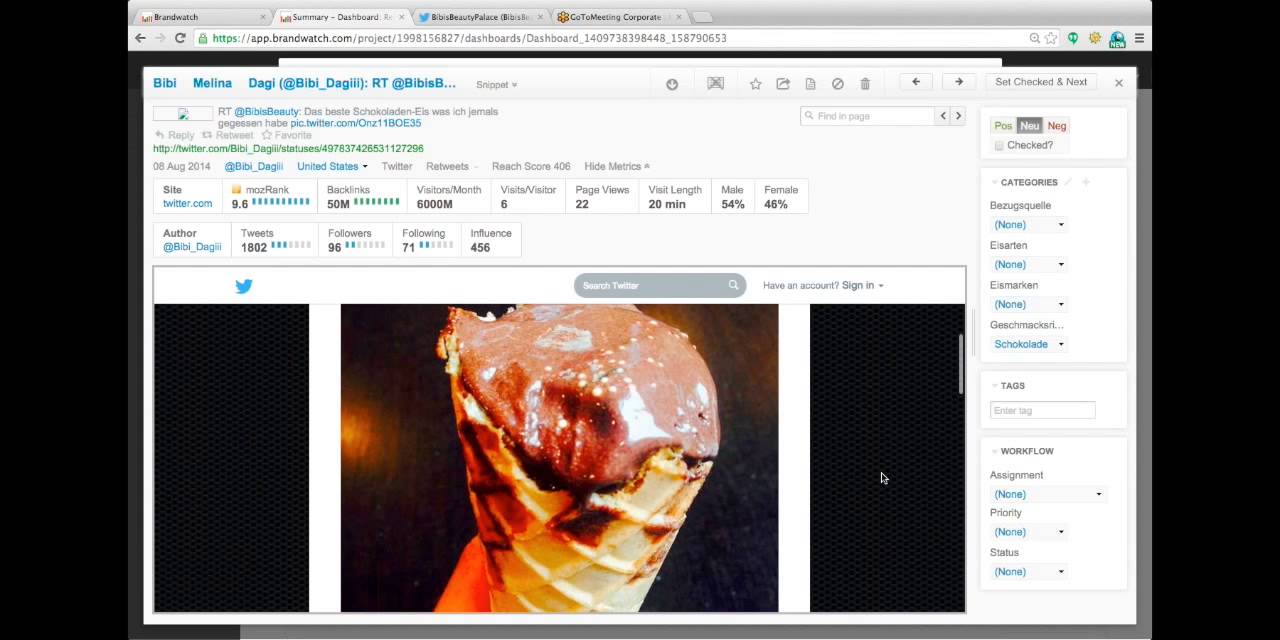


Media monitoring, or social listening, is a strategic process for tracking brand mentions across digital platforms to measure public perception, identify sentiment trends, and protect brand reputation; effective monitoring requires establishing benchmarks for normal mention volumes and sentiment levels, using filters to distinguish brand-level discussions from product-specific feedback, and regularly analyzing both total mentions and sentiment together to detect early warning signs of potential PR crises or successful campaigns.
Social Listening and Online Reputation Management Explained
Added:Fundamental concepts of digital marketing, including brand equity, brand positioning, and basic public relations (PR) strategies.
Familiarity with major social media platforms and key metrics such as engagement, reach, impressions, and share of voice.
A basic understanding of data analytics and how qualitative data (like user comments) can be converted into quantitative insights.
Advanced Crisis Management: Developing and executing strategic communication plans to handle online PR crises in real-time.
Natural Language Processing (NLP) and AI: Understanding the algorithms and machine learning models behind automated sentiment analysis tools.
Actionable Business Intelligence: Integrating social listening data into product development, customer service workflows, and competitive intelligence strategies.
Mastery of enterprise-level media monitoring tools (such as Brandwatch, Sprinklr, or Meltwater) to set up complex query syntaxes and dashboards.
30.2K views636likes36:40Original Release: 2020-10-15
Hey, I’m Chia from Brand24 and today I’m going to show you some media monitoring fundamentals that are essential for managing and protecting your brand reputation.
So monitoring mentions, which is sometimes also referred to as social listening is a key strategy in brand reputation management It’s how organizations and individuals are able to see what people are saying about their brand what they associate with it, and whether they feel positively or negatively toward it — in other words, it’s about finding out how the public perceives your brand or product Do they like it? Is it something they need? Is there something that you can do better?
By monitoring mentions of your brand, you become aware of how it is perceived by your audience. You learn about the specific things that people really like or dislike about your brand you discover key topics that tend to come up alongside mentions of it… and you can also measure how well your brand compares to the competition So, media monitoring is something that’s really valuable, if only for all the information it reveals… but with all those numbers and metrics, it can get a little overwhelming, which is why we decided to make a media monitoring course for you. By the end of this course, you should be able to: (1) measure how strong your online reputation is, (2) establish relevant benchmarks, (3) narrow down what it is that people like / dislike about your brand, (4) identify key topics that come up with mentions of your brand and (5) gauge how your brand compares to your competitors, and more There’s a lot more that you can do with the information that you get from media monitoring like identify compatible influencers and your top brand ambassadors, or you could pinpoint the source of your direct traffic... but we’re going to focus on reputation management today; just know that you can apply a lot of what you’ll be learning here today to a lot of other areas.
So, to complete this course, you only need three things: (1) a computer or laptop, (2) an Internet connection and (3) access to a media monitoring tool. I’ll be using Brand24 to show you the process, so to keep things consistent and moving along, you can create your own media monitoring account with Brand24. The free trial period currently lasts for 2 weeks which is more than enough time to learn the basic skills in this course. And you’ll find a link down in the Class Description. So, go ahead and get set up — and let’s get started!
The very first thing you want to do is figure out which keywords to monitor — what kind of mentions are going to give you the most relevant information? And this depends on the goals that you want to accomplish For instance, because our goal in this course is to monitor our brand reputation and make sure that it’s living up to customer expectations, you want to monitor “brand mentions” — and this refers to a group of keywords that are directly related to and associated with your brand.
So, your “brand mentions” typically include: (1) the name of your company, (2) any branded hashtags that you might be using, (3) the personal brands of key figures who are closely associated with the company (like yourself or your CEO, your Public Relations team, and any brand evangelists and influencers that you might be working with)... these are the basic “brand mentions” that you want to monitor.
And to further enrich the information that you’re collecting, you’ll also need to be aware of how your brand compares to other brands in the same niche. We’ll go more into detail about monitoring your competitors later in this course, but just know that monitoring key terms and phrases about other brands will also provide you with a lot of relevant information about your own brand.
You’ll be able to answer questions like: is your brand a preferred brand for the products or services that you offer? And is this because of the general quality of your product, or is it due to a few particular features, or the result of consistently providing really good service? These are just a few questions that media monitoring can help you answer, and we’ll dive into the key metrics that you want to keep an eye on in the next few sections of this course.
So, for now, for your first activity, I want you to just get comfortable with media monitoring data and media monitoring tools.
Start by setting up a media monitoring project — you can do this inside Brand24, which is the tool that I’ll be using (and you’ll find a link to it in the Class Description).
To begin with, just monitor your own brand mentions — like (1) the name of your company, (2) your branded hashtags, and (3) key figures within your company). Or if you don’t really have a brand or company yet, you can still follow along and learn about media monitoring by monitoring one of your favorite brands for this course.
I’m going to use Dunder Mifflin as an example. You might have heard of it: it’s a fictional paper sales company from one of my favorite shows “The Office”, and we’re going to go ahead and monitor the reputation of Dunder Mifflin on the Internet!
I’ll be showing you some examples of media monitoring data throughout the course based on the brand mentions that we collect for Dunder Mifflin, and you can check in the Discussions and Projects section for additional information and media monitoring tips as we go along.
So, once you’re all set up: you’ve created your media monitoring project and you’re monitoring mentions of your brand, then you’re ready for the next part — to learn about what these fundamental media monitoring metrics show you.
Now that you’ve begun to actively monitor your “brand mentions”, we can already extract some information about your brand.
So, the first piece of information that we can observe right away is your total Number of Mentions. You might notice brand mentions coming from social media platforms like Twitter; from various news sites; on video platforms like YouTube, TikTok or Twitch; or maybe your brand was mentioned in a podcast; or it’s been the subject of discussion on web forums like Quora and Reddit… and it could have also been mentioned on industry blogs; as well as on review sites like Yelp or TripAdvisor... the Internet is vast, and you can’t really control where organic mentions or discussions of your brand take place… but you can monitor them as they occur, and then take action as needed!
So, as a metric, your Total Number of Mentions is pretty straightforward: this is literally just a number that represents how many times people have mentioned your brand online. Naturally, this means that if your brand is well-known, you’re going to have a higher volume of mentions. And vice versa, if your brand is pretty new, and you don’t have a lot of brand awareness yet, you probably won’t see too many mentions, if any.
Now, as simple as your Total Number of Mentions may seem, there’s an important aspect that you want to consider, and that’s: who is represented in all these mentions? Are your brand mentions coming from a wide variety of people: older, younger, middle-aged, blue collar, white collar, female, male, etc? If not, is it because your brand message is resonating better with a particular demographic — and is this something that you want?
Whenever you work with data, representation is something that you want to consider, since it helps keep things in perspective. And we see a really good example of this in the 2016 presidential elections: during the presidential race, studies based on social media monitoring data predicted a very different outcome than what “real world” data indicated. Based on mentions of the candidates on major social media platforms (like Twitter), social media analysts were able to successfully predict the outcome of the presidential race more accurately than data scientists working with numbers from offline polling. So, despite the fact that many of these offline polls had forecasted a win for Democratic nominee Hillary Clinton, digital analysts monitoring mentions of the candidates online were able to predict President Trump’s victory.
Of course, this doesn’t mean that media monitoring data will always be more accurate than offline data — but it does speak to some basic differences between your online audience and your offline audience.
And there are 2 main types of differences that you want to consider: the first difference is just a standard difference in opinion — different audiences can have different preferences, especially if they don’t represent the same demographics. The second type of difference is in their levels of engagement. Generally speaking, we have very little control over our online audience.
Referring back to the example with the presidential election, we can definitely say that the people who actively contributed to online discussions about the elections, and about candidates in the running, were very interested and engaged in the topic, which suggests that they would have been more likely to go out and vote for their preferred candidate. On the other hand, an offline poll would have tried to capture the most representative sample of the voter population at large, which includes people who wouldn’t have been very interested in the elections at all. And this certainly could have been a contributing factor in the difference between the online and offline data.
What this tells us, in a broader sense, is that our online audience is going to represent a demographic that is generally more interested in our brand than our offline audience, which also means they’ll likely hold stronger opinions about it too, which can affect our Brand Sentiment (more on thatlater).
Ideally, to get the most comprehensive view of your brand reputation, you want to monitor both online and offline sources. To monitor your reputation offline, you can work with focus groups and conduct user research surveys in-person, or over the phone. Whereas, to monitor online sources, you can use media monitoring tools. Generally speaking, it’s going to be easier to monitor your reputation online, at least initially, since media monitoring tools do half the work for you by finding and collecting mentions of your brand automatically. And then, it’s just a matter of knowing what to look for, which is what you’ll learn in this course.
So, since one of the main reasons why we monitor our brand in the first place is because it helps us make more informed business decisions, this also becomes a reason for us to keep “representation” in the back of our minds. We don’t want to zero in on a small fraction of our audience and make big decisions based on that — we want to consider the greater perspective, based on representation.
So, for this part of the course, I want you to explore your mentions and see what kind of audience they represent. Just see who’s been talking about your brand! If you’re following along using Brand24, I recommend 2 ways of looking at your mentions: start with a general overview, followed by a quick analysis. So, if you’re logged into Brand24 and you just click on your project, you’re immediately taken to your Mentions Tab where you can see all your mentions. Just take a few minutes and scan through your most recent mentions to get a general overview, and get a feel for all the different ways that your brand is coming up in conversations or getting mentioned. I take maybe 10 minutes a day for this. This helps you get a sense of what’s going on, and it also gives you a chance to figure out what’s typical for your brand, both in terms of the types of mentions that you get, as well as the number of mentions.
In case you’ve never worked with any kind of media monitoring tool before, I will remind you that you might have to clean-up your project a little bit.
You might see some mentions that aren’t relevant; or if you deal with ecommerce, you might find online sales listings of your product included in your mentions, which don’t really contribute to the conversation about your brand or your reputation.
You can just delete these mentions individually, or block irrelevant profiles altogether. This is another good reason to check your mentions regularly; it’s a lot easier to tidy-up fewer mentions on a regular basis than it is to go through very large numbers once in a blue moon.
Now, after you’ve done a general overview of your mentions for the day, you can run a quick analysis. Just head to the Analysis Tab, where you can see a list of the most popular posts mentioning your brand, as well as the most popular profiles talking about it.
This step alerts you to certain brand mentions that may be gaining traction, and the profiles that are helping to drive conversations around your brand.
Taking just a few minutes a day to check out your mentions is something very small and very realistic that you can do to find out more about who’s talking about your brand and who’s helping to shape your brand reputation.
If you’re still in the early stages of brand building and you only just started monitoring your brand today (with this course), you might not see a lot of mentions; conversely, if you’re following along by monitoring one of your favorite brands that’s already well-established, you might be dealing with a huge number of mentions. So, what you see depends on the brand that you’re working with and its stage of development. But no matter where you’re at, the important thing now is to develop healthy habits and good practices by checking in on a regular basis: see how many brand mentions you have today; how many you have tomorrow; then in a week; and in 2 weeks, and so on… by then, you’ll have enough data to determine what’s considered normal for your brand, which is something that’s very important, as you’ll see in this course.
So, now, after you’ve finished the exercise and you’ve gone through a general overview of your brand mentions and you’ve run a quick analysis of the most popular mentions and profiles... you can move onto the next media monitoring metric… and that is Brand Sentiment.
Your brand sentiment measures how positively — or negatively — people feel towards your brand; it’s basically the backbone metric for reputation management.
However, just like with your Total Number of Mentions, you want to consider how representative your brand sentiment is. As we learned in the previous section, the people who are actively contributing to online discussions about your brand are going to be the ones who are really interested in it — and that can be for positive reasons or for negative reasons. So, you’ll likely see the bulk of your mentions coming from two extremes: your biggest supporters and your worst trolls. You won’t capture quite as much information from one segment of your audience though, and that’s the people who liked your product or service enough to make a purchase, but who aren’t so engaged with your brand as to talk about it. For the most part, this includes an audience who either isn't very familiar with your brand (apart from your product or service), or that just doesn’t feel very strongly about it. And since they don’t necessarily have strong opinions about your brand (or they’re just not very keen on vocalizing them), they’re not really the people who are shaping your reputation by driving the conversations around it, so you don’t have to worry about them too much, at least not in terms of measuring your brand sentiment.
Now, as you monitor your brand and your reputation and discover all the different things that people have to say about it — you want to make sure that you don’t make any impulsive decisions based on a handful of mentions. In other words, if you start to see a few negative comments pop-up, you can make a mental note of the situation and tag those mentions for future reference, but without overreacting on the spot. That’s because there are a few more things that you need to consider before you can decide if you need to take action (especially if it’s defensive action).
See, your brand sentiment is more than just a summary of all the positive and negative feelings that people have towards your brand, it’s also a metric that can alert you to potential disasters as well as successes. But this is only possible if you’re observing what the typical levels of positive and negative sentiment are for your brand, and establishing some practical benchmarks that way. These markers that you set up, they’ll clue you in and let you know when it’s time for you to jump into protection mode to defend your brand against a potential crisis or PR disaster… or when you can relax and celebrate the positive effects of a successful campaign.
So, one important thing that I want to point out here is that your normal levels of positive and negative sentiment can also vary by platform. Studies have shown that brand mentions in discussion forums tend to be more critical in nature, while opinions expressed on blogs are usually more positive... and Twitter is a platform that’s widely known to be more prone to negativity. So, the platform that you’re looking at is definitely something that you want to consider before you decide to take any course of action.
And I really want to stress that what’s considered to be normal levels of positive or negative sentiment is going to be very relative to your brand, due to a number of factors like: your industry, your niche, your product, your brand personality and so forth… that’s why it’s so important to establish those benchmarks; you might find that contrary to other companies, you typically see more positive sentiment in web forums, and maybe that’s also true of your brand mentions on Twitter. What this means is that you need to be ready to react and take action based on the criteria that you establish for your own brand, and not somebody else’s.
So, before you start to freak out about getting some negative mentions, always refer to your benchmarks: you could be looking at a platform where it’s perfectly normal for your brand to have higher levels of negative sentiment, and you haven’t actually reached that critical moment where it’s necessary to take action.
Now, for this part of the course, I want you to just begin observing your brand sentiment, and you can do this in 2 parts: first, observe your general brand sentiment, and then see what it looks like on individual platforms. So, in Brand24, you can view your brand sentiment from the Mentions Tab inside your project, in the chart on top. Just click on the heart symbol where it says “Show sentiment” and you’ll see a graph that shows you your general brand sentiment and how it changes over time — you can look at how your brand sentiment fluctuates over the course of a day, a week, a month, or longer... And just a little reminder: if you only started to monitor your brand today with this course, and you’re still in the very early stages of brand development, you might not have a lot of mentions to observe yet… whereas if you already have some brand awareness or if you’re monitoring a more established brand just to follow along (which is a good way to learn), you’ll probably have some more data to work with. The point is to observe your brand sentiment on a regular basis so that you’re able to define what NORMAL means for your brand, and set up benchmarks that way.
Now, after you’ve looked at your GENERAL brand sentiment, I want you to check out your brand sentiment on individual platforms. Just select the box for Twitter to view your brand sentiment on Twitter, and see whether it changes — and How. Does it seem more positive or negative than your general brand sentiment? Are fluctuations over time more volatile, or is it more consistent? And make sure you look at mentions from other platforms too, like news sites and podcasts. Just take a few minutes to check out your brand sentiment on each of these venues, and do this again the next day, in a week, in 2 weeks, etcetera… and just observe how your brand sentiment changes over time.
Your goal here is to find out what’s typical for your brand, which may look differently than what’s the norm for other brands. For example, a telecommunications company would always have some degree of negative sentiment (from those customers who either lose service or have poor service as they travel through certain areas), but that doesn’t mean that they’re going through a PR crisis. Having a positive brand sentiment all the time just wouldn’t be the norm for them.
Whereas, if you’re monitoring the brand sentiment of a charity organization that runs projects like improving literacy rates or providing access to safe drinking water, you would expect a very high level of positive sentiment — anything else might indicate some kind of problem.
And this is what matters — this is what’s going to be key to protecting your brand reputation: being able to identify the point at which YOUR brand needs to take action.
So, now that we’ve looked at brand sentiment and how to establish crucial benchmarks for your brand, the next section will make sure that you’re looking at the right pieces of data, especially since your brand mentions can refer to very specific aspects of your brand.
So, like we discussed in the previous section, your brand sentiment is the backbone metric for reputation management. This means that you want to make sure you focus on mentions that really talk about your brand sentiment, and that means differentiating between mentions that discuss your brand versus mentions that talk about your product, feature or service. You want to monitor and respond to the right type of sentiment.
This section is going to be a little shorter than the others, but no less important, since I’ll be showing you two basic ways that you can filter out the most relevant mentions possible: and that’s using Boolean Operators and keyword qualifiers.
For example, in the case of our paper company Dunder Mifflin, brand mentions might be about the brand itself, about the service, or they could be about certain employees like Michael Scott or Pam. It’s important to distinguish between these mentions, because sentiment could vary significantly between each of these categories.
One way to look at individual pieces of your media monitoring data is by using Boolean search operators: just use a combination of {NOT}, along with {AND} {NOT} in curly brackets, also specifying the keywords that you want to exclude. So, in this case, you could use {NOT} Michael, plus {AND} {NOT} Pam to see mentions of Dunder Mifflin that don't also talk about employees Michael and Pam. If this is your first time using Boolean search, this might seem a little confusing, but just try playing around with different combinations of operators and excluded keywords — it will help you get used to it, and you’ll see that it’s actually a pretty logical way to isolate different pieces of data.
Of course, for certain projects, you may prefer to exclude mentions that include specific keywords from the get-go, and you can do that by adding keyword qualifiers. For example, from your Project Settings, you can monitor “Dunder Mifflin” as your main keyword, and then specify “Michael” and “Pam” as your Excluded keywords, and then you would only collect mentions of Dunder Mifflin that don’t also talk about Michael and Pam. Setting up your project this way means that you’ll collect less data than you would by just monitoring all mentions of “Dunder Mifflin”, and then filtering out irrelevant mentions later with Boolean operators. However, it will also make your mentions much more specific and relevant to what you’re looking for.
I recommend using Boolean Search operators if your brand gets a low-to-moderate amount of daily mentions that’s easy to manage, and setting up keyword qualifiers if you get a large amount of daily mentions.
So, for the activity portion of this section, I want you to think about how to distinguish between mentions of your brand in general vs. mentions that talk about very specific aspects of your brand. How would you filter your media monitoring data to focus on the most relevant mentions — using Boolean search or with keyword qualifiers?
And what kind of Boolean operators would you use — which keywords would you exclude?
For this part, you want to consider your brand vs. your product or service.
For example, to monitor the general brand sentiment for McDonald’s, you might monitor “McDonald’s” and exclude mentions that talk about specific menu items like “Big Mac” and “McFlurry”, or references to services like “drive thru” — the keywords that you exclude will ultimately depend on your brand.
So, now that you’ve begun to monitor your brand mentions and establish benchmarks and you’ve learned how to differentiate between brand sentiment and product sentiment, it’s time to see how these individual metrics relate to one another and why you need to look at them together for reputation management.
So, now that we’ve gone over the importance of monitoring your Total Number of Mentions and your Brand Sentiment, it’s time to see how these metrics can help us manage our brands and protect our online reputation. The key is to observe both of these metrics together, in relation to one another, and not separately.
And this simple matrix illustrates the relationship between your Number of Mentions and your Brand Sentiment very clearly. There are a few possible scenarios here: for example, what if you have a low number of mentions for your brand that are mostly negative? Well, even though this isn’t the ideal situation (because we always want to have more positive sentiment towards our brand), this low number of mentions tells us that we haven’t reached a critical moment where we need to take action — there’s just not enough data to suggest that our brand reputation is suffering and that we have a PR crisis on our hands. It does, however, indicate that we need to keep monitoring the situation, to be ready to react if it escalates.
Now, what if you have a situation where you see a low number of brand mentions — that are mostly positive? Well, even though having more positive mentions is always a good sign, if our total number of mentions is low, it’s too soon to start celebrating. This means that we just haven’t reached a point where we can say that our marketing activities have matured enough to indicate a great success; low volume shows us that we’re still in the early stages of our activities. However, the positive brand sentiment here tells us that there is potential for success, so you should keep an eye on the situation.
Now, what if you see a higher volume of mentions than you had anticipated? And what if they’re mostly negative? This is why it’s so important for you to be monitoring your brand regularly, so you can clearly establish what’s considered normal — both in terms of your number of mentions and your levels of positive and negative brand sentiment. Otherwise, you wouldn’t know what to look for. If you see a greater number of brand mentions than usual, with more negative sentiment than you’re used to, this is a big red flag that something is wrong and that you may need to take action.
And the thing is, these situations won’t just magically appear out of thin air; there will be warning signs. If you’re monitoring your brand mentions regularly, you’ll start to see signs of this even if you don’t have a lot of mentions. At that point, while there’s no need to take action, because it’s still unclear whether it will develop into something serious, you can already see that this is something you want to keep your eye on. Monitoring your brand mentions regularly helps you spot these warning signs early on, so you can get in front of a potentially damaging situation before it has a chance to develop into a full-fledged PR disaster.
The same goes for having a greater number of mentions than expected, that are mostly positive. A small number of mentions, even if they’re all positive — means that it’s too soon to start getting excited... but once you approach a volume of mentions that is high for your brand, this indicates that your marketing activities have been successful. If you can spot signs of a burgeoning success early on — you can take actions to nurture it and potentially allocate some additional resources there for even greater success.
For example, Panera Bread’s recent campaign is actually based on a media monitoring exercise.
When they removed their French Onion soup from the menu last Fall and replaced it with seasonal options, their customers made more than 1000 negative comments on social media in just a few weeks. Clearly, they were not on board with the menu change.
Not only did Panera take action by responding to the comments and announcing the return of their French Onion Soup, they actually turned this into an ad!
They hired the actress who played Phyllis on The Office to star in a short video, where she read through some negative comments as Panera’s social media monitoring manager. This was a really fun and creative way for the brand to engage with their customers through video, letting them know that they definitely got the message.
All of the scenarios I just mentioned rely on you being able to define what’s considered normal for your brand. Establishing benchmarks regarding your typical number of mentions, and your typical levels of positive and negative brand sentiment is key to protecting your reputation. So, for the activity portion of this section, I want you to construct a simple matrix for your brand by answering these questions: what qualifies as a low number of mentions for your brand — and what qualifies as a high number of mentions? Same with brand sentiment: what is considered to be a low level of positive or negative sentiment for your brand — and what would be considered high levels? Since a lot of you will only have just started to monitor your brand today, you might not have enough data to make that assessment yet, so you can check back later — or better yet, fill out the matrix based on your data from today, and then see how your answers change after a week, or after two weeks or more. In any case, the more data you have, the more reliable your matrix will be, so you want to start monitoring your brand as soon as possible.
After you’ve answered these questions, or while you’re patiently waiting for Brand24 to collect more mentions, you can take a closer look at the brand mentions that you do have — to observe the nature of the conversations that are taking place around your brand.
Beyond your typical number of mentions and your brand sentiment, you also want to know what topics tend to come up in mentions of your brand. This tells you what people associate with your brand, and you’ll need to look at the context of your mentions for this. Naturally, this is going to be a little more time consuming but also very informative. I recommend looking at this from 2 perspectives: by looking at the Word Cloud and by going through your mentions manually.
The Word Cloud is a visual tool that considers all of the words that appear in your mentions and then displays them based on how often they’re used. So, the more frequently that a word is used in mentions of your brand, the bigger and darker it will appear in the word cloud. While this will help you get a very broad sense of some of the topics that are associated with your brand, it’s not a replacement for going through your mentions manually. This is because word clouds do not reflect time, so they won’t show you how the words that are used in your brand mentions and the topics that come up, change over time. Plus, they’re based on individual words, and not phrases or context, which can skew the results if you try to rely on Word Clouds and gauge your conversations on that.
In addition to looking at your Word Cloud, I recommend going through your mentions manually.
Ideally, you could be really thorough and read each mention to grasp the context. And this is actually going to be pretty doable for most brands, with the exception of big, multinational corporations. But even if your brand gets so many mentions that you would need an entire day or longer to go through them all, you can start by just taking 10 minutes a day to go through your most recent mentions, and getting a general idea of the kind of conversations that are taking place around your brand. Of course, if you’re sticking to 10 minutes a day, then it’s also a good idea to check out your most popular mentions; this will help you make sure you don’t miss out on important topics of conversations for your brand.
Now, this section, for this activity I want you to just take a few minutes to go through your mentions and see what kind of topics seem to come up with mentions of your brand. Start with your Word Cloud.
See which words appear most frequently in conversations about your brand. For Dunder Mifflin, the words that stick out the most in the Word Cloud include: “pam”, “michael”, “scott”, “company”, “office” and “scranton”.
Next, take a few minutes to look through your most recent mentions. You can also use the Filters that you see on the right side of your screen, but I like to start by looking at the most recent mentions, and tagging the ones that look interesting. This is where you can discover a lot of information, like: what do your customers like about your brand? For example, Dunder Mifflin could monitor mentions of specific employees to see which characters are generating the most buzz — and why. These insights are essential to helping you understand your audience, to understand why they might prefer you over a competing brand, or why you may be losing them to the competition.
Once you get an idea of the topics that are associated with your brand, you can check out your most popular mentions. These usually don’t change much, at least not on a day-to-day basis, so if you see a new mention here, you’ll know that the conversation around your brand is starting to shift a little bit.
And this brings us to the next and final section of this course: how to effectively analyze your competition to see how your brand compares.
So, this is the final section of our course, and it’s where we take everything we just learned and apply it to your competitors. By monitoring brand mentions for your main competitors, you can measure how your brand reputation compares to theirs.
Approach this exactly as if you were monitoring your own brand. This means: (1) monitoring the name of the company; (2) any branded hashtags they’re using; (3) and mentions of key figures who are closely associated with the brand — like their CEO, their PR staff, their brand ambassadors and their influencers. If you’re following along inside Brand24 and starting to monitor your competitors as we speak, make sure you create a separate project for each brand. This way, you can just use the Comparison function later to automatically compare major metrics between your respective brands.
So, when you’re monitoring your competitors, you want to observe their volume of mentions and their brand sentiment and establish benchmarks for these metrics, just as you’re doing for yourself. You want to learn what their typical number of brand mentions are, as well as their typical levels of positive and negative sentiment. And then you can begin to compare your brand with theirs.
The Comparison function in Brand24 makes this really easy. Just enter the project you created to monitor your own brand mentions, and then from the side menu, click on Comparison. You’ll see some basic stats for your brand. Now, scroll down and click on “Compare Projects” and select the project monitoring your competitor, and you’ll get a side-by-side comparison view of both your brand mentions. You’ll see how you stack up in terms of brand sentiment, and which platforms most of your competitor’s mentions come from — versus the platforms that most people prefer to use when talking about your brand.
This information can help inform your marketing strategies and make better business decisions.
So, since you and your competitor are both in the same industry — even the same niche — your brand sentiment is going to be a pretty good indicator of how the reputation of your brand compares to theirs… unless there’s a big difference in your respective volume of mentions.
So, remember that matrix that we constructed earlier, showing the relationship between your number of mentions and your brand sentiment? This applies here too. If public sentiment towards your brand appears to be more positive than it is for your competitor, but you have a significantly lower number of mentions than they do, then you can’t explicitly say that your brand has a better reputation. You have to establish a benchmark of “what’s normal” for both yourself and the competing brand.
Looking at the comparison of the Sources of your mentions tells you which platforms your customer’s competitors prefer to use. If you’re not already active on some of these platforms, but you observe that your competition is, this might be worth looking into, especially if you see that their benchmark for positive levels of brand sentiment isn’t as high there… So, for the final section of our course, I want you to monitor one of your competing brands.
Just choose the one that comes to mind when completing this sentence: “The best alternative to my brand is (such-and-such brand).” And then monitor mentions for this brand exactly as you would do for your own. Look at each of the metrics that we’ve gone over in earlier sections of this course, and establish relevant benchmarks for this brand. And then use the Comparison function to get an overview of the major differences that you find between your brand and others. This will help you analyze your competitors to see how your brand compares to theirs, and identify areas where you can improve... Thanks so much for joining us and taking our media monitoring course — I really hope you learned something new today, or at least gained a little perspective on media monitoring.
If you’ve been following along and monitoring your brand mentions with Brand24, then you’ve had a chance to get comfortable with a media monitoring tool, and that’s fantastic because the hands-on approach is the best way to learn.
However, if you decided to just watch and listen this time around, so you could learn about what media monitoring is in the first place, that’s also perfectly fine! Though now that you know what the process looks like, and you’ve picked up some media monitoring best practices from this course (so you know what to look for) I encourage you to just start monitoring your own brand mentions. It’s a great way to discover what people are saying about your brand, what they associate with it, whether they have positive or negative feelings towards it… and it will show you how to recognize the early signs of a potential PR crisis so you can take action and prevent it from turning into a disaster. And you can try to monitor your brand using any media monitoring tool, it doesn’t have to be Brand24 (although that’s a great place to start), just try to start monitoring as soon as possible so that you’re able to define what is normal for your brand and set up relevant benchmarks.
Alright, if you have any questions, feel free to let me know in the Comments or Discussion section below — I’ll definitely be checking in so I can get back to you. I hope you guys found this helpful, thanks for following along, and I hope you have a great day — bye!
Up Next
46:07
Data-Driven Personalization in Customer Experience Strategy
@nuxeo4216
245 views•2021-07-19

12:54
Triumph of Orthodoxy Icon: Byzantine Art & History Explained
@BenCallan
2.1K views•2024-08-06

9:49
FastAPI vs Flask vs Django: Choosing the Right Python Web Framework
@TechWithTim
302.5K views•2024-05-26

1:42
Game of Thrones Opening Credits: A Cinematic Analysis
@gameofthrones
46.3M views•2011-04-18
Related Study Plans & Knowledge Roadmaps
Structured learning paths in General & Interdisciplinary Studies
general-studies
Elevator Engineering: History, Physics & Cities
01From Hoists to Safety Brakes: The Dawn of Vertical Lift
02Hydraulic vs. Traction: The Engineering Physics of Elevators
03Modern Speed, Safety, and Algorithms
+ 2 more learning modules
12h5 modules
Explore Roadmap
general-studies
Rubber: Material Science, History & Geopolitics
01Origins of Natural Rubber & Mesoamerican History
02The Chemistry of Natural Rubber & Vulcanization
03The Geopolitics of the Rubber Boom & Colonization
+ 2 more learning modules
12h5 modules
Explore Roadmap
general-studies
Containerization: Evolution, Logistics & Trade
01Ancient Trade & Bulk Cargo: Amphorae to Barrels
02The Industrial Revolution & Cardboard Packaging
03The Containerization Revolution: Malcom McLean
+ 2 more learning modules
12h5 modules
Explore Roadmap
general-studies
Textile Tech: Evolution, Labor & Global Impact
01Pre-Industrial Textiles: Handloom & Cottage Industry
02Mechanization: The Spinning Jenny to the Power Loom
03The Factory System & Global Labor Transformation
+ 2 more learning modules
10h5 modules
Explore Roadmap