









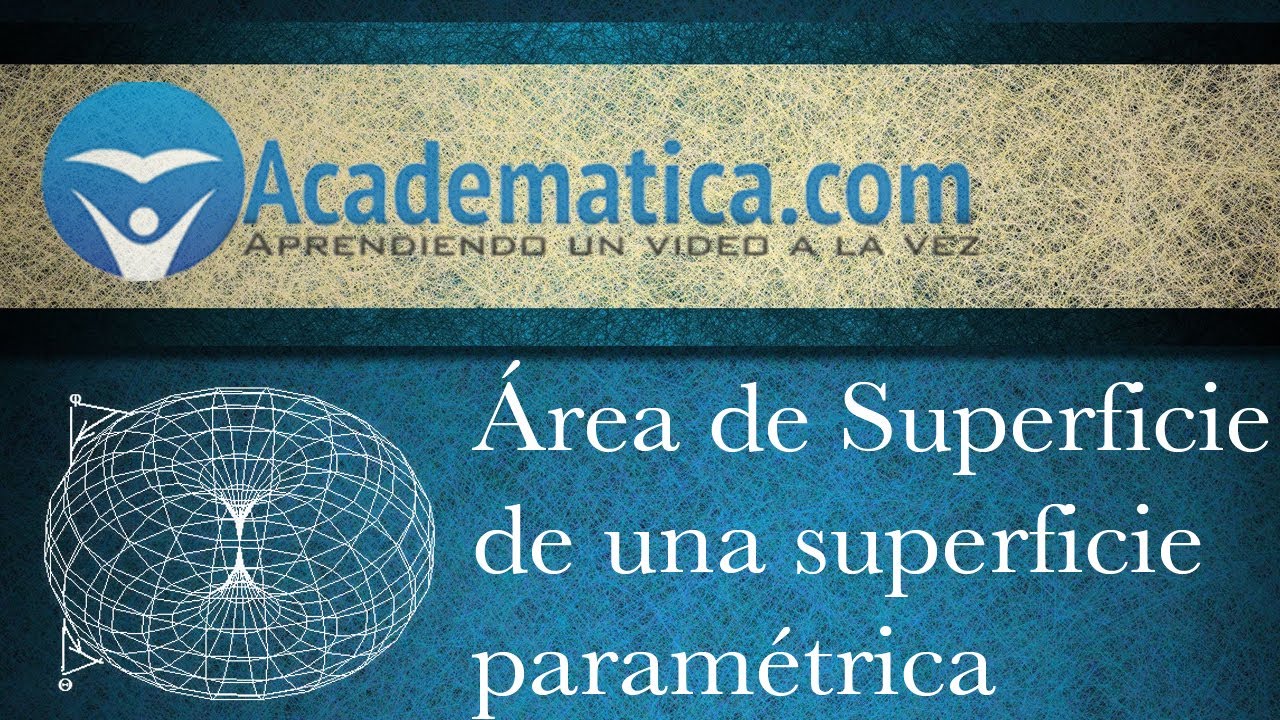


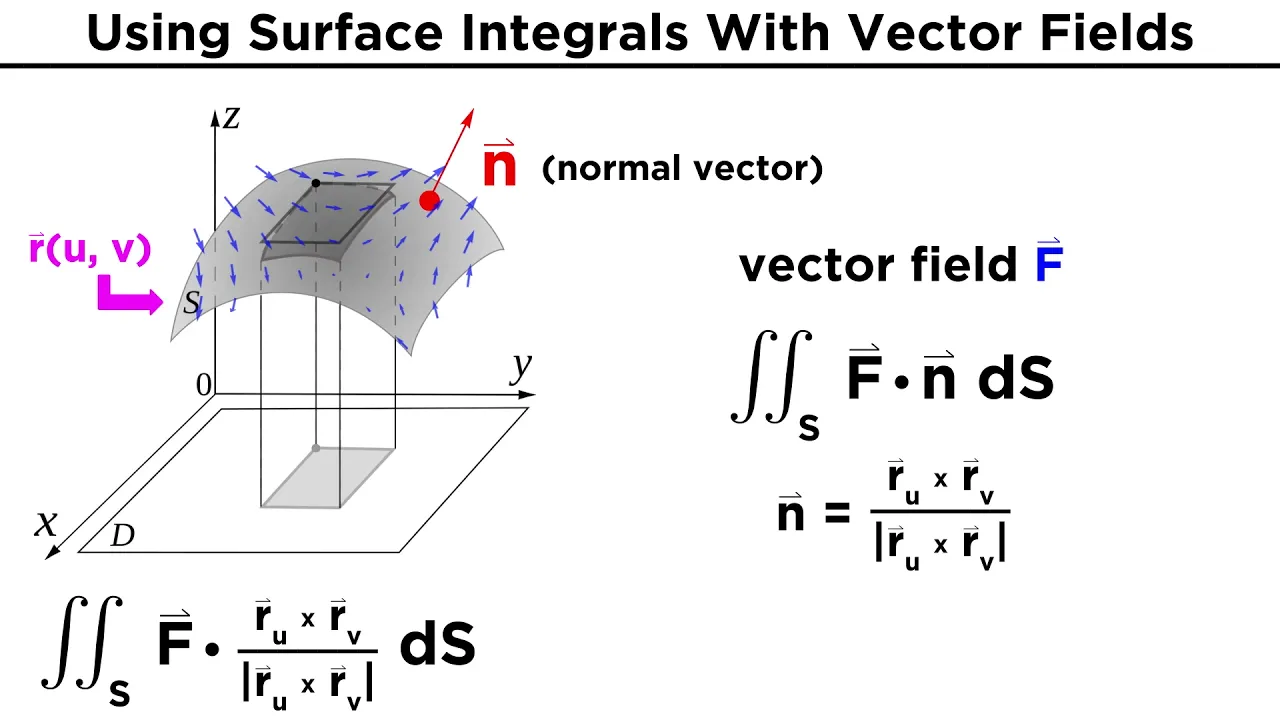







A parameterized surface requires two parameters (u and v) because it is a two-dimensional object, and different surfaces are best parameterized using different coordinate systems: graphs of functions use x and y as parameters, spheres use spherical coordinates (φ and θ), cylinders use cylindrical coordinates (θ and z), cones can use either cylindrical or spherical coordinates, and surfaces of revolution about the x-axis use x and θ as parameters. The tangent plane to a parameterized surface r(u,v) is found by computing the cross product of the partial derivatives r_u and r_v, which gives a normal vector to the surface.
Parametrized Surfaces & Tangent Planes | Multivariable Calculus
Added:Familiarity with 3D coordinate systems, specifically cylindrical and spherical coordinates, which form the basis for parameterizing standard geometric shapes.
Understanding of vector-valued functions of a single variable, including how to parameterize curves in 2D and 3D space.
Proficiency with partial derivatives, as they are required to find tangent vectors on a surface.
Knowledge of vectors in 3D space, specifically how to compute the cross product and how to write the equation of a plane using a point and a normal vector.
Calculating the surface area of parameterized surfaces using double integrals of the magnitude of the normal vector.
Evaluating surface integrals of scalar functions and vector fields, which is fundamental for calculating flux in physics and engineering.
Applying major theorems of vector calculus, such as Stokes' Theorem and the Divergence (Gauss's) Theorem, which heavily rely on parameterized surfaces.
Exploring advanced topics in differential geometry, such as the curvature of surfaces, geodesics, and differentiable manifolds.
607 views9likes21:04Original Release: 2024-04-06
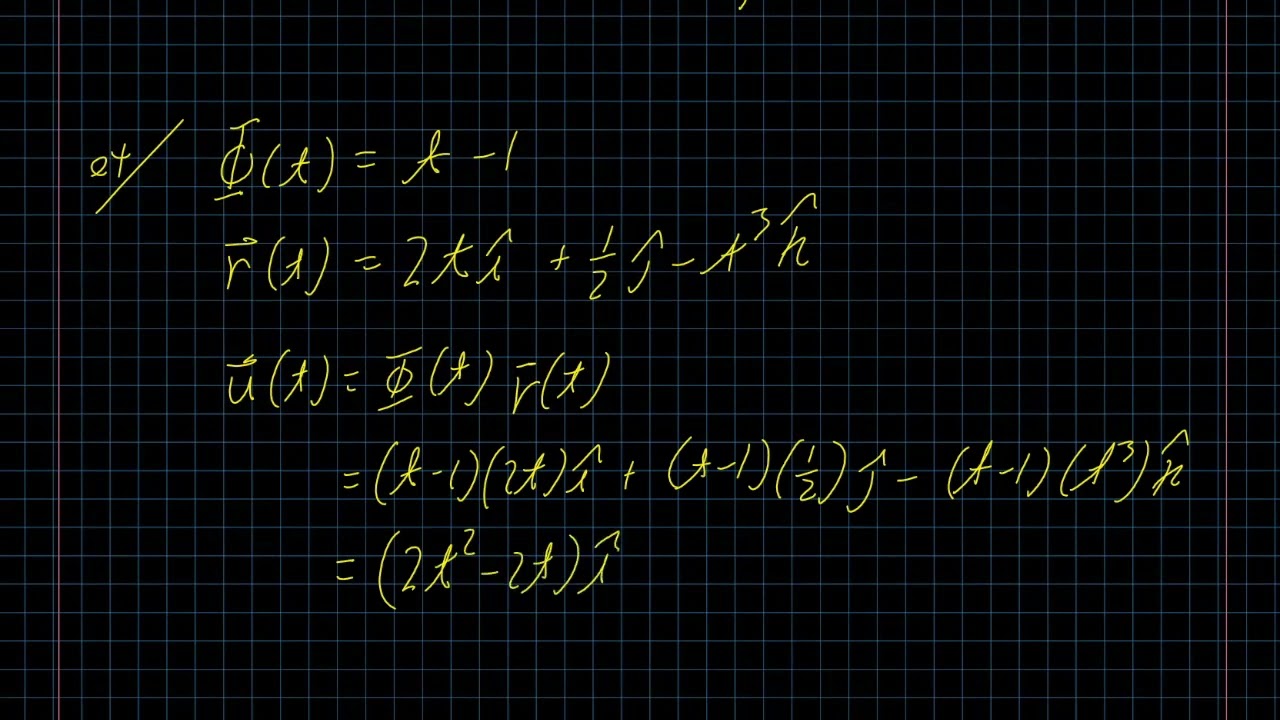
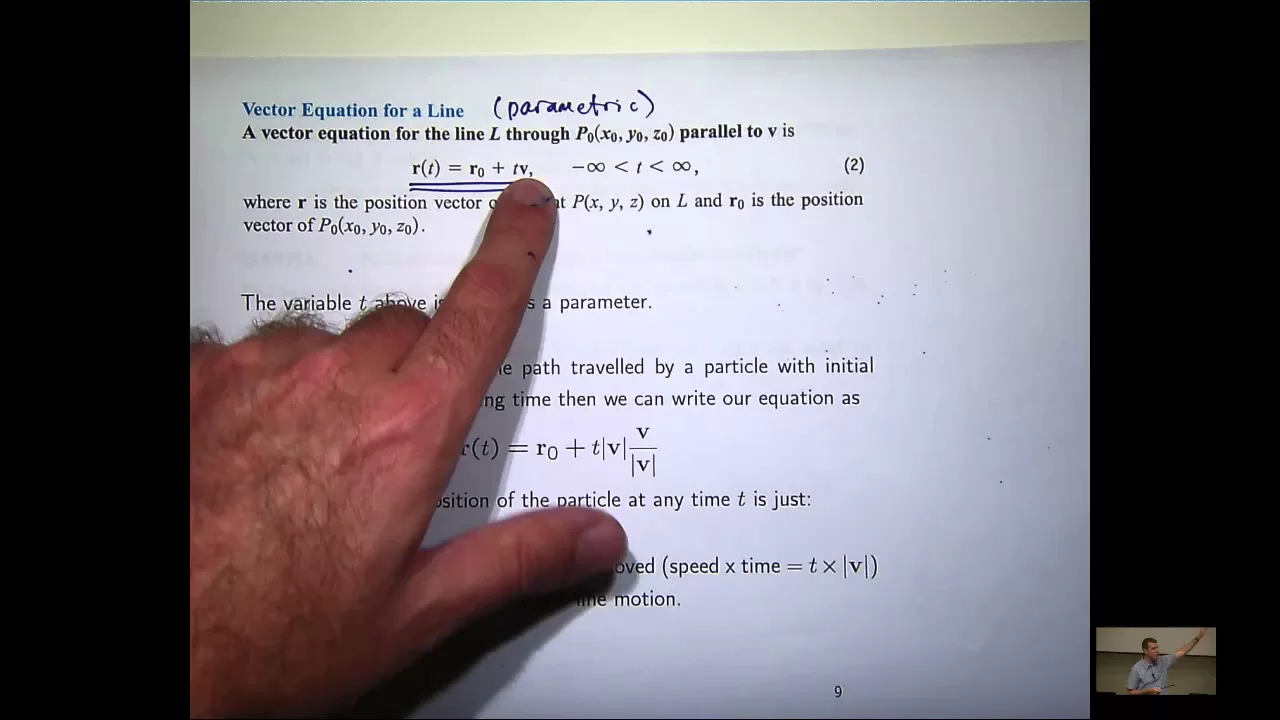
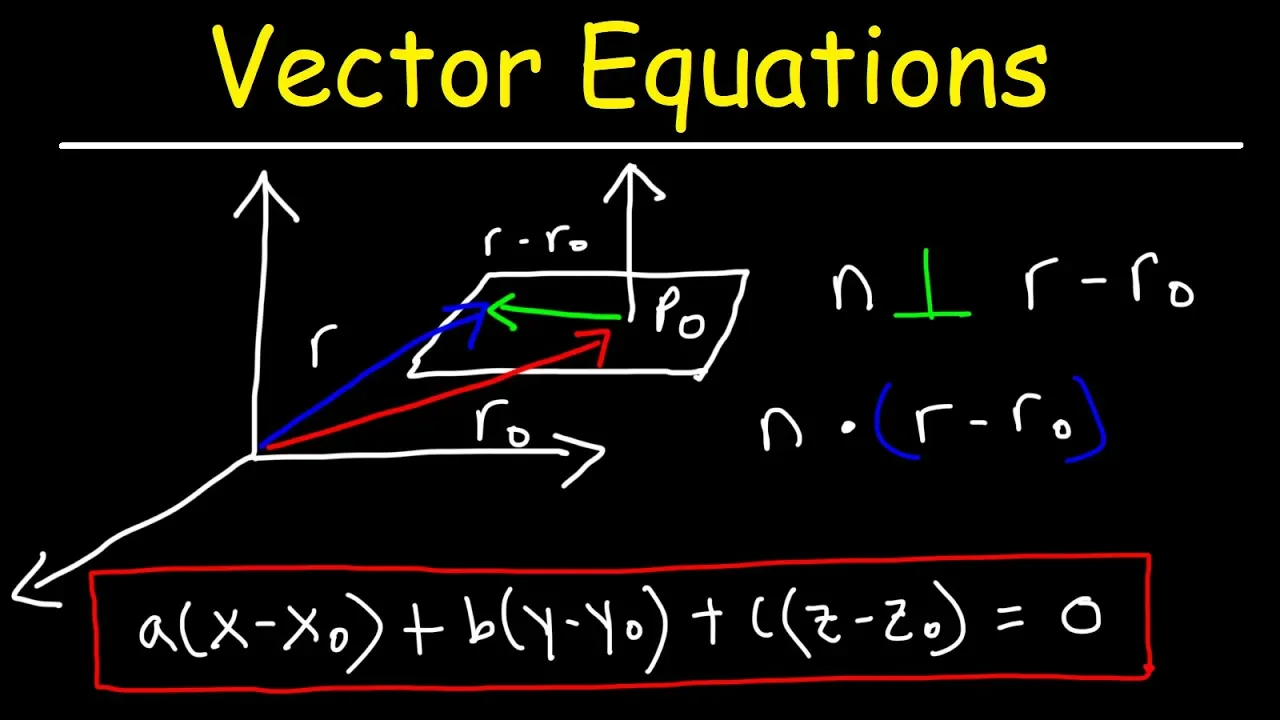
hello this is the 24th video on my multivariable calculus course in this video we're going to talk about parameterized surfaces to parameterize a surface we need two parameters why because a surface is a two-dimensional object so to parameterize a surface you need a parameter parameter for One Direction and another parameter for the other direction and usually I denote those two parameters in general by u and v so in this this video we're going to talk about a few examples on how to parameterize surfaces parameterize parameterizing surfaces is a very important concept since we're going to be using this parameterized surfaces and parameterized Curves in evaluations of surface and line integrals in the later videos okay so we'll do a few examples in this video the first example is uh parameterize the surface given by Z = x^2 + 2xy that lies above the square in the XY plane that the vertices are 0 1 uh 0 0 1 0 and 1 one so how do we parameterize this surface well let's first look at the parameter region so the region on the XY plane is a square like this so it is from uh 0 0 0 1 1 0 and 1 1 so this is our parameter region so how can we parameterize this surface well we could say the x axis the x coordinate is just X the y coordinate is just Y and the Z coordinate is evaluated by x^2 + 2x y now any parameterization uh must come with the limits of parameters so what are the limits of X limits of x from the diagram are are 0 and one and so are limits of Y so this region is a vertical simple region and it's also a horizontally simple region so we could parameterize it this way so let's look at Part B the surface given by zal F of XY with XY inside this disk so if you look at the parameter region parameter region is on the XY plane and it is a dis of radius one so how do we parameterize this surface again this is the graph of a function there are two ways of parameterizing the surface the first method is something similar to the one above so r ofx y equal x comma y comma 2xy Z is equal to 2xy that's what is given and then this surface this region is a vertically simple region so we could say y goes from bottom to top so what is the bottom of this disc the bottom is y = < TK 1 - x squ because the radius is 1 and then the top is y = < tk1 - x^2 the bottom has to have a negative sign so limits of parameter are going to be -1 - x^2 in square Ro TK and positive < TK of 1 - x^ 2 and then the limits of X are from -1 to one because this is negative 1 and that's one so this is one parameterization or we could do it uh using polar coordinates so how do we use it how do we use polar coordinates we could say well R and Theta or technically it is in fact cylindrical coordinates we could say R and Theta are our parameters so the base would be R cosine r s and the height would be 2xy so it would be 2 R cosine Theta or S of theta and of course I'll have to uh specify the limits of our parameters so R is between 0 and 1 because it is the unit circle and Theta is between 0 and 2 pi so what we got so far um uh were two examples that both of them were graphs of functions so let's look at more examples the next one is the sphere centered at the origin with radius a and a is a positive constant so we have a sphere centered at the origin and we want to parameterize that sphere so how do we parameterize a sphere centered at the origin well the best thing to do would be to use spherical coordinates so well we know that row is equal to a because it's the sphere itself it's not the ball of radius a they didn't say x² + y s plus z s less thanal to a s they didn't say a ball they said a sphere so row is equal to a so that means I can um use Fe and Theta as our parameters x coordinate is a row which is a um sine fe uh cosine of theta and then row sin Fe sin of theta and then row cine of V so this is our parameter but as usual any parameterization must come along with limits of parameter since it is a full sphere V goes from the top which is zero to the bottom which is pi so limits of V are 0 and pi and limits of theta are from 0 to 2 pi so this is the parameterization for this surface okay so next one is another parametrization example and as I said this is a very important concept the first thing we want want to do anytime you want to evaluate the surface integral is to be able to to parameterize the surface which is why I have a lot of emphasis on being able to parameterize surfaces the cylinder given by x² + Y2 = a² so we want to parameterize that so let's draw a diagram for this so the surface looks like this it's the entire cylinder so there is no limitation on X uh I'm sorry on uh Z so how do we parameterize this well this is not the graph of a function so we could use the spherical coordinates uh I'm sorry we could use cylindrical coordinates well for cylindrical coordinates radius is a and Theta is changing and also Z is changing so the limit the parameters are Theta and Z so the radius is a so it would be a cosine Theta and a sin Theta and Z could be anything now again we'll have to specify limits of parameter so Theta goes from 0 to 2 pi and Z is real so something needs to indicate that this is an infinite cylinder you could say Z is between negative Infinity to infinity or you could say Z is a real number next example is another parameterization part of the cone below the plane Z equals 2 so let's draw the diagram again and write the parameterization so we have a cone and it is capped by this zal 2 and again it's the cone itself not the top of the cone not inside the cone so let's um let's uh parameterize this one so how can we parameterize this well there are a couple different ways of parameterizing this we can look at the projection onto the XY plane if you projected into the XY plane then we're going to get a a dis so the top or let me put it as a projection onto the XY plane so projection onto the XY plane is going to be x² + y^ 2 uh equal 2 because we had x^2 + y^2 or in fact the square root of that equals 2 so this gives us a circle of radius 2 so this is the projection of x plane and then because the projection onto the XY plane is a dis we would want to use cylindrical coordinates in this case r and Theta are both changing so we could say R and Theta x coordinate is R cosine y coordinate is r s and Z coordinate is on the cone so what is the equation of the cone the equation of the cone is z = root x^2 + y^2 which is r now what are the limits of R limits of R are from 0 to 2 and Theta from 0 to 2 pi again as usual any parameterization must come along with limits of parameter now there are other ways of parameterizing this one as well we could also use spherical coordinates to parameterize this one I will write down in fact the spherical coordinate parameterization as well so this is the first one the second method so this is a different method for the same problem we could use a spherical coordinates so let's look at the cone the cone is z = otk x^2 + y^ 2 which is row cosine of V = row s of V so that gives you tan of V is equal to 1 which means V is pi over 4 so that means in the spherical coordinates we would have V equals pi/ four now what are the limits of theta well limits of theta are again 0 to 2 pi and what are the limits of row row goes from zero which is on the uh On the Origin to the plane to the plane Z = 2 so let's uh see what zal 2 is Z = 2 is row cosine of V = 2 so that means row is equal to 2 secant of V so here is another parameterization so we could use parameterization as Row V is pi/ 4 and Theta first component is row sin F which is pi/ 4 and then cosine Theta second uh component is row sin V sin Theta so s of pi/ 4 sin Theta and last component is row cosine of v and as we saw V is pi over 4 and again we have to write down the limits of parameter so Theta is from 0 to 2 pi because we have points in all different quadrants and row goes from 0 to 2 secant of V so this is the second parameterization for the same surface okay so let's look at the next example parameterize the surface of Revolution surface obtained by revolving the graph z uh y = x^2 about the XY plane so let's do that so y = x² is something that looks like this and I want to rotate that about the x-axis cuz they said rotate about the x-axis so you'll get something like this this something like this is the shape that you get oh you'll get um something like this so now we want to parameterize this one so how do we parameterize it we are going to take a point let's say point x on the XY plane and we are going to look at this circle that we have what is the radius of this circle the radius of this circle is f of x so in fact let me put x a little bit further so this is X this radius is going to be f of x so if I draw the draw that Circle right here you have a circle and this is the YZ plane parallel to the YZ plane One Direction is the y axis the other direction is the Z axis so that's like the Y AIS and this one is the z-axis what is the radius of this radius of this is f ofx so how do we parameterize this well we could say y equal radius cine of theta and Z equal radius s of theta so how do we write down the parameterization well we could say R of the two parameters are X and Theta so what is the X component well it is just x what is the Y component it is so this is the graph of y = f ofx it is x^2 which is our function time cosine of theta uh x^ 2 * sin of theta X is any real number because x² is defined for every real number and Theta is between 0 and 2 pi so this is the parameterization of this surface now in general if you have you are given a um surface of Revolution about the x axis and you're revolving yals F ofx the parameterization is going to be x f of x cosine Theta F ofx sin Theta X is in the domain of your function and Theta is between 0 and 2 pi so the last thing we're going to talk about in this video is the tangent plane so imagine you have a surface but your surface is given by a parameterization so you are given by F of U comma V when you fix your U you get these curves right here and when you fix your V you get Curves in perhaps another direction of this surface now if you fix your U and Def differentiate the blue curves what are you going to get you get these uh tangent vectors so fixing U we get R subv this is partial of the position with respect to V and if we do the same thing for the other for the other ones we're going to get R sub U which is the partial of r with respect to U so if V is fixed differentiating we get partial of r with respect to U and those two vectors are tangent to the curves that are on the surface so what does that mean it means so this is what we just talked about R of U and R of V are tangent to the surface so what does that mean it means if I want to define tangent plane to the surface I'll have to find the normal Vector to the tangent plane by finding the cross product of these two so if R of UV is a parameterization of a surface Sigma then R sub U and R subv are both tangent to the surface thus their cross product is a normal Vector to the surface so let's do an example on this one find an equation of the plane tangent to the surface of revolution in the previous example at this point so so let's first write down the parameterization that we had it was X x^2 cosine of theta x² s of theta and that's exactly what what we got right here so now we are going to have to find a tangent plane in order to find a tangent plane we need one point and we need a normal Vector so we are given a point 1 one2 and < tk3 over2 we'll have to find the normal Vector so first we're going to find the uh partial derivatives 1 2x cosine Theta 2x sin Theta and then partial with respect to Theta is 0 - x^2 sin Theta x² cosine of theta then we'll have to find the cross product of these two but before that let's find out what x and Theta are so that we can reduce our computation so at 1 12 root 3 / 2 we get X x^2 cosine Theta x^2 sin Theta is equal to 1 12 < tk3 / 2 and what does that give us that tells us X is equal to 1 so if you look at the first components there're X and one the second component is x² cosine Theta and 12 so that means cosine s of theta is 12 and the last component is x^2 sin of theta which is < tk3 / 2 so s of theta is < tk3 over 2 so what does this mean it means at this point RX and R Theta can be evaluated by these formulas so 1 2 * cosine of theta so this is 2 * 1 * 12 2 * 1 * < tk3 / 2 0 - 1^ 2 < tk3 / 2 and 1^ SAR 12 so if you find the crossb of these two we are going to get so eliminating the first one so we're going to eliminate these we're going to multiply those we get 1 * 1 12 so that's 12 minus so that is uh plus and then < tk3 /2 * < tk3 over2 so + 3 or+ 3 over two so that's one that's 1 12 so that's 1 12 and then plus < tk3 * that okay so that's fine then we're going to eliminate the second column multiply we get 1 12 and then the others the other is going to be zero uh and then we have a negative sign of course for the second component you always had a negative sign when you do the determinant and for the third one we get < tk3 over 2 so that's a normal Vector to the tangent plane so now we can write down the equation of the tangent plane from what we have learned before it would be 12 + 1 2 3 which is 2 * x - 1- - 12 y -2 - < tk3 / 2 Z - < tk3 / 2 equal 0 so that is the equation of the tangent plane so to summarize the graph of a function f ofx y can be parameterized by R ofx yal XY F of XY spheres are often parameterized by spherical coordinates C cylinders are Often parameterized by cylindrical coordinates cones are often parameterized by either cylindrical or spherical coordinates if you rotate the graph of yal f ofx along the x axis we obtain a surface um that is parameterized by x f ofx cosine Theta f of x sin Theta and a complete parametrization must include limits of the parameter R of U cross R of V is a normal Vector to the surface given by R of UV and that brings me to the end of this video I will see you in the next video
Up Next
71:15
Shape Analysis Lecture 6: Surface Curvature Fundamentals
@justinmsolomon
8.6K views•2021-04-15
28:10
Gain Recalibration in Hippocampal Path Integration: Math Theory
@1024kyz
144 views•2020-07-02
10:44
Fourier Series Introduction: The Big Idea Explained
@DrTrefor
387K views•2021-05-03
6:00
The Mathematical Impossibility of Accurate World Maps
@Vox
23.3M views•2016-12-02
Related Study Plans & Knowledge Roadmaps
Structured learning paths in Mathematics
mathematics
Non-Euclidean Geometry: Models & Geodesics
01Euclid's Fifth Postulate and the Birth of New Geometries
02Hyperbolic Space and the Poincaré Disk Model
03Geodesics: Defining Straight Lines in Curved Spaces
+ 2 more learning modules
15h5 modules
Explore Roadmap
mathematics
Knot Theory — Moves, Coloring & Polynomials
01Introduction to Topology and Knots
02Reidemeister Moves & Knot Equivalence
03Knot Invariants and Tricolorability
+ 2 more learning modules
12h5 modules
Explore Roadmap
mathematics
Category Theory: Functors, Monads & FP
01Mathematical Foundations: Functions, Composition & Types
02Introduction to Category Theory: Objects & Morphisms
03Functors: Mapping Between Categories
+ 2 more learning modules
12h5 modules
Explore Roadmap
mathematics
Complex Analysis: Residues & Contour Integrals
01Foundations of Complex Numbers
02Complex Functions and Holomorphic Properties
03Complex Integration and Cauchy's Theorem
+ 2 more learning modules
18h5 modules
Explore Roadmap