
![[이얼 대학수학] Stewart 미분적분학 (Calculus, Early Transcendentals) (8판+9판) Part C 제54강 15.6 매개변수곡면과 그넓이 (1)](https://i.ytimg.com/vi/Gos2PPkbSCI/maxresdefault.jpg)
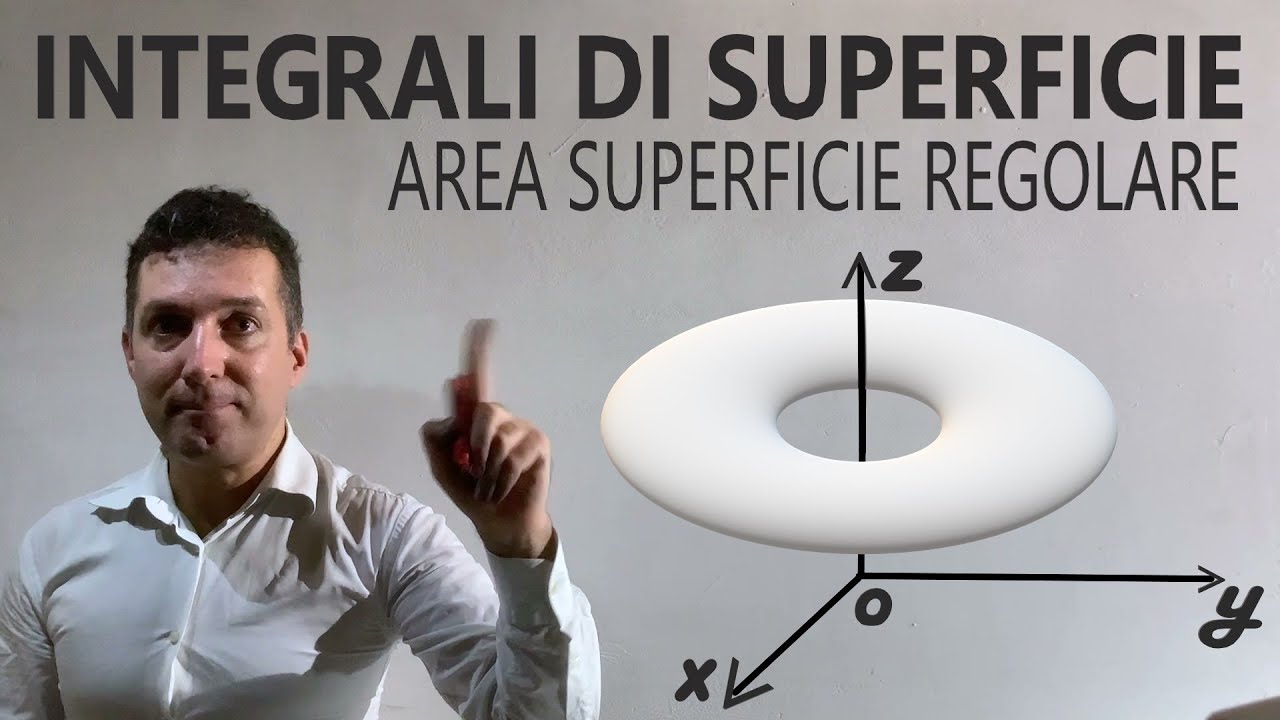



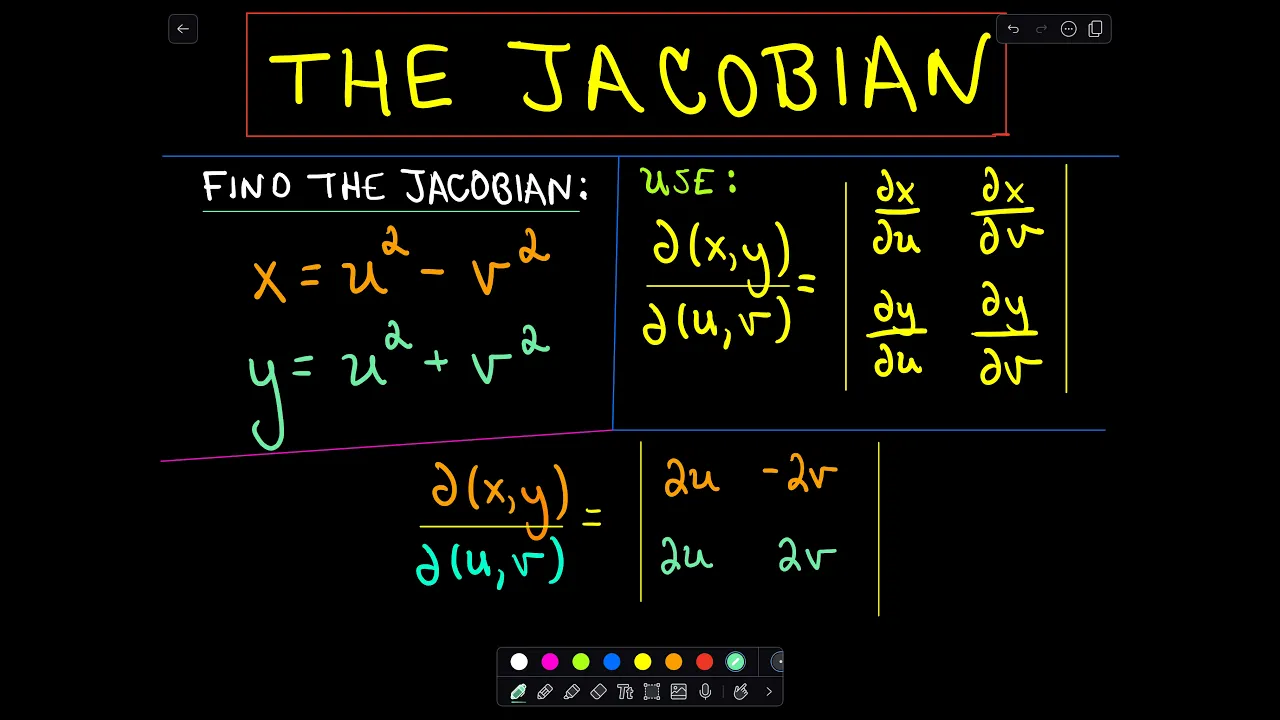


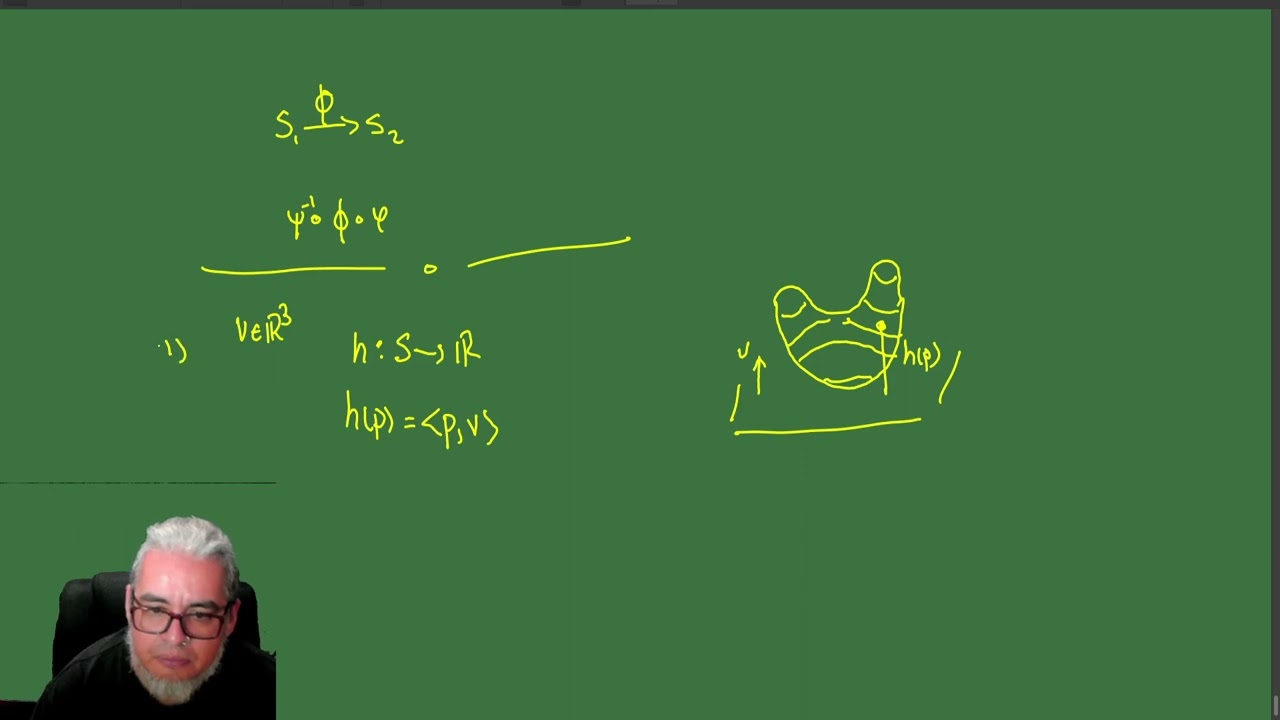
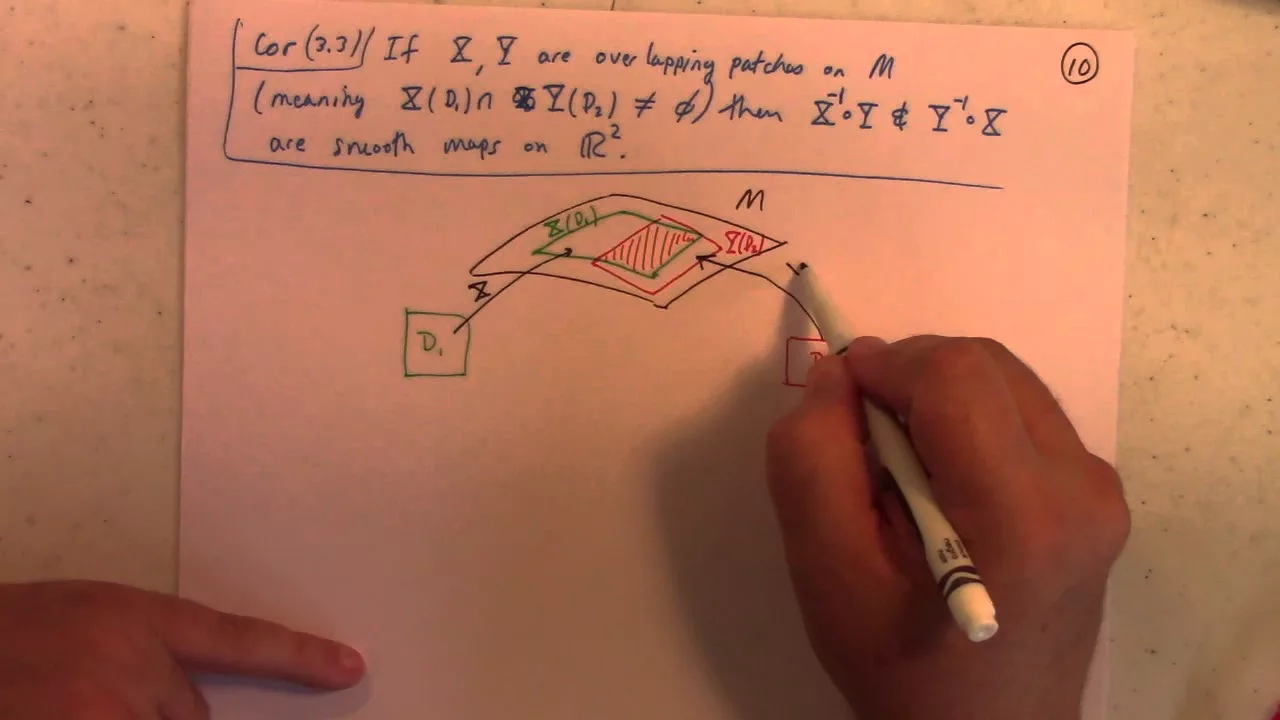




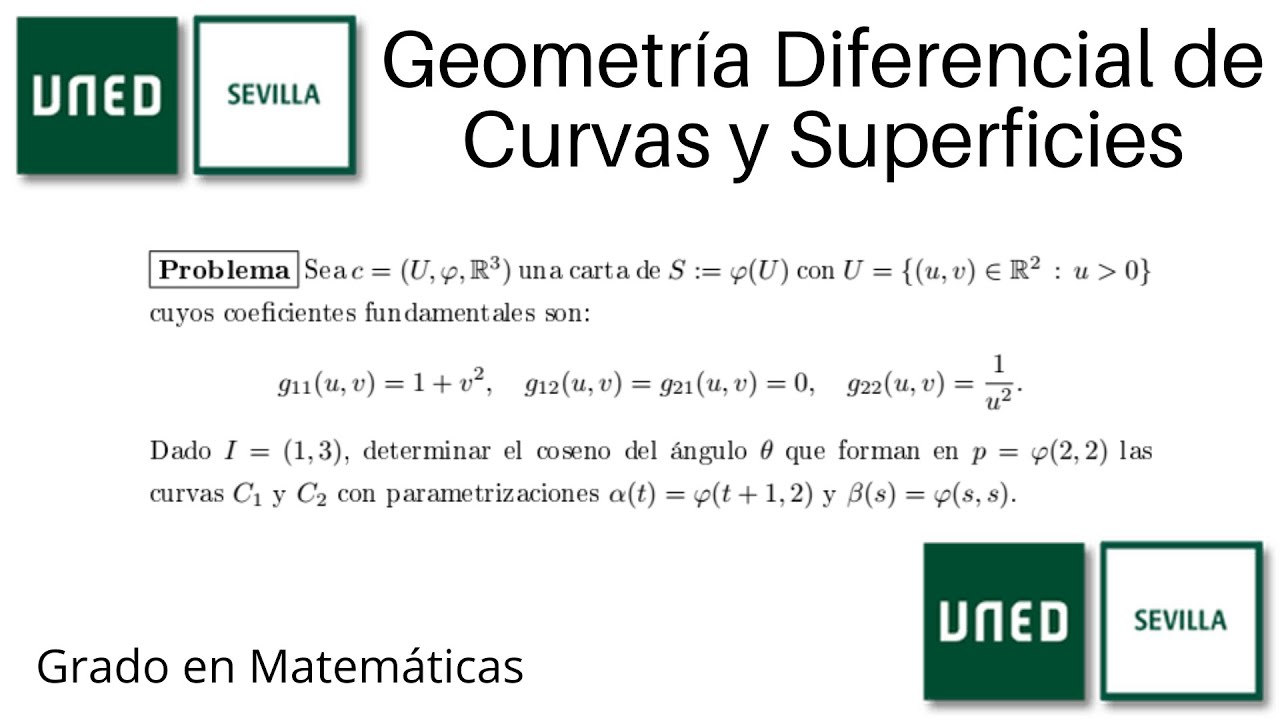


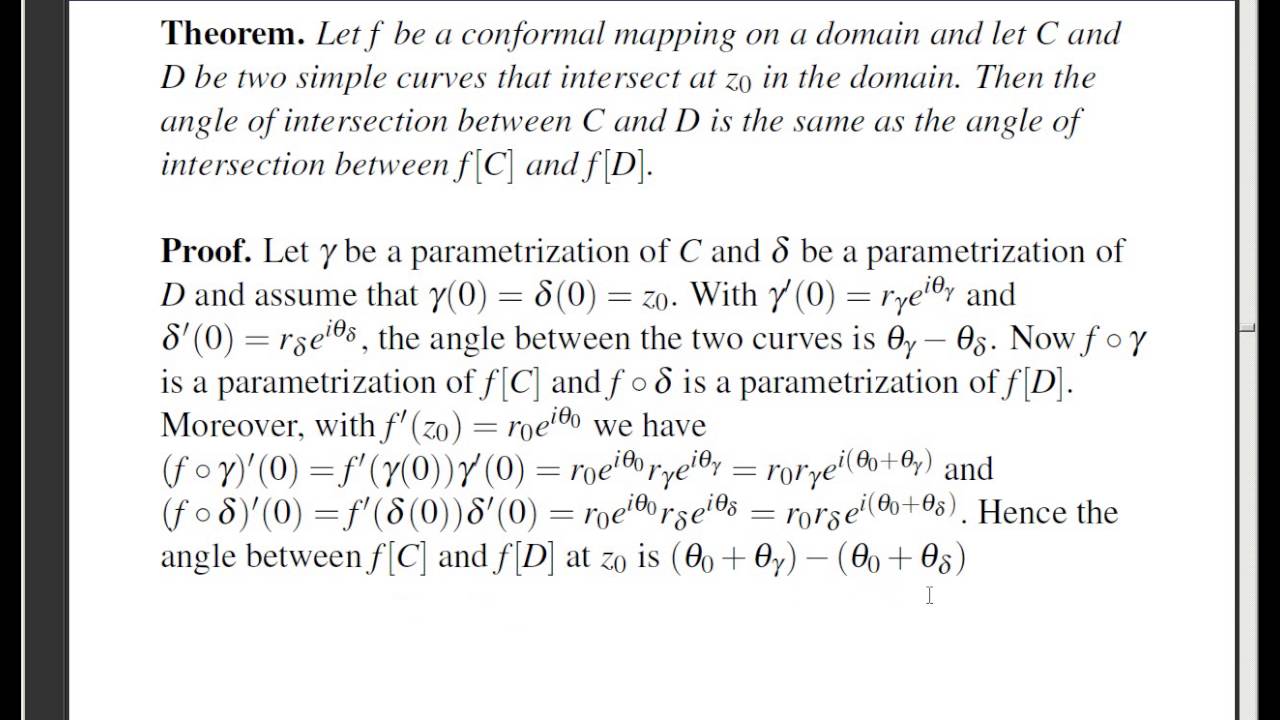


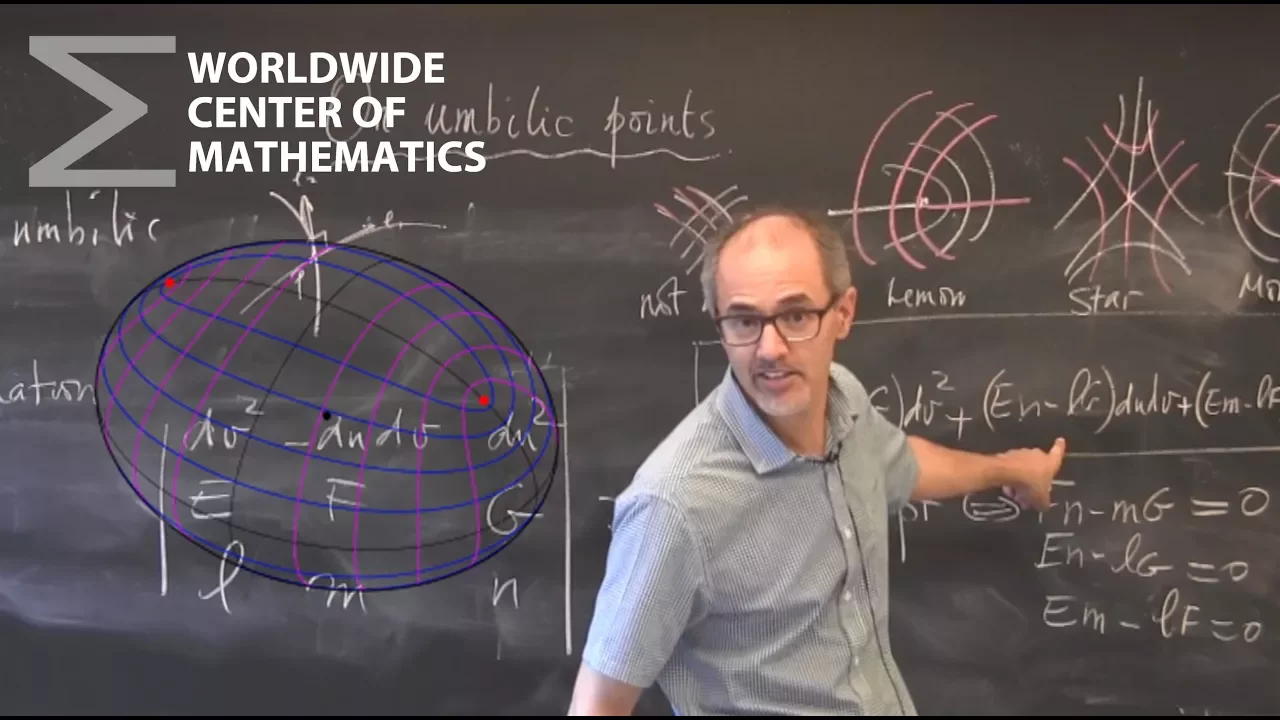










The First Fundamental Form is a quadratic form ds² = E du² + 2F du dv + G dv² that measures the intrinsic geometry of a surface, where E = ||σ_u||², F = σ_u·σ_v, and G = ||σ_v||² are coefficients derived from the surface parameterization σ(u,v). This form is invariant under reparameterization and translation, and its integral gives the length of curves on the surface. Two surfaces are isometric (preserve curve lengths) if and only if their First Fundamental Forms are identical, as demonstrated by the plane and cylinder having the same form ds² = du² + dv².
First Fundamental Form: Surface Geometry Basics
Added:Parametric representations of surfaces (coordinate patches and charts) in three-dimensional Euclidean space.
Partial derivatives and vector calculus, specifically the calculation of tangent vectors and Jacobian matrices.
The concept of a tangent space and tangent vectors at a point on a surface.
The standard dot product (Euclidean inner product) and its use in measuring lengths and angles.
Calculating arc length, angles between curves, and surface area using the First Fundamental Form.
The concept of local and global isometries, including conformal (angle-preserving) mappings.
The Second Fundamental Form, which describes how a surface bends into the surrounding space.
Gaussian and Mean curvatures, and Gauss's 'Theorema Egregium' which links curvature to the First Fundamental Form.
Geodesics, which generalize the concept of straight lines to curved surfaces.
11.4K views87likes29:33Original Release: 2016-08-01
okay welcome to this lecture where we will actually begin our study on Geometry of surfaces as we did for geometry of cures now how do you get the feeling of a geometry for a surface s so as we know it's consist of a surface will be consisting of different surface patches so let's this be once a surface patch that is my U this is my surfaces now to get the feeling of a geometry intuitively what do you understand if you want to have the filling of a Terrain what you do you work on the terrain so so similarly for surfaces what you do you try to take a curve gamma T which is on the surface so it will be of the form Sigma UT VT supposing the surface patch we are looking at Sigma u v and we try to measure different quantities or try relate quantities to surface along the curve so first of all first of all first thing we know about a curve that so let's come here so I have gamma T is equal to Sigma UT VT is part of a curve I don't need part of a curve or full curve part of a curve on Sigma U right this is our one surface SP we are looking at now T must belongs to some Alpha Beta and starting at T not length of GMA is up to a point T is given by we know from our discussion on curves gamma do T DT I should not be using T in this variable maybe I put X okay well now what is this quantity just have a look at Gamma dot. X this is gamma T is this fellow so this will be Sigma u u dot plus Sigma V V Dot where U dot denotes DX right and B dot is so I'm applying chain chain rule here so what is this quantity the norm of gamma dot Norm of a vector I can calculate if I take inner product with itself so that is Sigma u u dot Sigma V V Dot in our product with itself correct let's expand this what will happen you do the multiplication that will be Sigma U do Sigma U that will give you Sig Norm of Sigma U square and U do Square cos term will come twice Sigma v u do V Dot plus Sigma V Square V do Square okay let us call this quantity e this is dependent on EU this quantity F and this as G so this is going to be important so I write it again for the surface patch what is our is a standard notation e is Sigma U nor Square f is Sigma U do Sigma V and G is Sigma v² remember this huh so corresponding to the surface surface Pat Sigma I Define this quantity e f and g this depends on the surface patch on the same surface if you have two patches this EF and G will change so this fellow I can write it as e u do Square 2 f u do V do plus g v Square now so s becomes so St becomes t not2 t e u do Square 2 f u do V Dot plus G so I'm writing the same thing G V do Square power half so oh sorry this was Norm square right okay so I have to put a square root here now put if I put D DX this was U dot Square DX Square this is Du Square only so this is just just notation what I get is next page St equal to T to t e du ² uh 2 F du DV plus g d ² power half d correct the usual form we write this so this is just a notation D sare is equal to e du ² 2 F du DV plus G DV ² this fellow is known as First Fundamental form f f f this is the abbreviation we'll follow throughout of the surface path Sigma First Fundamental form okay the first time we are assuming there first time we are seeing such a expression so therefore First Fundamental it is really fundamental in the sense that if I integrate this square root of the First Fundamental form then what I get I get the length of the curve and why form form well form I I'm not defining what is a form explicitly but any form what it does is that it acts on a curve for instance here it acts on a curve G to give a real number in this case First Fundamental form gives length of the curve so clear always remember this expression this is First Fundamental form soon we will see a second fundamental form these two are very important as we see today yourself now you will see immediately that what we have decided that we will whatever property you want to surface you want to Define it has to be up to reparameterization so if I have a reparameterization of Sigma let's say Sigma Tilda so that is Sigma Tilda ulda vlda then you look at the jauan Matrix of D old by D new right du du Dua DV Dua d u DV Tilda DV DV Tilda you will see that First Fundamental form if I write if I write f f f in The Matrix form e f f this is a usual way of writing just shorter way of writing the first fundament Al form okay this is usually denoted by F1 then this Matrix and reparameterized matric we'll have this relation so First Fundamental form is up to the jakoban change of the jakoban Matrix reparametrization if I do parameterization so what are the things that keep remains same under fundamental form of course length of a curve why because in the length of a curve that is from the deration itself we have seen that actually the first form integrated gives you length of the curve and length of a curve doesn't depend on reparameterization so that will remain unchange if I translate my Surface translation will give the jauan Matrix identity so that will give First Fundamental form is preserved under translation so we are going to use that and see in an example so let's say example one let's take the previous example Sigma U is 1 - vp+ V GMA U this was generalized cone right so you have a curve gamma out here you have a point it's a rule surface and sorry lines passing through p and okay this is gamma so that gives a surface you have to remove the point P so actually this is your surface and it has opposite one if I take the image of gamma with respect to P I will have this one so let's consider the upper part only without P so this is my Surface okay now as I said I can take P to be zero why translate by P so you get new parameterization which will give you if you simplify V into GMA U minus P so replace now translate the curve also gamma by Gamma 1 which is the translation of the curve gamma so I get so we can have Sigma 1 UV is actually V into Gamma 1 U so now surface this p is zero p is origin now after translation right and I must know gamma must not pass through P I know what so we put the regularity condition regularity condition last time we saw that gamma does not does not pass through origin and GMA is smooth curve of course I take this gamma to be smooth to get the surface regular smooth surface okay now let's make gammaa U let's make one more change just so that I this instead of gamma is consider gamma Tilda but I make the change ulda equal to U and vlda equal to VY gamma U so change of variable then I will get my Surface is a nice form ulda vlda equal to vlda GMA Tilda ulda but in this case I have gamma Tilda utia this is always Norm one because of this right okay now I do another parameterization so I'm making things easier to calculate reparameterization so that gammaa is unit speed that we know how to do it we just have to change ulda to something so we assume gammaa is unit speed now what happens to the First Fundamental form so what is gamma ulda so finally let's take the surface to be Sigma u v equal to V gamma U where gamma U Norm one gamma do U Norm one after reparameterization I get this one so this page what I did all these things is reparameterize the cone in such a way that my surface looks like this so now it's very easy what is Sigma U Sigma U is just your V remains same gamma do U and what is Sigma V Sigma V is GMA U so e equal to and okay what is Sigma UV Sigma U okay let's calculate Sigma U sare this is V sare Norm of gamma do U square but we have assume unit speed so V Square gamma V Square this is simply gamma U sare so this is again one okay and uh Sigma U do Sigma V this is V into gamma U do gamma do U but gamma U and Gamma do U this in product is zero why because gamma U square is 1 if you differentiate 2 GMA U gamma do U is zero so that gives this the cross time is zero so f is zero this is G so First Fundamental form for the cone becomes v² du ² + D v² let's go to another example let's take the plane where uh p is perpendicular to Q un need vectors we have done this example if you recall the last lecture here it is very easy to calculate you can see FFF will be just you calculate Sigma U is just P Sigma V is q but both are un Vector so Norm one so it will be du sare DV sare okay let's take the generalized Cinder or the cylinder itself the most fun this is gamma U plus VX uh let's take and X is a unit vector and Gamma is unit speed that is gamma do U Square equal to 1 if you calculate the FFF here you'll get this is again du s DV squ so plane and cylinder has they both have same fundamental form it signifies something geometrically and I will try to recall you that what we did in one of the examples suppose I take the standard cylinder here cylinders of radius one correct so gamma is your curve cos U sin U and the cylinder is cos U sin u v right and then you look at the Y J plane This Plane of length 2 pi then we have done this thing before that I can wrap the plane into the cylinder so recall this wrapping a plane onto a cylinder and this map this wrapping map this is very interesting map this what happen that if I have a carve on the plane that will be wrapped and move to some carve on the plane but their length will be preserved so what it says that this wrapping map whatever it it we have done it before that is actually a isometry so here in here in this particular case the isometry is this is the cylinder this is YJ plan so this is an isometry what what is isometry that preserves the length of Curves since this is an isometry they have First Fundamental form same and this is was the theorem I want to prove then everything will become clear to you now okay so make like a definition I have two surfaces and F from S1 to S2 a diff morphism I am in the I am talking about regular smooth surfaces so I should take def morphism f is called and isometry if for each curve GMA on S1 length of gamma equal to length of f gamma so if we take this curve to GMA carve GMA to another curve F gamma they must have if they have same length is called isometry and obviously the theorem we are looking for is what I was trying to explain through this wrapping the plane that for it is true in general that if S1 if from S1 to s two this is isometry if and only if for any surface patch Sigma 1 on S1 Sigma 1 and F compost Sigma 1 the this is a Surface patch I know see this is surface patch this is a Surface patch on S2 so Sig Sigma 1 and F Sigma 1 have same First Fundamental form and that is exactly what is happening in the case of plane and generalized cylinder because this is an isometry and they have the same fundamental form in this case both are single patch okay okay so let us quickly try to see the proof first part suppose F ff of Sigma 1 is same as FFF of F Sigma 1 then you will see immediately that after all if I take a car scarve then DS square is FFF is given by the First Fundamental form and since fundamental forms are same this DS Square D Square element is same so length of the carve will be preserved so length of carbs are preserved hence if is isometry so this part is really straightforward okay now the other way other way is little non-trivial it's not really non-al I mean you have to do little bit work so conversely let if is an isometry what I have to show the surface patches for Sigma 1 and sigma 2 are same sorry Sigma 1 and sigma 2 to show Sigma 1 and F compos Sigma 1 has same FFF well the FFF of Sigma 1 we will denote by E1 F1 G1 here with E2 F2 G2 since isometry then what I have for all T not T1 length is preserved okay but this relation is true this integral equation is true for all T and T1 whatever carve you take that will implies these two are same here I should have written U Tia actually that's okay U do square plus 2f do U do V do G do V do squ but what I have to show I have to show E1 equal to E2 F1 equal to F2 G1 equal to G2 this this doesn't give the First Fundamental forms are same since they are same now I take special case take curve consider this curve U equal to U plus T minus t if you do it you'll see this this this terms will vanish and that will give you E1 equal to E2 similarly oh and V equal to V similarly take U = to u and v equal to V not starting at some U not V not some fixed point that will give you G1 equal to G2 now put them back or consider this curve U not T minus t and V = to V + T minus t this this curve since this will this will implies 1 + 2 and along with three will give you fub1 = to FS2 okay so this is the more or less SK of the proof this book Proof is available in any book in particular whatever the references I have given you can check that that's it for today next time we'll see another kind of map confirm one nips
Up Next

28:36
Theorema Egregium I: Curves & Curvature in Differential Geometry
@figur3itout307
144.2K views•2023-09-05
4:43
Elliptic Curve Cryptography Explained: ECC, ECDSA, ECDH
@PracticalNetworking
28.5K views•2024-10-21
10:44
Fourier Series Introduction: The Big Idea Explained
@DrTrefor
387K views•2021-05-03
6:00
The Mathematical Impossibility of Accurate World Maps
@Vox
23.3M views•2016-12-02
Related Study Plans & Knowledge Roadmaps
Structured learning paths in Mathematics
mathematics
Tensor Calculus: Vectors to Riemann Curvature
01Mathematical Foundations: Linear Algebra & Calculus
02Covectors, Dual Spaces, and Tensor Basics
03The Metric Tensor and Index Gymnastics
+ 2 more learning modules
40h5 modules
Explore Roadmap
mathematics
Gödel's Incompleteness: Logic, Proofs & Limits
01Introduction to Formal Systems & Hilbert's Dream
02Set Theory, Cardinality, and Cantor's Diagonal Argument
03Arithmetization and Gödel Numbering
+ 2 more learning modules
14h5 modules
Explore Roadmap
mathematics
Galois Theory: Fields, Groups & Solvability
01Foundations of Abstract Algebra: Groups & Fields
02Polynomials & Field Extensions
03Splitting Fields & Symmetries
+ 2 more learning modules
24h5 modules
Explore Roadmap
mathematics
Non-Euclidean Geometry: Models & Geodesics
01Euclid's Fifth Postulate and the Birth of New Geometries
02Hyperbolic Space and the Poincaré Disk Model
03Geodesics: Defining Straight Lines in Curved Spaces
+ 2 more learning modules
15h5 modules
Explore Roadmap