















![[TALK 5] What is its Structure? Dom Bellini, Jane Wagstaff and Shaoxia Chen](https://i.ytimg.com/vi/tjasuJmkueM/maxresdefault.jpg)





Proteins are polymers of amino acids with a hierarchical structure where the primary sequence (amino acid order) encodes all information for folding into functional three-dimensional shapes; secondary structure forms through hydrogen bonding between peptide backbone atoms (alpha helices and beta sheets), tertiary structure arises from side chain interactions (hydrophobic, electrostatic, hydrogen bonds), and quaternary structure involves multiple polypeptide chains assembling together, with even single amino acid changes potentially causing severe diseases like osteogenesis imperfecta.
Structures of Amino Acids, Peptides, and Proteins | MIT 7.016
Added:Basic organic chemistry concepts, specifically functional groups like carboxyl (-COOH) and amino (-NH2) groups.
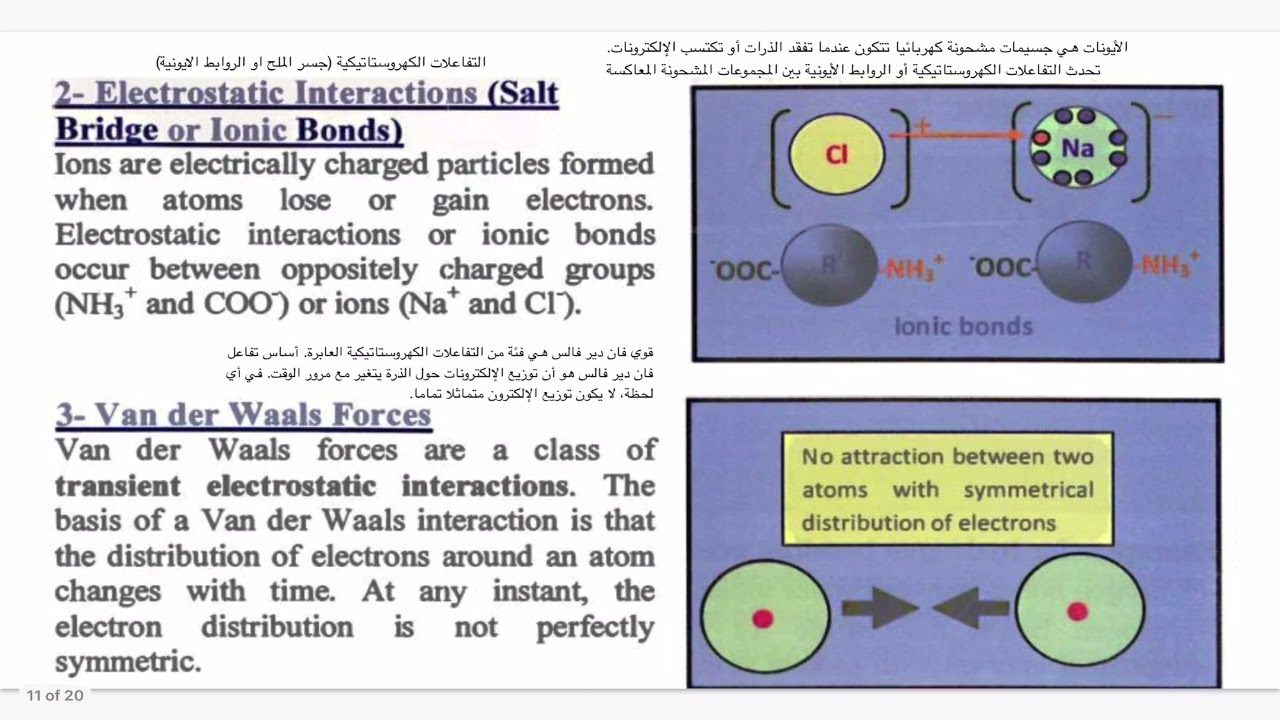
An understanding of chemical bonds, including covalent bonds, hydrogen bonds, ionic bonds, and hydrophobic interactions.
The concept of biological macromolecules, particularly how monomers polymerize to form macromolecular chains.
The basics of molecular biology's central dogma, specifically how translation converts genetic codes into amino acid sequences.
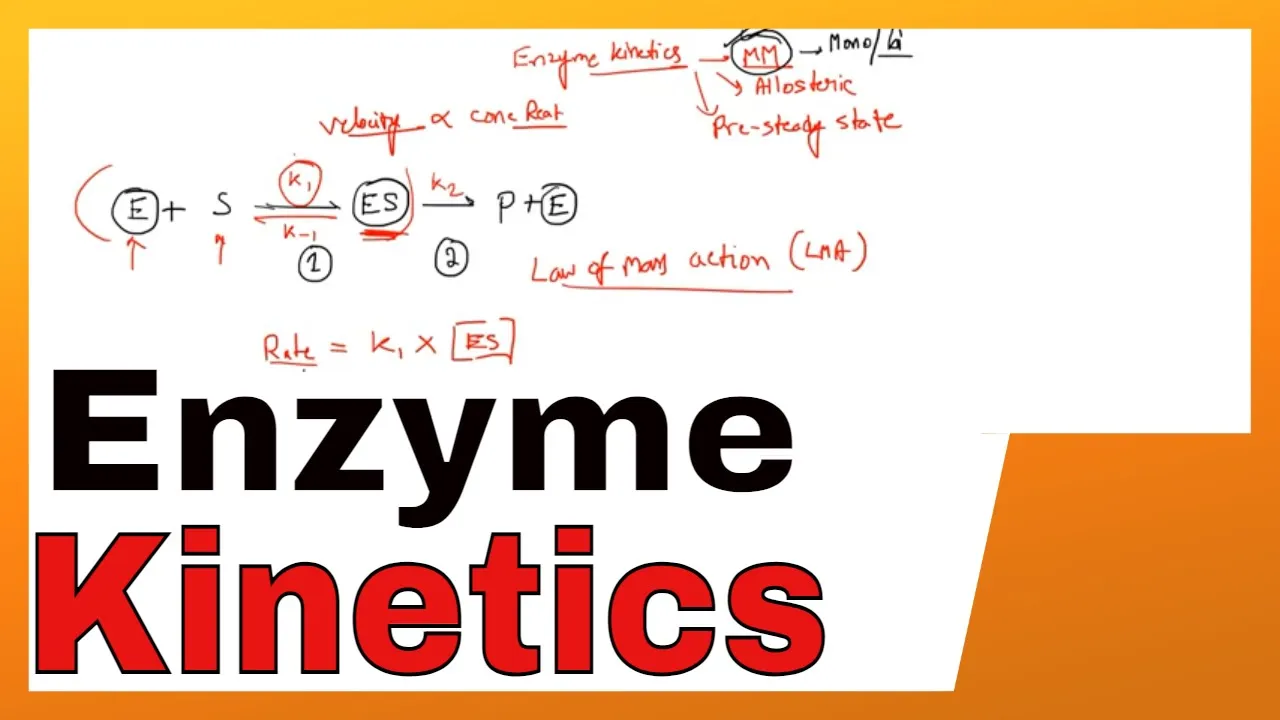
Enzyme kinetics and catalytic mechanisms, exploring how specific protein structures facilitate biochemical reactions.
The molecular pathology of protein misfolding diseases, such as Alzheimer's, Parkinson's, and prion diseases.
Structural biology techniques used to study proteins, including X-ray crystallography, NMR spectroscopy, and Cryo-EM.
Post-translational modifications (such as phosphorylation, glycosylation, and ubiquitination) and their role in regulating protein function.
The clinical and biochemical aspects of collagen-related disorders, such as Scurvy and Osteogenesis Imperfecta (brittle bone disease).
279.3K views4.3Klikes51:40Original Release: 2020-05-12
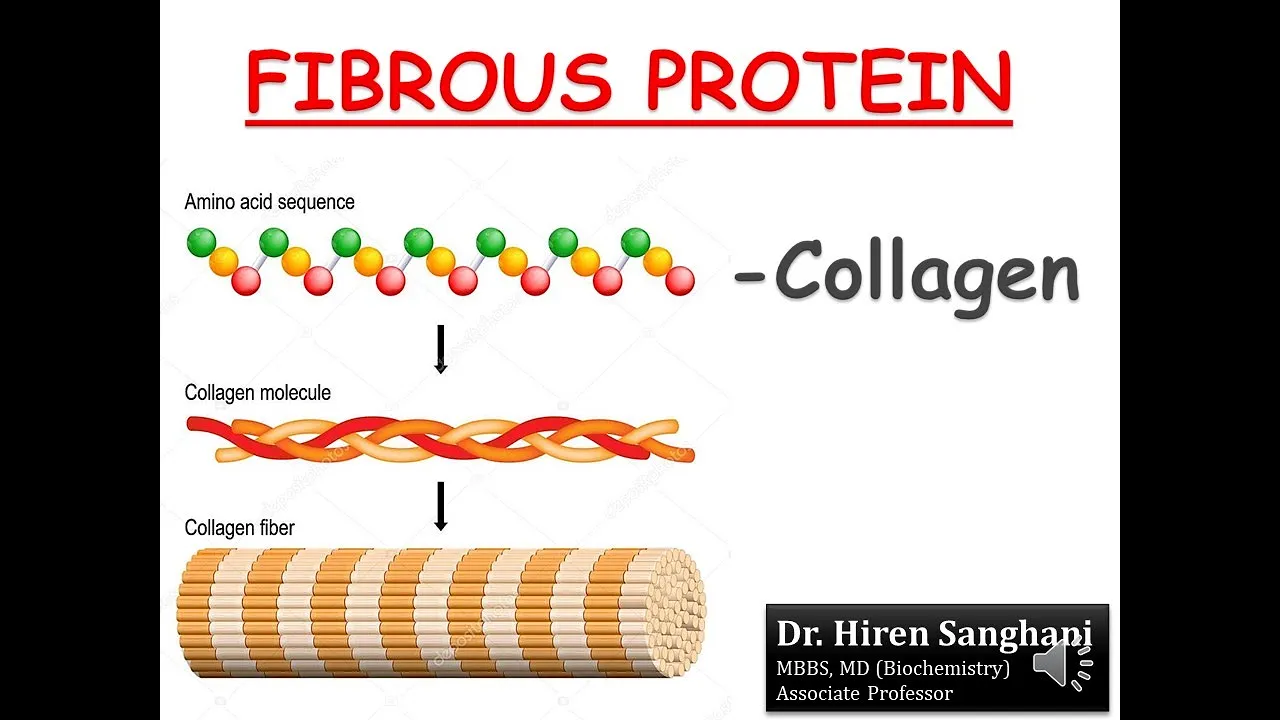
so gonna be a great lecture today it's about proteins I love proteins don't forget the handout yeah okay so I'm going to briefly wrap up the lecture we were doing on Friday because there were a couple of things that I wanted to make a note of and then we'll move on to section 2.3 about amino acids peptides and proteins now in the last class I introduced you to the lipid ik molecules and you can pick them out of a lineup because they are rich in carbon carbon and carbon hydrogen bonds as you can see here in these line angle drawings the majority of a lot of these molecules is carbon carbon or carbon hydrogen they are molecules that are mostly hydrophobic so there are some terminologies here what's hydrophobic which can also be referred to as lipophilic you either you can heat water and love fatty acid or fatty types of materials so there's both terms are synonymous and some of the lipids are what are known as an three Pathak and they include hydrophilic and hydrophobic components there are a couple of tiny terms that I didn't mention explicitly so I just want to go ahead and do that now for example in this phospholipid structure and we'll talk about these they have long-chain fatty acids attached via esters to this glycerol unit so there's one here and the second one here and then what's known as the polar head group in those fatty acids they could be fully saturated it means they have no double bonds in the structure so that term saturated is equivalent to no double bonds so no carbon-carbon double bonds or they could be unsaturated where there is a double bond within it so that's one or more double bonds and those double bonds take on a particular shape because there's not freedom of rotation around double bonds the same way there is around single bonds so those single bonds you can twist them around and twist them around but the double bond geometry is fixed and so double bonds we refer to them as either trans where the two groups are on opposite sides leaving the double bond or we refer to them as sis where the two groups are on the same side and we tend to use that sis and trans sort of naming system in a lot of other contexts as well but you might almost always want to remember the trans is as far away as possible sis is closer than trans alright so I'm just gonna take you forward to the phospholipid structure this is a very important semipermeable membranes I made up through the non covalent super molecular Association of phospholipid monomer units here's a monomer unit up here you see it has an amphipathic structure with a lot of hydrophobicity but also hydrophilicity and these molecules assemble into super molecular structures that form the boundaries of your cells saying they are semi permeable tells us a little bit about what can go through them if they were fully permeable anything could come and go and they wouldn't be much use frankly it's like leaving the door open the whole time but because they are semi permeable only a few things can come and go without extra help and other things need active mechanisms to to go through so let's take a look at the boundary here so when you see a membrane bilayer they are they're often shown looking like this where every one of these units is a phospholipid and there's water on both sides of the phospholipid because that polar head group is interacting with water on both sides so down here could be the inside of the cell up here could be the outside of the cell and a lot of cells especially eukaryotic cells the ones that make us up have a lot of endo membranes membranes with in the cells for example forming the boundary to the nucleus or to the mitochondria yes oh this guy must be so this looks like it's probably a saturated fatty acid so what do you think this one might be folks unsaturated and what's the double bond geometry sis so yeah it is it's like a it looks like a ballerina or something okay so we're you have a lot of concerns and we'll see later about how things get in and out of cells but most commonly things like oxygen or water and other small hydrophobic molecules can pass readily in and out through the semi permeable barrier but other things things that are charged things that are big need a different mechanism to get in and out and we will see later on how proteins provide the opportunities to Cargo things into cells or out of cells even very large entities and there are certain mechanisms whereby that happens through a semi permeable membrane okay I want to show you the other feature of membranes they are self-healing what this means is if you poke them you poke a hole in a cellular membrane you basically push apart those non-covalent forces once you take the thing away be it a needle or a very fine glass capillary they seal right back up to close to close the hole in the cell wall so that kind of tells us that they're non covalent forces so this is a really cool video of someone doing micro injection into eukaryotic cells the needle points to the cell approaches the surface you can drop something into the cell and then the cell closes and maintained regains its mackay its integrity of the barrier so this is a very cool a nation people do this they have to not drink too much coffee because it's quite complicated to do a lot of microinjection because you can really cause carnage and your cell population if you're if you're not very dexterous with microinjection but people have they can be very good at it so I just want to ask a couple of questions before you a couple of things to think about before we close up the lipids so here's a typical lipid bilayer where I've highlighted a single lipid in the colors those are the head groups and all in white and gray are the hydrophilic components and just one of the phospholipids is highlighted and that would be this molecular structure here so first of all what do you think the non covalent forces at that membrane interface may be that is what's going on here at the interface what are the types of interactions that you might have there give you a minute to think about it and I want to show you that I'm actually giving you a clue here because you can see the structure negative charge positive charge but also remember this is a barrier to water so there are other things going on with the solvent that the membrane is sitting in because there's water surrounding that barrier layer anyone want to tell me what the answer is and why yeah did you yeah yeah between what and what in right so water so that what is a good hydrogen bond donor and acceptor so there will be hydrogen bonding what about amongst all those lipid head groups what's the other major force yeah between the different charges so the correct answer here is both of them don't think it's just electrostatic it's both it's electrostatic amongst the head groups hydrogen bonding between all that sort of dense bunch of charge and the water and then the other question what type of molecules can get across I've already answered that question to you salts are gonna need ways to get in and out small proteins are too big to dissolve in that membrane through passive mechanisms so we're gonna have to figure out how to get proteins in and out of cells neurotransmitters such as this this is gaba or gamma amino butyric acid it's charged it just can't get through without a transporter of some kind and it's actually proteins that end up doing the heavy lifting of the transport processes that we'll see okay so this section will it be about the building blocks of your protein macromolecules which I want to remind you comprise 50% of all of the macromolecules so that suggests it's a pretty important class of macromolecules that has a lot of different functions now the amino acid building lock blocks look pretty simple they're called amino acids because they have an amine the carboxylic acid and there's a carbon that is tetrahedral between the carboxylic acid and the amine and the simplest of those is when those are both hydrogen but most of the amino acids are differentiated from that this one I showed you on the board this amino acid is glycine usually when it's just a lonely amino acid in aqueous solution it's in a different charged form just in consistent with what we talked about in the last class so this is glycine it's one of the 20 encoded amino acids that means the amino acids that are made through ribosomal biosynthesis through a code that's provided by the messenger RNA so they are encoded by messenger RNA RNA and later on you'll see all of the beautiful mechanics of those processes now this table looks pretty complicated so I'm going to deconstruct it a bit but what I first of all want to assure you is that these twenty you will always get a handout with these structures on them we are not asking you to remember these structures you might become familiar with some of them but you do not have to remember them you'll have a table that shows them but on that table I won't necessarily give you the information on what their properties are because those are things that you should be able to spot by looking at their chemical structures all right so that's important so these are all line angle drawings so you see the carbon the hydrogen's aren't shown in there the charges are shown for what's called the sidechain because most of the amino acids have a sigh change the amino acids are also chiral but you'll learn more than you ever wanted to know about chirality in 512 so I won't weigh you down with any of those properties so there is a side chain that dictates the properties of the amino acids one tiny detail the amino acids that are encoded in our proteins are all what are known as alpha amino acids there are other amino acids GABA that I showed you on the previous slide is not an alpha amino acid actually it's a gamma amino acid these are called amino acids because the amine group is at the Alpha position relative to the carboxyl don't need to know a lot more about that with respect to that so let's take a look at this set of amino acids and what you see is amino acid side chains with rather different properties I've amassed here's glycine at the very top all amino acids have a three-letter code or a one letter code I particularly enjoy using one letter codes and spelling out people's names in peptides and things like that I'll let you do that in privacy of your own room it's kind of amusing to see if your name actually spells out a peptide some some of us get I get a little stuck with Barbara because there are no B amino acid 1 letters with a B the next most abundant type of amino acid have hydrophobic side chains what that means is they have a lot of CHS are not a lot else right so take a look at them alanine has a methyl group for example where I've shown they are that would be Aladin and they get increasingly big they're quite large some of them have quite extended side chains are the ones have side chains with rings with double bonds in them those are what we would designate in organic chemistry is aromatic they show slit they're still hydrophobic but they show different properties to the to this other set of amino acids some of these amino may actually have hula groups in them but their major feature is that they're hydrophobic but in an amino acids such as tyrosine you could not only have hydrophobic interactions with that ring system but also hydrogen bonding with the O H on the tyrosine so some of the amino acids can do a few different things the next set of amino acids are those that are polar and charged and I've shown you the most common state of all of those amino acids but you already know that the amine of lysine is likely to be charged this guanidinium group of arginine take my word for it it's charged it's a bit more complicated to draw histidine is also one of those that's annoying to draw but the negatively charged side chains with a carboxylate are both negatively charged and that's something you would remember from the previous class hopefully and then finally their amino acids with polar uncharged side chains such as those shown here now this doesn't look like a very exciting set of building blocks how can life run on things made of twenty relatively simple building blocks with functional groups and it's that the building blocks are not functional themselves it is the polymers that are made up of amino acids and I'll always call them AAS because it's easier for me the polymers of amino acids are hetero polymers that means they're made up of a bunch of different monomer units when they're called hetero polymers and the other important thing about these polymers is that they are of defined sequence what is the sequence it's the order in which the amino acids appear so I'm right and all the functions of proteins are dictated by the order of the amino acids let's take a look at the side bar here so once again remember a couple of things that we will always give you this table to think about come back there were a couple of outliers I just want to mention quickly so I've talked to you about luck glycine the simplest amino acid with no elaborate side chain prolene is a little odd because it's side chain is kind of in a cyclic structure and towards the end of the class I'll talk to you about collagen whose structure is totally dependent on the involvement of prolene in the sequence of the amino acids that make up collagen and then the last sort of unusual amino acid is cysteine it has a file and the one clever thing about cysteine I'm just gonna put a bit of a peptide here one cysteine and then I'm gonna put a second cysteine and these are going to be deemed in a peptide ik structure what cysteine can do is it can exist either with the file sidechain SH or it can be at a different oxidation state where the two sulfur's are joined to each other so for the most part your linear arrangement of amino acids that dictates this sequence is solely held by it together by the Coulomb covalent bonds in the peptide backbone that we'll talk about in a minute but occasionally in folded structures if two cysteines are close to each other and the environment is oxidizing they will form a cross-linked but they're not what drives folding they kind of fall into place later on but that just sort of sets cysteine apart a little bit for its properties all right okay so coming down the side here amino acids are assembled in a unique linear polymer of defined order and we designate that defined sequence the primary sequence and proteins can be a thousand amino acids fifteen hundred a hundred amino acids they can be various lengths where they you know we would generally consider the smallest protein to be back about four hundred amino acids and you might go up to thousands of amino acids I'm gonna write two thousand or more here when the proteins are smaller they are not capable of adopting too much ordered structure and we mostly call them peptides peptides are sort of shorter sequences so peptide sequences so this would be a protein and peptides probably two to thirty nine amino acids for these breakpoints are a little a little bit more vague so the primary sequence will define the structure of a protein and we're gonna start to talk about the hierarchical structure of proteins that's put in place so and that's the primary sequence and that primary sequence is kind of a cool thing because it's very specific it defines it's got encoded into its structure the three-dimensional fold of the protein okay all the information for the folded compact globular structure that's functional is encoded in that primary sequence it's a cryptic code we may may not be able to tell by looking at it what it really looks like but all the information is there in order to program the folding into a globular structure so the primary sequence determines the fold and it's the fold of the protein that mandates its function it's not the sequence of the protein the sequence defines the fold the fold the three-dimensional form defines the function okay so that's very important and I think it's absolutely amazing that with a relatively limited set of building blocks we can define so many different functions of all the proteins in our body that may be structural they may be catalysts they may be things that transfer information from the outside to the inside of the cell all of that is programmed with this rather limited set of building blocks okay now let's now talk about peptides because one gets a little frustrated looking at single amino acids they don't tell us so much about the peptide ik structure so I'm going to draw two amino acids and then I'm going to tell you one important thing so let's put our 1 and I'm going to draw another amino acid and I'm putting it in a particular orientation or two because that designates that these might be different amino acids for example if our one is H there's an implied hydrogen here that would be glycine if our two is a methyl group there's an implied hydrogen there that would be alanine all right when nature bonds all these amino acids together it carries out a condensation reaction to form a peptide bond between these two components of the amino acid the amine and the carboxylic acid now I'm going to draw you the first of the dipeptides that you'll meet there are so many things to tell you about these structures it sort of drives me crazy thinking about oh I must remember to tell them that oh I got to remember to tell them that because the structures are cool r1 okay so this is a dipeptide two amino acids and there are some characteristics I want you to remember when we write out peptides we always write them in 2c so in that peptide this would be the carboxyl term and this would be the amino terminus if you don't always remember to write things in this order and you tell your friend oh go and get this peptide made and you put it down in the wrong order they'll make the wrong peptide so you always there's basically an agreement amongst everyone that we always write from left to right the sequence of peptides the next important thing about this structure as you look at it there are several bonds joining the polymeric structure many of these bonds show free rotations you can twist them around there's nothing stopping that conversion all of these show freedom of rotation so the image or peptide bond is unique in that there's restricted rotation about that bond so it's as if you've got a linear polymer but every third bond has kind of stuck in a particular orientation which starts to define a lot of details about protein tertiary structure it's not complete spaghetti it's like spaghetti with little bits that haven't been cooked they're stiffer than the rest of the sequence and the other really important thing about the peptide structure is that embedded within that structure there is the amador peptide functional group where remember this can be a hydrogen bond acceptor and this can be a hydrogen bond donor once you know that the next few slides will make a lot of sense as we talk about higher order structure of proteins so let's just take a look at that with a slightly longer peptide by convention if I'm going to draw a peptide that's methionine isoleucine threonine you can look up that names on those names on the chart that would be the MIT peptide these are the three amino acid I'm going to condense them into a tripeptide when I condense three amino acids I spit out two molecules of water and I put in place two Amador peptide bonds if I go down this backbone every third bond is going to be fixed fairly fixed there's not freedom of rotation around it and every third bond is going to have the capacity to be involved in hydrogen bonding interactions as I've suggested here all right what else is there here when when I write the MIT peptide I write n first I second T third if I wrote gim it would be a completely different chemical structure with different chemical properties so the directionality is important to understand and there you have it so now you can go home and practice your name in amino acids and draw them out if you draw them out fairly sort of sharply then you'll never get confused about what ends what and what where the substituents are but it's important to remember as you're making a dipeptide i forget this doesn't work as you're condensing a dipeptide when you're putting these R groups on one goes up one goes down but these are nuances of the structure that may may be lit for a good for a later discussion so here is now a longer linear peptide and the suggestion of a globular structure that might be found if that peptide was folded up so and the primary sequence here defines the globular structure and the process whereby you go from the extended primary sequence to the folded structure is called protein folding and physical chemists and physicists and computational chemists have for years try to understand how we could predict the folded structure from the primary sequence it's not simple because what you're doing is you're solving a massive energy diagram where as you fold a structure up you're trying to maximize all those covet non-covalent forces for maximum maximum thermodynamic stability right it's kind of a three dimensional puzzle where you're trying to have as many hydrogen bonds electrostatic interactions and so on as you can possibly make so when computational chemists try to fold proteins they're basically solving a three-dimensional puzzle where they are maximizing interactions and there are a lot of initio immaculate I nameks programs that are now starting to be able to fold proteins into fairly reliable structures but they don't always get them right because they they haven't gotten all the clues yet and also while they may be able to do ab initio or computational folding with small structures the headache gets way bigger the larger the structures gets so the the predictors aren't very good at predicting big structures they're getting better or predicting small structures and so just to reinforce to you the primary sequence is established by covalent bonds the peptide bonds but the globular tertiary structure is based on non covalent covalent interactions okay now I want to ask you this I love cartoons with science in them but you know 1020 percent of the time they get they make mistakes and I thought this one was particularly pertinent it's a bunch of guys lugging around in a lab and says well we finished the genome app now we've just have to figure out how to fold it what is wrong with that cartoon what fault yeah yeah yeah the genome doesn't fold his double helical duplex DNA or something you're actually folding proteins so the cartoon is not quite right but it's sort of kind of cute all right now when we talk about the non covalent forces that hold proteins together I just want you to remember from last time this set of non covalent forces because if you understand them and recognize them you'll understand how they may occur in folded protein structures all right so here's a peptide sequence here's a puzzle for you you can go back and figure out what the one letter code spells there just take out your um your table with all the amino acids it's a pendent to the back of your p-set and you'll be able to see what that very large peptide spells all right and then when you're working that out while you're here you got to listen to me for the time being okay so the first order we get it there's a primary sequence the next thing to think about is what's known as secondary structure it's higher order than just the primary sequence and it's established by non covalent bonds and it's called secondary my writings horrid today secondary structure and those are interactions that are put in place exclusively by interactions between the peptide bonds of what's known as the peptide backbone so if we look at this structure these are the side chains the peptide backbone is this continuous linear sequence that's what we would call the peptide backbone and the secondary structure is put in place by hydrogen bonding between components of the peptide backbone so for example hydrogen bonds such as that or a different hydrogen bonding interaction such as that between the atoms that have lone pairs of electrons and the other atoms had heavy atoms that hold a hydrogen that's quite acidic and there are a couple of major forms of secondary structure what I'm showing you here is what's known as the alpha helix first deduced by Pauling in fact through model building he said proteins could form these ordered structures and an alpha helix is an ordered structure exclusively made up from the hydrogen bonding interactions of the peptide backbone and you can look at this helical structure it's a continuous strand of peptide but there are hydrogen bonds between cos and NH s all the way through the backbone such that this strand of polypeptide can fold up into a cylindrical helical structure where all those are groups side chains of the amino acids on the perimeter of that helix so this secondary structure is an important one because it's very prevalent in a lot of proteins the next secondary structure is also held together by hydrogen bonding and it's interactions between stretched out strands of polypeptides that may not be close to each other in the primary sequence but they align in in the folded structure and so for example what I've shown you here is what's known as this sir this guy is enter C this is an anti parallel beta sheet and across that sheet there are continuous opportunities for hydrogen bonding interaction if the strands run in opposite directions its anti parallel if they're in the same direction is parallel these two secondary structure elements make up a lot of the sort of basics of how proteins start to fold their key non covalent forces and they're also other smaller motifs one is called a beta turn where the the peptide sequence may go through a chain reversal so the sequence would look like this I'm gonna just throw it and I'll talk to you in a moment about ribbon diagrams and this piece here would be the turn whereas that would be the interactions enforced by the sheep these are the ordered elements of secondary structure you don't have to be able to figure them out but you have to be able to pick them out in order to understand the structure okay so even those simple elements still it's hard to make big enough structures to have functions so as I mentioned in a continuation of the theme the protein folding is hierarchical you can start to put together elements of secondary structure to make things that are a little larger helix turn helix helix with a different kind of turn may be put in place by a metal iron or something or a strand turn strand or now something that's a composite of these two major types of cell secondary structure the helix and the turn and these really start to be proteins that might be big enough to be able to do something but they're all exclusively held together by non-covalent forces between the amides or peptide bonds in the backbone of the protein okay not very exciting just yet now one other little clue that people will you might see and you might be confused people sometimes when they're drawing sort of a quick picture of a protein they might draw a helix but instead of really showing it in detail they might show it as a cylinder so you might need to pick that out of a structure and then I want to call your attention to the fact that in all those motifs when you join one helix to another you might need a turn a strand to another strand you need a turn and so on okay so this is like taking your very extended sort of polymer knowing there are different kinks in it because of the back bow bonds but folding it up in a structure that maximizing the opportunity for another order of structure which we'll talk about now all right so we've seen primary/secondary is just with backbone and things start to get much more interesting when we get to tertiary structure because tertiary structure is enabled by all these other interactions electrostatic hydrogen bonding hydrophobic forces that can be put in place due to the side chains of the amino acids interacting with each other or with the backbone structure so I'm going to walk you through this so you can sort of get a sense of how these three dimensional puzzles work on a very small scale so look here that's a very small motif and what I'm going to call your attention to is when you fold up these motifs when the secondary structure is in place a lot of the side chains are near each other and they can engage in long distance contacts and so for example I'm going to show you interactions between side chains between side chains and the peptide backbone or side chains and water but what I want you do is take a look at this and see can you can you put any of those potential interactions on the drawing that's on your handout it's pretty obvious where there's a an electrostatic interaction right okay between plus get those out the way those are the easy ones and then interactions between hydrophobic groups where they want to amass that lipophilic structures so it's not exposed as much to water so they cluster so those are easy and then you can start thinking about what are all the hydrogen bonds you could draw here I've shown one between side chains between side chains and backbone between side chains and water and those may all contribute to the ultimate thermodynamic stability make sure you get your hydrogen bonds right remember two donors don't interact with a it's with each other and two acceptors don't so this might describe the folding possibilities of that small Lutie now what I want to show you is an ab initio simulation of a folding process so let me just get that a little bigger on the screen so this is computing gb1 is a very small protein that folds reversibly under appropriate conditions and what I'm going to do is forward you through this video this is a simulation this is all computation it's not looking at anything by spectroscopy or in solution or anything like that and what I'm gonna do is I'm gonna forward you through the structure this is multi scale modeling it's got its got a lot of details in how it's done but the starting point is a very denatured protein all stretched out right and what I'm gonna do is just show you for a few seconds you know this thing's like trying to find its thermodynamic minimum and it's actually failing pretty badly and it it does that for about 3060 seconds of the simulation so I made a point to myself to take you to about minute 1 where things start to get fairly interesting you're saying well what's interesting about that you see that nascent helix in the background and the red and the blue is starting to form strands that are a little bit aligned and it's trying to find as many connections as possible to satisfy a stable structure at a certain point in the simulation five of the hydrophobic groups are in a little team they're in a little hydrophobic cluster and that's a breakpoint in the folding process because that gets everything glued together better so that the rest of it now can start to really find its final place in the folded structure these early structures are known as molten globules a lot of the interactions are not yet in place but the hydrophobic cluster is critical but then after that it's almost as if you're sliding downhill to get all the remaining interactions in place to fold the protein ok so protein folding is a puzzle that can be solved computationally by maximizing thermodynamic interactions so it's Sigma this some of this some of this some of that that's gonna get difficult the larger the protein gets but for small proteins those simulations really start to make sense okay all right so let's just move on here last good what did you think of the simulation it's kind of cool right so you can find the link in the sidebar so just pop these back on now and that's the folded structure all right so with many proteins they're much more complex than that so for example here's cyclin a it's involved in cell cycle and you can see it's alpha helical structure dominantly very clearly all those beautiful alpha helixes next to it is the green fluorescent protein which is a cylindrical structure made up of a C parallel beta sheets what's really cool is when you sort of rotated you can see all those sheets but then it does this little sort of curtsy to the audience and you can look down into the barrel and then in some cases proteins may be a mixture of secondary structure elements here's a little hard to tell this is triose phosphate isomerase but if you look down it you can see the Gila C's and there's also a group of beta strands that are held together so in that protein it's a mixture of alpha helix and beta sheet now I'm not going to tell you much about pulling up protein databank files right now because I want to cover the next topic and then when we have a few minutes later on I'll show you but wherever I show you a structure I'm trying to show you the protein data bank code and in the website you can see there is a free download of Pi mall which is the program I used to create all these structures and movies so you can really look at things and believe me it took me about three years to learn how to use it probably take you about a week or maybe a couple of days so if I can learn it you can certainly learn it now there is one final element of protein structure the people get kind of hung up on and it's what's called put ternary structure it's like aren't we done yet so in addition to all of these let's say I have a folded motif and there's its structure that would be have primary secondary between the strands or the helix and tertiary structure right but in some cases proteins pulled up to quaternary structure where it's multiple of these units joined together I could have picked a simpler fold but doesn't get you the general gist of it all right where these are actually associated by non covalent forces so there's more than one polypeptide chain in fact here would be four polypeptide chains coming together in a higher order structure that's made up of four of those units the prototypic example of this is the protein that carries oxygen around in your blood which is hemoglobin and it has four primary sequences that have come together in a tetrameric quaternary structure hemoglobin is kind of interesting because it's made up of two alpha and two beta subunits if all these subunits were identical they would be called homo oligomers all the same pieces if they are different they are called hetero oligomers we'll see a little bit more about this when i talk about hemoglobin in the next class because the the features of the quaternary structure are very very important for the proper transport of oxygen and single mutations can really mess things up and you'll you'll see more about that in the in the next class so just to wrap that little bit up proteins are condensation polymers of amino acids each protein sequence is defined by covalent bonding native proteins most of them that are not don't have quaternary structure of through secondary and tertiary interactions these things that we already talked about and foldings defined by how to maximize all those non-covalent forces to get the maximum thermodynamic stability with the maximum number of interactions and subunits may also come together through quaternary structure okay so I'm going to talk to you about several proteins throughout the course but for now I want to focus you in on a structural protein that provides mechanical support for tissues in the next class we'll talk about transporters and enzymes and as we move on to signaling things like receptors and membrane proteins and so on so the protein I'm gonna describe to you is collagen it is the most abundant protein in the human body it plays enormous roles it's not an enzyme it's not a catalyst it's not a transporter it is one of those structural proteins where the structure of collagen has evolved to provide a mechanical stability to lot of essential components of complex organisms and there are many different types of collagen that are found in different parts of the body for example bone tendon cartilage and so on they are all collagen structures but they have subtle differences maybe some have different slightly different mechanical properties to adapt the functions that they perform okay a signal and what I'm going to show you is that a single amino acid change in the primary sequence of collagen can destabilize the structure so it is no longer viable and no disease type I'm going to talk to you about is a doozy a set of diseases known as collagen AAPA thiis and the particular one is called osteogenesis imperfecta osteo always refers to bone because collagen plays a critical role in the structure of bone bone isn't just bone it's collagen involved in it and it's also this disease is called brittle bone syndrome and here's the x-ray of a baby born with brittle bone syndrome and you'll see that the long bones in the upper arm are all irregular because the bones are brittle and they'll they'll break even in utero a lot of babies with this defect can't even be born through the birth canal because it would crush the bones and many of them don't survive very long at all some survive with different kinds of cases but their lives are greatly impacted and they could just sort of hit a table and the bones would break all right there are other sort of serious situations where parents are actually accused of abuse to the child but the child actually had brittle bone syndrome and it was just through you know helping them put their clothes on or taking them upstairs the bones got broken very readily so osteogenesis imperfecta really describes a collection of these defects now the collagen tertiary structure is shown here it's actually made up of a type of helix it's not an alpha helix it's a poly prolene helix where the individual subunits in that tersh in the structure are fairly long and extended and I show you three strands in this polymeric structure yellow a red and a green and these roll together into a three helix bundle that has a fibrillar structure and then all these structures come together to make the macromolecular structure that is collagen it's not just one of those peoples it's bundles of those fibrillar very organized pattern where you could even see that patterning in an electron microscopy and there are many genetic defects of collagen and what's so important to think about this if you have a defect in one strand that defect will propagate through every single strand if this is one strand made up of three polypeptide chains it propagates all the way through the structure and I believe I have a little time to just show you here's the collagen structure I'm just showing you how its extended those are three independent strands and there's a set of magenta residues in the middle which come from a defect in the sequence where a glycine has been changed to an alanine and that so I'm gonna show you this movie because it shows you right at the center of the structure there are residues painted in pink and what I'm going to do is show you close-up of that segment if you look at those HeLa sees they're all nicely organized except where that defect is and that defect is caused by the change of a hydrogen to a methyl group on three residues that come together and that bulges out that fibrillar structure and makes it not as compact and beautiful as it should be in the version that's got the glycine there so if you look at it you can even see that helix gets bulged out and is not as well aligned as the rest of the structure and then that defect gets propagated into all the fibrin results in the weakening of the bones either the collagen fails to form properly or the collagen when it forms it has much less mechanical stability so I think that's a good place to stop and now pick up next time with hemoglobin oh one last little thing a couple of things for you to do there's a great link on the website to the protein databank to see how enzymes work and if you have a little time it would be awesome if you could just take a quick flick through those parts of the text these slides are posted with these are reading assignments and they're posted in color if you want to look at them again you
Up Next

61:48
Autophagy: Intracellular Recycling System | Nobel Lecture 2016
@NobelPrize
150.9K views•2016-12-11

50:12
Bacterial Communication: Quorum Sensing and Biofilm Formation Explained
@JHUAAP
12.6K views•2011-06-28
49:08
Chemical Bonding Lipids and Membranes | MIT 7.016 Introductory Biology
@mitocw
262.9K views•2020-05-12

7:08
Bacteriophages: Earth's Deadliest Killers and Future Antibiotics
@kurzgesagt
34.6M views•2018-05-13
Related Study Plans & Knowledge Roadmaps
Structured learning paths in Biology
biology
RNAi: Biogenesis, RISC & Gene Silencing
01Molecular Biology Foundations: DNA to Protein
02Introduction to RNA Interference (RNAi)
03Molecular Biogenesis of miRNA and siRNA
+ 2 more learning modules
10h5 modules
Explore Roadmap
biology
Mycorrhizae: Signaling, Biophysics & Ecology
01Foundations of Mycorrhizal Symbiosis
02Molecular Signaling and Root Colonization
03Biophysics and Bioenergetics of Nutrient Exchange
+ 1 more learning modules
11h4 modules
Explore Roadmap
biology
Circadian Clocks: TTFL, SCN & Periphery
01Foundations of Molecular Biology & Gene Expression
02Introduction to Chronobiology and Actograms
03The Core TTFL: Molecular Architecture of the Clock
+ 3 more learning modules
14h6 modules
Explore Roadmap
biology
Population Genetics: Math, Drift & Selection
01Genetic & Probability Foundations
02The Hardy-Weinberg Principle and Baseline Models
03Mathematical Modeling of Natural Selection
+ 3 more learning modules
18h6 modules
Explore Roadmap