








![Dr. Jan Leonardi: Psicologia Clínica - Do Achismo à Ciência [Ep. 034]](https://i.ytimg.com/vi_webp/PFFdpoI8xbg/maxresdefault.webp)











The integrative approach in psychotherapy emphasizes that most evidence-based treatments produce similar outcomes for major disorders (the 'dodo bird verdict'), making it more effective to match therapy to individual patient characteristics such as stages of change, reactance levels, cultural background, and personal preferences rather than adhering strictly to specific treatment methods for particular diagnoses.
Psychotherapy Research & Integration: John Norcross Interview
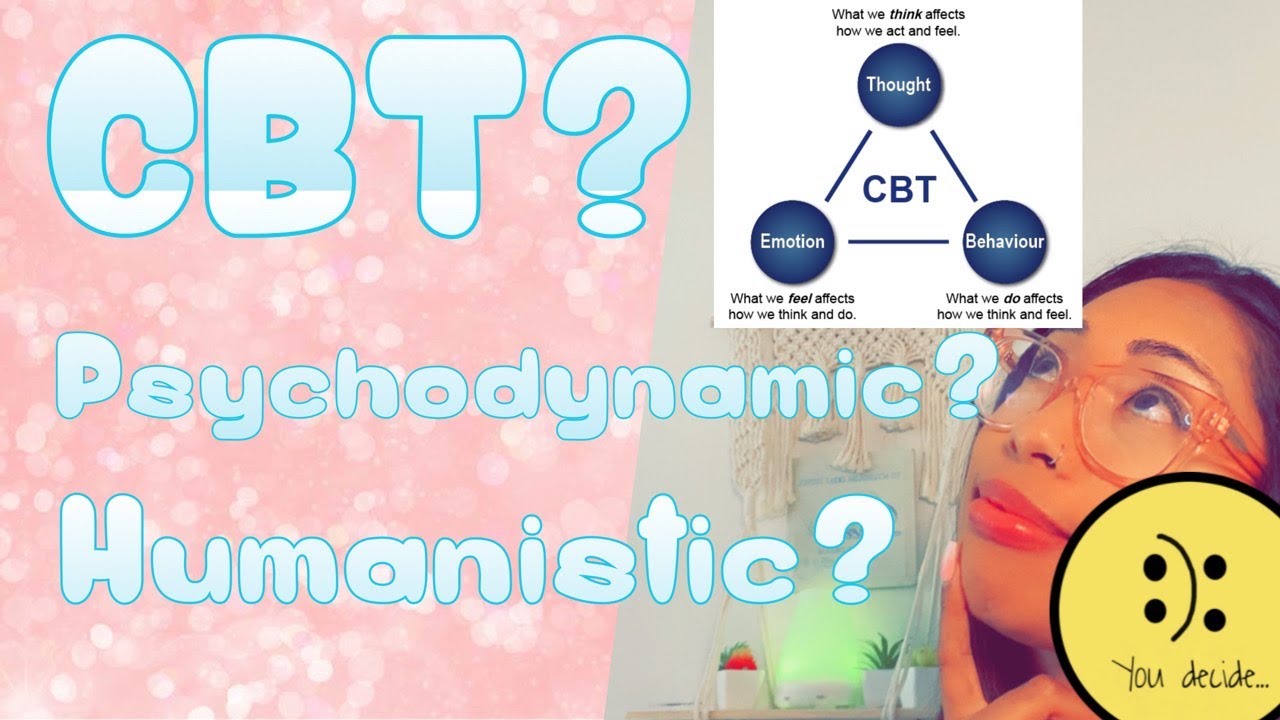
Added:Familiarity with major traditional psychotherapy modalities, including Cognitive Behavioral Therapy (CBT), Psychodynamic therapy, and Humanistic/Client-Centered therapy.
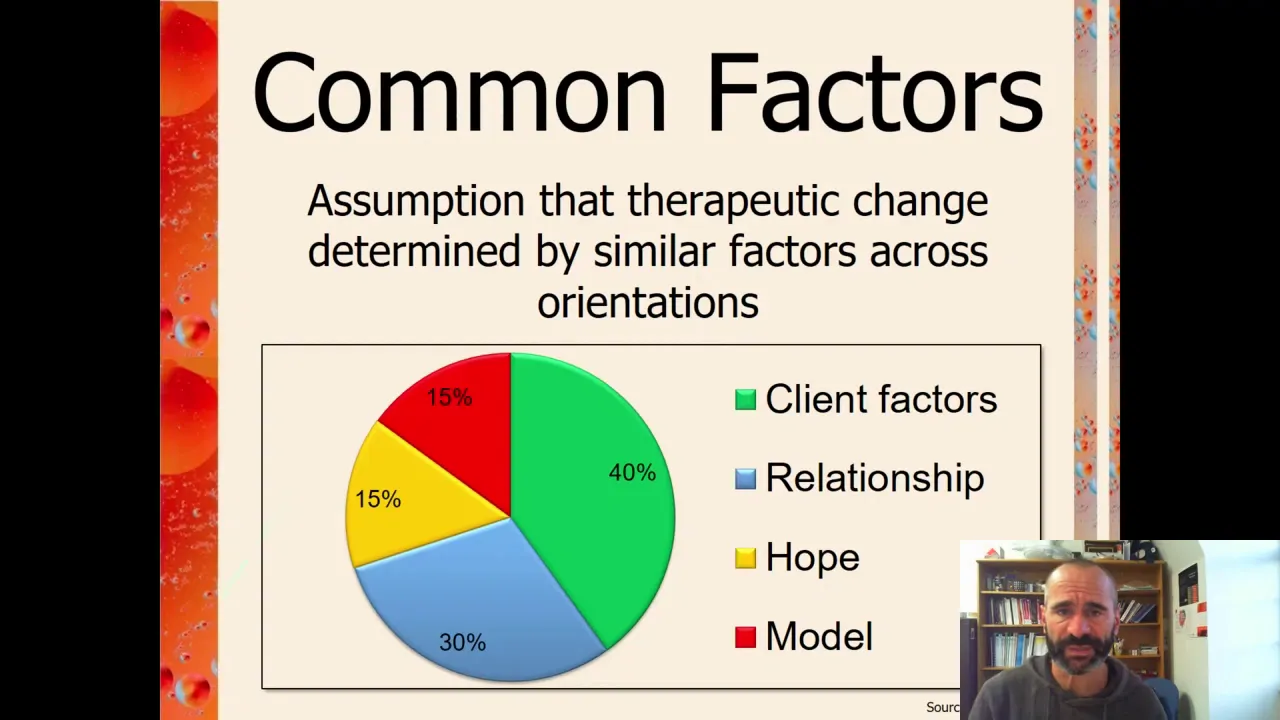
Understanding the concept of 'Common Factors' in psychotherapy, particularly the pivotal role of the therapeutic alliance in driving clinical outcomes.
Basic knowledge of clinical research methodology, including the difference between treatment efficacy (randomized controlled trials) and real-world effectiveness.
An introductory understanding of the history of the 'Dodo Bird Verdict' debate—the claim that all established psychotherapies produce equivalent outcomes.
Exploring the four primary theoretical pathways to psychotherapy integration: technical eclecticism, common factors, theoretical integration, and assimilative integration.
Studying client transdiagnostic markers used for clinical tailoring, such as resistance level, coping style, attachment style, and stage of change (Transtheoretical Model).
Reviewing the APA Division 29 task force research on evidence-based psychotherapy relationships and client responsiveness.
Developing advanced skills in multi-theoretical case conceptualization and designing individualized, integrated treatment plans for complex clinical presentations.
16.2K views164likes33:57Original Release: 2016-04-14
with me is John Norcross. Uh he's author and editor of more than 400 articles and I don't know maybe 20 more books and he is one of the most influential psychotherapists alive. He w he was a decisive figure in the creation of the integrative movement in psychotherapy and has served as president of the society for exploration of psychotherapy integration, the division of psychotherapy of the American psychological association and many more.
more. I could go on and on but uh his research is focused among other things on the importance of the therapeutic relationship and the impact of responsiveness meaning the importance of adapting therapy to the particular client. So thanks so much for having us John.
My pleasure Alexander.
So getting started uh usually we would ask more in this talks about your personal history but you have written a wonderful article exploring your personal development I think it's called personal integration and so maybe I would start off just asking you when you were starting even so you had your mentor uh James Pashaska and you had this opportunity to from the start think very trans theoretically and in a way integratively Do you remember at that time even so if there was a particular book or author that had a big impact on you when you were starting out? You bet. Um well Jim Braska was certainly my graduate mentor but even going back to my undergraduate days I was blessed to have the late Dr. Arnold Lazarus as a mentor. He of multimodal fame one of the early fathers of technical eclecticism. And at the same time I was um uh taking my doctorate with the Jim Pachoska in Rhode Island there were all kinds of other influential books. Uh one was Marvin Goldfried's seinal article in the American psychologist on principles or processes of change. Larry Butler was writing about matching therapy to the entire person not just disorders.
uh Jerry Frank uh had a very influential book called persuasion of healing which was uh one of the great patriarchs of the common factors approach. So I was um quite honored to be in the right place just as psychotherapy integration was beginning to blossom in the United States. Mhm. So you you were able to cut up between this equic side of Arnold Lazarus and uh you picked up on the common factors and so I I would think it's fair and then the theoretical integration of Goldfried and Petrosa.
Yeah. The strategy level that Goldfrey talks about. Yeah. Maybe uh would it be fair to say that you were never actually particular associated with one school of therapy? Is that correct?
Um yes I think that's probably correct.
Most people would say from the get- go I was quite integrative. Mhm. Uh I'm curious to know because at this time we're talking about and even when we get into the early '9s is when we start getting more meta analysis. Although it had come from before but that uh thing we call the dodo bird verict. The idea that everyone wins, the efficacy of the different models were basically the same is a very popular idea that I think catapulted uh the necessity for integration and eclecticism. Would you agree with that?
I would. It was one of many um influences coming out that if most psychotherapies work quite similarly for most disorders then it is the common factors that are probably powerful and it's probably other things rather than matching just to the disorder. Mhm. So picking up on that I wanted to ask you about the dodo bird verdict in 2016. So my question is uh you know since this is one of the great conclusion of psychotherapy research in the last decades in a way. So uh how true do you think this conclusion is today and do you feel there are any exceptions to this verdict?
Well it's it's true in one sense and absolutely false in another. It is true that most psychotherapies produce quite similar outcomes in terms of the major disorders but you have to specify Alexander in terms of the major disorders because that's not to say as many people are that everything works equally well for all people. The dodo bird verdict very specifically says the major tested forms of therapy for particular disorders. And even within that general strong conclusion, there are exceptions.
For example, severe anxiety disorders, we know exposure therapies work better.
Now, there's lots of exposure therapies, prolonged exposure, EMDR, cognitive processing, but some form of exposure seems to work better. Mhm. And in having conjooint sessions seems to work better for many couple or partner disorders and family disorders.
But yes, in general for most disorders, most therapies work about the same. But we ought to a few caveats about that.
These are therapies that have been tested. Mhm. So Alexander's therapy created last night in Lisbon after a nice night out doesn't count in that. These are therapies that have been rigorously evaluated for most disorders. They work the same. Mhm. Now that's absolutely false if you start talking about individual patients instead of disorders. Okay. We know from now years of metaanalyses that certain therapies work better for particular patient characteristics, not disorders.
So whether you're talking about the stages of change, reactance level, culture, preferences, we know some therapies work better for individual patient dimensions which we call transdiagnostic across diagnosis. Mhm.
Would you uh think that in the future then our focus would be on this patient characteristics and even the therapist characteristics and matching these?
Absolutely. And that's certainly where we spent our time uh looking at this responsiveness, this transdiagnostic match. They are way more powerful and efficacious than looking at specific treatment methods for particular mental disorders. So let's talk about the efficacious side because you've written in the past that the ultimate objective of in the integration movement is not simply to mix various therapies. Uh the ultimate objective would be to enhance the efficacy and efficiency of psychotherapy. Well, what are your views and cautions about the ways we can evaluate this efficiency? For instance, uh routine outcome measuring or feedback systems which has been talked about in the last decade a lot. Uh using the OQ45 or the core OM. Do you think it's enough using this to know if we're going if we're doing good therapy by using uh not enough. Mhm. But they're certainly very helpful. There's at least a dozen published feedback or monitoring systems with good evidence and that research evidence and meta analyses show they help a little bit with regard to patients who are doing well and they are essential to those people who are not doing well in psychotherapy. The most powerful effects of these feedback systems are to identify patients who are failing or ready to prematurely terminate and they are very helpful in that regard. But that's not to say that's sufficient. Um you know we need to do more than simply measure symptoms over time. That's important. We encourage everyone to do it. But we ought to be again looking at the entire person. Are they satisfied with therapy?
How's the therapy relationship? Are we meeting their particular goals? Not necessarily a global depression score.
So helpful, important, but I don't think I've ever met anyone who believes scores on the Beck Depression Inventory equate to good therapy. Yeah.
And uh you're talking now also, of course, of the client's preferences. And I know you've been working with Mick Cooper on this and a scale to measure the client's uh preferences. Could you talk a little bit about that? Sure. You know, this comes out of two meta analyses showing that psychotherapy can be demonstrabably improved by at least beginning with clients preferences. Now, every time I state that, someone challenges me and says, "Well, just because that's what they want doesn't mean it's good for them." And I say, of course, there always are clinical, legal, ethical caveats. But if we showed more respect for beginning where the patient wants, then we know we improve therapy and we also decrease dropouts by a third. That's a huge effect.
So Mick Cooper, Josh Joshua Swift, and others of us have been looking for a brief measure of client preferences.
Mhm. Not not a half an hour thing, but just could we find something to give patients that would take five minutes and capture the important dimensions.
There was nothing like uh that out there. So Mick Cooper was looking, I was looking uh in vain. Mhm. So Mick had some experience in this and we said, well, let's just combine our resources and we came up with this 18 item four scale takes four minutes to give. You score it right there and that begins the basis of a rapid discussion about what the client preferences are. And are you thinking of doing more research based on that work? Well, we are. We just published the instrument called the Cooper Norcross Inventory of Preferences, the CNIP. It's uh available free uh on each of our websites. Um as I said, it rapidly, reliably assesses preferences. And now we're starting to compare that uh on outcome studies and to other instruments that are much longer. Um in fact, Mick and I are just writing up an interesting follow-up on that that shows glaring disparities between what most clients want and what most therapists want.
So we may be guilty of the error of narcissis assuming that what our preferences are automatically translate into our patients and they don't overlap too well. There is a marked disconnect between what most clients and what most clinicians prefer and we may be just projecting that onto clients. Yeah, there's some research by people like Michael Lambert also about the self assessment bias and how we think that we are a better therapist than we are or we think we know better than our clients.
That's right. Neither uh Mike Lambert nor I have ever found a therapist who believes he or she is below average which is kind of interesting which is impossible. Exactly. It doesn't add up in statistics. Yeah. Well, you know, and some other research by people like Bruce Wample and Scott Miller, they suggest that the years of experience and use of supervision do not directly correlate with outcomes. So, I'd like to ask you also about this because if this is true and the measures are valid, then this would imply that professionals have been spending hundreds of dollars or whatever with no improvement of their outcomes.
What are your thoughts on this?
No, no, and no, Alexander, not even close. So, let's let's take each of these statements. It is true that traditional supervision does not show lots of improvement.
Uh but Larry Butler has just completed a study showing if you use integrative supervision in which you train therapists to match their therapy to the entire patient reactants culture stages then you get almost twice the effect size for patients. But traditional just talking saying you're doing a good job maybe try this maybe try that without any rhyme or reason. I'm not at all surprised that shows no difference.
Yeah. Most of the supervision I received that wasn't about customizing to the patient, I didn't think it was of any use when I went through it. But let's not let's not say all supervision is like that. If you don't have a systematic way of saying here's how patients will do better and communicating that in supervision, then it won't have any difference. Here's the other big no. The patient accounts for most of the outcome variance. Think about that for a moment. The single best predictor of who gets well and who doesn't is the patient. So a lot of these studies don't appreciate how therapist centric we are.
We we ask questions like well will us going to personal therapy make a big difference? The big difference is the patient. It's not us.
So unless you're doing therapy and doing supervision of that therapy that specifically tailors it to the patient, we're only going to make small little differences, which is indeed exactly what we find in the dodo bird. Right?
This particular treatment method for that particular mental disorder does not show a big difference. The moment you begin transforming therapy and supervision to what this particular patient needs, then you find big differences. Mhm. And my final no is about whether education can be just thrown out. Of course not. You know, you have to remember these studies show professional therapists versus paraprofessionals, not someone just taken off the street.
So, it's very educated versus a little less educated.
I'm not surprised that doesn't show a big difference because it's the patient.
The patient that makes the big difference. Mhm. Yeah, I can totally understand that. Well, based on all that you're saying, I have a little challenge for you if you could take just a little time on this, which is you're talking Bring it on. So you're talking about the work you did with the where or the work he did about matching supervision, integrative supervision as you called it. Well, imagine if you are running a three-year course in integrative psychotherapy or integration psychotherapy. So you're asked to create a program that would educate from the very first year your students on how to practice integratively. Maybe you probably also already do something like this anyway. So run us through what you think that program would look like.
Well, that's not not too difficult of a challenge for me since Rich Halgen and I have been proposing an ideal training sequence just like this. Okay. So first of all it begins with the recruitment of students. Most people just jump to training courses. We have to recruit interpersonally skilled, committed, curious, open-minded, researchincclined students. At least, not that they're going to be researchers, but at least they're open to what the research says.
Mhm.
So, you know, far too often there are academics who are willing to accept just about anyone's tuition and they don't take seriously the recruitment of of the people who are are going to be therapists. Mhm. After that then you do begin with the introductory course on systems of psychotherapy or theories of counseling that you you you um investigate most of the major models we have but is done so within a comparative frame like what what's unique and what is common among them. uh which sorts of patients are most likely to respond to psychonamic versus say uh a more behavioral viewpoint and there's lots of research on that. In the stages of change, the people in contemplation are likely to do best with an insight oriented. The people in action a little more in the cognitive behavioral tradition. Those seeking as a matter of preference for more insight were those for more immediate behavior change. So you can immediately see in the intro course each psychotherapy has value but it's a rather differential value depending upon the patient. From there you put uh our students into various therapies where they learn to competence how to behave. So the first course uh would naturally be in interpersonal skills and they don't graduate because the semester ends. They graduate and they finish when they're sufficiently capable of having a good solid relationship, how to repair ruptures, how to manage your counter transference, at least a modicum of empathy, support and the like. How do you think this could be measured?
Well, there are lots of uh rating measures for competence. You can go back and use some of the original Rogers.
Clara Hill has uh measures. Dialectical behavior therapy has therapist competence levels. So, you their practice within the class, then you videotape with simulated um clients.
Mhm. And you make sure everyone at least gets up to a competence level. What what I enjoy about what you're saying is that it doesn't stay with a very theoretical just book based knowledge. It does seem to have a very experiential side to it also.
Yes. And at the same time, I would have students undergoing personal development exercises. Um, as you probably know, I've done a fair amount of research on the personal therapy of the therapist.
um that's a little more restricted but certainly they ought to be going through some learning groups and taking absorbing the position of the patient rather than just the therapist. From there everybody has a series of clinical courses to where they reach competence in some of the major systems of psychotherapy. Probably not all of them in a three-year program, but at least two or three of them. again to competence because you can't integrate what you don't know. So you have to have some competence in the major systems of psychotherapy.
Then you get lots of experience with diverse patients. Experience of course is the great teacher. And it's only after people are in practice for a few years that they begin to determine that onesizefits-all therapy does not fit lots of patients. Mhm. and they come running and saying help me expand to a more integrative way of thinking and behaving.
And finally, the capstone would be an integrative conceptualization and treatment selection seminar where all new patients and patients brought in, we would just be thinking about how can you tell according to the best of research what is the treatment method and the therapeutic relationship of choice for this person. So when they're launched out into the big wide world, uh they have a way of systematically harvesting the research and tailoring therapy to the individual client. Mhm. And picking up on that, what do you think are the most interesting innovations in terms of research? The things that most enthusiast me right now?
Well, h I tend to be enthusiastic about lots of things. So, let me try to narrow it down to one or two. I think preferences Mhm.
within the the general idea of responsiveness to the transdiagnostic preferences have captured my interest.
Reactants has for years. You know, for 30 years I've been doing stages of change. So, still enthusiastic about that. I I like to to start doing research on other things and and for 40 years you've been talking about integration or at least this kind of talk we're we're having now. What do you still think are I can imagine that there's been some change over the years about the reaction that people have to this kind of talk. What do you think are still the main barriers to well basically people thinking in a more integrative sense?
Well, in the United States, it's been a fascinating journey because when I began in the late 70s and 80s, people were still trying to convince me these these integrations were theoretically or pragmatically impossible. Mhm. Turns out not to be the case. Uh the therapies are complimentary, not contradictory when you start thinking about individual patients.
And with the exception of some of the um mental health professionals I've treated, no one's ever said to me, "John, these things don't seem to mel together." No one has ever said that.
Mhm. It's like if you went to your physician and you said, "Well, here here's here's vitamins for this problem and here's a sav for that and you know, sooner or later I think you're going to have to have a little surgery to have something removed." Mhm. No patient is going to scream, "They're not the same model. It's pragmatic. It works. It's addressing what the client needs." Yeah.
So, in the United States, it's gone from skepticism to acceptance to virtually everyone understands mature sciences and professions all get to integration. Mhm.
But in other countries, it's still somewhat novel. And the um obstacle here is primarily that people are trained and socialized in a single method, single school bordering on the kind of commitment you see among religious zealots. Mhm. So in many countries in Europe as you well know the lensure and training is within a single school. Mhm.
So if you're certified as a cognitive behavioral therapist, well that per force is requiring people to commit to a single theoretical orientation.
So we need structural changes and with experience most people come to integration quite naturally if they can get past their socializing and institutional constraints. Yeah, my own experience from seeing the Europe scene, it seems that even though it's still divided in models for sure, like ecology is most associated with one particular model.
It's like uh they let each other live in the sense that as long as you don't mess with my model, we do the psychoanalysis, you do the cognitive, let's not get in each other's way. So, we're halfway there in a sense. Well, that's reproachment, right? Yeah. So the the first step is agreeing to disagree and there can be lots of schools in religion. So that's sort of a a a a tentative step to peace and harmony.
Yeah. But that's not integration. And the research says if you're treating the same patient the same way, you're mistreating a fair proportion of those patients. Yeah. There is and in no other profession would we allow this to occur.
Yeah. Yeah. There's something connected to this that I've seen maybe in England it happened in other countries in Europe at least. That's major impulse in terms of uh government influence to uh influence the way which type of therapy you should use especially in mental health institutions and of course cognitive behavioral therapies have been in the forefront of that. How do you see there being how do you understand this phenomenon f first and secondly how do you see this as a demonstration of trying to be scientific but really being maybe a little pseudocientific?
Well Alexander you you've you've wandered into complex turbulent waters here which I get quite passionate about.
On the one hand, the the stated goal of using the best of science to help the most of people should be close to every professional's heart. Um so it's a bit like prizing um motherhood and apple pie as we say over here.
Um the the the devil though is always in the details how you go about defining those and whoever controls the decisions and the rules can can pretty much control the answers.
Mhm. So for instance, we know at least in the English language 70 to 75% of randomized clinical trials for particular disorders have been conducted on cognitive behavioral treatments.
If you then say the only type of evidence we accept and value is randomized clinical trials, then we already know the answer. Yeah.
If however we start with different decision rules then integration wins easily and convincingly. If we were to say well let's talk about the therapy relationship. What works the most in a therapy relationship? It is therapist characteristics and these common relational factors of empathy, support, um the alliance But they don't ask that question. They ask the question what randomized clinical trial shows for particular disorders. It's a very model oriented in a way. Well, it's model oriented, but they've already defined what is the particular method. Yeah. And that's what many of us object to.
So sometimes as I give workshops I ask people to undertake a uh gdankan experiment a thought experiment like Einstein going out into the universe. If you were to gather up dispassionate scientists from around the world and ask them to review all psychotherapy research what would they conclude we should all be teaching and practicing?
I'm absolutely convinced they would say most therapies work the same, emphasize the therapeutic relationship and tailor treatment occasionally to the patient's diagnosis to be sure. Don't ignore it, but primarily to the entire person. Mhm. Of that. That's what the research tells us.
Sadly, that's not what a lot of the decision makers are looking at. They've gone to the antiquated largely discredited medical model where there must be a pill or a treatment method for a particular illness that does not fit well onto psychotherapy. Mhm. Yeah. So you can see you riled me up here.
Yeah. But it's a very interesting question and it it influences of course our future professions to all of us. So it's pretty important and it's interesting because you may be dealing with a phenomenon that we don't have at least in Portugal which is at least psychotherapy integration I think in America it's become quite popular like if you ask in surveys and you've done some of those that the great majority of the therapists identify themselves as integrative or at least eclectic therapists. Well, at least the modal uh probably not quite the majority these days, but it's the number one most frequent orientation of all mental health professionals, psychologist, psychiatrist, social workers, counselors in North America. Yeah. But again, this is something interesting because I would imagine in Portugal that would not be the case. Well, uh, how do you think would be the most, um, let's call it diplomatic way to start, uh, expanding, uh, the integrative movement in a way in other places where it still hasn't happened?
Well, the first answer I immediately think of is of course the research but well except we know most practitioners are not influenced much by research.
Exactly. So I think it begins with faculty and probably students. Mhm. Um, you know, when when historians look at the structure of scientific revolutions, they usually find that there's only a minority of people who are willing to do something different.
If you've been trained in psychoanalytic psychotherapy for 30 years and it's what you do, it's what you're comfortable with and I show you there's a better, more efficient way of treating say a third of your patients, maybe half of your patients, do you think they're going to be impressed with my research, Alexander? Most people won't care.
Exactly. But if we can get faculty and begin with students, that's where the difference will be. Yeah.
Um, as Thomas and other people, historians of science say, the truth is the two believers will have to retire and or die.
But with new students and opening up institutions to more secular, more integrative therapy, yeah, that's probably the place to begin. So that's our job basically as students. Yeah.
Yeah. And I'm holding you and a couple of my friends in Portugal responsible for that. Okay. We'll try our best.
Well, just closing off, I'd like to ask you uh what advice you'd wish you'd have gotten when you were starting out as a psychotherapist.
That's a fascinating question. Well, a couple spring to mind. One is patients return.
When you're in training, you may stay one place for one or two years, but that's pretty much it.
Once you're into practice, you find people coming back for 5 years later or maybe even 20 years later. Just last week, I saw someone that I saw 28 years ago. I went back and looked up the records. It's intermittent throughout the life cycle. But way too often as a student, I concluded I saw people for this discreet time and they were done.
So, I wish I had the advice or the experience of someone saying this is like the family physician model. I'm going to see people periodically as they need me throughout their life cycle.
That would that would certainly be one.
Um I I think probably a second one is the legal um aspects and pressures that are now confronting mental health professionals.
I understand it's a little more intense in the United States than other places, but I never actually realize I was legally practicing on the license of my supervisor. If things get bad and someone want to sue, and the United States is quite a litigation society, that they would have sued my supervisor.
Um, and now that I've been supervising, of course, I'm quite aware of his responsibilities. Yeah. And and finally, so much of what I was taught was bifurcated into either a treatment method or the therapy relationship. Um, when in fact they're virtually inseparable.
Um, you know, one thing, one way of thinking about treatment methods is they're they're a message, but it's but it's all through the relationship. But still most of our training you're you're trained here to do helping skills and trained here to do a particular method or technique. Yeah. Um I wish someone had said um these are complimentary.
They are necessarily intertwined and it's just not what you're doing, it's how you're doing it at the same time. That would have saved me lots of struggles. So maybe it'll save a few of you some struggles. So also try to think a little dialectically. Maybe it's what you're saying in a way. Exactly. So, yeah. Well, John, thank you so much.
It's been such a great pleasure to talk to you. Oh, it's been my pleasure. Thank you, Alexander.
Up Next

68:02
Psychotherapy for Adolescent Depression: What Works and Why
@associationforchildandadol1624
45.8K views•2025-10-29

68:32
Cognitive Skills for Differentiated Instruction | Teacher PD
@BrainWareLearning
631 views•2017-12-17

9:55
Thinking, Fast and Slow: Daniel Kahneman Animated Book Summary
@FightMediocrity
2.3M views•2015-06-05

6:40
The Nocebo Effect: How Beliefs Can Cause Real Harm
@CGPGrey
10.4M views•2013-12-23
Related Study Plans & Knowledge Roadmaps
Structured learning paths in Psychology
psychology
Neuroscience of Creativity: Networks & Training
01Foundations of Creative Cognition
02The Cognitive Neuroscience of Insight & Fixation
03The Triple Network Model of Creativity
+ 1 more learning modules
15h4 modules
Explore Roadmap
psychology
Imposter Syndrome: Etiology & CBT Framework
01Defining the Imposter Phenomenon
02Socio-Developmental Etiologies
03CBT Fundamentals & Thought Distortions
+ 2 more learning modules
15h5 modules
Explore Roadmap
psychology
Adult ADHD: Executive Dysfunction & Scaffolding
01Neurobiology of the ADHD Brain
02The Core Triad of Executive Deficits
03Executive Dysfunction and Emotional Regulation
+ 2 more learning modules
12h5 modules
Explore Roadmap
psychology
Loneliness: Evolution, Neurobiology & CBT
01Evolutionary Origins of Human Connection and Loneliness
02The Neurobiology and Physiology of Chronic Loneliness
03Maladaptive Social Cognition: The Psychological Loop
+ 2 more learning modules
12h5 modules
Explore Roadmap