


















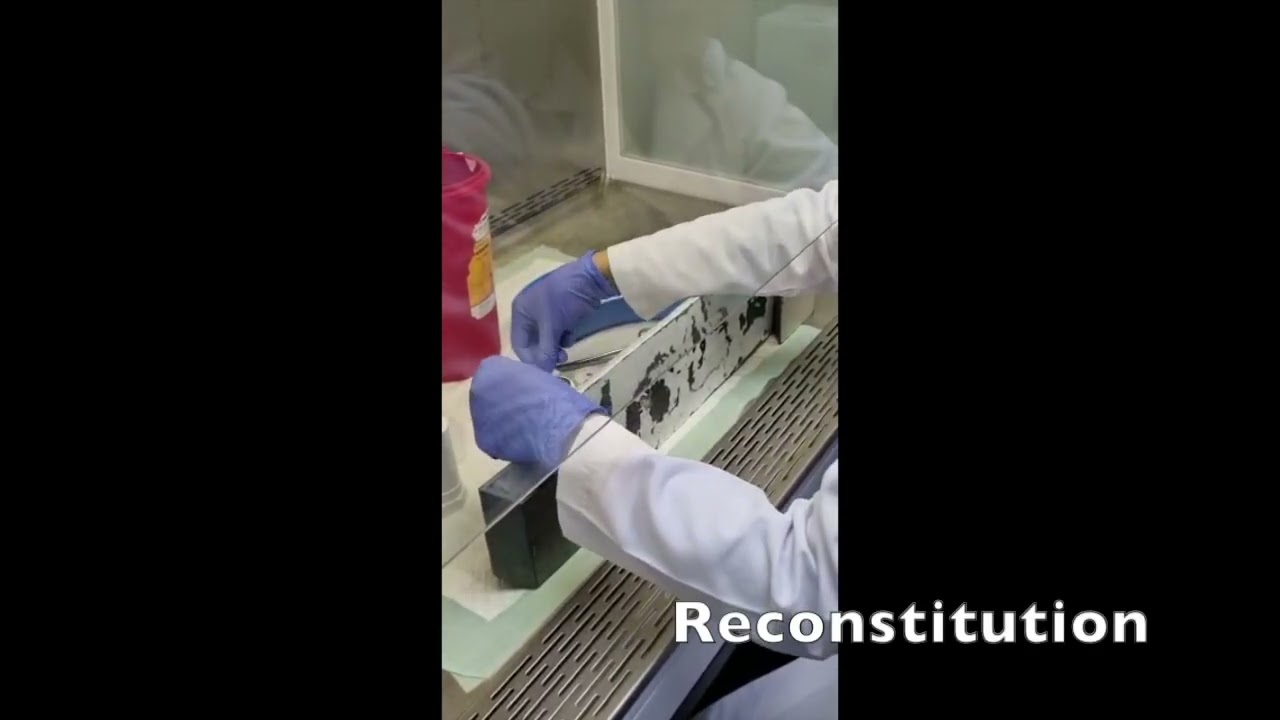
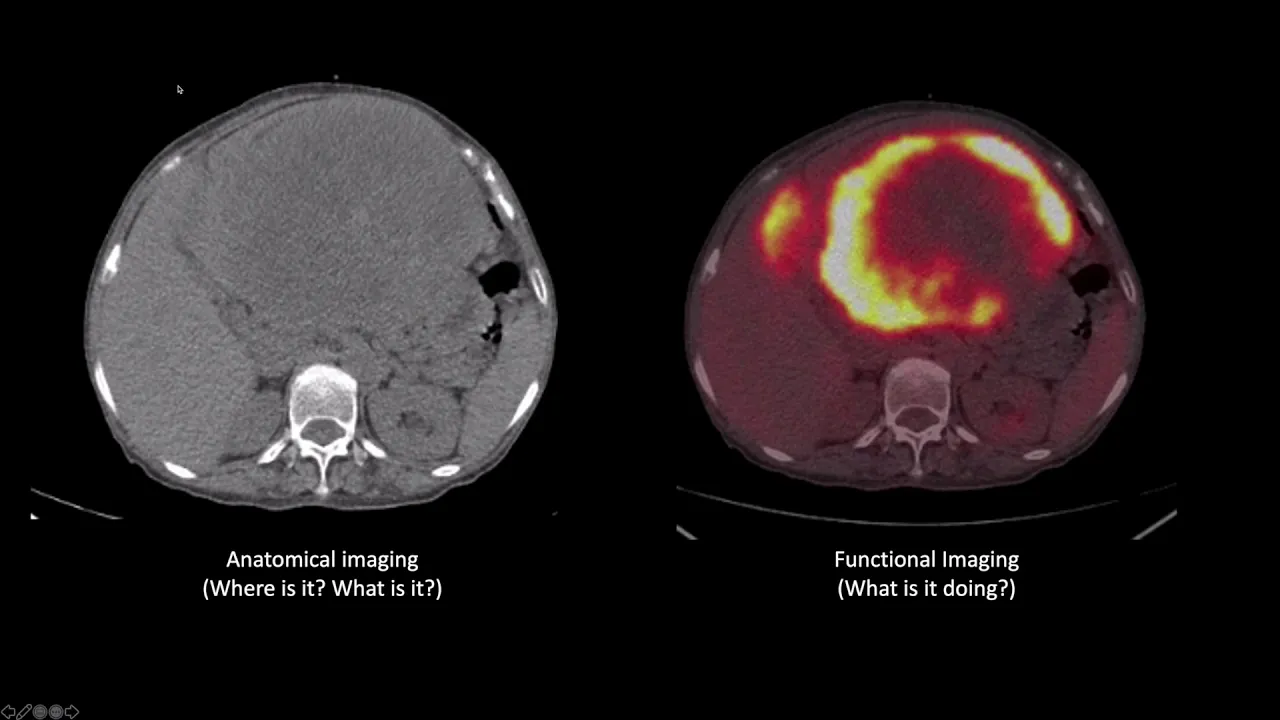


A wet 99mTc generator operates by continuously bathing the alumina column in saline, allowing technetium-99m to be eluted as the molybdenum-99 decays; the system uses a saline bag containing 250 mL, with the elution mechanism drawing 20 mL of saline across the column to collect the radiopharmaceutical in an evacuated vial, though this wet design can cause slight instability leading to increased molybdenum breakthrough compared to modern dry generators.
99mTc Wet Generator Operation | Nuclear Medicine Radiopharmacy
Added:Fundamental concepts of radioactive decay, isotopes, and the definition of half-life.
The principle of transient radioactive equilibrium between a parent radionuclide (Molybdenum-99) and its daughter (Technetium-99m).
Basic chemistry of ion-exchange chromatography, specifically how different chemical species bind to alumina columns.
Standard radiation safety and shielding principles, including the use of lead to attenuate gamma radiation.
Comparison between historical 'wet' generator designs and modern 'dry' Technetium-99m generators.
Quality control protocols for the eluate, including tests for radionuclide purity (Molybdenum breakthrough) and chemical purity (Alumina breakthrough).
The chemistry of reconstituting 'cold kits' with Sodium Pertechnetate (99mTcO4-) to form specific radiopharmaceuticals like 99mTc-MDP or 99mTc-Sestamibi.
Clinical applications of Technetium-99m in diagnostic nuclear medicine, specifically in SPECT imaging (Single-Photon Emission Computed Tomography).
17.7K views123likes7:58Original Release: 2015-03-05
okay we're going to talk about some generators now and forgive me I've only got one hand to operate the uh camera with the video record so itget a bit shaky at different times let me know uh what we're going to look at first is the general operation of a um a wet generator which is this uh Old Blue uh anstar generator that's been superseded uh by the Gtech uh generator which is um uh a dry generator and I'll explain the difference between the two of those as we go so these are Co generators there's no radioactivity in them um but we'll just talk about some of the the components so what I've done is I've actually popped the the top of these anyway so you can actually see that the generator has expired many years ago so if we uh if we remove the top of that what it exposes this aluminium Shield um that uh houses the the entire product this thing is uh about 22 kg so obviously despite the plastic on the outside is it has a bit of lead on the inside now normally you would actually have uh these uh screws or bolts that are popped in there um there's obviously four locations that actually hold that casing down so that casing is held in place and you can see again that that uh on the inside that there's a a duplicate version of the um the um identification criteria and expiry dates Etc that match the outside so if we lift that aluminum case off what it does is exposes the inside and you can actually see that we have this strong plastic casing um obviously they go through a number of drop tests and uh and inside it you have a large lead housing and you can see that off either side and normally you before you would do any of this you would have gloves on so um obviously it's being it's cold and and not a concern but on either side you actually have this uh Inlet outlet and we'll talk about what those mean in a second but nice thick lead um I'll just see if I can wedge that off with one hand no uh so what I'll do is uh I'll just I'll put you down for two seconds you can look at something else and uh and then what we've done is I've I've wedged that out and and so what you end up with is this uh lead cap and so this lead cap is obviously shaped to fit into these grooves to prevent any uh kind of uh leakage so it just slots into that uh that Groove um seals all the the uh potential leakage of of radiation in terms of not liquid leakage but obviously um Photon emissions uh and particulate emission obviously if there's anything particulate in there it would create brmr and radiation but that would be absorbed by the thickness of the lead so then what we have is that on this side the ins um uh uh in Flow side you have a saline bag this one contains 250 Ms and so it's going to flow in one side this lead housing and come out the other and in the middle of it we have the aluminum column okay so so this is the actual column it's got to be a silica and glass um uh filters and and wool filters as well as aluminium with the malum bound to it on the column so it's actually fairly small and the malum is contained in there so if we have saline washing in from the top uh down across the column uh washes across um the malum is more tightly bound to the aluminium than the technum so the um malum that's Decay to technum will get washed off and that will be technician 99 as well as technician 99m and progress down uh the line so down the line so that's all just uh conveniently tucked into there um you'll also see inside the housing these absorbent materials this will expand to a fairly good thickness of maybe an inch inch and a half um and so that little bit of absorbent material that's packed in around the housing uh is capable of absorbing um 250 Ms plus um now if the bag runs out this is one of the issues with the uh the wet system well it's not a big issue in clinical practice but if you alluded over 250 Ms then obviously you would have to break this thing open uh and and top it up so you could actually top it up through the port um but in most clinical environments 250 Ms is not going to be eluded in a week it might become an issue if you're uh using a generator over twoe periods so having double utions uh a new generator in week one combined with a new and an old one in week two um or more commonly in centralized pharmacies where some of these um products might be um uh cycled on two or three utions per day um to generate the maximum um uh efficiency in terms of output so the um the outside uh of this comes into this mechanism that I'm just about to pull out but before I pull it out it's obviously the housing where um we have our needle and we'll have an uion pot now I don't have an uion pot for this because it's such an old system these are been out of date for quite a few years but you would have a a lead pot with an evacuated vial that would sit in here uh and in essence um obviously you would remove the needle and I won't use a lead pot because um obviously uh you won't be able to see what's going on but there's a little tab here we lift this tab and as we lift the tab you can see that the needle drops down uh punches the in theory punches the um the uh um vial it's an evacuated vial of say 20 M and so it will draw 20 Ms of saline out of the bag across the aluminium column and into that um into that file so so that's the actual mechanism um and it's actually pretty simple but what it does and this is why it's defined as a a dry a wet generator what it actually does is it actually leaves the um column soaking in Saline so saline is drawn 20 M of Salin drawn from the bag down the line across the column and out into the vial on the other side but in doing that is that the entire system is bathed in Saline it's just full of saline and so this column here is soaking in Saline and while generally they're pretty stable is that what it can actually do is um create some degree of um instability so you might get a little bit more malum breakthrough or aluminium breakthrough so the mechanism itself it just lifts out so it's nice little uh slot there it's very modular lifts out so on the back you can actually see that you've got a spring loaded mechanism that as uh that lift lever is lifted it actually releases the spring and allows the flow of sailing through um the uh the network um when it's down then obviously a blocks that off clamps it off and you don't get that flow so that's the uh the wet generator um that we use uh we used to use a few years ago the principle is very similar and uh and essentially um uh it's fairly simple system when these are are loaded obviously You' want to load those as quickly as possible to reduce staff radiation and so from from time to time we used to find that there' be a kink in the in the system either as it gets poked in or as the lead cap gets put on um that uh you can end up with a kink in the line um that stops IT from being eluted but generally they're tested a few times before they come out to uh to the department and um and so generally don't have too many problems with that so that is the wet generator that has been superseded uh by our friend over here the dry generator
Up Next
5:24
Particle Accelerators in Hospitals: PET Scans Explained
@SciShow
119.3K views•2021-07-02

48:47
Graphic Medicine: Comics for Collaborative Healthcare Communication
@nationalpatientadvocate
189 views•2023-12-04

10:28
Neuroanatomy: Central and Peripheral Nervous System Divisions Explained
@AKLECTURES
136.2K views•2014-09-20
3:05
Stages of Labor and Vaginal Birth | Childbirth Animation
@nucleusmedicalmedia
52.1M views•2017-08-18
Related Study Plans & Knowledge Roadmaps
Structured learning paths in Medicine
medicine
Abnormal LFTs: Diagnostic Workup & Pathology
01Liver Anatomy and Basic Physiology
02Introduction to Liver Function Tests (LFTs)
03Hepatocellular vs. Cholestatic Patterns
+ 3 more learning modules
12h6 modules
Explore Roadmap
medicine
Analyzing Blood Smears: RBC, WBC & Platelets
01Introduction to Blood Components & Smear Preparation
02Normal Morphology of Blood Cells
03Erythrocyte Pathologies & Morphological Variants
+ 2 more learning modules
12h5 modules
Explore Roadmap
medicine
Mechanical Ventilation: Waveforms & Alarms
01Anatomy and Physiology of Breathing
02Introduction to Mechanical Ventilation & Core Modes
03Ventilator Settings and Waveform Interpretation
+ 2 more learning modules
12h5 modules
Explore Roadmap
medicine
Neuro Exam: Localization & Stroke Syndromes
01Foundations of Neuroanatomy and Vascular Supply
02The Neurological Examination: Step-by-Step
03Principles of Neurological Localization
+ 3 more learning modules
18h6 modules
Explore Roadmap