J.S. Bach's 'Kunst der Fuge' (The Art of Fugue), BWV 1080, is a monumental work demonstrating the pinnacle of Baroque counterpoint, where multiple independent melodic lines interweave through systematic imitation, inversion, and variation of a single subject, showcasing Bach's genius in creating complex yet coherent musical architecture.
Bach: The Art of Fugue, BWV 1080 — Marta Czech Performance
Added:Deep Dive
Understanding of Baroque Counterpoint: A foundational grasp of polyphony, where multiple independent melodic lines are combined harmoniously, as opposed to homophonic textures.
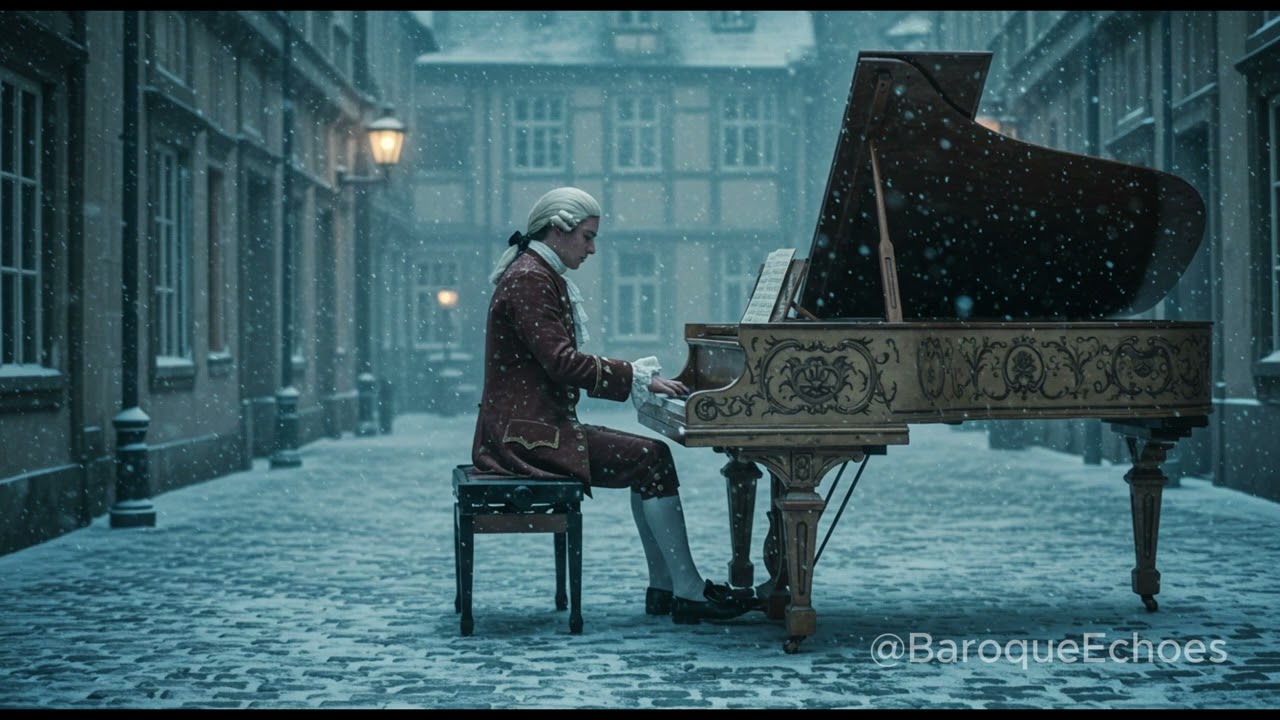
Contrapuntal Dreams | A Journey Through Solo Piano Melodies | Original
421
Baroque counterpoint is a musical technique where two or more independent melodic lines are woven together to create a harmonious whole, where each voice maintains its own distinct character while contributing to the overall musical structure. This composition demonstrates how independent melodies can converse, complement, and challenge each other to create intricate musical textures that reflect the elegance and complexity of the Baroque era.
Click to watch →
LIVE: Jazz Chord Masterclass and Announcing Tim’s New Book Melodic Jazz Guitar Chord Phrases
20.6K
Baroque counterpoint education focuses on rules for creating second melodies from a basic melody (terr firma), with harmony not being discussed much. The approach combines harmony knowledge with contrapuntal thinking by using harmonic understanding to inform melodic choices. This includes playing lines underneath or against a melody, breaking up harmonic pictures to sustain some notes while moving others, all while staying within the rubric of the song's changes.
Click to watch →
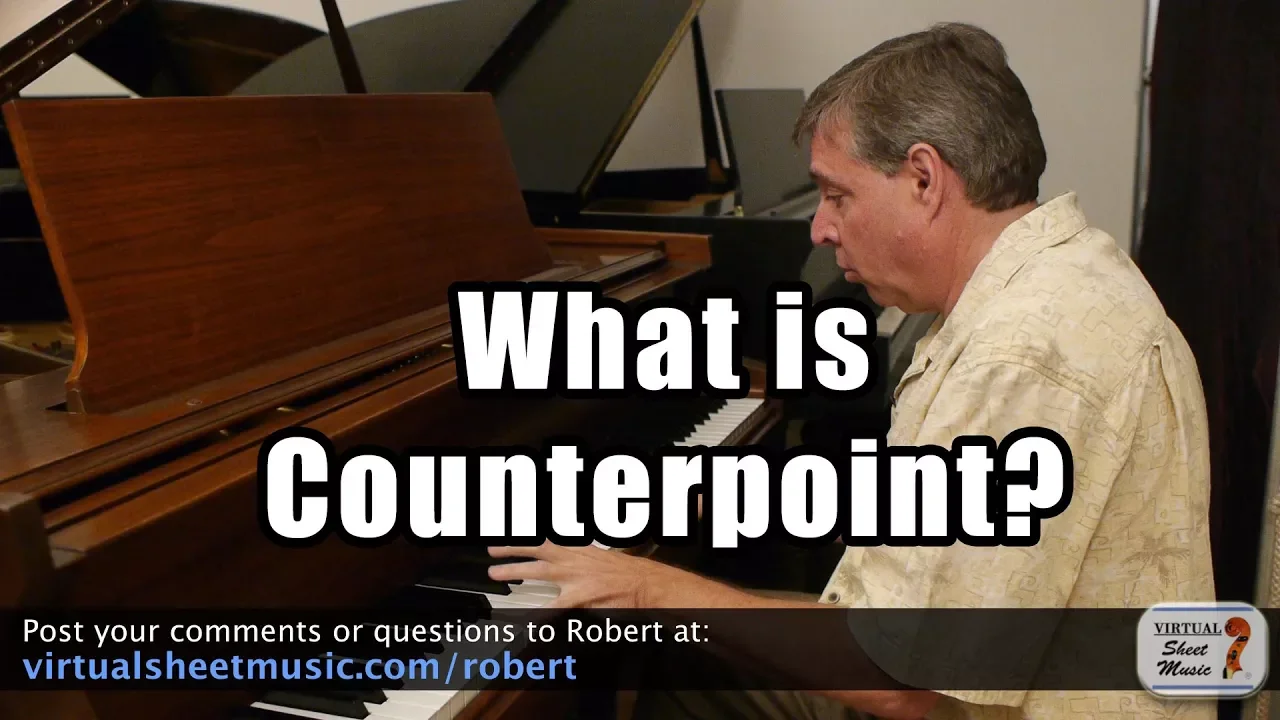
What Is Counterpoint in Music? Free Lessons
335.4K
Counterpoint is a musical composition technique from the Baroque era where multiple independent melodic lines interweave equally, as opposed to music with a clear melody and accompaniment; it involves forms like two-part inventions, three-part symphonias, and fugues with three to five voices, where no single line dominates but all parts contribute equally to the musical texture.
Click to watch →
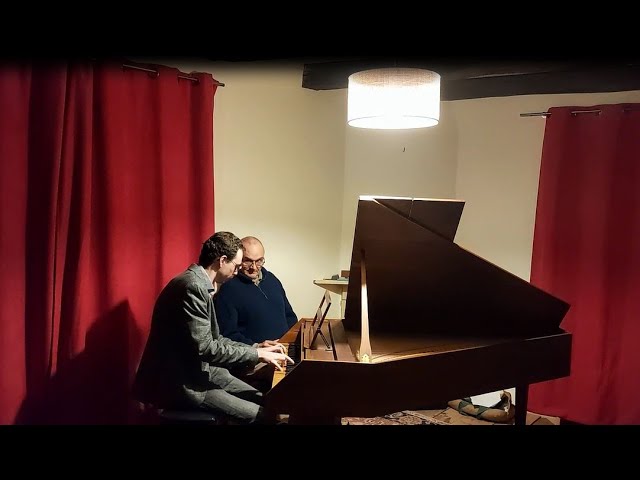
« SOUPE BAROQUE » (4) | CONCERT CONFÉRENCE | CONTREPOINT | J.-S. BACH | TREBOULS
101
Counterpoint in Baroque music involves the interweaving of multiple independent melodic lines, where a melody is accompanied by supporting voices and a bass line, creating a complex harmonic texture that is characteristic of composers like J.S. Bach.
Click to watch →
Pavaniglia con parti variate by Foscarini and Lesson for Classical Guitar
3.5K
Baroque counterpoint is characterized by recurring motifs that are passed between different voices throughout a piece. These motifs often appear in various forms—sometimes in the upper voice, sometimes in the lower voice, and occasionally overlapping in stretto (where voices enter in succession at the same pitch level). The satisfaction of studying baroque counterpoint comes from constantly exploring these motifs as they appear throughout the piece. By actively searching for these shared musical ideas, performers uncover hidden connections and develop deeper understanding of the composer's craft. This exploration reveals the intricate web of relationships that make baroque counterpoint so intellectually rewarding.
Click to watch →
Deep Dive
The Structural Anatomy of a Fugue: Familiarity with core fugal components, including the subject, answer, countersubject, exposition, episode, and stretto.
¿Qué es una Fuga? Analisis de la Fuga no. 2 J. S. Bach en Do menor BWV 847
24.4K
A fugue is a contrapuntal compositional technique for two or more voices built upon a musical theme, representing the highest point of contrapuntal development in tonal music. The Baroque period represents the golden age of fugue composition, with Bach's works in 'The Well-Tempered Clavier' and 'The Art of Fugue' serving as exemplary models. A fugue typically consists of three main sections: the exposition, development, and stretto. In the exposition, the subject is first presented in the tonic key, followed by a response in a different tonality (typically dominant or subdominant). Episodes serve as transitional passages exploring different tonalities, based on elements from the exposition. The stretto features overlapping voices where imitation begins before the theme finishes. The coda concludes the piece, often ending with a Picardy third for harmonic surprise.
Click to watch →

Aprende a componer una Fuga. Exposición.
6K
A fugue is a polyphonic musical work where themes are conducted through imitative counterpoint. Monotematic fugues contain two themes repeated across all voices, with no voice serving as a protagonist—all voices have equal status. Fugues can have 3-6 voices. The structure consists of Exposition (theme introduction), Development (theme exploration), and Repetition (theme return). The exposition presents themes with entries equal to voice count, typically alternating between tonic and dominant tonalities. Entries in the dominant are called 'responses.' Countertemes are secondary themes that accompany the main theme, providing melodic continuation. Bach's Fugue No. 21 demonstrates this: the first voice presents the theme in Bb major, the second in F major (response), the third in Bb major, followed by countertemes. A complementary entry may occur where the first voice returns to present the theme in the dominant. The exposition ends when all voices have presented their theme.
Click to watch →
Fugue analysis
127
A fugue is a polyphonic musical form built on the principle of imitation, where one voice introduces a monophonic theme that successively appears in all other voices. The term 'fugue' derives from 'fuger' meaning to flee, reflecting the chasing effect of voices. The strictest form of imitation is the canon, while the fugue is freer. Key terminology includes: 'ducks' (dux) for the first subject entry in the tonic, 'comes' for subsequent entries on the perfect fifth or fourth, and 'counterpoint' (punctus contraunctum) meaning 'note against note.' Counterpoint can be free (varying each entry) or obligato (repeating the same pattern). The exposition is the introduction section ending when the subject has moved through all voices, serving as the first development.
Click to watch →
Что такое фуга?
25.9K
In a fugue, one melody initially sounds alone, then additional voices join one by one. Each new voice enters sequentially, creating a layered effect where voices run after each other. This sequential entry is the fundamental structural characteristic of fugue music.
Click to watch →

The fugue explained by Bach
153.2K
The Fugue is one of the most complex musical structures ever invented, requiring mastery for conservatory degrees. Originating in the Early Middle Ages with polyphonic music, it evolved from the Canon (where voices sing identical melodies at different times) into a sophisticated form where voices present themes and counterpoints. The Fugue structure resembles an essay: it begins with an exposition where themes are presented across voices, followed by a development section with elaborations, counterpoints, and variations, culminating in a climax and resolution where the theme is reaffirmed. This creates a musical conversation where voices discuss, agree, and build upon each other's statements.
Click to watch →
Deep Dive
Historical Context of BWV 1080: Awareness of 'The Art of Fugue' as J.S. Bach's final, monumental exploration of monothematic contrapuntal possibilities, left unfinished at his death.

Rick Beato Is Actually Kinda Cool
33.2K
The Art of Fugue BWV 1080 was written in the last decade of Bach's life. It is a series of 14 fugues and four canons based on a single subject. This work represents the culmination of Bach's experimentation with monothematic counterpoint writing, demonstrating his mastery of developing musical ideas from a single theme.
Click to watch →

Bachs "Art of Fugue" - Bachs "Kunst der Fuge": Reasons for thinking about. The opening episode.
203
Walter Kolneder published an encyclopedic five-volume materials collection on BWV 1080 in 1977 (Heinrichshofen). This collection includes ideas from Ludwig Prautzsch, who taught at the Kirchenmusikschule Schlüchtern and served as church music director. Prautzsch was considered an authority on symbolism in Bach's work. His interpretations include the 901 notes plus one (due to Psalm 1) and the interpretation of firs and firs in the music.
Click to watch →
![Bach - The Art of Fugue, BWV 1080 [complete on Organ]](https://i.ytimg.com/vi/Lrb0dHKJBR4/hqdefault.jpg)
Bach - The Art of Fugue, BWV 1080 [complete on Organ]
2.3M
Johann Sebastian Bach’s The Art of Fugue, BWV 1080, is an incomplete masterpiece composed likely beginning in the early 1740s. The first known surviving manuscript, copied by Bach in 1745, contained 12 fugues and 2 canons, titled slightly differently by his son-in-law Johann Christoph Altnickol as Die Kunst der Fuga. A second version, published posthumously in 1751, expanded to 14 fugues and 4 canons. The work’s governing idea, as described by Bach specialist Christoph Wolff, is an in-depth exploration of contrapuntal possibilities derived from a single musical subject. The performance includes all movements in sequence: Contrapunctus I through XII (in both rectus and inversus forms), Contrapunctus XIII (rectus and inversus), Contrapunctus XI as a triple fugue, and Contrapunctus VII employing augmentation and diminution. Also included are four canons: Canone all’Ottava, Canone alla Duodecima in Contrapunto alla Quinta, Canone alla Decima in Contrapunto alla Terza, and Canone per Augmentationem in Contrario Motu. Contrapunctus VI is noted as being in Stylo Francese. The performance is rendered on organ by Herbert Tachezi. The work represents a systematic study of fugue and canon techniques, showcasing Bach’s mastery of counterpoint.
Click to watch →
Teil 1 Die Kunst der Fuge Vlog BWV 1080 von Johann Sebastian Bach KdF Bachvermittlung Shorts #vlog
501
Johann Sebastian Bach's Art of Fugue (BWV 1080) is a monumental late work consisting of 14 fugues and 4 virtuosos two-part canons, representing the longest and most complex fugues ever composed; the work concludes with the famous BACH quadruple fugue, which abruptly ends, generating centuries of speculation, mystery, and scholarly discussion about what happened at its conclusion.
Click to watch →

O que é BWV nas músicas de Bach?
458
BWV stands for 'Bach-Werke-Verzeichnis,' meaning 'Bach Works Catalog' in German. This catalog system was created to organize Bach's compositions. Bach's music was largely forgotten from his death until the mid-19th century, when Felix Mendelssohn revived it. Bach composed music for specific purposes like church services and court performances, not for posterity. Unlike later composers, Bach did not systematically date or catalog his works, leading to many lost manuscripts.
Click to watch →
Deep Dive
Baroque Keyboard Performance Practice: Knowledge of how Baroque articulation, ornamentation, and phrasing are translated to modern keyboard instruments.
Bach Complete Partitas BWV 825-830 | Yuan Sheng Piano Performance
2.6M
Baroque keyboard performance requires understanding historical performance practices including articulation, phrasing, and ornamentation. Performers must balance technical precision with expressive interpretation, using appropriate touch and dynamics that reflect the period's aesthetic. The harpsichord's unique timbre demands specific hand techniques and pedaling approaches distinct from modern piano playing.
Click to watch →

Bach - Piano Collection
771.7K
The video demonstrates authentic Baroque keyboard performance practices, including appropriate articulation, phrasing, and dynamic contrasts. Performers employ techniques such as terraced dynamics, clear voice separation, and precise rhythmic articulation characteristic of the Baroque period. The performances illustrate how modern pianists interpret historically informed playing styles while adapting to the piano's capabilities compared to the original harpsichord and clavichord instruments.
Click to watch →

English Baroque - Handel Edition
133.6K
Baroque opera distinguished between recitative (speech-like, text-driven passages) and aria (melodic, expressive set pieces). The video demonstrates both forms, showing how recitative advanced the narrative while arias provided opportunities for emotional display. Baroque keyboard instruments including harpsichord and clavichord required specific touch and articulation techniques. The video demonstrates keyboard performances showing characteristic articulation and dynamic contrasts possible on these instruments. Performers needed to master finger independence and precise touch to execute the rapid figurations typical of Baroque keyboard music. Baroque musicians used shorthand notation for ornaments including trills, mordents, and turns, which performers were expected to interpret according to established conventions. This system of abbreviated notation reflected the expectation that skilled musicians could realize written symbols into actual musical performance.
Click to watch →

Jacques-Martin Hotteterre: the LEGEND of the French Baroque
13.9K
Hotteterre systematically defines Baroque ornaments: tromblon (trill) agitates two notes (whole or semitone apart), beginning on the higher note; lower appoggiatura (notated as V) plays on upward-moving melodies; lower mordent (vertical line) appears on short notes with pivot notes; upper mordent (rising diagonal) borrows sound from within longer notes for expression; duplicata adds a turn to trills; kolle slurs notes together. Each ornament has specific notation and performance requirements. Hotteterre admits describing all situations is difficult but recommends practicing long notes for expression.
Click to watch →

Reiziger in Muziek: Gustav Leonhardt (1928 - 2012) Dutch
105.5K
Authentic Baroque performance requires period instruments and understanding of historical practices. The Wohltemperiertes Clavier provides complete technical foundation for harpsichord and piano. Professional musicians must study on period instruments because exterior changes distort interior meaning. Modern editions differ fundamentally from 100 years ago, which adapted to contemporary performance means. The harpsichord offers superior dynamic control through finger damping, allowing selective sustain per note or hand group. Bach's notation requires interpretation: four equal 16th notes should not sound literally. Key techniques include over-legato (sustaining previous notes), appropriate resolution dynamics (resolutions softer than dissonances), and creating tension through silence before resolution. Performers must avoid 'horror vacui'—the tendency to fill empty spaces with unnecessary motion. Baroque music demands rhythmic confidence and the ability to let go of rigid metrical precision to serve musical expression.
Click to watch →
Prerequisite Knowledge
- Concept 01Understanding of Baroque Counterpoint: A foundational grasp of polyphony, where multiple independent melodic lines are combined harmoniously, as opposed to homophonic textures.
- Concept 02The Structural Anatomy of a Fugue: Familiarity with core fugal components, including the subject, answer, countersubject, exposition, episode, and stretto.
- Concept 03Historical Context of BWV 1080: Awareness of 'The Art of Fugue' as J.S. Bach's final, monumental exploration of monothematic contrapuntal possibilities, left unfinished at his death.
- Concept 04Baroque Keyboard Performance Practice: Knowledge of how Baroque articulation, ornamentation, and phrasing are translated to modern keyboard instruments.
Subsequent Learning
- Step 01Advanced Contrapuntal Techniques: Detailed study of complex devices used in the work, such as inversion (al rovescio), augmentation, diminution, and mirror fugues.
- Step 02The Mystery of Contrapunctus XIV: Investigation of the unfinished final quadruple fugue, the introduction of the B-A-C-H motif, and the various historical completions attempted by musicologists.
- Step 03Comparative Performance Interpretation: Analyzing and comparing Marta Czech's modern piano interpretation with performances on historical instruments like the harpsichord or organ.
- Step 04The Legacy and Influence on Later Composers: Exploring how 'The Art of Fugue' influenced the late works of Beethoven (e.g., the Grosse Fuge), Mozart, and the development of 20th-century serialism.
Opening Sequence
Rhythmic Interlude
Applause Break
Solo Performance
Ensemble Build
Climactic Phase
Reflective Mood
Final Notes
Opening Sequence
0:23Playing Section
- 1
Initiates with musical performance and ambient sounds.
- 2
Sets the stage for the main content without spoken dialogue.
The 'Eye Music' Theory and the Historical Instrumentation Debate
While modern piano recitals of 'The Art of Fugue' present it as a cohesive concert masterpiece, a significant faction of musicologists and Historically Informed Performance (HIP) advocates challenge this approach. One prominent counterpoint argues that BWV 1080 was never intended for public performance, but was instead 'eye music' (Augenmusik)—an academic, pedagogical exercise meant for silent study or private keyboard practice. Furthermore, because Bach left the instrumentation unspecified, purists argue that the modern piano lacks the distinct timbral clarity required to delineate the complex, overlapping contrapuntal voices. They advocate instead for performances on historical instruments like the harpsichord or organ, or even a consort of viols, which can better separate the polyphonic lines. Finally, because Bach died before completing the final fugue, critics argue that performing it in concert forces an artificial resolution—either by abruptly stopping where Bach's manuscript ends or by playing speculative completions—disrupting the work's organic structural integrity.
Deep Dive
Advanced Contrapuntal Techniques: Detailed study of complex devices used in the work, such as inversion (al rovescio), augmentation, diminution, and mirror fugues.

TEORÍA DE LA MÚSICA 22: El Contrapunto
15.8K
The Fifth Species combines all previous species in a single counterpoint, allowing different voices to move at different speeds. Peaks should not coincide between voices to highlight each distinctly. Advanced techniques include canon (imitative counterpoint where voices imitate each other) and various transformations like inversion, rhythmic alteration, and starting on different pitch levels. The Baroque period developed these extensively. Counterpoint remains essential for understanding, directing, performing, and composing music across all periods.
Click to watch →

András Schiff / Piano Masterclass / Student - Yehuda Inbar / Jerusalem Music Centre
165.2K
This segment covers advanced contrapuntal techniques including counterpoint (interweaving independent melodic lines), imitation (repeating melodic phrases in different voices), and canon (imitation at fixed time intervals). The teacher emphasizes playing counterpoint more consciously and hearing imitation clearly. Fugue structure elements are explored including the seven-bar exposition (seven score) and the three imitations. The teacher emphasizes feeling the seven bars as a unit with the end being more important than the beginning. Starting from the upbeat creates anticipation. The distinction between horizontal and vertical texture is reinforced. The teacher references Bach's musical wisdom as a source of inspiration for performers.
Click to watch →

Cómo Componer un Canon (a la 8va)
8.2K
Third species counterpoint divides each pulse into four notes (semiquavers) to create active texture, compensating for interrupted pulses by prolonging note groups. Voice internal design involves identifying notes that work with both voices simultaneously; notes of passage (even if dissonant) are acceptable when taken and abandoned by stepwise motion. The 6-4 chord is acceptable when taken by contrary motion in the internal voice. Completing a canon requires recovering the initial register and maintaining contrapuntal independence. The final section should resolve to a cadence, typically the 6-8 progression, with the descending voice continuing to descend while the other ascends. Dissonant notes should be taken and abandoned by contrary motion for natural resolution.
Click to watch →

La vocalidad en la música de Luis de Narváez
3.8K
The sixth difference on 'O gloriosa domina' demonstrates proportional changes from binary duple to 'time imperfecto prolationer' (ternary subdivision of binary meter), creating a 3/4 feel from 2/4. Tonal response (respuesta tonal) involves the consequent voice responding using the plagal mode of the original (if cantus firmus is mi, response is mi-la, a fourth, not a fifth). This ensures modal coherence. False entries create anticipation before the full cantus firmus appears. The technique involves voices successively imitating each other at fourths and fifths, with the final entry being a false entry that restarts the cantus firmus.
Click to watch →
¿Rachmaninoff roba a Chopin? | Música Explicada
12.9K
This segment explores advanced contrapuntal techniques and the work's historical reception. Variation 12 is a fugue where voices imitate and respond, demonstrating sophisticated contrapuntal organization. Variation 14 presents four-voice choral texture with bass harmony, tenor melody, and outer voices containing borrowed accompaniment figures. The richness lies not in elements but in how material is organized. The work was initially poorly received, considered weak and irregular, with even Rachmaninov omitting variations during performances. This demonstrates how complex music can be initially misunderstood and how historical reception does not always reflect artistic merit.
Click to watch →
Deep Dive
The Mystery of Contrapunctus XIV: Investigation of the unfinished final quadruple fugue, the introduction of the B-A-C-H motif, and the various historical completions attempted by musicologists.
The Fugue That Stops Mid-Air | Bach – Art of Fugue XIV
142
Contrapunctus XIV, the final fugue of Bach's The Art of Fugue, survives only as an incomplete autograph manuscript that breaks off mid-bar after introducing three subjects, leaving its intended conclusion unknown; the principal theme of The Art of Fugue does not appear in the surviving portion, though it can be combined with the three subjects through slight rhythmic adjustment, and the fragment documents a stage in the composition process rather than a completed work.
Click to watch →

J. S. Bach - The Art of Fugue - Contrapunctus XIV (BWV 1080)
47.9K
J.S. Bach’s Contrapunctus XIV from The Art of Fugue (BWV 1080) ends abruptly at bar 239, leaving the work unfinished. A note in the autograph, written by Bach’s son Carl Philipp Emanuel Bach, states that the composer died while introducing the B-A-C-H motif (B♭-A-C-B♮) in the countersubject. However, modern scholarship challenges this account, noting that the musical notation is in Bach’s own hand and stylistically consistent with his work from 1748–1749, before his vision deteriorated. The piece was followed posthumously by Bach’s chorale prelude BWV 668, published in 1751 as an appendix to The Art of Fugue under the title “Wenn wir in höchsten Nöthen sein” (BWV 668a), though its original title was “Vor deinen Thron tret ich hiermit” (BWV 668). The video features a 1965 Decca recording conducted by Karl Münchinger with the Stuttgart Chamber Orchestra. Accompanying visuals include Hubble and Spitzer Space Telescope imagery: Crab Nebula, Homunculus Nebula, Sculptor Galaxy, Eagle Nebula, Carina Nebula, N49, Sombrero Galaxy, Whirlpool Galaxy, Bode’s Galaxy, NGC 6751, “Pillars of Creation,” V838 Monocerotis, M77, and an artist’s impression of the Cosmic Distance Ladder. The Hubble Space Telescope is also shown as viewed from the Space Shuttle Discovery.
Click to watch →

🎩 BACH TE RETA CON UN DETALLE HISTÓRICO.
¿Qué contrapunto de El Arte de la Fuga quedó inconcluso…
911
Contrapuntus 14 from Bach's The Art of Fugue (Der Kunst der Fuge) is the only contrapunt that remained unfinished, ending with the famous B-A-C-H motif (B, A, C, B-flat) that Bach used as his musical signature.
Click to watch →
Stefano Greco - Lecture on the Rhetorical Reading of Bach
1.3K
Contrapuntus 14 ends after presenting the B-A-C-H motif (representing the number 14) at bar 239. Bach's son wrote that 'after the theme B-A-C-H appeared in the counter-subject, the composer passed away.' Research shows the main theme doesn't appear until the very last note. Bach deliberately positioned his signature before this moment, following Kircher's instruction that music should stop as if death had come before the divine vision. This represents Bach's philosophical statement about the limits of human artistic expression before the infinite. The chorale 'Wenn ich in höchsten Noth' published alongside explains Bach's intention: seeking comfort before God's throne despite being unable to fully comprehend the divine.
Click to watch →

J.S. Bach – Contrapunctus XIV (from The Art of Fugue)
114
This video presents a performance of Contrapunctus XIV, the final and most complex fugue from J.S. Bach's The Art of Fugue, performed by the Lydian Quartet. The piece exemplifies Bach's mastery of counterpoint, featuring four voices that interweave in a masterful display of polyphonic harmony, representing the culmination of his theoretical and compositional achievements in the art of fugue.
Click to watch →
Deep Dive
Comparative Performance Interpretation: Analyzing and comparing Marta Czech's modern piano interpretation with performances on historical instruments like the harpsichord or organ.

SPOM Set B Costing – Most Repeated MCQs in Exam 🔥 | 100% ICAI Pattern | Must Watch Before Exam
50.8K
Comparative performance analysis involves comparing actual performance against industry averages or benchmarks. For a beauty parlor, this includes comparing: (1) Conversion rate (orders placed ÷ website hits); (2) Gross profit ratio (gross profit ÷ sales); (3) Repeat customer percentage; (4) Time per job; (5) Revenue per technician. Higher conversion rates and gross profit ratios indicate better performance.
Click to watch →

DEAMON - NEVER EVER - Reaction/Bewertung
7.2K
This segment illustrates a systematic approach to comparing multiple performances. The presenter employs comparative analysis by: (1) establishing baseline expectations based on previous performances; (2) identifying specific strengths and weaknesses in each performance; (3) noting when performances are 'stable' versus when they are 'much stronger than usual'; (4) recognizing when performances are 'much weaker than usual.' The presenter also discusses the importance of balance in performances, noting that some performances may have 'a few nice lines' while others may lack sufficient punchlines. This demonstrates how comparative evaluation requires consistent criteria application and attention to both positive and negative aspects of each performance.
Click to watch →
![[QUEENDOM 2] Opening Show Performances: WJSN, KEP1ER, HYOLYN REACTION | KPOP TEPKİ](https://i.ytimg.com/vi/7KI8ebn6k-U/maxresdefault.jpg)
[QUEENDOM 2] Opening Show Performances: WJSN, KEP1ER, HYOLYN REACTION | KPOP TEPKİ
3.2K
This segment illustrates the methodology of comparative performance analysis. The speaker demonstrates how to evaluate performances by comparing them against established benchmarks and previous works. Key analytical elements include: (1) Identifying unique characteristics that distinguish one performance from another; (2) Recognizing when performances meet or exceed expectations; (3) Understanding the relationship between artistic innovation and audience reception; (4) Formulating balanced assessments that acknowledge both strengths and areas for improvement. The speaker emphasizes that effective analysis requires both objective observation and subjective interpretation, combining technical assessment with emotional response to create a comprehensive evaluation.
Click to watch →

CCMA UNIT-3 COMPARATIVE & COMMON SIZE STATEMENT EXPLANATION
352
Interpretation is a compulsory section in Comparative Statements, typically worth 2 marks. Two key points must be included: (1) Performance Analysis - if sales or income increased during the year, state 'Increase during the year'; if there was a loss, state 'Decrease during the year'. (2) Overall Financial Position - state whether the overall financial position is 'Satisfactory' or 'Not Satisfactory' based on the profit/loss and financial health indicators.
Click to watch →
BTS MUC | Correction Examen de MGUC | Partie 3 : Comparer ses performances
3.3K
This segment teaches how to interpret comparative performance data through visual techniques and revenue analysis. Key techniques include: (1) Using color coding (green for positive performance, red for negative) to quickly identify strengths and weaknesses; (2) Analyzing revenue evolution by comparing store progressions against network averages; (3) Understanding that individual category progressions don't always translate to overall positive performance—a store can show strong progressions in some categories while still underperforming compared to the network overall. The instructor demonstrates how to spot paradoxes in the data where apparent strengths may actually indicate underlying weaknesses when viewed through the lens of network comparison.
Click to watch →
Deep Dive
The Legacy and Influence on Later Composers: Exploring how 'The Art of Fugue' influenced the late works of Beethoven (e.g., the Grosse Fuge), Mozart, and the development of 20th-century serialism.
Bach: la persistencia de la memoria
5.3K
Johann Sebastian Bach's musical legacy persisted through the efforts of later composers who preserved and expanded upon his works; Brahms reconstructed Bach's Chacona for piano, Casals rediscovered and popularized the Cello Suites, and Ysaÿe incorporated Bach's influence into his Violin Sonatas, demonstrating how musical traditions evolve through reinterpretation across generations.
Click to watch →

A Brief History of Bach
202.5K
Even though Bach fell out of public favor during his lifetime and after his death, other musicians never forgot about him. Haydn possessed copies of 'The Well-Tempered Clavier' and Bach's Mass in B Minor. Mozart transcribed much of Bach's music and wrote in counterpoint directly recalling Bach's style. Beethoven could play 'The Well-Tempered Clavier' by age 11 and described Bach as 'the father of harmony.' This demonstrates that Bach's influence continued through the Classical and Romantic periods, even when his music was not fashionable among the general public.
Click to watch →

Víkingur Ólafsson: Tiny Desk (Home) Concert
229.6K
Jean-Philippe Rameau (1683-1764), dubbed the 'Newton of harmony,' revolutionized musical theory and composition by fundamentally defining harmony and opening doors for generations of composers. His piece Le Rappel des Oiseaux demonstrates his innovative approach through perfect imitation between independent melodic lines. Despite being separated by 200 years, Rameau became Debussy's favorite composer, revealing surprising commonalities between them as musical outsiders who questioned conventions and sought to reinvent music. Both composers arrived at tired musical scenes and worked to bring freshness and innovation, demonstrating how revolutionary ideas often transcend temporal boundaries.
Click to watch →
なぜ音楽の父?バッハの魅力を紹介!バッハはそんなに凄いのか?バッハの功績?後世への影響?なぜ音楽の父と呼ばれるのか?
41.3K
Bach's sacred music, including the St. Matthew Passion and Mass in B Minor, is frequently ranked among the greatest classical works. His influence grew significantly during the Romantic era as printed scores became widely available. Mozart studied Bach's Well-Tempered Clavier under Neefe, calling it his 'Bible.' Beethoven kept the score throughout his life and required his students to study it. Chopin's 24 Preludes in all keys are a direct homage to Bach's Well-Tempered Clavier. Mendelssohn revived the St. Matthew Passion in 1829 after 80 years of neglect. Brahms incorporated Bach's techniques and spiritual depth into his own works.
Click to watch →
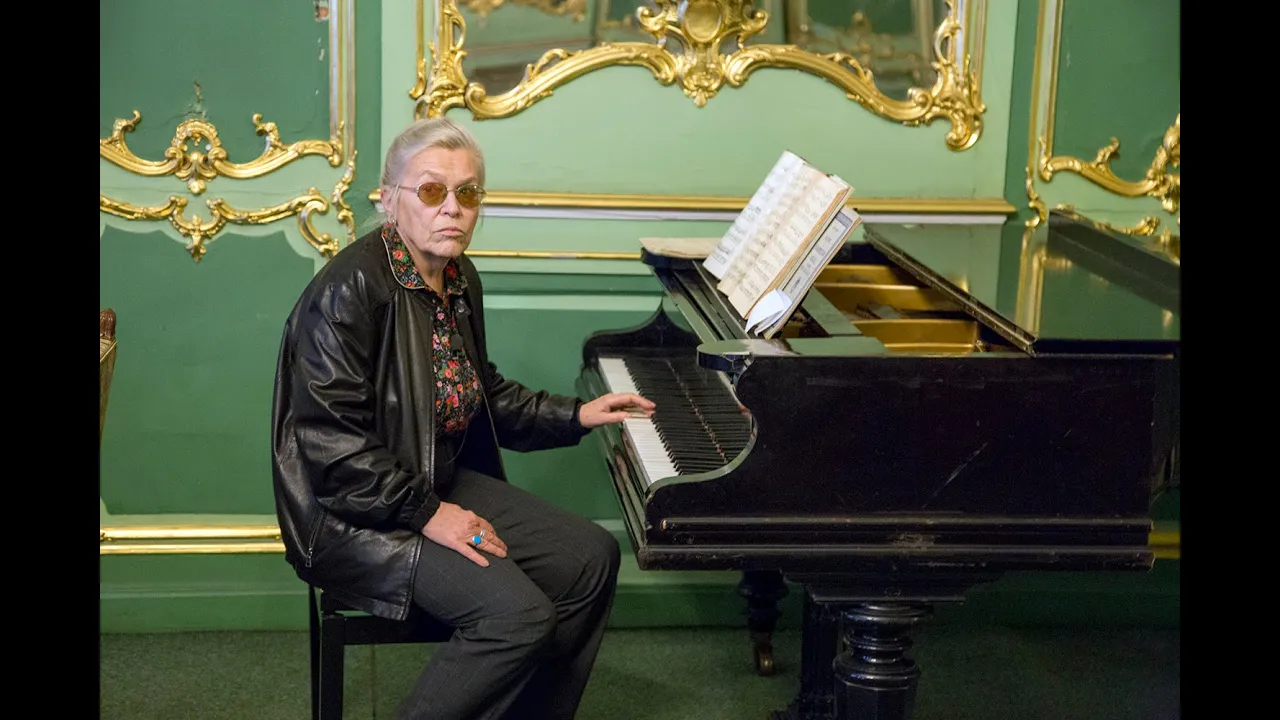
Лекция А.Л. Порфирьевой "И.С. Бах. Способы понимания"
61.1K
When Mendelssohn began performing the Passions, Bach became very quickly transformed into what he became for later generations. For many, Bach became synonymous with polyphonic music. This association was strengthened by the Romantic movement, which elevated Bach to a heroic status. The heroic and pathetic elements in Bach's music, particularly his oratorical style, continue to produce strong effects on new listeners.
Click to watch →
Opening Sequence
Rhythmic Interlude
Applause Break
Solo Performance
Ensemble Build
Climactic Phase
Reflective Mood
Final Notes
Opening Sequence
0:23- 1
Initiates with musical performance and ambient sounds.
- 2
Sets the stage for the main content without spoken dialogue.
The 'Eye Music' Theory and the Historical Instrumentation Debate
While modern piano recitals of 'The Art of Fugue' present it as a cohesive concert masterpiece, a significant faction of musicologists and Historically Informed Performance (HIP) advocates challenge this approach. One prominent counterpoint argues that BWV 1080 was never intended for public performance, but was instead 'eye music' (Augenmusik)—an academic, pedagogical exercise meant for silent study or private keyboard practice. Furthermore, because Bach left the instrumentation unspecified, purists argue that the modern piano lacks the distinct timbral clarity required to delineate the complex, overlapping contrapuntal voices. They advocate instead for performances on historical instruments like the harpsichord or organ, or even a consort of viols, which can better separate the polyphonic lines. Finally, because Bach died before completing the final fugue, critics argue that performing it in concert forces an artificial resolution—either by abruptly stopping where Bach's manuscript ends or by playing speculative completions—disrupting the work's organic structural integrity.
Understanding of Baroque Counterpoint: A foundational grasp of polyphony, where multiple independent melodic lines are combined harmoniously, as opposed to homophonic textures.
The Structural Anatomy of a Fugue: Familiarity with core fugal components, including the subject, answer, countersubject, exposition, episode, and stretto.
Historical Context of BWV 1080: Awareness of 'The Art of Fugue' as J.S. Bach's final, monumental exploration of monothematic contrapuntal possibilities, left unfinished at his death.
Baroque Keyboard Performance Practice: Knowledge of how Baroque articulation, ornamentation, and phrasing are translated to modern keyboard instruments.
Advanced Contrapuntal Techniques: Detailed study of complex devices used in the work, such as inversion (al rovescio), augmentation, diminution, and mirror fugues.
The Mystery of Contrapunctus XIV: Investigation of the unfinished final quadruple fugue, the introduction of the B-A-C-H motif, and the various historical completions attempted by musicologists.
Comparative Performance Interpretation: Analyzing and comparing Marta Czech's modern piano interpretation with performances on historical instruments like the harpsichord or organ.
The Legacy and Influence on Later Composers: Exploring how 'The Art of Fugue' influenced the late works of Beethoven (e.g., the Grosse Fuge), Mozart, and the development of 20th-century serialism.
1M views14.2Klikes1:20:33@MartaCzech120Original Release: 2022-09-28
[Music] so [Music] do [Music] do [Music] so [Music] [Applause] [Music] so [Music] so [Music] do [Music] so [Music] do [Music] do [Music] [Applause] do [Applause] [Music] [Applause] [Music] [Applause] [Music] do [Music] so [Music] so [Music] [Applause] [Music] [Applause] [Music] so [Music] do [Music] do [Music] so do [Music] do [Music] do [Music] do [Music] [Applause] [Music] so [Music] so [Music] do [Music] so [Music] [Applause] [Music] do [Music] do so [Music] [Applause] do [Music] [Applause] do [Applause] do [Music] do [Music] do [Music] do [Music] my do [Music] do [Music] so [Music] do [Music] [Applause] [Music] so do [Music] do [Music] [Applause] [Music] so [Music] do [Music] do so do [Music] so [Music] so [Music] [Applause] do [Music] so [Applause] do [Music] do [Music] so [Music] [Applause] do [Music] do [Music] so [Music] do [Music] do [Music] [Applause] do [Music] so do [Music] do [Music] do [Music] [Applause] do [Music] [Applause] do [Music] do [Music] [Applause] [Music] do [Music] do [Music] do [Music] so do so [Music] do you
Up Next

23:34
Film Score Composition: Character Themes with BBC Symphony Orchestra
@splice
307.7K views•2025-07-31

12:54
Triumph of Orthodoxy Icon: Byzantine Art & History Explained
@BenCallan
2.1K views•2024-08-06

9:49
FastAPI vs Flask vs Django: Choosing the Right Python Web Framework
@TechWithTim
302.5K views•2024-05-26

1:42
Game of Thrones Opening Credits: A Cinematic Analysis
@gameofthrones
46.3M views•2011-04-18
Related Study Plans & Knowledge Roadmaps
Structured learning paths in General & Interdisciplinary Studies
general-studies
Elevator Engineering: History, Physics & Cities
01From Hoists to Safety Brakes: The Dawn of Vertical Lift
02Hydraulic vs. Traction: The Engineering Physics of Elevators
03Modern Speed, Safety, and Algorithms
+ 2 more learning modules
12h5 modules
Explore Roadmap
general-studies
Rubber: Material Science, History & Geopolitics
01Origins of Natural Rubber & Mesoamerican History
02The Chemistry of Natural Rubber & Vulcanization
03The Geopolitics of the Rubber Boom & Colonization
+ 2 more learning modules
12h5 modules
Explore Roadmap
general-studies
Containerization: Evolution, Logistics & Trade
01Ancient Trade & Bulk Cargo: Amphorae to Barrels
02The Industrial Revolution & Cardboard Packaging
03The Containerization Revolution: Malcom McLean
+ 2 more learning modules
12h5 modules
Explore Roadmap
general-studies
Textile Tech: Evolution, Labor & Global Impact
01Pre-Industrial Textiles: Handloom & Cottage Industry
02Mechanization: The Spinning Jenny to the Power Loom
03The Factory System & Global Labor Transformation
+ 2 more learning modules
10h5 modules
Explore Roadmap