















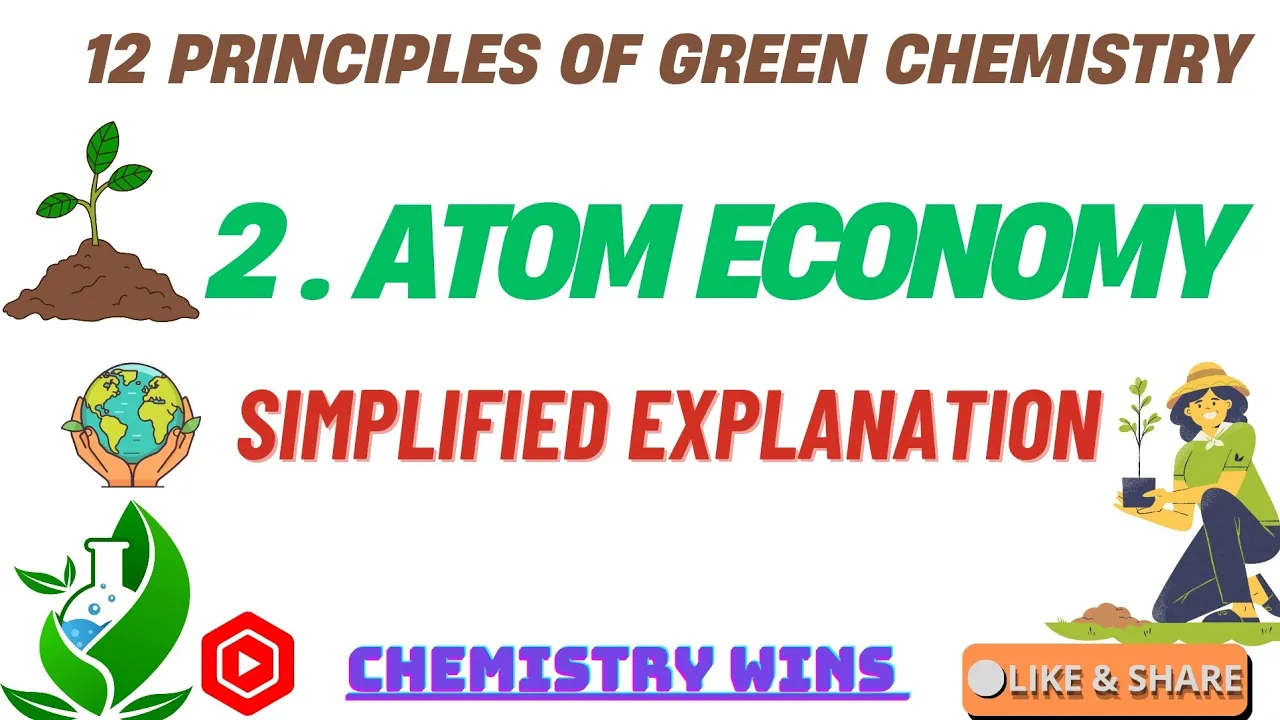






Atom economy is a green chemistry metric that measures the percentage of reactant mass that ends up in the desired product, calculated using the formula: (Molar Mass of Desired Product ÷ Sum of Molar Masses of All Reactants) × 100%. When calculating atom economy, you do NOT include catalysts or solvents in your calculations—you only consider the molar masses of the reactants and the desired product. If a reaction produces only the desired product with no side products, the atom economy equals 100%, representing perfect efficiency. Lower percentages indicate more waste generation.
How to Calculate Atom Economy in Chemistry
Added:Understanding how to write and balance chemical equations, including the use of stoichiometric coefficients.
Calculating relative formula mass (molar mass) using relative atomic masses from the periodic table.
The Law of Conservation of Mass and how it relates to reactants and products in a chemical reaction.
Distinguishing between reactants, products, catalysts, and solvents within a chemical equation.
Comparing atom economy with percentage yield to comprehensively evaluate the practical and theoretical efficiency of a reaction.
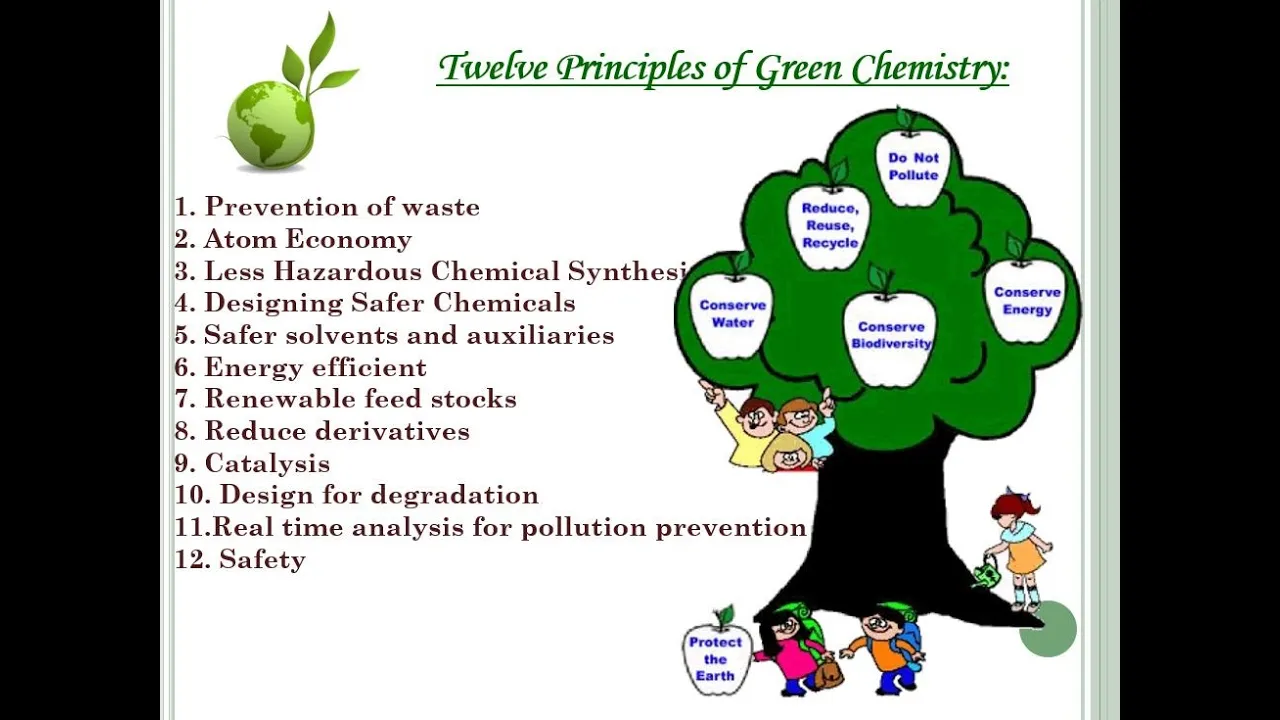
Exploring the 12 Principles of Green Chemistry, focusing on how atom economy minimizes waste at the molecular level.
Calculating the Environmental Factor (E-factor), which accounts for auxiliary waste like solvents and catalysts that atom economy excludes.
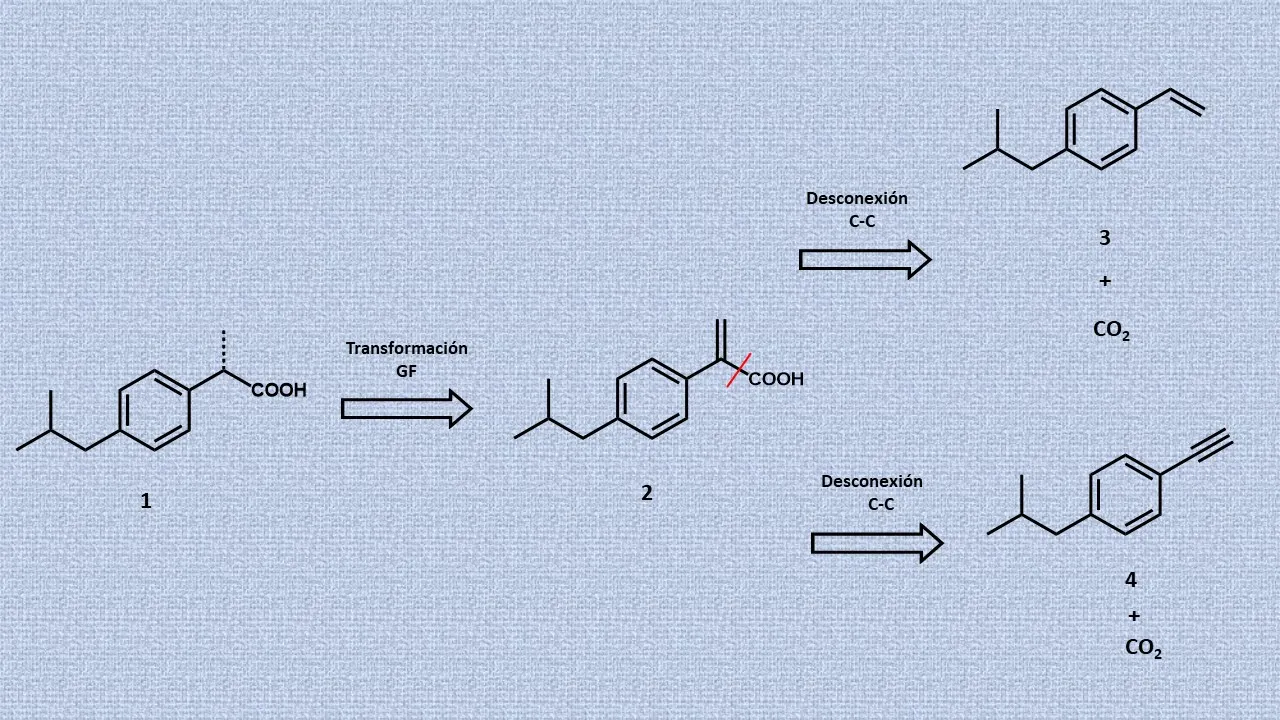
Analyzing industrial chemical pathways (such as the synthesis of Ibuprofen) to evaluate and design more sustainable synthetic routes.
4.1K views28likes16:42Original Release: 2021-04-29
hello everyone this is dr young here and in this video i'm going to talk about how to calculate atom economy which is wrapped into this idea of green chemistry and some of these green principles now this video is not meant to be an overall introduction to green chemistry or to atom economy examples but just very specifically on how to do the calculations you know if you have an equation how do you calculate that percentage how do you calculate that atom economy what i will say as a reminder here right is here's a list of the 12 principles for green chemistry um right from the american chemical society and the epa and i'm not going to go through all of them but i want to highlight here that number two is atom economy right we so remember that green chemistry is all about preventing waste having less hazardous waste doing safer reactions to protect the workers trying to use renewables things that biodegrade etc etc and atom economy is one of these 12 principles so let's talk more about how to calculate this atom economy and kind of what is it talking about in general um what you'll see here right atom economy it's just kind of it's a it's a metric that we can use when we're trying to discuss how green our reaction is and it's a way to sort of theoretically measure what percent of the atoms or at least the mass of those atoms end up um in your product right so what's the mass of all of the reactants that you're putting into a reaction and then how much of that ends up in your product right because ideally you want all of your reactants to end up in your product you don't want to waste a bunch of stuff right the point is not to have a bunch of extra atoms extra mass that you're just going to have to throw away we want to get as much of the reactants into the product as possible that would be a reaction with a really high atom economy right if you were to build a house the idea is that you want to basically use all of the lumber and sheetrock and everything that you bought you don't want to have a whole bunch of extra that you're just going to throw away and that's kind of the idea with this atom economy and so i can take a look at these two reactions here right so it doesn't really matter what these reactions are we don't have to stress about that right now but what i want you to see here is that for this first one this reaction is really atom economical and so what i mean by that here is that this is my product this is my desired product this is my desired product and here are my reactants right i have this and this so over here on the left hand side i have two carbons i have four hydrogens and i have two chlorines and on the right hand side in my desired product i have those same two carbons i have those same four hydrogens and i have those same two chlorines so what's great about this one is that all of the atoms ended up in my product right they all end up in my product so i'd call this a 100 atom economy because everything from my reactants ended up in my product now if i do the same thing with this one the second example um here's again going to be my desired product and here are my reactants i could do this same sort of thing here but what we're going to see is that look i have a side product here right here's a side product something that i didn't try to make but i just made because that's how this reaction worked so i have this side product and the idea is that this is waste right this is not going to end up in my desired product i'm going to throw this away eventually it's going to go down the drain or go into some chemical waste disposal place and what's going to happen here is if i calculate the atom economy for this reaction here i'm going to see that the atom economy for this reaction ends up being 37 well specifically 37.08 for this one which is much less right what we're saying is that the mass of the atoms that went into this reaction only 37 of them ended up in my desired product that most of that mass right almost two-thirds of that mass ended up in my waist and that's because for example bromine weighs so much so my side product was the majority of my mass that i um produced and that's not what i wanted to make so this would not be a very atom economical reaction whereas this first one would be a much more atom economical reaction so you might be asking yourself well where did you come up with this 37.08 how did you get there and that's what we're going to talk about next is how did i calculate that but right now i just want you to see that in the first example all of these atoms ended up in the product which is why it's 100 atom economy that's exactly what we're going for that's what you want to see in a perfect world and then in the second example i made a product but only 37 of all of this mass that i started with ended up in that product so that is a less atom economical reaction less of my mass ended up in my product now if i take a look at this right um there is an equation here so what you have here atom economy is calculated by taking the molar mass right which um again molar masses that we're talking about grams per mole you're just adding up the atomic masses from the periodic table you're taking the molar mass of your desired product and you're going to divide it by the sum right this is the sum the sum of all of the molar masses for all of the reactants and again molar mass is right it's just grams per mole and then you times that by 100 to get a percent right so it's just a fraction of a part over a whole the part being your desired product the whole being all of the reactants that you put into that reaction and i'll mention a couple of notes here right is that again like i said before these are molar masses these are grams per mole these are not the actual mass of something you don't need to actually do a reaction in order to calculate the theoretic or sorry to calculate the um atom economy this is just a theoretical exercise you could you could calculate the atom economy for any reaction you want right now in your living room don't need to go into a lab don't need to get an actual yield or anything like that this is different than a percent yield where you have to do the reaction you don't have to do the reaction for this right these are just molar masses right so you don't know how you don't need to know how much you wait out of anything it's just add them up from the periodic table also for atom economy is that we do not include any reusable catalysts so you may or may not be familiar with catalysts yet you certainly will be later but um what we're gonna see is that some things will have cat written next to them cat for catalyst or maybe it'll say like something like if you see a percentage like five mole percent or something like that those are catalysts and we don't include those in the atom economy because the idea is that they aren't supposed to be wasted that they're reusable that you can keep on using them so we don't usually factor them into this atom economy so we're going to ignore those when we do these calculations the other thing to kind of point out here is that um we are going to multiply the molar mass by a coefficient if there's one in front of it so like for example and i'll show you one here in a second but if you had something like oh i have iron reacting with oxygen to make iron oxide uh iron three oxide right so if you have something like this where let's say we have three two four the idea is that you would take the mass of iron right which is uh what 55.845 and then you'd multiply it by four because there's four of them same thing for here you take the mass of o2 right which is going to be about 32 ish and then you multiply that by three you take the mass of this you'd multiply that by two right so if you have coefficients in your equation you need to multiply the molar masses by that and again i'll show you an example that in a second this equation down here doesn't have any of that so i don't really need to worry about that in this case so here is this equation that i had in that previous slide right and what i need to do is i need to figure out what are the molar masses of these pieces so again my desired product here is going to be this which is i think is what i said on the other slide and if i look at that the molar mass of that is 60.06 grams per mole i also have the molar mass of my sodium bromide which is 102.89 grams per mole and then i have the molar mass of my reactants which are going to be 107.9 grams per mole and again i got these numbers just by adding up the masses from the periodic table and then the sodium oxygen ch3 thing sodium methoxide is 54.08 grams per mole and sorry and that is a zero now like we said up here in this equation what i'm going to do here is i'm going to set up the molar mass of my desired product which is the thing in green so my molar mass of my desired product is 60.06 grams per mole and then i'm going to add up right all of the molar masses of my reactants which in this case is this thing with the carbons in the bromine that weighs 107 and the thing that weighs 54.02 right those are my reactants that's what i'm adding up and then times a hundred now you'll notice here right that i did not include this thing in red i did not include the sodium bromide because it was not my desired product and it was not my reactant right so that's the thing that's left over that's the thing that's waste and so then if you punch this into your calculator what you should get is a number around 37.08 percent right and that is the atom economy for that reaction that's how i figured that out on that now that previous slide right so i took the molar just the molar mass that i got from periodic table uh of the product i divided it by all of the reactants multiplied it by 100 to get my percentage right so we're saying that 37 of the mass of the reactants ends up in the product now i want you to give a try so here's two examples i want you to pause take a minute do these on your own but i want to point out a couple things first here the first one i was being really nice and i already calculated out the molar masses i think for all of these different pieces right so the molar mass of this is 88 water is about 18. sulfuric acid is about uh 98 that's about 60 that's 45. and i put in bold here the quote unquote desired product the thing you're trying to make right so that's what you're trying to make in the first equation that's what you're trying to make in the second equation here and i want to point out right i said there are some caveats here that we don't include catalysts so you don't need to worry about including catalyst so notice that this says catalyst right here so i can completely ignore this because it's a catalyst we don't include catalysts in this and we are going to need to take into account things like um stoichiometry and coefficient so i'm going to point that out down here that you're going to have to deal with in the second equation some stoichiometry you have some coefficients here you have to multiply up things so go ahead and pause take a minute take a crack at both of these for the second one you're going to have to not only find the molar masses but also figure out the atom economy for this so go ahead and pause and then we'll go through these together so hopefully you actually gave this a try let's see how you did here so i'm going to take write my desired product which we said was 60.05 grams per mole and i'm going to divide that by the reactants which are just those two remember i'm not going to include the catalyst we don't include catalysts and multiply that by a hundred so the atom economy for this one should be 56.6 for its atom economy so a little more than half of the mass of the reactants end up in our desired product which is which is fine not great ideally we're going for 100 but that we have a way to kind of measure that atom economy now if i do the same thing for the one below same thing my desired product is this sucker this um you should have found out weighs about 181.45 and again your numbers might be slightly different than mine just because you're using a different periodic table um totally fine there's a little wiggle room here so i'm going to use the molar mass of the c6h6 which i calculated to be 78.11 and now here's where the three comes in right chlorine cl2 weighs 70.91 but there's three of them so i'm gonna go three times at 70.91 right this three is this three up here so i need to say that well i need to take into account that i needed three of them and all together for my reactants so you just include that right you just multiply it and then we multiply by a hundred again i'm going to ignore this iron chloride i think because it's a catalyst we don't include the catalysts and if i do that then i get for my added economy for this one should be about 62.939 for the atom economy and so here's how you calculate right the atom economies of these two things so i could say comparing these two reactions right that the second reaction is more atom economical than the first reaction a higher percentage of the mass of the reactants end up in the product than in the first reaction so that's how we would kind of use this to evaluate reactions again the goal is more atom economical the more the more efficient it's supposed to be in terms of atom utilization now again i'll talk more about this in other atom economy videos you're about green chemistry and everything but atom economy is just one metric it's not the metric for deciding how green something is the pros of atomic economy is it's really quick and easy right we just did a couple of examples all you need is a periodic table to do it and an equation you're done so you don't need to actually perform the experiment you can just do this at home and it does give you a sense of all right how much waste there could be from a reaction you haven't done the reaction but it gives you a sense of like ah this one's definitely gonna waste more atoms than this one the cons though is that you notice that we never talked about solvents which is like the number one source of waste for most reactions is the actual solvent you do it in whether you do a reaction in water or ethanol or acetone or thf or whatever it is and it ignores the actual percent yield of your real reaction right you may have a really highly atom economical reaction that say uses 95 of all of the atoms you know go to the product but if that reaction sucks and doesn't work then who cares right if you if you try the reaction and only get like five percent of it actually reacts then that's then then that's still a huge waste right that doesn't that doesn't really so this doesn't have a lot of real world um uh connection you know to the real the real yields of these real reactions you want to you want a reaction to have both a high a high uh percent yield and a high atom economy that would be great and then this doesn't say anything about the the hazards of the waste right so you know you might have one reaction that has an atom economy of 90 but that 10 percent might just be water or something super benign right like the the product is is not a big deal you don't have to worry about it but you might have another reaction that also has an atom economy of 90 but that 10 percent waste might be something super toxic or super hazardous like really flammable or explosive or something like that right so the atomic company doesn't say anything about that the hazards of the waste is it toxic is it is it going to you know is it corrosive is it going to be a an aquatic toxins stuff like that so i'd give a little better sense now of what atom economy is you feel more comfortable um calculating it it's just uh you know the molar mass of the desired product divided by the molar mass of those starting reactants so practice let me know if you have questions good luck
Up Next
57:51
Green Chemistry Metrics: A Guide for Educators | Webinar
@beyondbenign2120
4.8K views•2015-09-30
83:56
Biocatalysis and Catalysis in Islatravir Synthesis | Merck Webinar
@SCIwheresciencemeetsbusiness
675 views•2020-10-08
11:49
How to Calculate the E-Factor for Green Chemistry Reactions
@DrDougYoung
8.3K views•2022-10-28

17:31
Edible Water Bottles: A DIY Guide to Sodium Alginate Spherification
@ryan
10.5M views•2019-06-21
Related Study Plans & Knowledge Roadmaps
Structured learning paths in Chemistry
chemistry
Nuclear Chemistry: Decay, Meds & Fuel Cycle
01Introduction to Nuclear Structure and Radioactivity
02Decay Dynamics and Kinetics
03Radiation Interaction and Detection
+ 2 more learning modules
24h5 modules
Explore Roadmap
chemistry
Supramolecular Chemistry: Forces & Machines
01Foundations of Chemical Bonding and Intermolecular Forces
02Introduction to Host-Guest Chemistry
03Thermodynamics and Dynamics of Self-Assembly
+ 2 more learning modules
16h5 modules
Explore Roadmap
chemistry
Photochemistry: Excited States & Reactions
01Foundations of Light-Matter Interactions
02Molecular Orbitals and Electronic States
03Photophysical Processes and Jablonski Diagrams
+ 2 more learning modules
18h5 modules
Explore Roadmap
chemistry
Coordination Chemistry: Bonding & Properties
01Introduction to Transition Metals and Ligands
02Crystal Field Theory (CFT) and Geometry
03Magnetic Behavior and Spin States
+ 2 more learning modules
14h5 modules
Explore Roadmap