
















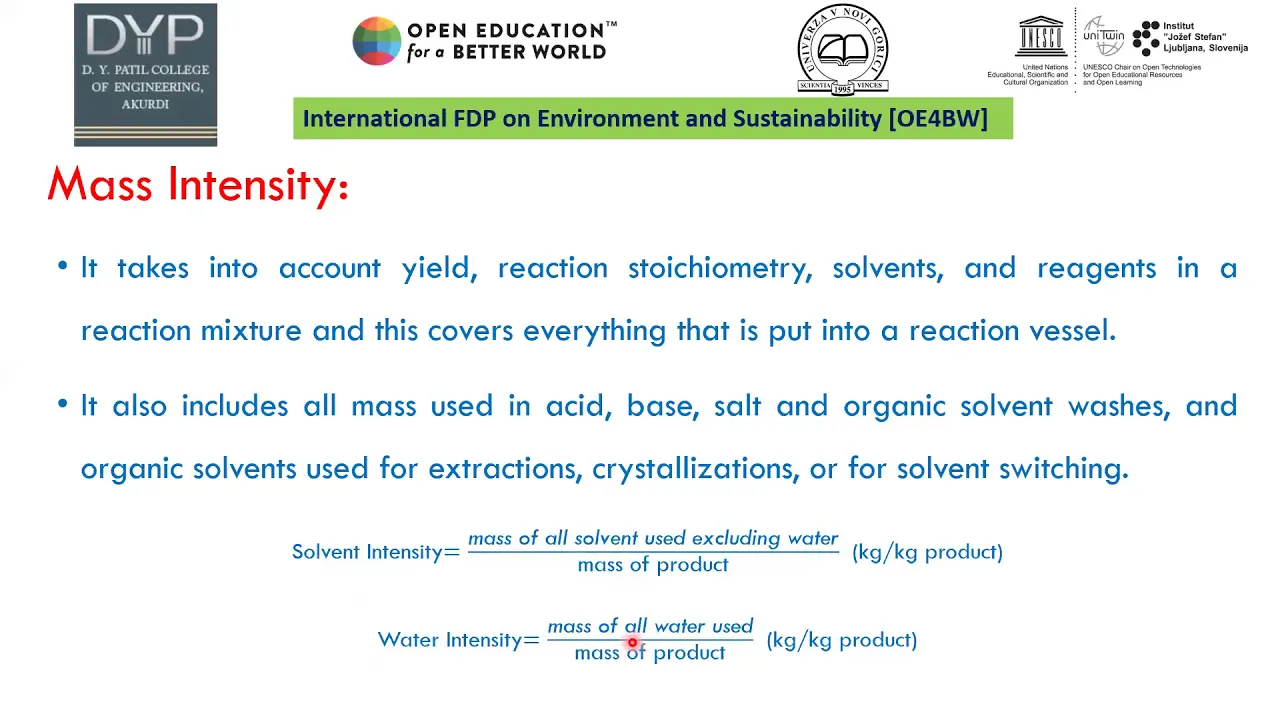
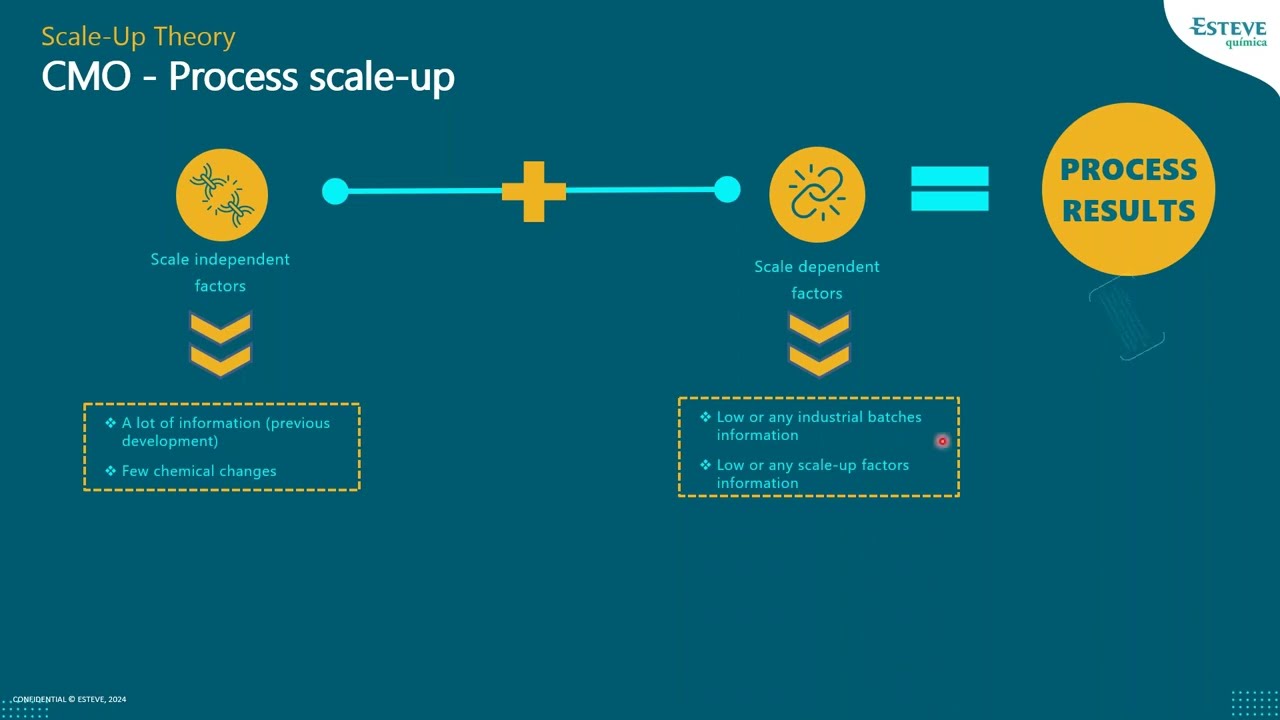


Green chemistry metrics provide quantitative tools for evaluating the environmental impact of chemical processes, moving beyond traditional yield-focused assessment. Key metrics include atom economy (molecular weight of desired product divided by total reactant molecular weights), reaction mass efficiency (actual product mass divided by total input mass including reactants and solvents), E factor (waste mass per unit product), and process mass intensity (total input mass including all materials divided by product mass). Process mass intensity (PMI) is particularly valuable as an industrial metric because it focuses on inputs rather than outputs, enabling proactive design changes rather than reactive waste treatment. Educational activities involving student reaction mass inventories help students understand that workup procedures often contribute significantly more mass than the reaction itself, teaching them to think holistically about chemical processes rather than focusing exclusively on reaction yields.
Green Chemistry Metrics: A Guide for Educators | Webinar
Added:welcome everyone welcome back to the green chemistry commitment education webinar series hosted by the green chemistry commitment we're really happy to um start to have a kickoff our webinar series with Dr Andy Dix at the University of Toronto my name's Amy Canon I'm the executive director of beyonda n a nonprofit organization dedicated to Green chemistry education this webinar series is designed to highlight relevant Topics in green chemistry education for faculty and students our goal is to provide resources for faculty and students who are looking to adopt green chemistry in their courses and programs and again we're happy to kick off our first webinar of the Academic Year today okay okay and before we begin I just want to give you some technical information about the webinar we're broadcasting live and recording this session and we'll be posting that by the end of the day today therefore all attendees are inlisted only mode and all lines are muted if you have a question then just type it right in there into the question box on your on your control panel and the moderators will view it and we'll respond to as many questions as we can after the presentation the webinar again is being recorded and it'll be posted right on the link that you see on the screen and also in the welcome box that you see on your control panel the webinar is being brought to you as part of the green chemistry commitment program which is a Consortium program aimed at transforming chemistry education expanding the community of green chemistry practitioners growing departmental resources for those looking to adopt green chemistry improving connections to Industry and AFF and affecting systemic change in chemistry education the program is a voluntary flexible program for adopting green chemistry student learning objectives and for promoting the work that you are currently doing at your institution that you that can serve as models for other institutions to get involved with green chemistry so can find more information at the link here on the screen green chemistry commitment. org or you can email me directly as part of the webinar series we're giving away a green chemistry book at the conclusion of each webinar and we will'll announce the randomly selected winner from our list of attendees at the end of the webinar and we will send the book directly to you today we'll be giving away a copy of Dr Andy's book that's the one on the far right here is a springer brief um green chemistry metrics a guide to determining and evaluating process greenness so we're really great to have that as the theme of of today's talk so the winner will receive an email from us requesting your contact information immediately following the webinar so now I would like to introduce our speaker Dr Andy dicks Andy dicks joined the University of Toronto chemistry Department in 1997 after undergraduate and graduate study in the United Kingdom he became an organic chemistry sessional lecturer in 1999 and hired as part of the University teaching stream faculty two years later he has research interest in undergraduate laboratory instruction that involved designing novel and stimulating experiments particularly those that showcase green chemistry principles this work has led to over 45 peer-reviewed Publications in the chemical education literature he has won several pedagogical Awards including a 2011 American Chemical Society committee and environmental Improvement award for incorporating sustainability into chemistry education in the 2015 chemical Institute of Canada national green chemistry and Engineering award he has additionally edited a book as as a resource for teaching green chemistry green organic chemistry and lecture in laboratory and in 2014 he was co-chair of the 23rd IUPAC International Conference on chem chemistry education which was held in Toronto and so Andy is going to talk to us today about selected green chemistry metrics for educators so I'm going to hand the controls over to Andy okay well thank you very much for the uh introduction Amy and uh I really appreciate the opportunity to uh speak with everyone this afternoon hopefully everyone can uh hear me okay and uh see the slides okay and uh as Amy mentioned I'm going to speak a little bit today about some selected green chemistry metrics for educators I'm going to focus on uh a certain number in in particular and and make mention of a few others certainly not trying to cover everything I might say about metrics today but focusing on ones that are uh to my mind quite important for teaching green chemistry um I'm an organic uh chemist uh in uh by my training but what I'm saying here today is not really specifically uh related doesn't have to be related to organic chemistry and green chemistry I think what I'm saying can certainly be applied to other areas of chemistry as well so just to uh try and kick things off then here's the overall aim for today to highlight some of these important metrics uh used to teach green chemistry with connections to uh industry as much as possible I think that industry and the connections we can make with industry and students is very important it's a way that students can really pick on pick up on why we would be teaching green chemistry to them if they are potentially going to enter industry and Industry clearly many Industries are taking the principles of green chemistry and sustainability very seriously now so I will focus on some important Mass metrics uh in terms of adom economy reaction Mass efficiency e factor and particularly focus on process Mass intensity or PMI as a metric that perhaps doesn't get as much attention but is is actually one that that is of great interest to the pharmaceutical industry and and other chemical Industries as well and and my feeling is it's a metric that we should be telling our students about and and getting our students to think about calculating PMI values for various reactions that they they undertake in the in the lab I'll also say a bit about metrics in terms of the nature of substances that students might be handling in the lab or or or analyzing in terms of literature uh synthesis for example suitability of solvents and reagents uh Industries have done a lot in recent years to not only come up with their own guides for greener solvents and reagents but also to make them very public and they they've been published in research journals such as green chemistry uh from the Royal Society of chemistry and and and that's something that's that's really appreciated and and students can use those guides I think in a in a very positive way and interpret them and along the way I'd like to profile some educational activities that we have developed here at the University of Toronto these are some things that we have primarily done in our uh third year course which is an organic primarily an an organic synthesis course uh which has some green chemistry running all the way through it but I should mention that we're ALS also at the moment in the process of developing modules that we're hoping to incorporate in our first year General chemistry and organic chemist chemistry offerings so we're looking at UFC really to move Beyond just teaching green chemistry to chemists but Al also to life science students and one of the areas that we want to focus on in that regard is mass metrics and particularly teaching the some fundamental metrics to life science students about uh green chemistry principles so that's where I hoping to uh go this afternoon before I get into a detailed discussion of some metrics I I'd just like to share with you something that some of you may have heard before if you if you've heard me speak at a conference but General picture that I have of green chemistry is like it it's like a good relationship maybe a maybe a happy marriage it's about compromise and and decision- making in transparency and I'm mentioning this again today because I think the transparency side is really important in the context of green chemistry metrics the idea that uh we should be considering more than the yield of a reaction when students do reactions in the lab or they consider them just from a theoretical perspective uh they should be thinking about byproducts and everything that goes into a reaction everything that comes out of a reaction rather than just focusing in on the product of Interest which is something that we tend to have them focus on so uh that's what I mean in this context of transparency and and the metrics that I will be talking about but I think those are three important uh pillars of of green chemistry uh if you like and I will mentioned something about the decision making a bit later on today as well so we're familiar I think all of us with the 12 principles of green chemistry and the ones that I've highlighted here in red are really the ones that I'm focusing on today and I think really tie into the idea of metrics in green chemistry so some of these are related to the mass metrics certainly in terms of number two for example in incorporating Starling materials into the product uh we desire but also uh thinking about the metrics related to choosing reagents and solvents uh can be linked to use and generate substances possessing little or no to toxicity so there are only three or four metrics there that I haven't particularly uh touched upon or won't touch upon uh this afternoon uh related to uh energy requirements and and designing products that uh don't particularly have any toxic important toxicological problems related to them so really we're we're we're focusing on a large number of the 12 principles and many of us uh appreciate I think that these 12 principles are great from a teaching perspective and students can uh pick up on them and look at them uh not just in isolation from one another but group them together and we can use them as a way to explain important Concepts in green chemistry and sustainability I thought it would be uh useful in tying in with an industrial perspective to show you this uh graph which is from publication last year in ACS sustainable chemistry and Engineering which is a relatively new Journal focusing in on uh the role that industry plays in in green chemistry and new developments in the field and this is uh from a survey of chemical manufacturers uh who were asked the question in your opinion how frequently does your company imp the following principles of green chemistry so they were specifically asked about the 12 principles and on a scale of one to four uh one being never implement the principle and four fully implement the principle and it's interesting to me that the first thing is all the principles are implemented to some extent uh there are no principles that score less than two uh on the scale which is which is which is interesting and there are couple of uh actually three principles that score greater than three between three and four on the scale uh the two uh most highly scoring principles are number one and number 12 so uh prevention of waste and and inherently safer chemistry for accident prevention so this says that uh Industries are uh we know that they're taking green chemistry seriously and we know that they are linking their activities to the 12 principles and that there are uh a principle there certainly in terms of waste and and metrics in terms and metrics related to waste that the industry is interested in and focusing on and also the idea of using safer compounds uh partly for preventing accidents so that's a that's an interesting uh observation and I'll I'll mention something else from that publication uh in a in a a little bit of time so the industry link here is important and and generally we know chemistry I like this quotation from Lord celvin to measure is to know and that's uh linking in again to the idea of metrics and making measurements and and Quant quantifications of uh various aspects of chemical reactions that students may be uh undertaking so with that in mind then here's a problem from from my perspective Chemists in Academia often judge how good in in in in quotation marks or reaction is by the percentage yield that is obtained uh and and I think this this starts very very early on uh and runs through undergraduate perhaps into graduate school and Beyond graduate school and really uh if we adopt this yield is everything mentality and we focus on the the yield as a of a reaction as being a a a very important metric on its own and that's not really uh thinking in a green chemistry way I think that as as a laboratory instructor myself I'm to blame in this regard I would use yield as a um but the point is that yield is not yield is not everything there can certainly be reactions that are very high yielding but from a a green chemistry perspective looking at other aspects of the reaction uh it's not so green um after all so a lot of what I'm saying today is moving trying to move Beyond this idea teaching the idea that we're very focused on yield and we should be considering actually other aspects of reactions uh that are very important and feed into uh green chemistry and sustainability so with that in mind then if we think about a few of the fundamental metrics that might be used in uh undergraduate uh or college teaching um very very well known uh ma Mass metric is the idea of Adam economy and and more specifically it's embedded in the second principle of the 12 principles of uh green chemistry So Adam economy is as as certainly uh many of us will will appreciate we're thinking about the reaction and its efficiency in terms of the molecular weight of the product that we're interested in divided by the molecular weight of all the reactants that we've used and it's a useful tool in some ways particularly theoretically is one can very quickly judge uh which reactions are adonic or or non-conical in a very uh simple sense we can look at the scheme at the bottom there and say if we have reactant a uh with a molecular weight of 100 and it is reacted with with B with a molecular weight of 200 if our product C has the just the sum of those two molecular weights that's 300 then we have a 100% atom economy and we don't have here any byproducts and we don't have any wasted atoms going to uh materials that we're not interested in now that's uh useful certainly a very useful fundamental uh concept the issue here perhaps if I just stay on this slide for a moment or or two or or couple of issues that we can mention uh is that we are thinking here intrinsically just about the reaction and not everything around it so this is not taking into account the practical way in which a reaction would be done it is not considering the reaction yield for example it is not uh thinking about the solvents that are being used or the workup process to isolate the desired product some reactions according to uh the economy uh notion will come off very well intrinsically uh at the second year organic level one might think about the bromination of an Aline uh where molecular bromine is just added to a carbon carbon double bond to make a product that will have 100% Adam economy uh so will Nobel prize winning deals older reaction for example aldol condensations will have very high adom econom as well but there are some reactions that really don't come off uh particularly uh nicely and a good example that is has certainly been used in in teaching before is the again Nobel prizewinning vidic reaction where if one considers a typical vidic reaction and and one generates the vidic reagent as shown in the scheme here we can see that there are a number of uh waste products that are generated in the formation of the vidic reagent and in the vidic reaction itself so in the conversion of cyclohexanone to methy cyc U methylene cyclohexane we can see that actually we're wasting an awful lot of atoms we have uh Benzene as a byproduct which is highlighted in red triphenol phosphine oxide is another byproduct and if we add up the mo the molecular weights along on with an inorganic uh byproduct as well lithium bromide if we add up the molecular weights of those three uh waste compounds we find that actually our Adam economy is only 18% now vid obviously was working on this a long time before the idea of green chemistry came around and and uh I would explain to students that this is not a criticism of the reaction in any way it gives products that are very difficult to make by the means but it's interesting to note that such a well-known established reaction does actually waste a lot of atoms along the way so a nice thing about the adom economy principle is that one can take any reaction that is being taught both from an organic or an inorganic sense in lecture for example and it can be analyzed because it's not necessary to actually do a reaction in the lab to calculate an adom economy one can look at as a as a downside of the of the model but certainly from a theoretical perspective it provides a very quick and simple way of looking at any reaction that is being taught a student can very quickly see where the atoms are going and most of them ending up in the desired product or or are most of them actually ending up in a waste container So Adam economy has its has its uses I would argue primarily from a theoretical perspective and and uh once practical work comes around there are other alternative improved metrics to consider one of those uh metrics that that I think uh is is quite nice to to think about is uh the idea of reaction Mass efficiency so Rea reaction Mass efficiency can be applied in the laboratory because it is now we're thinking about actual masses of materials that are added in a chemical process so expression that we can write here for percentage reaction Mass efficiency is the mass of the desired product divided by the total input Mass where we are considering that to be the the mass of the reactants that are actually used so it takes into account stochiometry of the of the of the compound of the actual reaction we can also factor in there the mass of recovered Mir materials if any recycling is done as part of the process so there's an improve here in a sense over atom economy because actual reactant masses are being considered uh and very very importantly here the actual product yield is being factored in so whereas in Adam economy there is no consideration of yield at all the actual yield is is built into the percentage reaction Mass efficiency calculation generally in this calculation one is not thinking about non- reactant materials and I would include their reaction solvents work look up compounds and so forth so we are here still focusing just on the reaction but what is really nice is that this is not a particularly uh challenging calculation to do for uh a typical undergraduate experiment if a reactions being performed indeed it can be calculated very very easily for any reaction undertaken in an undergrad lab and I've made the point there at the bottom that students are often very surprised when they do this type of calculation because they get very low numbers very often so they may for example do a reaction that has a very very respectable yield of possibly 80% or 70% something like that which we might say is a very good yield in an undergraduate laboratory but perhaps they had to use a large excess of one of the reactants to get that kind of yield and that means then that there is actually quite a bit of waste generated their percentage rme will be lower even though they got quite a high yield so I think it's good for these calculations to be incorporated in the laboratory after a student has has or group of students has done a certain reaction they can go to this calculation it straightforward to interpret and understand and uh calculate a percentage rme it do tells nicely with the theoretical Adam economy that they may have seen uh previously uh in lectures and of course they can compare Adam economy and reaction Mass efficiency values that they calculate in the uh laboratory if if if that is so desired so reaction ma Mass efficiency is is is more helpful uh I I I would say as it reflects what's actually being done uh in the laboratory from an industrial perspective the historically uh important green chemistry met metric was the so-called environmental or E factor that was proposed in the early '90s by Roger Sheldon and the E Factor then uh again people are often familiar and have heard about this is the is the mass of adjusted waste for a chemical process divided by the mass of the actual product that was generated and the adjusted waste there can uh account for recycling of uh compounds again if if that actually um has has taken place and and in Industry of course this is a something that does happen routinely it's a very quick and easy approach to assessing how much waste is generated it's it's a metric that does not uh Focus uh so much at the introductory level on the type of waste that's produced so at its most basic level all waste is considered to be the same uh a kilogram of of sodium Chlor chloride would be considered the same waste as a kilogram of sodium cyanide at the at the introductory level adjustments can be made to it to to uh account for the type of waste uh conceptually the ideal e Factor value then is is is zero and the lower the efactor value the better if it can approach zero that's excellent because that will mean that the amount of waste is is minimal and if it is actually zero then there is no waste so it has been around for a long time now as a metric and Sheldon himself wrote quite a nice review about it in in 2007 which is mentioned there at the bottom of the slide uh a 15-year uh uh retrospective on on the metric that he put forward which is which is an interesting me um read we can describe the eact metric as being an end of pipe metric in the sense that it is uh in some sense a reactive metric and and looking at what is gener ated at the end of the reaction um and I can make the point also that water is not usually included in the calculation um Sheldon proposed that the very high values would be would be uh generated if if water was included for for uh all all processes so generally water isn't included now because of the Simplicity of of the the E Factor metric then again it is certainly possible to calculate this kind of thing in the The Graduate lab and uh we do this for or we ask students to do it I should say for a Suzuki reaction uh that uh we we published in in the journal chemical education a few years ago now and has been one of our Mainstay reactions uh over the last seven or eight years so the reaction is is actually shown there and again it's a it's a high impact Nobel prize winning reaction where with the students are generating four fenal phenol uh as a the target compound by doing a Suzuki reaction under aquous conditions very mild base and and a and a Palladium catalyst so there are a number of green chemistry features that we can focus on in the nature of the reaction uh if students do the E Factor calculation though they come up with a very very high number which is typically between 400 and 500 depending on their actual um mass of product that is they generate so a typical mass that they may form we do the reaction is done on a microscale typical amount of mass is about 115 milligrams that comes out at about a 65% yield something like that on average now it turns out to get that amount of for phenol phenol product you have to use almost 50 grams of material uh which is a large amount and that's in incorporating everything in the reaction uh that is used in in in the workup and the reaction solvents and so forth so uh when students calculate this kind of number they can compare it to the numbers that you can see there in the table above the scheme which are typical e Factor ranges for different industry segments if we were trying to make a comparison here for the Suzuki reaction that the undergraduates do it would probably be with the pharmaceutical industry because the product there actually is the backbone of uh several non-steroidal anti-inflammatory drugs that are commercially available uh and the typical e factor for the pharmaceutical industry then is is 25 to 100 kilograms of waste per kilogram of product so the students calculated value is a long way away uh away from that and they're quite surprised by that and they getting appreciation that there is a lot of waste generated by this pretty typical uh procedure you can see that the going from the pharmaceutical industry to Fine Chemicals bulk chemicals and oil refining as the product tonnage goes up dramatically the E Factor uh goes down uh a very nice uh pharmaceutical example uh here is is is the synthesis of Viagra by fiza which is clearly a a pharmaceutical but the E Factor typically for synthesis of that compound by fiser is less than five so it goes into the bulk chemical uh category it's an incredibly efficient process which has been tweaked over a number of years so there are some interesting things to talk about with students there in the context of waste the nature of the waste is not accounted for but waste is considered very uh to be very important from the pharmaceutical perspective now the metric that I want to talk a bit about now then is one that that we're trying to really highlight to students because of its industrial relevance and I've called it here the gold standard uh which is process Mass intensity uh PMI uh can be compared with the efactor metric in many ways it's similar uh but it is focusing on inputs rather than outputs it is focusing very much on what is going into a reaction rather than what is coming out at at the end of a reaction the way B in the reaction so we can think of this metric as being a very front-end approach uh where the input mass that is being considered here is is everything including reactants reagents uh catalysts I've highlighted solvents there in different uh areas the reaction solvents work up and and and purification so everything is being thrown in there and the ideal PMI value then is going to be Unity if you consider this uh expression in the sense that all the input mass will ideally end up in the product and I've mentioned there a few typical PMI values uh PMI as it includes everything water is generally included in this calculation and you can see that PMI values tend to be higher than efactor values in the same type of industry it's interesting that glos Smith Klein GSK have targeted a a PMI value this year of of 20 uh which is the that number is there in the um second publication that is listed at the bottom of the slide uh from organic process research and development so this is a a a a great interest uh to to Industry and and it and it really signals a shift away from an emphasis on on waste it's it's the opposite end of the spectrum from the e Factor um metric that we've just been discussing so I thought it was uh worth mentioning or or or showing you a couple of quotations uh regarding this metric and how it is considered uh the American Chemical Society green chemistry Institute pharmaceutical Roundtable has chosen this specific metric as the key one for evaluating progress towards more sustainable manufacturing and as such I would certainly like students to know this and to think about this approach as as being a front-end one so here are a couple of interesting uh statements about it from uh a publication there again at the bottom of the screen so to truly in integrate green chemistry and Engineering into chemical processes one has to look at the inputs instead of the outputs to F focus on what is going in uh more than what is coming out at the end and focusing on reducing waste helps companies to reduce cost but focusing on efficiency also enables Innovation uh to create add value and I really like that second statement because it is sort of saying uh to us and saying to students that if we can control what goes in we have an opportunity to change what the way that we're doing things if we simply focus on what comes out we're going to just be doing waste treatment uh and that will have maybe less of a positive impact than if we really uh focus in on the the substances that we're using to uh uh do a particular transformation for example so with that in mind then uh what we have uh if from an industry perspective uh this is a a second graph from the publication I showed you uh earlier on today chemical manufacturing responses to a second survey question what green chemistry metrics does your company use and you can see of the three uh options there on the left hand side pm iactor adom economy PMI is the one that is used the most there are other metrics there that are uh considered to be uh perhaps more important from an industrial perspective that's carbon footprint and water usage and I won't really say anything about those metrics today uh perhaps though we should be as Educators thinking about uh talking to our students about those metrics and how they're calculated and maybe doing those calculations uh the LCA life cycle analysis or assessment there is also considered to be important that is certainly something I feel that could be introduced to students in the context of a green chemistry course a dedicated course it is a very very complex assessment to do which has many factors leading into it I think it's difficult to drop that into a an existing course but maybe somebody who is developing a green chemistry course can talk about a simplified life cycle analysis or assessment uh within the context of that course so with that then let's move on to think about the waste uh what I call the waste conundrum there's a lady here pointing at a can of soup saying there are too many people counting calories and not enough people counting chemicals which is quite an interesting statement and a second uh little thing there on the right hand side too many people accounting chemic and not enough people are taking chemistry and probably most of us listening today are thinking that not enough people are taking chemistry and probably agree with that but I would kind of take these two uh little cartoons and blend them together and say that really from my perspective not enough chemists are counting chemicals so we are perhaps not paying enough attention to the amount of chemicals we're using and the type of chemicals we're using and um that is feeding throughout the moment a little bit to our students so one thing that we wanted to do at UFT to try and address this was to design an experiment where students had to count chemicals and count them very very carefully and in order to do this we took a uh literature reaction from the Journal of organic chemistry which is shown to you on the screen there and it's not important to focus in on the details of this reaction particularly it's a an asab balis hman reaction uh we can mention a few green features about it without worrying about the mechanism or whatever it's not important for us uh we should be able to look at the reactants and the products of this reaction and appreciate that the atom economy is very very high most of the atoms on the left hand side are ending up in the product on the right hand side and in fact you do the calculation the Adam economy is is 95% so so it's really really high the only byproduct of the reaction actually is water which is good there are some catalysts that are used here there is uh dabco and atinum triflate salt so the catalytic feature of green chemistry is very nice A Greener solvent option is being used this reaction is done in isopropanol as the solvent which is a relatively green solvent to be used from the literature the reaction yield is 80% which is which is certainly good and that leads then to an overall reaction Mass efficiency of of 76% if we multiply the 95 by the 80 then we can say that the reaction Mass efficiency is uh 76% uh certainly energy efficient reaction conditions as well uh this is reaction is done usually at room temperature just stirring the reactants together for a week to make the product there's no heating involved whatsoever so this is taken from the literature from J or cem and what we decided to do was to get students to pretty much follow the reaction from the literature with a few changes and get them to analyze the reaction in terms of the masses of substances that they used and what I've done there is a lot of information this is just taken from our laboratory manual it's the procedure that students follow this uh will allow them to make about one gram of material uh which is not an 80% yield uh as it in in student hands the yield is around about 60% and what I've highlighted there in yellow uh aspects of the workout where a lot of material is being used so a lot of organic solvents aquous sulfuric acid water dorom methane uh aquous bases and aquous sodium chloride are being used in the workup and it is the workup that is really contributing here to the mass of the uh materials that are being used to to generate the asab bis Helman product so students follow this uh procedure and uh they perform what I call a student reaction Mass inventory and simply what they are doing here is everything up uh the components of the reaction and the components of the reaction work up and here then if we sum up the amount of material that's used in the reaction it's about 21 Grams something like that in the workup of the reaction though it's it's more like 340 grams for a total amount of material to make one gram of product then being about 361 gram so I've mentioned that the devil really is in the workup this student reaction Mass inventory approach then can be done to any reaction and I think it's it's really important to um perhaps if someone runs a laboratory of any type take one reaction that's being undertaken doesn't matter what the reaction is but to go through this kind of analysis to see where the mass is going and to think about what the contribution is so if one does this for the as of Al hman reaction uh students are then able to reflect quite carefully on how the PMI might be reduced they calulate a value typically between 350 and 400 so the sort of ideas that they come up with is that perhaps a recyclable extraction solvent can be used as an alternative although that may introduce an energy cost to get that solvent back that's the idea of compromise in green chemistry to go back to my initial statement so there's some compromise that would have to come in there perhaps the amount of aous washes or the volume of M of aquous wash material could be reduced perhaps the aquous washes could be recycled for a second reaction or given to another student on another day to use for their work up importantly students tend to pick up on the fact that if any catalysts in the reaction were recy recycled or or unreacted reaction components Were Somehow recycled that would have next to no impact actually on the PMI so the big contributions to the PMI are uh highlighted in the uh pie chart there you can see that over half of the mass is water and there are significant contribution from organic solvents as well this is getting students to think more broadly about a process rather than specifics of a reaction and again we're moving away from the idea that the yield is everything and that we really often have to focus in on the workup as to where improvements can be made if we are trying to uh reduce uh the mass of of of of substances that that we are using there's a reference there at the bottom to a journal of chemical education article that we've recently published on this reaction uh if you're interested in having a read of that but I would stress the point that this is not a specific this is not an approach that is specific to this type of reaction one could take any reaction that they are currently doing and just embed this kind of analysis into the lab manual to get students thinking about where where materials are going uh when they're actually doing their their reactions in the lab so with those Mass metrics in mind just so the last few minutes or so I'll say some things about the nature of processed substances rather than uh focusing in on on on calculating um uh particular Mass metrics so this is where I feel that companies have been very good and transparent in context of green chemistry because uh industrial solvent and reagent selection guides have been published and there are lots of different ones from different organizations but essentially they work in a similar way to try and rank the greenness of solvents and reagents so an example here is from sopi the company where they have a solvent guide where ID cards are set up and different solvents are ranked in terms of their uh Health sa health safety and environmental hazards uh physical properties cost and very importantly the substitution advice so that there are two of these ID cards that are given to their employees on the screen the leftand one is for um two methy tetrahydro fur which is viewed as a a useful replacement solvent for say d chloromethane for product extractions and um uh tumar thf then is is can be indirectly derived from a renewable source from corn cobs uh it can be recycled uh unfortunately it is it is somewhat expensive but the physical and and important properties are highlighted there on the right hand side is the same uh chart for DM F dimethy formamide which is not such a a pleasant solvent from a a green perspective and there's a note there at the bottom that says that should be used only if there is no alternative such as aeda nit trial or other solvents there are there are some red boxes within that ID card which are flags to uh the user that uh this is not a um a preferred solvent to use from a green chemistry perspective so that's from from a solvent um angle and similarly from a reagent angle companies like GSK and fisa have produced reagent selection guides and here is one from the GSK approach where reagents are scored for a particular reaction according to the their properties whether they're Adam economical or not stochiometry workup and a life cycle analysis is built in here as well this is from the GSK reagent selection guide for an alken reduction so various conditions to do an alken reduction hydrogenation conditions using different catalysts the reagents are split up into few issues uh those with some issues and some with major issues so we want to stay in the green there and uh there are some nice references as I said companies are willing to make this information available and these can be used we've found at UFT in a in a helpful way from a teaching perspective so to just give you a bit of a sense of this we've tried to build these guides into a a third-year undergraduate assignment quite a significant one where students are asked to propose a synthesis uh of either a pharmaceutical or an agrochemical or a fragrance molecule that is given to them so the classes is split up into three groups there are three slightly different assignments and students are given a starting material they are asked to look at a traditional synthesis to uh morphine for example or methy Jasmin as a fragrance and they have to consult with the uh solvent and reagent guides to try and come up with a A Greener synthesis of the target compound they also have to answer questions around uh their synthesis in terms of uh metrics and do some other analyses as well so we have run this type of assignment I can't give an awful lot of detail about it today we we're we're tweaking it a bit uh for our third iteration this year but we're trying to build in uh use of these guides they can be used in a simpler way than this I think at maybe the second year level just to inform students about alternative solvents and and different possibilities Greener options for solvents and reagents so um I think I'm I'm pretty close to uh running out of time so here's my uh if you like reiteration of of one particular point I touched on earlier uh with relating to metrics and their important so I think that sometimes too many chemists are not counting chemicals and we need to do a good job of explaining how important it is to look at the whole process with our students and not just focusing on the reac action that they're undertaking but everything that they are doing now in my discussion of that today I've said very very little if anything about energy considerations uh and I've said nothing about toxicity of of product and and products and considerations there so things are much more complex than than I have presented today but hopefully you can get the sense that there are some really quite straightforward calculations that students can do they don't necessarily have to do them for every reaction they undertake in the lab they can see some of them in lecture that will mesh nicely with what they're doing uh themselves in the lab but it's important that they do start thinking about these things and interpreting values that they can calculate and sometimes comparing those calculations with those in the literature so just as a final uh slide am Amy very kindly mentioned uh that um I worked with a with a a student stent on on putting together a green chemistry metrics book uh this is a a pretty short book it's only about 100 pages long it's a primer on green chemistry metrics goes beyond what I've been speaking about this afternoon uh we um have have published a few experiments in the Journal of chemical education on uh green chemistry labs and and and there's one there profiled on the on the cover last year in decision making and uh I worked with a a number of people a few years ago on on pulling together a a green chemistry teaching textbook from a from a practical and a theoretical perspective and um that's highlighted there on on on the right hand side and and and if you don't know about it it might be a good resource to dip into if you're thinking about particularly teaching green chemistry for the F for the first time so thanks very much for tuning in today and uh really glad that you did that and I hope that you uh learned something that was that was valuable thanks of all wonderful thanks so much Andy that was a a great presentation a great overview of of metrics for us and if anyone's frantically trying to jot anything down off of these slides we will be posting them on our website so I'll put the link right in the chat box too um but we do have a couple questions that that have come in and I wanted to um ask those to you Andy to respond and um the first one I'll I'll ask is are there any green chemistry metric s that take into account the relative hazards associated with non-product materials in a reaction uh there are yes so uh that's a very good question and and something that I mentioned briefly earlier on is is the idea of a life cycle analysis and there are um Publications and and and and perhaps I can make a a publication available and you you can um post it or or make reference to it later Amy where a simple life cycle analysis has been done in a teaching a chemistry teaching context where hazards of materials are factored in along with uh the kind of aspects I've been talking to about today in terms of metrics so life cycle analysis is a lot more encompassing in terms of thinking where have chemicals actually come from how are they made uh what is their fate in the environment what are their physical hazards chemical hazards and so forth and as I mentioned in the discussion there uh that can be done a very complicated way and very often is done by industry in quite a complex manner as it as it has to be from a teaching perspective there are one or two I think useful Publications in that realm and I'll I'll um maybe uh U forward a couple of links to uh Amy later on today about that so it can be done great great and um another good this is sort of a bigger picture this is a great question um can you please respond to the comment that green chemistry is only important to synthetic chemists so it's it's sort of you know thinking about this metrics in terms of um being geared towards synthetic chemists yeah that is a that that is a great question because certainly everything I've said today is given the impression that it's only relating to synthetic chemistry because that's the the spect that we uh uh we have it's partless perspective that we have and and the courses that we teach are in the context of of synthesis uh I would say that anybody handling materials of any kind can can think about these these metrics um certainly in the context of analytical uh chemistry I know there's been a lot of concern about solvent use historically historically using the right type of solvents of chromatography and recycling solvent so I think that there is a um a lead in there with with the analytical side of things where uh compounds aren't being made but they're being uh detected and and and and the methods for that are using more materials than perhaps uh is is necessary um there are probably other areas of of chemistry which don't involve synthesis but actually involve using things uh where um it's not being looked at particularly carefully what is being used and how much is being used in terms of of of of compounds um I did have a conversation with a colleague once who was a theoretical physical chemist and he said how well how does green chemistry um factor into my work and I didn't have a very good answer I have to say um I couldn't really couldn't really say anything that that um that I I I felt was was was reasonable but you know most chemists the vast vast majority of chemists uh handle things uh perhaps they handle chemicals perhaps they handle uh machines uh those machines have got to be built uh they have there energy considerations in operating those machines so you know people doing physical chemistry uh without any aspect of Sy synthesis or maybe without even handling chemicals but making physical measurements perhaps they have to be concerned about the uh machines and the the apparatus that they're using so I I think that can be um what I've said today can be factored into other aspects of chemistry excellent that's great I'm going to just quickly announce the winner of the book that we'll be sending you it'll be uh Andrew Davis so you'll you'll get an email from us getting your contact information so we'll send that right out to you and then I've got two more quick questions hopefully we can fit in by the end of the hour um one is you you mentioned stochiometry um why do you think we typically don't teach stochiometry Beyond General chemistry this is a great pet peeve that I have first personally um we hammer it home in that course and then forget it in organic and do you think that alone would make a difference in terms of understanding waste generation in some of these other metrics yeah I I I to I I totally agree with that the person that's asked that question has made a really really key point so organic chemists I think uh are historically very very poor at balancing equations uh don't think about byproducts um all about what you know what can we synthesize what we want and can we make a lot of it uh and not what goes down the drain uh what what where the waste is you know we're using 10 equivalents of this react of this reactant to drive the reaction to completion whereas you know perhaps it would work perfectly well with with one equivalent so yeah we need to perhaps revisit uh the reactions that students are are doing looking at the procedures maybe they can be done in a more Greener fashion but the the very minimum we can in lectures organic chemistry lectures in in second year and first year if it's taught in first year we can we can look at some reactions and say okay let's do a mass balance here let's see where things are going um bear in mind here that the Adam economy is quite low because we have these byproducts we we we do a pretty lousy job of that generally at the moment and sometimes actually it isn't even done that well in gen cam uh I think it could be the the whole idea of Adam economy if it if you want to introduce metrics into first year and I know most US schools don't teach much organic chemistry in first year in Canada we do at a number of schools but General chemistry would be a great place to start talking about Adam economy because students come from high school um very often with an idea about stochiometry and balancing equations Adam economy is would would be a new metric for them and it can be a great way to start off at the beginning of the fall semester um some IDE is regarding green chemistry so um yeah I think we can do a better job in organic and we might think about moving or introducing some things in Jam as well great idea and um one I think this is a good one to close the hour here too if there was if there was time in an organic lab course to introduce only one metric what would that one metric be that you would recommend for faculty um process Mass intensity yeah based on what I've said today and my the the way that my feeling is developed over sort of teaching these metrics for for sort of about a decade or so now I think it would be PMI because that is giving students a a true picture Adam economy on its own is not um reaction Mass efficiency is better uh than than Adam economy e Factor has the uh many uh merits but the downside that you're focusing on waste uh PMI fits the bill for me because now we we're we're tying in with what industry is very interested in which is important for students to know uh but also we're looking at the whole process and we're looking at what's going in at the beginning and we have an opportunity if we think about what's going in to make some proactive changes rather than the reactive analysis at the end of the process that's great okay that's a great take-home message there okay thanks so much Andy thank you thank you so much for helping us out with and giving this webinar was fantastic and um please everyone uh mark your calendars for our next webinar coming up in October with Dr Rich gurnie at Simmons College and he'll be talking about uh how he's integrating green chemistry into a research oriented organic lab course so it's a really interesting model if you're thinking about integrating research throughout your organic lab course okay thanks so much
Up Next

Supercritical Fluids in Green Chemistry: Properties & Uses
@AppliedSeparationsIncASI
18K views•2010-06-29
Biocatalysis and Catalysis in Islatravir Synthesis | Merck Webinar
@SCIwheresciencemeetsbusiness
675 views•2020-10-08
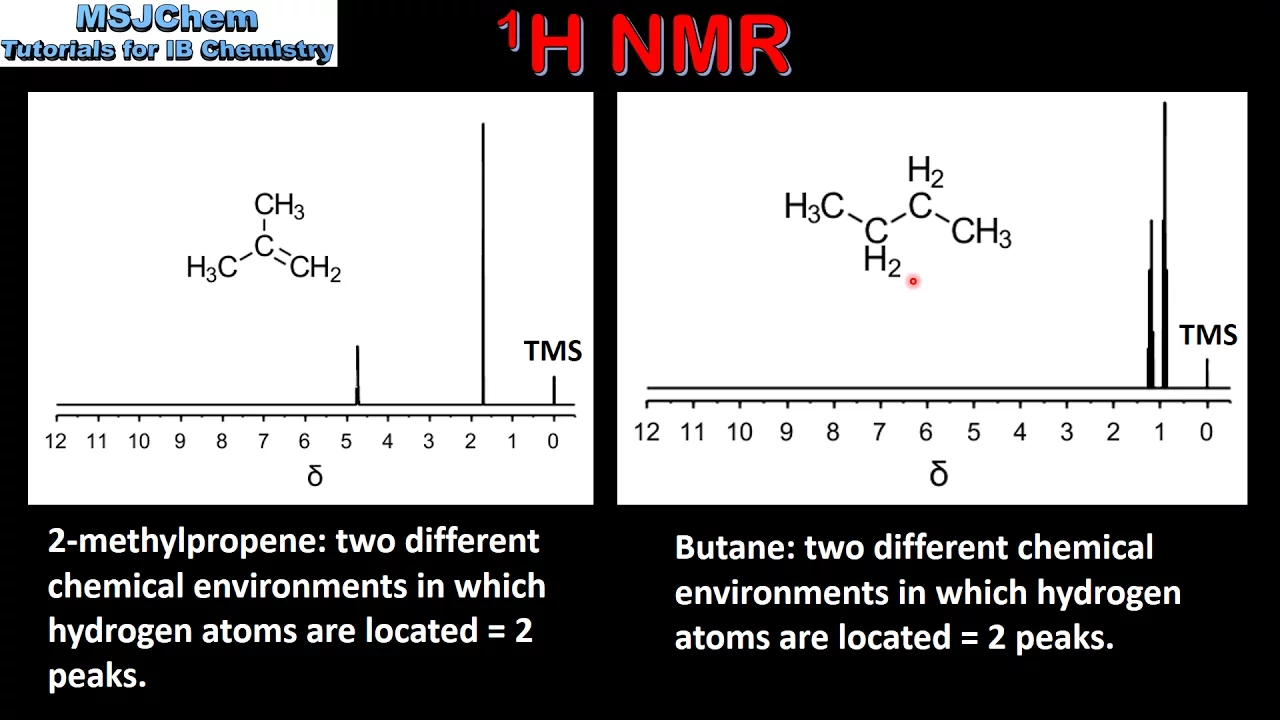
1H NMR: Determining Number of Peaks from Structure
@MSJChem
59.2K views•2017-04-06

Edible Water Bottles: A DIY Guide to Sodium Alginate Spherification
@ryan
10.5M views•2019-06-21
Related Study Plans & Knowledge Roadmaps
Structured learning paths in Chemistry