






![#016 - ▶️ Dither & Quantization Distortion [Tutorial - How To - ENGLISH]](https://i.ytimg.com/vi/rTdSHt4Wrmo/maxresdefault.jpg)





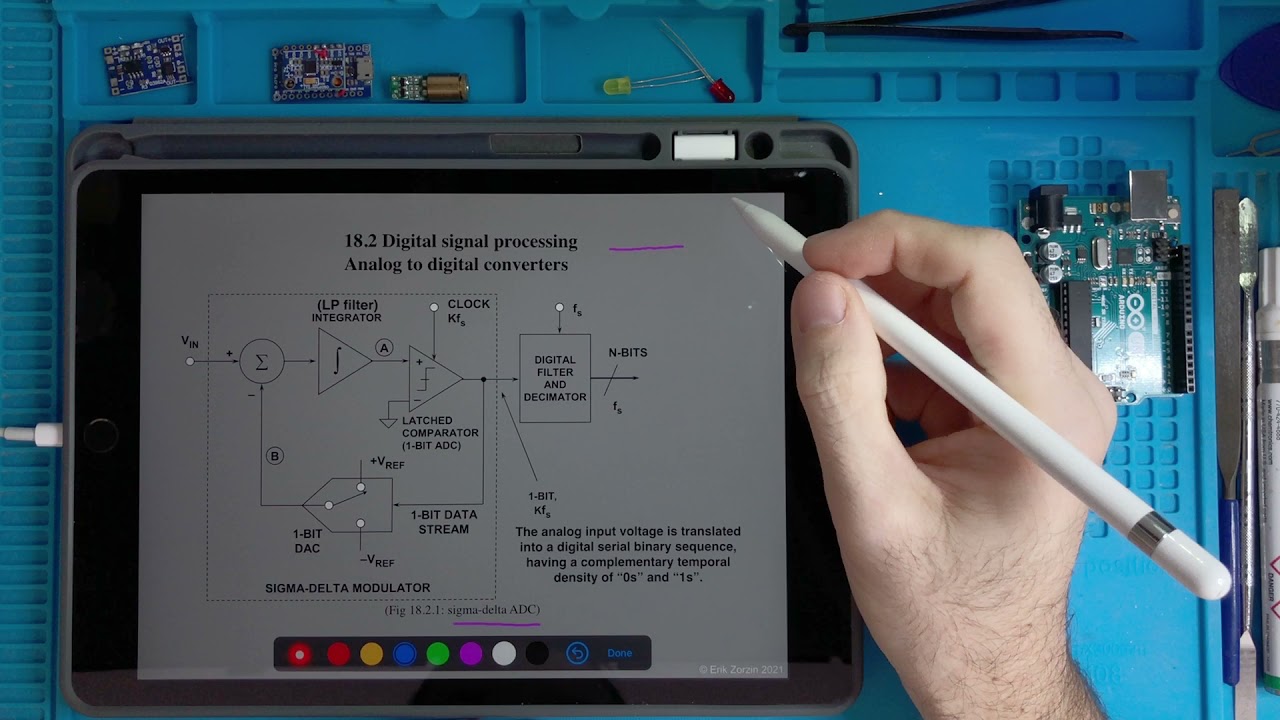
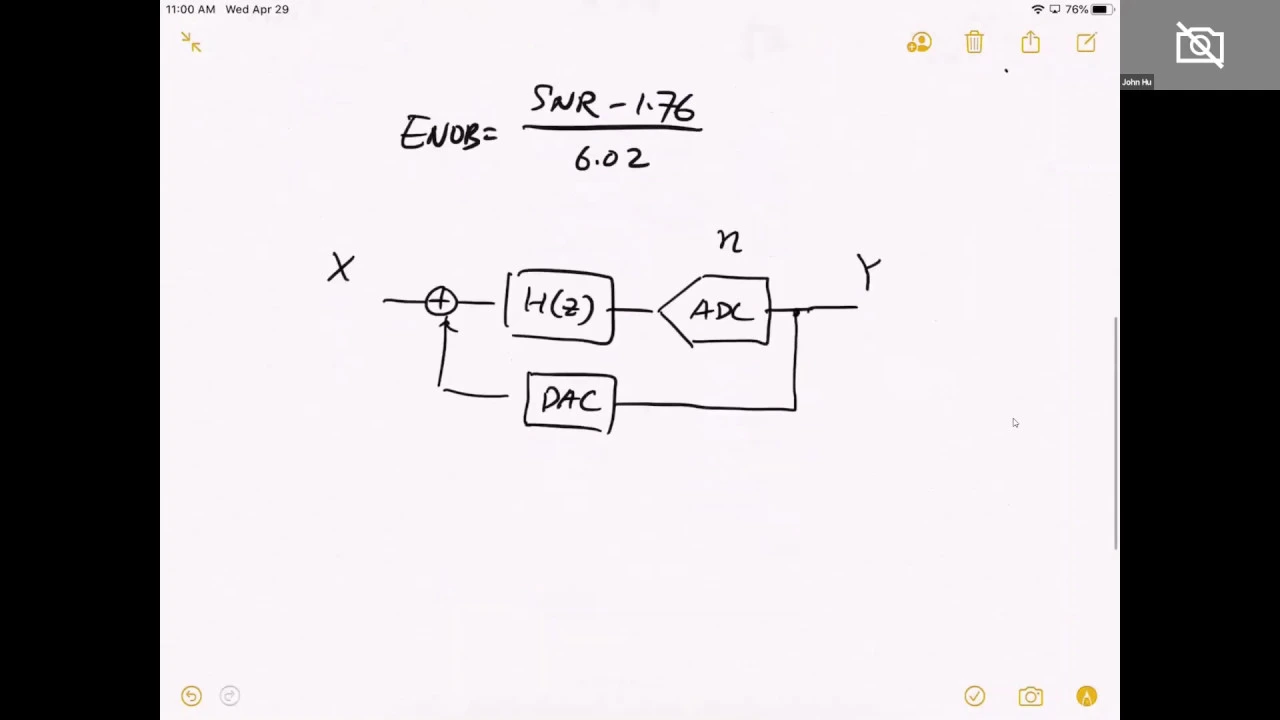

The Nyquist-Shannon sampling theorem states that a band-limited signal (one containing no frequencies above a certain limit) can be perfectly reconstructed from discrete samples taken at twice the rate of the highest frequency in the signal; this principle enables digital audio recording and playback, where signals are first band-limited using a low-pass filter (typically to 20 kHz for human hearing), then sampled at 40 kHz or higher, and finally reconstructed through a DAC with an identical low-pass filter, ensuring the output matches the original analog signal without stair-step artifacts.
Understanding Digital Audio through the Nyquist-Shannon Sampling Theorem
Added:Basic understanding of analog sound waves, including concepts of frequency (Hz), amplitude, and the human hearing range (20 Hz to 20 kHz).
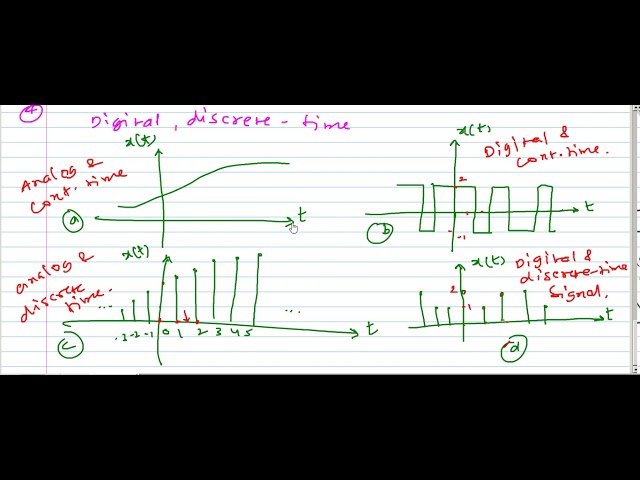
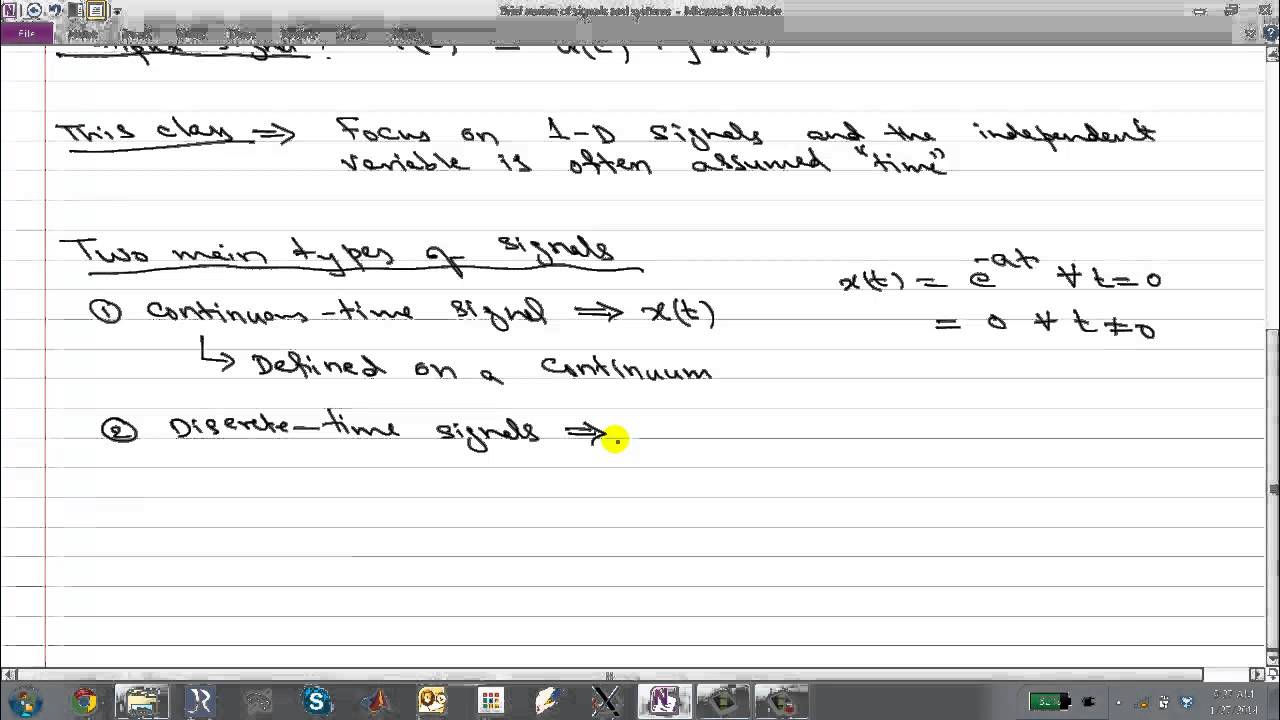
The conceptual distinction between continuous-time (analog) signals and discrete-time (digital) signals.
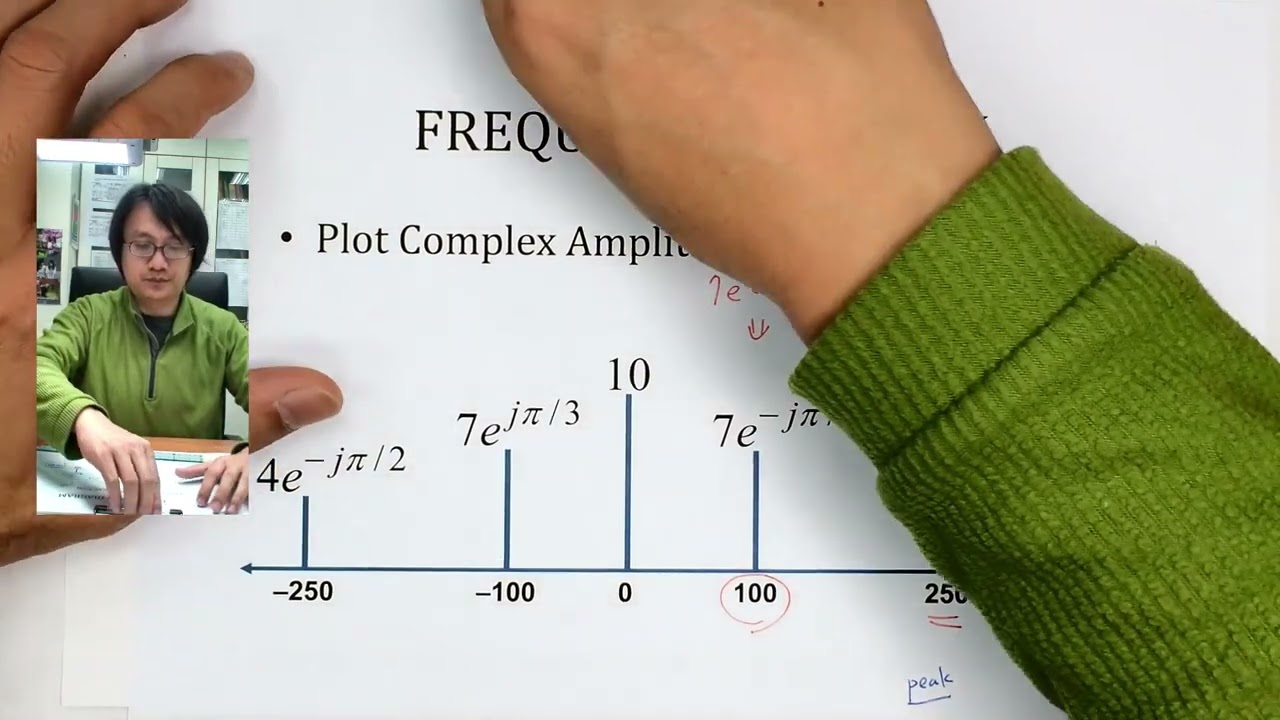
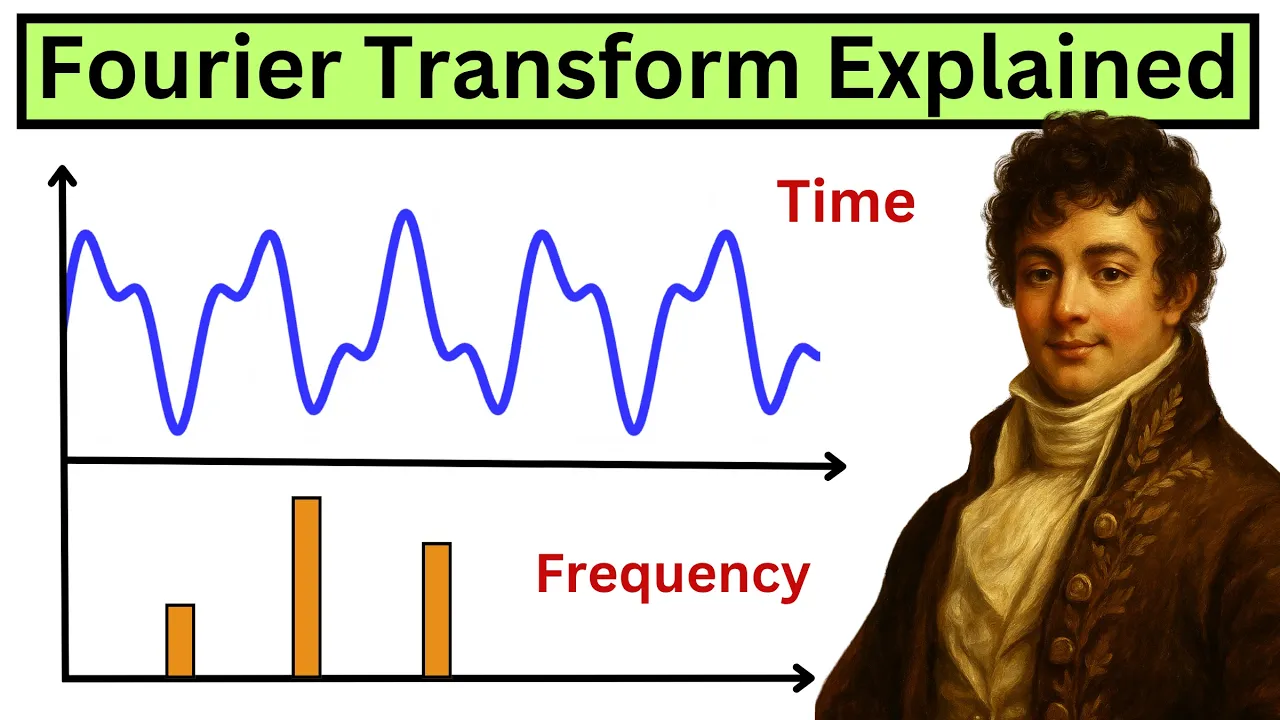
An introduction to the frequency domain and the concept that complex signals are composed of individual sine waves (basic Fourier theory).
The phenomenon of spectral aliasing and how anti-aliasing (low-pass) filters are physically implemented in Analog-to-Digital Converters (ADCs).
Quantization, bit depth (e.g., 16-bit vs. 24-bit), dynamic range, and the role of dither in reducing quantization distortion.
Practical Digital-to-Analog Conversion (DAC) and the real-world limitations of the mathematical Whittaker-Shannon interpolation (sinc function) formula.
Modern high-resolution audio techniques, oversampling, and the mechanics of sigma-delta modulation.
583K views24.7Klikes17:33Original Release: 2018-08-10
In 1982, the fruits of a partnership between Sony and Philips were released to the music-loving public.
The Compact Disc, or CD, was unveiled as the first consumer digital audio format.
These 12 cm discs could store up to 74 minutes of perfect quality digital audio, and as was famously demonstrated many times over, were immune from liquid damage, could withstand significant scratching, and could be played without wearing them down for a theoretically infinite number of times. That’s because, unlike all previous sound formats where the sound is encoded as an analog impression of the sound wave on plastic discs or magnetic tape, the sound on a CD is encoded as a series of samples, which function as a set of instructions on how to recreate the sound.
The Compact Disc was a big freaking deal in many ways. It represented a giant leap in convenience for the consumer, quality of the recorded sound, and in raw data storage capacity.
That last bit wouldn’t be too relevant to the computing industry for some time, but it solved the central problem of digital sound--needing a, for the time, absurdly massive amount of raw data.
Before we get too far into the specifics of the Compact Disc, it’s time to dig a little deeper into how digital sound actually works. Recall from my last video that an analog-to-digital converter is taking instantaneous samples of the analog signal at a specific sampling frequency.
Then, a digital-to-analog converter can recreate the original analog signal with only those samples. Well, a lot of people think that this can’t possibly work to recreate all the detail in the original analog sound wave. But thanks to mathematics, we know that it can. And does.
It’s time to explore the Nyquist-Shannon sampling theorem. This theorem was co-discovered by E. T. Whittaker and Vladimir Kotelnikov so it is also, but less commonly, referred to as the Whittaker–Nyquist–Kotelnikov–Shannon sampling theorem. Anyway, Harry Nyquist and Claude Shannon, along with the other two, discovered that a band-limited signal, that means a signal which does not contain frequencies above a certain limit, can be perfectly described and perfectly reconstructed by taking instantaneous samples at twice the rate of the frequency limit.
This gets a little complicated, so I’m going to explain it as best as I can.
Our hearing itself is bandlimited. Though frequencies exist in nature above 20,000 hertz, our ears cannot detect anything above that frequency. Some people claim they can but, well most people rapidly lose their hearing at those high frequencies as they age, and I’m talking like as they leave childhood, so let’s just not go there. With the knowledge that anything above 20,000 hertz will just not be audible, we can therefore capture all of the audio we can hear by only recording sounds below 20 kilohertz.
Passing an analog input through what’s called a low-pass filter will eliminate any frequencies above a specified point. There’s no sense in recording sounds we can’t hear, so we can use a low-pass filter to eliminate frequency components above 20 kilohertz and we end up with a signal that represents all that we can hear, and is, importantly, band-limited.
For now, we’re going to assume this can work perfectly, so we’ll say that any signals above 20 kHz cannot pass through the low pass filter.
Nyquist-Shannon tells us that by sampling at a rate of 40 kilohertz, we can capture all the detail possible in this newly band-limited signal. That may sound a little unintuitive, but let’s explain why it’s true. When you have a band-limited signal, certain types of sounds get reduced to a representation of themselves made as a sum of sine wave harmonics.
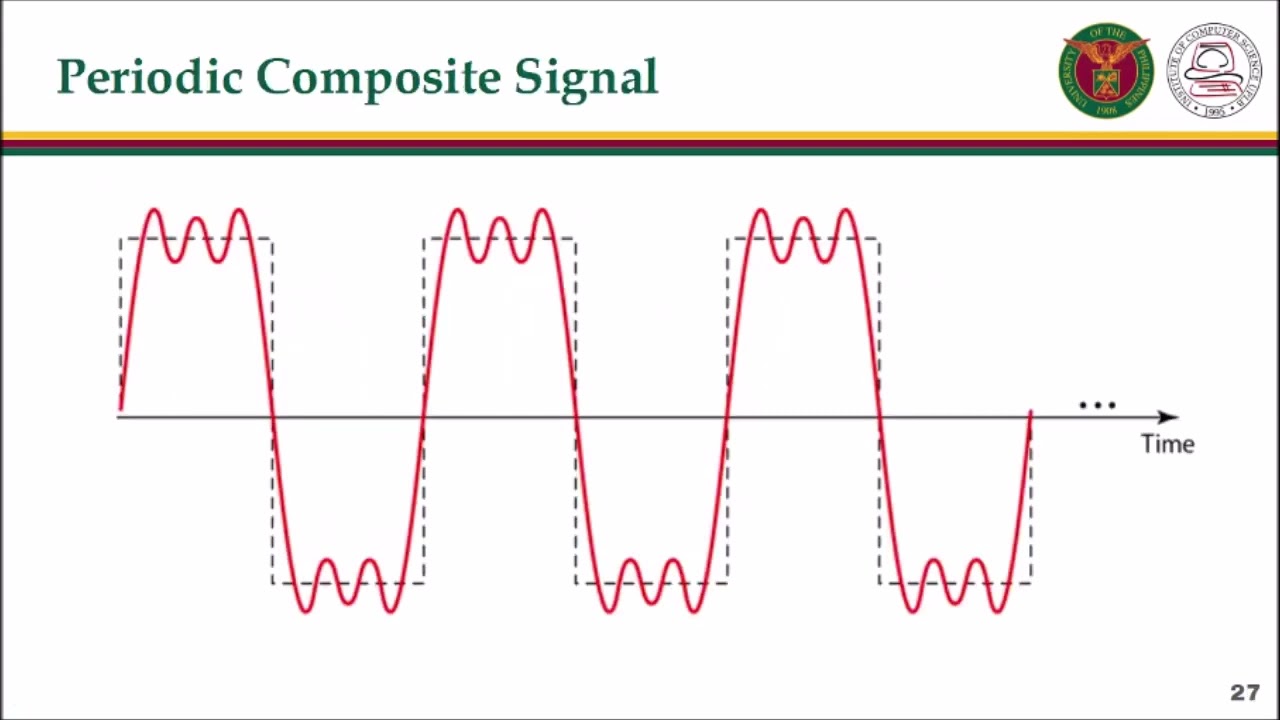
Fourier transformation, which is another complicated math subject that will rear its ugly head a little later, means that we can represent any waveform as a sum of sine wave harmonics.
The most classic illustration of this is a square wave.
A true square wave looks like this, but to actually reproduce this signal would require near infinite bandwidth. And I know what you’re saying, that seems silly, this is just a rapid hard cut in and out of a signal. Like flipping a light switch on and off. Ehh, that’s true, but if we could produce this signal, then this vertical piece, which represents an instantaneous increase in amplitude, would require a frequency response that’s ridiculously high. See if we can make that instantaneous shift from low to high intensity, then we must be able to produce the same shift downward in the same amount of time--which is no time at all if it truly is instantaneous. To do that would require infinite bandwidth. That’s more than we have to play with, so when this signal is passed through a low-pass filter of 20 kilohertz, it comes out like this. This is the sum of harmonics that would create this square wave via a fourier transform, but the highest frequency harmonic possible is 20 kilohertz.
Because we’ve placed a bandlimit on the input, we’re dealing with nothing but sine waves now, piled on top of each other. We are constructing any other waveforms as a sum of sine wave harmonics, and this explains why the Nyquist-Shannon theorem holds true.
If the sample goes from the lowest possible to the highest possible value and back, the only waveform that can hit those three samples is a sine wave at the Nyquist frequency of 20 kilohertz. We can’t describe any frequencies higher than 20 kilohertz, but just two samples per cycle is enough to define our highest possible frequency.
When you band-limit a signal, you eliminate all of the high frequency harmonics that could define a square wave with greater detail than this. Now before you cry foul that this is creating detail where there shouldn’t be detail, just remember that your hearing is just as bandlimited as the output of the low-pass filter. And also keep in mind that the whole chain here is messy. Everything in nature will oscillate with a sudden impulse of energy.
Even if a true square wave were to burst on the scene, your eardrums will oscillate between the peaks in energy, sort of like the wiggly wobblies in this bandlimited waveform.
So they key here is-- don’t worry about it.
This drove me crazy for days but the fact is--this is just how sound waves and nature work. Any signal can be represented as a sum of sine waves, and bandlimiting it simply forces these oscillations into existence. The most pressing issue with this representation is that it can create ringing artifacts as a result of the Gibb’s phenomenon, but now we’re getting into really nitpicky stuff, and you could easily argue that this would happen even in analog systems due once again to natural oscillations either in the physical realm, such as the fact that both a phonograph needle and loudspeaker driver have mass and thus cannot move instantaneously so they will oscillate at their own harmonic frequency and create their own ringing artifacts anyway, and also the electrical realm because the nature of any circuit will have some oscillations, too. So again, don’t worry about it.
Now comes the part that sounds crazy but is completely true, and I can show it to you in a moment. Nyquist-shannon tells us that if we simply have twice the number of samples per second as the frequency of our signal’s band limit, the exact bandlimited signal can be reproduced perfectly, and I mean literally perfectly, using only those samples.
This is admittedly weird, so let’s talk through it.
Imagine an ADC is recording a sound. Every 40 thousandth of a second it takes an instantaneous reading of the signal it receives. By quantifying it on a digital scale of our choosing, it creates 40 thousand discrete samples every second. But remember, that signal has passed through a low-pass filter before it reached the ADC, so it does not contain any frequencies above 20 kilohertz. The truly mind-blowing part about Nyquist-Shannon is that the samples we get from this bandlimited signal can ONLY reproduce the original signal. There is only ONE signal that can possibly produce the exact series of samples that the ADC recorded Again, this is because we are dealing with a bandlimit. Without a bandlimit in place, the samples could be defining parts of other strange waveforms due to aliasing, but when adhering to this bandlimit the resulting string of samples can only define exactly one waveform. There is literally only one mathematical solution for the bandlimited waveform that would pass through all samples.
(Mind blow) This is some complicated stuff here. But just know that if I have any series of samples, and I assume these are representing a bandlimited signal, then they can only possibly satisfy one waveform. And that, ladies and gentlemen, is why the myth that digital sound creates a stair step pattern in the output is false. But the weirder bit is that the DAC very well might. But before you freak out--that doesn’t mean any stair-steppy signal has ever come out of a DAC or CD player or anything. And that’s because of the same low-pass filter that originally bandlimited the input signal.
Many digital to analog converters are actually quite simple. They use a resistor ladder, which is tied to the actual bits in each discrete sample, to produce the appropriate voltage.
I don’t want to go on too much of a tangent here but they are really neat and explain how the simplest DACs work. Each bit of the sample is tied to a resistor. If it’s a 1 the resistor is activated and passes voltage through it, and if it’s a 0 the resistor is not. The network of resistors will create a unique voltage for each possible combination of bits, and thus you now end up with zeros and ones equalling a voltage of however specific you want. A 16 bit DAC, like those used in the Compact Disc standard (most of the time--we’ll get to that) will have 16 resistors, each controlled by one bit of the datastream. These feed into intermediary resistors to create all of the possible voltages. But the more bits you add, the more accurate these resistors have to become, which helps explain why the earliest DACs were very expensive. The technology to produce resistors in an integrated circuit within an accuracy within approximately.000015% was expensive for a while.
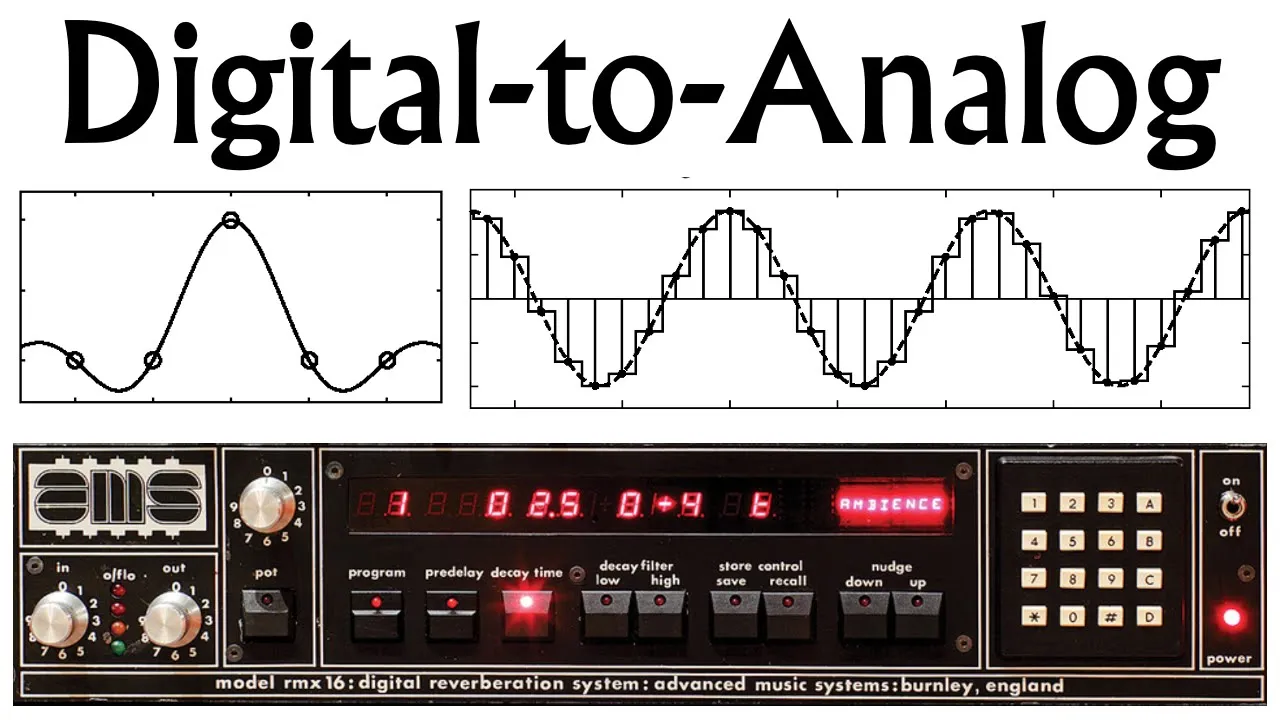
Anyway, these R-2R DACs, as they’re sometimes called, will produce a stair-step waveform from the output of the resistor ladder. This is what’s called sample-and-hold. Each sample sustains the given voltage level until the next sample is received by the DAC. This had led to many, many, far too many people believing that this is the signal that comes out of your CD player and goes into your amplifier. It is easy to imagine this blocky-looking waveform screwing around with your favorite recording of Beethoven’s 9th.
But you forget, dear audiophile, that the stair-steppy waveform will pass through a low-pass filter on its way out. And that filter will create the same bandlimit on the output from the DAC as was placed on the input of the ADC. Now, what this means, is that the output from the DAC is also bandlimited to 20 kilohertz. And why does that matter? Because the very stair-steppy nature of the resistor ladder’s output is impossible with a bandlimit of 20 kilohertz. Just like our square wave example, these vertical components require infinite bandwidth. Good luck with that.
But what’s even weirder, and kinda difficult to grasp, is that because the output of the DAC has the same bandlimit as the ADC did, now we are dealing with Nyquist-Shannon again.
And the truly strange-but-true part of this, is that the only possible result of the output from the low pass filter is the original waveform that the ADC recorded. Remember, with a bandlimited signal, we can represent all of the detail within that signal with discrete samples, and with only a sample rate that is twice the bandlimit frequency. If we create a waveform that passes through all of the samples, then it must be the original waveform recorded by the ADC.
The fact that the waveform comes out of the resistor ladder all choppy-like doesn’t matter in the slightest, because the low pass filter will bandlimit it and get rid of the choppies. Now it can only contain frequencies of 20 kilohertz or below. Remember, the vertical parts of the stair-step pattern are impossible with that bandlimit, so they just get smoothed out. And since we know that the DAC was outputting the correct voltage level with each sample, all of the samples must have been satisfied. Which means that after the LPF smooths the waveform, it must have passed through all of the samples. And because there’s a bandlimit in place, Nyquist-Shannon proves that the output signal is the exact same one as the input.
To provide some evidence to back this claim up, take a look at this CD player. This is a Sony CD changer from 1993. It has a relatively rudimentary DAC in part because it’s a cheaper machine and in part because it’s older. Let’s hook an oscilloscope up to it and take a look at the output coming from its RCA jacks.
This is just some music it’s playing right now. Notice that there’s nothing in here that looks remotely stair-steppy. But let’s take it even further. I’ve created a CD with various tones generated in Audacity. Let’s start with a 1 kilohertz square wave.
Even though in Audacity the samples look like this--straight up, then hold, with a completely straight line between peaks--the output from the CD player is that wiggly wavy thing. That happens because those wiggly wavies are the only way to make this square wave with a 20 kilohertz bandlimit, and the wiggly bits are passing through each of those samples.
Now let’s switch to some sine waves. This is again 1 kilohertz. This looks perfectly smooth, no stair-steps to be seen. To be fair, though, even in Audacity it looks pretty good.
Let’s move up to a 10 kilohertz sine wave. Now in Audacity it looks really gnarly, with the connections between the samples making a barely intelligible wave. There aren’t even 5 samples per cycle, so how can the smooth detail of the sine wave possibly be reproduced?
Well, take a look. There’s a perfectly smooth sine wave for you, right there.
This is why some of you cringed when I drew straight lines between the samples. That’s only sort of what happens, and even then it’s not that accurate. But it does serve as a sort of blend between the two realities. There is a stair-step pattern in the intermediate between the resistor ladder and the low pass filter. So the DAC does connect the dots, but like this. Then the LPF smooths out the connections between the dots, but that only happens as a side-effect of the fact that it’s creating a bandlimit so the high frequency components, that’s the vertical parts here, get tossed out. What you’re left with is the only possible waveform that can both hit all the samples, and which does not contain frequency components above Nyquist. Simple, right?
Ah! We haven’t even really talked about the CD itself yet! And this is pushing into the 14 or 15 minute mark already, if my gauge of time per written page is at all correct.
OK, I guess we’re going to push the technology of the CD into another video. But that’s OK, since we covered what makes sound out of numbers. And hopefully we’ve destroyed the myth that digital audio cannot produce smooth waveforms. It does.
Much of the information from this video (and indeed some selected clips) came from a lovely video by Monty at xiph.org. I’ve linked to a great article of his down below, and a card will pop up now heading to his video. Many, many people brought this to my attention on Twitter and elsewhere, so thank you. He’s got some much better demonstrations than I do that cover this topic. He also explains why the bit depth affects noise, and not clarity, what dithering is and how it reduces quantization noise, and much more.
But I will give you one last tid-bit before I sign off. You may have noticed that in the video we’ve been discussing a theoretical sampling rate of 40 kilohertz, as this Nyquist sampling rate could perfectly capture all of what human hearing can pick up. But the CD standard’s sampling rate is 44.1 kilohertz. Why the extra 4.1? That seems awfully specific.
Well, that’s due to the fact that low-pass filters aren’t perfect. They can’t just cut off frequencies above a point, they instead have a transition window where the frequencies degrade to zero.
The 44.1 kilohertz sampling rate is to accommodate for that window. Without a hard-cut on the low-pass filter, aliasing could occur because the samples might define a waveform of a higher frequency than Nyquist. This is a precisely why we need an LPF. Both of these waveforms satisfy all the samples, so to prevent one of them from coming through, we need to decide a limit in frequency. If the red waveform is above the Nyquist limit, then it won’t get reproduced. But if the low-pass filter could let slip some signals above our decided sample rate, scenarios like this might occur. Therefore, the sample rate was chosen to be 44.1 kilohertz, that way it exceeds the transition window for our desired 20 kilohertz cutoff.
And by sampling a bit beyond the audible range, we don’t have to worry about spurious aliasing artifacts from samples in the transition band.
But the more interesting thing about the 44.1 kilohertz rate is that it was also chosen for easy digital sound storage before a CD gets pressed. This was the perfect sampling rate for storing sound on both an NTSC and a PAL U-Matic videocassette recorder. The commercial VCR format from Sony was among the earliest ways to store a digital audio stream, using the video signal sort of like a giant QR code. It’s not literally being read in that sense, but the data is stored on the tape as a field of black and white bars in each line, so if watching the output on-screen it would look like a flashing screen of QR codes whizzing by 60 times per second. 44.1 kilohertz would, on both NTSC and PAL signals, work out to 3 samples per video line. So in a strange twist, the world of analog video dicated how digital sound would work.
Thanks for watching, I hope you enjoyed the video. As I end all of my videos apparently, if this is your first time coming across the channel and you liked what you saw, please consider subscribing. Also, and I know this can sound weird, but for those that follow my videos--you might want to make sure you are actually subscribed. Often times YouTube just serves you content because it knows you like it, and you might think you are subscribed when you aren’t. Same goes for all channels, but I’ll be the selfish one today and post this reminder.
As always, thank you to everyone who supports this channel on Patreon, especially the fine folks who are scrolling up your screen. Supporters on Patreon have turned my weird hobby of making videos about technology into a job, and you all deserve my thanks. If you would like to pledge some support and help the channel grow, please check out my Patreon page.
Thanks for your consideration, and I’ll see you next time!
Up Next

6:37
Quadcopter Drone Flight Dynamics: Physics Explained
@SabinCivil
1.1M views•2020-10-31
30:32
Ultrasonic Transducers: Resonant Frequency Measurement and Horn Design
@imajeenyus42
229.9K views•2017-02-22

21:03
Heat Pump Efficiency: A Cold Climate Analysis
@TechnologyConnections
1.4M views•2022-03-26
33:39
How a Student's Question Saved a NYC Skyscraper from Collapse
@veritasium
22.8M views•2025-04-26
Related Study Plans & Knowledge Roadmaps
Structured learning paths in Engineering
engineering
Building Acoustic Levitators: Physics & Arduino
01The Physics of Sound and Standing Waves
02Piezoelectric Transducers and H-Bridge Drivers
03Arduino Programming: Generating 40 kHz Signals
+ 2 more learning modules
14h5 modules
Explore Roadmap
engineering
Building Peltier Cloud Chambers: Particle Tracks
01Cosmic Rays & Cloud Chamber Physics
02Thermoelectric Cooling (TEC) Fundamentals
03Custom Liquid-Cooling Loop Design
+ 2 more learning modules
18h5 modules
Explore Roadmap
engineering
Yagi-Uda Antennas: Modeling, Build & VNA Test
01Introduction to RF and Antenna Fundamentals
02Yagi-Uda Antenna Design Principles
03Antenna Modeling and Simulation in 4NEC2
+ 2 more learning modules
18h5 modules
Explore Roadmap
engineering
ECG Monitor Design: Op-Amps, Filters & Noise
01Electronics & Breadboard Basics
02Op-Amps and Instrumentation Amplifiers
03Bioelectricity and ECG Fundamentals
+ 2 more learning modules
18h5 modules
Explore Roadmap