MMP is New Zealand's electoral system where voters cast two votes: a party vote determining overall seat allocation proportionally, and an electorate vote selecting a local MP; parties need at least 5% of party votes or win an electorate seat to enter Parliament, with remaining seats filled from party lists to achieve proportional representation, often requiring coalition governments.
Understanding MMP: New Zealand's Mixed Member Proportional System
Added:Deep Dive
Basic understanding of representative democracy and how a parliamentary system of government operates.
संसदीय व्यवस्था ( Indian Polity ) FULL CHAPTER | Complete Indian Polity - Chapter 13
139.4K
The parliamentary system is a form of representative democracy where the government is formed by representatives elected by the people. The ministers are members of the legislature and represent the people's interests. This representative democracy ensures that the government is accountable to the people through their elected representatives. The parliamentary system is designed to ensure democratic accountability.
Click to watch →

BRAOU UG Political Science 1st Year 1st Semester: REPRESENTATIVE DEMOCRACY
507
In representative democracy, citizens elect representatives who form the government. In parliamentary systems (India, Canada, Britain), the executive comes from the legislature and is collectively responsible to it. In presidential systems (USA, Brazil, Mexico), the executive is independent of the legislature and directly elected by the people, based on Montesquieu's separation of powers theory. The judiciary ensures laws remain within constitutional limits through judicial review. In India, the constitution is supreme, and any law violating it can be declared unconstitutional. The system operates through universal adult franchise, with elections conducted by an independent Election Commission.
Click to watch →
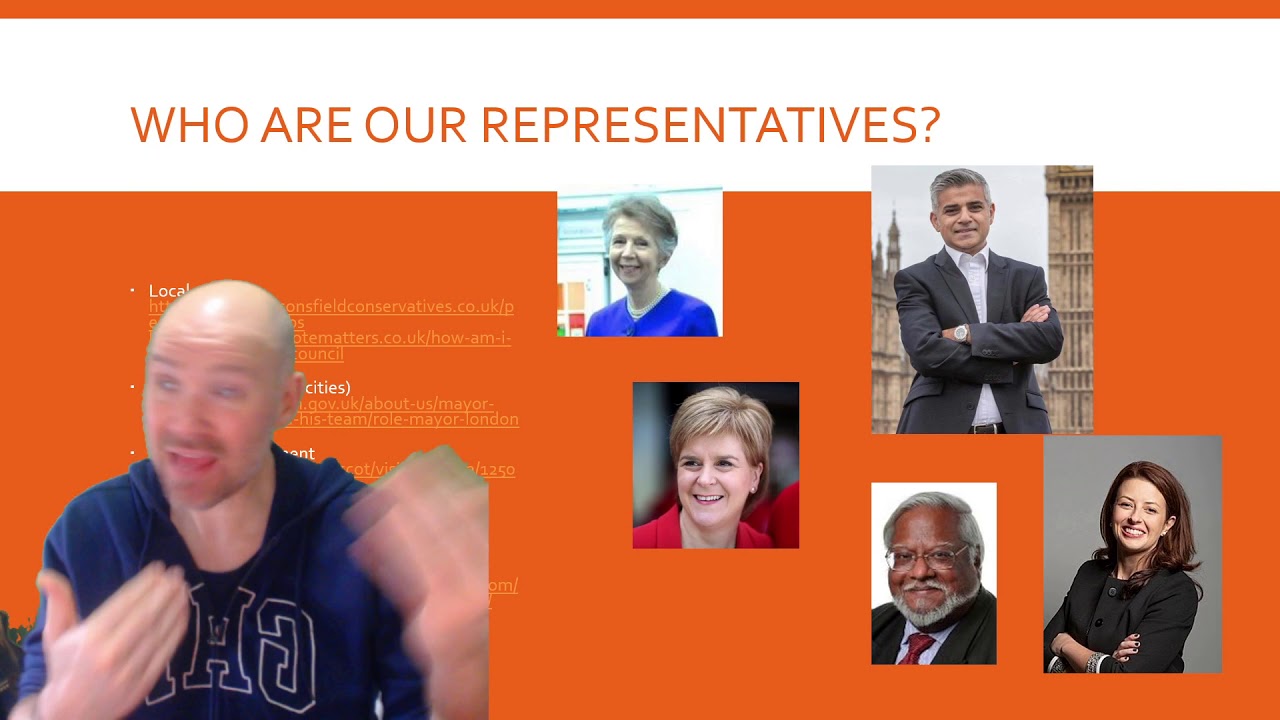
Representative Democracy
512
Representative democracy is a system where citizens elect representatives (such as local councillors, mayors, and Members of Parliament) to make decisions on their behalf, rather than participating directly in decision-making. This system operates at multiple levels—local, regional, and national—with representatives accountable to voters through regular elections. Representatives fulfill various roles including constituency representation (advocating for local interests), party representation (following party lines), social/functional representation (reflecting demographic diversity), and causal representation (championing specific causes). The system has strengths such as enabling more rational decision-making, protecting minority interests, and providing practical governance efficiency, but also faces weaknesses including limited accountability between elections, electoral mandates that force voters to accept entire party manifestos, and potential conflicts between different representation models that can frustrate constituents.
Click to watch →
PARLAMENTARISMO: o que é e como funciona esse sistema de governo?
1.1K
The parliamentary system is a form of government where voters elect representatives to the legislature, and the party with the majority (or coalition) selects the Prime Minister as head of government, who remains in power as long as they maintain parliamentary support; this system, used in countries like the UK, Canada, Germany, and Japan, can function in both monarchies and republics, and differs from presidentialism by concentrating power in the legislative branch and allowing for more efficient governance without the gridlock that can occur between executive and legislative branches.
Click to watch →

STGT Victory Batch || Political Science || 1500 MCQ || By Susmita Ma'am || #stgt #pgt #jrbt #tpsc
9.2K
Representative democracy (পরোক্ষ গণতন্ত্র) is a system where citizens elect representatives who then govern on their behalf. India operates under a parliamentary system with Parliament consisting of two houses: the Lok Sabha (lower house) and the Rajya Sabha (upper house). The President is the constitutional head of state, while the Prime Minister is the actual head of government. Members of Parliament are elected by citizens and represent them in the legislative process. This system is particularly effective for large countries because it provides administrative stability and practical governance while maintaining democratic accountability.
Click to watch →
Deep Dive
The concept of 'First-Past-the-Post' (plurality) voting systems and their historical dominance in Westminster-style democracies.

Class 11th Political Science Chapter 3 Subjective | Chunav Aur Pratinidhitv Class 11 Bihar Board |
4.2K
The First-Past-The-Post system (also called Plurality System or Majority System) is an electoral system where the candidate who receives the most votes wins, even if they do not have an absolute majority. For example, if a candidate receives 2000 votes out of 5000 total votes, they win even if other candidates receive fewer votes.
Click to watch →
Political Thought of J.S Mill||J.S Mill: Representative Government, Suffrage, Change in democracy||
38.2K
The first-past-the-post system creates 'tyranny of the majority' where minority groups receive disproportionate representation despite significant support. For example, a candidate winning 33% of votes in a constituency secures all seats while 67% of voters get no representation. Proportional representation addresses this by allocating seats according to the percentage of votes each party receives nationwide, providing fairer representation for minority groups and smaller parties. Mill proposed a plural voting system where different citizen categories receive different vote weights: graduates and government officials receive more votes than ordinary workers, with exceptionally talented individuals receiving even more. This system aimed to give greater weight to educated citizens' political judgments. Mill also advocated for open ballot systems where voters' choices are publicly visible, believing this promotes societal tolerance by making people accountable for discriminatory preferences.
Click to watch →

UPSC CDS Previous Year Paper Solution Part - 1 | #upsccds #upsccdspreviousyearpaper
294
The First Past the Post system is a simple plurality system where the candidate with the highest number of votes wins the election. It does not require a majority (more than 50%) of votes. For example, if Candidate A gets 35%, Candidate B gets 34%, and Candidate C gets 31%, Candidate A wins even though B and C together have more votes than A. This system is used in India, UK, and Canada for Lok Sabha and Vidhan Sabha elections. The candidate with the highest vote percentage wins, regardless of whether they have a majority.
Click to watch →

लोकतंत्र में निर्वाचन और मतदाता जागरुकता REET Sst New Topic || REET 2021 Exam Complete Syllabus
63.8K
The First Past the Post system is used for elections to the Lok Sabha and State Legislative Assemblies. In this system, the candidate who receives the highest number of votes wins, regardless of whether they achieve a majority (more than 50%). This system is also known as the plurality system.
Click to watch →

Maybe We Were Wrong About Ranked Choice Voting
74.1K
Plurality voting (first-past-the-post) is the dominant voting system in the United States, where voters can only select one candidate and the candidate with the most votes wins, even without a majority. This system creates several fundamental problems: it forces voters to vote strategically for the 'lesser of two evils' rather than their true preference, it enables vote splitting where multiple similar candidates divide the vote and allow a less-preferred candidate to win, and it fails to produce representative outcomes when there are more than two viable candidates. The Equal Vote Coalition argues that this system is the root cause of many problems in American democracy, including unrepresentative government and the inability to vote one's conscience.
Click to watch →
Deep Dive
The fundamental distinction between local constituency representation (electorate seats) and nationwide party representation.

ระบบเลือกตั้ง และการใช้ทรัพยากรร่วม กับ ปิยบุตร | พูดมาก Podcast EP.03
133.1K
Elected representatives serve as representatives of the entire nation, not just their local constituency. Constituencies are divided to ensure geographic distribution of representatives, but local governance is handled by local government bodies. To prevent PR systems from fragmenting representation too much, countries can adjust the ratio of local constituency seats to party list seats or organize party lists by geographic regions. This ensures regional diversity while maintaining proportional representation.
Click to watch →

POLÍTICA NA NOVA ZELÂNDIA: Como funcionam as eleições na Nova Zelândia?
1.7K
In MMP, voters elect representatives through two mechanisms: electorate seats and party seats. An electorate is a local geographic area where voters elect a candidate to represent them in Parliament. Candidates who win their electorate seats do not need to meet the 5% threshold. Party seats are allocated proportionally based on the percentage of votes each party receives nationally, ensuring representation for smaller parties that meet the threshold.
Click to watch →

CODE ÉLECTORAL : LA PROPOSITION DES DÉMOCRATES A ÉTÉ RETENUE SUR LES ELUS QUI VONT PARRAINER
1.9K
Representativeness at the national level does not automatically guarantee representativeness at the constituency level. The 24 constituencies constitute the entire national territory, and the only way to verify that national representativeness exists is to ensure that all parties have presence and strength in every constituency. This ensures that elected officials represent the entire national electorate rather than just specific regions.
Click to watch →

Ceprano 15 settembre 2020
114
Local representatives (municipal, provincial, regional) and national parliamentarians serve fundamentally different functions, have different powers, and fulfill different democratic purposes. They cannot be equated or substituted for one another. The speaker argues that reducing national representation while maintaining local representation creates an unbalanced system that fails to address the differentiated needs of citizens at various territorial levels.
Click to watch →

Ex-partylist representative Eugene De Vera airs his side about his expulsion from the House
696
Party list representatives have a national scope but represent specific sectors (like professionals), while district representatives have a localized focus on their specific geographic area. Party list representation is sectoral and can be national, regional, or sectoral, whereas district representation is strictly localized to a specific geographic constituency.
Click to watch →
Deep Dive
The general concept of Proportional Representation (PR) and the democratic philosophy of aligning seat share with vote share.

Why British Democracy Is An Absolute Joke
25.4K
Proportional Representation (PR) is an electoral system where parties receive seats proportional to their vote share. If a party gets 20% of the vote, they get 20% of the seats. This is considered more logical and democratic than FPTP because it directly translates votes into representation, preventing the extreme disproportionality seen in the 2015 UK election.
Click to watch →

পিআর পদ্ধতি চালু হলে বিস্ময়কর যা ঘটতে পারে...|@Changetvpress
3.8K
Proportional Representation (PR) is a democratic electoral system where political parties receive seats in proportion to their vote share, ensuring that parties with 5-10% votes can win 15-30 seats instead of none, thereby giving minority parties a meaningful voice in government and preventing the concentration of power in a single party; this system addresses the problem of minority governments (where parties win with only 30-40% votes) by requiring only 51% votes to form a majority government, which builds public confidence and reduces the likelihood of authoritarian tendencies.
Click to watch →
國會席次分配的秘密?The Secret Behind Parliamentary Seat Allocation#普發公民課本 #L4-03 #897 @mynotebook
1.3K
Proportional representation (PR) aims to make parliament a 'reflection' of society's diverse voices, including different classes, ethnic groups, and ideologies. Political scholar Lee Pat distinguishes consensus democracy (PR-based) from winner-take-all systems. PR forces multiple parties into parliament, requiring negotiation and compromise to form coalition governments. For countries with deep ethnic or religious divisions, PR is not just beneficial but essential for preventing social fragmentation.
Click to watch →

পিআর পদ্ধতি হলে সব দলের প্রতিনিধি সংসদে থাকবে: ব্যারিস্টার ফুয়াদ | | Samakal News
63.8K
Proportional Representation (PR) is an electoral system where citizens cast two votes: one for a candidate and one for their political party. Seats are allocated proportionally based on vote share, ensuring no votes are wasted. In the current system, only winning candidates gain representation, while losing votes are discarded. PR ensures all votes count toward party representation. Implementation methods include lottery selection, negotiation, geographic distribution, and rotating seat allocation over time. Established democracies like Germany, New Zealand, and Australia have adopted PR after over a century of democratic practice. The core principle is that every voter's opinion holds equal importance regardless of demographics, education level, or geographic location.
Click to watch →

সংখ্যানুপাতিক নির্বাচন কী, কেন মত দ্বিমত! | Proportional Representation | Barta24
9.2K
Proportional Representation (PR) is an electoral system where political parties receive seats in parliament proportional to their share of votes, ensuring representation for all parties and citizens; this system, used by approximately half of the world's 170 countries, includes three main types (open list, closed list, and mixed systems), and while experts like Dr. Ahsan Kalimullah argue it is necessary for Bangladesh's governance, others like Dr. Nurul Amin Bapari caution that constitutional changes require broad consensus and institutional stability first.
Click to watch →
Prerequisite Knowledge
- Concept 01Basic understanding of representative democracy and how a parliamentary system of government operates.
- Concept 02The concept of 'First-Past-the-Post' (plurality) voting systems and their historical dominance in Westminster-style democracies.
- Concept 03The fundamental distinction between local constituency representation (electorate seats) and nationwide party representation.
- Concept 04The general concept of Proportional Representation (PR) and the democratic philosophy of aligning seat share with vote share.
Subsequent Learning
- Step 01The mechanics of coalition government formation, political negotiations, and the role of minor 'kingmaker' parties in MMP systems.
- Step 02Advanced MMP anomalies and rules, such as 'overhang seats,' 'underhang seats,' and the strategic implications of the 5% party vote threshold.
- Step 03A comparative analysis of New Zealand's MMP implementation with other mixed systems, such as Germany's electoral model.
- Step 04The historical and political context of New Zealand's 1993 electoral reform referendum and its long-term impact on the country's political culture.
MMP basics
Party vote
Threshold rules
Electorate vote
Seat allocation
Coalition rule
MMP basics
0:00Playing Section
- 1
Explains MMP system of representation in parliament.
- 2
Covers the dual vote structure: party and electorate.
Criticisms of MMP: The Kingmaker Effect and Lack of Direct Accountability
While the Mixed Member Proportional (MMP) system ensures a highly representative parliament, critics argue it introduces several democratic drawbacks. A primary criticism is the 'kingmaker effect,' where small minority parties hold disproportionate leverage in coalition negotiations, effectively dictating key policy decisions and deciding who governs despite receiving a tiny fraction of the popular vote. Additionally, opponents point to a lack of direct accountability for 'list MPs.' Because list MPs are ranked and selected by political parties rather than directly elected by voters in a specific geographic electorate, it is nearly impossible for the public to vote out unpopular individual politicians. Critics also argue that MMP leads to compromise-heavy, unstable coalition governments, contrasting it with majoritarian systems like First-Past-the-Post (FPP) which typically deliver decisive, single-party mandates.
Deep Dive
The mechanics of coalition government formation, political negotiations, and the role of minor 'kingmaker' parties in MMP systems.
Governor के घर के बाहर भयंकर हल्ला जीते Thalapathy Vijay, Om Birla तक पहुंचा मामला
127.6K
This segment explains the concept of 'kingmakers' in coalition politics - smaller parties that can determine government outcomes. In Tamil Nadu, the VCK and Left parties (with only 4 seats each) are crucial kingmakers for the Tamil Maanila Congress. The speaker notes that these small parties can wield disproportionate power, often receiving disproportionate attention. The segment also covers how smaller parties can be 'kingmakers' for larger parties, and how political alliances can be broken after elections, leading to accusations of betrayal and damaged trust between parties.
Click to watch →

அமைதியாக நடந்த ஆளுநர் உரைகள்! ஓடி போன தீய சக்திகள் R.Varadharajan Ex-Police / Advocate
71.3K
The Governor praised the coalition government formation, noting that the DMK had brought together various parties including Congress, Communists, and Muslim League. The speaker criticizes this coalition, noting that the DMK had only 107 seats and that the coalition was unstable. The speaker explains the concept of 'kingmaker' in Indian politics, describing it as someone who has the power to determine who becomes the Chief Minister. The speaker mentions that in 1967, MGR was the kingmaker who brought MGR to power. In 1971, MGR was the kingmaker who brought Karunanidhi to power. In 1996, Rajinikanth was the kingmaker who brought DMK to power.
Click to watch →

BREAKING!! ActionSA makes it's move with budget proposal | End of the road for the GNU?
52.6K
In coalition governments, smaller parties can become kingmakers whose support determines whether the coalition survives, as demonstrated by South Africa's 2024 National Union Government where ActionSA's potential entry could tip the balance from 286 to 205 seats, while the ANC's refusal to compromise on coalition governance principles threatens the stability of the governing arrangement.
Click to watch →

Thailand's Neverending Political Crisis Explained
134.2K
In Thailand's parliamentary system, smaller parties can become 'kingmakers' when they hold crucial votes needed to form a government. After Pong Tan's removal, the People's Party emerged as kingmaker because only last-election candidates were eligible, leaving only two viable options. Both needed the People's Party's 143 MPs to form a government. The party negotiated conditions requiring dissolution within 4 months for snap elections and constitutional reform referendums. Despite ideological differences, the People's Party ultimately chose Bhumjaithai's Anutin over Pheu Thai due to deep distrust of Pheu Thai's previous betrayal of reformist principles.
Click to watch →

TO MORALNIE NIEGODNE! Prof. Markowski: Morawiecki powinien być SKREŚLONY | EXPRESS BIEDRZYCKIEJ
92.3K
Coalition governments face challenges in reducing ministerial positions due to political patronage and coalition partner expectations. Kingmaker parties in proportional representation systems can significantly influence government formation despite small vote shares. Strategic voting occurs when voters support parties not for preference but to prevent worse outcomes, as demonstrated in the 2023 Polish elections.
Click to watch →
Deep Dive
Advanced MMP anomalies and rules, such as 'overhang seats,' 'underhang seats,' and the strategic implications of the 5% party vote threshold.

Te Pati Maori & Takuta Ferris Are Out To Sabotage Democracy At The Next Election
18.3K
MMP was designed as a strictly proportional system where votes directly determine seats. However, 30-35 years ago, governments increased the threshold from 4% to 5% and introduced overhang seats, allowing parties to win more seats than their vote share entitles them to. The Māori Party won 6 of 7 Māori seats with only 3.5% party vote, demonstrating this manipulation. This creates opportunities for strategic voting to exploit the system.
Click to watch →

Wahlrecht als Waffe – wie Parteien unliebsame Gegner ausbremsen wollen - TE Wecker am 25 04 2026
2.9K
Overhang mandates occur when parties win more constituency seats than their second vote share justifies, disrupting proportional representation. Compensatory mandates correct this by adding list seats to other parties, but cause parliament sizes to increase significantly. The 5% threshold prevents parties from entering parliament unless they achieve 5% support, preventing millions of voters' votes from counting if their party falls just below the threshold. This system was designed to ensure stable government formation, drawing lessons from the Weimar Republic's frequent government changes.
Click to watch →
The 2017 New Zealand Election Explained
125.2K
New Zealand's 2017 general election demonstrated how the Mixed-Member Proportional (MMP) electoral system creates complex coalition politics, where voters cast two votes—one for an electorate representative and one for a political party—to determine both individual representation and proportional parliamentary composition; this system, combined with a 5% threshold for party entry and overhang seats when parties win more electorates than their party vote entitles them to, resulted in a historic tight race where Labour increased its seats while National maintained power through a coalition with New Zealand First, illustrating how MMP enables smaller parties to become kingmakers despite having minimal overall support.
Click to watch →
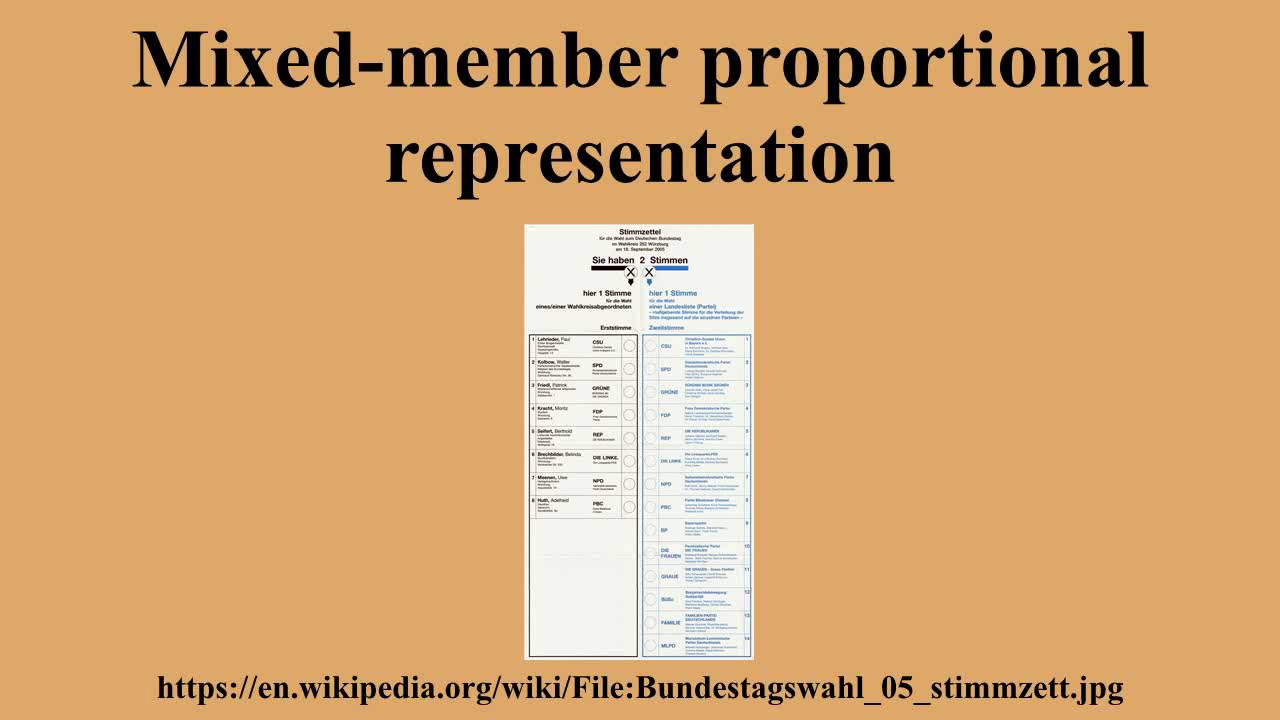
Mixed-member proportional representation
728
MMP achieves proportionality through mathematical allocation methods including largest remainder and highest averages (D'Hondt/Sainte-Laguë) methods applied to total assembly seats. Overhang seats occur when parties win more constituency seats than proportional allocation warrants, expanding total assembly size. Balance seats compensate for overhangs to restore full proportionality. Threshold requirements (5% in New Zealand/Germany, 3% in Bolivia) determine eligibility for list seats. Germany's 2013 federal election introduced balance seats to achieve complete proportionality. These mechanisms ensure the total number of seats a party receives reflects its share of the party vote, regardless of constituency performance.
Click to watch →

Webinar: MMP After 30 Years: Time for Electoral Reform?
176
Core MMP design reforms include: abolishing overhang seats (which distort proportionality and create strategic incentives) by implementing a 50/50 electorate-list split; retaining the one-seat threshold to reduce wasted votes; lowering the party vote threshold to 3.5-4% to reduce fragmentation and wasted votes; fixing quirks where candidate deaths create overhangs; abolishing bi-elections and filling vacancies from party lists; and repealing walker jumping restrictions to protect MPs' freedom of conscience. These changes aim to enhance fairness, reduce gaming of the system, and improve proportionality while maintaining local representation.
Click to watch →
Deep Dive
A comparative analysis of New Zealand's MMP implementation with other mixed systems, such as Germany's electoral model.
Webinar: MMP After 30 Years: Time for Electoral Reform?
176
International comparisons reveal important lessons for New Zealand's electoral reform. Germany's MMP system differs significantly from New Zealand's, particularly regarding overhang seats and government formation rules—in 1976, Helmut Kohl's CDU won 48% but the Social Democrats formed government. Cultural conventions matter more than legal rules; Canada's strong convention gives the largest party first chance at forming government even with unusual support. The UK extended its parliamentary term from 3 to 7 years in 1716 with improved governance outcomes. New Zealand's parliament of 120 MPs is unusually small internationally, while its executive of 30 ministers dominates parliamentary proceedings. These comparisons demonstrate that electoral system effectiveness depends on both institutional design and political culture.
Click to watch →

Is MMP Holding Back Good Government? .
306
This segment traces the historical development of MMP in New Zealand. It begins with the 1986 Royal Commission on Electoral Reform, established by Jeffrey Palmer, which found the existing system inequitable and recommended adopting Germany's mixed member proportional system. The Commission specifically recommended a 4% threshold, 100 MPs, and elimination of Māori seats. However, both National and Labour parties modified these recommendations when implementing MMP in 1990: they raised the threshold to 5%, increased MPs to 120, and retained Māori seats for 30 more years. The segment explains that these changes were made despite the Commission's reasoning that Māori would be represented through all parties under MMP.
Click to watch →

REGIERUNGSWECHSEL im 17. BUNDESLAND? | Neuseeland Umfragen
312
New Zealand uses the MMP (Mixed Member Proportional) electoral system, adopted in 1993, featuring a 5% threshold with half seats from direct candidates and half from party lists. Unlike Germany, only one direct mandate is needed for parliamentary entry. The party system divides into two main blocs: left (Labour, Green, Te Pati Maori) and right (National, New Zealand First, ACT). Te Pati Maori represents the indigenous Maori minority, advocating for Maori-specific representation. The Green Party combines environmental and progressive positions. New Zealand First, led by Winston Peters, has shifted from left to right on social issues. The system creates unique dynamics where left-wing gains often benefit Labour most, while Te Pati Maori's support depends on Maori voters' preferences for indigenous representation.
Click to watch →

A Look Ahead To New Zealand’s Upcoming Election
26.7K
New Zealand operates under a mixed-member proportional representation (MMP) electoral system that combines single-member electorates using first-past-the-post voting with a national party vote that allocates additional seats proportionally to ensure overall parliamentary representation reflects the share of votes each party receives; this system, along with seven exclusive Māori electorates designed to ensure indigenous representation, creates a six-party political landscape where no single party typically achieves a majority, necessitating coalition governments and making Winston Peters' New Zealand First party a pivotal kingmaker in government formation.
Click to watch →

COMPARATIVE GOVERNMENT AND POLITICS |DU|REGULAR|SOL|NCWEB|IGNOU|
2.3K
Mixed electoral systems combine elements of both FPTP and PR to balance their respective advantages. The Mixed Member Proportional (MMP) system uses two tiers: single-member district representatives using FPTP and party-list representatives using PR. If a party receives 10% of votes nationally but wins zero seats in single-member districts, the PR component compensates by allocating additional seats. This system is used in Germany and New Zealand. Types include: (1) Parallel Voting - non-compensatory with two independent tiers, (2) MMP - compensatory that adjusts seat allocation for proportionality. The Alternative Vote Plus (AV+) system uses Alternative Vote method with additional members, adopted by the UK Parliament. The Alternative Member System (AMS) combines single-member districts with PR, used in Italy and Hungary. The Dual Member Proportional (DMP) system uses two-member districts as an alternative to FPTP in Canadian elections.
Click to watch →
Deep Dive
The historical and political context of New Zealand's 1993 electoral reform referendum and its long-term impact on the country's political culture.

3.8 New Zealand's Electoral System with Therese Arseneau
436
New Zealand has a history of bold electoral innovations despite general conservatism, including establishing Maori seats in 1867 and becoming the first nation to grant women voting rights in 1893. The abolition of the Legislative Council in 1950 created constitutional vulnerability by removing the only check on the lower house, resulting in an 'elective dictatorship.' Two consecutive 'stolen elections' (where National won fewer votes but more seats) catalyzed reform. The Royal Commission on the Electoral System conducted a professional appraisal and recommended MMP as the preferred system. Heightened political discontent from neoliberal policies under both Labour and National governments created reform momentum. A two-stage referendum process achieved victory: an indicative referendum in 1992 (85% turnout, 85% voted to change) followed by a binding referendum in 1993 (85% turnout, 54% voted for MMP). This grassroots movement succeeded despite political elite opposition, demonstrating how direct democracy can drive institutional reform.
Click to watch →

S1 E14: Modern New Zealand | RNZ
29.5K
Following Labour's electoral defeat in 1990, National Party leader Jim Bolger reinforced rather than repealed Labour's economic reforms. In 1991, Finance Minister Ruth Richardson delivered 'the mother of all budgets,' slashing social welfare and abolishing universal family benefits, with the proportion of children living below the poverty line doubling between 1990-1995. The 1991 Employment Contracts Act delivered the knockout punch to union power, reducing membership to under 20%. Public trust in politicians reached an all-time low, ranking alongside second-hand car dealers. In response, voters embraced the 1993 referendum replacing first-past-the-post with Mixed-Member Proportional voting, achieving 54% approval. This electoral reform dramatically increased political diversity, with seven parties plus one independent MP in the 1996 election, and significantly boosted Maori and women's representation in Parliament.
Click to watch →

Following Alexis West Archives - Nicky Hager
116
The 1993 MMP referendum represented a historic showdown between well-funded business lobbies and ordinary citizens. Despite overwhelming public support, the campaign faced a barrage of negative advertising funded by business interests. The referendum succeeded because citizens were organized and mobilized to participate. MMP led to rapid political transformation: Ruth Richardson lost her job and left politics, Mike Moore was replaced by Helen Clark, and the ACT Party became the first to use MMP for their policies. Modern political campaigns use calculated tactics including coaching politicians to avoid real issues, manipulating emotions through focus groups, and using carefully crafted language. New Zealand's opaque election finance system allowed secret donors to influence politics. The National Party's 2005 campaign failed because they didn't account for MMP's coalition requirements—no party could win over 50% alone. MMP has made Parliament more diverse with more women, Māori, and younger people, but has also slowed legislative processes. Some policies like Section 59 would only have been put through by the Greens under MMP because there would have been no Green Party in Parliament. New Zealand's security policy reflects diplomatic relationships with larger powers rather than actual security concerns. The war on terror has become a code word for US-friendly relationships. Electoral finance reform faces challenges under MMP because governments must find coalition allies rather than acting unilaterally. Despite these challenges, people can still make a huge difference to politics when they organize, get informed, and work together. MMP adds dimensions of more voices and shifting coalitions that make change possible at times when it wasn't previously possible.
Click to watch →
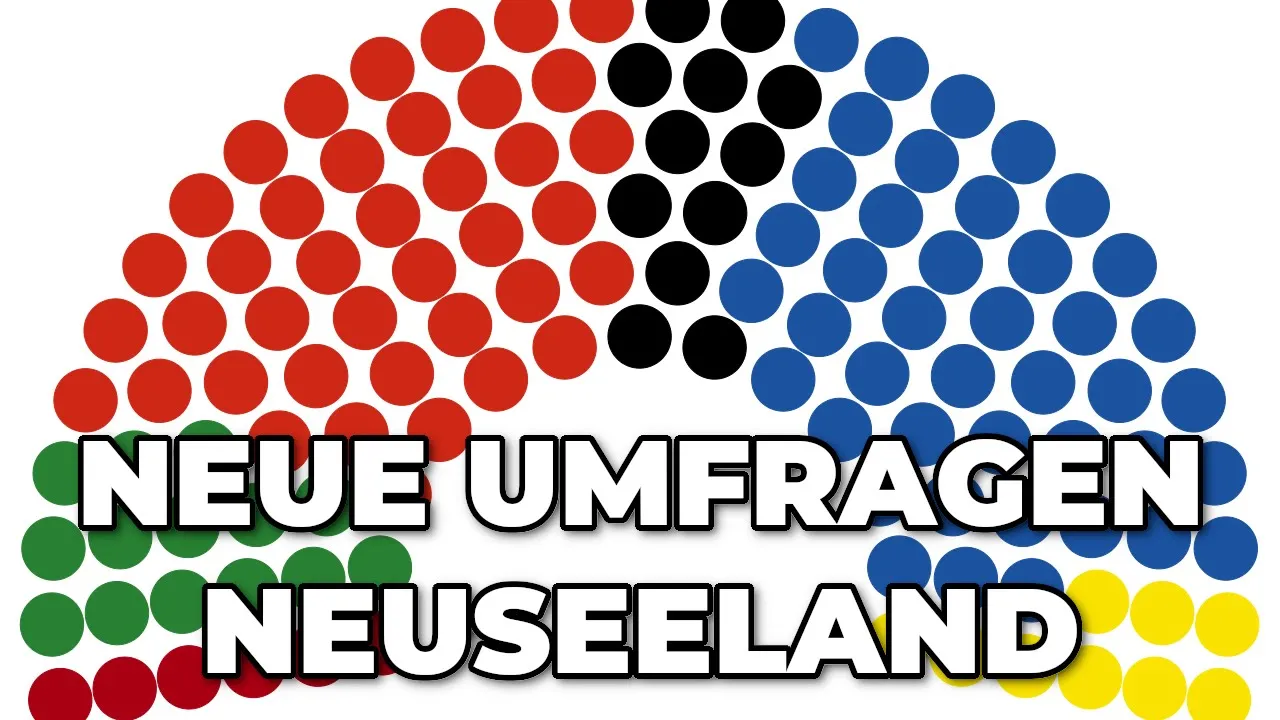
Sehr Deutsch, aber in Ozeanien | Wahlumfragen in Neuseeland | National, Labour, Green, ACT
632
New Zealand's 1993 electoral reform referendum (53% approval) replaced the two-party system with a mixed-member proportional representation system featuring first and second votes, a 5% threshold, and direct mandates, resulting in a multi-party landscape with six major parties including Maori Party (indigenous representation), Greens, Labour, National, New Zealand First, and ACT, enabling diverse political views to be represented in parliament.
Click to watch →

Oscar Luigi Scalfaro - Garanzia di unità nella transizione
168
This segment covers the 1993 electoral reform referendum and its consequences. The referendum represented direct popular sovereignty, with citizens deciding the electoral system rather than parties. Scalfaro recognized this vote provided a path to stable governments and re-legitimization of the political system. He argued that parliament was bound by the referendum vote, and the majoritarian system, by giving more weight to individual votes and reducing party negotiation power, became the safeguard for parliamentary re-legitimization. On December 21, 1993, Scalfaro proposed dissolution of parliament, justified by the referendum result, the new electoral law, and the gap between parliamentary forces and electoral winners. The 1994 crisis emerged when winning parties (Lega, Forza Italia, Alleanza Nazionale) had been elected outside the constitutional arena, claiming a 'moral monopoly of representation' that could divide the country. Scalfaro frequently reminded political forces of their common responsibility toward the country and the necessity of safeguarding national unity.
Click to watch →
MMP basics
Party vote
Threshold rules
Electorate vote
Seat allocation
Coalition rule
MMP basics
0:00- 1
Explains MMP system of representation in parliament.
- 2
Covers the dual vote structure: party and electorate.
Criticisms of MMP: The Kingmaker Effect and Lack of Direct Accountability
While the Mixed Member Proportional (MMP) system ensures a highly representative parliament, critics argue it introduces several democratic drawbacks. A primary criticism is the 'kingmaker effect,' where small minority parties hold disproportionate leverage in coalition negotiations, effectively dictating key policy decisions and deciding who governs despite receiving a tiny fraction of the popular vote. Additionally, opponents point to a lack of direct accountability for 'list MPs.' Because list MPs are ranked and selected by political parties rather than directly elected by voters in a specific geographic electorate, it is nearly impossible for the public to vote out unpopular individual politicians. Critics also argue that MMP leads to compromise-heavy, unstable coalition governments, contrasting it with majoritarian systems like First-Past-the-Post (FPP) which typically deliver decisive, single-party mandates.
Basic understanding of representative democracy and how a parliamentary system of government operates.
The concept of 'First-Past-the-Post' (plurality) voting systems and their historical dominance in Westminster-style democracies.
The fundamental distinction between local constituency representation (electorate seats) and nationwide party representation.
The general concept of Proportional Representation (PR) and the democratic philosophy of aligning seat share with vote share.
The mechanics of coalition government formation, political negotiations, and the role of minor 'kingmaker' parties in MMP systems.
Advanced MMP anomalies and rules, such as 'overhang seats,' 'underhang seats,' and the strategic implications of the 5% party vote threshold.
A comparative analysis of New Zealand's MMP implementation with other mixed systems, such as Germany's electoral model.
The historical and political context of New Zealand's 1993 electoral reform referendum and its long-term impact on the country's political culture.
60K views321likes2:02@ElectoralCommissionNZOriginal Release: 2020-07-13
MMP - or mixed-member proportional - is the system we use in Aotearoa to choose the people and parties who represent us in Parliament. Under MMP you get two votes every general election.
Let's have a look at how they work. Your first vote is for the political party you support. This is called the party vote. The more votes a party gets, the more seats they will have in Parliament. If 40% of us vote for the Cherry party it will get around 40% of all the seats in parliament, if 10% of us vote for the Pear party it will get about 10% of the seats. To get any seats in parliament a party must win at least 5% of the party vote or win an electorate seat - that's where your second vote comes in. Your second vote is to choose a Member of Parliament to represent the area you live in.
This is your electorate vote. The candidate who gets the most votes in your electorate will become your local MP. So - if the Banana party wins 4% of the party vote, but no electorate seats, they have no members in parliament.
But if they win 4% of the party vote and also win an electorate seat, then they are entitled to 4% of all the seats in parliament. This 4% would be made up of their one electorate MP with the rest being list MPs from their Party List.
Because MMP is a proportional system there can be a range of big and small parties in Parliament. Every candidate who wins an electorate gets a seat in Parliament. The remaining seats are filled from party lists according to their share of the party vote.
Under MMP, parties might not have a large enough share of the votes to govern alone, so it's common to get support from other parties to form a government. The political party or group of parties with more than half the seats becomes the government. If you would like to find out more about New Zealand's political system and voting in Aotearoa visit vote.nz
Up Next

19:03
State Government Functions & MLAs: Class 7 Civics One Shot
@byjus-class-678
98.4K views•2023-08-04

24:30
BRICS Pay and de-dollarization: A New Financial Order Emerges? | 55 chars
@DannyHaiphongYT
164.6K views•2024-10-22

7:33
Government Surveillance Methods: 10 Ways You May Be Watched
@BeAmazed
1.6M views•2017-04-09
10:19
Explaining the Saudi-Iranian Proxy Conflict in the Middle East
@Vox
18.2M views•2017-07-17
Related Study Plans & Knowledge Roadmaps
Structured learning paths in Political Science
political-science
Economic Statecraft: Sanctions & Chokepoints
01Foundations of Geoeconomics and Economic Statecraft
02The Mechanics of Weaponized Interdependence
03International Sanctions: Types, Implementation, and Efficacy
+ 2 more learning modules
12h5 modules
Explore Roadmap
political-science
Central Bank Independence: Politics & Policy
01Foundations of Central Banking and Monetary Policy
02The Time Inconsistency Problem & Inflation Bias
03The Delegation Model and Designing Independence
+ 2 more learning modules
12h5 modules
Explore Roadmap
political-science
Consociationalism: Power-Sharing & Stability
01Democratic Dilemmas in Divided Societies
02Introduction to Consociational Democracy
03The Four Pillars of Consociational Design
+ 2 more learning modules
12h5 modules
Explore Roadmap
political-science
Rebel Governance: Legitimacy, Economy & State
01Foundations of Rebel Governance and Statehood
02Establishing Political Legitimacy and the Rebel Social Contract
03Wartime Economies and Rebel Resource Management
+ 2 more learning modules
14h5 modules
Explore Roadmap