






![MEMO 2025 ECONOMICS P.2: JUNE EXAM ECONOMICS 2025 GRADE 12 2025 [THUNDEREDUC] GAUTENG PROVINC MEM](https://i.ytimg.com/vi/njTe0XnfVxk/maxresdefault.jpg)













![[노경12] 노동경제학_제5장 보상적 임금격차_(3) 정책응용사례-생명의 가치는 얼마나 되는가(229p)](https://i.ytimg.com/vi/NBH9sRdnwCQ/maxresdefault.jpg)




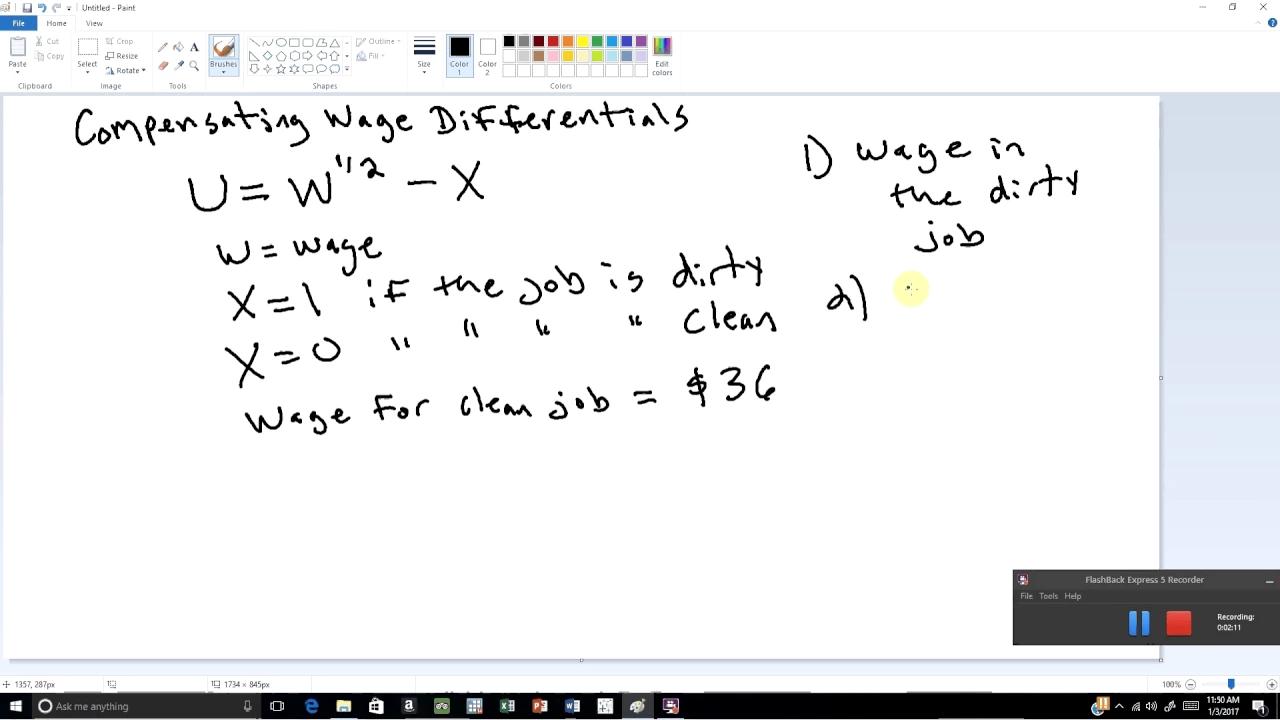


In labor economics, compensating differentials explain why riskier jobs pay more: workers demand higher wages for dangerous work, giving firms an incentive to invest in safety when the cost of safety improvements is less than the wage premiums they would otherwise pay. This market mechanism, driven by the profit motive, explains why job safety has increased over time in wealthy countries—not primarily due to government regulations or unions, but because wealthier workers demand higher wages for risk, which incentivizes firms to make workplaces safer. However, this system only works when workers know about risks and cannot account for hidden long-term risks like asbestos or radiation, which require government intervention.
Compensating Differentials: Risk, Wages, and Job Safety in Economics
Added:Basic Labor Market Equilibrium: Understanding how labor supply and labor demand interact to determine wages in competitive markets.
The Concept of Marginal Utility and Trade-offs: How individuals make decisions by trading off money (wages) for non-monetary attributes (safety, comfort).
Profit Maximization and Cost-Benefit Analysis: How firms analyze marginal costs and marginal benefits to make investment decisions.
Perfect Information Assumption: The baseline economic assumption that workers and employers have complete knowledge of job risks and wages.
The Value of a Statistical Life (VSL): Exploring how economists calculate the monetary value of risk reduction using wage-risk trade-offs.
Government Intervention and Regulation (OSHA): Analyzing how and why governments regulate workplace safety when market mechanisms fail.
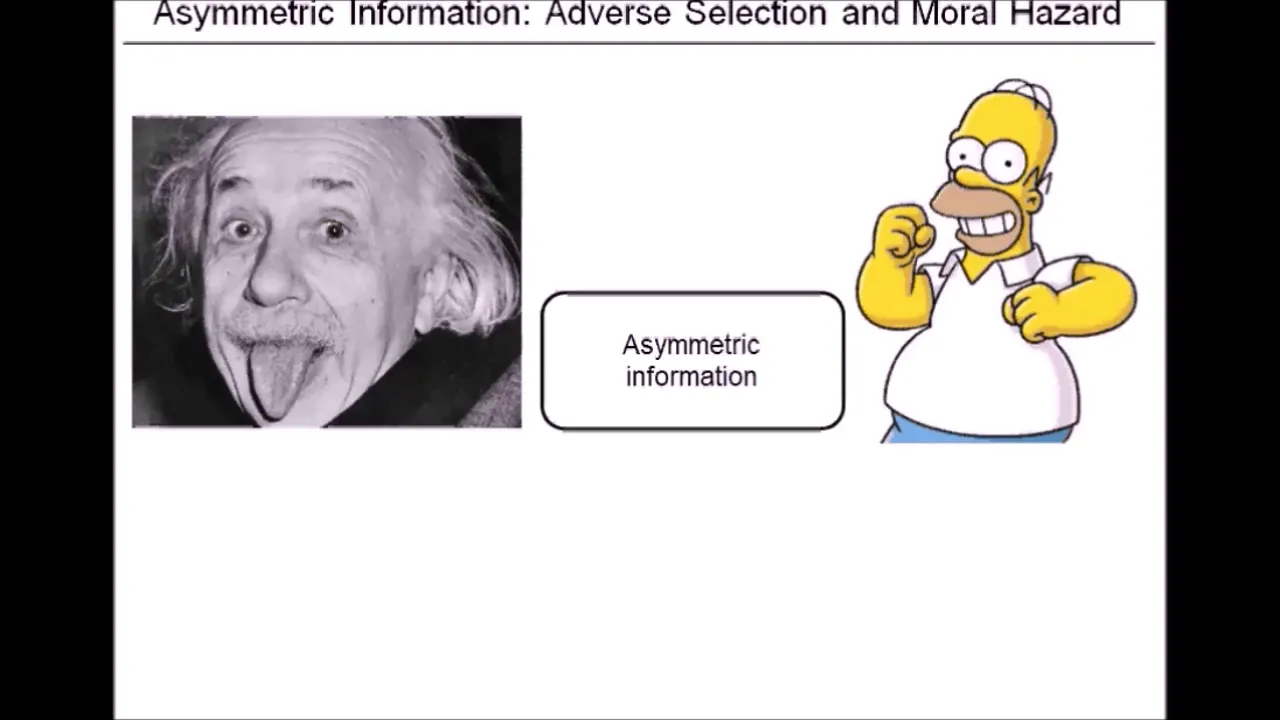
Asymmetric Information and Moral Hazard: Studying what happens when employers know more about job hazards than workers do.
Other Compensating Differentials: Broadening the theory to analyze non-wage job amenities like scheduling flexibility, location, and health benefits.
71.4K views167likes4:43Original Release: 2015-04-08
♪ [music] ♪ - [Alex] In this short lecture, I want to elaborate on a surprising claim made at the end of the last video.
Namely that firms have an incentive to increase job safety, because then it can lower wages.
Recall that the main idea of compensating variations is that wages adjust until jobs requiring a similar level of skill have similar compensation packages.
What this means is that jobs which aren't very fun, they have to have higher wages compared to similar jobs which are more fun and which therefore have to have lower wages.
The same thing goes for safety.
So if we were to replace fun with safety, jobs with low levels of safety have to have higher wages compared to jobs with high levels of safety which are going to have lower wages.
Let's see this in another diagram.
Let's consider two fishing jobs.
One in the Gulf of Mexico is low risk, the other in the frigid choppy waters of the Arctic has high risk.
If the jobs require equal skill levels, then the supply of workers to the high-risk job is going to be lower, and therefore, the wage is going to be higher.
In fact, the wage will adjust until the difference in wages compensates for the risk.
Putting it the other way.
If firms were able to make the Alaska job as safe as the Mexico job, they could pay lower wages.
And what this means is that the firm has an incentive to invest in safety whenever the cost of the investment is less than the extra wages the firm has to pay to compensate the workers for risk.
Moreover, the more wages that workers require to take on risk, the greater the firm's incentive to invest in safety.
Now keeping this principle in mind, let's consider this along with the history of developed countries.
Job safety is much higher today in rich countries than in poor countries, and it's much higher today than in the past when rich countries were poorer.
Many people think that this increase in job safety is due to government regulations and to unions, but in fact, those factors have played only a small role.
The major cause of increased job safety is increasing wealth and the profit motive.
As workers have become wealthier, they have demanded higher wages to take on risk, and that, in turn, has increased the incentive of firms to make workplaces safer, because firms are able to pay lower wages for safer jobs.
In other words, rich workers buy more Plasma TVs and they also buy more workplace safety.
The profit motive is a reason to supply workers with Plasma TVs, and it's also a reason to supply workers with safer jobs.
There are, however, two qualifications.
Let's take a look at those.
So the profit motive give firms an incentive to supply workers with goods, like Plasma TVs, and also to supply workplace safety.
This process works, however, only when workers know about the risks.
Workers won't accept lower wages to reduce risks that they don't know about.
Fortunately, workers' compensation -- the government-required insurance system -- is experience rated.
Firms which have more accidents pay more.
So firms do have an incentive to take into account hidden risks, so long as they occur when the worker is on the job.
Risks that are hidden and that don't occur on the job -- things like risks from asbestos, cancer, radiation risks, and so forth -- they will not be handled very well by the market process or by workers' compensation.
Unfortunately, no system works all that well for hidden long-run risks, but the tort system and government regulation do have a role to play in handling these hidden long-run risks.
Okay, that's it for job safety and compensating variations.
See you next time.
- [Narrator] If you want to test yourself, click "Practice questions," or if you're ready to move on, just click "Next video."
♪ [music] ♪
Up Next
10:27
Supply and Demand for Labor: Market Equilibrium Explained
@OCCSFECON
95.7K views•2012-10-14

5:07
Impact of Yuan in Indo-Russian Trade Amid Sanctions
@WION
261.9K views•2022-07-01
12:31
Subsidies Explained: Incidence, Elasticity & Deadweight Loss
@MarginalRevolutionUniversity
325.4K views•2015-01-28

113:18
The Age of Easy Money: Fed & Inflation | Full Documentary
@frontline
21.2M views•2023-03-15
Related Study Plans & Knowledge Roadmaps
Structured learning paths in Economics
economics
Sovereign Debt: Defaults, IMF & Restructuring
01Introduction to Sovereign Debt & Government Bonds
02Debt Sustainability & Credit Ratings
03Anatomy and History of Debt Crises
+ 2 more learning modules
12h5 modules
Explore Roadmap
economics
Market Design: Matching Theory & Gale-Shapley
01Introduction to Market Design and Price-Free Markets
02Two-Sided Matching & The Gale-Shapley Algorithm
03School Choice Systems and Mechanism Design
+ 2 more learning modules
10h5 modules
Explore Roadmap
economics
Impossible Trinity: Forex, Capital & Policy
01Introduction to Monetary Policy and Central Banking
02Exchange Rates and International Capital Flows
03The Mundell-Fleming Model
+ 2 more learning modules
8h5 modules
Explore Roadmap
economics
Healthcare Economics: Market Failures & Systems
01Introduction to Healthcare Markets and Market Failure
02Asymmetric Information and Adverse Selection
03Moral Hazard and Insurance Design
+ 2 more learning modules
12h5 modules
Explore Roadmap