



![MARTATHON - GOLD DAY - 2 - CHEMISTRY - 2 [ SHIVAM SIR ] =02-04-2026](https://i.ytimg.com/vi/YUOxY8Imf7w/maxresdefault.jpg)





![REGULACIÓN de la actividad enzimática [INTERACCIONES ALOSTÉRICAS]](https://i.ytimg.com/vi_webp/6SK3Bcd_iJw/maxresdefault.webp)







This video demonstrates a systematic approach to tackling MCAT Chem/Phys passages by reading each paragraph, writing a 3-5 word summary to ensure comprehension, and then addressing questions methodically. The walkthrough covers a passage about photoacid-controlled enzymatic reactions, including understanding acid-base definitions, applying the energy-frequency equation (E = hv), identifying functional groups, and analyzing enzyme activity in pNPP assays.
MCAT Chem/Phys Passage Walkthrough: 99th Percentile Tips & Strategies
Added:Fundamentals of acid-base chemistry, including pH calculations, pKa, and the Henderson-Hasselbalch equation.
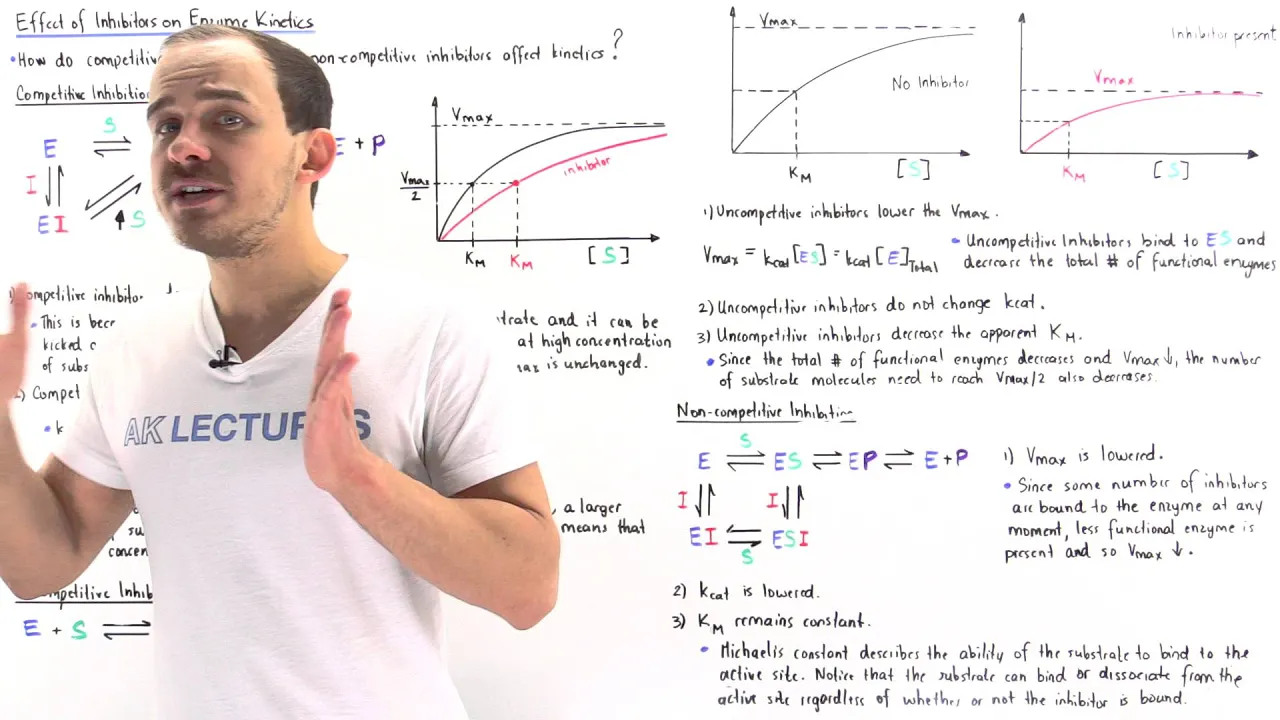
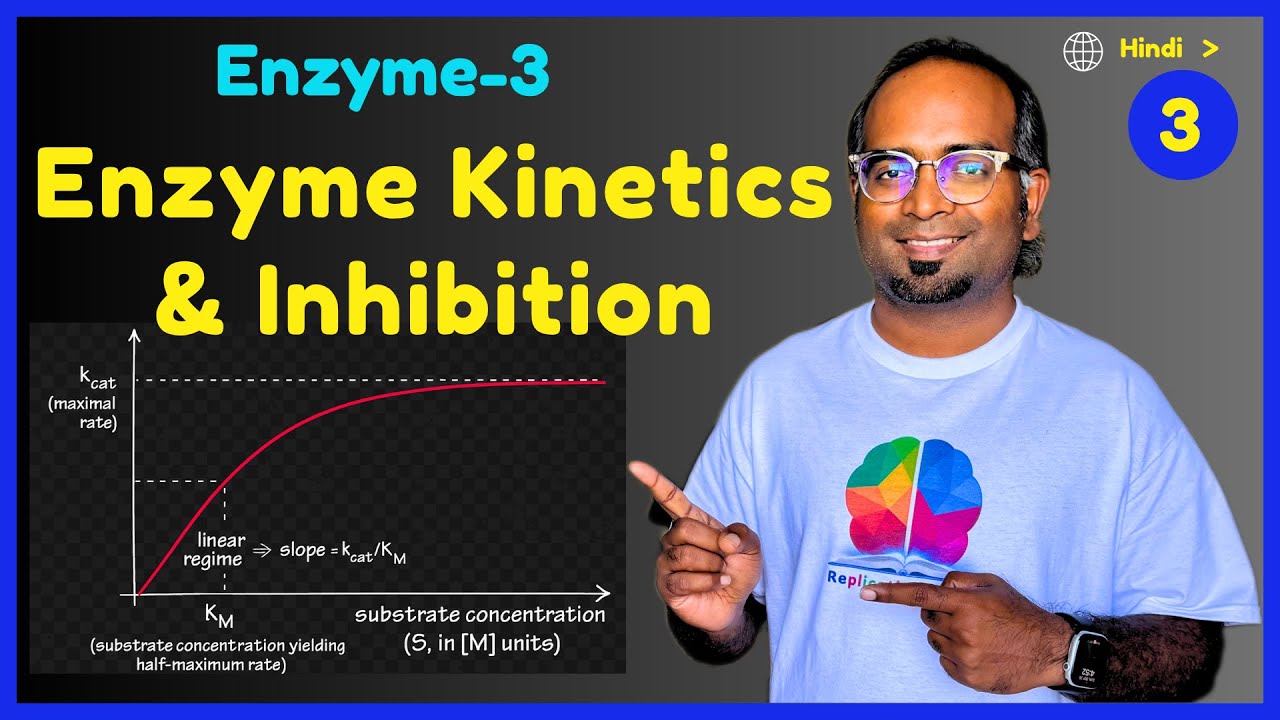
Basic principles of enzyme kinetics, specifically the Michaelis-Menten model, Km, Vmax, and types of reversible inhibition.
General familiarity with the MCAT passage-based question format and active reading strategies.
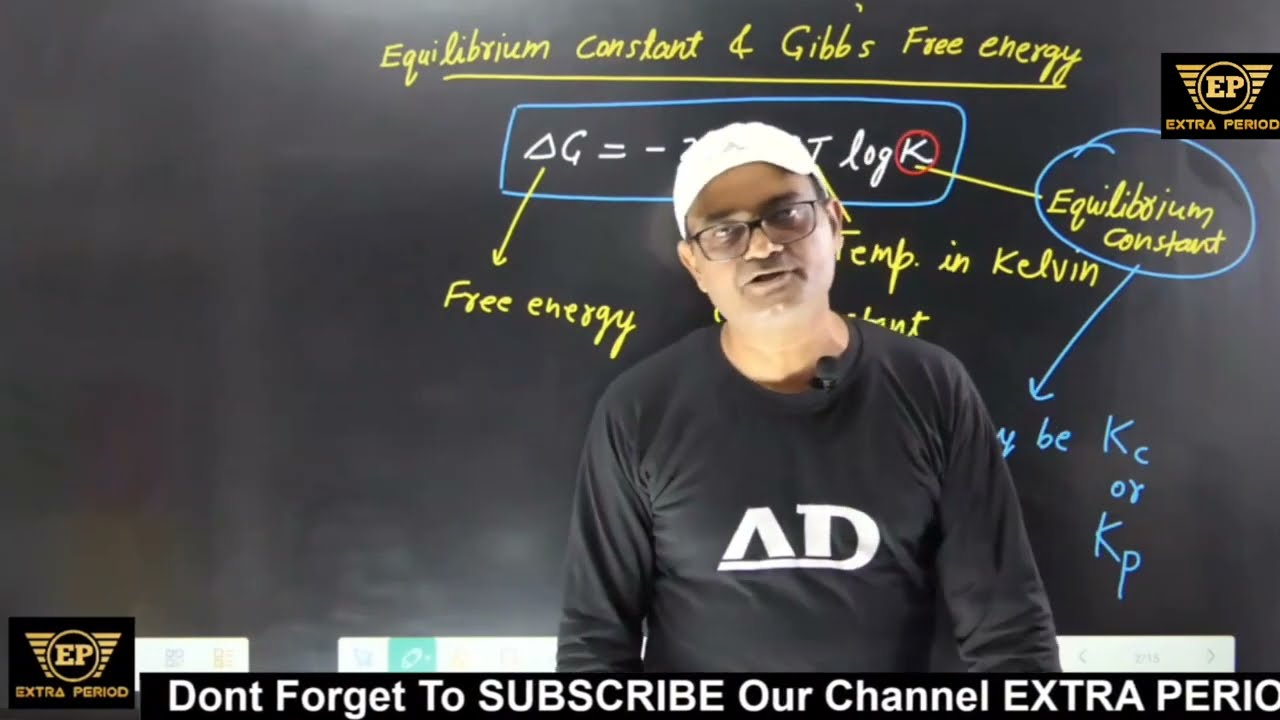
Core thermodynamic concepts such as Gibbs free energy (ΔG), enthalpy (ΔH), and chemical equilibrium constants (Keq).
Timed practice of Chem/Phys passages from official AAMC materials to apply the strategies under exam conditions.
Advanced biochemical applications, such as analyzing metabolic pathway regulation and allosteric enzyme behaviors.
Deep dive into common MCAT experimental techniques, including chromatography, gel electrophoresis, and spectroscopy, which frequently appear in passages.
Developing an active error tracking system (error log) to classify and correct reasoning mistakes made during passage analysis.
3.6K views80likes24:18Original Release: 2022-05-13
- Hey, all, my name is Prashanth Kumar or PK, and I'm an MCAT tutor at Shemmassian Academic Consulting.
Today, we're gonna be doing a passage walkthrough in the MCAT Chem/Phys section.
You should be taken roughly six and a half minutes on this passage.
But today, we're gonna be going more in depth so you can see exactly what's going on in my head as we take on this passage.
Let's get it.
All right, great.
So, I've gone ahead and put the passage on the left and the questions that we are going through on the right.
So, feel free to take a moment and pause the video and come back to us when you're ready.
If not, let's get right into talking strategy.
For me, I like to maintain the same strategy regardless of what passage I'm looking at.
The reason for this is it gives me some sort of routine to come into a passage with regardless of whether the passage is super, super easy or super, super hard.
I know I have something to come back to to make sure I understand what's going on.
Oftentimes I feel like stressed out if there's a super hard passage and I'd waste time being stressed, or I'd lose confidence in my ability.
So, doing something over and over again builds that routine, builds that confidence and makes you geared up for test day.
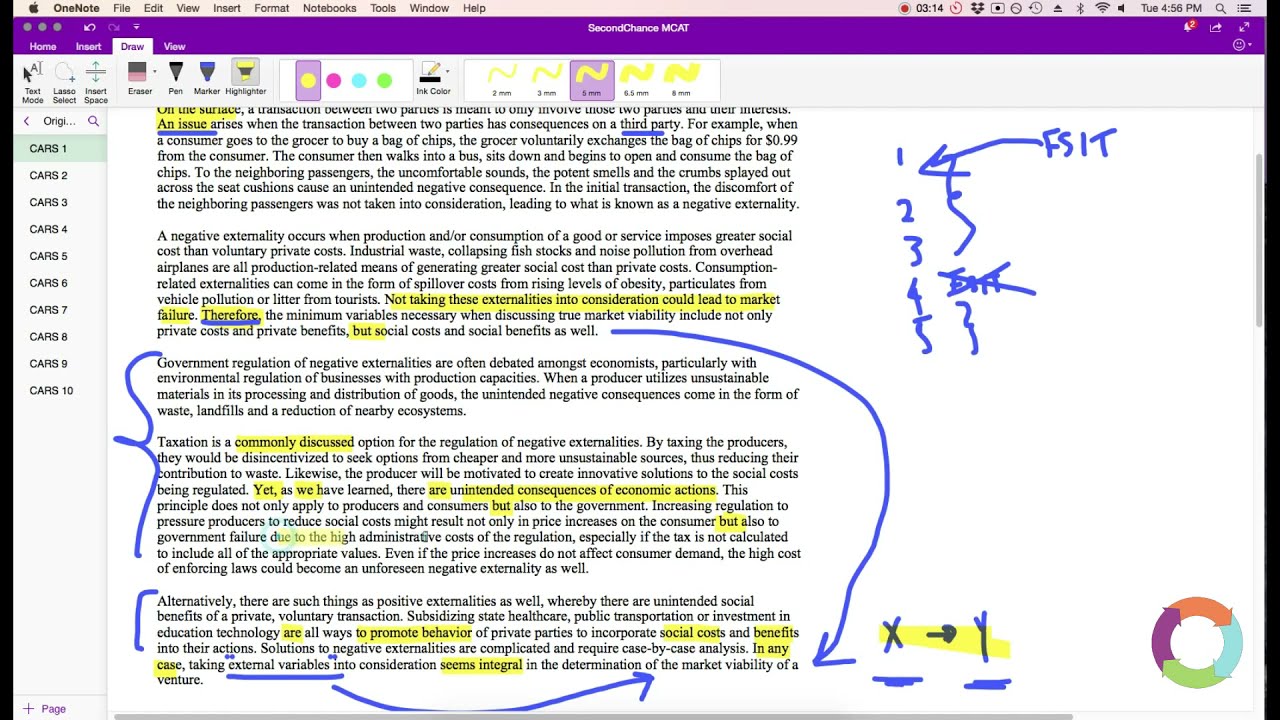
So, for me, that strategy is read the paragraph, write a quick three to five-word summary, go on to the next paragraph, do the same, and on, and on, and on.
The reason I really like the strategy is that it provides accountability, making sure you have a quick check in after each paragraph before moving on to the next.
I'd find myself a lot of times sort of reading words and not understanding what's going on, and then continuing throughout the rest of the passage and not understanding what's going on and having to reread.
And preventing this with this little check-in saying, "Do I understand what's going on," provides an ability to not waste time.
And if you need to reread, you can reread that paragraph alone, you don't have to reread the entire passage.
So, it saves a lot of time in the long run.
My second piece of advice is look at the figures, but don't spend too much time on them on the first read.
We don't know what the questions are gonna ask about the figures, if any, right?
So, why would we waste time before we need to?
And so, with that, we have both of our strategies and we can get right into the first paragraph.
"Most biochemical reactions depend on the pH value of the aqueous environment and many are strongly favored to occur in a acidic environment.
A non-invasive control of pH to tightly regulate such reactions will define start endpoints as a highly desirable feature in certain applications."
All right, so, the question I ask myself after each of these paragraphs is, what's happening, right?
Three to five quick words, easy words, anything, right?
We just wanna understand what is happening in basic terminology.
So here, all I'm saying is pH control reactions, right?
Good, check.
That's what I'm saying.
You can write abbreviations, arrows, whatever you want, right?
Pneumonics.
These notes are supposed to be for you and you only, no one else is gonna look at them.
So, abbreviate, do whatever you need to do to save time as long as you're getting what you need out of it.
So here, I'm just thinking, oh, it's talking about pH control reactions and how they're very important.
So, I just post check mark by that.
Next paragraph, "Researchers report a novel optical approach to revers control a typical biochemical reaction by changing the pH by using a acid phosphatase as a model enzyme.
The reversible photoacid G-acid functions as a proton donor, changing the pH rapidly and reversibly by using high power UV LeDs as an illumination source in the experimental setup.
The researchers found that the reaction can be tightly controlled by switching a light on and off, making the technology applicable to a wide range of other enzymatic reactions, thus enabling miniaturization and parallelization through noninvasive optical means.
Figure one displays the structure of the G-acid."
And then it gives us a figure.
So, again, what is the question we're asking, right?
The question we're asking is what's happening?
And so, here there's a lot going on, right?
It's giving us a lot of words.
A lot of things we might not have heard, right?
I always know like words I've never heard before, like miniaturization and parallelization, right?
Things I probably haven't learned before.
So, we're not gonna focus too much on those, because those are more detail oriented.
Instead, we're thinking about, huh, what are they looking at?
Well, they have this sort of LeD functioning for sort of acid phosphatase pH reaction, right?
And so, that's all I'm thinking, right?
We have these LeDs that are functioning in some aspect to change pH rapidly, right?
And so, and then we're looking at acid phosphates, all of that, but these are details.
We wanna focus on big picture understanding.
So, LeDs are affecting acid phosphate's reactions, that's the big takeaway.
And then we look at the figure, right?
And we see some sort of reaction.
I always look at the little blurb underneath.
So, Figure one, light activated deprotonation of G-acid, right?
So, we're looking at what happens when we add light to this reaction and this protonation.
But again, not spending too much time on that figure.
We don't know what's gonna be asked and we can come back if needed.
All right, onwards.
"In order to use the photoacid in a wide range of biochemical applications, the researchers ensured that it met certain requirements, such as solubility in water, low toxicity and excitability with commonly available, inexpensive illumination sources such as LeDs.
LeDs have several advantages compared to more conventional illumination sources.
They're more efficient, have a long lifetime, a compact size and high reliability."
All right, so again, what is happening?
Quick question, right?
So, here they're deciding, okay, when are we gonna use these photoacids, right?
And so, I'm just gonna call this, my paragraph, the photoacid criteria, right?
And so, then on my point, that has to do with LeDs, right?
And so, this is all I'm saying, right?
It's talking about why we're using LeDs and then it suggests why LeDs are great.
And so, quick three to five word summary and onward.
"The researchers chose an acid phosphatase as a model enzyme to further study the system.
The activity of optimum APs typically lies at an acidic pH of 4.5 to 5.5.
APs non specifically catalyze the hydrolysis of monoesters to produce inorganic phosphate under acidic conditions.
In experiment A, researchers use the acid phosphatase from potato, You see 3.1.3.2, which is active between pH of four and seven with an activity Optimum at a pH of five and 5.3.
At an alkaline pH of eight, the activity of EC 3.1.3.2, is several orders of magnitude lower."
All right.
So, a lot of details here.
Again, we're not focusing on what's happening we're just focusing on like a big picture understanding.
So, here we have sort of like an experimental design, right?
Where we're looking at these acidic pHs, right?
Or these APs at different pHs, right?
And we're using that to model like a system.
And we don't need to know every detail, right?
We're not focusing on catalyzing the hydrolysis of monoesters or whatever, right?
Here it says that these acid phosphatase are more active at certain pHs than others, right?
It says it's optimum at five to 5.3 and then several activities, several orders of magnitude lower at alkaline pH of eight, okay?
So, if you wanna add acid greater than basic, something like that, just a note that the five to 5.3 is where it's optimum versus the pH of eight, then you can note that too.
But remember, this is whatever you need, whatever you can stay quick with.
All right, onward.
"To assay EC 3.1.3.2, activity researchers use p-nitrophenyl phosphate, pNPP assay.
The pNPP assay is a color metric assay in which the substrate pNPP is hydrolyzed by acid phosphate in the product p-nitrophenol, pNP plus Pi, in purified HPlC grade water as shown by Figure two."
Okay, and then we have a reaction pNPP to Acid Phosphatase, pNP plus Pi.
All right, so here, there's not much there, right?
It's just describing this different assay looking at pNPP assay, right?
And so, then I'm just gonna point it to this because it gives us exactly what the paragraphs is saying, right?
What are we inputting?
What is outputting and how is it occurring, okay?
And so, we're not spending too much time on the figure.
It's just a reaction scheme for this assay, okay?
And with that, we've done it.
We have gone through our passage and sort of mapped it out, and we understand, big picture understanding of what's happening.
We're sort of looking at pH dependent reactions, especially around this very important acid phosphatase, and then we have this assay that looks at it as well.
And so, with that, we're ready to get right into questions.
And so, we'll start with question number one.
"Which of the following best describes the role of water in the deprotonation of the G-acid?"
Is it A, acid, B, catalyst, C, base, or D, an aprotic solvent?
Okay.
So, where would we look to see the deprotonation of a G-acid?
Well, we remember that when we saw the second paragraph, it's talking about the reaction being occurring with this UV light, and water being the place where this deprotination occurs, right?
It says, plus H2O.
And so, we see that the photoacid, right?
The reversal photoacid G-acid is a proton donor, okay?
And so, here we have a reaction that has to do with a proton donor and a proton acceptor.
And so, right away, your mind should be thinking, huh, protons are being traded between molecules, this is a commonly seen type of acid based reaction, right?
And so, since there's only two molecules here, right?
There's water and there's the G-acid, right?
We know those are the two acid, one's the acid and one's the base.
And so, right away, we can get rid of catalyst and aprotic solvent.
Aprotic solvent is where it's occurring, it doesn't really make sense in this situation.
A catalyst is something that's not used up and it would stay the same throughout the entire course of the experiment.
And as we can see, the H2O is turning into an H3O, and is part of the reaction.
So, the catalyst is eliminated.
And so, now we need to determine which one's the acid and which one's the base.
And that requires understanding the definition of an acid.
An acid is always going to be your proton donor, right?
It's gonna want to give away an H plus, whereas your base is wanna, it's like the grabber, it wants to have the H plus.
So, proton acceptor and adds an H plus basically, right?
And so, here, it's asking us the role of water not the role of the G-acid.
So, to get this question right, all we need to know is what is happening at water while it's turning from H2O, to H3O plus.
So, we're adding an H plus.
And so, that means what?
That means water is our base.
And so, we've eliminated A, because the acid would be this one, right?
It's giving away the H of the OH and putting it on to H2O.
And so, that's the base.
Great.
And so, with that, we're one for one onto the next question.
Let's go.
Question number two.
"The researchers measure the energy of a photon during experimental trial to be 3.3 times 10, the negative 12th Joules.
What is the frequency of the weight?
Note, Planck's constant is equal to 6.6 times 10 of the negative 34th."
Is it A, two times 10 of the 22nd, B, 1.5 times 10 of the 22nd, C, one times 10 of the 22nd or D, 0.5 times 10 of the 22nd?
All right, so, this is a standalone question.
So, we're not really gonna need anything other than from our passage, right?
It's giving us information, energy of photon, the energy, and it's asking for frequency and it gives us Planck's constant.
So, right away, we should be thinking of one equation off the top of our mind.
And that is energy equals Planck's constant times the frequency, right?
E equals h.v, very, very common equation, very, very common on the MCAT, because it's a simple plugin chug equation.
And so, right away we can see that, where we wanna plug in our numbers.
And so, E energy of the photon is going to be 3.3, times 10 to the negative 12th Joules, right?
And we're equal to h, our constant, 6.6 times 10 to the negative 34th, right?
Times v or our frequency.
And so, all with this, we have an equation with one variable left, right?
And so, now we can start our math.
And it's pretty simple based on algebra, right?
If we wanna isolate our variable here, all we do is gonna say, okay, we are gonna divide both sides by 6.6 times 10 to the negative 34th.
So, 3.3 times 10 to the negative 12th, over 6.6 times 10 to the negative 34th.
And I know everyone's gonna be like, oh, I hate these types of calculations, they're so annoying especially in scientific notation.
I'm here to give you some tricks.
The first trick is to note right here that all of our answer choices end with 10 to the 22nd, right?
So, because of that, we're actually only doing half the work.
We don't need to do the second half of the calculation.
So, we can kind of ignore the 10 to the negative 12th and 10 to the negative 34th, because we know the answer will all end with the same scientific sort of exponential part of it, right?
And so, now we're left with V equals 3.3 over 6.6, right?
And so, 3.3 divided by 6.6.
That's a little more challenging of a calculation, but let's just break it down into what we know, right?
Well, if we can divide the top and the bottom by three, that's 1.1 over 2.2, right?
1.1 over 0.2, that's just one over two, right?
And so, while you might not note 3.3 over 6.6 is not, is one half off the top of your head, sort of doing this quicker sort of breakdowns into smaller terms that you're more familiar with, can help you identify that that's equal to one over two.
Hopefully you can get that immediately, but if you can't, no worries, we're trying to make tips to help you get there.
So, one over two, and what is one over two as a decimal?
it is 0.5, right?
And so, now we're looking at any answer choice with 0.5 written in it, and there's only one and that's D, right?
None of the other answer choices have 0.5 in there.
And so, with that, we've used all of our sort of calculation techniques to get D without having to do like every single calculation.
We wanna use all the shortcuts and things you can do to get you there.
And so, with that, we are on question three.
All right.
"Which of the following functional groups is not found on the protonated G-acid?"
Is it "A, alcohol, B, benzene, C, sulfonate, or D, sulfite?"
All right.
So, we're first identifying that it's a not question, right?
Not means everything except this is seen.
And we're looking on the protonated G-acid.
So, where is the G-acid talked about?
It's that same exact second paragraph right here, right?
So, we can look at the figure and then we just are looking at the molecule itself, right?
So, now we need to decide which side is the protonated G-acid.
Is it this one or this one, right?
And so, it's pretty obvious a protonated one will have the proton on it.
So, that would be this guy.
And so, we're looking here to determine what functional groups are on that.
And so, this is exactly where you're gonna need to know all your functional groups by heart.
Hopefully those Orgo skills that are still fresh in your head, but we're identifying them.
So, let's start one by one, right?
Is it a alcohol?
Right?
We see it right here.
An alcohol is just an OH group attached to other things and that's right there.
So, we can eliminate A, because we're dealing with a not question.
A benzene, right?
What is a benzene?
Classic benzene ring, sort of an aromatic ring with three double bonds.
And we have that right here, right?
And so, we can eliminate B, okay?
A benzene, I'll write them right here, benzine right there.
And then sulfonate, okay?
So, sulfonate is a less commonly seen one, right?
But it's still very important to know.
And a sulfonate is an S with a double bond O, a double bond O, and an O-, okay?
And then an R group attached to it, or additional carbons attached to it.
So, as you can see, it's SO3, one minus, okay?
And then we have sulfite, and another not as commonly known one, but what is that?
That is S with a double bond to an O, and then an O, and then an O, both with minuses.
So, this is SO3, two minus, as the functional group.
And this is SO3, one minus, as the functional group.
where that double bond is determining whether it's a sulfonate or a sulfite.
So, with that, we need to identify which one of these is it, is it a sulfonate or a sulfite, right?
And so, we see that there are two double bonds, right?
On both of these.
These are identical molecules, and they have two double bonds and one single bond, and that matches with our sulfonate, okay?
So, with that, we choose sulfonate as our answer, and we get rid of, alright, sorry.
I misspoke exactly what I was saying.
The not, right?
We have a sulfonate, we have a sulfate, we don't have a sulfate, right?
This is exactly the type of mistake that I don't want you to make.
So, good job.
A good job catching me right there.
But right, the sulfonate is what's eliminated and the sulfite is what's not, on the protonated G-acid.
I was testing you obviously.
But we're onward to question number four.
"Researchers are likely to observe which of the following during a pNPP assay for EC 3.1.3.2, when pH is lower to five?"
Is it "A, cleavage of EC 3.1.3.2, B, an increase in inorganic phosphate levels, C, a decrease in sulfonate levels, or D, a decrease in EC 3.1.3.2 activity?"
All right, so, the question is asking sort of what happens to this assay at a specific pH.
That's the basic question, and it gives us a bunch of answers choices.
So, we need to run back to the paragraph where we're talking about this EC 3.1.3.2.
And where is that?
That's in these last two paragraphs, right?
Where we're talking about assay 3.1.3.2, and sort of where it's optimally active, okay?
And so, right away, we should note that when we're talking about a pH of five, we noted down in our sort of quick summary that it's very active at assets, right?
Why?
Because the activity optimum at a pH of five to 5.3, right?
So, when we're changing our pH from our pH of eight to five to 5.3, we're at our optimal level.
And so, what is optimal activity mean?
That means you're gonna have an increase in the activity of your phosphatase.
Right?
And so, our acid phosphatase is exactly what we're looking at, right?
We're looking at EC 3.3, whatever, 0.2, and that is the activity that's being changed.
And so, we're at optimal activity levels.
We're gonna have increased activity.
And so, what does that mean?
Well, now, we can look at this sort of reaction that's occurring with this acid phosphate, and that's this one right here, right?
We see the assay as a function of pNPP turning into pNP plus Pi.
And so, with that, what would happen if we had increased activity?
Well, that would mean we're moving in the forward direction, right?
We're moving this way more so than backwards, right?
We're increasing the amount of reactions that are occurring.
And so, with that, that would mean what?
If we're moving in the forward direction, we're gonna have decrease of the pNPP and increases of the pNP plus Pi.
Because whenever we have a pNPP, then it's gonna immediately turn into a pNP or a Pi, because it's at much greater activity level.
And so, with that, we're able to identify what's gonna happen in our answer choices, right?
And so, we should be able to eliminate D almost immediately, right?
We would expect an increase in EC 3.1.3.2 activity when we are decreasing the pH to five, right?
Where if we're moving to an optimal activity point, then we wouldn't expect a decrease.
And then additionally, we see the opposite, right?
We see an increase in the inorganic phosphate levels, right?
And this is what we see with our error right here.
Our Pi, the notation for inorganic phosphate is increasing because we're at the optimal activity level.
And so, with that, B is looking like our best answer right now.
Let's look at A and C, cleavage of EC 3.1.3.2.
Well, we know that we're not dealing with cleavage right now, right?
Acid phosphatase is a type of enzyme, and EC 3.1.3.2 is an enzyme and enzymes aren't being cleaved at all, they're helping facilitate to reaction.
Instead, it's the pNPP that's being cleaved into pNP plus Pi.
And so, we can eliminate A.
And then C, a decrease in the sulfonate levels.
Well, we can see from even our first reaction that it's never going to be the sulfonate that's changing, right?
It's the protonation and the phosphate group that's always changing.
And so, there's no effect on sulfonate levels, so, we can eliminate the C.
And so, with that, we have answered all four of our questions and we've crushed it.
Great work team, we crushed another MCAT Chem/Phys passage, kudos for you for getting it done.
Lots of great stuff, dealing with organic chemistry, experimental design, some physics in there, lots of great topics, great job.
If you'd like this video, give us a light down below and subscribe to our channel.
And comment exactly what videos you're looking forward to next, so we know how to prep for you.
Additionally, check out our 528 Strategy Series on the channel from Vikram.
Super helpful tips and tricks to help you get your maximum score possible.
And finally, click the link in our bio for an MCAT question of the day, every single day.
So, you don't miss out on any studying before test day, happy studying, and let's get it.
(bright music)
Up Next

6:57
8 Cell Lysis Methods: Mechanical vs Non-Mechanical Techniques
@BitesizeBio
347 views•2024-01-09
178:38
Whole Brain Architecture: First International Workshop 2024
@thewholebrainarchitecturei9784
640 views•2024-07-22

9:49
FastAPI vs Flask vs Django: Choosing the Right Python Web Framework
@TechWithTim
302.5K views•2024-05-26

1:42
Game of Thrones Opening Credits: A Cinematic Analysis
@gameofthrones
46.3M views•2011-04-18
Related Study Plans & Knowledge Roadmaps
Structured learning paths in General & Interdisciplinary Studies
general-studies
Artificial Light: History, Tech & Human Impact
01The Pre-Electric Era: Fire, Oil, and Gas Lighting
02The Incandescent Revolution and Grid Electrification
03Gas Discharge and Fluorescent Illumination
+ 3 more learning modules
14h6 modules
Explore Roadmap
general-studies
Elevator Engineering: History, Physics & Cities
01From Hoists to Safety Brakes: The Dawn of Vertical Lift
02Hydraulic vs. Traction: The Engineering Physics of Elevators
03Modern Speed, Safety, and Algorithms
+ 2 more learning modules
12h5 modules
Explore Roadmap
general-studies
Rubber: Material Science, History & Geopolitics
01Origins of Natural Rubber & Mesoamerican History
02The Chemistry of Natural Rubber & Vulcanization
03The Geopolitics of the Rubber Boom & Colonization
+ 2 more learning modules
12h5 modules
Explore Roadmap
general-studies
Containerization: Evolution, Logistics & Trade
01Ancient Trade & Bulk Cargo: Amphorae to Barrels
02The Industrial Revolution & Cardboard Packaging
03The Containerization Revolution: Malcom McLean
+ 2 more learning modules
12h5 modules
Explore Roadmap