










Political scientist Ian Shapiro argues that strengthening political parties is essential for healthy democracies, as weakened parties lead to increased voter alienation and harmful policy outcomes. He presents a framework distinguishing four types of democratic systems: (1) Two big strong parties (like the UK Westminster model) produce programmatic competition where parties bundle issues and develop comprehensive policies; (2) Multiple parties with coalition governments lead to clientelism where parties externalize costs onto third parties; (3) Weak parties with strong leadership produce retail clientelism with fragmented policies; (4) Multiple weak parties create wholesale clientelism with extreme polarization. Shapiro contends that popular demands for direct democracy mechanisms like primaries, referenda, and proportional representation have actually undermined democratic accountability by fragmenting voters into blocs, enabling right-wing parties to gain legitimacy, and producing harmful outcomes such as Brexit and protectionist policies. He argues that reform should focus on strengthening party institutions rather than expanding direct democratic participation, as strong parties create the right incentives for politicians to bundle issues and make long-term policy commitments that benefit voters overall.
Democratic Competition: Good, Bad, and Ugly | Ian Shapiro
Added:good evening ladies and gentlemen and their warm welcome to all of you for a lecture tonight from Professor Ian Shapiro that will be entitled democratic competition the good the bad and the ugly this is one of our events that we call the foreign policy forum and in foreign policy forum we are especially pleased to thank Daimler funds for the generous support of the series that today brings us Professor Shapiro Ian Shapiro is sterling professor of political science at Yale University where he also serves as the Henry Arliss director of the Macmillan Center for International and area studies he has written widely and influential E on democracy justice and the methods of social inquiry a native of South Africa Shapiro received his JD from the Yale Law School and his PhD from the Yale department of political science where he has taught since 1984 and served as chair between 1999 and 2004 I'd like to pause for a second perhaps irresponsibly to riff for a second on this phrase a native of South Africa which is probably something you hear at virtually every introduction that you're given and what I'd like to indulge in just for one second may not only be biographical determinism which is a certain kind of fallacy but banal biographical determinism which is even worse so I forgive me and please rebut at any point what I'm saying but if you all have a chance to look at the description of Professor Shapiro's work on the website of the Yale political science department you'll find some very interesting observations one of them is his aversion to what we often call theoretical or theoretical paradigms that then need to be supported through empirical evidence and it rather describes his method as starting with the problem and it seems to me that if we think about a place like South Africa no the idea of starting to think about politics democracy justice and transformation by starting with very dense reality and the problem is perhaps a very good example or even or even motivation Ian Shapiro is a fellow of the American Academy of Arts and Sciences and the American Philosophical Society a member as well of the Council on Foreign Relations his most recent books include the real world the real world of democratic theory containment rebuilding a strategy against global terror and the flight from reality in the human sciences as well as the forthcoming politics against domination my understanding is that the current project is a co-authored project or will be a co-author project with Professor Francis Rosen bluth so please welcome Professor Ian Shapiro many of you know our tradition here the lecture will be followed by a question and answer period please wait for a microphone to reach you for the benefit not only of the hall but people who are not physically present in the hall but will be seeing the video let us know very briefly who you are and then try to have a question mark at the end of whatever whatever you say which very often helps everybody in the room as well so with that perhaps excessive instruction in [Applause] good evening ladies and gentlemen thank you so much for coming tonight the talk that I'm giving is based on collaborative work with Francis Rosen bluth my colleague at Yale who is a political economist who works on electoral systems among other things the the project that we are engaged in is is motivated by a paradox and the paradox is that over the past three or four decades we have seen across almost all of the Democratic world movement to bring democracy closer to the people by democratizing the operation of political parties the making of political decisions and the ongoing activities of political processes all motivated by a sense of political alienation but the paradox is that as that has occurred we've seen an increase in political alienation by just about any measure that you could come up with whether it's participation in political activities whether it's turnout in voting whether it's faith in electoral institutions or political parties or politicians we've seen this this revival of demand for more and more participation accompanied by increasing alienation from politics now of course there are plenty of reasons for people to feel alienated from politics we have had after all decades of increasing inequality and wage stagnation we have had the financial crisis of a decade ago after which many thought of us the undeserving have been bailed out whether it's the bankers who would thought responsible for the crisis or voters and consumers in other countries being supported by taxes from yet other countries whether it is the proliferation of unpopular Wars that have had knock-on effects of massive deficits and refugee crises there plenty of reasons for voters to feel alienated nonetheless we think that there's a relationship between the two things that I mentioned first namely the increasing demand for direct forms of participation in politics and the increased alienation that we see fueling yet more demands in a kind of vicious cycle that that becomes the source of its own discontent and in contrast to many of the demands that are being made the AL thesis is that actually two big strong parties or predictable coalitions of parties are actually best so if if you want to think about it as a two by two what used to be called the United the the quest menses system where you have two big strong parties until they started messing up the British system for many similar reasons that have arisen everywhere we think is is best where you have multiple parties as in northern European systems because as a result of PR we think that's less good but then even worse is when you have weak parties you so in the u.s. we have two party system but very weak parties for reasons that I'll talk about and then in East Europe and Latin America you tend to have parties that are both multiple and weak parties because of things like hope and lists PR and other things that I'll mention so those are the the if you like the universe of possibilities and it's very important that we not only think about the number of parties which is conventional for commentators to do but also the strength of parties and I'll say more about what I mean by strength as we go on but really what we make making the argument for is the importance of big wrong parties so but let me first just flesh out a little bit what I mean when I say that there's a demand for greater democratization of political parties political processes and political decisions so starting since the 1960's in the US but in in many other countries as well we've seen a proliferation of devices for selecting candidates primaries caucuses membership meetings and so on that that take control of the selection of candidates away from political parties and put them in the hands of popular decision-makers usually party members or this that subset of party members that tends to be highly active and those people tend to be on the extremes of political parties there has been a variety of devices to try and get better at so-called descriptive representation to get members of parliament who or the or the Congress in the u.s. who are more like the voters that they represent so in the u.s. this has taken the form of majority minority districts gerrymandering the districts in order to get certain ethnic and racial groups represented but it's it's another reason that people often like PR because it it seems to produce a legislature that more reflects voters there's been an emphasis on deliberation and other forms of direct participation for political decision making direct election of party leaders by party memberships rather than by the congressional or legislative party that is is being led the use of ballot initiatives referenda and plebiscites the preference as I said for PR over single-member district system single-member district systems tend to give a small number of choices or even a binary choice to the voter whereas PR you get the per raishin of parties and the greens can find a party that suits them and the Social Democrats that suit them and the left it suit them and the AFD party that suits them everybody can feel that they have a representative in Parliament that better reflects their views fixed Parliament's shortened term limits these are all devices that have been pressed in order to weaken the control of party leadership's over the decisions that parties make and and the government's that they form and what they can do while they're governing so this is this is what we mean by weakening parties and political leaders a strong party by contrast is a party in which the leadership has a great deal of freedom to design the political platform and agenda but always subject to the constraint that if they don't deliver they're gone so if you have if you have a situation where the lead the leadership fails to deliver victories then the sanction is that them that the back benches will quickly remove that leader and replace them with someone else so what we call party discipline is really a situation where it's in the interests of the back benches to give a lot of authority to the leadership to make the tough decisions that will hold the party together and give it the possibility of winning always subject to the constraint that if they don't deliver they'll be gone you could never in a strong party have a system like the Democrats have in the u.s. at the moment where Nancy Pelosi has led the House Democrats to four successive defeats and she's still there so that's a sign of the something not being right in the system so the upshot is we want to argue is that what you get is a weakened the parties with the diminished capacity form governments and govern that leads to more alienation of voters which who feeds demands for further reform which then reinforces the problem now it's important I think this is this is a general argument we're making and we we it's our view that it's it's it's rid it said just about every day in every democratic system Germany has always been held up as a kind of exceptional exceptionally successful system it is a mixed system there is a there's a science so-called of dog breeding where the the aim was to produce a dog that had the personality of a Labrador but didn't shed right and so this was the idea of a labradoodle and in many ways Germany was for many for a number of decades held up is the perfect Labradoodle that they had the mixed system you have your PR but you also have your single-member district system you produced it while not a two-party system you certainly had two very predictable forms of government more or less alternating in power that produced what we think of as parties that are capable of developing broad programmatic policies folks partying as as they were known here and so many people said this is the sort of the German system is the sweet spot and this is what we should all be converging upon and indeed many countries have tried to copy the German system but it turns out to be very difficult to copy and and so they end up with poodle doors rather than labradoodles and even in Germany the the system is starting to feel some of the strains that other systems are experiencing why has the German system being so successful well first of all you've you have a tradition a very strong parliamentarism because of the vibe our experience and the understanding of the how enormous lee destructive it is politics in the legislature to have a powerful independent president when independent Chancellor and that rather the the the leader of the executive must be a strong representative of the of the dominant party in Parliament second your yours mem your single-member districts are big they're big and they're diverse and that helps produce stable parties if you like the the to think about it this in a genuinely well-functioning single single-member district system what's really important is that the median voter in the district shouldn't be that different from the median voter in the country so ideally every district would have some urban voters in it and some rural voters in it and some representatives of different ethnic groups in it so that in every district you have people running for office who have to think about the interests of everybody in the country rather than a narrow slice of people so the fact that you have big districts helps only 299 of them they're more than three times the size of the districts in the UK for example this is a good thing that you have a relatively controlled system of candidate and leader selection resisted by and large the pressures for direct election of leaders I see there no there's some of that in the SPD but nothing like the case in in some countries you you know we just saw in in Britain as I said they've been messing up their system we had last year a circumstance where Jeremy Corbyn had a and no confidence vote of 170 to 240 in the parliamentary Labour Party and three months later the membership re-elected him by 62% this is not a recipe for a party that he's going to be able to govern if if he stumbles back into ten down extremes always possible because in in politics in the short run you only have to be marginally less incompetent and the people you're running but he looks better than you should now because he's not in the position of trying to govern with the party with whom he largely disagrees on every major question then you have in Germany you also have budget rules the independent central bank and various EU protection agreements that limit the centrifugal possibilities in politics and it's also all has been under penned by the post-war corporatist deal between business and labor that has now begun to fray in Germany as elsewhere we've seen and are seeing in real time playing out the impacts of globalization technology and slow growth with the creation of structural unemployment whether it's in the East or in the D industrializing cities and in the West we've seen going on with the German parties many of the same phenomena that we're seeing elsewhere first of all the shrinking and fragmentation of the Left largely reflecting the declining power and size of labor and this means that traditional labor parties are less able to negotiate good deals for them shrinking memberships and also less able to protect workers who are who are no longer within their ambit and as the as the Left parties that used to come in in just about every European country the the left-of-center party would come in first or second now comes in third or fourth and we've seen this fragmentation to other parties then the the right has has also started to fragment rather reminiscent frighteningly in some ways of of the 1930s and as you as you see we've watched here as the the the right-of-center party has moved to the center partly to gobble up voters that have become available because of the fragmentation of the left they then they can be outflanked on on their own on their own right and so you see the fragmentation on the right eye I learned today that in 1986 franz josef strauß warned that there must not be we must never allow a situation to develop where a democratically democratically ladida the legitimate party can emerge to the right of the CDU but of course that's exactly what has happened as as the CDU has gone in search of voters in the middle and so we've seen then fragmentation on the right as well a collapse of that corporatist consensus which depended on very high rates of growth and productivity growth the implant even in Germany which has been relatively immune from decentralizing reforms part of the reason it took six months for you to get a government was that the SPD first had to take it to their National Convention and then to their membership and even the CDU this time around I understand had to bring the coalition agreement to the membership at the behest of the youth movement and then not only did Angela Merkel have to do that she had to publish her cabinet selections in advance of their approval of the of the coalition deal so this is as I said no where near as extreme as in many democratic systems but it's the same kind of pressure of trying to put grassroots control on the activities of leaders in in in the legislature and it's so it's worth now just I think taking a step back from these particular and and looking at it in a broader historical sweep if we think back to the 1930s when you had you had vimar here and we had other forms of of proportional representation in Europe that getting a big foothold in the legislature in those elections in the 1930s was was an important part of the successful strategy of the rise of the radical right in Britain by contrast because they had only two and only two parties that could survive the Mosley i'ts who in the in the late 20s and early 30s had as many supporters as the Nazis had here were they never got to see it in Parliament and they and they were largely ineffective and so this is one of the advantages of a two-party system is that extreme groups like that cannot get a foothold in the legislature if you think of the 2010s there's an analogous comparison in that you get the emergence of of extremist parties in just about every European system but the UK in 2015 you kept got about 7 million votes in a PR system that would have given them over 90 seats in the House of Commons they would have started to become a real force to be reckoned with in fact I think they got one seat and and then Cameron messed it up by having a referendum he didn't have to do that you know the this is another example of succumbing to this pressure for direct democracy Britain never had referendums until 1975 and why did they have the first referendum because Harold Wilson didn't want to deal with the fight in the labour party over Europe so I said we'll have a referendum and I won't have to confront this and so Cameron was just playing out this this same script but this is why referenda are so bad for democracy because what what we have to remember about democracy is that political parties are actually integral to the successful functioning of political of democracy because they bundle issues so what I mean by bundling issues when you say you know a political party has to give a broad platform what what you're really saying is that everything they propose has to be discounted every other thing they propose so it's the exact opposite of pulling something out and saying let's have a referendum on whether we should have property taxes in excess of 1% of assessed values in California voters say no we shouldn't write without reference to what that means for the quality of the schools or the roads or whatever it is or should we shut down this Airport in Berlin right you pull that out and people can vote on that question without reference to the the costs of that decision for every other decision that's going to be made and so the function of political parties is to bundle issues and when you start to disaggregate issues and allow voters to vote on one issue at a time you're essentially waging war on the the core function of a political party and so what what you really want is a political party that will bundle issues in a way that can appeal to as many voters as possible over time so this is this is our our argument that you get this with two large strong alternating parties or at least predictable parties of pre-election predictable coalition's or pre-election coalition's because if they're true and only two if you think about it this way if the if they if somebody doesn't vote for our party they're gonna vote for the other party so you don't want to leave voters on the table because if it's winner take all and it's loser to lose all politics right so that means that as you put together the coalition's to form your political party you have big incentives to internalize the costs of you the deals that you're making whereas if you have lots of parties each party doesn't know who it's going to be making a coalition with after the election and certainly not in the next election after that so they their main incentive is to maximize what their membership wants and if they make deals to externalize the costs on to third parties so you might well have business and labor making a deal for high wages and industrial stability and externalizing the cost on to consumers in the form of higher prices or farmers joining some coalition in order to get price supports for agriculture again externalizing the costs on to consumers so it but if you only have two parties you have to worry about every voter that you're gonna externalize costs on to so instead what you're going to think about is ways of internalizing the costs of the deals that you make as much as possible or at least mitigating their effects on others as much as you can so as not to make them available to the other party that's competing against you and then you lose everything as I said it's winner win all loser lose all politics so that's why you're most likely to get programmatic competition in in these systems because it's in the interests of both parties to articulate a general program that can give most voters most of what they want most of the time because that's the way you're going to be able to appeal to them now some people say well but then the parties converge on the middle and voters don't get any choice actually that's not what happens if you look at these systems it happens on some issues so if you look at the UK off the war they create the the National Health Service in 1948 they implement in 1948 they enacted in 1946 and it's hugely popular it's the even today I saw a poll the other day the National Health Service is more popular than the Queen it's more popular than the British Olympic team it is the most popular institution in Britain ergo neither party will touch it they'll argue about how to fund it around the margins but the core commitment of the Health Service is I'm touchable and even even Margaret Thatcher when she was rolling back the frontiers of the welfare state didn't touch the NHS so on some issues they'll converge but on other issues they won't because there won't be agreement on what what the best way is to deliver for most voters so you'll have a party probably following broadly Keynesian policies and a party following broadly supply side or market-oriented policies or you'll have in you know and you will have the nationalization and deed nationalization of British Rail three times in the last hundred years so on some issues you will indeed get policy alternation but on the things that the median voter cares it's intensely about you they will converge but you know why shouldn't they converge if the if the the policy is that popular so that's what we mean by programmatic competition the bad is when we think about multiple parties and coalition government precisely because coalition's have an incentive to externalize the cost you satisfy the people in your coalition for right now you give them whatever you need to give them you know whether it's six ministries and the Finance Ministry or whatever it might be you satisfy them by giving them what you need to give them right now to get your government together and you let the future take care of itself you worry about the future when it comes you don't have any incentive to do anything different that tends to produce clientelist competition where you're giving the supporters of each group one for you one for you three for you because that's what you need to give and you don't think about anything beyond the support of the members of the coalition the ugly are with the second half of my table weak parties where the leadership has lost the ability to articulate programs that its own back benches will support because of things like the proliferation of primary who participates in primaries the voters of the extremes of the party so if you look at Donald Trump for instance in the Republican primaries most of those primaries that where he won the nomination had turnout in the teens 17 18 19 % Trump was in fact picked by 5% of the American electorate to be the candidate for the Republican nomination and then of course he becomes one in a binary choice so you get weak party and the same thing goes on in the legislature that the Tea Party say well will will force the selection of very right-wing candidates and same thing happens in the Democratic Party on the far left you then get people sent to Congress that the leadership can't control because if they listen to the leadership and the they did what the leadership wanted they would lose their seat at the next election because somebody would primary them so that's the idea of a weak party it cannot it cannot the leadership can't articulate policies that the backbenches will support and they have very little control of the the selection of the backbenches as well then you tend to get fragmented and intra-party competition so the in in Latin America and many East European countries now we have open lists PR so you get both the proliferation and the intra-party competition which weakens leadership's and you get the worst of all worlds in Israel we have PR know very low threshold now three and a ha they just put it up to three and a half percent threshold and primaries the worst of there's a you know a poodle door of the of the pure form of a poodle door so I just let me say a little bit more about the incentives here that we're talking about why it's good to have big strong parties one as I've already said that they it forces everybody to discount everything they want by everything else they want so the it again just go back to brexit the brexit first of all it wasn't that the pollsters got brexit wrong in fact the median voter in Britain doesn't want to leave Europe but the brexit voters are more intense than the non than or remain voters so they turned out in higher numbers than the remain voters in fact a majority the polls basically had it right a majority wants to stay and a majority of both parliamentary parties wanted to stay so that's the one thing but then the other thing is by by putting brexit out there this is the unbundling problem again you know if we one thing to have a referendum on the basic rules of the game at the moment of a constitutional convention but particular policy choices Italy it it says to people you can think about leaving Europe without reference to the costs of this to the economy without reference the cost of this for job creation without reference to anything and and of course when people are campaigning then there's going to be a lot of fake news about what what the effects of this are going to be oh we'll have 350 million pounds a week to put into the NHS whatever it is you you you don't have any the politicians have no incentive to not misrepresent what they doing because all they're trying to do is get this ball over the line this week right so there's no incentive to to discount choices by the other choices that people are making and if if voters are forced to do that they behave very differently I'll just give you one more example of this about 12 years ago I wrote a book about the repeal of the estate tax in the US which was a big puzzle because that you can get you can get sixty five seventy percent of Americans to say we should repeal the estate tax when fewer than 2% of them pay it and but but what the more interesting point about it is if you if you poll and you say should we get rid of the estate tax people say yes but if you have a pole should we get rid of any tax people say yes but if you say should we get rid of the estate tax if it means we're also going to get rid of prescription drugs for seniors then they say no right so this is Elementary bundling right and and single-issue politics is an invitation to unbundled so that's why one reason big parties are good internalizing the costs of the deals they make I've already talked about another analogy is from from the world of industrial arbitration there's one kind of arbitration that works like this when business and management have a dispute they each take a final position H take a position and they can't agree so they go to arbitration the arbitrator comes in the arbitrator does some fact-finding and then comes up with a decision and it's usually you know it's not what either of them wanted it's some form of compromise the difficulty with that is everybody knows that's what's gonna end how it's going to end so people take extreme positions in order to then give up something and appear to be being reasonable right we've all seen this it's just like a shop jacking up prices in order to have a sale later right so there's what one one mechanism to defeat that is called lost best offer arbitration and the weight loss best offer arbitration works is that both sides must give their lost best offer and then the arbitrator has to pick one they can't compromise they must pick one and the effect of that is exactly what you would predict if you think about it for a second first of all they tend to converge secondly they don't engage in strategic misrepresentation of their preferences because the stakes are too high if you take an extreme position you you've got a bet the arbitrator is going to pick the other side so you won't do it and so what that's what we find in lost best offer arbitration there's much less game playing and strategic misrepresentation and the parties tend to converge on something actually pretty close to one another and to what they think a person would regard as a reasonable settlement so our argument is that competition against among two big programmatic parties is more like lost best offer arbitration because each party has to articulate a platform knowing that the voter is going to be in the position of that arbitrator they just is the last best offer there's not going to be a post-election negotiation this is what you're going to get do you want it what do you want that and there's no third possibility and that creates the right incentives for the politicians in both parties so that's why we want big parties that are capable of articulating large large programs that can appeal to many people another way of thinking about it is big strong parties are sort of like marriages they they are made of course marriages fall apart sometimes but they people anticipate when they get married that they're going to stay married for a long time maybe even forever they plan on that expectation and they therefore have a reason to building internal trust among the groups that compose them and building is a a name for the future being viewed in a certain way by others and so on whereas in coalition politics it's more like hook ups you you this this is going to work for us for now and we have no idea what's going to work for us off the next election and so we don't have any incentive to think about that the this you know we might you know maybe we will have another grand coalition next time but who knows look at Italy now we don't know will there be a coalition of parties on the right or will it be like Greece in 2015 where you'll get the far right and the far left you know nobody knows and so they can't plan for it and they can't anticipate and they can't develop policies that produce long term arrangements and then finally when you have two big parties the opposition party is essentially a government in Waiting auditioning for power they can't be in a position if they want to get anywhere of just taking potshots at the government and doing nothing else they have to be there as a government in Waiting showing voters that if if and when the government screws up here we are we're ready to govern so they have they have every incentive to develop programmatic policies in opposition that they're going to be able to implement in government that's only true if you have not only big parties but strong parties so just again to give you an American illustration where we the costs of weak parties are that they can't actually command their members to do anything in support of the programs that they campaign on so when the Republicans were in opposition they voted 67 times that they were going to repeal Obamacare knowing that it was going to be either not get through the Senate or vetoed by President Obama when they actually get control of the house they find they can't enact that because the party is so weak that the leadership can't actually get the back benches to do it so that's why we need strong as well as big not just big so there it is in summary form you get with two big strong parties the in the UK system unadulterated which unfortunately now has been adulterated in more ways than I've mentioned tonight that I'm happy to talk about more if people are interested with multiple parties you tend to get wholesale clientelism with weak parties you tend to get retail clientelism bridges to nowhere bringing home the bacon to your constituency and so on and then with multiple weak you get wholesale and resell mine to listen so what about reform so reform agendas are difficult because there's this this this whole problem has been made worse by this basic misdiagnosis people think there's not enough popular control of parties and politicians when actually there's too much this is why the subtitle of our book is going to be saving democracies from itself it's hard because the beneficiaries of the status quo don't want to change it when you think back to the Italian referendum it seems like ancient history now given what's happened in Italy but you know Renzi I didn't think all of the million things he was trying to do if those reforms were good but a big chunk of what he was doing was trying to do was to reverse some of these decentralizing reforms and of course he got nowhere it's hard because often it's it's starry-eyed progressives who push for these decentralizing changes what you tend to find is that most instruments of direct democracy are dreamed up on the on the naive left and then basically hijacked by the cynical right so this has happened with ballot initiatives with primaries with many of these other instruments it's hard I think because of the misguided faith in PR again people particularly on the European left and Americans who are envious of the European left have often said PR is better because it it's it leads to less inequality our own view about that which I haven't talked about now but can elaborate on if people are interested is that depended on a particularly historical set of circumstances which is no longer there because it depended on the left the the labor movement being more powerful and more effective and more encompassing of sectors of the population than is is the case any longer but mostly it's hard because the direction that reform needs to go in is the exact opposite of the direction that people are demanding so that's why we're writing our book but now you can all tell me why I'm wrong Leslie called it is my name I was the Financial Times correspondent Eastern Europe in Berlin during the cold war now my question to you mr. Shapiro is what your recipe might be to end the stasis in American politics is part of the reason that a large section of the population feels they were given the short end of the stick by whatever party was ever in control in America what was it so you asked me two separate questions one is what caused it and then what's the solution yeah so I think that what caused that is is similar to what's caused the eruption of the far-right parties in Europe namely that as the left this is as the Left parties got weaker and disintegrated many of the the center-right parties shifted left woods to gobble up those voters and they they didn't see any danger there because there's no longer an alternative if you go if you think about the New Deal many the sort of Averell Harriman's of this world the noblesse oh please business elites and so on said it's really important that we make sure that nobody gets to the position of having nothing to lose but their chains because there's another IO ideology out there vying for them and that would be really bad but once capitalism was the only game in town they thought we can move to the suburbs and build more prisons we don't have to worry about people the people who don't make it in a capitalist system anymore so I think you see the disintegration of the less then the right-of-center parties you know as here moving to the center but that creates it creates political space which shows up in a PR system in the emergence of far-right parties and in the u.s. system in in primaries and so on these voters are now mobilize able for a hostile takeover attempt of a political party and that's what we saw with Sanders and with Trump play itself out and that's what couldn't play itself out with the Mosley i'ts in Britain in the 30s and what couldn't play itself out with the euchre people in the 2010s so because the parties the British parties are strong right so weak parties are vulnerable in a two-party system in just the same way as multiple parties are vulnerable in this I think that's largely what produced it and so the solution the the solution is for the economic and political elites to wake up and realize that if they don't speak you know it's not what we everybody keeps saying well there are these people with these extreme preferences they don't drop out of the sky right the reason they emerge that something produces them the reason they emerge is that the economic system hasn't been addressing their interests they see no future for their children they see static or if not declining standards of living they see their communities being ravaged by drugs and somebody comes along and says only I can fix it you know and they see no reason not to try that because the system is not working for them so that's that's I think the cause of it yeah helmut annual to her to school of Governors are you essentially saying that we should all a dog to Westminster model of government am I am I essentially saying we should all adopt the Westminster model of governance No so I'm you know I'm I'm acutely aware of the could critique of political theorists which goes like this it says fella goes up to a farmer in Donegal and says how do I get to Dublin and the pharmacist well I would have started from here sunny so you know and I'm very much believed we have to start from where we are and work with what we have to work with and so I think that the question in every situation it's it's not this anything special about Westminster and indeed there's some bad aspects of the British system the constituencies are too small all the and they're not particularly now when all the wealth is in London they're there many problems of that system it's rather what are the principles that made the Westminster system good when it was at its best and how whatever system you're in how can you move in that direction rather than a different direction so as I said you have to start from where you are but basically anything that strengthens parties is good and anything that reduces the number of parties provided it's not - one is good and so and anything that that makes parties able to function more cohesively is good so but you have to think about the system as a whole people tend to think about one reform at a time so for instance this week Hillary Clinton is running around saying oh isn't it terrible that the that the electoral college vote lets the person with with 2.8 million fewer votes become the President and we should get rid of the electoral college without any reference to what impact that would actually have what it would increase the legitimacy of the President these RV the legislature wears a better reform is to say in in that particular instance would be to go back to the system they had before 1824 when the presidential candidates were selected by the Parliament the the congressional parties so that would make the president functionally more like a prime minister and would align the incentives of the president more with the incentives of the Congress there's no constitutional object obstacle to that that's a feasible reform that could be done if people weren't looking in the wrong direction so in every system I would say first of all stop going the wrong way because one thing I didn't mention with these decentralizing reforms they're almost impossible to reverse so once you go there you're not coming back and so first of all do know don't go in the wrong direction and then think about what would make the party stronger given where you're starting you know you you you you've got to start where you are but at least you want to know which direction dublin is in so you can't sometimes a Westminster system just wouldn't work so if you have massive regional variation single-member district systems won't even produce two parties so then you have to think so then PRS may be better but you want to have a very high threshold and other things to discourage small parties and so on so that's more either direction of what I'm saying yes sir I ran order I'm a fellow here my question is how do you make these constructs that many of them are counterintuitive how do you make it appeal to someone that's struggling to get by it doesn't have the kind of time to lend their sophistication to political ideas and so packaging and you can see how very unsophisticated things can be very appealing how do you begin to combat that with these kinds of ideas that are so counterintuitive well I think it is difficult and you you I think you largely have to focus on on the people who are in the business of designing these systems and reforming them and convince them that actually these reforms are making their jobs harder not easier because the reason these people are struggling to get by is that the the economy isn't working for them and what you're doing is putting your politicians I mean look how hamstrung your new government is it's you know it's it's not obvious at all that they they're gonna have the kind of freedom to articulate and implement policies that are good for the country that they would have had even a decade ago so we're now you know governments that enact but protectionism the flavor of the week to satisfy a very narrow slice of off you know voters I mean here is a good example that you know first of all American steel workers jobs didn't go didn't go to trade they've gone to technology the US produces more than 70 percent of its own steel these tariffs are not going to bring any this steel jobs back nevermind and they're going to be huge costs for the economy so the fact that that politicians stick themselves with catering to these groups isn't actually going to make it any easier for them to govern and to and put in place policies that are actually going to help the economy so at the end of the day I think those are the people you have to convince that what what you're doing is actually just making it harder for you but it's I agree with you there's a kind of pushing string quality to it but that is the nature of the beast yeah hi Andrew Hicks also a fellow here at the Academy my question is about with the bundling of issues within a strong two-party system that in the way requires a kind of rational cast the rational calculus you talked about of discounting X for the cost of Y etc where do use that are often referred to with the code word of family values within American politics how do they fit into that that is to say how do social issues figure within at least within your talk which is function as a kind of economic calculus of choice commitments that fall outside of broadly secular politics so I think you know that's a very hard question and what I would say about that is that politics works best when it's about divisible goods so most of the problem with all forms of identity politics is that it tends to be about indivisible goods and that I think the more the sort of the underlying question beneath you is what is it that gives politicians the incentive to try and mobilize people around identity politics and indivisible goods and I think it's largely when the nation is is not delivering in the economic sense so it's it's usually that identity politics becomes appealed to as a kind of cultural shorthand or scapegoat to find somebody to blame you know if it's those brown people or it's those you know an American feminists it's this group words that group was screwing up the country and that's why your life's not going well so it largely becomes and it it's it's what game theorists called cheap talk there's very little cost to them at least in the short run of mobilizing people on that basis and so so I think that that the worst thing you can do is design systems that encourage mobilization around indivisible goods and that's why I think majority minority districts it's a terrible idea because it actually gives politicians incentives to mobilize on ethnic and racial basis so the people sometimes say well you have this talk oh this is so for turn allistic you're talking about what's in people's interests but you've got to accept their preferences and act on them but the way I think about it is if if politicians don't address people's preferences don't address people's interests they're going to confront their preferences and it's not going to be pretty because preferences are going to the preferences are going to be driven in the direction of these things because it's always cheap to mobilize it's easy to mobilize people around these issues and so it's better to think about what will create a system will move toward a system where politicians don't have incentives so it's in in a strong two-party system it's very difficult to mobilize people around ethnic issues because you won't get you won't win but there's just not enough of them so I you know and I think that that that's how I think about that problem hunson let's form a German diplomat ugly things into more democracy is money ugly party is money ugly you didn't mention money at all so money money is very bad for politics but and it's particularly bad in weak in weak systems because in in weak systems money can be used to capture politician etc it's another reason by the way I think primaries are terrible because if you have primaries you just need more money because you have much longer election system and you're going to have people funding or threatening to fund primary candidates as well so yeah the the role of money especially in the u.s.
system is just complete disaster and it goes everyone says oh it's so important to have courts well in the US case the main impact the court has had is to in 1976 in a case called buckley versus vallejo to say that money is speech protected by the First Amendment which is the single most destructive decision of the court for the u.s. democracy and it's meant that every time Congress has tried to regulate the role of money in politics and gets pulled up short but of course if politicians need large amounts of money to run for office they have to please the people who give them the money and and that you know disproportionately benefits the wealthy and they well-heeled what with the arrival of Internet and all that some people said oh this problems going to go away and look how Obama raised so much money from tiny contributions and this is great crowdsource funding parties hip-hip-hooray but it turns out that the people who give money to parties are more extreme even than primary voters and even the people who give small amounts to parties are more extreme even than primary voters so it's a it's a hugely unrepresented and disproportionate the extreme subset of the population that gives money to politicians and so it's it's a very very bad yeah sure there is the court could in the US case the court should say money is not speech its money and it's not protected but you'd have to have a different court thank you for your lecture my name is Hannah Shem a student a college student of government a:hover University so my question is like specifically in the u.s. context how do you think we can rebuild a capacity for parties given that like we've rebuilt the capacity of parties like if assuming that we have like weak parties in the states and could you also elaborate on why you consider like us to have a weaker party a weak parties okay thank you so the US has weak parties for a number of reasons one is it has more first of all it was designed by people who didn't believe in political parties they were completely against political parties and until they operated the system for a few years and they quickly change their mind so Madison and Jefferson quickly learned they weren't going to be able to stop Hamilton if they didn't form a party and then they got they got religion pretty fast but by then they had unfortunately had already written the Constitution which is not friendly to strong parties first of all because of the separation of powers secondly because of proliferation of either veto players in the system the courts that bicameralism the Senate rules that's not written in Constitution but all of these things mean when you have lots of veto players you're basically creating many points at which people can extract rents for their assent to any policy one of the reasons Obamacare this is speaks to money as well as veto players one of the reasons Obamacare was such a bad law and so vulnerable was that they they had only the exact number of votes in the Senate they that too possible they had exactly 60 votes and Joe Lieberman this senator from my home state of Connecticut also happens to be the state where it's the center of the insurance industry and the insurance industry had given millions of dollars to lieberman's campaigns of the years and Lieberman had said he would support the bill and then ten days before the vote he said we know I'm not going to support it unless you take the public option out of the bill the public option was the thing that could eventually have led Obamacare to morph into a single-payer system Medicare for all and it was the thing that kept the the other competitors honest so there you see both the the problem with lots of veto players the problem with money coming together and of course they took the public option out of the bill because they wouldn't have been able to pass it otherwise so we have a lot of veto players and every veto player can extract a rent for anything that when they're needed to pass the bill greatly weakens the party the presidential ism greatly weakens the party because the reason Pelosi can survive there is that she doesn't really get blamed for all these losses because they blame the talk of the ticket or they say well the party on the hill always loses seats in the midterm or they say the unpopular results are due to the president so there's there's no there's very little accountability so all of these reasons contribute to party weakness but by far the biggest one has been the rise of primaries because primaries takes candidate selection out of the hands of the leadership completely it was it was great to get rid of the smoke-filled rooms and all that that shouldn't have been the smoke-filled rooms in the party apparatus it should have been the leadership in the house choosing the house candidates with a lot of local constituency input this is something they do pretty well in the UK and I think something you do pretty well here in Germany actually in your single member district it is dominantly about an OP system but it's pretty constrained by party committees and so on in the US it's a complete free-for-all and it you get candidates that are completely uncontrollable by the leadership but who also can't coordinate with one another because they come from very different types of constituencies so often they can't coordinate enough to get rid of a leader but the leader can't whip them to vote either so you get what we've got so what what could be done as I said I'm all for starting where we are in peace real reforms I mentioned one I think if the congressional parties was to select the presidential candidates that would be an improvement the other would be we're never going to get rid of primaries in the u.s. I think it's impossible it's a just politically not thinkable but you I think that something like the following could be thinkable one could say that the result of the primary is only going to be counted if the turnout is 75 percent of the general election turnout the previous round and that that would I think the word that you could sell that politically because I think the vast majority of people don't understand that taemin ischial numbers of people turnout in primaries so they think it's more democratic but if you say fine if 75 75 percent turnout and vote will count the primary if not we won't almost no primary candidate would get elected under that you know and that that is I think it's a way of framing the reform that you could imagine selling I think you could because it highlights the fact that this isn't actually more democracy but instead it's it's contracting out candidate to selection to a self-selected group of activists [Music] very much you
Up Next
Institutional Corruption and Political Decay | Francis Fukuyama
@HarvardLawSchool
48.2K views•2015-06-09
Patronage and Political Machines in Southeast Asian Elections
@NewYorkSoutheastAsiaNetwork
511 views•2023-04-05

Government Surveillance Methods: 10 Ways You May Be Watched
@BeAmazed
1.6M views•2017-04-09
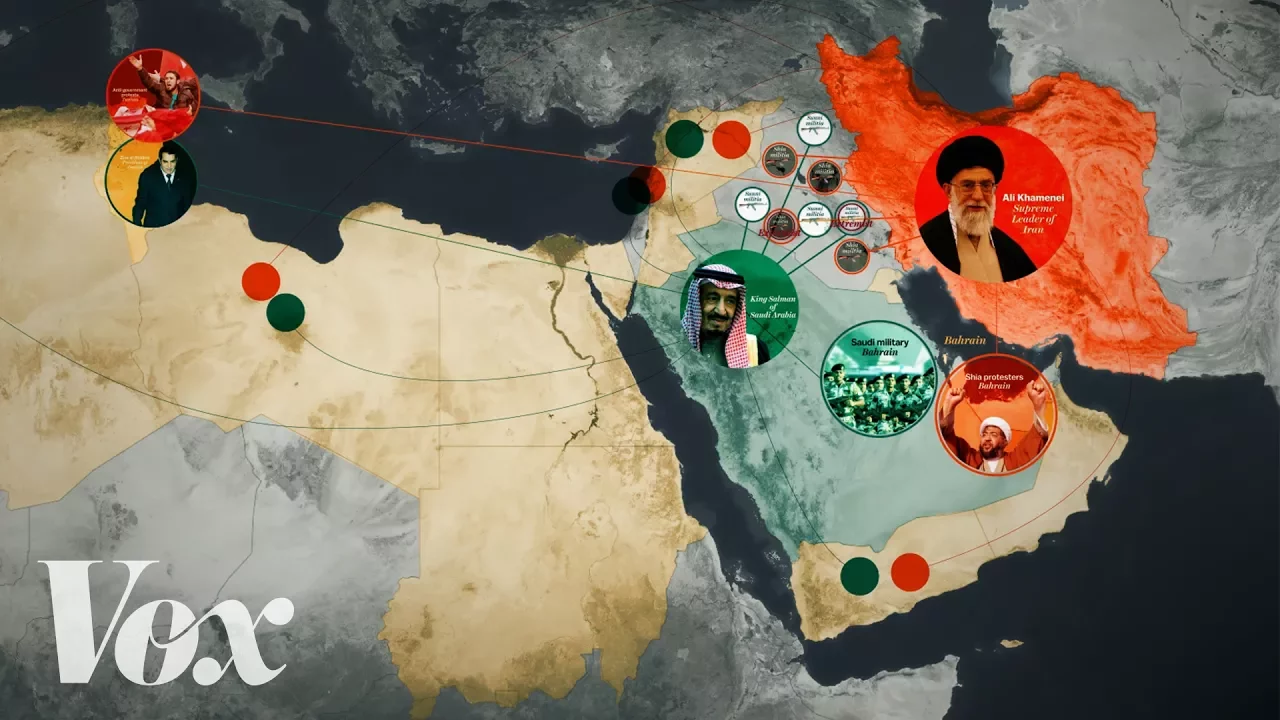
Explaining the Saudi-Iranian Proxy Conflict in the Middle East
@Vox
18.2M views•2017-07-17
Related Study Plans & Knowledge Roadmaps
Structured learning paths in Political Science