


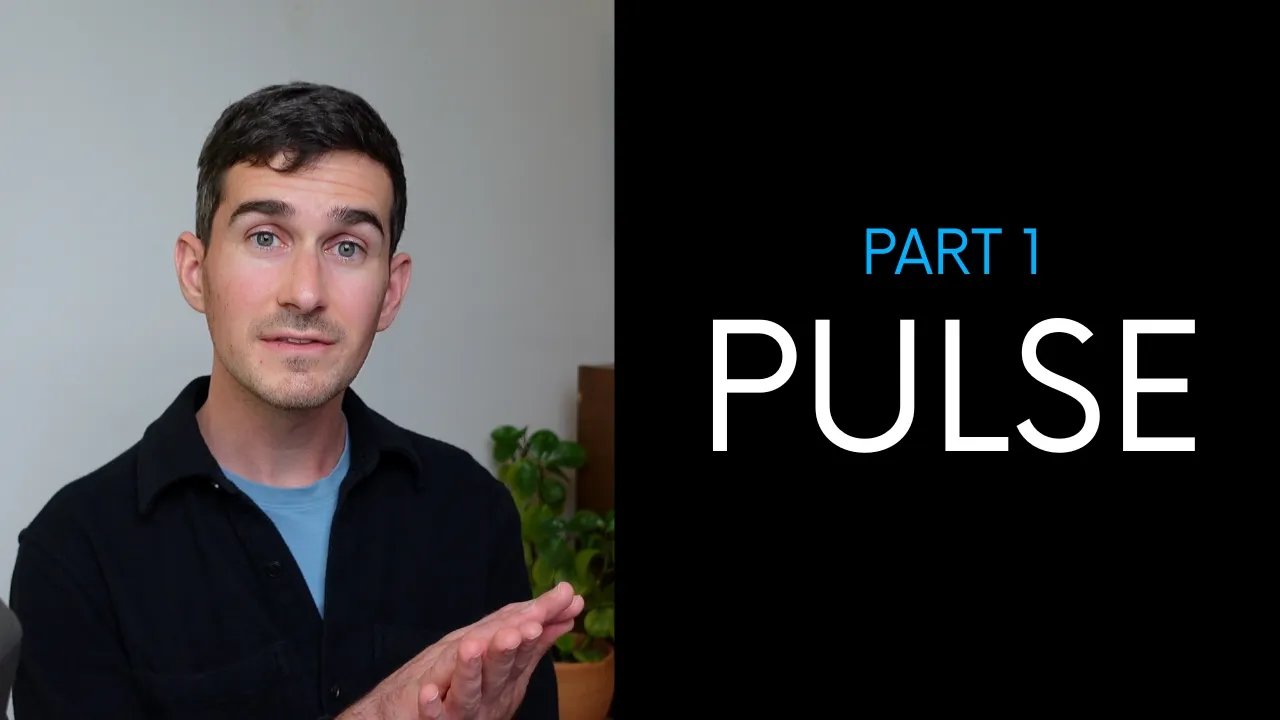



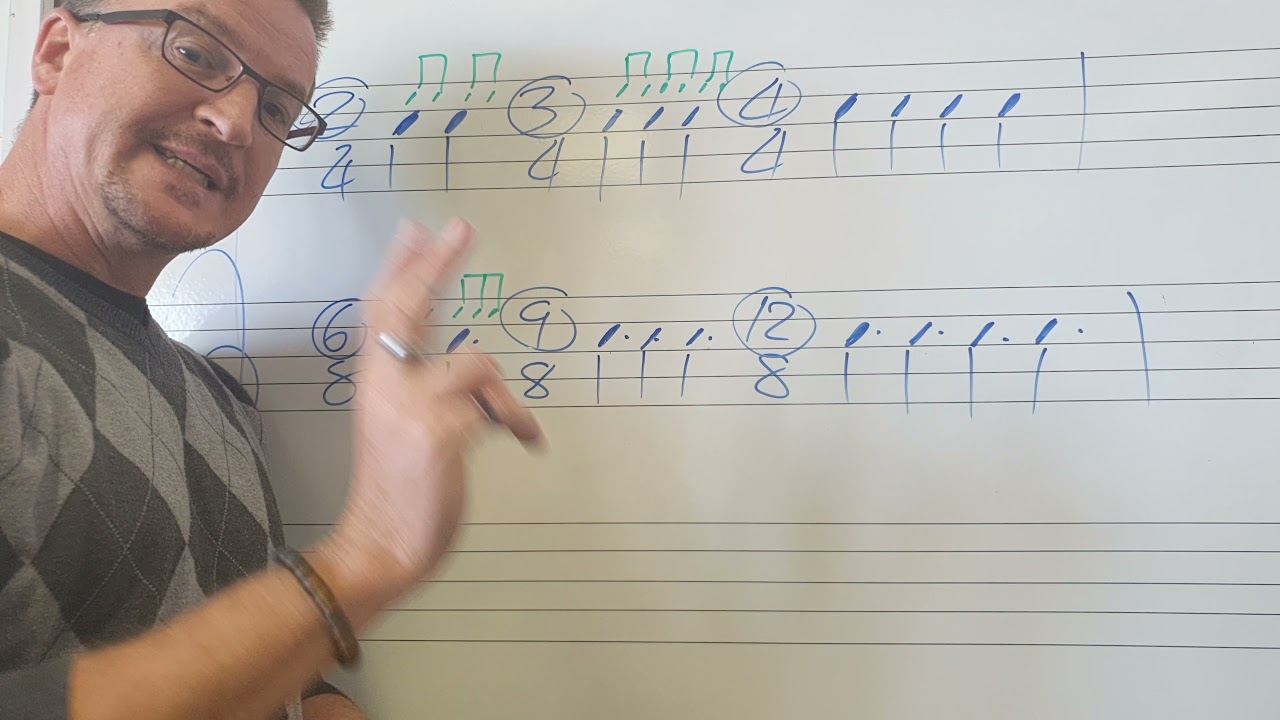




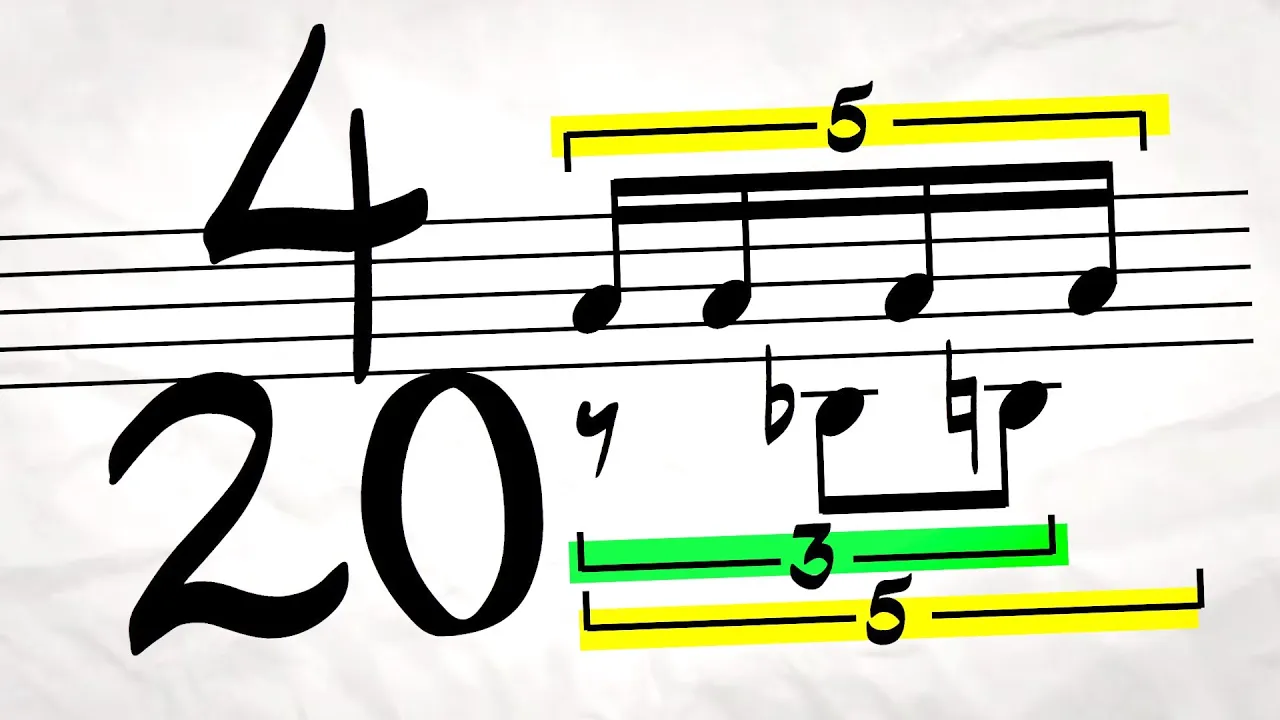
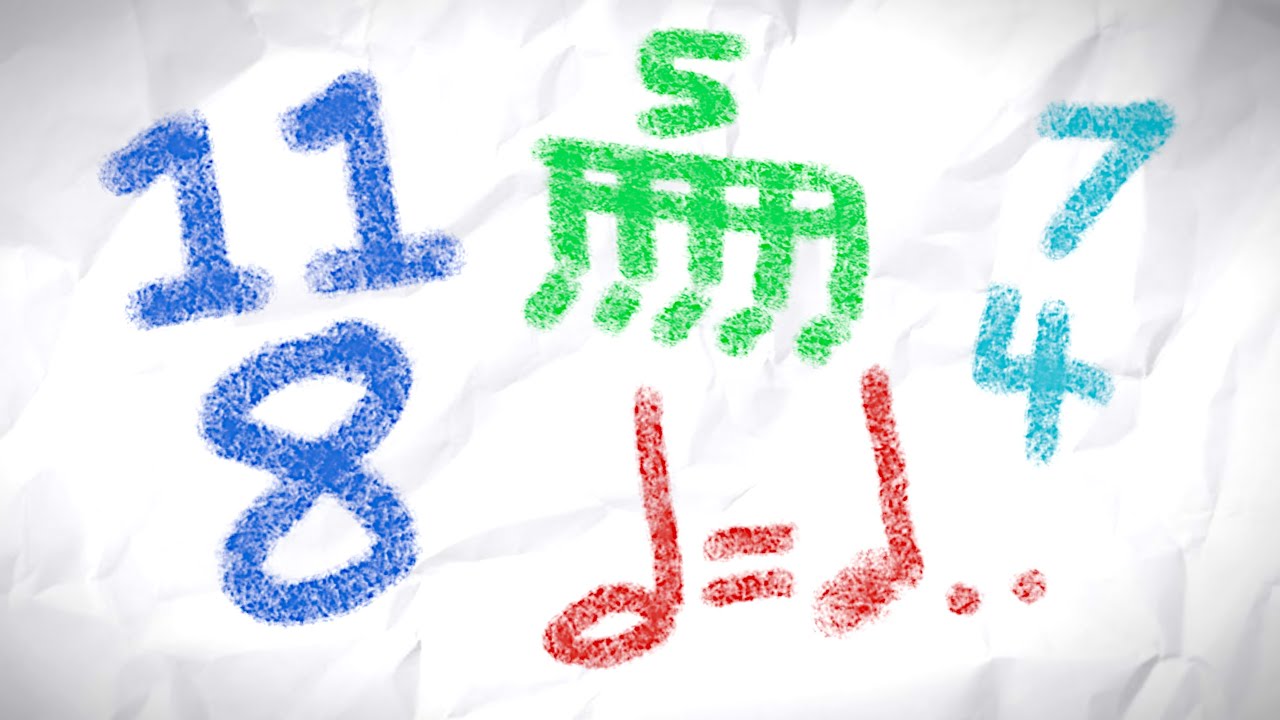






A polymeter involves two or more different time signatures playing simultaneously (such as 11/8 over 4/4), creating tension through misaligned first beats that only occasionally align, while a polyrhythm involves two or more rhythmic patterns playing simultaneously within the same time signature by using different subdivisions (such as triplet subdivisions over straight eighth notes), creating a contrasting rhythmic texture without changing the underlying meter.
Polyrhythm vs. Polymeter: Music Theory Explained (Stranger Things)
Added:A foundational understanding of basic time signatures (such as 4/4, 3/4, and 6/8) and how beats are grouped into measures.
The concept of a steady musical pulse (tactus) and how tempo dictates the speed of the beat.
Familiarity with beat subdivision, specifically the difference between simple subdivisions (dividing a beat into 2 or 4) and compound subdivisions (dividing a beat into 3).
Practical execution of rhythmic decoupling, developing hand-independence exercises for instruments like the piano or drums.
Introduction to metric modulation, which uses subdivision shifts to smoothly transition between different tempos.
Analysis of advanced rhythmic structures, including complex/irrational polyrhythmic ratios (e.g., 5:4 or 7:3) and nested polyrhythms.
Exploration of polyrhythmic and polymetric applications across diverse genres, from West African drumming and Indian classical music to progressive metal and electronic synth-wave.
38.4K views1.4Klikes16:56Original Release: 2017-11-10
poly poly meters poly ribbons poly walks these are strange things right wrong there are friends well at least when we take the time to get to know them so on that note please allow me to introduce my friends to you but first chain right now here and welcome to the hack music theory revolution where we empower you with notation free Erie for making great music so two things aligned which resulted in this lesson right here the first thing was that last week I did a video on a bassline that I wrote using a poly meter by the way thank you so much for all your kind comments about the video what's interesting though is that something turned up in the comments and people were emailing in asking what's the difference between a poly meter and a polyrhythm it turns out there's an immense amount of confusion and even misinformation around these two concepts on the internet but that all ends right here right now with this video the second thing that aligned resulting in this lesson is that we just binge watch stranger things chew and the soundtrack is full of these pulsating since they just go and go and go and cause tension and I was thinking always really that's the perfect foundation to teach what a poly meet Joanna polyrhythm is and the difference because it's so easy to hear them against that pulsating sense so there you go two things that made this lesson alright let's jump in so our BPM is 90 our time signature is 4 4 and we're in the key of a minor so that's just all the white notes with a as the root so in other words the home this video is not about chord progressions though so I'm just going to kind of blast through here real quick and give you an overview of our chords so we've got a minor we've got C major we've got a minor and then we're finishing on G major now if you want some help writing chord progression and arranging the notes in a way like we've done here so the chords flow smoothly into each other I then please check out my hack music theory for songwriting and producing PDF the link is below and this is what it sounds like alright now that we got our stranger things inspired pulsating since all set up and ready to go let's start by clearing up any and all confusion with regards to the terms this is so easy you're gonna laugh are you ready so a poly meter poly means two or more meter means time signature therefore a poly meter is two or more time signatures playing simultaneously now a polyrhythm poly means two or more rhythm means a pattern in time therefore a poly rhythm is two or more patterns in time playing simultaneously it's that easy now having said that there are countless ways to creatively interpret and express these two musical concepts so in this video I'm just gonna teach you one of each to get you started alright let's do this okay so here's how this game works we're gonna write two versions of the same melody one using a poly meter and one using a poly rhythm and then we're going to play them back-to-back so you can really hear the difference between a poly meter and a poly rhythm and then also please note that we've got the root notes for the chords in our progression down here these are all muted so they just they're to act as a template over which we can write our melody and we're gonna start with a poly meter two or more time signatures playing simultaneously and because we've already got our chords and our basement and our drums going in four-four all we need to do now is choose a time signature for our lead melody when choosing your second time thing just start by changing the grid to whatever note value you want for that time signature so you could do in quarter notes in eighth notes and sixteenth notes thirty seconds whatever you want I'm gonna use eighth notes because the number aids is very special in stranger things - so then what you have to do is once you've selected the note value you need to decide how many beats you want to designate to that second time signature so in other words how many beats are we going to use to write our lead melody now and I'm obviously going to use eleven if you've watched stranger things - you know eleven and eight those are magic numbers right so anyway if you have moisture it's there's two characters called 11 and eight inevitable tattoos yeah it's very cool okay so what we're going to do is write our second melody in eleven eight what that means is we're going to have eleven eighth notes so one two three four five six seven eight nine eleven so that is going to be one bar of eleven eight and then that is going to loop so this melody is going to loop and when it comes to looping that second time signature in a poly meter there's a couple different ways to do it you could let them both just kind of go and do their things so they kind of stop together on the one and then they go in different directions and then eventually they'll align again where both of their first beats come together that's one way to do it sometimes you can go hold on for a very long time until they eventually align again the other way to do it is to go as long as you want and then just cut that second time signature and that's exactly what we're going to do here so we've already got our chord progression going in four bars of 4/4 this makes it a very neat and satisfying sounding chord progression it's very even sounding so all we're going to do is we're going to loop this 11 eighth time signature as many times as we can and then it's just gonna get cut at the end here whatever doesn't fit doesn't fit we just start again okay and now we use these eleven eighth notes to write our melody so let's start we're gonna start on B we're gonna go up to see that maybe we've come down to E down to see October of the see up to be and then down to be and then after another be and then we're gonna end on to a so that's the route and we're gonna actually glue those together so those two eighth notes become a quarter note so you're really going to be able to hear where that melody ends and therefore whether time sing chance okay now that we have written our melody it's time to lube it so we select little mini and here we go this is our second loop and check this out when we try for the third look what happens wow it's too long but how amazing is this because we're ending on that quarter note on a which is the root note of our scale we can just cut it to an eighth note and it doesn't even change the melody because the melody still ends on a it's just that a is a bit shorter than it was previously so once we've cut that we can now just select that last loops with a melody and move it into place and now we're done so we're getting eleven eight eleven eight and then the last eleven eight has been chopped to ten eight okay let's have a listen to our poly meter and as a place through I really want you to pay attention to the first beats of the bar in both of those different time signatures so we're gonna hear the first beat of the bar in 4/4 over there and then over there and then over there and then over there so we're going to get four beat ones in our 4/4 time signature but then in the eleven eight one we're only gonna get three so we're gonna get our first beat at the bar there and then this is the beginning of our next bar of eleven eight and then that last bar is not even eleven eight that's ten eight okay so we're only gonna get three first beats in our second time signature and what you'll notice is on beat one over here it's the only time that both of the first beats of those time signatures align the xb1 in 4/4 is here and then it eliminates there and therefore falls there and then that's the tenth one there and then this is the fourth one here so all the other beat ones are totally misaligned and then boom it all locks in again at the beginning here so that is what a poly meet is all about different first beats of different bars in different time signatures here we go the poly meter exhibit a and now on to Exhibit B the polyrhythm so in other words two or more patterns and time playing simultaneously okay the easiest way to get a polyrhythm is to change how you subdivide each beat so you can see right now we have the grid set to eighth straight which means each quarter note is being divided up into two eighth notes so we're dividing corner notes into two what we could do is change straight to triplet which means now we're dividing each quarter note into three equal parts and that is an eighth note triplet each so we could also change it to quarter note triplets which means now we're dividing a half note beat into three equal parts instead of a half note into four equal parts so you can play around with all kinds of different triplets and that's a really easy way to to get a poly rhythm going because we're gonna be in the same time signature so our lead synth is going to be written using a poly rhythm but it's still just gonna be in 4/4 everything is in 4/4 here but because we're dividing the beat up differently our melody is going to be using triplets and our chord progression and basins and drums that's all just going to be eight straight so we're going to get this incredible kind of rubbing against each other of of these two rhythms but they're both in 4/4 okay so we can take the melody as it is and just nudge it a little bit into this new triplet grid here so we just move all these notes so we're using quarter note triplets which i think is going to be really nice to to get a little bit of a slower movement through our melody so we're just moving them all over and then extending them to make sure [Music] let's have a listen to this real quick this is just an example of the the melody shifted into coordinate triplets [Music] okay so um you can immediately hear that quarter note triplet just rubbing against those on those straight eighth notes awesome okay so I really enjoyed all of that up - up - bar - that kind of felt a little slow because obviously coordinate triplet is longer than you know that original melody of just straight eighth notes so here's another trick we can actually change the grid to eighth triplets and we can actually so the second bar we're actually going to go through eighths triplets this is gonna sound awesome cuz check this what happens is we end up with the same accents so we're accenting beat two of of our 4/4 time signature which is the snare drum and we can actually copy and paste this at all melodic fragment here so we're gonna get the accents on the two and the four so we're gonna have that's how the root note of the scale so that's a and those are going to be accentuated with with the backbeat snare so have a listen to this [Music] okay now all we do is copy and paste that because that's two bars of 4/4 we're gonna go into the second half of this and here's another little trick sometimes what is a very call is to to take your polyrhythm and unpause it so you actually lock into the same subdivision of the beat I just you know in one place somewhere and I think it's gonna be really cool to do that in this fourth bar here where everything's just going to lock in to the straight eighth notes and we can use the same the same melody so actually going to use that that exact same thing I'm so it's gonna the melody is gonna end exactly the same as it always does except now we're going to straight eighth notes I'm and then we get a really nice long a at the end which once again is the root note of the scale so that's pretty cool ok so here we go Exhibit B the polyrhythm [Music] and just before playing the final poly metric version of the melody and polyrhythmic version of the melody back to back so you can really hear the difference between a poly meter and a poly rhythm just a quick note to say that if you want to join our hack music theory revolution then head on over to patreon comm slash revolution harmony thanks big-time for watching and we'll see you next Thursday on the hack music theory show until then happy songwriting producing [Music] you
Up Next

9:50
Polyrhythms vs. Polymeters: A Music Theory Guide
@andrewhuang
406.3K views•2020-11-26

10:20
Mozart's Musical Dice Game Explained: History, Rules, & Fun
@webpianoacademy
5K views•2023-03-13

47:36
Understanding Diatonic 7th Chords in Major Keys | Music Theory Tutorial
@GracieTerzian
54.7K views•2022-03-02
10:49
Understanding John Coltrane's Giant Steps: A Music Theory Analysis
@Vox
10.4M views•2018-11-12
Related Study Plans & Knowledge Roadmaps
Structured learning paths in Music Theory
music-theory
Composing Galant Music: Partimento & Schemata
01Foundations of Figured Bass and Keyboard Harmony
02The Rule of the Octave (Regola dell'Ottava)
03Galant Schemata: The Building Blocks of Form
+ 2 more learning modules
30h5 modules
Explore Roadmap
music-theory
Decoding Overtone Series: Tuning & Drone Music
01Acoustic Foundations: The Physics of the Overtone Series
02Tuning Systems: Equal Temperament vs. Just Intonation
03Microtonality and Spectralism: Beyond Standard Pitches
+ 2 more learning modules
24h5 modules
Explore Roadmap
music-theory
Impressionist Harmony: Scales, Planing & RPGs
01Foundational Music Theory: Keys, Intervals, and Seventh Chords
02Impressionist Color: Chord Planing and Parallel Harmony
03Whimsical Textures: Pentatonic Cascades and Whole-Tone Scales
+ 1 more learning modules
14h4 modules
Explore Roadmap
music-theory
Negative Harmony: Axis Reflection in Indie Pop
01Music Theory Foundations: Scales, Intervals, and Triads
02Functional Harmony and the Circle of Fifths
03Demystifying the Negative Harmony Axis Reflection
+ 2 more learning modules
16h5 modules
Explore Roadmap