



![8 - La comptabilité carbone - Cours des Mines 2019 - Jancovici - [EN subtitles available]](https://i.ytimg.com/vi/lgoUns8Cu0w/hqdefault.jpg)










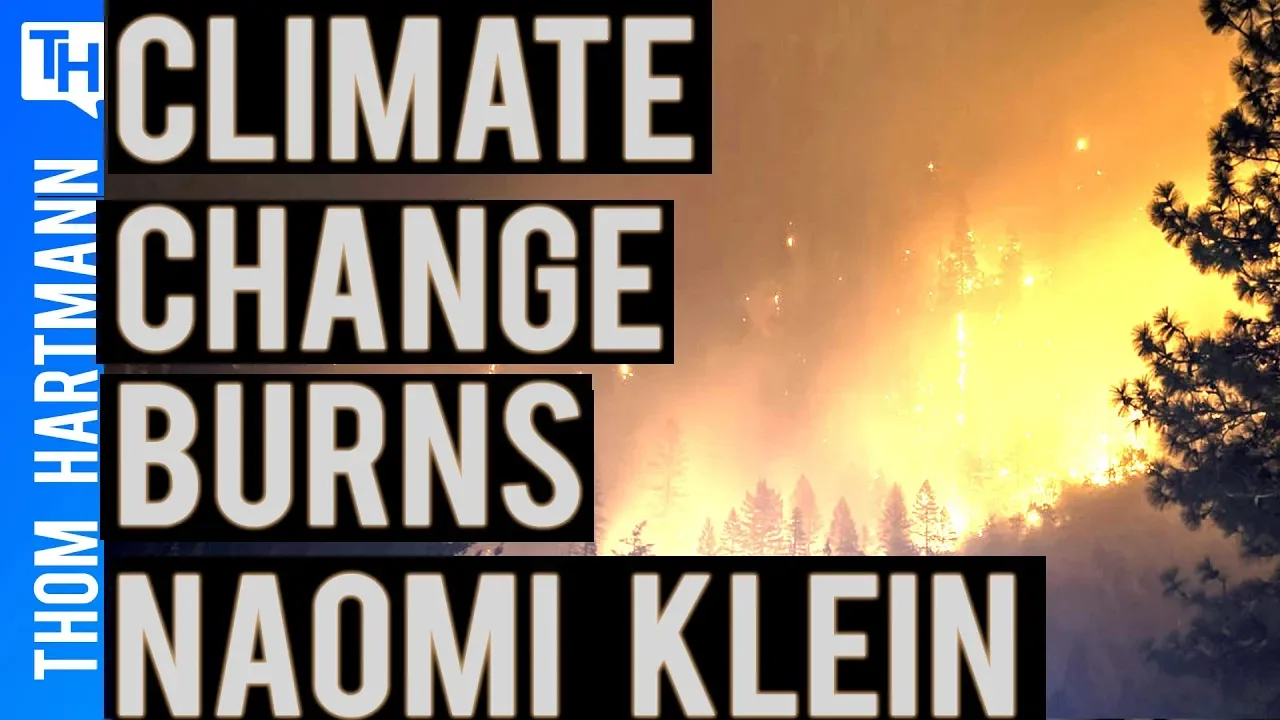









Naomi Klein argues that climate change represents the most powerful counter-narrative to capitalism because the economic system is fundamentally incompatible with addressing the climate crisis; while neoliberal policies promote privatization, deregulation, and growth-at-all-costs, responding to climate change requires massive public investment, regulation of corporations, and a complete transformation of energy systems, making radical systemic change necessary rather than optional.
Naomi Klein: Climate Crisis as a Challenge to Neoliberal Capitalism
Added:The definition and core tenets of neoliberalism, including deregulation, privatization, free-market globalization, and the reduction of state intervention.
Basic concepts of market failure and negative externalities, specifically how greenhouse gas emissions are historically unaccounted for in capitalist accounting.
An overview of global climate governance, including key international treaties like the Kyoto Protocol and the Paris Agreement.
The historical link between the expansion of industrial capitalism, fossil fuel dependence, and the rise in global temperatures.
The concept of 'Degrowth' (décroissance) and ecological economics as alternative models to perpetual GDP-growth-oriented systems.
Policy frameworks for a 'Green New Deal' and how they attempt to merge state-led economic restructuring with aggressive decarbonization.
The principles of Climate Justice, focusing on how climate change disproportionately affects vulnerable populations and the Global South.
Naomi Klein's broader concept of 'Disaster Capitalism' and how environmental crises can be exploited to implement unpopular neoliberal policies.
69.8K views1.1Klikes56:55Original Release: 2015-07-27
buenas tardes a todos ya todas muchisimas gracias por avenido vamos a comenzar ahora la presentación de libro de na mcclain esto cambia todo el Kalin tambien toe el capital is mo contra el clima y la presentación mastery structure ah de de la siguiente manera en primer lugar vamos a hacer una pequeña presentation so Brea disposal a tener una intervention in party runic on fear a moon ik infer NC a-- despues comenta ramos un poco entre las dos algunas de las casas de esta que yeah a yeah pedido resan är okay sama significative --is para finalmente abrir una pequeña toter no de preguntas que sera poor fuerza muy brave a porque no vamos a tener demasiado tiempo y finalmente a yeah estar aquí en el esta Nereo fer mondo libros para todas aquellas personas que quieres a llevar o su firma em en primer lugar senel our Gwen oh no me Glennis una persona muy conocida casino area falta present our la no es period ista s : ista yo creo que some de sobre conocido sal goo knows de lor libros cask rito como puede ser no logo la doctrine Adele soak yes take a brass a present on oh hey alguna de alguna manera yo creo que lo que characterizes los libros a los analyst rigor osos pero sobre todo que trasmit incasa's tremenda men taken place con una enorme clara de no y para que es su Mo's activist Tisdale Ecology's mo sosial y st. ramos a nuestro active is no fundamental meant ain't a visible affair la Vera que este Modelo Konami co y la cultura que se dicen cadena alrededor del a declared on a chiral esse a las personas importantto a la vida no no es muy difícil encontrar un EXO Unni lo conductor entre las diferentes obras Dena me Glenn Eno Lobo no sin contrib a MOS Laden uncia la constitución del poder de las multinationals y todo SE dispositivo de conquista del alma que sus TNA's symbolic Ament a material meant a loss imaginary OHS k permiten ok permiten que existe este Modelo economic o la doctrine adele sock Bonilla de manifesto cual es o los mekinese Mo's del extractive is mo Sophie podría llamar sassy che pretend a sacar cualquier go today rentable idad de cualquier proceso comunitario de cualquier proceso politico y que se estaba viendo SE v vo primero en algunos lugar es las planas - gusta structural que estamos viviendo una forma tan absolutamente desk Armada en la sociedad que tenemos sobre mismo en concrete when eldest odd Oh espanol estoy Ultimo libro de tu lado esto cambia todo el capital is makan contra el clima intraday jeno en la parte más material deste s tractive is mode esta lucha contra la vida no SS entra en un phenom ii no como es el del cambio chromatic Oh a van Sandow aboard and OD una forma de da Oh Moira bureau Cyclery SEMA lo que es la explication del cambio climatic Oh como se Doh possible construir si disgusto del negocio Nismo que de alguna manera contra Benia todo lo que estaba planty ando la ciencia en un modelo k sin embargo sacra lisa la ciencia yo creo que eso que de fantasy comenteis prasad o express at amend own ofor Maclaren conflict o que existe en las luces yo resistencia x' contra el problema del cambio climatic Oh con la idea clara de que si los mercado's no tienen como priori das la vida de la gente y los politico's de hond a cuidar a las personas parece que el cambio solamente bhava near de nosotros y nosotros mismas y esto laborda muy bien el greco her todo este conjunto de luces a contra el extractive is mo k yama yama bloke Adriano yo Ultimo Tereus n alar antes de dar leia Paso chase a note a mucho que este libros escrito por una mujer no solamente por qué Rico ha una buena parte de las luces en defensa de el territorio protagonist Addas pour mujeres C no porque además Drake Ojeda una forma Clara como todos los efectos deste sistema otra vez a los cuerpos de la persona otra vez a las vidas co t Deanna's y mi o opinion nuestra uniform evident a incluso project on dos a la misma con su propia experiencia sobre la materna de un kappa too low pressure so kate en el libro no este viejo a este viejo principio feminista de caelo personal tambien is Politico Issa mas pues Lucido la palabra I write arrow a la cara de cemento por a ver pedido estar en este skocy Oh thank you thank you Yahya hadera for that lovely introduction that very thoughtful introduction and I of course want to thank our hosts here at the círculo de Bellas Artes which is truly beautiful and I also want to thank my wonderful publisher PI dose this is the first book this is the fourth book that we have published together and I'm thrilled to be to be working on this project with you once again it's been a long time since I've been in Spain it's actually been eight years I was here in in 2007 to launch the Shock Doctrine in Spanish and that's the last time I was here and part of that is because I have been trying to fly less and and it's also because this book has been really all encompassing I think that a lot of you here are familiar with my last book with the Shock Doctrine and what that book described which is a very ugly tactic through which our elites have systematically harnessed moments of shock moments of intense crisis weather wars terrorist attacks economic crises or increasingly natural disasters linked to climate change in order to push through extremely unpopular policies essentially using shock to do an end run around democracy to say we can't afford democracy anymore because we have an emergency and we just have to push through all of these policies under cover of crisis so when when the book was finished I sent the book to Alfonso Cuaron the wonderful Mexican filmmaker who had recently finished a film called children of men and and I asked Alfonso to read the book and send me a quote and he did something much better than that which is he made me a short film a six-minute film a trailer for the Shock Doctrine and it's a great piece and we ended on a slogan this is 2007 remember and the slogan was information is shock resistance arm yourselves and the idea was that if people really understood this tactic understood how it has been used so systematically to advance these brutal economic policies from the coup in Chile in 1973 up to September 11th if we understood this then we could resist it we could name it and we could use it to stay oriented during moments of intense transition and intense transformation so less than a year after the Shock Doctrine was published we unfortunately had a chance to test this theory to test the theory that information is shock resistance because of course a few months later Wall Street collapsed and we found ourselves in the midst of an intense economic shock at the time that this happened at the time that our governments spent trillions of dollars in order to bail out the banks that had caused the crisis many people described this as the Shock Doctrine and warned that if this happened if we responded to the crisis in this way then it would become a pretext to impose brutal austerity to privatize to further privatize the public sphere and to push all kinds of policies that people would otherwise resist and indeed by 2009 there were mass movements across Europe including in Spain that were resisting precisely this tactic and the slogan which was first heard in Italy but ricocheted around the world was we won't pay for your crisis we will not pay for your crisis in other words we knew it was happening we knew it was happening while it was happening and we fought back I'm sure that every person in this room participated in many demonstrations against precisely this kind of crisis exploitation I certainly did in my country we occupied squares we occupied Wall Street in North America inspired in part by the indignados movement here in Spain we fought hard and we fought I think with our eyes wide open but it didn't work the economic punishment of the many kept coming while impunity reigned for the architects of the crisis so in the first year in the midst of the economic crisis as I toured and spoke to two groups of people about the shakta the question that I started to hear was how can we develop a strategy to respond to crisis that is a progressive response to crisis how can we have a kind of people's shock doctrine a response that doesn't try to overturn democracy but does the opposite responds to crisis by deepening democracy response to crisis not by pushing through policies that increase inequality but does the opposite response to crisis by by by building a more equal world by advancing policies that tangibly improve people's lives that shift value in concrete ways can we do this and you know when I first launched the book I the first event I had for it was in the city of New Orleans which was still reeling from the aftermath of Hurricane Katrina and I received this question from from a labor organizer named socket Sony and it really stayed in my head he said because in the book I used this word disaster capitalism to describe what happens in moments of crisis he said ok Naomi they have disaster capitalism we need disaster collectivism how can we build that and we know historically that moments of shock moments of crisis have been opportunities for progressive movements that is certainly that was certainly the case after the market shock of 1929 when the market collapsed that became a moment when in North America Social Security was born huge public investment happened all kinds of public funding for the Arts housing it was a moment of rapid transformation and in fact so the society was moving so far to the left that the New Deal was a compromise it was in fact capitalism saving itself from revolutionary change we also know that after the Second World War that was a moment when countries like mine in Canada UK won universal health care and and other policies that benefited huge numbers of people so there is historical precedent for shocks for crises to be moments when democracies deepen when progressives can win these big victories but that didn't happen after the 2008 crisis and what I've come to understand is that the reason for that is that while we have said very strongly what we didn't want while we had very loud no we never had a convincing enough yes we never had a convincing enough counter-narrative to the narrative of austerity a story to really rival the narrative of scarcity that came to dominate the globe so powerfully so even as people rejected the logic of austerity they didn't have confidence in the alternatives so this new book this changes everything is in a way my belated response to these questions that I received after publishing the Shock Doctrine what could be a progressive response to crisis because I think part of a progressive response to crisis is redefining what a crisis is right the Declaration of a crisis is a subjective process our elite decide when something is a crisis but elites aren't the only ones who can decide something as a crisis right now in the United States there's a movement of African Americans declaring the fact that the police shooting of unarmed black men is a crisis they've been doing it for decades but something changed something tipped and a mass movement emerged declaring that black lives mattered and said what has become normal is no longer acceptable and indeed if we look at the history of social change it is a history of crises being declared from below declaring that slavery is a moral crisis that patriarchy is a moral crisis and forcing changes upon our elites because of the power of mass movements the argument I'm making in the book is that climate change can be and indeed must be such a crisis our elites do not behave as if it's a crisis but it is a crisis behind which there is a huge amount of scientific consensus and we do our elite a hue huge favor when progressives accept the narrative that climate change is something that we can only care about when the economy is good that it's somehow a luxury to be reserved for boom economic times and something to be forgotten during times of economic crisis what I want to offer to you tonight is that I believe that climate change is the most powerful counter-narrative we have to the brutal logic of deregulated capitalism our economic model is not only waging war on workers on communities on public services and social safety nets as you well know here in Spain it is also waging war on the life-support systems of the planet itself the conditions for life on Earth and I think the clearest example of this conflict is the way in which the economic crisis of 2008 was used to sacrifice the planet as well as sacrifice so many people's lives here in southern Europe now it's perfectly understandable that the movements against austerity have been focused on pensions health care education housing food these are the daily concerns but it is also true that the same logic of false scarcity the same economic pressures have been used to rationalize a wholesale attack on renewable energy most dramatically in this country where there was a transition underway to renewable energy and it was abruptly severed at the same time as renewable energy subsidies have been slashed not only here in Spain but also in Italy in Greece in Portugal this part of the world is also in the midst of a fossil fuel frenzy of a push to drill to frack for gas to drill for oil and gas offshore as you know this is happening here in Spain thankfully the push to drill off the Canary Islands has been defeated but the fracking wars are ongoing in Italy there are plans to double the amount of oil drilled offshore in Greece there's pressure to drill for oil and gas in the Ionian and Aegean and of course there's pressure in Portugal along the same lines and what's important to remember is that up till 2008 Europe was the leading example the beacon of leadership on climate change and all of this was sacrificed under cover of crisis so I was in Berlin a couple of days ago and a journalist there told me that he didn't agree with my book and he explained that this was because he said I'm a moderate and he said I don't like radical change and he also pointed out that radical change has a bad history in Germany so most Germans feel the same way as him now I told him that I understood radical change scares most people and a lot of the time it does turn out badly especially in Germany but here's the inconvenient truth or the convenient truth depending on your perspective when we're talking about climate change in 2015 we have waited so long we have procrastinated for so long all the while making the problem worse because emissions are up by 60% since we started negotiating to lower our emissions that we now find ourselves in a situation where there are no non radical options left on the table the reason why I called the book this changes everything is not because I'm saying my book changes everything I don't believe books change everything but I do believe that climate change changes everything by which I mean that no matter what we do everything changes in one way or another if we stay on the road we are on if we leave our economy intact the way it is that leads us to four to six degrees of warming above pre-industrial levels now we have not even warmed the climate by one degree Celsius and we are already seeing catastrophic results super storms like typhoon Haiyan cyclone Pam hurricane sandy Hurricane Katrina the drought in California right now which if it continues for another year will deplete the water table for the state that's what less than 1 degrees looks like when our governments met in Copenhagen in 2009 they defined anything above 2 degrees warming as far too dangerous they set the target at 2 degrees when they set that target the African delegates and I was at the convention the African delegates marched through the halls of the Convention Center chanting that this was genocide because it would lead to mass deaths in sub-saharan Africa island nations low-lying island nations also rejected the two degree temperature target saying that they needed 1.5 in order to survive that was the slogan 1.5 to survive so now the World Bank the International Energy Agency and Price Waterhouse Cooper okay so we're not talking about radical leftist here state we're headed towards 4 to 6 degrees of warming that changes everything about our physical world you know people ask me to describe what does 4 or 6 degrees warming look like and I can't answer the question because the climate models break down what the climate scientists tell us is they don't know whether anything over 2 degrees is can Hannibal with what we would describe as civilization organized society we're talking about endangering all of our coastal cities we are talking about massive crop failure so you know my book is not filled with apocalyptic fear-mongering I think we actually are afraid enough I think the problem is we don't see a way out we don't see a way out of this existential fear but what's important to understand is if we keep doing what we're doing it changes everything about our physical world these moderate options that German journalists are imagining don't actually exist okay it's not too late to prevent those radical physical changes to our world but in order to do so because we've waited so long it requires radical changes to our economic and political system that's the reality in which we find ourselves because we now have to cut emissions by so much eight to ten percent a year starting now that that challenges the fundamental logic of growth which is at the heart of our economic system so in the book I argue that the reason why we have failed to rise to the challenge of climate change is not for the reasons that we hear so often you know we hear that it's human nature that humans are just too selfish to deal with something that seems abstract or that it's too difficult for our governments to agree on anything I think none of these explanations actually bear up to real examination because I mean if this past economic crisis in Europe has taught us anything it's that people are willing to sacrifice a hell of a lot in the face of abstract evening ly abstract goals they may not do so happily but they are doing it and as ours are government's coming together to agree on a plan well in the same years that they have failed to negotiate a binding climate agreement that actually penalizes people who don't follow it they built the World Trade Organization an incredibly complex global system of rules and regulations with clear penalties and and binding targets so it's possible to agree the argument I make in the book is that what really explains the failure is catastrophic bad timing by which I mean that this crisis landed on our collective laps at the worst possible moment that it could have and that moment was the year 1988 1988 was the year when our governments first met to start negotiating emission reductions and it was also the year before the Berlin wall collapsed it was in retrospect the triumphant moment for the neoliberal project so when you look at what that project is I mean we're all familiar with it it's privatization its deregulation it's essentially a war on the public sphere it's now goes under the banner of austerity all of it locked in under free trade deals so what I do in the first part of the book is show the direct clash between the dictates of neoliberalism these core rules and the most basic things that we need to do in the face of the climate crisis if you're going to take climate change seriously you obviously need to invest massively in the public sphere you have to transform your entire energy system you have to transform your the way we move around you have to move away from a culture of the car towards a culture of public transit it has to be affordable maybe it should even be free whatever it is you shouldn't privatize it that's a very bad idea at a moment like this and yet that's precisely what our governments were doing they were privatizing our energy systems our rail systems some of it's still happening as you know and they were handing out over these core tools our Airlines another one you know these core sectors fossil fuel driven sectors of the economy what you have seen so clearly I think in Spain is that when you have a privatized energy system when you have huge for-profit companies dominating your energy market they're going to see renewable energy as a threat to their core business model and that's precisely what's happening now with attacks on homeowners that are putting solar panels on their rooftops because they want to become energy producers well your private energy companies see those people as competitors and this is not something unique to Spain we're seeing again and again how that profit motive in the energy sector clashes directly with what we need to do in the face of the climate crisis you know we've all heard a lot about Germany's energy transition which ironically Germany at the same time as it prescribes austerity on the rest of Europe is doing something very different at home but that but one of the things that has made that energy transition possible is that in hundreds of cities and towns residents have decided voted in many cases in referendums to take back control over their energy grids from the private companies that sold them off which is exactly the opposite of what Germany is demanding of Greece at the moment that it's sell-off its energy systems which is why I think it would be a very good idea for the countries of southern Europe to begin to say to Germany we're going to stop doing what you say and we're going to start doing what you do because the other thing that Germany shows is that this is a fantastic way to stimulate your economy and create jobs Germany has created 400,000 jobs in its energy transition it has also shown the huge potential of what is increasingly being called energy democracy because of the way it's that the energy transition was designed there has been an explosion of participatory ownership in the energy grid 900 new energy cooperatives as well as this increased ownership at the local level of the energy grid which is a way of fighting austerity when you keep the profits from the power you generate you can use those profits to pay for services so you have a real win-win obviously the other way in which the logic of neoliberalism clashes with what we need to do in the face of climate change is that it fell out of fashion at precisely this wrong moment to regulate corporations which is something that we very much need to do in the face of the climate crisis we need to tell companies what they can and cannot do we need to put firm caps on emissions and we need to say no to companies when they want to drill for oil in new territories we need to keep the latest science shows about 3/4 of the known carbon reserves in the ground and that's where Germany is interesting because despite the fact that they have this amazing energy transition the Merkel government has been unwilling to say no to the coal companies so their emissions are not going down nearly as quickly as they should be in fact they went up for a couple of years in a row and the end so there's only so far that Germany is willing to bend the rules of neoliberalism even at home but this is one of the clear clashes that we have we need to regulate corporations we need to intervene massively in the market we need to gain public and communal control over many parts of our economies that have been privatized the other conflict that we're increasingly seeing is with the free trade deals sorry that lock-in many of these policies and make it really hard to change direction so give you an example and I think this is very relevant right now because of the battles going on over new trade deals like the TTIP what we're seeing more and more is that these deals that contain investor protection clauses that allow private companies to sue national governments is that when you have real popular victories against an extractive practice like fracking for instance or against a pipeline carrying a particularly dirty form of oil as we've been having a big fight in North America over tar sands pipelines these victories become vulnerable to trade challenges so for instance and this is relevant to the fracking fights here in Spain in my country the province of Quebec successfully banned fracking but it's now facing an investor challenge under NAFTA under the North American Free Trade Agreement from a private company who says it has the right to frack for gas in Quebec so this is the absolute worst time to be entering into these agreements under which trade literally Trump's the planet it's insane we can't let it happen there are many many examples but I'm sort of running out of time here I went to to Frankfurt for the block yuppie protests last week and you know I I went there knowing that I would probably be the only speaker who even mentioned climate change and I was pretty much for understandable reasons but what the reason why I went is because it seems to me that when you look at these these conflicts between the logic of austerity and what we need to do in the face of climate change it's time for a merger a friendly merger between the anti-austerity forces and the climate justice movement for it's ridiculous that these are two separate conversations that barely speak to each other that you can have strikes against rail privatization against fare increases for public transit against energy privatization and barely mentioned climate change or not mention it at all this is the same conversation and as I said earlier it only serves our elites when we buy into the logic that climate change is some kind of a luxury as I said earlier it's not only a conflict with neoliberalism that we face because we've waited so long and we now need to respond so rapidly and cut so deeply we're now facing a conflict between that core logic of pursuing growth above all else and staying within planetary limits but I actually think it's even deeper than that conflict which is that I think climate change deserves to be seen less as an issue like you know lots of other issues that we are all thinking about in dealing with and more as a spiritual crisis as a civilizational crisis of narrative of story because the story of fossil fuels the story of the industrial use of carbon is the story of human beings telling themselves that they can dominate that we can dominate the natural world that we can liberate ourselves from nature the store that story is older than than the industrial use of fossil fuels it dates back to the 1500s really the 1600s and Francis Bacon but it was the industrial burning of coal that allowed that theory that we could dominate the natural world to seem to be turned into a reality that was that was the promise of coal that you no longer needed to think about where you lived everywhere could be like everywhere else the promise for for factory owners was that they no longer had to build their factories by rushing water to power their factories they now could build their factories wherever they wanted they were in charge and the promise for for shipbuilders and the owners of fleets of ship was was that you no longer had to think about when the wind blew you were no longer at the mercy of the wind you were once again in charge and for a long time fossil fuels really did deliver on this fantasy of freedom from nature on this fantasy that we are somehow other than this thing we call the environment as if it is apart from us as if we are not the environment climate change is the answer that comes at a 200 year delay because all the while that we have been burning coal at an industrial scale the carbon has been accumulating in the atmosphere and it turns out that we were never free it turns out that we were never in charge it turns out that we were never having a one-way conversation with nature now comes the response and so I think that we should not be afraid to see climate change as a message that is being spoken in the language of fires and floods storms and droughts telling us that we need a whole new economic model one based on justice and sustainability now I get this question quite a lot about whether or not this is realistic you know what is it possible to change the system so quickly is it possible to have change at this level and I particularly hear from my friends in the environmental movement you know like they take me aside and they say you know climate change was big enough did you have to make about capitalism and the truth is that if everything was wonderful with capitalism I would say they're absolutely right you know if the only problem with this economic system is that it was slowly causing sea levels to rise I would say there is absolutely no hope that we could change it just because of that it seems too far often too abstract but the reality is is that we are talking about allowing sea levels to rise and endanger your life on Earth in myriad other ways in order to protect an economic system that is failing the vast majority of people on this planet with or without climate change and it is precisely that deep desire for change that you see expressed so powerfully in this country that is what gives me the most hope what gives me the most hope is the possibility of a convergence between the forces that are already fighting this economic system and the existential urgency of the climate crisis it puts us on a firm and unyielding science-based deadline now I'm a writer and I believe that deadlines can be effective I mentioned that it took me five years to write this book but I wrote 80% of it in the six months before it was due so I think if we can stop looking away from this crisis get out of our own climate denial the possibilities for emerging these movements are enormous Spain is living through a historic period as you well know the climate movement is living through a historic period we are seeing victories we never thought imaginable this on the streets of New York this September 400,000 people marched demanding action on climate change that's four times bigger than the largest climate March before it we've seen victories against fracking at national-level at provincial and state levels since my book came out we've seen fracking banned in New York State we've seen it banned in Wales we've seen it banned in Scotland we've seen the very rapid spread of the fossil fuel divestment movement in hundreds of universities and cities and religious institutions demanding the divestment of holdings of stocks in fossil fuels coal oil gas because these are now seen as immoral investments we're hearing the Pope talk about climate change as a moral crisis for Humanity and at the same time we are seeing a very powerful new way wave of anti austerity action not only activism but as we know the election of Sue diese and Greece the rise of podemos in Spain which is inspiring much of the rest of Europe the fact that the next big climate conference is happening in Europe in Paris at the end of this year I think is should be seen as an invitation to bring all of these movements together and articulate what a just transition away from fossil fuels looks like it looks like an economy powered by 100% renewable energy it looks like energy democracy power owned by communities with the resources staying in those communities it looks like good well-paying jobs in the millions it also looks like recognizing a climate job as something that isn't just putting up solar panels it is recognizing the caregiving professions that are already low carbon teaching nursing all kinds of caring professions the arts precisely the parts of our economies that we are starving in this moment we have an opportunity for a tremendously inspiring transformation if we are just willing to stop looking away you new political parties and formations born out of the struggle against austerity born out of the struggle against eviction from housing but this vicious system does more than evict individual families from their home it also is threatening to evict large parts of humanity from our collective home as a result of climate change this is not apocalyptic rhetoric it's reality we need a movement that gets at the logic behind both of these forms of eviction and takes on that logic at its very core thank you bueno muchisimas gracias por la por la intervention y uno algunos de más que que me su harriel escuchar LuPone NC a-- kk reales abba see tamela la lectura del libro no y yo creo yes toi compart o yo creo que su need a central chaos lands odd o yo la compart okoma activist ecology stood estas a muchísimo tiempo aminos mio hooray mejor manera de dez montar la la via villa de física del capital is Moe Cason trois la mirada nel funcionamiento de la natural esta yo creo que el Callan Tammi ento global pero también incluso a loss process owes de Ajo tambien Toa des Cosette de algunos de los recursos naturals minerals fundamental mint a que inclusion SS atomos para poder a sur la transition a Modelo basado en renewables y nos Colo Kanda yay no ante pues la impossible Adad oh la la contradict she owned SNC al que existe en el desarrollo de vidas whenas para la mayor parte de la gente con el funcionamiento de una Logica basada en el Lucroy yellows negocios no sin embargo a pensar de que des des Logan el estado espanol Achra sido muchísimo a la mobilization sociale y las personas son consciente de la Logica de la gusta leda's no hemos sido cap a stays dead a sorrow yarrow movimiento de meses como el que tu estaba Siena Londo que estan haciendo en estados unidos las víctimas mobilizations contra el cambio climatic oaf wearin es casi Seema's yell nibbled eldest curse o alrededor de esto temes Ella's plataforma is polemic políticas emergent a's yell as Nomar gente se las que existe on a sec to on digamos en los center nose demands he pasión en muchos movimientos sociales que no sunnah strict Ament a eco-lodge estas es muy muy s Cassano yo creo que habrá una parte de responsabilidad de la propias n take a trabajamos en estos movimientos e pero credo tambien que toda esta idea que tu tambien senilis NL libro toda esta he ammonia cultural yes a vassal ah feck no Logica ki toad el crecimiento konami co una especie a de totem esta Cruz Ando ESA manera de entender el mundo no siesta difficult ando poder entender lo no Yahweh no puede qual esto opinion un poco ellos movimientos case conocido como se Desiree Ando es a transformation okay I think there's there's there's I think kind of there's a bit of a grass is always greener phenomenon we're certainly from a North American perspective we look at what's happening in Spain and think my god this is incredible and and particularly the ability to go from street opposition into political engagement at all levels of government extraordinary and and and so you know you it's not as if you haven't been busy um but I think that this idea that climate change caring about the climate is a luxury that you can't focus on in a moment when people are worried about putting food on the table is an idea that in part stems from decisions that were made by the green movement in Europe and also in North America to advance policies that we're not just that did not put justice at their center that did not have an economic justice framework so they passed on the cost of transitioning to green energy or you know buying green products to the consumer and there was a perception that going green was expensive first of all and and and so it made sense that this is something that was very fashionable when the economy was booming and then immediately went out the window as soon as there was an economic crisis right and if you think about Al Gore's climate movement you know it was very much it was pretty glitzy you know it was Hollywood big Glee Green NGOs and you know I was like Vanity Fair launched a special annual green issue which lasted two years and it you know it's really interesting to track like there were all of these for instance all these green products that just ended in 2009 the market completely disappeared so I think it's it's the green movement has traditionally been in North America not in the global South a very neoliberal movement and it also addressed the public primarily as consumers right so it was like okay here's climate change here's what you should buy here's what you should wear here's how you should shop it assumed all this disposable income and the message that working-class people got was this is a rich people's problem you know this is a problem to care about if you don't have anything real to care about so that March in New York City that 400 person March what was remarkable about it was not just that it was big what was remarkable about it was that it looked and felt like New York City which is a very diverse City a very immigrant City it was the only environmental March I've ever been to that was predominantly non white working-class and that's because a lot of work has been done in building an actual environmental justice movement that can what we need to do in the face of the ecological crisis two people's need for jobs infrastructure cheap or free transit and and also connects it with pressing issues like asthma you know you know health issues that that disproportionately impact poor people because that's where the dirtiest industries are sited in the United States that's very racialized that's very much broken down along race but here it's very much broken down along class so this is really about building a climate justice movement not just a climate movement but a climate justice movement there's a group in the United States that I love and do a lot of work with called movement generation and their slogan is transition is inevitable justice is not and it's the justice part of it that we need to build together see Domo say la experiencia nuestra de las personas que estamos aqui articulate a say muchas de las logic as Kayne IDO saliano alrededor del quien see me las policías bastante similares entir a a sido possibly connect our algunos de los elementos de la lucha por ejemplos muy significator veau que todo lo que ha sido Laden uncia con las infrastructure Azusa Cola construction infrastructure --is absolutamente Eurasian Al's case and SRO yaghan el estado español y KN servidio davis a para construir todo el discurso de della della corruption y también typify car al on Casta de alguna manera estaba estaba de algún estaba so meaty endo a la población a-- a todo este proceso de de de so meta me n toey de Dupree carries a she owned a yo creo que atilla's odd o mucho de sade si trabajo no pero sin embargo yo creo que IE también el papel que aqui al menos en el estado espanol hi Rallo Syndicate ozs importante sin embargo la idea de que pal a hacer crecer la economía ovale resolver las necesidades de la gente Acosta de cualquier tipo de empleo yo creo que sigue stand oh mooie-mooie instil Edano y que NOS fault hacer esta establecer esta co-relation case evident a cuando me Ramos el territorio de que precisamente a chaos logic escape Rometty inque even a Krier mucho empleo son las que anda strew a doe al territory oh you Nevada strew IDO locatin quaint RZA's que somos Drecker en infrastructure escena Feliz uri korean personas in empleo no es decir que la logic akkada strew yay yer carries a la vida de la gente es la misma Logica que destroy Ella naturally toss point to the fact that you know I'm making an argument about the profound threat that what we need to do in the face of climate change challenges the logic of neoliberalism and it's very clear and this is why if you look at who denies the science of climate change it is overwhelmingly the most right-wing most you know market fundamentalist institutions this is what has given birth to the whole movement of a climate change denial it's not a scientific movement it's a movement that was born and incubated inside the free market think tanks that sold the world neoliberalism it's very direct and very causal at the st. but but at the same time the left is not immune to these threats because you know traditionally we have been having battles over the distribution of the spoils of extractivism and growth we haven't been having deep debates about the very logic of extractivism and the assumptions that nature is limited whether in its ability to provide resources or absorb our pollution and we know that the industrial state socialist Soviet style economies were horrific from a climate perspective and an environmental perspective so it isn't it isn't the case that just because this challenge is the right it only reconfirms the ideas of the left it reconfirms some of our ideas you know we tend to believe in the public sphere we believe in regulation we believe in market interventions but generally this this challenge to growth is a big problem for developmentalist Keynesian even traditional socialist thinkers and I can tell you for myself that I have you know my own research into climate change has forced me to challenge my own ideas and around economic growth and natural limits and and and we see this play out very dramatically in Latin America where you have increasingly intense conflicts between left-wing or center-left governments in Ecuador Bolivia Brazil Argentina if you want to call it center left am i missing any venezuela and and and anti extractive movements led by indigenous people in all of those countries that but at the same time we're also I think Latin America is also leading leading the way on developing a post extractivist progressive worldview that is drawing on the knowledge of indigenous people and but also updating it and and and and modernizing it so but I think we can't we can't underplay the extent to which this is a challenge you know when I listen to Alexis tsipras you know I'm still hearing the same we just need to get back to growth let us get back to growth and that's not enough I know I actually believe I that if tipped us talked to Merkel about climate change she would be far more destabilized than the then talking to her about getting back to growth see
Up Next

55:13
Federal Emergency Management and Hurricane Helene: A Policy Analysis
@freethepeople
34.5K views•2024-10-09

82:26
Mutual Aid 101: Survival, History, and Community Power
@PrinceShakurYoutube
55.8K views•2025-03-01

9:49
FastAPI vs Flask vs Django: Choosing the Right Python Web Framework
@TechWithTim
302.5K views•2024-05-26

1:42
Game of Thrones Opening Credits: A Cinematic Analysis
@gameofthrones
46.3M views•2011-04-18
Related Study Plans & Knowledge Roadmaps
Structured learning paths in General & Interdisciplinary Studies
general-studies
Elevator Engineering: History, Physics & Cities
01From Hoists to Safety Brakes: The Dawn of Vertical Lift
02Hydraulic vs. Traction: The Engineering Physics of Elevators
03Modern Speed, Safety, and Algorithms
+ 2 more learning modules
12h5 modules
Explore Roadmap
general-studies
Rubber: Material Science, History & Geopolitics
01Origins of Natural Rubber & Mesoamerican History
02The Chemistry of Natural Rubber & Vulcanization
03The Geopolitics of the Rubber Boom & Colonization
+ 2 more learning modules
12h5 modules
Explore Roadmap
general-studies
Containerization: Evolution, Logistics & Trade
01Ancient Trade & Bulk Cargo: Amphorae to Barrels
02The Industrial Revolution & Cardboard Packaging
03The Containerization Revolution: Malcom McLean
+ 2 more learning modules
12h5 modules
Explore Roadmap
general-studies
Textile Tech: Evolution, Labor & Global Impact
01Pre-Industrial Textiles: Handloom & Cottage Industry
02Mechanization: The Spinning Jenny to the Power Loom
03The Factory System & Global Labor Transformation
+ 2 more learning modules
10h5 modules
Explore Roadmap