







![초보도 바로 응용! 즉흥솔로를 만들어내는 방법 [간단한 멜로디 응용하기]](https://i.ytimg.com/vi/unxHnA-X8zs/maxresdefault.jpg)



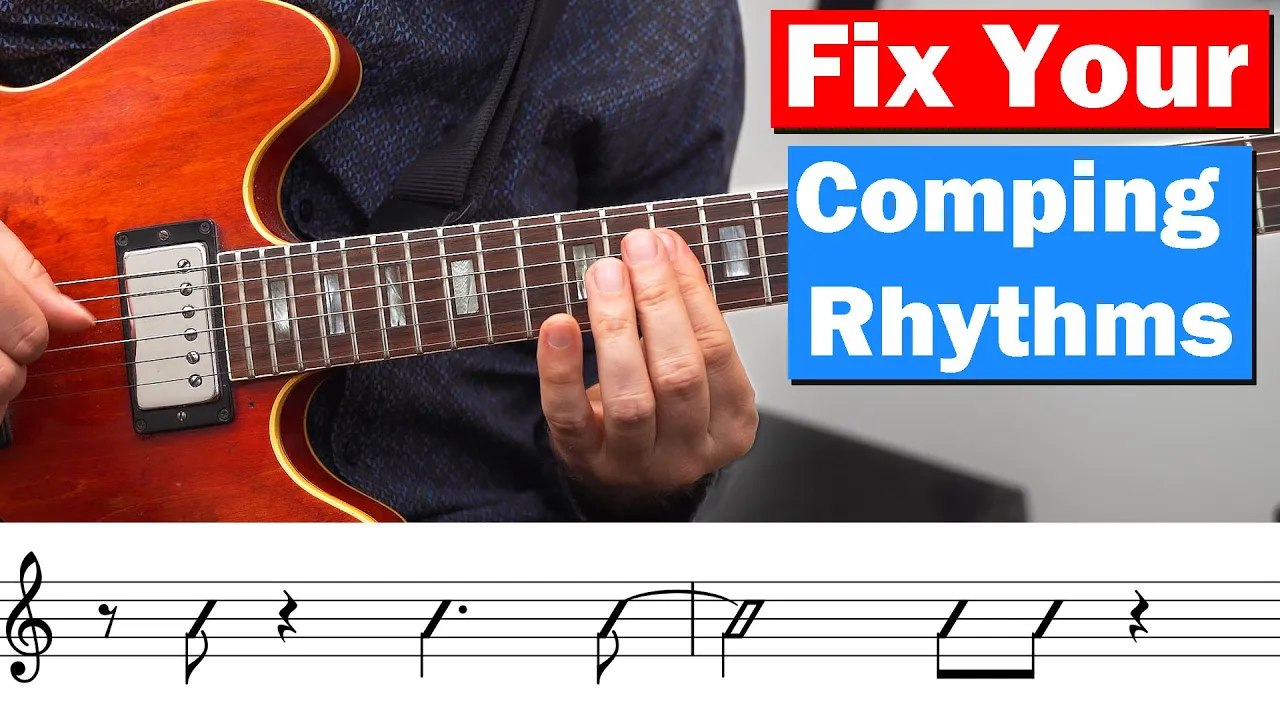












Jazz lead sheets only show chord progressions and melody pitches, not rhythm, so musicians must interpret the swing feel themselves rather than playing exactly as written; this involves using swing rhythm (delaying the second eighth note of each beat by a triplet eighth note) and anticipating melody notes to create authentic jazz phrasing.
How to Swing Jazz Lead Sheets: Advanced Interpretation Techniques
Added:Ability to read standard music notation and interpret basic jazz lead sheets, including melody lines and chord symbols.
A foundational understanding of basic swing feel, specifically the difference between straight eighth notes and swung eighth notes.
Familiarity with common jazz chord structures and harmonic progressions, such as the ii-V-I cadence.
Basic instrumental or vocal proficiency that allows for fluid playback of written melodies before applying rhythmic alterations.
Advanced jazz phrasing and micro-timing, such as playing 'behind the beat' or 'ahead of the beat' to create tension.
Introduction to melodic improvisation, using chord tones, passing tones, and scale extensions to embellish the original lead sheet melody.
Jazz comping techniques, learning how to rhythmically and harmonically accompany oneself or other soloists based on the lead sheet.
Ensemble performance dynamics, applying lead sheet interpretation in real-time collaboration with a live rhythm section.
258.5K views6.9Klikes2:30Original Release: 2026-04-15
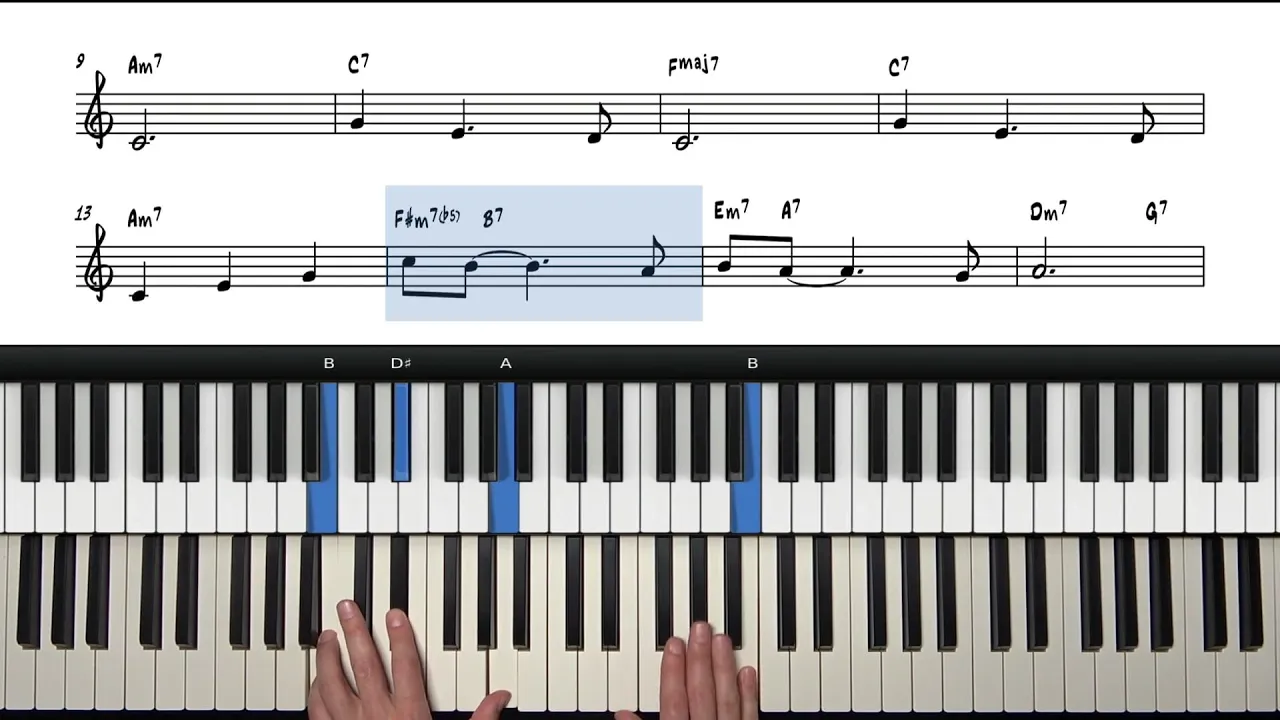
Don't play jazz lead sheets exactly the way that they're written. That's not even the intention. All the lead sheet shows us are the chords of a tune and the pitches of the melody, not the rhythm. So, if we look at history, jazz musicians were using lead sheets back in the day to get through gigs that they took on last minute, let's say. And they were expected to know how to swing the melody without being given exact rhythms. Let's look at Autumn Leaves here and look at this horrible rhythm that's on the lead sheet. It's just quarter notes. Because it's not supposed to show us how to swing it. We need to know how to do that. So, let me give you some ideas. But first, let me play this horrible, terrible quarter note rhythm.
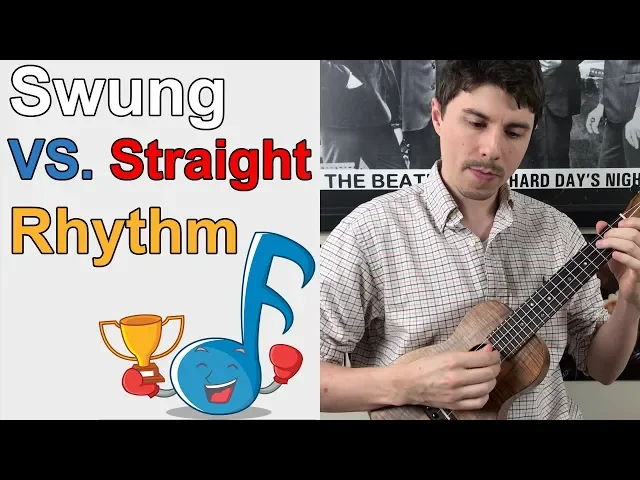
1 2 3 4 1 [music] 2 3 4 1 2 3 4 1 2 3 4 1 2 3 Now, if you enjoyed that, great. That's fine. But it's not going to be jazz. So, if you want to make it a little bit more jazzy, then stick around. So, we're just going to anticipate all of these melody notes that land on beat one. So, we're going to use a swing rhythm, which if you don't know, that means you just delay the second eighth note of each beat. So, instead of 1 and 2 and 3 and 4 and 1, we're going to have 1 and 2 and 3 and 4 and 1. And if you want to be precise for now, delayed by exactly a triplet eighth note, like 1 and a 2 and a 3, like 1 a 2 and a 3. So, now listen to it. 1 2 3 4 a 1 2 3 [music] 4 1 2 3 4 and 1. So, it's landing on the end after 4. 2 3 [music and singing] 4 and 1 2 3 4 1 2 3 4 and 1.
Awesome. It's already swinging a little bit more. And we're going to do one more thing for today. There's so many things to do, but we're just doing two things.
Instead of starting on beat two, we're going to start each one of these phrases on the end of two. So, I'm going to turn these into eighth notes. That means I need to add eighth rest right here.
So, eighth note here, eighth rest there, eighth note here, eighth rest here. Now, let's see what this sounds like, okay? 1 2 and 3 4 and 1 [singing and music] 2 3 4 1 2 and 3 and 4 and 1 2 3 [music] 4 1 2 [singing] and 3 4 and 1 2 3 4 [music] and 3 4 and 1 2 Already much jazzier, much more [music] swinging. So, try that out with the melodies from lead sheets that you're reading. Anticipate a little bit, move them around different places using that swing rhythm.
Up Next
20:44
Upper Structure Triads: Advanced Chord Voicings Tutorial
@jazzedge
38K views•2016-05-12

12:54
Triumph of Orthodoxy Icon: Byzantine Art & History Explained
@BenCallan
2.1K views•2024-08-06

9:49
FastAPI vs Flask vs Django: Choosing the Right Python Web Framework
@TechWithTim
302.5K views•2024-05-26

1:42
Game of Thrones Opening Credits: A Cinematic Analysis
@gameofthrones
46.3M views•2011-04-18
Related Study Plans & Knowledge Roadmaps
Structured learning paths in General & Interdisciplinary Studies
general-studies
Elevator Engineering: History, Physics & Cities
01From Hoists to Safety Brakes: The Dawn of Vertical Lift
02Hydraulic vs. Traction: The Engineering Physics of Elevators
03Modern Speed, Safety, and Algorithms
+ 2 more learning modules
12h5 modules
Explore Roadmap
general-studies
Rubber: Material Science, History & Geopolitics
01Origins of Natural Rubber & Mesoamerican History
02The Chemistry of Natural Rubber & Vulcanization
03The Geopolitics of the Rubber Boom & Colonization
+ 2 more learning modules
12h5 modules
Explore Roadmap
general-studies
Containerization: Evolution, Logistics & Trade
01Ancient Trade & Bulk Cargo: Amphorae to Barrels
02The Industrial Revolution & Cardboard Packaging
03The Containerization Revolution: Malcom McLean
+ 2 more learning modules
12h5 modules
Explore Roadmap
general-studies
Textile Tech: Evolution, Labor & Global Impact
01Pre-Industrial Textiles: Handloom & Cottage Industry
02Mechanization: The Spinning Jenny to the Power Loom
03The Factory System & Global Labor Transformation
+ 2 more learning modules
10h5 modules
Explore Roadmap