















![【250927】[원자력X파일] 이재명 대통령과 엇박나는 외교라인 위성락, 조현 누구를 위한 미국과의 핵협상인가? 대국민사기극 심층분석](https://i.ytimg.com/vi/_IgsXeWEZo8/maxresdefault.jpg)


Nuclear reactors generate electricity through controlled nuclear fission, with different reactor types using various coolants and moderators: Light Water Reactors (LWRs) use ordinary water, with Boiling Water Reactors (BWRs) allowing direct steam generation in the core while Pressurized Water Reactors (PWRs) use a secondary loop for higher efficiency; Heavy Water Reactors use deuterium oxide with lower neutron absorption, enabling use of lower-enriched uranium; Breeder Reactors convert fertile materials like U-238 into fissile Pu-239 by capturing escaping neutrons; Generation IV reactors represent advanced designs aiming for improved safety, sustainability, and proliferation resistance. Nuclear power offers significant advantages including extremely low carbon emissions (75x less than coal, 35x less than natural gas) and high energy density (3.5-4 million times more energy per fission than coal combustion), but faces challenges including high capital costs, nuclear waste management, and public safety concerns demonstrated by historical accidents at Three Mile Island, Chernobyl, and Fukushima.
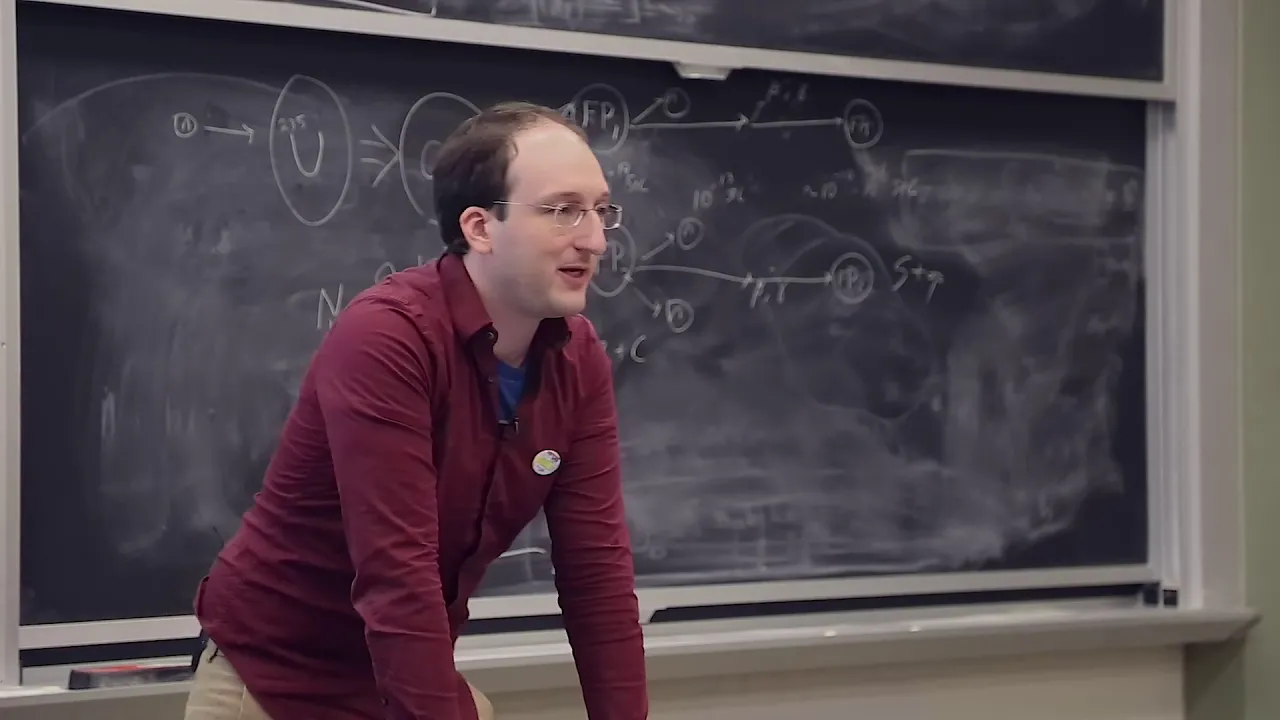
Nuclear Reactor Construction and Operation | MIT 22.01
Added:the following content is provided under a Creative Commons license your support will help MIT OpenCourseWare continue to offer high quality educational resources for free to make a donation or to view additional materials from hundreds of MIT courses visit MIT opencourseware at ocw.mit.edu so if you guys don't remember me I'm one of your TAS I'm Tina number three that's what I call myself I'm Kayne and I'll be teaching your lesson today because well mics in Russia so yeah yeah so I know you guys had your first exam a couple of days ago how did that go okay sounds good alright so we will talk about it but because you guys just had a super kind of intense exam we just want to give you guys a break so today I'll be teaching you guys a little bit of nuclear energy so this lesson won't be super in-depth there won't be a lot of crazy intense math actually there won't be any crazy intense not because we just want to give you guys a break you guys are gonna be starting up full cycle on Friday with really cool topics like stopping power so for now it's just kind of like it's a very expression over a couple fun facts I'm a couple guys might already know some of the concepts I'm mentioning because you guys are intelligent people but I walked into MIT not knowing a single thing about nuclear energy and I was like I wish someone could have told me these things um so that's what I want to do for you today okay so I'm going to be talking about kind of like the functionality and the benefits and the problems associated nuclear but first let's start with a very brief history in a nutshell so between 1895 to 1945 that's one really cool people were developing nuclear science so people like Madame Curie or like Fermi etc they were all designing this nuclear science like they were developing it which is pretty cool most of this development happened between 1939 to 1945 doesn't really want to take a gander as to why why will it yeah exactly but what field in Manhattan Project which is what war - yeah exactly so World War two was happening during those times and they were trying to develop the atom bomb which is why the majority of nuclear science was developed between these like five or six years then 1945 to 1960 they entered a phase of like well the war's over now at what do we do with ourselves so luckily they decided to redirect this science into using it for energy and harnessing it in a controlled fashion so mainly the focus was actually for naval submarines but they often realized like we can use this for like energy as well free electricity as well so there's a lot of really cool things that happened in between these years so in 1951 the first nuclear reactor to produce electricity was the experimental breeder reactor the Eevee one was developed and designed and operated and actually kind of worked it was created by Argonne National Labs which is in Idaho and they actually still exist so if you want to go work there this summer you totally can boom and then in 1953 President Eisenhower he created something called atoms for peace so this is just a program that advocated using nuclear for things that were peaceful such as electricity instead of like nuclear weapons and stuff also 1953 was the creation of mark 1 so mark 1 is the first prototype naval reactor that was created it was created in a March and then finally in 1954 the first nuclear-powered submarine the USS Nautilus was launched and it's up and running so lots of cool things happened between this time but the real heyday of nuclear was actually between 1960 to 1975 so during the span of 15 or so years this was like the real commercial energy boom people like Westinghouse were creating nuclear reactors I think the first one was called Anki Rho is a 250 megawatt electric nuclear power plant which is like not insignificant for like a time like the 70s so other different companies and other different countries were doing this as well basically there was this huge boom and nuclear energy so if you look at this little chart over here this is nuclear reaction reaction construction throughout the years so if you look in this little chunk you can see what a massive peak there was this is like when everyone was building nuclear reactors people thought oh super Jazzy and everyone's tried to jump on that unfortunately all good things have to come to an end though from 1975 to 2002 which is about this chunk over here you can see a massive decline and then you can see that nothing really happens between the 90s in the 2000s other than the fact that we were all born but no new nuclear reactors were being commissioned during this time and then today we're kind of I say we're back but basically we're entering what people like to call a nuclear Renaissance which is between like this chunk over here you can see that there's been a slight increase in nuclear reactors being produced but basically there's been a whole new push for creating more advanced reactors and currently China India and South Korea they are the main like players in this game so China itself has 32 offer directors operating at the moment and they have 20 more Commission like literally right now which is kind of insane Sam do you guys have any questions about this alright so what causes like nuclear resurgence this is a perfect time to talk about why nuclear power school again you guys probably know this but the main reason is sustainability so right now we've entered a phase in time where people are started to realize that we've done damage to our environment and we gotta fix this so global warming is a thing I promise you it's actually saying and basically we're looking for a way to produce electricity without creating such a large carbon footprint so if you look at this chart over here you can see that this is where nuclear lies in the amount of carbon that it produces per what's a unit per gigawatt hour of electricity when you look at that in comparison to a coal and natural gas which is our two primary sources of energy at the moment you can see that this is definitely more attractive so the statistic is actually that nuclear creates 75 times less carbon emission then coal does and 35 times less than natural gas does which is incredible and amazing so that's the main reason why we're going for nuclear well there's out there kind of other kinds of really good reasons one is the amounts power output you guys actually calculated this yourself and pset1 you know just how much power or energy comes out from one fission reaction um so just so you guys can double check to be got that statistic right and a piece set it turns out that you 35 40 3.5 million times more energy than burning one kilogram of coal does um so you can see that you definitely need a lot less fuel in a nuclear reactor than you do in a normal like coal burning reactor and then finally the last thing would be energy security um so one of the good things about nuclear is I can serve as a good base load source of energy so if you're working the energy sector you probably see this chart all the time of like time verses like energy that's being consumed and it's kind of like fluctuating like little mass that stays like fairly constant about at certain times of the day like you need more energy than usual so this is just kind of like the energy demand during the day that's what this chart kind of crudely depicts so nuclear power is able just to provide a good base load source that means like it can provide constant energy at a really high level all the time so this is why we kind of want to replace coal and natural gas with nuclear because it can take this role other alternative forms of energy might be better for the environment it might be safer and things like that but it's not really able to do this so for example if you want to replace all the coal burning fire plants with solar panels if it's not sunny that day you're kind of like look right like you can't produce energy if it's not something outside somewhere for wind if it's not windy outside you're not getting any electricity luckily for nuclear it doesn't have to rely on any of these factors you can continuously produce energy right so you guys have any questions about what I've mentioned awesome so now we'll talk a little bit about reactor types I'm just telling you guys about some of the main ones and how they work so how people like to divide up the reactor types is in generations so generation one which is all the way over there that refers to the like the trial reactors these are the ones that didn't really produce all that much electricity at all they're more of proofs look they're more proof of concept kind of things um so that would be like the mark one that I want you to guys earlier now we move on to generation two so generation two is actually what most of us reactors like the category that most u.s. reactors fall into so these were developed between like the seventies and like the 80s ish and these are the ones that are functioning mostly today and then we have generation 3 3 + & 4 so these are the new types of reactors that people are trying to build to create several improvements but we'll talk about them a little bit more later so I want to start off with light water reactors because well these are the reactors that are most common in the United States so light water reactors are LWR s are mostly broken up into two sub categories boiling water reactors and pressurized water reactors so how you guys can think about reactors is that honestly they're just kind of glorified steam turbines that's what that's what they're doing so let's start with boiling water reactors so boiling water reactors or PWRs comprise about 21% of you reactors that are located and working in the United States so it's a really really simple mechanism and we can walk through that right now so over here this little nubbin right over here so this is the fuel core so this is what the inside of a fuel core looks like that picture over there um so the fuel core is basically just a bunch of rods of like uranium sometimes it's clad in something like zirconium and there's also control rods to help slow down the process so uranium undergoes what yassuh fission so what gets released during a vision and cool and neutrons awesome so those three things are all like flying around inside the reactor core at the moment as the uranium undergoes fission so the isotopes we just kind of let them be like I don't I'm not completely sure what we do with and we might folk to them out but I think they just kind of hang out there the heat obviously goes to create power talked about in just a second but the neutrons come flying around so those other neutrons can stimulate other fuse other efficient and the control rods are there to prevent like to make sure that there's not too many fission's happening at the troll rod at a certain time i and the fuel core at a certain time so anyway going back to the heat so the heat that gets created during these nuclear fission's that goes and heats up the water so this is just one loop of water basically so the water flows through the core and heats it up it creates steam so the steam goes and spins the turbine the turbine create electricity and it comes back and gets recognized that's literally it that's all that happens during a PWR yeah that's that's actually just it so a cool thing about the BWR is because it's so simple it's also incredibly well not incredibly what is the cheapest option out there for creating nuclear power I'm one of the downsides it's just that it might not be as energy efficient as it possibly could be or not be able to create as much power as I possibly could if it was a core technology but yeah oh and another downside is that because we have the nuclear material interacting with the water and so this is a coolant pump right I mean this is the core tube so this is basically connected to a lake or an ocean or some other source of cold water and that runs through the primary loop to cool down the water and reconnect it to steam if there ever is a breach between these two the chances of leaking nuclear material into the environment exists like it's not high per se but with me wrs there is a higher chance of leaking radioactive material into the varmint so that's one of the downsides that BW RS um do you guys have any questions about this awesome um so I just want to show you guys this picture again because here's the underside of a PWR I make it sound like it's super simple and like a walk in the park but this is actually the amount of technology that goes into one of these reactors like look at all those wires I don't even know what they all do but it's kind of insane so yeah so the next kind of reactor that falls under the light water reactor category is the pressurized water reactors so PWRs are actually more more important if you lo the BW RS so remember BW o RS comprise about 21% of the reactors in the United States on PWRs comprise about 60% of the reactors in the United States but they are functionally essentially the same and it's just slightly more complicated um so over here we have our fuel core again and again it's all it's doing is heating up water with its fission reactions but this time this water is pressurized so does anyone know why you would want to pressurize the water yeah yeah exactly so when you increase the pressure you're also increasing the boiling point of the water and that allows you to function at even higher temperatures than if you're working with a BWR which gives you more energy efficiency you guys will learn all about that into 805 by the way so yeah so it heats up this pressurized water and this pressurized water goes into a second loop which again just heats up water that creates into steam that sends a turbine that crazy electricity it gets me condensed etc and that's again all that there really is so one of the upsides of using a PWRs like I mentioned the higher efficiency but also the chance of leaking nuclear material into the environment becomes mitigated because you have two separate loops with the nuclear fuel being more isolated from the environment um if there is a breach between like the condenser loop and the secondary loop not a big deal like nothing really bad happens you'd have to have breaches in both the loops which is very unlikely to happen yeah so do you guys have any questions about those two yeah I'm not completely sure but if you google it you should be able to find it really easily so those next pictures again just to show you that like I make it sound really simple and like a walk in the park but it's really not there's a lot going on so this picture over here is basically just showing that there are a lot of redundancy systems inside these reactors like we don't just have one single primary loop and if it fails it fails we actually have four at the same time and this is just called the N minus 2 redundancy something like that so the next kind is something much cooler oh it's called a heavy water reactor actually it's just a little bit cooler but the main heavy water reactor that everyone can kind of think of on their minds is can do which is the one that's located in Canada the only difference between heavy water reactors and the light water reactors I mentioned before is that it uses heavy water instead of light water does anyone know what heavy water is yeah exactly so it's just a terraeum oxide so remember I'm sorry this might seem a name but this is water right um and this is heavy water where the dia is just a hydrogen with two two atomic particles instead so one proton and one Neutron so the reason why they decide to use heavy water instead of light water is because heavy water has a much lower absorption cross-section than light water does um so what this means is that when neutrons are flying around in the reactor like there is a chance of it hitting a fission product and under a piece of fissionable material and undergoing fission but there's also a chance that the water that surrounds it will absorb that Neutron so if that Neutron gets pulled out of the system you're not able to create any more fission's this is actually kind of a bad thing because the whole point of a nuclear reactor is to create heat envisioned so we don't want them to neutrons to be absorbed you can see if you look at those statistics um you can see that the absorption cross section of h2 our deuterium is like point zero zero zero five two barns in comparison to h1 which is 0.33 two barns so I'm bad at math but I think it's like 680 times less right maybe anyway so you can see why deuterium would be a good option for this so because it's absorbing less there is because it has a chance of absorbing less neutrons as it undergoes its processes um you're actually able to use a lower enriched uranium which is really great because that lowers fuel cost yeah but the main downside of this is that even though you're lowering your fuel costs deuterium is really expensive it's about a thousand or so dollars per kilogram which is kind of ridiculous because a kilogram of water is really not much at all you know so even though your counter you act like you're counteracting the lowered fuel cost with a higher water cost also because your act you're using your reactor with lower in rich uranium you actually have to change out your feel more often that fuel gets spent more quickly I'll describe that in just a second and therefore you just have to keep replacing it more often than you would for a normal weight light water reactor um questions about this one oh I forgot to mention but aside from that everything else with the heavy water reactors and the PWRs they're the same mechanisms and then finally we're going to move on to breeder reactors so breeder reactors are a really cool idea and they were most popular between like the 50s and the 60s ish at the very beginning of creating nuclear reactors so what breeder reactors are or again there's some sure the same thing as light water reactors I mentioned to you guys before but instead now there's two little chunks of extra material so do you guys know what the difference is between fits all for Tahoe and fissionable materials cool all right so [Music] all right so let's start with the Samba turn so fizzy material is basically just the material that has build me to undergo fission with a thermal Neutron so basically when the thermal Neutron gets absorbed by this fissionable material it's going to undergo a fission um makes a lot of sense right so do you guys happen to remember what the energy of a thermal Neutron is you guys calculated this in pset 1 huh lower than that yeah a point ot5 easy like super letter do and while we're at it how do you calculate this what some constant time Steve go shoot so main example with the fissile material would be u-235 and plutonium 239 there's four in total but those are the two most important ones so this is the main fuel that is inside a nuclear reactor but it's not all just u-235 like you guys have heard of oh what's called enrichment right like in Richmond is basically the amount of DES all material versus the amount of other fissionable material so moving on to fissionable material so Fischer I'm on terrible fissionable material is just material that is able to undergo fission after the absorption absorption of a more energetic Neutron um so that's all it is so that's all it is so an example of fissionable material that's inside the other reactors at the same time is u-238 so if it u-238 absorbs a thermal Neutron it's probably gonna do much but if it absorbs a neutron of about like I would say like 2 MeV then it's more willing to undergo a fission and then finally we have fertile material so for a time material is the basis for breeder reactors but fertile material is just material that absorbs a neutron and then is able to become a piece of fissile material so for our purposes the main types of fertile material we use are u-238 and thorium-232 so if you look at these processes you can see that you - they're a absorbs a neutron becomes you 239 undergoes a beta decay to come to neptunium and undergoes one more beta decay to become the beautiful plutonium 239 if we start with thorium 232 instead absorbs a neutron becomes thorium 233 undergoes a beta decay to come protactinium becomes uranium 233 which is another sound material by the way through a series of beta decays mom so that's what breeder reactors are doing they're adding extra chunks of uranium 238 and extra chunks of thorium 232 into the reactor so if one of the neutrons so imagine okay if you're looking at the little fuel core there's a bunch of neutrons are flying around and he other isotopes and things like that so some of the neutrons will go and create other visions with the material that's hanging out in the red but other neutrons might escape and when they escape instead of going into the water and dissipating and never to be seen again or being reflected the instead create more fissile material um so you can I understand why this is a kind of an attractive idea is that you're creating your own fuel you're able to work at a higher fuel efficiency um because you don't need to add in as much fissile materials that's you would for a normal light water reactor so people were really fascinated with this idea like I said in the 50s and 60s because back in the day they legitimately thought that we would run out of u-235 but luckily in the 16 we we discovered that we have a lot more uranium ore than we thought we did we're probably not gonna run out anytime soon and after that discovery people were not nearly as interested in breeder reactors the reason being is that one because there's just this extra material that's hanging out this extra material could be more fissile material I creates more reactions it's not nearly as energy-efficient my part of power efficient and it's also slightly more expensive because you're not being able to be power efficient and it also is better on paper than ever is in reality so on paper you're like oh this is great because I can just create more fissile materials I never need to add more this is never really truly sustainable they always have to keep adding more fissile materials because it's not as perfect as I want it to be any questions about these things cool beans and then finally we're gonna move on to generation four reactors so generation four reactors are all the new kind of reactors that people want to build so the primary objective for these new designs of reactors like the ones I just told you guys about they're all good and well but we want to make them better right we want to make them cleaner and safer and more cost-effective keep them robust yet sustainable and also make them more resistant to people being able to divert materials into creating nuclear weapons um so yeah so here are the six kinds of generation form reactor types that were deemed to be the the most the most promising so there's gas cooled fast reactors LED cool fast reactors molten salt reactors sending cool fast reactors high temperature part of very high temperature gas reactors and supercritical water cooled reactors so I'm gonna be honest with you guys I don't know all that much about these and I don't want to like spew out information that might potentially be false so if you guys aren't interested one you can talk to other lab members people in this department I know they're mostly Mike's group actually a lot of people Mike's coop are working on what one salt reactors so you guys can like go ahead and ask them off that or if you understand you can read more about them with this hyperlink that I included over here hopefully he will post the slides online and you guys can just click it and there's a awesome source all about these different kinds of reactors any questions I'm pretty sure that they're just kind of proof of concept stage right now like there aren't any that are producing electricity and like in the United States at least good question all right so all the things that we've mentioned before that like how great nuclear yes and all the cool applications of it and how simple and easy reactors are why aren't we using more of it so currently in the u.s. there's only 99 operating reactors that are producing electricity which makes up about 19 percent or about 20 percent of the total electricity output in the United States the main players are still you would imagine coal and natural gas so this is actually even worse in other in the rest of the world and the rest of the world there's only about 440 reactors federal power three countries it produces only fourteen percent of the global electricity so these proportions are pretty low and you're wondering like why aren't we using more nuclear power what exactly is holding us back so it turns out that the main things that are holding us back is just social social economic and therefore like government has a tense to start using nuclear power or more often so the main reason why we're a little bit hesitant to start using more nuclear power is because of safety issues so nuclear weak none of us could argue that nuclear is like 100 percent safe it actually does have some dangers associated with it which is why it's so important that we're doing what we're doing but if you guys look at this chart that I showed you guys in like the first or second slide um you'll notice that there are these events um listed above what are these words Three Mile Island Chernobyl Fukushima what are they yeah so there's some of our biggest nuclear accidents that we've experienced through history and you can see that after a nuclear accident you can see a pretty steep decline and the amount of nuclear reactors that are being commissioned so this is especially noticeable at Three Mile Island which is essentially the first nuclear reactor as an accident that we all had to go through and you can see that after Three Mile Island you can see this massive steep like this massive decline in the amount of nuclear actors being commissioned this is probably causational we can pretty much assume that and then you can see that in chernobyl once you know what happened you can see like this also another massive decline and again a Fukushima once again like the amount of reactors being commissioned after the accident just declines dramatically so I'm assuming you guys probably don't know exactly what happened during each of these accents like you probably know that they exist but like what happened during them so if you do know sorry but if you don't know you're about to know home so Three Mile Island which is the first one it happened in 1979 on March 28th so Three Mile Island reactor is a PWR located in Pennsylvania so during this time it underwent a core meltdown so the cause of this is just the fact that there was some kind of mechanical or electrical system that prevented coolant water from being pumped into the primary system so because there wasn't enough water coming to cool up the core the core began to overheat so as the temperature of the core Rises the pressure also Rises so they notice this and they're like oh shoot we got to fix that so luckily there is like a little emergency valve that you can see in this little animation gets opened up and pressure gets released so that's all good and well um but unfortunately after the pressures release you should close the valve again and continue operation but it became stuck so this valve became stuck and they didn't realize that became stuck because their their equipment and their instrument ation wasn't able to take that so they continue operating again but this style was open um so there's actually water that was getting leaked out of this primary this primary loop so because the water was getting leaked they noticed that oh shoot the pressure is dropping well what do you do when the pressures dropping apparently you have to make sure that there's not enough there's not too many vibrations I could damage the reactors so they shut off the coolant pumps so well they lower the operation of the quota pumps so now there's water leaking out so the core is getting hotter but then they also took out the water that's usually used to cool the reactor core so again it's also getting hotter so this combination events led to a core meltdown so the core amount of town um that's never a good thing by the way um so yeah and yeah so the core meltdown the reactor wasn't able to operate anymore but luckily at Three Mile Island there was containment that prevented radioactive isotopes from leaving the system so they actually took a brief survey when I'd be surfing I was probably a long long experience but I realized that the two million people who are around two Island at the time within like a two-mile radius or like like maybe like a 30-mile radius or something more like that they realized that they didn't get much dose at all they collected about a total of one milligram more dose than usual so to put that in perspective and x-rays six mil around so really nothing that bad happened at Three Mile Island other than they had to shut it down and they had to do expensive repairs but people weren't hurt the environment wasn't damaged it wasn't that bad of a situation I think the effect was bigger and concept than it was in actual damage um questions about Three Mile Island accident alrighty the next reactor accident the Big Kahuna I like to call it is Chernobyl so on April 25th 1986 RBMK reactor that was located in Ukraine exploded so what they were doing at Chernobyl during the time of this explosion is that they were actually running ironically enough safety tests oh they're running the reactor low power to see how it behaves so at low power I don't think they quite realized this but the coolant pumps in the reactor we're also powered by the nuclear reactor being generated so if they were burning this at low power the coolant pumps weren't getting enough energy to properly cool the fuel core so that was unfortunate and they realized that this is a bad thing so the reactor start to go supercritical so one they realize that the reactor was creating a lot more fission's than it should have been creating they decide to insert the control rods so thank goodness we have these high absorption control rods to slow things down right for some reason I don't not completely share why they did this but rpm chains they have graphite tips control rods so as they lower the control rods into the water this graphite tip which doesn't effectively absorb neutrons it displaced a little bit too much water that was necessary and that cost the first explosion so what's super duper critical it caused the first explosion that renoble oh by the way um then for some reason like a couple minutes later there's a second explosions they're not completely sure why the second explosion happened to the state we can't really pinpoint why it could have been like building up helium or just a ton of other fission reactions but there's a second explosion that actually just blew this entire core apart so that kind of stunk but it did sum up the whole reaction because the super critical mass was all blown apart and it was no longer supercritical it was fine the whole debacle stopped but unfortunately there was a lot of radioactive radioactive isotopes being spent in environment um first of all Chernobyl didn't have the same kind of containment the Three Mile Island had so this these isotopes are just able to go everywhere and also the second explosion had a lot of steam with it that carry these isotopes even further than they probably should have gone um so if you're looking at the sad statistics of Chernobyl it turned out that 28 highly exposed reactor staff and emergency workers died from this radiation or from thermal burns during this time and officials also believe that there's about seventy thousand seven thousand cases of thyroid cancer that occurred because of Chernobyl they're pretty sure I was Chernobyl because these are all cases that happened and people who are less than 18 years old so you guys know that no one really lives near Chernobyl at the moment um it's kind of been deemed unlivable because these radioactive isotopes literally went everywhere in this environment like it was in the water it was in the plant it's not safe to live there it's a pretty radioactive environment luckily we see that there are animals coming back now if you look on National Geographic calm there's like little deer roaming around Chernobyl um but it's been about like how long has it been like 3040 years people are advised to live here still search for noble was terrible questions yeah oh yeah sorry so um you guys will learn all about criticality in a little bit but basically when I say supercritical it just means that there's way too many fission reactions happening yeah I think I might have skipped to detail it wasn't being cooled enough so the water was evaporating and then it became supercritical because they're not enough neutrons were being slowed down and absorbed my bad I'm sorry good all right so the next reactor accident um that we were all alive for which is cool oh and what's Fukushima Daiichi so if we could she would ITA happened in 2011 on March 11th and Fukushima died Luka Shima is in Japan so these reactors these are I think these are pressurized water reactors yeah I think so um so following a major earthquake the generators that um pardon yeah so following a major earthquake the things that were cooling the core they broke I think they're just like power generators on the side that did um yeah they broke the coolant pumps so there wasn't enough water being able to go to the field course this is a very similar problem as you can see that in all these instances of the reactor incidents it's just kind of like the fuel core was misbehaving and we weren't able to get enough coolant water to it so following the earthquake these coolant pumps broke they're like oh that's ok what we can do is we have backup generators to continue running the pumps it'll be all okay nothing will happen we're all good and then a tsunami hit so it's a 15-foot tsunami I think I think that 15 meter tsunami oh good gosh Oh so 15 meter tsunami hit and it broke the generators and then at that point they're like oh no so they had no other done see factors to continue pumping cool water into the fuel core so again there wasn't enough water in the core it became supercritical it began to melt so the fuel rods began to melt but this is actually another additional bad thing so the water was evaporating critics team they're so Konya the fuel rods were coated with surco diem so what you guys might not know is that one zirconium and steam interact with each other that's not a good thing it starts to explode so the as you can see the reactors at Fukushima Daiichi began to explode there was radioactive radioactive isotopes being spread out all around the country you guys probably saw the lovely flow charts of like the radioactivity flowing out from Japan and making it to California and contaminating your fish and stuff like that but luckily no one was directly hurt by burns or radioactive exposure alright questions about Fukushima so aside from these safety issues um these safety issues that happen they get elevated in the news quite a lot so these are mainly the things that people who don't really have any background in nuclear energy hear about nuclear energy they're like oh shoot well this thing is going to explode every twenty years like why do we keep using this reactor accidents are actually pretty rare like if you think about it it's been about 60 or 70 years we have 440 reactors happening other countries there's three main accidents have happened but because these are the things that people get ingrained into their mind thank you news stations people think that nuclear reactors are incredibly dangerous and that's why we have the social hesitancy which is why we aren't able to get enough government funding and which is why there's all these bureaucracy loopholes to jump through which is why nuclear power isn't more of a thing makes sense yeah another issue that's associated with nuclear power is nuclear waste so what in the world do we do with it so first of all the main thing in nuclear waste is spent fuel so like I mentioned you guys the spent fuel rods are made out of uranium oxide but after undergoing a much officiants these Urania these uranium particles get transformed into other isotopes that aren't fishable or fertile or even remotely bizarre right so we eventually have to replace them and add a new rods and this is a process that happens every late 12 or so years I'm not completely sure and let statistic but the main issue is like what do we do with all this material so the mysterious material that comes out is pretty radioactive it's also incredibly hot so it can be dangerous if someone decides to they come and eat it oh so that's why we got to figure out a way to dispose it so the primary way of disposing of this spent fuel is putting it into spent fuel pools so spent fuel pools are just giant tanks the water that exists at the reactor so these tanks of water are mixed with I believe it's boron which is the neutron absorber let me simply just put the spent fuel rods all the way at the bottom of the pool so this pool is that like 20 meters high I think and this is actually a really good solution because the water in the pool it cools down the reactor rods um and also prevents a lot of neutrons from escaping because water is a really great neutron moderator you guys all know this I'm gonna turn down it's actually fairly safe apparently you can go swimming on the top of the reactor so that fuel pool and you'll be okay I'm not be exposed to too much radiation if you want so yeah so this is the main solution that people have been using for years but they realize that this isn't super sustainable because the amount of space that we have and they spent fuel pools is not infinite like we have way too much spent fuel to be able to just continue to store it and they spent fuel pools so like shoot kind of find another solution so the next solution was something called dry cask storage so dry cask storage is just a way to keep this spent fuel surrounded by an inert gas so and it's held inside a cask a cache just being probably like a steel drum that's like bolted and welded shut and there's additional pieces of shielding around it like cement and then etc so there's just like gigantic tanks basically that are sitting outside so they just put them outside the reactor as you can see it's just it looks like it's sitting in a parking lot outside the reactor and so this is a okay solution um so basically what they do is they take the spent fuel let it sit in their pool for about a year or so maybe two or three years and then they're able to take it out because at that point it's significantly less radioactive because you know you guys know how to calculate this - you guys know like the half-life of different isotopes you see that the radioactivity declines at a certain point it's also more cool now so they can put them in these tanks so they let these tanks hang outside and this is an OK solution except for the fact that again we just have to weigh too much spent fuel to be able to do this it turns out that if you were to just keep all the spec filled that we create in fuel cast it would take about 300 acres away and which is absolutely a main and obviously no one wants to take up that brief a little side note when I was googling like images of dry cask storage I was looking for the different types well I thought particularly disturbing was that there's only two types listed vertical storage and horizontal storage like there's no other solutions other than these are giant tanks anyway so people realize that we need to figure out yet another way to dispose of the spent fuel hopefully a way that doesn't get in the way of people with backyards so their idea was something called deep geological repositories their deep geologic repositories literally just means that they want to bury the nuclear waste very deep into the ground and never be able to retrieve it again so the main push this was well first of all it's a permanent method disposal they hope to put it in the ground never have to think about again so therefore the regions that they choose to bury in the ground have to fulfill a lot of criterion so this criterion includes not having a lot of seismic activity because we are keeping this nuclear waste underground in these cow for thousands of years if there is a huge earthquake those casts break radiation gets everywhere that's obviously not a good thing so you know make sure that doesn't happen lost have to make sure that there's not a lot of water that leaks through because the water can carry the radio actually I radio I said may be isotopes and carry them into the vironment which is something else that we don't want to do a lot of guys chuckled when you saw me you come mountain so Yucca Mountain is like the primary push by the United States to find a deep geological repository somewhere in the United States so we can deal with our fuel so in 2002 the main push for this began they spent a lot of money they spent like billions of dollars finding the perfect location to put our spent fuel they had like nine different locations they finally narrowed it down to Yucca Mountain they're like yes this is the one and they started like digging down deep into nuclear you come out into making this happen but then things weren't as peachy-keen as I hoped it would be so Yucca Mountain is located in Nevada people of Nevada weren't happy about this um they're like why why are we getting tossed on nuclear waste we don't even have nuclear reactors in Nevada this is not there there's a lot of opposition and because of the social opposition there was government opposition and many loopholes had to jump through and so it's just becoming a huge disaster they also realized that it wasn't as geologically sound as I had hoped there's a lot more ground water running through and seeping through Yucca Mountain then they thought there would be so it's actually not as safe as I had hoped so there's a huge debacle basically the costs are rising nothing much was happening there's a bunch of different things preventing progression from happening and then 2011 under the Obama administration he just called it quits there's no more government funding till you come out in it's been abandoned as you can see from this lovely google picture it's permanently closed and you can also see that like 14 people went out their way to review you come out and um but we're actually doing okay it's at 3.6 stars just like uh normal like motel or something like that yeah so that has been abandoned this idea has currently been a banned in the United States we're kind of still looking for other solutions but we really don't have it figured out all that well there is one other kind of way of dealing with nuclear waste which is repurposing I personally think nuclear repurposing is the coolest option out there and basically repurposing just means you take the spent fuel you chemically separate out any material that could be continuing to be used any fissile material that could be continuing to be used in other reactors so basically you take the spent fuel and it turns out that 96 of a use fuel assemblies recyclable so you take the Sun feel you take out what is useful you throw away what's not useful which is also still radioactive waste that has to be put in a fuel pool or something like that well you have this precious fuel that you can like put into another reactor so this is actually something that France and other places in Europe and Russia in Japan they use repurposing quite a lot for somebody's in the United States doesn't do it so the reason being is that this is a really cool idea it's like recycling it's like very like it's very clever I think I think it's personally one of the cleverest solutions but the issue is is that it's kind of a really expensive process so repurposing fuel takes a lot of money and it turns out that the act of repurposing fuel actually cost more than just buying a new chunk of uranium-235 which is why we don't do it's not economically sound um see ya you guys have any questions about anything I mentioned about deposition of nuclear waste almost done so all these are issues like we have a lot nuclear waste to deal with is kind of there is an inherent danger with using nuclear power but the real thing that holds us back from just having nuclear power everywhere and creating about like 90% of our electricity as we would hope it would is economics so in this world money really matters a lot so the economics of nuclear power is actually really complicated topic and it changes depending on who you talk to there's a lot of factors that are involved so you can include certain factors into your calculations like oh the cost of building the reactor in the first place or like the fuel costs our operating cost and maintenance cost or less the amount of money that comes out of damaging the environment you can play all these different factors in and everyone turns out a different number so but basically everyone you talk to you if you can look at this chart yellow is nuclear power look gray is coal and the blue is the natural gas but basically anyway you talk to you can see that nuclear is not nearly as economic of a source of electricity generation as any other of these ones that I mentioned unless you talk to UK UK thinks it's okay but everyone else is saying that it's not as money efficient so where are all these costs coming from so the primary cost actually lies with something called capital cost so capital cost is basically the sunk cost of just building the reactor building reactors takes billions of dollars it also takes tons of time and because it takes a lot of time interest rates also jack up that and further so basically it's just just this massive investment they have to throw in immediately um and this is where most of the issues lie like it's really hard to go to investor would be like hey can I have a billion dollars to Bill this nuclear reactor it's gonna take five years and it's gonna take twenty more years for you to get your profit back how does that sound no investor is going to be like yeah that's a good idea that's the main reason why we can't get nuclear up and running we have a lot of plans and we have the possibility to create a lot of plants but we just don't have the money to do so because it's a huge chunk of money like I mentioned before it takes a while to get your profit back and also if for some reason something happens and you have to stop building your reactor well you just lost a billion dollars like there's no turning back right if you look at this chart over here which is breaking up the cost of you can energy per kilowatt hour I believe you come on our kilowatt hour kilowatt hour I'll be can see nuclear coal and natural gas so this giant went chunk over here refers to the fuel so if you can look at nuclear power the majority the cost actually doesn't come from nuclear fuel at all it's just about one cent per kilowatt hour as compared to natural gas which the majority of the cost of electricity actually comes from the fuel if you look at operation of maintenance again it's not that large of a chunk it's about the same as maintaining a coal power plant but then if you look at the capital cost which is the dark gray color you can see how massive that is in comparison to building natural gas and coal power plants yeah I think that's the main thing so because it is more expensive we can't compete with other forms of electricity people buying the electricity that's cheapest not necessarily the electricity that's best for like grandchildren or something like that yeah so that's why nuclear power is it more of a thing and that ends my pretty lengthy sideshow so do you guys have any questions about anything I mentioned if you guys are interested about any of these topics like if any of these things piqued your interest I recommend going to NRC go if they have a lot of really cool information let me write that down because I talked quickly uh-huh that's basically where I got the majority my information for the slide show and it is a reliable source it might just be skewed a little bit pro-nuclear so just keep that in mind but there's a lot of like crazy sources out there on the website out there on the interwebs take them with a grain of salt take NRC gov with less grains of salt than usual um or it's one of these things really the I interest you guys can take 2204 which is really cool cost that's offered here I think this spring and if not the spring next spring I'll but basically it's called nuclear power society it's chopped by a guy named Scott Kemp he talks about all these things in a lot of detail and slower so yeah cool so thank you guys so much for coming I know you guys could have slept a next hour but instead you heard me ramble for an hour you
Up Next
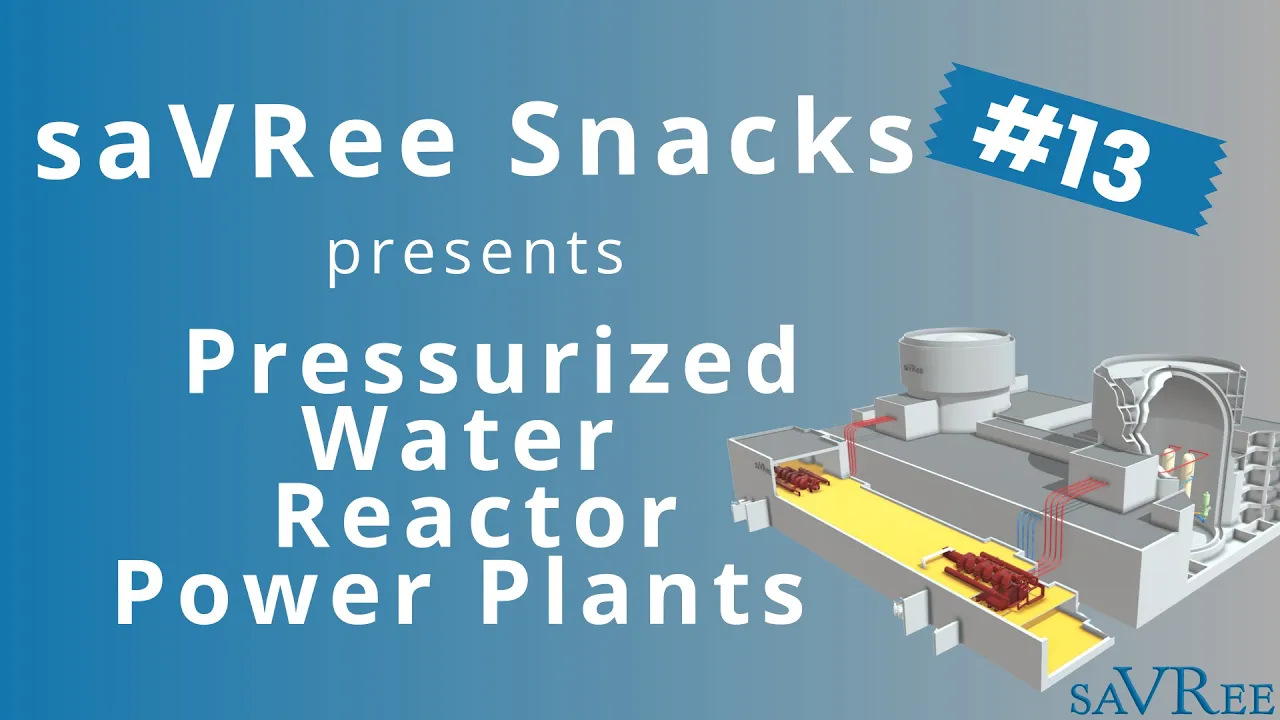
Pressurized Water Reactor (PWR) Power Plant Operation Explained
@savree-3d
28.5K views•2023-09-03
Ultrasonic Transducers: Resonant Frequency Measurement and Horn Design
@imajeenyus42
229.9K views•2017-02-22

Refractive Index Plasma Diagnostics: Wave Propagation & Schlieren Imaging
@mitocw
1.2K views•2024-08-20
How a Student's Question Saved a NYC Skyscraper from Collapse
@veritasium
22.8M views•2025-04-26
Related Study Plans & Knowledge Roadmaps
Structured learning paths in Engineering