













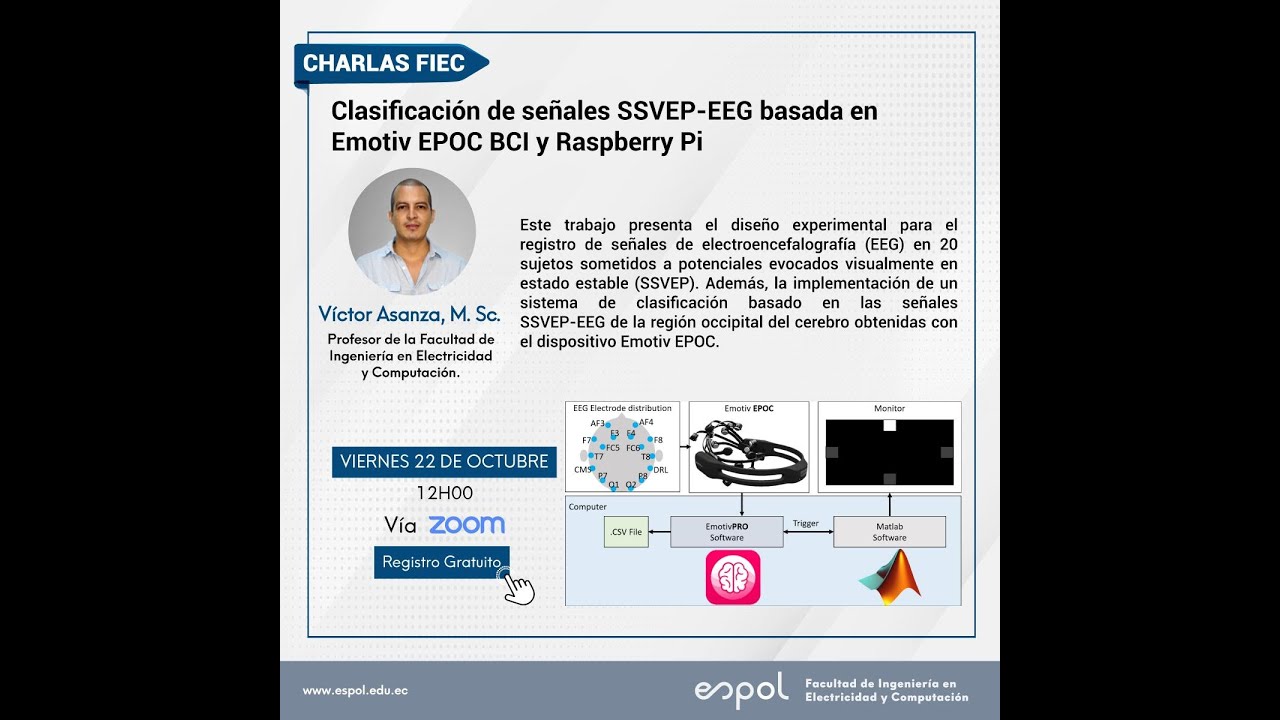








The brain uses a filtering mechanism in the frontal area to selectively process attended information while inhibiting distractions; this filtering ability is impaired in conditions like ADHD, where individuals cannot effectively ignore competing stimuli, but can potentially be trained through cognitive brain-machine interfaces that use brainwave patterns to identify and strengthen attentional control.
Neural Mechanisms of Attention and Brain-Computer Interfaces
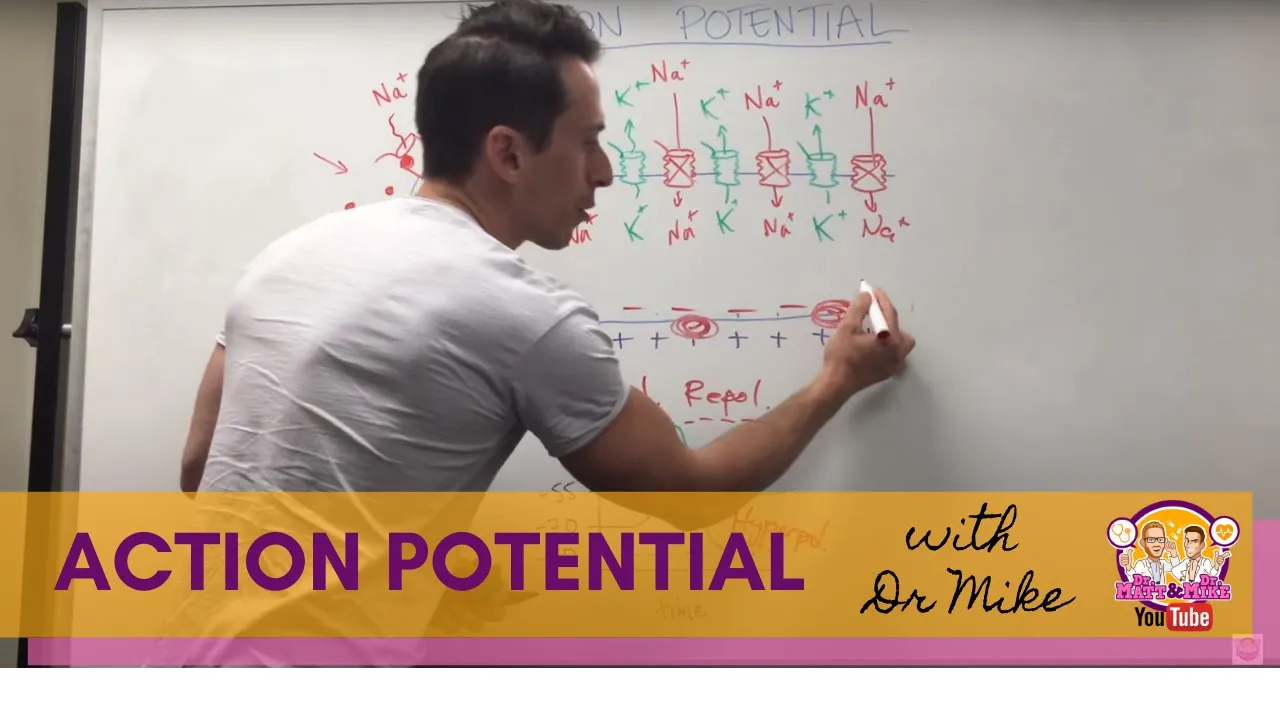
Added:Basic neuroanatomy and physiology, specifically how neurons communicate via electrical signals and action potentials.
Fundamental concepts of selective attention and how the brain filters sensory inputs and manages cognitive load.
The principles of Electroencephalography (EEG) and how neural oscillations (brainwaves) are measured and categorized (e.g., alpha, beta, theta waves).
Introductory concepts of Brain-Computer Interfaces (BCIs), including how neural signals can be translated into external device commands.
Advanced machine learning and signal processing techniques used to decode real-time EEG data for BCI applications.
Clinical applications of neurofeedback training for treating Attention Deficit Hyperactivity Disorder (ADHD) and other cognitive challenges.
The development and mechanics of neuroprosthetics and assistive communication systems for individuals with severe motor impairments (e.g., ALS).
Ethical considerations in neurotechnology, focusing on neural privacy, cognitive enhancement, and the implications of decoding human thought.
422.1K views6Klikes6:32Original Release: 2017-07-12
Paying close attention to something: Not that easy, is it?
It's because our attention is pulled in so many different directions at a time, and it's in fact pretty impressive if you can stay focused.
Many people think that attention is all about what we are focusing on, but it's also about what information our brain is trying to filter out.
There are two ways you direct your attention.
First, there's overt attention.
In overt attention, you move your eyes towards something in order to pay attention to it.
Then there's covert attention.
In covert attention, you pay attention to something, but without moving your eyes.
Think of driving for a second.
Your overt attention, your direction of the eyes, are in front, but that's your covert attention which is constantly scanning the surrounding area, where you don't actually look at them.
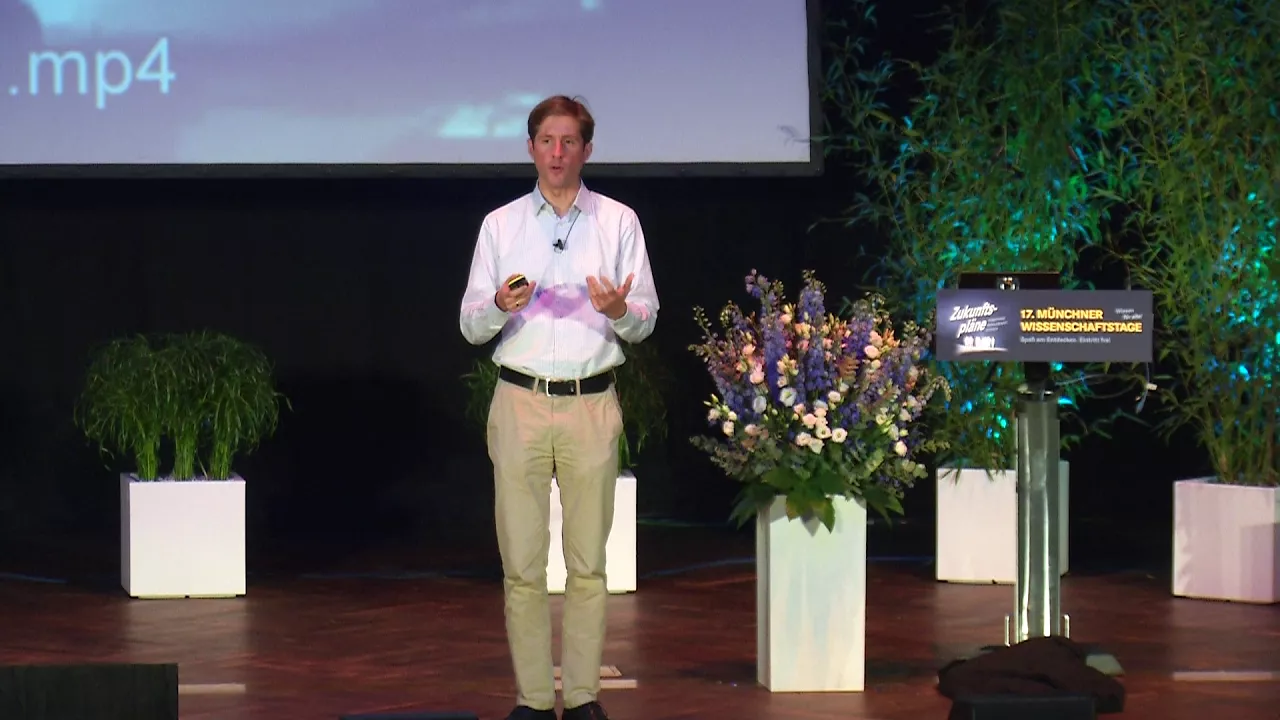
I'm a computational neuroscientist, and I work on cognitive brain-machine interfaces, or bringing together the brain and the computer.
I love brain patterns.
Brain patterns are important for us because based on them we can build models for the computers, and based on these models computers can recognize how well our brain functions.
And if it doesn't function well, then these computers themselves can be used as assistive devices for therapies.
But that also means something, because choosing the wrong patterns will give us the wrong models and therefore the wrong therapies.
Right?
In case of attention, the fact that we can shift our attention not only by our eyes but also by thinking -- that makes covert attention an interesting model for computers.
So I wanted to know what are the brainwave patterns when you look overtly or when you look covertly.
I set up an experiment for that.
In this experiment there are two flickering squares, one of them flickering at a slower rate than the other one.
Depending on which of these flickers you are paying attention to, certain parts of your brain will start resonating in the same rate as that flickering rate.
So by analyzing your brain signals, we can track where exactly you are watching or you are paying attention to.
So to see what happens in your brain when you pay overt attention, I asked people to look directly in one of the squares and pay attention to it.
In this case, not surprisingly, we saw that these flickering squares appeared in their brain signals which was coming from the back of their head, which is responsible for the processing of your visual information.
But I was really interested to see what happens in your brain when you pay covert attention.
So this time I asked people to look in the middle of the screen and without moving their eyes, to pay attention to either of these squares.
When we did that, we saw that both of these flickering rates appeared in their brain signals, but interestingly, only one of them, which was paid attention to, had stronger signals, so there was something in the brain which was handling this information so that thing in the brain was basically the activation of the frontal area.
The front part of your brain is responsible for higher cognitive functions as a human.
The frontal part, it seems that it works as a filter trying to let information come in only from the right flicker that you are paying attention to and trying to inhibit the information coming from the ignored one.
The filtering ability of the brain is indeed a key for attention, which is missing in some people, for example in people with ADHD.
So a person with ADHD cannot inhibit these distractors, and that's why they can't focus for a long time on a single task.
But what if this person could play a specific computer game with his brain connected to the computer, and then train his own brain to inhibit these distractors?
Well, ADHD is just one example.
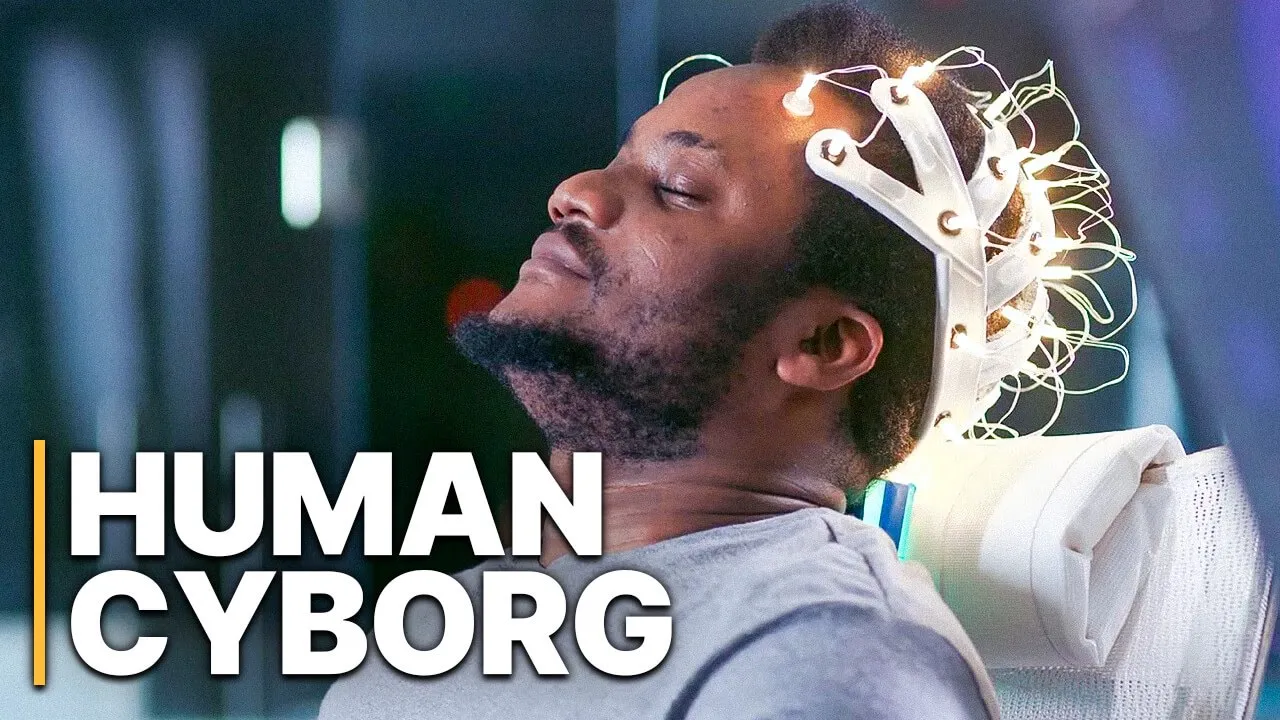
We can use these cognitive brain-machine interfaces for many other cognitive fields.
It was just a few years ago that my grandfather had a stroke, and he lost complete ability to speak.
He could understand everybody, but there was no way to respond, even not writing because he was illiterate.
So he passed away in silence.
I remember thinking at that time: What if we could have a computer which could speak for him?
Now, after years that I am in this field, I can see that this might be possible.
Imagine if we can find brainwave patterns when people think about images or even letters, like the letter A generates a different brainwave pattern than the letter B, and so on.
Could a computer one day communicate for people who can't speak?
What if a computer can help us understand the thoughts of a person in a coma?
We are not there yet, but pay close attention.
We will be there soon.
Thank you.
(Applause)
Up Next

4:09
Dopamine Reward System and Placebo Analgesia | Brain Mechanisms
@NIH_NCCIH
6.7K views•2013-08-26
21:55
Deciphering Neural Circuits Controlling Anorexia in Mice | Richard Palmiter
@AllenInstitute
2.3K views•2011-10-10
11:35
Heart-Brain Connections: Science of Interoception and Empathy
@TEDx
24.2K views•2018-01-23
13:03
How Exercise Benefits Your Brain: Science Explained
@TED
11.4M views•2018-03-21
Related Study Plans & Knowledge Roadmaps
Structured learning paths in Neuroscience
neuroscience
Appetite Regulation: Brain Circuits & Hormones
01Foundations of Endocrinology and Brain Anatomy
02Introduction to Energy Homeostasis
03Peripheral Signals: Leptin, Ghrelin, and Insulin
+ 2 more learning modules
14h5 modules
Explore Roadmap
neuroscience
Neuroeconomics: Value, Risk & Brain Mechanisms
01Foundations of Neuroscience and Brain Anatomy
02Introduction to Neuroeconomics and Subjective Value
03Dopaminergic Prediction Errors & Reinforcement Learning
+ 3 more learning modules
18h6 modules
Explore Roadmap
neuroscience
Spatial Navigation: Cells, Grids & Brain Maps
01Foundations of Brain Anatomy and Memory
02Place Cells and Head-Direction Cells
03Grid Cells: The Brain's Coordinate System
+ 2 more learning modules
12h5 modules
Explore Roadmap
neuroscience
BCIs: Neural Decoding & Prosthetic Control
01Neuroscience Foundations: How the Brain Signals Intent
02Signal Acquisition: Recording the Brain's Activity
03Neural Decoding: Translating Brain Waves into Data
+ 2 more learning modules
25h5 modules
Explore Roadmap