







![[Version 2] Undertale - All songs with the "Enemy Approaching" melody/leitmotif](https://i.ytimg.com/vi/bXJQ3EcDQf8/hqdefault.jpg)
![Undertale [Análisis Musical] - Lo que la música nos quiere contar](https://i.ytimg.com/vi_webp/2M2D3MnQxbY/maxresdefault.webp)
In music theory, a theme is a complete melodic idea that serves as the primary subject of a musical piece, while a leitmotif (light motif) is a smaller musical fragment that specifically represents concrete narrative elements like characters, events, or emotions within a story; leitmotifs were pioneered by Richard Wagner as 'musical road signs' that synchronize music with stage action, allowing audiences to understand narrative developments through recurring musical cues that can transform and adapt as the story progresses.
Theme vs Leitmotif: Musical Concepts Explained
Added:A basic understanding of musical elements, specifically the definitions of melody, motif, and musical phrasing.
Familiarity with the concept of narrative accompaniment, or how music is used to support visual storytelling in film, theater, or opera.
An introductory awareness of musical variation—how a musical idea can be altered through changes in tempo, key, or instrumentation.
A deep dive into Richard Wagner's 'Ring Cycle' (Der Ring des Nibelungen) to study the historical origin and ultimate codification of the leitmotif.
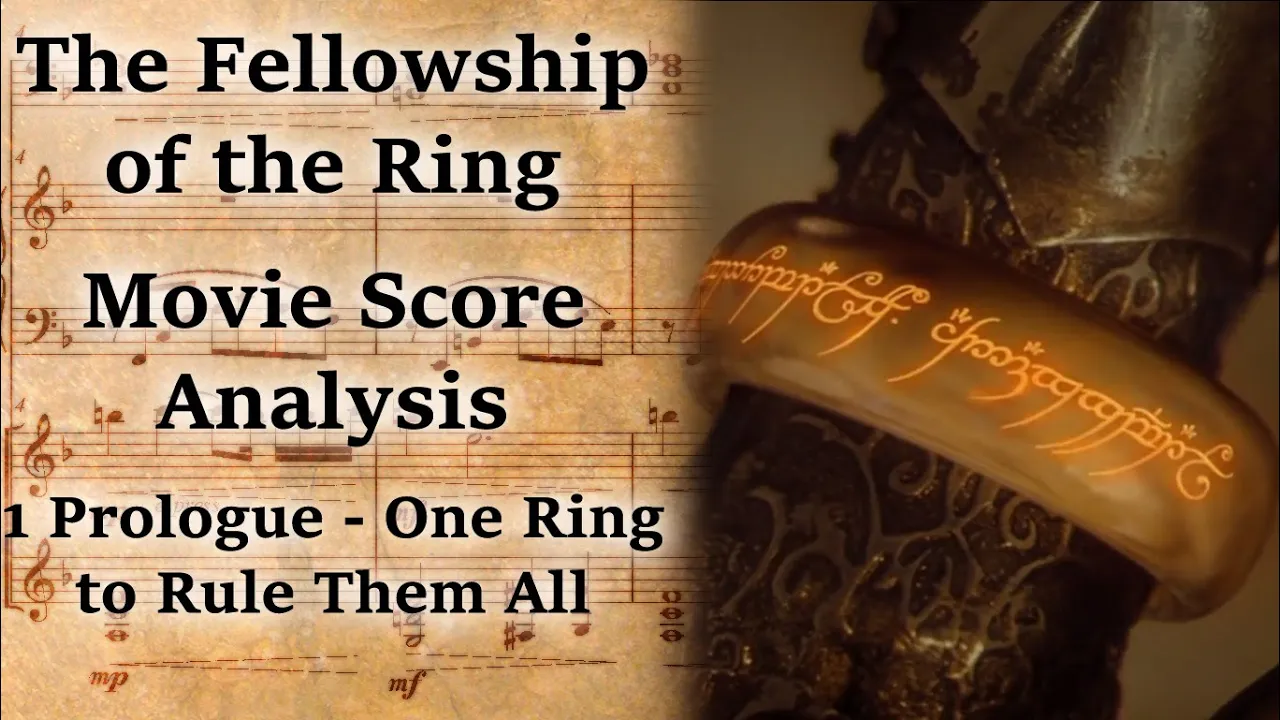
Analyses of prominent modern film and television scores (such as John Williams' 'Star Wars' or Howard Shore's 'The Lord of the Rings') to observe these concepts in action.
Study of advanced compositional techniques for thematic transformation, including inversion, retrograde, and re-harmonization to mirror character arcs.
Exploration of interactive and adaptive scoring in video games, analyzing how leitmotifs are dynamically triggered by player agency.
223.1K views10.9Klikes5:40Original Release: 2016-10-26
So, I don't know when people started confusing these two, but a theme and a light motif are not the same thing.
People tend to think that it's just music that represents something in a story, which isn't really true. In order to understand what a light motif is specifically, you first have to kind of go over the difference between a theme and just a regular motif. Okay? So, in music, the theme is the primary melodic subject of your piece. And that's what a lot of music academics will call their theme, a subject. Uh, but theme and subject are almost always interchangeable unless you're talking about a fugue, but let's not cross into that unholy territory. Okay, so that's a theme. That's the main subject, the primary piece of melodic information within a piece of music, your main melody, your theme. Okay? And your theme can just stay abstract. It doesn't have to represent anything in a story, but it can if the composer wants it to. Um, a really great example of a main theme is Superman. So, this is the full musical idea that represents Superman in the Superman film. All right, easy. That's a theme.
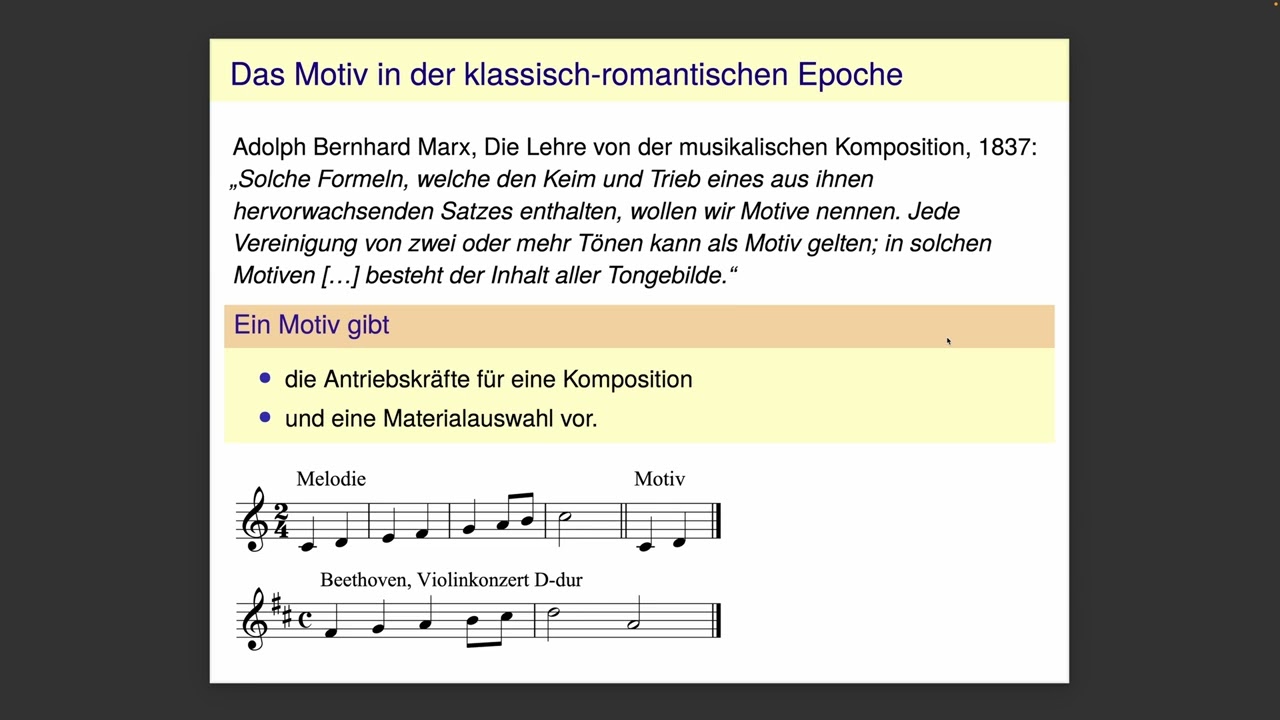
So, what's a motif? Well, a motif is the smallest piece of music that can still contain thematic information. It's a very small gesture that composers can use to develop their piece of music. So, a really great example of a motif is this from Beethoven 5. Okay, so Beethoven used this motif and developed it into this theme.
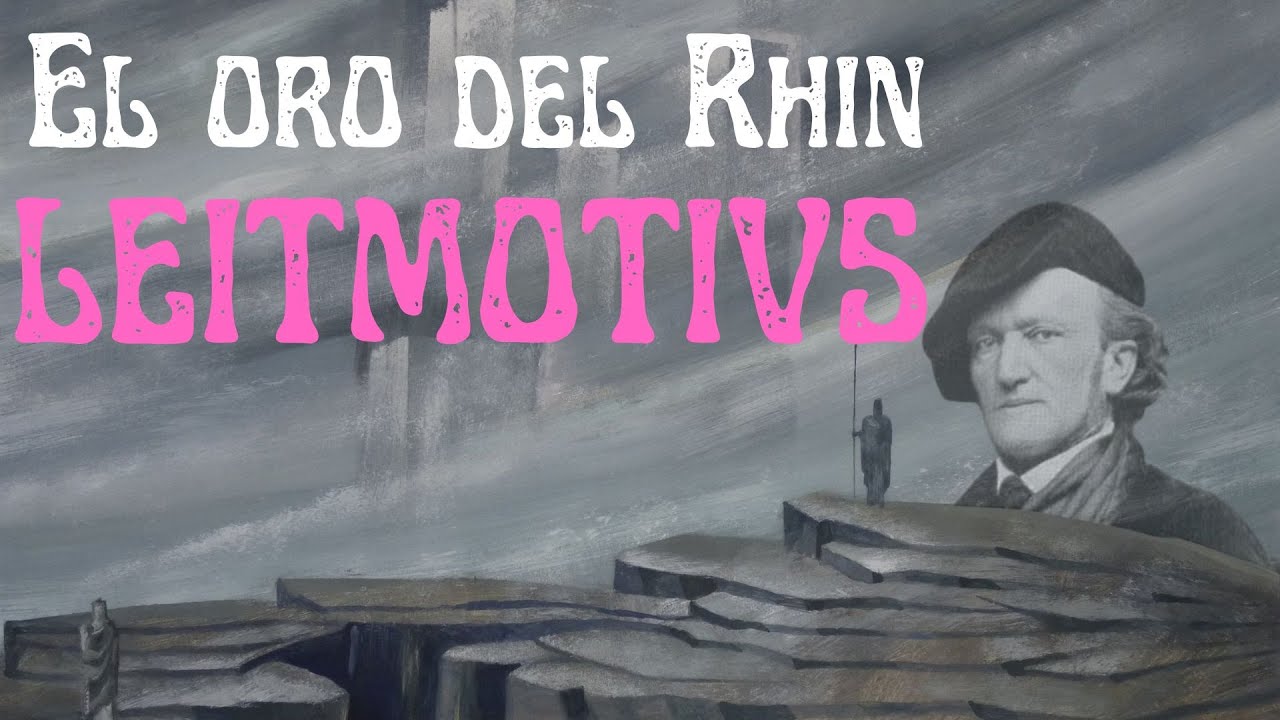
[Music] for his fifth symphony and that's a motif. Okay, so a light motif or a leading motif is a motif that specifically represents something like a character or an event or an emotion or some other noun within a narrative. A light motif has to represent something concrete within the story. Otherwise, it's just a regular motif. See, light motifs are created by this asset called Richard Vagner. He was this really anti-semitic total dick hole that had a really unique idea about how to synchronize music for the stage. So Vagner, on top of being a dick, was this major control freak. He wrote his own labretto. He wrote his own story. He wrote his own characters, his own music.
Everything that he could. And everything that he couldn't do for himself, he micromanaged the out of because he wanted all of his operas to be like this perfect image of what he had envisioned in his head. See, Vagner believed in this concept called gazerk, which is total artwork in German, and believed in a complete unification of drama and music. So instead of just having the music accompany what was going on on stage, Vagner wrote the script into his music using light motifs, they were basically musical road signs that told the listener what was going on on stage.
So is there a specific character on stage? Play that character's light motif. Is there a love potion on stage?
Play the love potion light motif. Did someone just get cursed? Play the curse light motif. Did someone just die? You get the idea. So when you look at these Vagner scores, you can see all these musical labels telling you exactly what's going on on stage without actually having to look at the script.
So in short, both a theme and a light motif can musically represent something in a film or a television show or a video game or really anything within a narrative. The big difference really is effectively the length and completeness of the musical idea. And you can have both a theme and a light motif coming from the same piece of music. So like you know how in The Legend of Zelda: Ocarina of Time, you'd have to input those first six or so notes to trigger one of the magical pieces of music.
Well, those first few trigger notes would make up the primary motif of the theme. So the entire piece is called the Song of Time. And within the game, that is the musical theme that represents time. But right a down, right a down would be more like the light motif of time. Or another great example of theme versus light motif again from the Zelda series is how in a Twilight Princess when you're fighting the possessed Zelda, you hear a motif from Zelda's lullabi. So in that instance, Zelda's lullabi is the musical theme that represents Zelda. And in the Twilight Princess boss fight, they're taking the primary motif of that theme and using it to musically represent Zelda, making that specific motif a light motif. So, like with that, you could technically call the coin sound effect from the original Super Mario game for the NES a light motif. Uh, it's two notes, so it really isn't that long enough to be a theme or a musical idea all on its own, but it plays every single time you get a coin. In essence, musically representing the fact that Mario just collected a coin. But the problem with calling the coin sound effect a light motif is that you're stripping the light motif of its greatest strength, versatility. So all great light motifs change as the narrative changes. Maybe a character's light motif is at a lower instrument to represent how that character might be scared at that specific moment. Or maybe another character's light motif harmonizes with another character's light motif to symbolize a relationship between the two characters or something like that. So, what would have been cooler in the Mario example would be if they had like the coin sound effect change ever so slightly in order to harmonize with the theme of the background of whatever level you were on as a means of kind of reflecting that although the coins might stay the same, you're acquiring them in a different location, which is exactly what they did in Super Mario Galaxy. Whenever a coin appears on screen in this game, the sound that plays along with that coin appearing harmonizes with the soundtrack in the background.
[Music] And again, the greatest strength of a light motif is its flexibility. Just look back at that possessed Zelda example. The light motif isn't getting taken directly from the source, note fornotee. It's playing in a variety of instruments against frantically moving strings in order to make it sound more disjointed and tense. But that's all pretty much it. A theme or a subject is a complete musical idea. And although it can, it doesn't have to represent something in a narrative. It can just be an abstract musical idea all on its own.
And a motif is a fragment of a musical idea, the smallest musical unit that can still possess some sort of thematic identity. But if a motif represents something specific in a narrative, then that motif becomes a light motif. Thanks for watching.
Up Next
32:15
Every Time Signature Explained Using Nintendo Music Theory
@CadenceHira
1.7M views•2024-01-05

10:20
Mozart's Musical Dice Game Explained: History, Rules, & Fun
@webpianoacademy
5K views•2023-03-13

47:36
Understanding Diatonic 7th Chords in Major Keys | Music Theory Tutorial
@GracieTerzian
54.7K views•2022-03-02
10:49
Understanding John Coltrane's Giant Steps: A Music Theory Analysis
@Vox
10.4M views•2018-11-12
Related Study Plans & Knowledge Roadmaps
Structured learning paths in Music Theory
music-theory
Composing Galant Music: Partimento & Schemata
01Foundations of Figured Bass and Keyboard Harmony
02The Rule of the Octave (Regola dell'Ottava)
03Galant Schemata: The Building Blocks of Form
+ 2 more learning modules
30h5 modules
Explore Roadmap
music-theory
Decoding Overtone Series: Tuning & Drone Music
01Acoustic Foundations: The Physics of the Overtone Series
02Tuning Systems: Equal Temperament vs. Just Intonation
03Microtonality and Spectralism: Beyond Standard Pitches
+ 2 more learning modules
24h5 modules
Explore Roadmap
music-theory
Impressionist Harmony: Scales, Planing & RPGs
01Foundational Music Theory: Keys, Intervals, and Seventh Chords
02Impressionist Color: Chord Planing and Parallel Harmony
03Whimsical Textures: Pentatonic Cascades and Whole-Tone Scales
+ 1 more learning modules
14h4 modules
Explore Roadmap
music-theory
Negative Harmony: Axis Reflection in Indie Pop
01Music Theory Foundations: Scales, Intervals, and Triads
02Functional Harmony and the Circle of Fifths
03Demystifying the Negative Harmony Axis Reflection
+ 2 more learning modules
16h5 modules
Explore Roadmap