








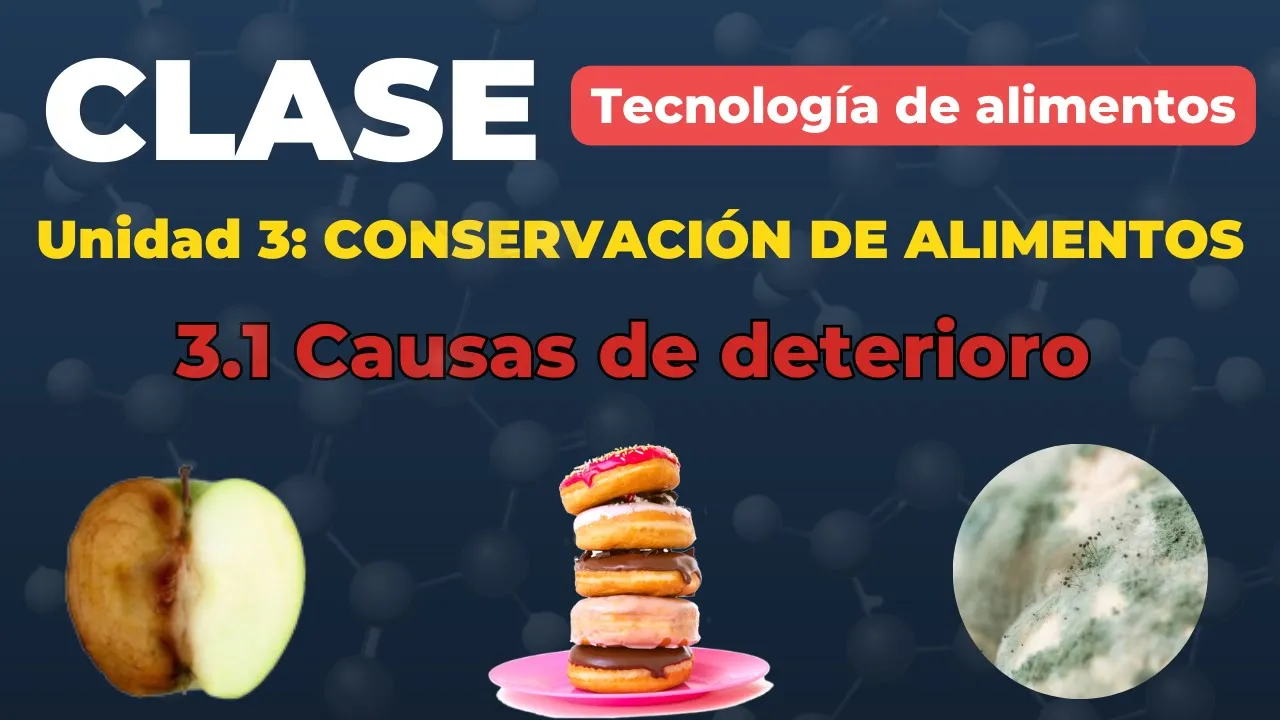











Food spoilage occurs through three main categories: physical, chemical, and microbial. Chemical spoilage primarily affects macromolecules (proteins, lipids, carbohydrates) through reactions like oxidation, enzymatic browning, and Maillard reactions, influenced by factors such as water activity, temperature, pH, and oxygen exposure. Microbial spoilage, the most common form, involves bacteria, yeasts, molds, and parasites that grow under specific conditions (temperature, water activity, pH, oxygen availability) and can cause foodborne illness. Preservation methods include adjusting water activity, controlling temperature, lowering pH, using preservatives, and proper packaging to prevent microbial growth and chemical degradation.
Food Shelf Life Part 2: Chemical & Microbial Spoilage
Added:Basic principles of chemistry, specifically oxidation-reduction (redox) reactions and enzyme-catalyzed reactions.
Fundamentals of microbiology, including the classification of bacteria, molds, and yeasts, and their basic environmental requirements for growth (pH, water activity, and temperature).
An understanding of food composition, particularly how lipids, proteins, and carbohydrates are structured and how they degrade.
The foundational concept of food shelf life, including the physical factors (such as light and mechanical damage) that initiate quality decline.
Industrial food preservation technologies designed to combat these reactions, such as Modified Atmosphere Packaging (MAP), pasteurization, and the application of natural or synthetic antioxidants.
The critical scientific and regulatory distinction between food spoilage (quality loss) and foodborne pathogens (safety risks/poisoning).
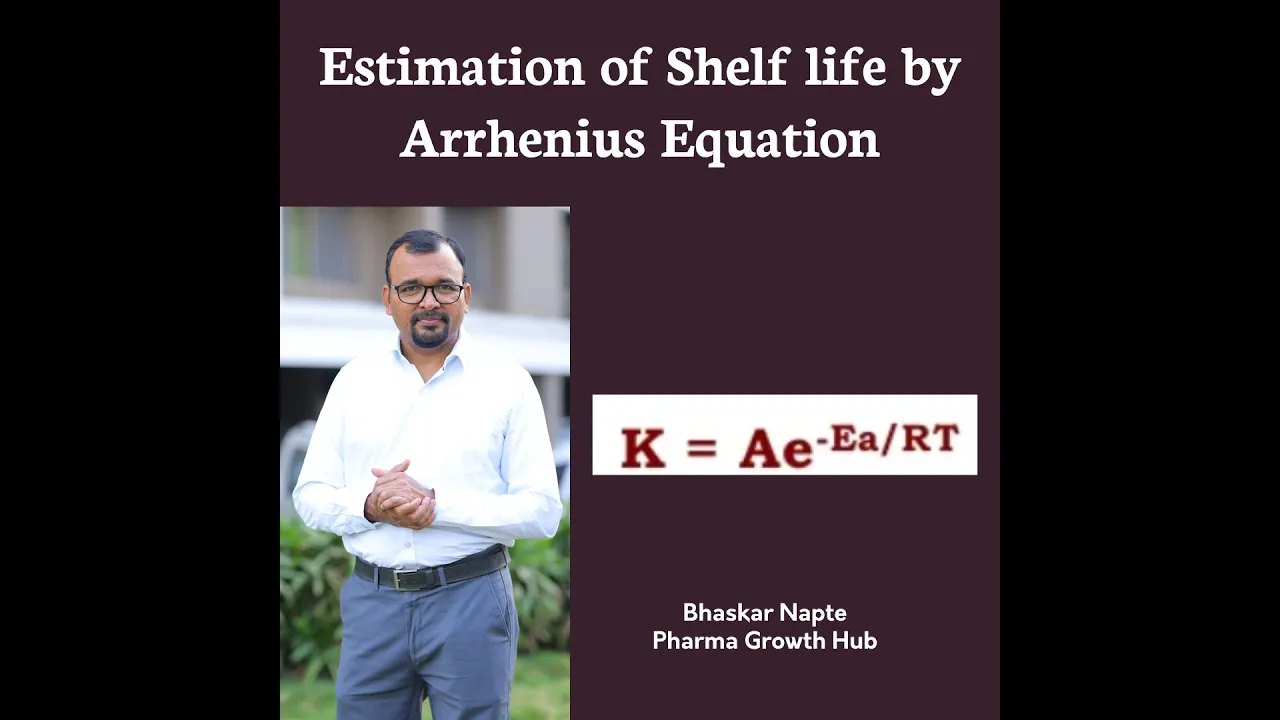
Predictive shelf-life testing and modeling, utilizing mathematical equations (like the Arrhenius equation) and microbial growth kinetics to estimate product stability.
The design and implementation of Hazard Analysis Critical Control Point (HACCP) plans in food manufacturing to systematically prevent microbial and chemical hazards.
212 views6likes26:28Original Release: 2023-02-19
welcome back to the subject food science and technology this is part two of the recording of shelf life of food and in this session we're going to be talking about the categories of spoilage but then we concentrating on chemical and microbial spoilage since the last video we actually discussed the physical spoilage so when we talk about chemical spoilage I um we're usually talking about spoilage that usually or mainly affects your macromolecules so your macromolecules and all the other other food companies then degrade over time but like I already mentioned that the consequences are normally seen or observed with your macromolecules your proteins lipids and carbohydrates and the degradation of this macromolecules actually depend on the water activity the temperature of either processing or storage the pH inherent pH of the product the exposure to light oxygen either during processing and storage and also um like we already mentioned that um the other factors affecting this will be the presence of other micronutrients like the presence of other vitamins and minerals so when we talk about the minerals the minerals of importance are when we discussed the reaction lipid oxidation your iron and copper then accelerate the degradation of of the lipids but then the the the main degradation is actually observed on the lipid than on the actual minerals so what happens is that in terms of this chemical reaction each and every chemical reaction has its different Optimum conditions um what happens is that in terms of enzyme activity it's usually reduced at low water activity or it's reduced at low uh storage temperatures are freezing and and and Refrigeration but then at higher temperatures those enzymes become denatured and therefore those chemical reaction might not take place so what happens is when this chemical reactions that we are going to talk about just now have taken place in the food product it usually affects mainly your sensory attributes such as your color flavor Aroma and texture of food and these are actually the attributes that consumers use to actually judge food to decide whether they are to buy this or not but one thing that or two things that I actually overlooked in terms of your chemical spoilage or chemical degradation of your food components is that um there's two consequences whereby the first one will be when this degradation takes place what happens is that some of the nutrients are degraded therefore the nutritional values now compromise or is reduced and then second one would be some of the byproducts that are actually formed in this chemical reactions are carcinogenic therefore they can cause cancer things like your acrylamide formation during um carbohydrate processing and also fewer ends during processing of Jarred products and those can actually cause cancer which are then overlooked but the main thing that consumers are focusing on uh those sensory attributes that they can actually relate with okay so in terms of chemical spoilage we mentioned that mainly it's affecting your macromolecules so we're actually going to go through each and every macromolecule and discuss the type of chemical reaction that will be taking place and obviously factors affecting that and so on so in terms of the first one being the protein degradation or chemical reactions involving your protein um there's one thing that we still need to remember about proteins is that all enzymes are proteins I remember if you if you still remember that saying all enzymes are proteins and not all proteins are enzymes so we can say your lipase your amylase your PPO your pectinase those are enzymes and they are all proteins but then we also have proteins like your myoglobin your casein and so on they are not enzymes but they are proteins so in terms of protein degradation we actually have proteins reacting with other macromolecules one or proteins reacting with micro nutrients and obviously the in other environmental factors uh whether you're extrinsic or intrinsic factors affecting that however at the same time then we also have your enzymes also acting on the proteins your enzymes acting on the lipids or the carbohydrates so those will be the type of reaction so as I already mentioned enzymes being complex proteins what they do is that they catalyze some chemical reactions and if they are present in food if they are not denatured during a heat processing then they can be detrimental to the to the the sensory attributes even obviously nutritional composition of the food so some of the different enzymes like I already mentioned would be uh your lipases your amylase PPO and pectinates okay so the first in terms of your reactions um what happens is that in terms of of of proteins oxidation can actually take place in the presence of proteins whereby one of the most important protein found in medium myoglobin your myoglobin when it's actually exposed to oxygen it becomes oxygenated to oxymyoglobin and then from there changing to being oxidized to Mac myoglobin and then what happens is that that red pigment of your myoglobin or your meat your fresh meat changes to Brown and that color becomes um something that's undesirable because it shows that the meat is not fresh so the color change from red to Brown obviously becomes a a hindrance in terms of the sensory attributes of of the meat and then the second one would be enzymatic activities whereby your fruits vegetables and even Seafood um your enzymatic Browning can take place and that is due to the enzyme polyphenol oxidase so this usually happens during your processing extraction even harvesting if there's any bruising remember bruising we mentioned that it's physical but because of bruising each and every reactant of enzymatic Browning being your polyphenol oxidase your your phenols what happens is that in the presence of oxygen all those are in different compartments within the cell but when bruising takes place those components come into contact and then in the presence of oxygen then Browning takes place so then that also affects the softening of the tissue so it affects your Seafood your fruits and vegetables and then the the fourth one will then be what we call your non-enzymatic Browning or the Malad reaction which usually occurs between your protein the amino groups of a protein which then reacts with reducing sugars and then it forms your yo yo yo what we call your melanoidance and I mean nonenzymatic Browning is a complex reaction that just doesn't only involve your male aggression we also want to have what we call ascorbic acid degradation in the presence of oxygen which then at the end of the day reacts with your sugars and then forms Browning and then caramelization so some people might not look at caramelization as a degradation product because we do form caramels and food and we use caramels in terms of flavoring of food but in whereby the the sugar concentration is high and the temperatures are high some sugars can caramelize especially maybe in milk in uht milk you don't want caramelized milk so that becomes degradation in milk but it is desired when the the caramels are going to be used for flavoring so that will be your degradation of your proteins when it comes to your carbohydrates the first thing that we still need to go back and mention is we mentioned that enzymes will either react like the enzymes are all proteins they act on proteins or on other macromolecules so you also get enzymes that are actually reacting on the carbohydrates like we already mentioned amylase breaking down starch if that's not a process that's required and amylase actually degrade the starch into simple sugars that is degradation because that's not a reaction that we acquire so that will be a side reaction that's taking place um of other chemical reactions that are actually involved in carbohydrate degradation will be generalization and retrogradation of starch which usually happens during freeze door Cycles um whereby there's moisture migration especially in braid whereby the moisture um moves from the the crumb from the crumb of the bread to the crust and then it actually dries out so that happens not only in bread but in in baked goods and it's known as staling and then another thing is something that also involves um carbohydrates as we already mentioned in the previous slide that in terms of the myelid reaction you have a protein reacting with the sugar so here same applies that carbohydrates are actually involved in the Browning reactions whereby we have your mail ad reaction and caramelization and also ascorbic acid degradation which then involves the sugars and then of the other the third one will be your oligosaccharides and polysaccharides that are actually broken down by hydrolytic reactions whereby um your enzymes such as your pectinase actually breaks down the pectin um the methyl group separates from the galactorinic acid and then you get softening of the fruit and vegetables and then that's degradation because it becomes mushy so those are then the chemical reactions that are actually involved in in your in your carbohydrate so um this slide is just showing you the the type of Browning reaction so there are there are two types of Browning reactions that are taking place here we have what we call your enzymatic Browning this is just a picture showing you enzymatic Browning of apple juice and then how we can actually prevent enzymatic Browning by using different types of additives like your citric acid your potassium metal biosulfide ascorbic acid and also pasteurization or heating to inactivate the enzyme therefore um you then um reduce the rate of reaction and this one here would be a picture that's actually showing you enzymatic Browning whereby this is an experiment we did with pulse electric field where we show that past electric field enhances the production or increasing in Juice yield but one of the detrimental effect of pulse electric field on fruit like your your apples will be Browning and that it's actually your banana Browning so that's actually um your enzymatic Browning and this is non-enzymatic Browning where we see Malad reaction ascorbic acid degradation taking place in your heat processed apple slices so that is just a pictures illustrating the type of the two types of or we can say three types of enzymatic of Browning whereby you have enzymatic nonenzymatic Browning that's actually divided into three which is your ascorbic acid degradation taking place your myelid reaction and then lastly your caramelization that's taking place because of higher temperatures and longer storage times still continuing with your chemical spoilage of the third macromolecule we actually have lipid oxidation or lipid spoilage so the first one will be oxidative run acidity whereby we have our lipids lipids being either your saturated fatty acids unsaturated polyunsaturated all the different types of fatty acids whereby addition of oxygen on the hydrocarbon chain results in oxidative rancidity and then that obviously affects the The Taste and the smell it smells rancid and then of the same type of reaction that's actually involving a fat but this one is hydrolytic rancidity the second one way by like we already mentioned you actually find your proteins which are enzymes are reacting on other macromolecules and in this instance um your lipases they are reacting on the hydrocarbon chain or let's say on the entire um there are what is this glycerol and free and fatty acids um triglyceride and what they do is then the lipase then breaks down the Ester Bond resulting in your glycerol and free fatty acids and that is known as hydrolytic rancidity and that is usually um common obviously in oils that are being processed that are frying at high temperatures frying different food products with different moisture content but another food product with this is more prevalent will be your butter whereby your short chain fatty acid your butyric acids are broken down and then you can smell that but one thing for sure is that um at times it's actually desirable that's where you get that flavor for butter and cheese maturation okay so another thing that actually then happens is that in terms of your hydrolytic rancidity your free fatty acids that have been broken down by the lipase then become a a an accelerator of your oxidative rancidity if you can see in the picture here when your triglyceride is in the oil that your triglycerides but what happens is that when your free fatty acids break down what happens is that because now you actually have the hydrocarbon chain which is then your your hydrophobic and then you've got the the hydrophilic um carboxylic side so what happens in in in in solution or in an oil the free fatty acid would want to move the hydrophilic portion would want to move to the surface close to where it is um there's this it's hydrophilic and then as a result then it is actually reducing the surface tension for oxygen and therefore then you it actually accelerates your oxidative rancidity so hydrolytic rancidity product then accelerating oxidative rancidity and then what happens is that later on especially oils that are used into frying um due to all these components being formed in here some are aldehydes that are formed in there other short chain uh carbons what they do is that over time they polymerize and as they polymerize they form a viscous gummy oil so that's that viscosity High viscosity that you usually see for oils that have been reused and reused in terms of frying and then later on it turns brown attending Brown because obviously of the component of food that's being fried in there your sugars also and found in the oil and also at the same time some of these aldehydes that are formed they then react with those sugars and then they form Browning so that becomes the chemical spoilage relating to your lipids so we've discussed all three and then um the one very much common type of spoilage being your microbial spoilage is the most common means of spoilage that can be seen not everybody can see that the oil is rancid um if you are used to look seeing oil old oil because I know there are some some places where they they they they sell used oil so if you are used to that kind of oil that's being pre-used um you might not know the the the the quality of unused oil but then you will still be using oil that is actually have deteriorated but in terms of microbial spoilage microbials spoilage is not a good site especially if you can see the mold growing you can smell the product is off you can smell that the milk is often it's sour so that becomes the most common means of food spoilage so in terms of microbial spoilage uh most common microorganisms they cause food are born illnesses whereby you eat the product and you might have a bit of vomiting diarrhea and obviously in other cases you people can even die because of that food upon illnesses okay so in terms of this microbial spoilage it's major concern is for perishable foods like your fresh fruits your vegetable your meat poultry fish baked baked products milk and juices unlike um those are the non-perishable products like your canned product that has like maybe a shelf life of two to five years and then um some of these microorganisms that are actually potential of a food spoilage are your bacteria your yeasted mold viruses and parasites that will then be found in the raw material especially your your animal products in terms of microbial spoilage we already know as we mentioned it's one of the major so the growth of microorganisms can easily be prevented or slowed down because not all microorganisms can be deactivated or we can get rid of that's why we have processes like uht milk and pasteurization so in UHD milk we get rid of everything in pasteurization we just get rid of the the the pathogenic bacteria but spoilage microorganisms are reduced to a level that they do not multiply provided the product is stored under the recommended conditions okay so the growth of microorganisms like I've already mentioned can be prevented by you know adjusting the initial microbial load adjusting the initial microbial load I already mentioned pasteurization whereby you actually reduce the pathogenic or you kill all the pathogenic bacteria and some of the spoilage microorganisms but there are some microorganisms that um can still grow or multiply provided the product is not stored well by adjusting the temperature of storage so if you can freeze the product or keep it under Refrigeration you can actually reduce the the rate of multiplication reducing the water activity because water is a medium in which all chemical reaction takes place so if the water activity the available water is reduced then your microorganisms cannot multiply we lower the ph but like we can always mention lowering the pH is not always a case for all microorganisms most microorganisms don't grow under lower pH but we then have your acetophiles that love acid but all in all lowering of pH will then result in reduction in microbial rate of most microorganisms we use our preservatives like the benzoic acids and the nissins and everything else that can actually um reduce the microorganisms and then obviously the last one using proper packaging you have to use a proper packaging because in terms of packaging the packaging the first uh function of packaging is actually to prevent your your food product being in contact with the environment and then you also have your special type of microorganisms vacuum packaging you have your modified atmospheric packaging in that way it then reduces um or the rate of microbial spoilage so like we already mentioned some microorganisms simply cause food spoilage so you look at the food and you don't want to eat it I mean think about when milk becomes sour that milk becoming sour sometimes you might not use it in your coffee because your coffee is going to go off but I remember growing up when the milk becomes sour it becomes a messy and then we just use it for different peppers but we don't throw it away so it has spoiled but it has spoiled but then it cannot it does not make you sick While others cause illnesses and um depending on the severity death can also take place so as a result then it means not all microbial growth is undesirable it's undesirable is going to cost mold on braid but we also want those type of mold are your Rockefeller cheese and Camembert we want those microorganisms to produce those um specialized cheeses so not all microorganisms are undesirable most are used in production of many fermented food products like your cheese and wine your saccharomyces or avca that will be the yeast that's used in fermentation um soy sauce sauerkraut and I already mentioned the other Camembert cheeses and stuff so microorganisms depending on which one it is then we will see whether it is desirable or not so this is actually a table that I took from um the book understanding and measuring or shelf life of food it's just showing you the different types of microorganisms the temperatures and the food system where they will be found so just go through it and see um make an example of most yeast at temperatures of minus five at a water activity of 0.8 and what type of food product will you find this one growing in will be in your salted fish and stuff like that so just go through that one so as we already mentioned that microorganisms have specific requirements and conditions in which they can Thrive okay so some of those factors affecting your microorganism will definitely be mostly your intrinsic and extrinsic factors like we already spoken about the nutrition requirements we have lactose fermenters and non-lactose fermenters so if these ones require lactose to ferment they are not going to ferment any other uh sugar they will just ferment lactose and then presence of antimicrobial agents when they are there they will hinder some microorganisms but not suitable for certain types of microorganisms water activity I think it's a concept that has been exhausted that different microorganisms have different um requirements for for for for for water activity talk about the zero files that can actually grow in very low water activity but obviously there are others that require high water activity the pH we already mentioned oxidation reduction potential um the temperatures we have your mesophile your thermophiles and your hyperthermore files so very important knowing which microorganisms can grow in a food product um we must not just assume that all microorganisms don't grow at refrigerated temperatures I mean think about the pseudomonas in your polonies and then oxygen availability very important when we spoke about oxygen we talk about aerobic and anaerobic bacteria think about your clostridium botulinum which might be a big problem in terms of anaerobic canned products especially meat products and then also in activation processes what processes are being used are we drying the product are we heating it up are we canning how are those microorganisms dying in terms of that process of inactivation so each of these factors mentioned here will definitely affect the growth it affects whether the microorganisms does profiliate or it doesn't Okay so just to wrap up the categories of spoilage um this is just a table showing the major types of food spoilage like we already mentioned physical chemical and microbial just to wrap it up um it talks about the major mechanism for different type of food products an example milk your milk um the type of spoilage oxidation can take place hydraulic rancidity and bacterial growth so what are those critical storage variables definitely the oxygen if oxidation is taking place and then the temperature because the temperature affects both your bacteria and sometimes we owe something that maybe we don't mention was that some of these bacterias that are growing in your product they then produce the enzymes that then degrade obviously the macromolecules we jump from there and then make an example of leafy vegetables um leafy vegetables enzymatic activity moisture loss wilting microbial growth so what's so important in terms of critical storage variables for leafy vegetables the temperature very important the light oxygen and definitely the humidity if it has to do with your your wilting the moisture loss or moisture migration the last one then we can talk about beer beer oxidation in microbial growth so very important oxygen light and temperature so those are the major mechanisms that um you need to to know about
Up Next
56:30
Lipid Oxidation in Milk & Dairy Products | Food Science Webinar
@australiandairymanufacturi2316
177 views•2023-05-12
83:56
Biocatalysis and Catalysis in Islatravir Synthesis | Merck Webinar
@SCIwheresciencemeetsbusiness
675 views•2020-10-08
10:06
1H NMR: Determining Number of Peaks from Structure
@MSJChem
59.2K views•2017-04-06
17:31
Edible Water Bottles: A DIY Guide to Sodium Alginate Spherification
@ryan
10.5M views•2019-06-21
Related Study Plans & Knowledge Roadmaps
Structured learning paths in Chemistry
chemistry
Nuclear Chemistry: Decay, Meds & Fuel Cycle
01Introduction to Nuclear Structure and Radioactivity
02Decay Dynamics and Kinetics
03Radiation Interaction and Detection
+ 2 more learning modules
24h5 modules
Explore Roadmap
chemistry
Supramolecular Chemistry: Forces & Machines
01Foundations of Chemical Bonding and Intermolecular Forces
02Introduction to Host-Guest Chemistry
03Thermodynamics and Dynamics of Self-Assembly
+ 2 more learning modules
16h5 modules
Explore Roadmap
chemistry
Photochemistry: Excited States & Reactions
01Foundations of Light-Matter Interactions
02Molecular Orbitals and Electronic States
03Photophysical Processes and Jablonski Diagrams
+ 2 more learning modules
18h5 modules
Explore Roadmap
chemistry
Coordination Chemistry: Bonding & Properties
01Introduction to Transition Metals and Ligands
02Crystal Field Theory (CFT) and Geometry
03Magnetic Behavior and Spin States
+ 2 more learning modules
14h5 modules
Explore Roadmap