








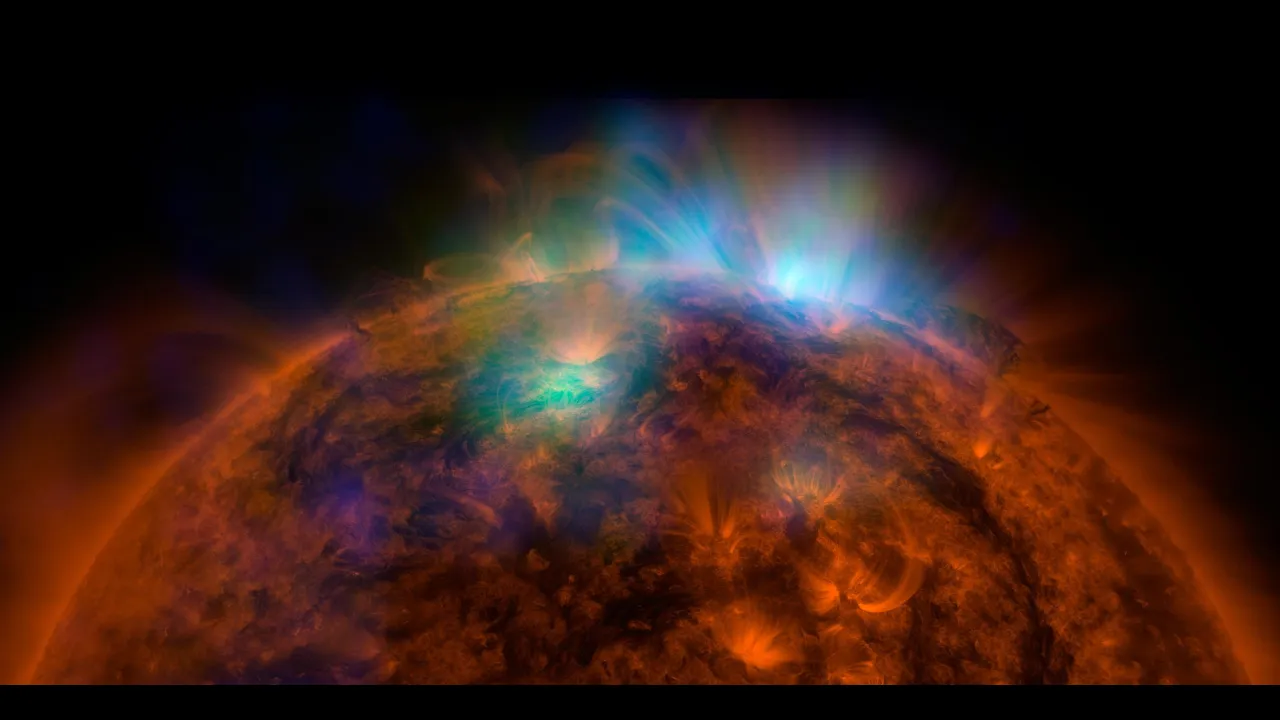




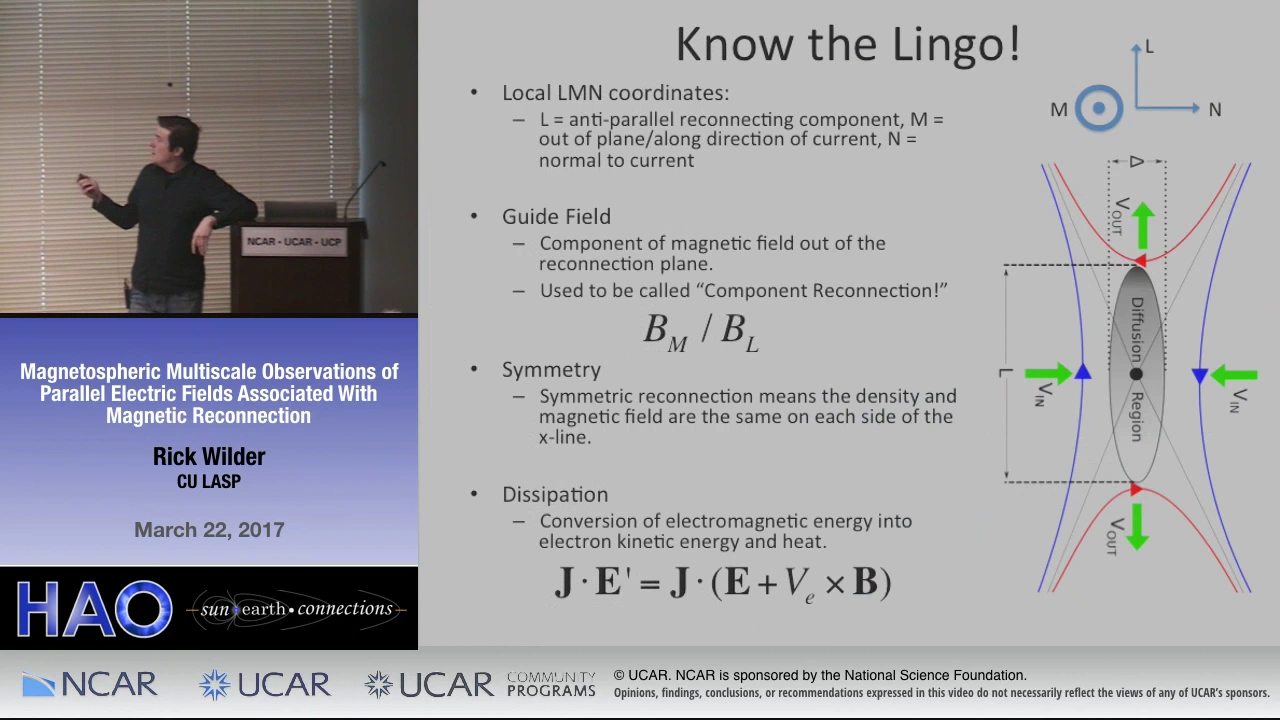





NASA's Magnetospheric Multiscale (MMS) mission, launching March 12, 2015, consists of four identical spacecraft flying in a pyramid formation as close as 10 kilometers apart to study magnetic reconnection—a fundamental process where oppositely directed magnetic fields connect and disconnect, releasing explosive energy that drives space weather and accelerates particles to near-light speeds; this revolutionary mission enables unprecedented three-dimensional measurements at electron-scale resolution to finally understand how magnetic reconnection works, which has implications for understanding solar flares, auroras, and space weather effects on Earth's technological systems.
NASA's MMS Mission: Understanding Magnetic Reconnection | Scientific Exploration
Added:Basic concepts of electromagnetism, including magnetic field lines, magnetic flux, and how charged particles interact with magnetic fields.
The state of matter known as plasma, particularly its behavior as a highly conductive fluid in space environments.
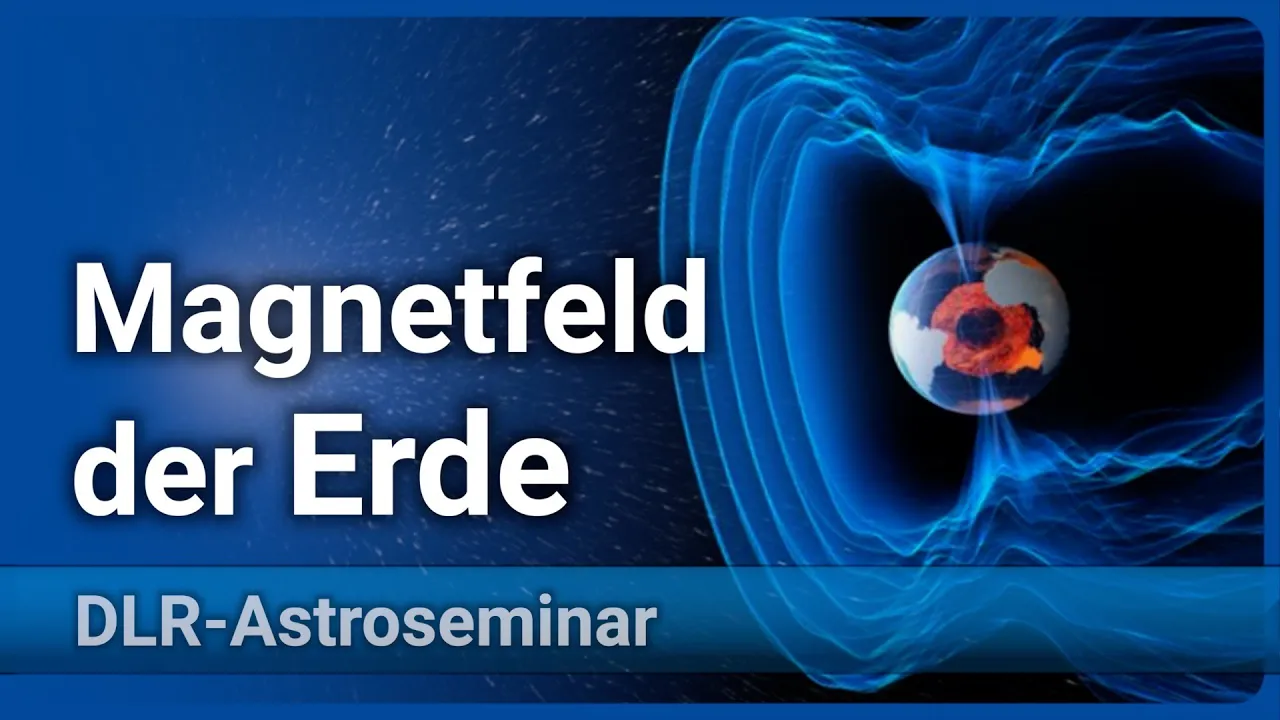
The structure of Earth's magnetosphere and its interaction with the solar wind.
An introductory understanding of what space weather is and its general effects on human technology.
Advanced plasma physics theories, such as Magnetohydrodynamics (MHD) and collisionless reconnection models.
Specific scientific discoveries made by the MMS four-spacecraft constellation, particularly regarding electron-scale physics.
The role of magnetic reconnection in solar dynamics, including solar flares, coronal mass ejections (CMEs), and stellar astrophysics.
Space weather forecasting techniques and the engineering strategies used to protect satellites and power grids on Earth.
13.8K views191likes36:11Original Release: 2015-02-25
good afternoon my name is Dwayne Brown and welcome to NASA headquarters today's briefing will discuss the upcoming March 12th launch of NASA's magnetospheric multiscale or MMS mission that will study magnetic reconnection around the earth now that's a lot to swallow but remember these two words magnetic reconnection what is is it why is it important to study today you will get those answers all of the information you were here today and any updates will be on the website at www.nasa.gov MMS and also for the social media folks out there there is a lot of excitement building for this launch send your questions in at hash asknasa and follow the conversation it is growing and growing about this upcoming launch and the unprecedented science coming from this Mission Twitter Facebook and other social media platforms we'll have brief presentations from our participants and then we'll open it up for questions starting here in the NASA TV studio our phone lines and the questions from the public viewing this program on social media first let me introduce you to today's participants first you're here from Jeff Numark interim director Helio physics division NASA headqu qus in Washington Jim bur principal investigator MMS instrument Suite science team Southwest Research Institute San Antonio Texas Greg Tuli MMS project manager at NASA's godded space flight center in Greenbelt Maryland and Paul cassic associate professor West Virginia University in morgant toown and with that we'll start with Jeff thank you Dwayne and good afternoon everyone uh I'm really thrilled to be here today to introduce MMS uh to you all before we talk about MMS in detail I want to step back a little bit and talk about how it fits in with with the important work that NASA is doing on Helia physics physics is kind of a a strange word to to many of you but it it deals with some of the most fundamental parts that we know starting with the sun we we all recognize the Sun and what we're doing is looking at the sun and its extended atmosphere that we call the heliosphere and how it interacts with the planets the space environment around the earth the space environment around other planets out to the edges of our Interstellar space uh this sun is actually variable many of you think of the Sun as as a constant but if you look at this uh first movie I have here you'll see what we actually when we look in NASA look at the Sun that you see it's these activity zones you see large eruptions in the sun we call solar storms these storms travel throughout interplanetary space and at times these storms interact with the Earth and that interaction can cause what we call space weather what's what starts these storms what causes the space weather around the earth this is a phenomenon that Dwayne already mentioned magnetic reconnection magnetic reconnection actually occurs throughout the Universe not just on the Sun not just around the Earth but around other planets at the edges of our solar system and in fact around black holes large other galaxies this is a a fundamental process that occurs and MMS is going to revolutionize our understanding of it if you in that movie we saw as a very large scale system looking from the Sun all the way through space they are how do we study that system the next graphic you see here shows you the our hel physics system Observatory the fleet of spacecraft that Nasa uses to look at this connected system we're studying the Sun how the solar storms erupt from the Sun how they travel through space how they interact and with the Earth's magnetic environment and and so we need this whole uh system together MMS is going to fill a key part of this new system if you look at the uh my next view you'll start to see introduce you to MMS what is MMS doing it's going to actually fly in the Earth's magnetosphere this protective magnetic environment around the earth and um you can see here the observatories we're using this environment around the earth as a natural laboratory we've actually rather than building one on earth we're going to where these magnetic reconnection actually occurs in space so we can understand it you'll see here as you see we have four spacecraft which gives us a three-dimensional understanding and in fact a four dimensional understanding you'll hear about the instruments that revolutionize our ability to make measurements in time as well as in space to tell you some of the details about it I want to introduce uh Dr Jim Burch thank you Jeff sunlight and starlight ionizes thin gases that fill the solar system and galaxies and this so-called plasma state electric and magnetic forces are stronger than gravity and many Dynamic phenomena occur the most energetic of these is magnetic reconnection it occurs when magnetic fields and adjacent regions of space interconnect in the process magnetic energy is destroyed and heat and kinetic energy are released because of its explosive nature magnetic reconnection is often described as a magnetic explosion in space reconnection is important to us as the engine that drives space weather and a main disruptor that is frustrating our attempts to harness nuclear fusion with Magnetic containment devices the MMS Mission will conduct a definitive experiment in space that will finally allow us to understand how magnetic reconnection Works let's look at a video magnetic fields exist throughout the Universe and energy is often released by magnetic reconnection in the outer parts of our galaxy or at the center of our galaxy there's a black C and these are X-ray flares that have been observed recently caused by reconnection in the sun's superheated Corona magnetic fields create spectacular loops and arcades the energy stored in these structures can release creating explosive solar flares and coronal mass ejections intense fluxes of energetic particles and giant clouds of ionized gas and magnetic fields are ejected from the Sun and travel throughout the solar system when these clouds impact other magnetic Fields such as the Earth similar reconnection events occur and these cause intense magnetic activity in the auroral lights at the same time they accelerate charge particles to high energies creating a hazard to space Travelers and spacecraft and even disrupting groundbased power grids magnetic reconnection also occurs in laboratory devices and this is a major magnetic storm at the Earth producing the Aurora in the laboratory devices that are designed to harness nuclear fusion by heating up the plasma confined by magnetic fields events called Sawtooth crashes have thwarted efforts to permanently solve the energy crisis our next slide shows a simplified picture of reconnection a fundamental question is why and how does magnetic reconnection take place the answer is in one sense simple but in another sense complex and mysterious the simple part is that adjacent magnetic fields pointing in opposite directions tend to annihilate each other releasing their magnetic energy and heating the charged particles in the surrounding environment and this process magnetic reconnection the magnetic fields are torn apart and reattached to their neighbors the mysterious part is what goes in on inside the Box label diffusion region with MMS we will be able to probe the diffusion region for the first first time with measurements down to the smallest scale of the plasma the electron scale to solve this mystery now the next animation is going to show reconnection of simulations this is the magnetosphere solar wind coming in from the left there're two boxes these are our Targets on the day side and one in the tail on the right inside these boxes reconnection is going on and this video shows or this animation shows one of the latest and most sophisticated computer simulations of the Fusion region we know what goes on outside of this box from some previous missions but what goes on inside the box is a mystery even with the simulations because they cannot simulate Everything Computers are not big enough and so we have to fly spacecraft in that box and we have to put four spacecraft in there and make particle measurements a 100 times faster than have been attemp attempted in previous missions now this is our orbital strategy the video showing the launch of the satellit four spacecraft and a pyramid configuration launched on the night side we spend 6 months uh getting the instruments ready and then we scan through the day side along the Magneto Paws where reconnection is occurring adjusting the spacing between the spacecraft down to a minimum of 10 kilometers and we make two scans through the day side at this point we raise the appy to 25 Earth radi and make one scan through the Magneto tail also adjusting the spacing between the spacecraft now to tell us how we accomplish this with the spacecraft is uh Craig Tuli project manager good afternoon uh I'm going to talk just a little bit about these incredible machines that we've built and how we're going to fly them to create this insitu flying laboratory that that the gentlemen have just described um in my first photograph which you can see um you'll see the four MMS observatories in the in the clean room at Godard space flight center indeed at GD space fight Center where we designed and built and tested these observatories um the instruments and there are 100 of them um were LED and brought to Gard by the Southwest Research Institute where we then integrated them with these four observatories um and you can see in the picture um the red covers show you some examples of the instruments and such and there are covers on the solar arrays now in the next photograph if we could bring the next one up um you see you see the stack where where you can actually see the solar arrays um and the instruments on the top edge of that octagonal perimeter um and we're flanked there by the two halves of the atlas fairing the 4 meter fairing each of those MMS spacecraft weighs just shy of 3,000 lb um about 900 lb of that is fuel we carry and they measure each about 4 feet tall by about 12 ft across that octagonal crosssection um a couple things that are very special about mm and indeed some of the challenges we faced in building them and and some of the reason that we built them ourselves at Nasa is in order to make the measurements uh that were described these very precise magnetic field electric field and particle measurements our own spacecraft have to be very very clean meaning they can't have very much a significant electric field or magnetic uh moment of their own we don't want to see our own noise so we we've built spacecraft in this case that are more than a about more than a hundred times lower residual magnetism and more than a thousand times lower than what is typical for spacecraft to have in terms of electric charge so every aspect of the spacecraft was designed to be very clean so we can make these Precision measurements the other aspect of these is these are spinning spacecraft as was mentioned so they have to be precisely balanced um even as we deplete the fuel they have to be balanced because we need to keep and in this little model of MMS we have to keep these very precisely oriented with respect to the ecliptic north of our solar system all the while while spinning now lastly this is a fairly large stack and when we stack it up uh as when you saw it uh that's about 16 feet tall but the uh in this picture what you can't see is when we when we deploy these we then extend sensor booms from each one of these um we we deploy 16 feet of of magnetometer booms you'll see those unfold in a video in a moment we then also extend 50 fet of booms out the along the spin axis this way and then we finally on four sides put out almost 200 ft of wire booms with sensors on the end all of these booms then enable us to measure in three dimensions the electric fields in the magnetic fields we do all this with spinning spacecraft that we're flying in a formation as close as 10 km um to give you some sense of scale once we've deployed these booms an MMS footprint is about the size of a full baseball field so we end up flying four baseball fields um kind of in a distance that ends up being about about the size of Washington DC separation when we're 10 km apart um in the video we show next um and we can bring it up and I'll narrate it I'll describe a little bit about what our what our uh only a few weeks from now it's going to look like uh that's the atlas rocket on the pad uh of course that's our launch vehicle um in some aspects of this video are sped up otherwise this press conference will be very long and I'll comment on that when you see them but there's our launch uh on the atlas 5 um we then here you'll see the booster separate um in the Centaur upper stage will carry us on our initial orbit that that that Jim showed you um the fairing separates which we detect and there's our stack of four MMS spacecrafts already spun up by the atlas Centaur now you'll see them start to separate from the top down in in actuality it's about 5 minutes between the separation events as we get a the separation distance we want initially we sped it up here to show you and here you'll see that first um 16 ft magnetometer pair of booms deploy outward on the bottom side of the spacecraft and then shortly we will see um the example where we start releasing those 200t wire booms out the side all the while while spinning all the while while keeping this thing very very stable um and then finally in this in this in this video you'll see those those spin Axis or axial booms um deployed upward they uncoil their folded coil booms leaving us with with these very large spinning spacecraft in a formation that forms this laboratory and as this video uh rolls on with another uh Liberty with the video is you can begin to see other MMS in the picture I don't think you'd see them quite this well at 10 km but you get the idea we are flying these four spinning um very large once deployed spacecraft information we maintain that formation um to an accuracy of 100 m so flying 10 kilm apart using the GPS on the that is actually below us a GPS system we built we keep track and Manu this formation to the to within 100 met um now to talk a little bit more about the bigger picture of what we're doing with MMS and how it fits in the bigger picture of Helo physics I'll I'll turn it over to Paul thank you Craig so I'm really excited to talk to you today about why scientists are uh waiting with baited breath for MMS to be launched and why everyone should also be excited about uh what we're going to be able to learn uh so the first m in mms uh stands for magnetospheric the Earth has a magnetic field that sticks out into space and the part of space where the magnetic field is dominant is called the magnetosphere outside the magnetosphere you have uh particles from uh the sun being spewed out that's called the solar wind and those particles that would normally run into Earth instead they run into the Earth's magnetic field so the Earth's magnetic field is very important in protecting us from the particles uh from the Sun uh so shown here in my first graphic is a sketch of the Earth's magnetosphere which comes from a computer simulation the Earth is the ball in the middle and the strange looking yellow lines represent the magnetic field the lines connecting to the Earth in the center uh are in are the the magnetosphere uh and on the left you see a magnetic field line and that one is being uh pushed in away from the Sun by the solar wind towards the Earth so as we've heard from the other panelists the MMS mission is designed to study magnetic reconnection using the magnetosphere as a laboratory it occurs when oppositely directed magnetic fields point in opposite directions and they come together and effectively break so we will see this in Motion in a moment uh magnetic fields from the solar wind in this animation will come in from the left side and when they reach the magnetosphere they'll break and that's what magnetic reconnection is so let's go ahead and roll the uh animation so you can see field lines coming in from the left and breaking when they reach the magnetosphere and that's magnetic reconnection but the process doesn't end there you see these magnetic fields being dragged away from the Sun and when they get to the The Far Side of the Earth the field lines are oppositely directed again and they break again that's again the process of magnetic reconnection and you can see what happens is the magnetic field lines uh shoot back towards Earth and that's where it gets interesting for us um so the magnetic fields snap back like rubber bands and blast these hot particles back towards the Earth so as we saw in Jim's animations some of these particles harmlessly run into the atmosphere uh at Earth and when they do they excite the gas up there and they the gas ends up giving off light and that's what we on Earth see as the northern and southern lights also known as Aurora as pictured here however as we we've also heard from the other panelists the particles can cause problems too so there's a number of satellit in space uh that we use for very important things like cell phone communication and GPS uh so if these particles run into the satellites they can short out the circuits and uh can knock out the satellites and that would cause problems for cell phone reception um the moving magnetic fields can also Drive electric currents on the earth and that can uh overload Transformers and lead to uh power outages which has happened in Canada and the United States and parts of Europe so all of these are aspects of what are known as what what's known as space weather and so you can see that magnetic reconnection plays a very important part in space weather uh and that's uh why it's important for us to study the fundamental science of magnetic reconnection in order to understand it so that's just one reason that MMS is important to all of us so why is MMS so important to science scientists so going back to the name MMS uh the second M and the S stand for multiscale uh this signifies that reconnection happens at a very small region in space as we saw in the uh animation but it impacts a huge region of space uh of the whole magnetosphere which is a million miles long this makes it extremely difficult to study like a cosmic version of finding a needle in a hay stack the best we've been able to measure magnetic reconnection in the magnetosphere has been with a mission with four satellites in a pyramid uh and they were separated by 600 km or more uh so 600 km is the distance from Washington DC to Boston but as we've heard from Craig the uh four spacecraft for MMS will be separated by only 10 kilometers which is about the size of Washington DC so much closer than we've ever been able to see before uh in addition as we've heard we'll get the data much faster than we have in the past a 100 times faster than previous missions so to get a feel for for what this is is like picture watching a football game and you can watch for a minute at a time but you have to wait an hour in between times that you can watch it would be really hard to figure out what's going on in the football game so these are the problems that have been plaguing researchers studying magnetic reconnection is that we can't see the smallest scales uh and we can't process the data fast enough to really understand what happens right at the place where magnetic reconnection happens uh so this makes it difficult to see for example how particles uh get accelerated and heated during magnetic reconnection events so you can see NASA's MMS mission is really going to give scientists an unprecedented opportunity to study reconnection go back to Dwayne thank you Paul and and folks okay so um let's see if uh we can go ahead and uh go take questions we'll start with uh we're here in the NASA TV studio uh with a question here and then we'll go to the phone lines and then we'll go to social media if you can wait for the microphone uh say your name and your affiliation please um Adam iner medil news service and actually a question for Greg you mentioned the four different uh shuttles that are being used can you explain why specifically they're needed to be four and whether kind of these four shuttles flying so close together is a norm and something that typically is done oh okay so but they're spacecraft or observatories but I wouldn't I wouldn't call them shuttles right I mean we have we have four MMS spacecraft we there's a model of them there um but the reason we have four is is as we've talked about we want to measure this phenomenon we want to capture it in three dimensions and so if you just kind of imagine if I've got three things no matter how I put them down they'll Define a plane I can only get two Dimensions with three objects so in order to have four measurements simultaneously of whatever is going on I really need to have at least four points in space and that's what we talk about making a pyramid there's three of them and another one here so now we have a three-dimensional shall we say sensor made up of four satellites so we can know what's going on in 3D and we also know what's going on very fast in time be used for anything else other than magnetic studies in the future no this mission is this mission is is dedicated and indeed we we anticipate it it will largely solve the mystery of magnetic reconnection but it's it's a mission dedicated to that they'll fly for 2 years possibly more if we if we decide to extend the mission but uh their per sole purpose is is to is to probe and really understand and solve the mysteries of magnetic reconnection okay um be we're going to kind of switch gears here we're going to go to social media and um uh Karen Fox who's uh on the uh board there what what's uh going on in the community what question is it coming in we do have some questions for you uh at bone Drake has asked us uh she's been studying map a recent NASA Mission uh in her High School Global studies class she's wondering whether MMS will be related to that and then the question is how will MMS data be uh connected to some of the other missions that we have uh so this is uh Jeff Newark I'll take that um smap is an earth science Mission uh looking at soil moisture uh and and this Mission uh is not really related uh to that uh it really is looking at at a very different phenomena not it's really looking at the environment our near space environment where where snap is looking down at the so the moisture in in the soil throughout the over the Earth uh in terms of the uh how the data works together again what what I showed you earlier in the video we have today spacecraft that look at the sun look at the initiation of those solar storms we watch those storms travel through interplanetary space going towards the Earth and then we we don't really know what happens as they interact with the Earth's magnetic field so we use the other spacecraft to set up the context and that allows MMS to then study the details of what's going on in that magnetic reconnection Zone that you heard so much about you have any other questions K we'll take two more from social media then we'll go to the phone line and we'll come back uh another question from at beast mode uh wanted to follow up on the GP PS that Craig Tulie mentioned can you describe how MMS uses GPS and relies on it please sure um our our GPS system and and it's actually got a name it's called Navigator which is quite fitting um the way the way it works is m i mean much as we use GPS on the ground as you would use in your handheld or in your car or on your phone um we use it to determine our location of each Observatory which is very important because that's that's how we you know we we begin to understand where we are in these orbits CU essentially MMS flies four very similar but not identical orbits all the time in order to maintain that formation you can imagine four orbit lines that are very close so we need to know precisely where each one is in relation to the Earth um now the thing that is very very um novel and actually um interesting about mm's GPS system is the GPS constellation is far below us you know we are much higher than that constellation of GPS satellites and so our system is able to actually pick up very very weak signals from the side loes you know of those GPS uh satellites and from that it can triangulate and determine where each of our MMS satellites is it also gets very precise timing of when we're there um and then that is continually we send that to the ground we use that then to to design and plan the Maneuvers that actually adjust the formation to maintain not too far apart not too close together and the right shape um and incidentally as we do that we get feedback from the science team it's it's not something we've known in advance one of the interesting things about the mission is we'll be fine-tuning that that separation um in order to optimize as we see the data they'll be looking at this data real time throughout the mission and we'll be tuning that that Laboratories um to collect the data one more Karen and then we'll go to the phone lines all right another question from at Galaxy Gallas the question is what do we expect to be the lifespan of MMS and do we think that the sun's radiation could have have an effect either on the mission or on the data the MMS Mission um is actually nominally planned for two years of science Gathering it's preceded by six months um as as as Dr BS described as we wait for our orbit actually to get around into that region of interest in the magnetopause in front we'll we'll swing through that magnetopause twice and then we will double our orbit size our apogee our farthest point and we'll swing through the tail and that's the second year so this is essentially a two-year science campaign um we carry fuel so if if it makes sense um and there's and and still something to be done we could potentially do some more work afterwards um if if NASA decides that's warranted so we we won't run out of fuel quite that soon um in terms of the radiation it it the although magnetic reconnection sounds very explosive and it is from the standpoint of the electronics and such we have built on the spacecraft these orbits this region in space is fairly typical of what we see for satellites it's in fact some of the time it's less severe than what geostationary satellites see as we pass in and out of the radiation belt so in terms of radiation this is a typical kind of uh environment for us to build science satellites in okay if you just joined us again we're here at NASA headquarters learning about the upcoming NASA mission to study magnetic reconnection around Earth and it is the first I believe dedic ated project to do this um very extraordinary science so we're going to go to the phone lines on to our media and I believe we have uh Ken Kramer from Universe today Ken hi thanks for taking my question um wonder if you could talk a little bit about um studying would it be worth studying the magnetosphere anywhere else in the solar system at any other planets and and how do does do the other planets compare to the Earth thanks you can take that uh question in fact we are studying reconnection at other planets Cassini at Saturn for example and then uh Jupiter also reconnection is going on but the the mode is different because these planets are dominated more by rotation of the planet and so the solar wind has an influence and reconnection has an influence but is not as strong as it is uh at the Earth and so it's a different type of circulation that is set up in these planets but people like myself we work on reconnection we do that as Saturn as well I also add that there are other missions have observed and we we've learned about REM magnet connection other regions of our magnetosphere although we haven't flown into it asked about other regions on the earth well you did well here we have two missions that have been up a while 7 to 10 years is the European cluster Mission and the NASA thus Mission and those are still operating and they're be operating in different parts of the magnetosphere and this is where we'd be able to do a Global study of what reconnection causes as Paul mentioned reconnection happens in this small region but it affects the entire magnetosphere and by comparing our data to the Theus and cluster data we'll have a very powerful thing that we call the heliospheric observatory or this will be a major part of the heliospheric observatory Paul cassic just to add also uh the messenger satellite mission is measuring reconnection at Mercury and Mercury is a lot like uh earth except it's smaller and so everything thing that we just described happens uh about 10 times faster okay uh there's a lot of uh Buzz in the social media atmosphere we're going to go back to Karen Fox again if you have any questions send in to asass NASA and uh Karen Fox what do we got going on coming in now we have a question from at M monard who wants to know how does the spinning of the spacecraft interact with the sensors how do you control the data given that everything is spinning you want to start with that one yes thank you for that uh question most of our measurements are independent of the spin and this is how we make these very fast particle measurements because we're not tied to the spin of the spacecraft like just about all previous magnetospheric missions have been so we have a lot of instruments and we don't care what the spin rate is for our particles a low energy particles so some of our measurements are do rely on the spin these long wire Booms that Craig talked about need the spin in for centrifugal force because otherwise these wires wouldn't be stretched out like that so we need the the Booms to deploy our antennas the spin of the spacecraft is pretty slow spin rate compared to most magnetospheric uh emissions I don't know if that answered the question completely I think we're back to me we have some fun questions that are are going a couple other directions but I'm going to throw them out to you all uh one the questions from the raisin 2222 is is there a chance that the magnetosphere around Earth is connected to the a magnetosphere around a black hole at the center of our galaxy um Paul I try to answer that so Paul cassic um I would say that uh the they're not connected in terms of being touching each other um I think where we hope the connection is is that if we understand the physics of reconnection here on near Earth in the magnetosphere then we can apply what we've learned uh here in the magnetosphere to other places that reconnection happens such as uh in solar flares like we saw the movies of other planets uh and even in uh you know black holes and and neutron stars we'll take one more from social media go ahead Karen great Bill Waldman 808 asks whether this mission is going to provide a model that can be used to predict space weather events in the future well this uh is a research Mission and what we learned from it will be an important part of models that will eventually be able to predict space weather we won't be predicting it from this Mission but we will be coming up with theories and we'll be proving theories that then can be used in the in models to make them better in fact I think it's crucial that we understand magnetic reconnection because as I said earlier reconnection is the engine that drives space weather so if you're going to predict what's happening you got to understand the engine right and I got a comment to follow that up just more generally as people think about this is um know centuries ago as we as we became a sea fairing species it became increasingly important that we figured out how to understand and predict the weather that's crucial you're going to navigate the globe and you can see as a species as we're going to move out into our own solar system the idea that we need to understand what drives all of that weather is equally important okay uh what we're going to do here we we're going to go ahead and close out and um before I uh do any um final comments here I want to turn it over to Jeff numar for some final comments thanks Wayne um well I hope we gave you a little bit of a taste of of how exciting MMS is going to be the the complexity of of developing this mission is is just really unprecedented four spacecraft 100 instruments each one 100 times better than we've done before really enabling us to revolutionize our understanding looking at this area that that Jim showed you that of magnetic reconnection that we've never been able to sample before using our our magnetosphere as a natural Environ laboratory to study this we're just we're just very excited and uh I hope you uh continue watching us on this journey and I want to thank our panelists I want to thank the folks joining us uh on the phones here and particularly on social media join the conversation uh on Twitter Facebook and go to the website you'll be seeing a lot of updates and a lot of additional information as we get closer to launch down uh in Florida at www.nasa.gov MMS uh magnetic reconnection I like the call this class 101 advanced classes will be down in Florida uh it's phenomenal science with a phenomenal team we will see you down in Florida uh thanks to contractor team and the and the launch team we're ready we'll see you in Florida March 12th thanks for joining us from NASA headquarters goodbye for
Up Next
14:44
Parker Solar Probe Faraday Cup: Dr. Tony Case Interview
@SmarterEveryDay2
83.5K views•2018-08-24

12:53
21cm Hyperfine Transition in Neutral Hydrogen: Radio Astronomy Basics
@AaronRobertParsons
12.4K views•2011-10-13

32:32
NMR Spin Physics I: Zeeman Effect, Resonance Condition & Larmor Frequency
@nptel-indianinstituteofsci8064
2.3K views•2024-01-17

27:14
Entropy and the Second Law of Thermodynamics Explained
@veritasium
27.5M views•2023-07-01
Related Study Plans & Knowledge Roadmaps
Structured learning paths in Physics
physics
Nuclear Physics (Decay, Fission & Reactors)
01Atomic Structure and the Binding Force
02Radioactive Decay and Half-Life
03Nuclear Fission Mechanics and Chain Reactions
+ 2 more learning modules
12h5 modules
Explore Roadmap
physics
Soft Matter (Polymers, Colloids & Rheology)
01Foundations of Soft Matter & Thermal Forces
02Polymer Physics and Macromolecules
03Colloids, Surfactants, and Self-Assembly
+ 2 more learning modules
38h5 modules
Explore Roadmap
physics
Analytical Mechanics: Lagrangian & Hamiltonian
01Mathematical Foundations: Calculus of Variations
02From Newtonian Mechanics to Constraint Dynamics
03The Principle of Least Action & Lagrangian Mechanics
+ 3 more learning modules
28h6 modules
Explore Roadmap
physics
General Relativity (Spacetime & Cosmology)
01Foundations of Relativity: Special Relativity
02The Geometry of Spacetime: Equivalence Principle & Curvature
03Einstein's Field Equations: The Mathematics of Gravity
+ 2 more learning modules
55h5 modules
Explore Roadmap