


![[여수-1강] '국민의 집으로 가는 길'을 다시보다 | 신필균 복지국가여성연대 대표 | 자치분권대학 여수캠퍼스 스웨덴학교](https://i.ytimg.com/vi/w6mIk0gPil4/maxresdefault.jpg)



















Milton Friedman argued that free immigration and a welfare state are fundamentally incompatible because unrestricted immigration attracts individuals from countries without social safety nets who require more welfare resources than native populations, ultimately straining the welfare system beyond sustainable limits.
Milton Friedman: Free Immigration vs the Welfare State
Added:Understanding of the 'Welfare State' concept, including social safety nets, progressive taxation, and state-funded public benefits.
Core economic principles of Milton Friedman and the Chicago School of Economics, particularly classical liberalism, free markets, and limited government intervention.
Basic economic models of immigration, specifically how the free movement of labor affects wages, job markets, and public finance.
The policy distinction between open borders (unrestricted migration) and controlled or merit-based immigration systems.
Analysis of empirical data testing Friedman's hypothesis: investigating whether modern immigrants act as net fiscal contributors or net beneficiaries in welfare states.
Exploration of alternative policy designs, such as guest-worker programs that allow labor mobility while restricting access to state welfare.
The philosophical and ethical debate on freedom of movement versus national sovereignty within modern classical liberal and libertarian thought.
Comparative case studies of UK and US immigration histories, specifically examining how welfare expansions shifted the political dynamics of immigration.
28K views2.9Klikes6:34Original Release: 2022-03-22
hello again right now in britain we effectively have free and unrestricted immigration the government may try to disguise this fact of course although it's obvious to ordinary people but there it is free immigration some people think there's a good idea others are strongly opposed to it but it happens to be how things are at the moment we also have a welfare state which simply means that the government looks after our health and the social well-being of people stepping in to help them if they become too poor or are struggling to cope are these two concepts really incompatible with each other as milton friedman claimed over 20 years ago if a country has open borders and also a health service to which anybody at all can gain access as well as a social system which accepts that the government and local authorities have a legal duty to house and feed everybody then it is inevitable that some people who live in countries which do not have those things will be tempted to move to a country which does those wishing for free health care and subsidised housing and welfare benefits paid in cash will inevitably not be well-to-do professionals they will be poor and loudly uneducated people who lack housing food and health care in their own country the needs of these immigrants will almost certainly be greater than those of the native population in the country to which they're heading and so they will require more of the resources of the welfare state to be devoted to them that is to say that those already living in the target country would already have somewhere to live the means to feed themselves and so on the new arrivals will not have any of those things and they will need to be provided for them the money to pay for this must be taken from the existing population most of whom will be working and paying taxes this means that taxes will have to be increased to pay for all the new arrivals we are of course already seeing this process in action but it cannot continue indefinitely there is a limit to how many tax increases the citizens of the country will be prepared to pay to subsidize new arrivals and at a critical point the welfare state will begin to unravel and it will be a case of every man for himself in britain this process is beginning as it is increasingly obvious that the national health service simply cannot cope anymore with demands being made upon it local authorities too are a breaking point with all their available housing stock being fully occupied new homes are being built but of course this cannot be done fast enough to keep up with demand this will lead to a steep rising council tax which would in turn lead to other problems anybody who is wondering why their tax bill is soaring and national insurance contributions being increased need look no further than this for the explanation to see how this works in practice in modern britain one need only look at further education colleges in larger cities at one time young people with severe learning difficulties attended day centres run by the local council these were very expensive and it was thought both more humane and also a lot cheaper to cater for them in the educational system instead most colleges now have an send department that is to say special educational needs and disabilities at the college which i worked part-time until a couple of years ago that say the epping forest campus of new city college there is a flourishing send department although the college is in an almost entirely white area let's say dempton in ethics it was noticeable that between two thirds and three quarters of the students in the send department were either foreign in that their families had arrived in the country over the last few years or belonged to visible minorities the most severely disabled those with both profound learning difficulties and also extensive physical problems being confined to wheelchairs and so on invariably belong to those categories it was clear to me that many of them had actually been brought to britain from turkey yemen pakistan and so on because the families knew that the young people had complex needs and would not be properly treated in their own countries mostly those students not only needed extra staff to be employed to help them at the college but also a huge amount of input was necessary for the national health service for their physical disabilities in short the welfare state had attracted to families who've now placed an extra burden upon its resources this is of course unsustainable in the long run and we are now seeing the whole thing accelerating with enormous speed many of the ukrainian families coming here will have children in a similar case and these will all have to be supported and subsidised from our taxes i do not know what the solution is because clearly the present government has no intention of cutting immigration but if they do not do so then in the long run we shall have to bid britain's welfare state farewell
Up Next

92:09
Understanding Trump's Immigration Policy and the Liberal Paradox
@nccronthemove747
119 views•2025-07-09

24:30
BRICS Pay and de-dollarization: A New Financial Order Emerges? | 55 chars
@DannyHaiphongYT
164.6K views•2024-10-22
7:33
Government Surveillance Methods: 10 Ways You May Be Watched
@BeAmazed
1.6M views•2017-04-09
10:19
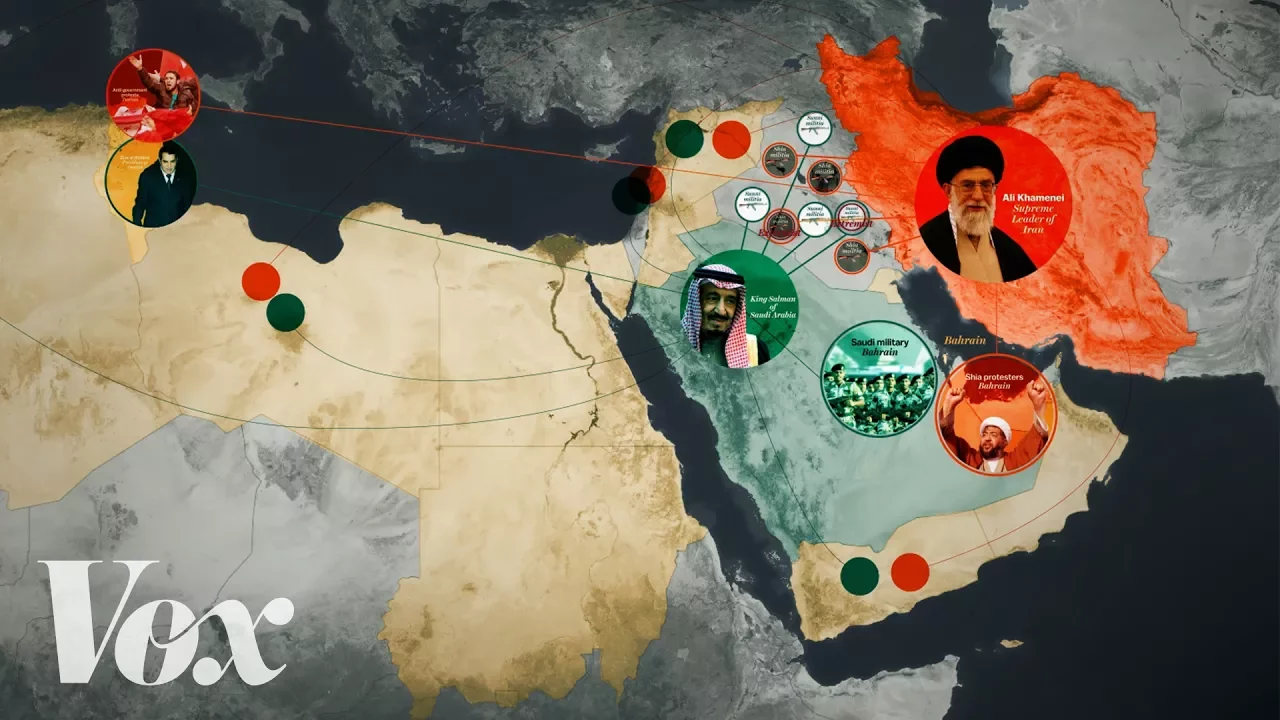
Explaining the Saudi-Iranian Proxy Conflict in the Middle East
@Vox
18.2M views•2017-07-17
Related Study Plans & Knowledge Roadmaps
Structured learning paths in Political Science
political-science
Economic Statecraft: Sanctions & Chokepoints
01Foundations of Geoeconomics and Economic Statecraft
02The Mechanics of Weaponized Interdependence
03International Sanctions: Types, Implementation, and Efficacy
+ 2 more learning modules
12h5 modules
Explore Roadmap
political-science
Central Bank Independence: Politics & Policy
01Foundations of Central Banking and Monetary Policy
02The Time Inconsistency Problem & Inflation Bias
03The Delegation Model and Designing Independence
+ 2 more learning modules
12h5 modules
Explore Roadmap
political-science
Consociationalism: Power-Sharing & Stability
01Democratic Dilemmas in Divided Societies
02Introduction to Consociational Democracy
03The Four Pillars of Consociational Design
+ 2 more learning modules
12h5 modules
Explore Roadmap
political-science
Rebel Governance: Legitimacy, Economy & State
01Foundations of Rebel Governance and Statehood
02Establishing Political Legitimacy and the Rebel Social Contract
03Wartime Economies and Rebel Resource Management
+ 2 more learning modules
14h5 modules
Explore Roadmap