On October 4, 1957, the Soviet Union launched Sputnik 1, the world's first artificial satellite, which successfully opened the space age by transmitting radio signals back to Earth from orbit.
Sputnik 1 Launch: The Dawn of the Space Age (1957)
Added:Deep Dive
The geopolitical context of the Cold War, specifically the post-WWII rivalry and arms race between the United States and the Soviet Union.
Ядерный шантаж Кремля. Путин готовится к атаке? | Кризисы России
10.6K
After World War II, the Soviet Union and the United States engaged in a global arms race and competition for political influence across various regions worldwide. Both superpowers faced multiple instances of coming dangerously close to actual war. The Soviet Union maintained control over Eastern European socialist states through military force and ideological influence for decades. This period of intense competition established the pattern of Cold War confrontation that would define international relations for over 40 years.
Click to watch →

128 Civics Questions 2026 by 9 Groups for US Citizenship Interview (Both learn and Test)
11.6K
During the Cold War, the United States's main rival was Russia (the Soviet Union). This rivalry, spanning from 1947 to 1991, defined global geopolitics through ideological competition, nuclear arms races, proxy wars, and intense diplomatic confrontation between capitalist democracies and communist states.
Click to watch →

Guerra Fria Geografia | Mundo pós-guerra fria | Estados Unidos X União Soviética |
34.5K
The Cold War emerged from ideological competition between the United States and Soviet Union following World War II. The US implemented the Marshall Plan to support Western allies economically, while the Soviet Union extracted resources from satellite states like Romania, Bulgaria, Poland, and Ukraine. This rivalry was characterized by nuclear deterrence, preventing direct military conflict. The space race represented technological competition, with the Soviet Union launching the first human into space while the US achieved the Moon landing. The Chinese Revolution marked a significant turning point, as the US opposed Soviet influence in Asia, leading to proxy conflicts in Korea and Vietnam.
Click to watch →
![Context for the COLD WAR & DECOLONIZATION [AP World History Review—Unit 8 Topic 1]](https://i.ytimg.com/vi_webp/4UjI9r_l6tc/maxresdefault.webp)
Context for the COLD WAR & DECOLONIZATION [AP World History Review—Unit 8 Topic 1]
362.8K
The Cold War describes a state of hostility between states characterized by ideological struggle rather than open warfare. After WWII, the United States and Soviet Union emerged as global superpowers due to their economic and technological advantages. The US achieved post-war prosperity through wartime industrial mobilization and minimal domestic destruction, enabling programs like the Marshall Plan ($13 billion in aid). The Soviet Union recovered through centralized command economy efficiency and pre-war heavy industry investments. Both nations developed nuclear weapons—the US first with atomic bombs on Japan (1945), followed by Soviet testing in 1949—sparking an arms race that defined the Cold War era.
Click to watch →

Sejarah Berdirinya Negara Rusia Part 4 Revolusi Rusia dan Uni Soviet
19.4K
After World War II, the Cold War began as a period of intense rivalry between the Soviet Union and the United States. This period featured an arms race, the Cuban Missile Crisis, and Soviet intervention in various global conflicts. The world came close to nuclear war multiple times.
Click to watch →
Deep Dive
Basic principles of orbital mechanics, such as how a projectile achieves orbit by balancing gravitational pull with forward velocity.

( @danrhodes بمشاركة ) !! سحر الفضاء
451.6K
Objects in orbit around a planet maintain their path through a precise balance between gravitational pull and forward velocity: if an object moves too slowly, it will fall back toward the planet; if it moves too quickly, it will escape into space; only at the exact orbital velocity does the object maintain a stable orbit around the planet.
Click to watch →

Physics 20 Unit C Lesson 21: Orbits and Satellites
247
Orbital motion occurs when gravitational force serves as the centripetal force keeping objects in circular paths around larger masses. All projectiles are in constant freefall, pulled toward Earth's surface. For stable orbit, an object must achieve sufficient tangential speed so that gravitational force only changes velocity direction without decreasing magnitude. The velocity vector remains perpendicular to the gravitational force vector, directing acceleration toward the center of the circle. This establishes the foundational relationship between orbital speed, gravitational attraction, and circular motion.
Click to watch →

Chat BREAKS Vaush into Proving Them WRONG About Gravity via Kerbal Space Program
47.1K
An orbit occurs when an object moves forward at high speed while gravity pulls it toward the planet. By the time gravity would pull the object down to the planet's surface, the object has moved forward far enough to be above the surface again. This continuous forward motion combined with gravitational pull creates the orbital path.
Click to watch →

Gravity for astronauts in orbit | Centripetal force and gravitation | Physics | Khan Academy
286.6K
When projectiles are launched horizontally from Earth, increasing velocity causes them to travel further before falling. At sufficiently high speeds, the projectile travels far enough horizontally that as it falls toward Earth, the planet's curvature means it never reaches the ground. This critical velocity is called orbital velocity. If the object goes even faster, it escapes Earth's gravitational influence entirely. This principle explains how spacecraft achieve orbit - they're not defying gravity but falling around Earth at just the right speed to continuously miss the planet.
Click to watch →
kerbal Space Stream - 19-11-2013 final
630
Orbit is achieved when a spacecraft balances forward velocity with gravitational pull. When a spacecraft moves forward while gravity pulls it downward, it creates a curved path that continuously falls toward Earth but misses the surface, resulting in orbital motion. The spacecraft has a high point (apogee) and low point (perigee) in its orbit, determined by where velocity changes were previously applied. This balance allows the spacecraft to maintain a stable path around Earth without crashing or escaping into space.
Click to watch →
Deep Dive
The historical transition of rocket technology from military artillery (like the German V-2 rocket) to intercontinental ballistic missiles (ICBMs).
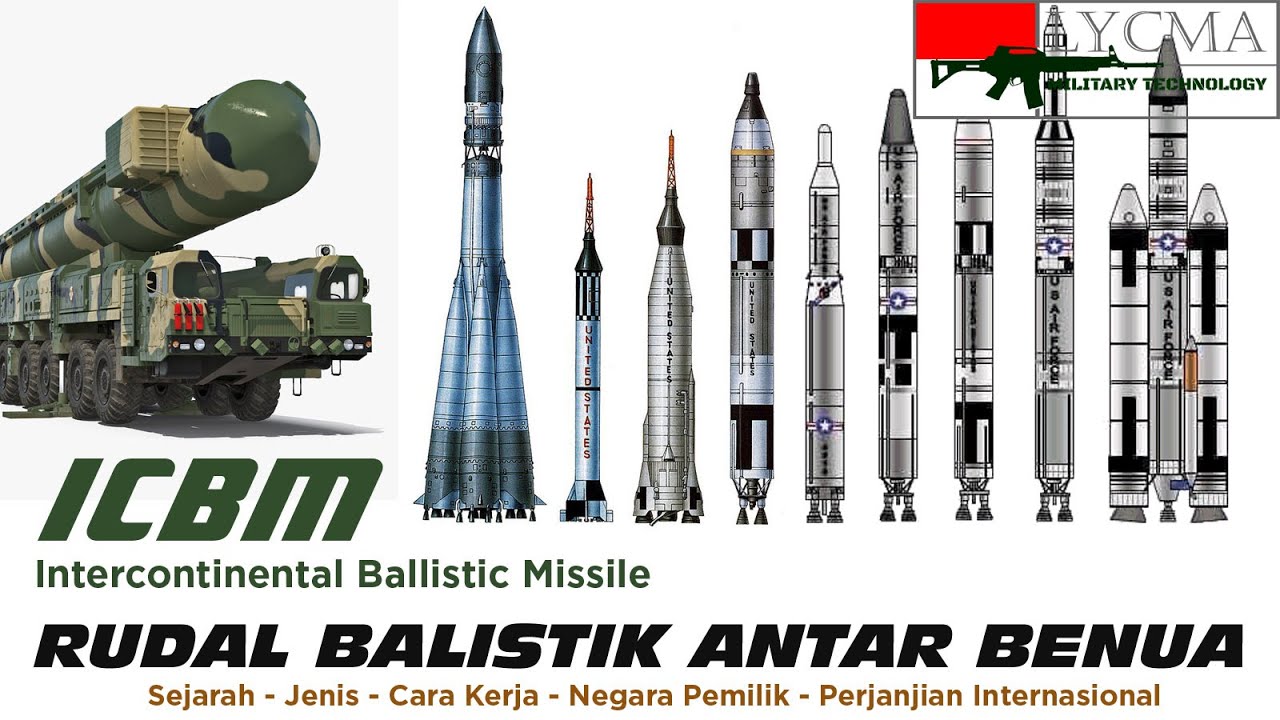
ICBM / Rudal Balistik Antar Benua
2.2M
ICBM technology originated from WWII German V2 rockets (320 km range). After Germany's defeat, the USSR captured V2 facilities and scientists, creating the R1 rocket. The US launched Operation Paperclip, bringing over 1,600 German scientists including von Braun to develop American rocket technology. The USSR achieved the first ICBM success in August 1957 with the R7 rocket (6,000 km range), followed by the US Atlas in November 1958. Both required large launch facilities similar to space rockets, which were impractical and vulnerable.
Click to watch →

Formidable Shield 2019, a defesa antimíssil da OTAN
72K
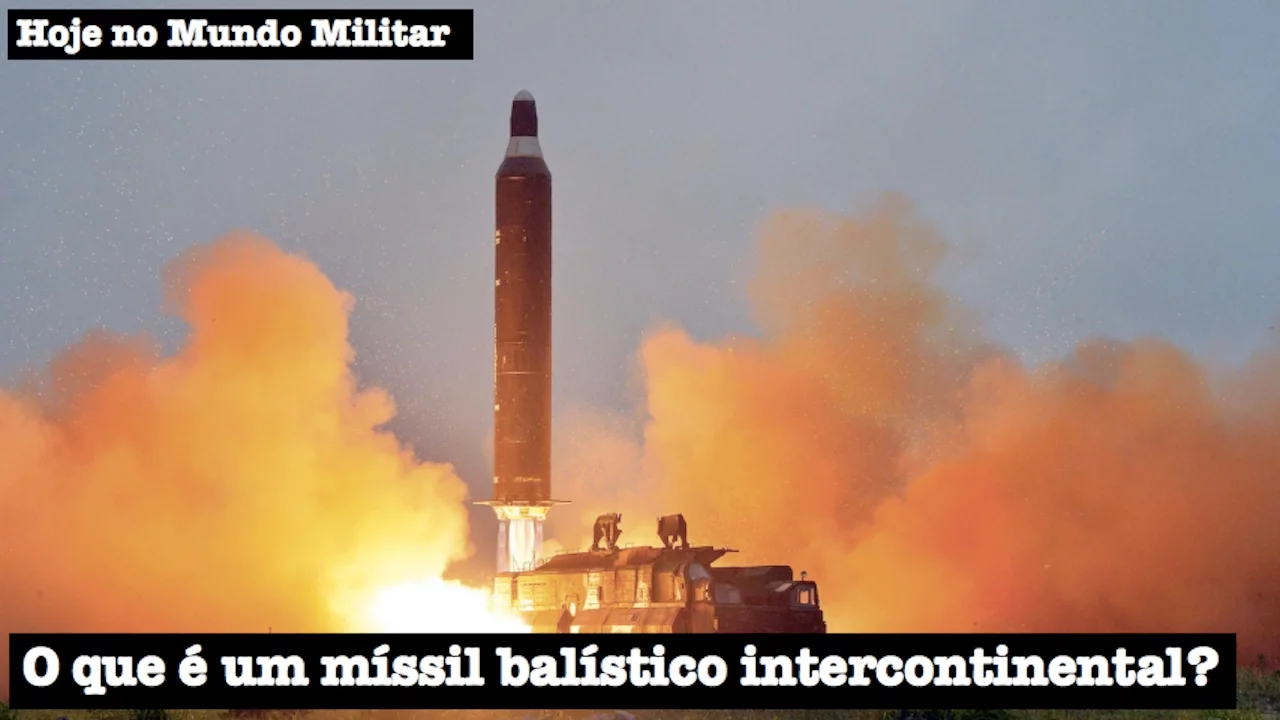
Intercontinental ballistic missiles (ICBMs) emerged in the mid-20th century, evolving from German V2 rocket technology. The R-7 rocket, which launched Sputnik, was a direct evolution of the R-1, which was an exact copy of the V2. Over decades, these missiles evolved to become smaller while simultaneously increasing their range and payload capacity.
Click to watch →
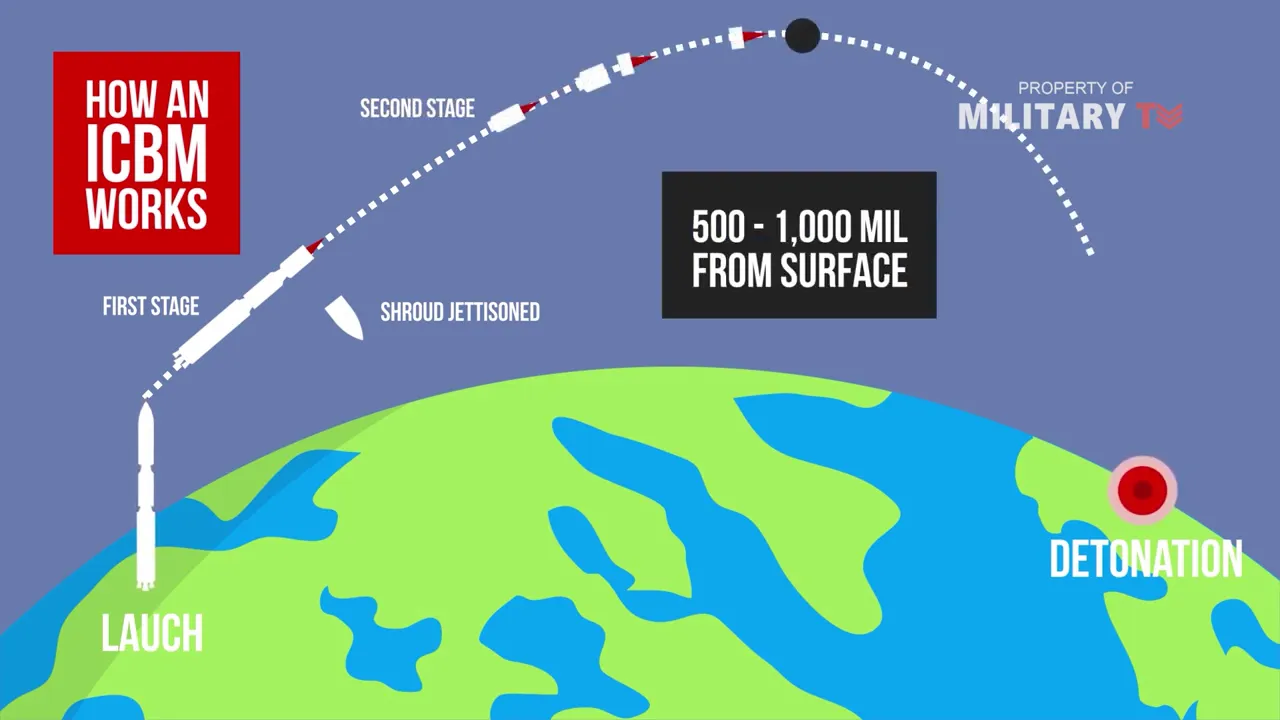
What is an intercontinental ballistic missile ( ICBM )?
273.2K
The first practical design for an ICBM emerged from Nazi Germany's V2 rocket program. The liquid-fueled V2 rocket, designed by Werner von Braun and his team, was widely used at the end of World War II to bomb British and Belgian cities. Under Project America, von Braun's team developed the A9 and A10 ICBM intended for bombing New York City and other American cities. Initially intended to be guided by radio, the guidance system was changed to a piloted craft after the failure of Operation Elster. The second stage of the A9/A10 rocket was tested a few times in January and February 1945, representing early attempts at intercontinental ballistic missile technology.
Click to watch →
O que é um míssil balístico intercontinental?
332.5K
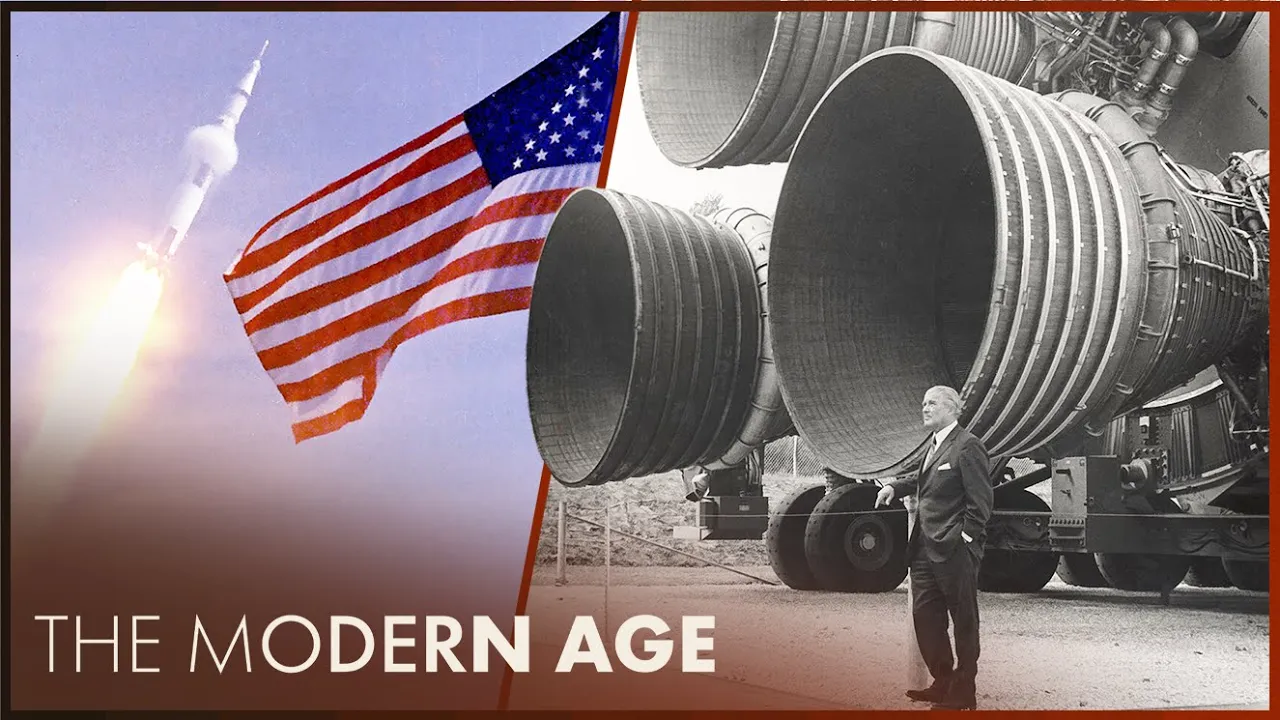
ICBMs evolved from WWII rocket technology, beginning with Werner von Braun's V2 rocket and the A9/A10 Amerika project. After the war, von Braun's team developed the Saturn V for the US. Meanwhile, Soviet engineers led by Sergei Korolev created the R7 rocket, which became the world's first ICBM in 1957 and later launched Sputnik and Yuri Gagarin. The US achieved its first ICBM with the Atlas missile in 1958. The space race accelerated ICBM development, as both superpowers sought to demonstrate technological superiority through both military missiles and space exploration.
Click to watch →

The Invention Of Missiles 🚀 #shorts #facts
144.1K
Missile technology evolved from 1200s Chinese gunpowder rockets strapped to arrows, which remained unused for 700 years, to the V-2 rocket developed by Wernher von Braun in 1942—the first ballistic missile that flew 55 miles into space at 3,500 mph and killed 9,000 civilians in London and Antwerp. After WWII, both the US and USSR raced to capture German rocket scientists, leading to the 1957 Soviet launch of the first intercontinental ballistic missile capable of delivering nuclear warheads anywhere on Earth in 30 minutes, which nearly ended civilization during the 1962 Cuban Missile Crisis and resulted in today's 13,000 nuclear warheads.
Click to watch →
Prerequisite Knowledge
- Concept 01The geopolitical context of the Cold War, specifically the post-WWII rivalry and arms race between the United States and the Soviet Union.
- Concept 02Basic principles of orbital mechanics, such as how a projectile achieves orbit by balancing gravitational pull with forward velocity.
- Concept 03The historical transition of rocket technology from military artillery (like the German V-2 rocket) to intercontinental ballistic missiles (ICBMs).
Subsequent Learning
- Step 01The immediate societal and political reaction in the West, known as the 'Sputnik Crisis,' which led to the creation of NASA and increased funding for science education.
- Step 02The subsequent milestones of the Space Race, including the launch of Laika on Sputnik 2, Yuri Gagarin's orbital flight, and the Apollo Moon landings.
- Step 03The evolution of satellite technology, spanning telecommunications, weather forecasting, global positioning systems (GPS), and scientific observation.
- Step 04The establishment of Space Law and international treaties, such as the Outer Space Treaty of 1967, governing the peaceful use of space.
Sputnik Launch
Deployment Phase
First Signal
Sputnik Launch
0:08Playing Section
- 1
Sputnik launched on October 4, 1957, while US plans were unfinished.
- 2
Soviet satellite beat America in the race to orbit.
- 3
Signal reached Earth, marking the official start of space age.
The Geopolitical Illusion and Militarization of the Space Age
While the launch of Sputnik 1 is traditionally celebrated as a peaceful, monumental milestone marking the 'Dawn of the Space Age,' a critical historical perspective views it primarily as a catalyst for Cold War militarization and political opportunism. Revisionist historians argue that the resulting 'Sputnik Crisis'—the panic in the West over perceived Soviet technological dominance—was heavily exaggerated by U.S. politicians and military figures. This alarmism was leveraged to justify massive increases in defense spending, the expansion of the military-industrial complex, and the rapid development of Intercontinental Ballistic Missiles (ICBMs). From this viewpoint, the early Space Race was less about scientific discovery and more of a propaganda proxy for the nuclear arms race, establishing a precedent of utilizing space exploration to cloak the militarization and surveillance of Earth's orbit.
Deep Dive
The immediate societal and political reaction in the West, known as the 'Sputnik Crisis,' which led to the creation of NASA and increased funding for science education.

Sputnik crisis
123
The Sputnik crisis catalyzed fundamental institutional transformations in American science and defense policy. By February 1958, the Advanced Research Projects Agency (ARPA/DARPA) was established to coordinate high-level R&D projects. On July 29, 1958, President Eisenhower signed the National Aeronautics and Space Act, creating NASA. The National Defense Education Act poured billions into education, increasing NSF funding from $34 million to nearly $500 million by 1968. NASA provided almost 10% of federal academic research funds by the mid-1960s. These institutions represented a systematic reorientation of American priorities toward technological competition with the Soviet Union, establishing frameworks that would define American scientific and space policy for decades.
Click to watch →

80. Government Funding of Science with Terence Kealey / The Bitcoin Standard with Saifedean Ammous
1.6K
The Soviet launch of Sputnik in 1957 created a crisis of terror in America, leading to massive government funding of science. Before 1957, American government funding for science was minimal and largely nominal. The crisis prompted the creation of DARPA, NASA, and the Defense Education Act in 1958, pouring government funds into science. This marked a fundamental shift from the laissez-faire approach that had enabled the Industrial Revolution to a system of government-directed scientific research.
Click to watch →

TODA La Guerra Fría Explicada (USA vs URSS) | Historia Aburrida Para Dormir
98.8K
In the US, Sputnik's launch caused national panic known as the Sputnik Shock. There was fear that if Soviets could launch satellites, they could also launch intercontinental ballistic missiles with nuclear warheads from the USSR to American cities. The belief that US science and technology were insurmountable was shattered overnight. This panic led to radical policy changes: Eisenhower authorized massive investment in science and technology, creating NASA (National Aeronautics and Space Administration) with the explicit goal of surpassing the Soviets.
Click to watch →
Saturn V: The Most Powerful Rocket Of Its Time | The Saturn V Story
597.9K
The Soviet launch of Sputnik 1 on October 4, 1957, shocked the American public and government, revealing that a communist nation had achieved the first artificial satellite orbit. This crisis prompted rapid American response, including the formation of NASA in 1958 to consolidate aerospace efforts. The Vanguard rocket failure in December 1957 further intensified pressure, leading the Army with von Braun to launch America's first satellite within 60 days. This sequence of events—from Soviet achievement to American crisis response to institutional creation—established the framework for the Apollo program and demonstrated how national prestige drove technological mobilization during the Cold War.
Click to watch →

Sputnik crisis
544
The Sputnik crisis catalyzed an escalating Space Race that culminated in America's lunar landing. Kennedy, campaigning on closing the 'missile gap,' deployed 1,000 Minuteman missiles and set the Moon landing goal, arguing that controlling space meant controlling Earth. Despite privately viewing the race as wasteful, Kennedy recognized its political value for a frightened electorate. The crisis transformed American science policy: NASA provided nearly 10% of federal academic research funding by the mid-1960s, and the NSF budget grew from $34 million in 1958 to nearly $500 million by 1968. The National Defense Education Act poured billions into education, increasing college funding six-fold by 1960. This educational revolution established frameworks prioritizing STEM fields for national security, creating lasting legacies in American education and research infrastructure that continue influencing policy debates about technological competitiveness and national security investment.
Click to watch →
Deep Dive
The subsequent milestones of the Space Race, including the launch of Laika on Sputnik 2, Yuri Gagarin's orbital flight, and the Apollo Moon landings.

COMO É A VIDA DE ASTRONAUTA
173.8K
The Soviet Union achieved remarkable milestones in the early space race: launching Sputnik (the first artificial satellite) in October 1957, sending Laika (the first living creature) to space in November 1957, and finally sending Yuri Gagarin as the first human to space in 1961. Sputnik transmitted radio signals and orbited for 9 months. Laika died from cold and stress due to system failures but became a national hero. Gagarin was selected based on three criteria: excellent academic performance, humble peasant background, and short height (1.6m) to fit in the cramped Vostok capsule. The capsule was so small Gagarin could barely move and had to remain seated throughout the mission.
Click to watch →

Vesmír, Pristánie na Mesiaci a Tragické Udalosti
260.3K
The space race began after World War II when both the US and USSR recruited German rocket scientists. On October 4, 1957, the Soviet Union launched Sputnik 1, the first artificial satellite. On November 3, 1957, Sputnik 2 carried Laika the dog, who did not survive. In 1958, the US launched Explorer 1, discovering the Van Allen radiation belts. In 1960, Sputnik 5 carried two dogs (Belka and Strelka) who survived. In 1961, Ham the chimpanzee became the first primate in space. On April 12, 1961, Yuri Gagarin became the first human in space aboard Vostok 1, completing one orbit. Alexei Leonov performed the first spacewalk lasting 12 minutes. These milestones marked humanity's first steps into space exploration.
Click to watch →

สารคดี Space Race | จากนาซีสู่นาซ่ากับภารกิจพิชิตดวงจันทร์ (1946-1969)
370.5K
The Space Race was a Cold War competition between the United States and the Soviet Union to achieve space dominance, beginning with the Nazi V2 rocket development under Wernher von Braun and the Soviet Sputnik 1 launch in 1957 under Sergei Korolev, progressing through animal and human spaceflight milestones including Laika, Yuri Gagarin, and Alan Shepard, and culminating in the Apollo 11 moon landing in 1969, which demonstrated how international competition can drive unprecedented technological advancement and unlock humanity's potential for space exploration.
Click to watch →

Космическая гонка на пальцах | Мудреныч | СССР против США
3.7M
The launch of Sputnik 1 in 1957 sparked the Space Race between the USSR and US. The USSR achieved firsts: first satellite (Sputnik 1), first living creature in orbit (Laika, 1957), first human in space (Yuri Gagarin, 1961), first woman in space (Valentina Tereshkova, 1963), first spacewalk (Alexei Leonov, 1965), and first soft lunar landing (Luna 9, 1966). The US responded with Explorer 1 (1958), Apollo 8 (1968), and Apollo 11 (1969). This competition drove rapid technological advancement in rocketry, space stations, and planetary exploration.
Click to watch →

Náci rakétákból a Holdra: az űrverseny legsötétebb titkai
1.6K
The space race accelerated with sequential firsts. One month after Sputnik 1, Sputnik 2 launched carrying Laika, a Moscow street dog, demonstrating the ability to sustain life in space. Despite revolutionary technology including temperature control and life support systems, Laika died when the capsule overheated. In response, America launched Ham the chimpanzee aboard Mercury Redstone 2, testing whether animals could perform tasks under extreme acceleration. On April 12, 1961, Yuri Gagarin launched aboard Vostok 1, becoming the first human in space. His spacecraft was fully automated because Soviet leadership didn't trust humans to remain emotionally stable. Gagarin completed one orbit in 108 minutes, declaring 'Poyekhali!' (Let's go!). America responded with Alan Shepard's suborbital flight on May 5, 1961, followed by John Glenn's orbital flight on February 20, 1962, restoring American confidence.
Click to watch →
Deep Dive
The evolution of satellite technology, spanning telecommunications, weather forecasting, global positioning systems (GPS), and scientific observation.

La vida después del Pájaro Madrugador - Dr. Roberto Murphy
405
Satellite technology has evolved from Sputnik 1 (1957) to modern global infrastructure. Sputnik demonstrated satellites could orbit Earth. Arthur Clarke's 1945 article proposed geosynchronous orbits for global communications. INTELSAT I (Bird) launched in 1965 as the first commercial satellite, enabling real-time global communications. The 'Our World' broadcast in 1967 demonstrated the first global satellite transmission. Modern applications include satellite communications (telephone, television, internet), navigation systems (GPS, GLONASS, Galileo, BeiDou, IRNSS), nanosatellites (10cm cubes, $40,000, under 8 months development), meteorology (hurricane tracking, climate monitoring), and space telescopes (Hubble, James Webb). This technology has transformed human connectivity, enabling global commerce, navigation, weather forecasting, and scientific discovery.
Click to watch →

Modern Marvels S03E05 Satellites
1K
Satellites have fundamentally transformed human civilization since the mid-1960s, serving as crucial links in weather forecasting, global communication, military reconnaissance, and navigation. Arthur C. Clarke first envisioned these applications in 1945, describing how satellites could be placed in geostationary orbit to relay signals. The Space Race began in 1957 when the Soviet Union launched Sputnik, a 184-pound satellite containing a radio beacon and thermometer. This simple achievement shocked America, raising fears about Soviet nuclear capabilities. Robert Goddard launched the first liquid-propelled rocket in 1926, pioneering spaceflight technology. Wernher von Braun and 120 German scientists fled Nazi Germany to America, bringing V2 rocket expertise. Explorer 1 successfully entered orbit in 1958, launching the Explorer program. NASA was formed in 1958 with dual purposes of peaceful exploration and Cold War competition. In 1961, Yuri Gagarin became the first human in space, followed by John Glenn in 1962. Kennedy challenged America to land a man on the moon, and on July 20, 1969, Apollo 11 succeeded. Reconnaissance satellites became critical as superpowers built nuclear arsenals. Sputnik 2 carried Laika the dog in 1957, proving life could survive in space. The Discoverer program developed spy satellite technology. Early satellites operated in polar orbits between 100-400 miles, flying over poles to photograph different locations as Earth rotated. However, film recovery took about 2 weeks, proving too slow for crisis situations. The U-2 spy plane shootdowns in 1960 and 1962 demonstrated aircraft vulnerability. The National Reconnaissance Office was established in 1960, and the Keyhole program reduced delay times to 3-4 days. Two world events—Soviet invasion of Czechoslovakia in 1968 and Yom Kippur War in 1973—proved several-day delays were unacceptable. Keyhole Model 11 reduced lag time from days to minutes by transmitting digital images directly to Earth. Weather satellites evolved from military reconnaissance projects—TIROS-1 in 1960 produced cloud images that proved invaluable for storm warnings. TIROS-3 identified Hurricane Esther two days before other observations. Modern weather satellites operate in low Earth polar orbits for detailed atmospheric data and geostationary orbits for global cloud coverage. They provide high-resolution 3D maps, precise weather system data, and search-and-rescue capabilities for boats and aircraft. Earth Resources orbiters like Landsat assess crop yields, identify fault lines, and manage natural resources. GPS uses multiple satellites to fix positions within a few yards, enabling navigation for boats and cars. Communication satellites transformed global connectivity. Echo-1 in 1960 was a 100-foot aluminized balloon that passively reflected radio signals. Telstar in 1962 actively retransmitted signals but required tracking dishes. SYNCOM in 1963 was the first geostationary communication satellite, enabling Kennedy to call a ship off Africa. INTELSAT, formed in 1965, linked nations worldwide with over 20 orbiters today. Modern satellites use graphite epoxy—half aluminum's weight but ten times stronger—with solar panels for power. They relay television signals globally, enabling live broadcasts like the 1964 Olympics from Japan. Today's satellites provide 400 channels and video conferencing capabilities, transforming our world into a global village where real-time worldwide communication is standard.
Click to watch →

BRAND NEW | Theremin | The Fixies Season 5
9.3K
There are thousands of satellites in orbit around Earth. Thanks to them, we get weather data, GPS navigation, internet access, and television broadcasts. Satellite phones can connect to telephone networks in locations where mobile phones don't work. Scientists put telescopes on satellites to study space, whether artificial or natural. The moon is thought of as Earth's natural satellite. Satellites have revolutionized communication, navigation, and scientific observation.
Click to watch →

Modern Marvels S03E05 Satellites
337
Satellites have transformed human civilization since the 1960s, serving as crucial links in weather forecasting, global communication, military reconnaissance, and navigation. Arthur C. Clarke first envisioned modern satellite applications in 1945, describing how satellites could be placed in geostationary orbit to relay signals. Satellites must be propelled at approximately 17,500 miles per hour to achieve orbit, where centrifugal force counteracts gravity. Robert Goddard launched the first liquid-propellant rocket in 1926, and Nazi German scientists including Verner von Braun fled to the US after World War II. Sputnik's launch in 1957 sparked the space race, leading to NASA's formation in 1958. The race culminated in America's moon landing in 1969. Reconnaissance satellites evolved from the Discoverer program to real-time Keyhole satellites, while weather satellites like TIROS-1 revolutionized storm warnings. Communication satellites progressed from passive balloons like Echo-1 to geostationary systems like Syncom-1, enabling global telephone and television transmission.
Click to watch →

3° Secundaria » Tecnología » La innovación y el cambio técnico
1.5K
Satellite technology has evolved from the space race to modern telecommunications. The space race began October 4, 1957 with Sputnik, the first artificial satellite, followed by Explorer 1 (first scientific satellite) and Echo (first communications satellite). Satmex 5 launched December 1998 with more power than predecessors Morelos and Solidaridad, enabling broadband internet, rural telephone service, video distribution, and data transmission. Technical changes include solar panels for power and evolving functions from early space race to current mobile phone communication, television transmission, and internet services. The Telesecundaria educational program uses satellite communication: signals generated in Mexico City are sent to Solidaridad 2 and Satmex 5, distributed via DUSAT network across America. Innovations address growing Latin American demand covering over 90% of population across 45+ territories.
Click to watch →
Deep Dive
The establishment of Space Law and international treaties, such as the Outer Space Treaty of 1967, governing the peaceful use of space.

Space Law | Deepika Jeyakodi, Space Lawyer | SSERD Space Talk
5.7K
Space law emerged from the need to regulate international competition in space following World War II. The first writings date to 1910, but modern space law began developing around WWII when space technologies advanced in Germany, USSR, and USA. The launch of Sputnik in 1957 dramatically accelerated the need for international rules, leading to the 1958 UN resolution establishing that space activities should be peaceful and benefit all humankind. The Committee on Peaceful Use of Outer Space was established in 1958 with 18 members, becoming permanent in 1959 with 24 members, and now has 95 members. International space law operates through a hierarchical structure: general international law, specific space treaties, other international law fields, and regional/national laws. Beyond binding 'hard law,' soft law provides guidelines and standards. The Outer Space Treaty of 1967, ratified by approximately 110 countries, establishes fundamental principles: all countries are free to explore space, activities should benefit all humankind, celestial bodies must be used for peaceful purposes, and international cooperation should be promoted.
Click to watch →

What is Space Law?
171
Space law consists of five major international treaties developed between the 1960s and 1970s to govern human activities in outer space. The Outer Space Treaty (1967) establishes that space is open to all states, belongs to all humanity, can only be used for peaceful purposes, prohibits weapons of mass destruction, and holds governments accountable for space activities. The Rescue Agreement extends maritime rescue obligations to space, requiring anyone near a distressing spacecraft to assist. The Liability Convention (1972) holds launching states responsible for damages caused by their spacecraft. The Registration Convention (1975) requires all space objects to be internationally registered for transparency. The Moon Agreement (1979) addresses lunar resource use but lacks ratification by major spacefaring nations.
Click to watch →

Space law
375
Space law encompasses national and international law governing activities in outer space, beginning at approximately 100 km above sea level. The field originated with Sputnik 1's launch in 1957. In 1959, the UN created COPUOS with Scientific and Technical and Legal subcommittees. Five major treaties were negotiated: the 1967 Outer Space Treaty (most widely adopted with 100 parties), the 1968 Rescue Agreement, the 1972 Liability Convention, the 1975 Registration Convention, and the 1979 Moon Treaty (only 13 parties, considered failed). The Moon Treaty was intended to supplement the Outer Space Treaty regarding resource appropriation but failed due to limited acceptance.
Click to watch →

Lawfare Daily: Chris Johnson on Space Law (or Lack Thereof)
127
The 1967 Outer Space Treaty, negotiated at the United Nations Committee on the Peaceful Uses of Outer Space and led by the United States government, serves as the foundational legal instrument governing activities in outer space. Negotiated during the Cold War Space Race between the U.S. and Soviet Union, it has been ratified by over 110 states parties. A unique principle in space law is that states bear international responsibility for all national space activities, including those conducted by private actors. Unlike other areas of international law, states are automatically internationally answerable for any space activities they authorize through licensing and permission.
Click to watch →

UP LEKHPAL SCIENCE AND TECHNOLOGY TOPIC-SPACE TECHNOLOGY Upsssc Lekhpal विज्ञान एवं प्रौद्योगिकी
6.5K
The Outer Space Treaty (January 27, 1967) establishes foundational international space law: (1) Outer space must be used for peaceful purposes, (2) No nation can claim sovereignty over space or celestial bodies, (3) Astronauts represent all humanity, (4) All nations have freedom to explore space. The treaty prohibits nuclear weapons in space and applies to all celestial bodies including the Moon. It was signed by the Soviet Union, UK, and USA as depositary governments.
Click to watch →
Sputnik Launch
Deployment Phase
First Signal
Sputnik Launch
0:08- 1
Sputnik launched on October 4, 1957, while US plans were unfinished.
- 2
Soviet satellite beat America in the race to orbit.
- 3
Signal reached Earth, marking the official start of space age.
The Geopolitical Illusion and Militarization of the Space Age
While the launch of Sputnik 1 is traditionally celebrated as a peaceful, monumental milestone marking the 'Dawn of the Space Age,' a critical historical perspective views it primarily as a catalyst for Cold War militarization and political opportunism. Revisionist historians argue that the resulting 'Sputnik Crisis'—the panic in the West over perceived Soviet technological dominance—was heavily exaggerated by U.S. politicians and military figures. This alarmism was leveraged to justify massive increases in defense spending, the expansion of the military-industrial complex, and the rapid development of Intercontinental Ballistic Missiles (ICBMs). From this viewpoint, the early Space Race was less about scientific discovery and more of a propaganda proxy for the nuclear arms race, establishing a precedent of utilizing space exploration to cloak the militarization and surveillance of Earth's orbit.
The geopolitical context of the Cold War, specifically the post-WWII rivalry and arms race between the United States and the Soviet Union.
Basic principles of orbital mechanics, such as how a projectile achieves orbit by balancing gravitational pull with forward velocity.
The historical transition of rocket technology from military artillery (like the German V-2 rocket) to intercontinental ballistic missiles (ICBMs).
The immediate societal and political reaction in the West, known as the 'Sputnik Crisis,' which led to the creation of NASA and increased funding for science education.
The subsequent milestones of the Space Race, including the launch of Laika on Sputnik 2, Yuri Gagarin's orbital flight, and the Apollo Moon landings.
The evolution of satellite technology, spanning telecommunications, weather forecasting, global positioning systems (GPS), and scientific observation.
The establishment of Space Law and international treaties, such as the Outer Space Treaty of 1967, governing the peaceful use of space.
441.6K views2.3Klikes1:27@WidmannJanOriginal Release: 2008-06-21
[Music] On October the 4th, 1957, while the Americans were still finalizing their plans, Sputnik was launched.
[Music] Then its casing opened, the springs snapped, and the nose cone was pushed out of the way. A ball with four antenna emerged to go it alone in the darkness of space, and a radio began to send a signal back to Earth. Humanity had entered the space age. Heat. Heat.
[Music]
Up Next

11:34
Operation Paperclip: Nazi Scientists and the US Cold War Legacy
@FORGOTTENHISTORYCHANNEL
99.6K views•2022-09-14

33:02
The Great Schism of 1054: Causes and Consequences
@SacredCathedrals
113.5K views•2026-02-19

91:57
The Geopolitics of the Ukraine War and the Rise of Global Autocracy
@JordanHarbingerShow
468K views•2025-04-19

17:05
Understanding the Cold War: Superpower Conflicts and the Road to Détente
@OverSimplified
46.1M views•2019-01-24
Related Study Plans & Knowledge Roadmaps
Structured learning paths in History
history
Byzantine Iconoclasm: Theology, Art & Politics
01Foundations of Byzantium and Early Christian Images
02The First Iconoclasm: Leo III and the Crisis of Images
03Empress Irene, Nicaea II, and the Second Iconoclasm
+ 2 more learning modules
9h5 modules
Explore Roadmap
history
Iranian Revolution (Causes, Events & Legacy)
01The Pahlavi Dynasty and the Roots of Discontent
02The Spark of Rebellion and the Rise of Khomeini
031979: The Fall of the Shah and the Climax of the Revolution
+ 2 more learning modules
8h5 modules
Explore Roadmap
history
Mali Empire: Mansa Musa, Trade & Timbuktu
01Foundations of the Mali Empire
02The Trans-Saharan Gold and Salt Trade
03The Reign and Pilgrimage of Mansa Musa
+ 1 more learning modules
6h4 modules
Explore Roadmap
history
1947 Partition: Politics, Borders & Legacies
01Foundations of British India and the Divide
02The Political Negotiations and the Mountbatten Plan
03Drawing the Boundary: The Radcliffe Line
+ 2 more learning modules
8h5 modules
Explore Roadmap