








![[Bayesian inference for a proportion] Updating the Beta prior part 2](https://i.ytimg.com/vi/LikF1EAzNgs/maxresdefault.jpg)






![[Bayesian hierarchical modeling] Video discussion part 1](https://i.ytimg.com/vi/1XIHdjtOsKw/maxresdefault.jpg)

![Data Analytics [LIVE] - Priors pt. 1](https://i.ytimg.com/vi/kW7oRLai1Kg/maxresdefault.jpg)




A conjugate prior is a prior distribution that, when combined with a specific likelihood function, produces a posterior distribution of the same functional form, enabling analytical solutions without complex computations; for example, a normal prior with normal likelihood yields a normal posterior, while a beta prior with Bernoulli likelihood yields a beta posterior, making Bayesian updating straightforward through parameter updates rather than requiring numerical methods.
Conjugate Priors Explained: Definitions, Examples & Why They Matter
Added:A solid understanding of Bayes' Theorem and the core components of Bayesian inference (prior, likelihood, and posterior).
Familiarity with common probability distributions, particularly the Normal, Binomial, and Beta distributions, including their probability density functions (PDFs).
Understanding the concept of conditional probability and joint probability distributions.
Basic skills in algebraic manipulation and integration, which are typically used to calculate normalizing constants (marginal likelihoods) in probability.
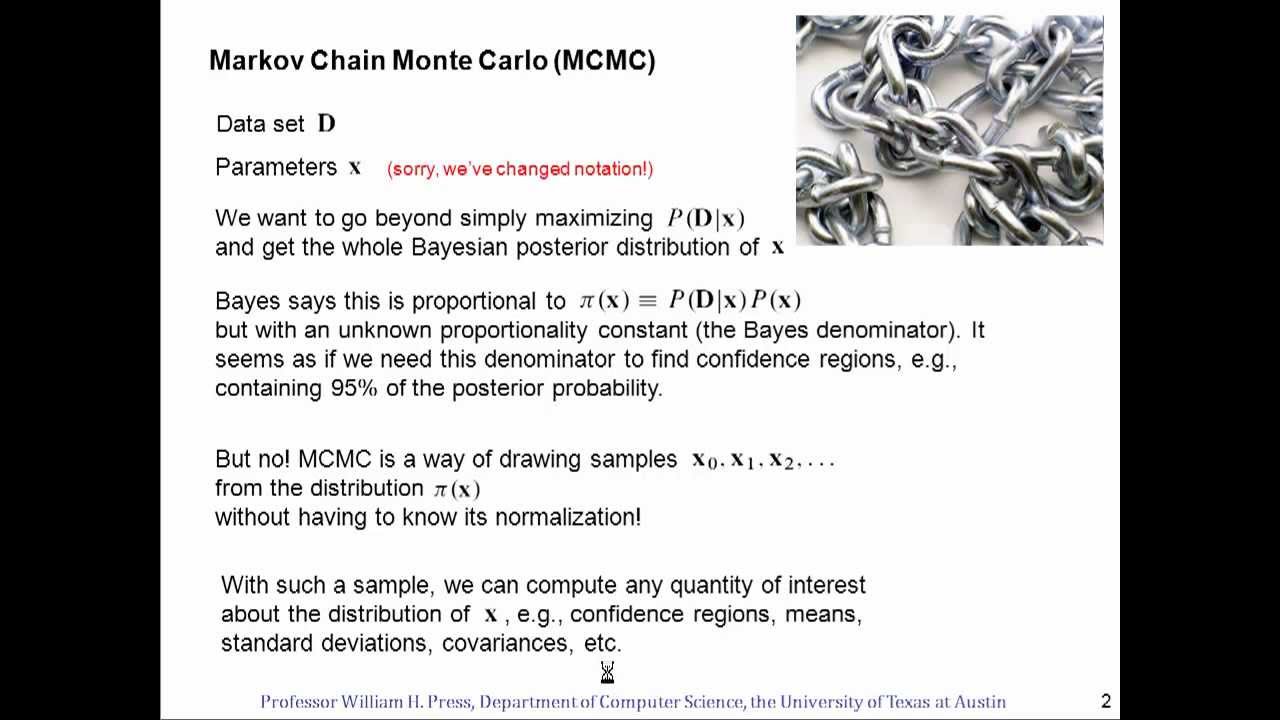
Markov Chain Monte Carlo (MCMC) methods and Gibbs Sampling, which are essential when conjugate priors cannot be used and numerical approximation is required.
Hierarchical Bayesian modeling, where hyperparameters themselves are assigned prior distributions (hyperpriors).
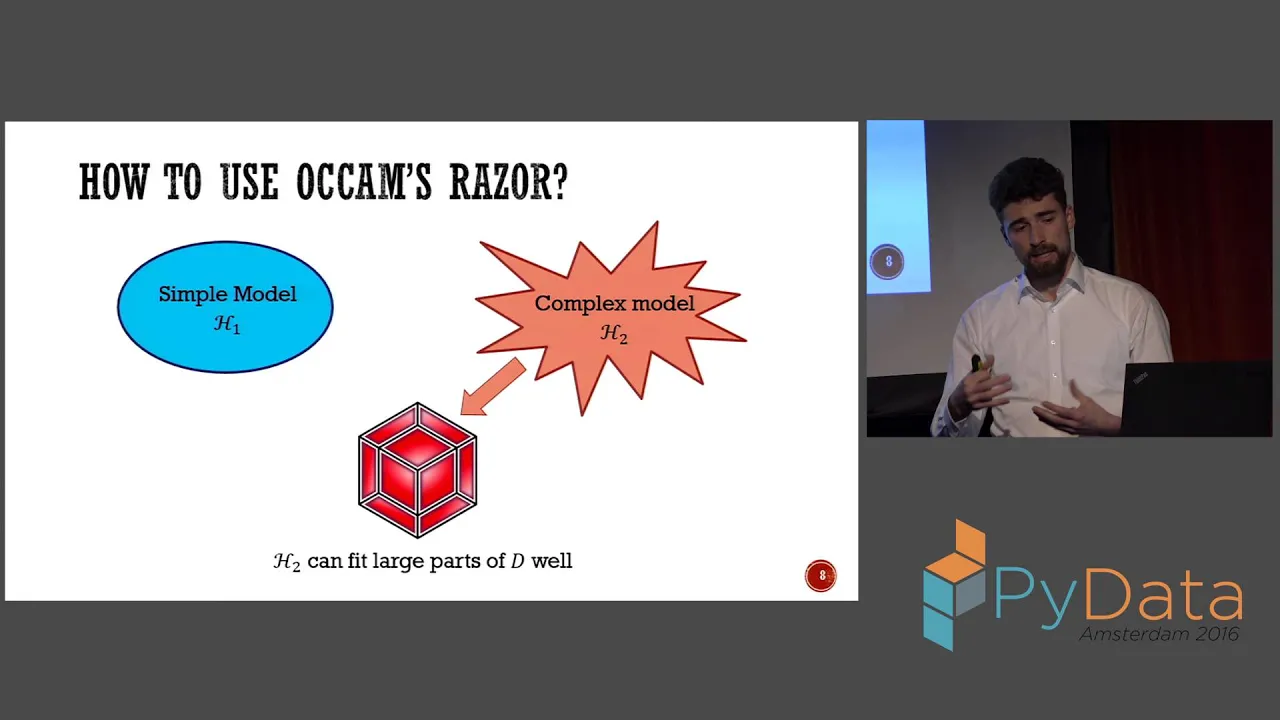
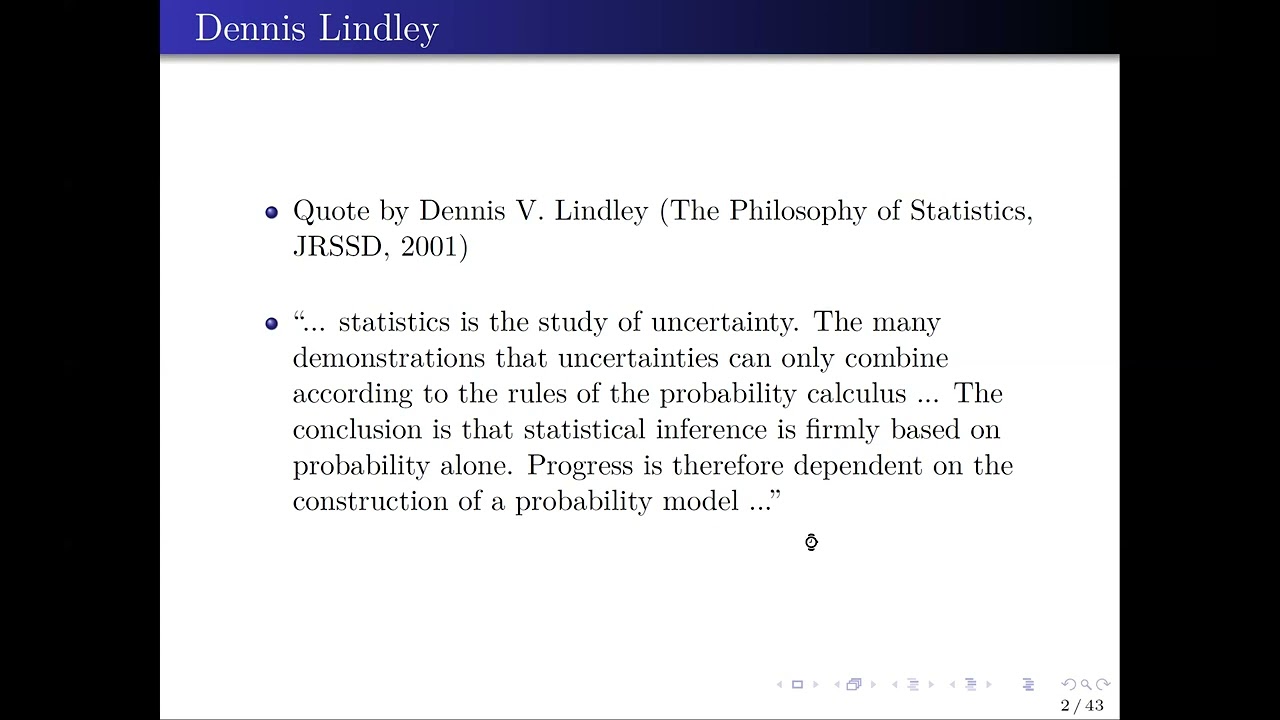
The study of non-informative, objective, and reference priors, such as Jeffreys prior, and their philosophical implications in Bayesian analysis.
Practical applications in machine learning, such as Thompson Sampling in reinforcement learning or Latent Dirichlet Allocation (LDA) in natural language processing.
46.5K views369likes5:30Original Release: 2014-08-12
in this video I'm gonna provide an introduction to the concept of a conjugate prior in doing so we're first of all going to define what is meant by a conjugate prior we're also going to talk about one or two examples of conjugate priors and we're also going to explain the sort of rationale for why you might use conjugate priors in the first place okay so first of all what do we actually mean by a conjugate prior how do we define it well the idea here is that if we have a given likelihood function so let's say our likelihood which remember is this part of the numerator so our likelihood is the probability that our data given our choice of theta and given our model choice if we were to assume that our likelihood function here was normal so we're talking about a normal distribution there then the idea is that what we can do is we can choose our prior so remember that this here is the prior and if we choose the prior the probability of theta given our particular model choice to also be normal not necessarily having the same mean or anything like that but just having a normal distribution form then it turns out if we pick this particular distribution for the prior then the posterior which remember is the goal of Bayesian inference then it happens to be the case after you do quite a bit of mathematics that the posterior in this case also also turns out to be normal and note that the posterior here being normal and being of the same form as the prior isn't necessarily the case if I was to choose a different prior distribution in this particular case if I was to choose for example a gamma distribution here for the prior four in this case theta then the posterior would not have this sort of nice neat form and it wouldn't simply just be a gamma distribution or a normal distribution it would be potentially some rather horrible distribution which wouldn't be as nice to work with so the idea is that what we can do is we can choose our or if we choose our prior distribution in a particularly intelligent way such that is what we call conjugate to the in case they're likely hidden in all cases their likelihood I should say then it turns out that in that case of choosing a conjugate prior the posterior has exactly the same form as the prior okay so we've already spoken about one example of a prior which is conjugates to the normal distribution and it turns out to be the case that the normal distribution is conjugate to the normal but they don't necessarily have to be the same an example of this being the case whereby if we have a likelihood which is of the sort of Bernoulli form so it's sort of theta to the power Z times 1 minus theta to the power n minus said here so we might be thinking about flipping a coin for example then the idea here is that if we choose a prior which turns out to be of the form theta to the power a minus 1 times 1 minus theta to the power B minus 1 which actually turns out is a sort of beta distribution then it turns out that you can workout after quite a lot of mathematics that the posterior distribution is also a beta distribution with the parameters of this new beta distribution depending on the original Z a and B and in this case also n so in this case the beta distribution is conjugate to a Bernoulli prior which means that we get a beta posterior distribution out in the end ok so we've gone through a couple of examples now I want to explain why would we actually use conjugate prize because it shouldn't just simply be an arbitrary choice of prior to make the maths easier there should also be some sort of reason behind the method so first of all we should say that by choosing a prior which is necessarily conjugate to the likelihood this is sometimes an often case unrealistic of the situation so that's the potential cost for choosing a conjugate prior what are the benefits well the benefits are that we don't necessarily need to do any maths because the idea is that if we choose a conjugate prior to a specific likelihood function then we can just work out the parameters of the posterior by simply using easy sort of formula to update the parameters of the posterior and this has already been worked out for us so you can just look it up in sort of a table and work out the parameters that way rather than having to do any sort of matter on your own another benefit to choosing a conjugate prior is that we can actually generate the posterior exactly and this is really beneficial because we don't actually need to use any sort of numeric or computational method to sample from that posterior distribution we can just arrive it's analytic form so that's definitely a benefit and I should say that even though we have said that it is sometimes unrealistic it can also provide a sort of window of insight into the more sort of realistic choices of prior so that's Dennis definitely a benefit of using a conjugate prior even though it might not necessarily be completely realistic it still provides a bit of insight into what might happen if we made the prior a little bit more realistic
Up Next

71:13
Bayesian Statistics Crash Course: Key Concepts & Distributions
@svcognac3163
944 views•2022-06-10

4:43
Elliptic Curve Cryptography Explained: ECC, ECDSA, ECDH
@PracticalNetworking
28.5K views•2024-10-21

5:11
Beta Conjugate Prior to Binomial and Bernoulli Likelihoods
@oxeduc4209
49.7K views•2014-08-12

6:00
The Mathematical Impossibility of Accurate World Maps
@Vox
23.3M views•2016-12-02
Related Study Plans & Knowledge Roadmaps
Structured learning paths in Mathematics
mathematics
Tensor Calculus: Vectors to Riemann Curvature
01Mathematical Foundations: Linear Algebra & Calculus
02Covectors, Dual Spaces, and Tensor Basics
03The Metric Tensor and Index Gymnastics
+ 2 more learning modules
40h5 modules
Explore Roadmap
mathematics
Gödel's Incompleteness: Logic, Proofs & Limits
01Introduction to Formal Systems & Hilbert's Dream
02Set Theory, Cardinality, and Cantor's Diagonal Argument
03Arithmetization and Gödel Numbering
+ 2 more learning modules
14h5 modules
Explore Roadmap
mathematics
Galois Theory: Fields, Groups & Solvability
01Foundations of Abstract Algebra: Groups & Fields
02Polynomials & Field Extensions
03Splitting Fields & Symmetries
+ 2 more learning modules
24h5 modules
Explore Roadmap
mathematics
Non-Euclidean Geometry: Models & Geodesics
01Euclid's Fifth Postulate and the Birth of New Geometries
02Hyperbolic Space and the Poincaré Disk Model
03Geodesics: Defining Straight Lines in Curved Spaces
+ 2 more learning modules
15h5 modules
Explore Roadmap