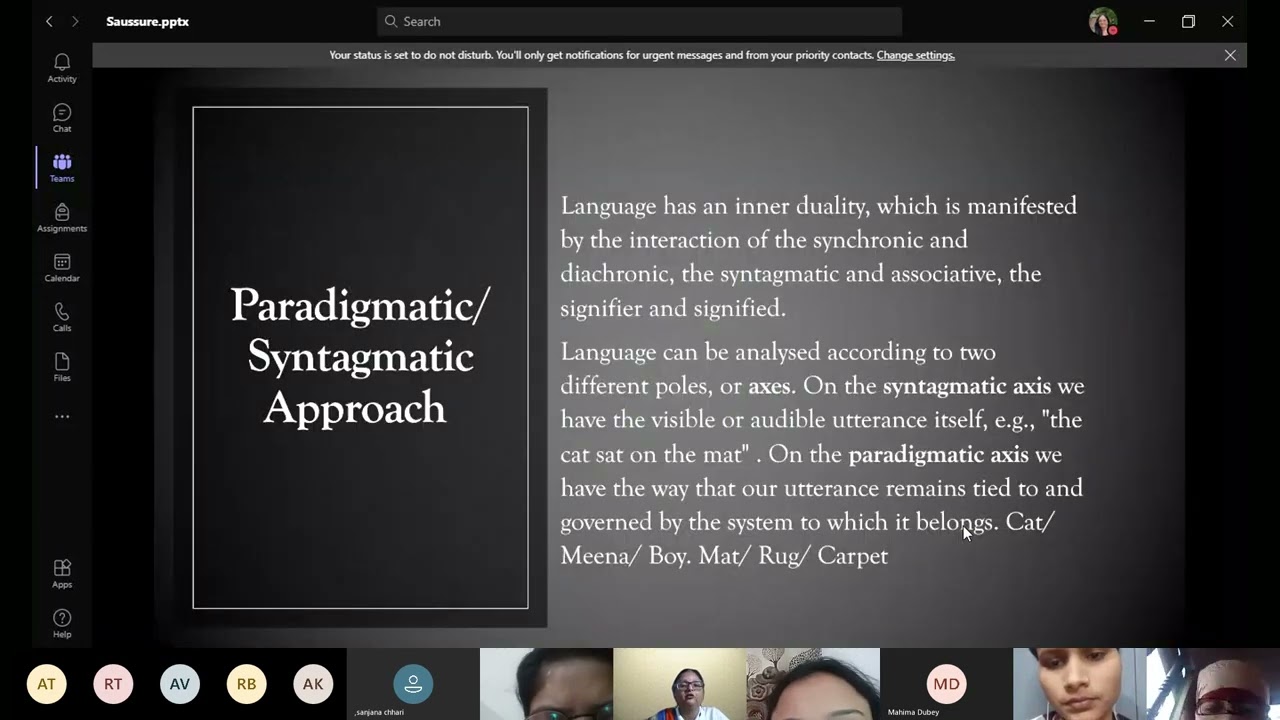










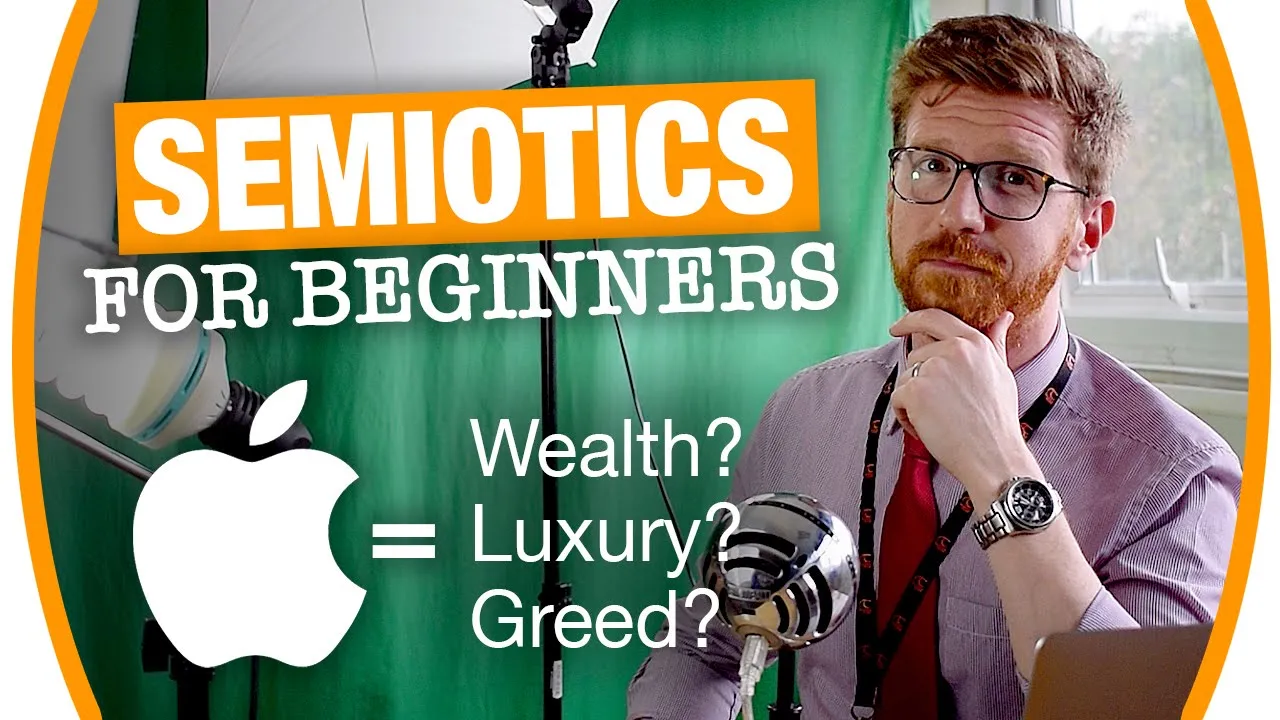











Semiotics is the study of signs and symbols, proposed by Ferdinand de Saussure and Charles Sanders Peirce in the early 1900s. Peirce distinguished three types of signs: icons (which resemble their objects, like pictures and metaphors), indexes (which have a causal link to their objects, like smoke indicating fire), and symbols (which refer to objects through convention or law, like words). The arbitrary nature of symbols—having no inherent connection to their meaning—is what enables human thought, allowing ideas to be manipulated without direct experience and enabling humans to create cultural constructs like traffic regulations and social conventions that exist independently of physical reality.
Semiotics Explained: Signs, Symbols & Ferdinand de Saussure
Added:Basic understanding of linguistics, specifically how language functions as a system of representation rather than just a nomenclature for pre-existing objects.
The fundamental philosophical concept of epistemology, particularly how human minds construct meaning and interpret external reality.
An introductory awareness of Structuralism, a theoretical framework that analyzes elements of human culture in terms of their relationship to a larger, overarching system.
The conceptual distinction between abstract mental representations (thoughts/ideas) and concrete physical referents (objects in the physical world).
Roland Barthes' cultural semiotics, specifically his analysis of modern myths and how signs are used in mass media and advertising to naturalize ideologies.
Post-structuralism and Deconstruction, examining how Jacques Derrida and Michel Foucault questioned and destabilized Saussure's rigid structural dualism.
Practical applications of semiotic analysis in media studies, brand strategy, marketing, and user interface (UI) design to optimize visual communication.
Umberto Eco's theories of interpretive semiotics, focusing on how readers actively participate in decoding texts and the limits of interpretation.
351K views1.6Klikes3:26Original Release: 2007-11-04
Semiodics study of science.
This science was proposed in the early 1900s by Swiss linguist Ferdinand D.
Sassur and the American pragmatist Charles Sanders Pierce.
Ceur argued that there was no inherent or necessary relationship between that which carries the meaning, the signifier, usually the word or symbol, and the actual meaning which is carried, the signified. For example, the word car is not actually car. The meaning of car could be carried by any random string of letters. It just so happens that in English that the meaning is carried by the letter C, A R.
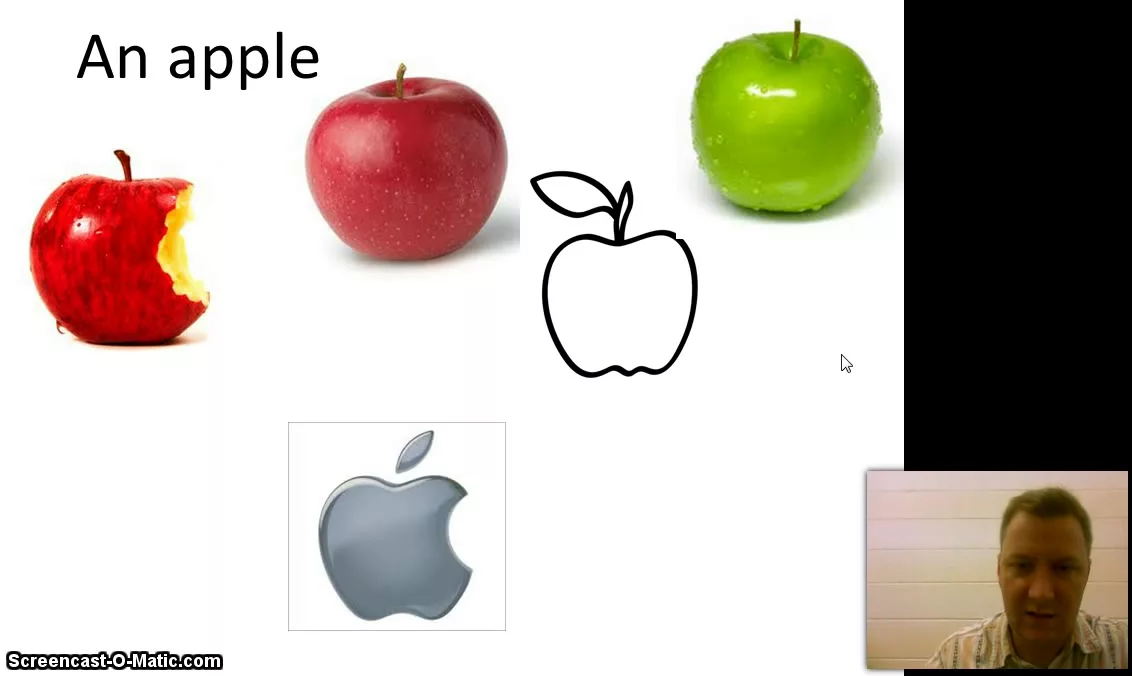
Pierce's ideas about semiodics distinguished between three types of signs: icon, index, and symbol. Whether a sign belongs in one category or another is dependent upon the nature of its relationship between the sign itself, which you called the reference, and the actual [Music] meaning. An icon is a sign that stands for an object by resembling it. Included in this category of signs are obvious examples like pictures, maps, and diagrams and some not so obvious ones like algebraic expressions and metaphors. The essential aspect of the relation of an icon to its object is one of similarity. Indexes refer to their objects not by virtue of any similarity relation, but rather via an actual causal link between the sign and its object. Smoke is an index of fire. A mark on a fever thermometer is an index of body temperature and so forth. The relation between the sign and its object is actual in that the sign and object have something in common. That is the object really affects the sign. Finally, symbols refer to their objects by virtue of law, rule or convention. Words, propositions, and texts are obvious examples in that no similarity or causal link is suggested in the relation between, for example, the word horse and the object it refers. If symbols need bear no similarity or causal link to their object, then science can be considered by the sign user in unlimited ways independent of any physical relationship to the sign user. This point is of crucial importance and in fact lays the foundation for semiotic view of cognition in humans. The fact that humans can utilize signs which are arbitrary and need have no existence in their immediate experience is what makes thought possible and distinctly human. Ideas can be brought to mind and manipulated without being directly experienced.
Meanings can be expressed in various ways through a variety of sign systems, language, music, gestures, and so forth.
In essence, humans can create via signs a world entirely separate from one of direct experience. We find it hard to imagine a world without traffic regulations, social conventions, basketball games, and so forth. These are as real to us as trees and rocks.
Yet they as well as our understanding of trees and rocks have come about via interactions of humans individually and collectively through the science structures that we call culture.
Up Next

72:18
The Evolution of Morality: Three Views Explained
@MindandMetal
233 views•2020-05-14

164:01
John of Damascus on Holy Images: A Theological Defense
@BannedBooks
139 views•2026-04-25

68:32
Should We Destroy the Machines? Big Tech Surveillance Critique
@TheStoriesWeTell303
167.9K views•2025-11-30
4:57
The Myth of Sisyphus: A Greek Legend of Eternal Punishment
@TEDEd
8.6M views•2018-11-13
Related Study Plans & Knowledge Roadmaps
Structured learning paths in Philosophy
philosophy
Frankfurt School: Critical Theory & Culture
01Foundations of the Frankfurt School and Critical Theory
02Horkheimer & Adorno: The Critique of Instrumental Reason
03The Culture Industry and Mass Deception
+ 2 more learning modules
12h5 modules
Explore Roadmap
philosophy
Philosophy of Language: From Frege to Austin
01The Linguistic Turn: An Introduction to Language in Philosophy
02Gottlob Frege: Sense and Reference
03Early Wittgenstein: The Picture Theory of Meaning
+ 3 more learning modules
15h6 modules
Explore Roadmap
philosophy
Feminist Epistemology: Standpoint & Injustice
01Introduction to Epistemology and Feminist Critiques
02Sandra Harding and Standpoint Theory
03Donna Haraway and Situated Knowledges
+ 2 more learning modules
12h5 modules
Explore Roadmap
philosophy
Environmental Philosophy: Ethics & Deep Ecology
01Foundations of Environmental Ethics & Anthropocentrism
02Biocentric Individualism and Animal Liberation
03Ecocentric Holism and Deep Ecology
+ 1 more learning modules
10h4 modules
Explore Roadmap