






![What NASA Discovered When They Landed On A Comet [4K] | Trajectory | Spark](https://i.ytimg.com/vi_webp/uTQQyKtWmrM/maxresdefault.webp)













![Humanity's First Space Encounter [4K]](https://i.ytimg.com/vi_webp/iUP9X52pjU8/maxresdefault.webp)


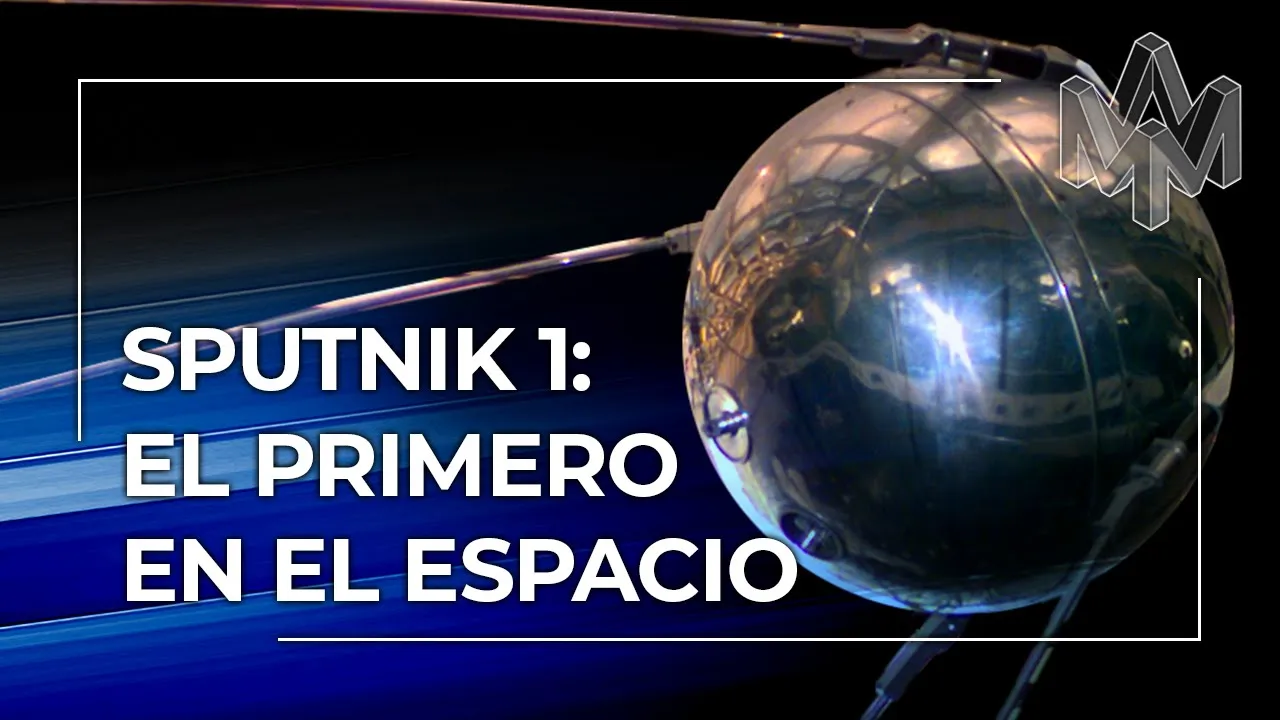
The Soviet Union's launch of Sputnik 1 on October 4, 1957, triggered the formation of NASA on October 1, 1958, under President Eisenhower's leadership, with Administrator Keith Glennan overseeing the consolidation of existing aerospace research institutions like NACA and the Jet Propulsion Laboratory to establish America's civilian space program in response to the Cold War space competition.
NASA's Birth & Moon Race: 1957-1961 Historical Archive
Added:The geopolitical context of the Cold War, specifically the ideological and military rivalry between the United States and the Soviet Union.
The launch of Sputnik 1 in 1957 by the USSR and its psychological and political impact on the Western world (the 'Sputnik Crisis').
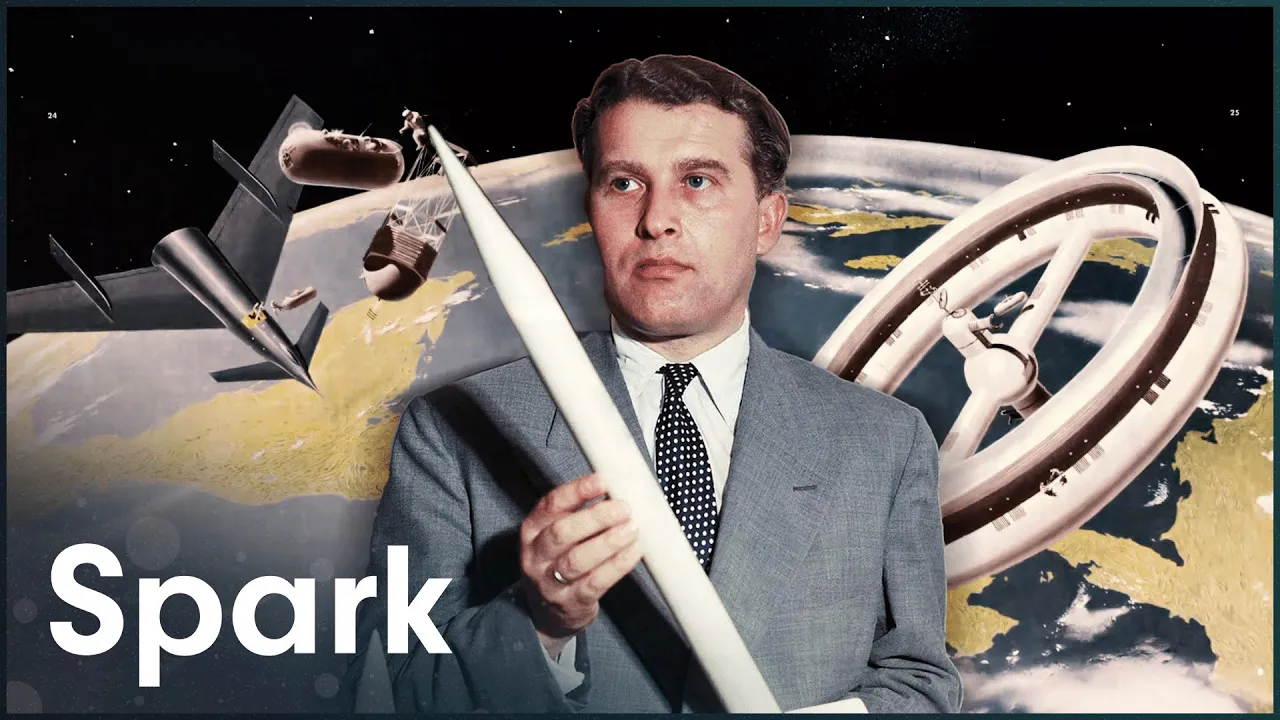
Basic rocketry and missile technology origins, including the transition of WWII-era German V-2 rocket technology and scientists (like Wernher von Braun) to the US and USSR.
The distinction between military defense ballistic missile programs and early civilian scientific efforts to reach orbit.
Project Gemini (1961–1966), which developed the necessary spaceflight techniques (like rendezvous and spacewalks) required for reaching the Moon.
The Apollo Program, culminating in the historic Apollo 11 lunar landing in 1969, and its scientific discoveries.
The socio-economic and technological legacy of the Space Race, including major spin-offs in computing, materials science, and telecommunications.
The transition from space rivalry to space cooperation, starting with the 1975 Apollo-Soyuz Test Project and leading to the International Space Station (ISS).
2.3K views16likes58:49Original Release: 2011-12-23
hello I'm Lyn Bond Duran your host for our series 25 years of progress during this 13-part series we see some of the highlights of NASA the National Aeronautics and Space Administration since its official founding on October 1 [Music] 1958 [Music] what is happening in other American Science in medicine the year before NASA is born well 1957 is the year the American Cancer Society reports a high correlation between cigarette smoking and lung cancer and new element nobelium 102 is disclosed by the Argon National Laboratory in Lamont Illinois and overseas on October 4 1957 the Soviet Union launches Sputnik 1 the first artificial satellite the soviet's launch is for the international geophysical year or igy the geophysical year is 18 months from July 1957 to December 1958 more than than 70 Nations and as many as 30,000 scientists cooperate to investigate the world and its [Music] [Music] environment [Music] Sputnik one concerns Americans because of far reaching military and Technical implications of the launch less than a month after the first Sputnik the Russians launch a second Sputnik which weighs about a half a ton and carries a dog as a passenger the second sputnick causes even more concern in America because of the the large size of the satellite during igy the United States plans to launch a Vanguard satellite which weighs just a little over three lbs the attempt to launch the Vanguard on December 6th 1957 ends in failure in a ball of flame and [Music] wreckage T Keith Glennon is the first administrator of NASA he has asked why NASA was formed that's a fairly easy question to answer Sputnik on October 4th 1957 as I recall it the Russians launched a fairly heavy object into orbit and that caught us really by surprise a Vanguard project had gotten underway in 1955 as I recall it uh part of the igy program International geophysical year program but it wasn't anywhere near ready uh they had I think scheduled some launches late that year that is in 1958 but uh it wasn't clear that they were going to be able to fly them there was another uh uh competitor which had really never been recognized that was the army uh with their uh Jupiter uh which together with some uh upper stage solid Rockets developed by the jet propulsion laboratory in California uh finally was the uh vehicle which was which launched a uh a satellite for the US early in 1959 and the satellite was called Explorer one let's go back to after Sputnik success and Vanguard spectacular failure when Major General John maderas and Dr Veron Brun and their team at the Army Redstone Arsenal are given their long sought chance a goahead to launch an American satellite they will use their flight proven Jupiter sea rocket launcher we are at Cape canaval in late January 19 1958 as the covered satellite is placed at top the Jupiter sea poised on pad 26 for [Music] firing Explorer one is to be about 30 lbs in orbit severe winds aot force a two-day postponement then on January 31st 1958 the United States answers the Soviet challenge in space [Applause] [Music] Explorer makes a major Discovery a radiation belt around the earth Dr James Van Allen of the University of Iowa identifies the region the discovery of the Van Allen belt is an important finding of the international geophysical year during a satellite television program broadcast in 197 8 Dr Ern stallinger director of science for Dr verer Von braa makes this statement about the launch of Explorer one it was a gate that opened into a new land we hoped at that time that we will make progress and Achieve many more things in space beyond launching a small satellite I want to to be honest though and say that at that time we did even not think it possible that 20 years later there may have been 12 men walking on the moon and coming back to Earth in good shape many of the dreams which we had at that time were fulfilled but many other dreams which um many many achievements were accomplished which we even did not dare to dream at that time however when we look forward now toward the next 20 years I have the feeling that The Best Is Yet To Come the United States space effort before the launch of Explorer one is fragmented Navy Army Air Force National Science Academy and NACA President Eisenhower appoints James Killian to be science adviser just after the first Sputnik launch Keith Glenn and recollects the writing of the space act which forms NASA my recollection would be that Mr kilan who was the president's science advisor had been appointed almost immediately following the uh launch of Sputnik uh and pack the president science advisory committee and I suspect uh Mr Lyon Johnson on the hill uh did a sort of a cooperative job in putting together the space act they had as a model the atomic energy act and indeed if you compare the two you find a good deal of similarity in many of the Clauses in the two acts but what were the major implications of the space act they simply said that we were to pursue uh the development of activities in space for the benefit of all mankind mind we were to uh do it as a civilian agency uh we were to be responsive to the military in the sense that if we found in our developments some Gadget some uh information that would be of value to the military we were bound to give it to them and that that was really the the thrust of this uh act we we were also uh uh told that we should pursue International activities and this is I think an extension of this for the benefit of all mankind the space Act is signed into law by President Eisenhower on July 29 1958 and on October 1 1958 NASA comes into being Glennon recalls Eisenhower's feelings about space he was not a space cadet he used to say as he look over shoulder and you say you know Keith that Moon's been there a long time it's going to be there great many eons yet and we'll get there one day but it isn't necessary we break our necks and break the budget to get there now okay what about Congressional support at the time Congressional support was really very good uh as a matter of fact they were pushing us I don't think in my 20 months there that I ever had a budget proposed to them uh that they didn't want to add something to uh my stock answer was I have uh studied this we have presented you with a budget which is what we think we can usefully use if we need anymore you may be certain I'll come right back to you that seemed to satisfy them before NASA is born Keith Glennon is president of case Institute of Technology and former commissioner of the atomic energy commission then Eisenhower nominates him to be first NASA administrator in August 1958 with Dr Hugh Dryden as deputy and NASA is formed from the national advisory committee for Aeronautics Glennon explains and we did inherit uh the national advisory committee for Aeronautics operation uh NAA as it was then called of which Lewis Laboratories were one uh there were uh four four or five such Laboratories three big ones Ames Langley and Lewis and one at wop's island in Virginia and one out in Edwards Air Force Base in California but uh we had 8,000 well-trained loyal dedicated uh uh people in NACA and they formed the base on which we erected uh NASA so we we were very well endowed NACA was formed in 1915 to supervise and direct the scientific study of the problems of flight with a view to their practical solution NACA was required to direct and conduct research and experiments in Aeronautics the committee was responsible for many of the advances in US Aviation through 1958 some space- type research is done in later years but emphasis was on airplane research again Glennon tells us what happened in NACA space research NACA had uh been doing development work largely at Langley as I recall it on the shape of of the capsule that might be used in a an up and down flight like uh actually Mercury started out to be and finally into an an orbit the uh uh problems of uh trying to get adequately capable people in a variety of fields meant that we had to look other than in NACA and it became apparent very early on that our real limitations in the launch vehicle business the booster rocket as we then called we really didn't have any we had been us using sounding Rockets small things that went up and accumulated information and uh telemetered it back to the United to the ground but we didn't have anything that really would lift very much with any degree of of shity so I guess it was in probably in November might have been like late October 1958 that I made a trip to um to uh Huntsville with Hugh Dryden my deputy and one of the very very great men in this uh Space Program his name cannot and will not ever be forgotten we uh came back it is clear that Von Bron had uh a real strong team there very capable we did try to get that uh Laboratory or part of it I didn't want the whole thing they had work going on for the Army the pushing missile was in in uh development at the time and they were they had as their really scientific support the jet propulsion laboratory managed by the U Caltech out on the west coast near Pasadena Dr Glennon is successful in his effort to continue the job of building the new NASA organization officials transferred JPL the jet propulsion laboratory in Pasadena to NASA and the role of the California Institute of Technology as JP manager continues about a year later officials transfer a large segment of the Army operation at Huntsville to NASA and workers build it into the Marshall space flight center only a week after NASA comes to life Dr Glennon approves the first US man space flight program project Mercury scientists developed the Mercury capsule shape through tests workers do wind tunnel tests of small and large scale models covering speeds from 0 to 18,000 [Music] mph researchers fire small models of the capsule in a supersonic pre-flight ballistic gun range the gun sends the 1-in model down a 30t instrumented range of recording stations the model goes 10,000 [Music] mph as a model speeds down the gun range Barrel photographs and Shadow graphs are taken this Shadow graph shows airf flow around the model [Music] workers develop boilerplate versions of the Mercury capsules for test this first test is a parachute drop test from an Air Force C130 the capsule slides out of the plan's cargo door on a sled the sled [Music] releases a charge ejects a Dro par parachute not only is NASA working on man space travel but from early on scientists launched space science probes workers launch the Pioneer 1 probe toward the moon about a week after NASA comes into being a lunar TV scanner is aboard because of an error in Burnout velocity the probe does not reach the moon but reaches an altitude of almost 71,000 mil and the craft re-enters the Earth's atmosphere over the South Pacific on on October 12th 1958 Glennon remembers that first pioneer I guess we sort of broke our pick on some of those I recall those were the Pioneers as I recall it and uh I recall how how Overjoyed we were when we could talk to that uh little bit of a thing it's about this big was so passion uh 200,000 miles out in space and get the information back it never did Reach the the moon or go into orbit around the Moon it failed and fell back to Earth but at the same time the Soviets could never talk to their Birds more than 10,000 miles up so we were beginning to get a little sense that we were doing things right that we were getting better all the time and that was indeed the the objective of NASA in those days push the state of the art as hard as you could but don't waste your muscle the United States tries 37 satellite launches by December 1959 less than a third are successful as a result NASA begins to instill a new sense of rigid quality control to check and check and check again rocket components Wells valves pumps materials and so on over time the quality control program works in other areas of Science and Engineering the first domestic jet airline service begins between New York and Miami on December 10 1958 and in August 1959 plans to explore Antarctica in 1959 and 1960 are announced in September 1959 SEO oawa and Arthur cornberg received the Nobel Prize in medicine for chemical heredity work meanwhile the first seven us astronauts are chosen early in 1959 NASA selects a team of seven engineer Pilots for project Mercury M Scott Carpenter L Gordon Cooper John Glenn Virgil Grom Walter Sherra Alan Shepard and Donald Slayton the astronauts prepare for flight after 2 hours the astronaut comes out of a mold used to make a flight couch to fit his body shape early on veteran test pilots look down on the role of the pilot in Project Mercury but the Mercury pilot plays an active role he controls the capsule's attitude and Pitch roll and yaw as well as operating navigation and communication systems in all Mercury flights the pilot proves to be essential to the success of the mission he operates all primary flight controls and initiates retro Rockets to fire beginning The Descent to a landing whirling in a centrifuge cab astronauts learn important lessons about how they react to the g-loads of emergency aborts meanwhile workers test an escape system for the early Mercury capsule the pilot must be able to escape from the Mercury launch site in case of an emergency in this unmanned test a 16- ft Tower with a solid rocket sends the capsule safely away during this test a rees's monkey is aboard at more than 1300 mph pressure sensing devices start start the [Music] Escape extensive Mercury program research and development continues workers launch a Big Joe Mercury test capsule nearly into orbit to test re-entry into the Earth's [Music] atmosphere an atlas booster carries the caps to an altitude of 100 m and nearly to orbital speed from the recovery ships the capsule appears as a flaming Fireball as it streaks back into the atmosphere Patrol aircraft fly to the impact area and pick up the capsule's recovery signals two destroyers race to the [Music] area the Navy ship strong makes the pickup the capsule survives its re-entry in excellent [Music] condition other areas of the Space Program are successful in 1959 by August 10 of the 17 launches are good please clear the launching [Music] area [Music] also in August NASA launches an Explorer 6 which functions well in all respects Explorer 6 detects a large ring of electrical current circulating the Earth during this first program of our 13 part series we' seen how the launch of Sputnik in late 1957 encouraged the birth of NASA in October 1958 early NASA projects continue through 1959 Lessons Learned From early difficulties lead us to ever more successful [Music] [Applause] [Music] performance [Applause] [Music] oh [Music] oh [Applause] [Music] please clear the launching [Music] area Next program we pick up the NASA Saga in 1960 when goals are still being set i'm ly B Durant no all pre-art panel lights are correct the ready light is on check Mercury umbilical while evacuate Mercury umbilical clear [Music] on your backup clock is [Music] started [Music] [Music] okay looking good Roger Clubby on [Music] Roll Columbia Houston you're go at 40 [Music] 4 [Music] w [Music] [Music] m [Music] hello I'm Lyn bandant your host of our series 25 years of progress during this second program we cover 1960 and 1961 National Aeronautics and Space Administration projects to set the perspective against other scientific and medical US history in 1960 the Navy submerges a ba es scaff to a record 24 4,000 ft in the Pacific Ocean and in May the US atomic submarine Triton travel submerged around the world in 84 days a NASA highlight is the launch of the first US weather satellite on April 1 1960 called Tyrus 1 it produces almost 23,000 pictures of Earth weather this tyros 1 experimental weather satellite provides dramatic pictures of cloud formations including spiral formations associated with large area storms tyros 1 Works in a useful manner for 78 days it's the world's first successful weather satellite and ever since then weather satellites help in weather prediction save lives and property through storm detection meanwhile in the man program astronauts continue training for their space flights in the Mercury capsule astronauts practice with a space flight simulator at Lewis Research Center in Cleveland strapped firmly the astronaut spins around first one and then all three axes they do exercises in bringing spacecraft under control a spacecraft in orbit travels at a speed which balances very delicately the pole of Earth's gravity to simulate weightlessness in space a pilot flies an airplane the plane descends begins a steep climb as the aircraft decelerates it eases over the top in a parabolic Arc for short periods its occupants are [Music] weightless [Music] another first for NASA is the launch of echo1 the first passive Communications satellite workers launch it into orbit on August 12th 1960 echo1 is really a big balloon from it radio signals are bounced relaying signals between distant locations on Earth Millions on Earth see Ekko as a moving pinpoint of light in the night sky T Keith Glennon NASA's first administrator recalls EO was 100t in diameter inflatable balloon which was encased perhaps in a an aluminum casing of about uh I suppose 30 in in diameter perhaps and it was uh that case was exploded open when it reached a particular height and then the the balloon inflated and it stayed up there just circling the earth as a matter of the what we call injection velocity when it was injected into orbit and uh I I can recall going up to Hol in New Jersey where they had a new type of antenna a horn antenna you now see them on uh towers around the country and we we talked to the satellite and we to set pictures over that satellite and I still have one on my desk echko is just the first of many communication satellites later communication satellites are much more complicated they are active not passive carry antennas receivers transmitters and other equipment modern satellites receive signals transmitted up from Earth and retransmit an amplified signal to distant locations News sports Entertainment Television telephone fact assembly and other Communications are now routinely transmitted via satellite satellites began a Communications Revolution and 1961 is a year of other scientific advances as well the National Geographic Society announces that the fossilized skull of an early humanoid discovered by Dr Lewis leaky is 1.7 million years old Jack Kirby of Texas Instruments invinc the integrated circuit on April 12th 1961 Soviet Cosmonaut Yuri gar becomes the first human being to orbit the earth his VTO one spacecraft makes one orbit gagaran lands safely again the Soviet Union accomplishes a first while the US is preparing for a suborbital Mercury man space flight the Mercury Ground tracking Network includes 18 [Music] stations Bermuda station continues undergoing inter systems checkout Bermuda duplicates the control center on the mainland workers complete and ready the station for operation during April [Music] 1961 other workers complete the final two stations Kano Nigeria and [Music] Zanzibar scientists simulate orbital flights for training [Music] during 1961 this unmanned test shot is ready for blast [Music] off [Music] the launch [Music] fails but the Escape system works raising confidence for later man [Music] flights I think the one thing that strikes me as I look back on the training program is that I have really developed a feeling of confidence a confidence in the people with whom I work a confidence in the systems with which I am dealing and will have to deal in flight and of course a confidence in myself in May 1961 astronaut Alan Shepard prepares for the first US man space flight with a Mercury C capule the craft is to rise over 100 m into space in this suborbital flight officials schedule the launch for the early morning of May 2 1961 weather postpones the launch resume the count Roger ready to resume the account on May 5 Shephard goes to the launch complex it is just 2 years and 7 months after the start of project Mercury 9 8 7 6 5 4 3 2 1 [Applause] Z all right left off and the clock is [Applause] started yes sir loud and clear as countless Millions watch and listen the manually controls his craft and has almost continuous Communications with Earth Periscope what a beautiful view cloud cover over Florida three to 41 near the eastern coast the Mercury Redstone 3 travels 300 miles and reaches an altitude of 115 mil Shephard enjoys about 5 minutes of weightlessness my condition is still good I'm getting ready for impact about 16 minutes after liftoff the spacecraft is found a helicopter picks up Shephard and then his freedom 7 spacecraft the Mercury suborbital flight is a success but the Russian gagaran has orbited the Earth and in a heavier spacecraft President Kennedy says quote we are behind the news will be worse before it is better and it will be some time before we catch up President Kennedy asked vice president Lyndon Johnson to head a study of what is needed to beat the Soviets in the Space Race NASA's 10-year plan calls for a man orbital flight around the moon the question is can the US be the first nation to orbit a man around the moon the technical answer is maybe not so the proposal is made that the goal be extended to the surface of the moon on May 25 1961 President Kennedy speaks before a joint ation of Congress to define a new National goal now it is time to take longer strides time for a great new American Enterprise time for this nation to take a clearly leading role in space achievement which in many ways May hold the key to our future on Earth I I believe that this nation should commit itself to achieving the goal before this decade is out of Landing a man on the moon and returning him safely to the Earth no single Space Project in this period will be more impressive to mankind or more important for the long range exploration of space as one author writes NASA is exhilarated but odd to land a man on the moon and return him to Earth is perhaps the hardest technical project in the nation's history the Mercury project to orbit a man spacecraft around the earth is by itself a demanding program but facing the challenge NASA begins to work towards the assigned National goal NASA decides that a Twan Earth orbital spacecraft called Jiminy must be developed as a step between the oneman Mercury capsule and the Apollo craft which is destined to fly men to the Moon in back project Jiminy is to learn of man's capabilities during longer periods of weightlessness and geminy is to help train astronauts to maneuver and Rendevous spacecraft during flight the Twan spacecraft continues under design acquisition of the Titan 2 rocket for gimy from the Air Force begins gimy is the intermediate project between Earth orbital and manned lunar space flights by October 1961 NASA is already receiving proposals for a three-man spacecraft for Moon missions officials evaluate proposals engineers and scientists of project Apollo meet with industry people to discuss design and building of the Apollo craft companies present their models on November 29th officials select the North American Aviation Corporation of Downey California to be the prime contractor to produce Apollo spacecraft during 1961 NASA puts four successful unmanned scientific satellites in orbit other NASA satellites are only partly successful there are two good orbital tests of the Mercury capsule without a man on board one of the flights carries a chimpanzee and there are two man suborbital missions including Shepherd's flight workers launch explore 10 March 25 1961 the 79 pound satellite gathers facts about solar wind Earth's magnetic field and its reaction to solar flares in April 1961 NASA launches the 82b explore 11 it detects gamma rays from cosmic sources and Maps their locations in the sky this is the first try of that kind of satellite space astronomy scientists and Engineers put another successful tyros weather satellite in orbit and in August 1961 NASA launches the Explorer 12 Satellite into a highly elliptical Earth orbit Explorer 12 investigates solar wind interplanet magnetic fields energetic particles and the Van Allen belt the second man suborbital us space flight with astronaut Virgil Gom aboard is a success but the spacecraft is to sink in the [Music] ocean Grom experiences one and A2 G's the flight surgeon Clos watches the test Pilot's condition during flight gom's vital signs are okay at engine cut off the spacecraft makes its turn around and the astronaut is weightless the retrieval helicopters are within 2 miles of the landing Point Grom says he's ready for pickup as the lead helicopter moves in to hook the capsule the side hatch is blown off Grom leaves the rapidly filling spacecraft the recovery helicopter struggles with the almost submerged craft the helicopter is over taxed by 1,000 lbs a second recovery helicopter moves in to pick up the astronaut Grom has trouble staying afloat after four anxious minutes Grom struggles into the horse collar the lead helicopter's motor apparently malfunctions the spacecraft [Music] drops project Mercury continues in high gear pointing toward a man orbital mission on September 13 NASA puts an unmanned mercury into orbit one test objective is met early in Flight the atlas releases a spacecraft into proper orbit 1 hour and 49 minutes after launch the space spacecraft lands 200 m east of [Music] Bermuda enus the chimpanzee makes a Mercury flight in November 1961 the chimpanzee arrives at Cape canaval from Hollman Air Force Base workers put the Chimp in a special couch with testers in a pallet and water feeder he is 39 lb during pre-launch testing enus is is connected to the spacecraft's environmental system fitted with numerous biosensors the primate does [Music] [Music] tests later NASA launches Mercury with enus aboard [Music] about an hour into the flight the spacecraft passes over mushe Australia then 5 minutes later the WRA Australia tracking station confirms that all systems are green a 16 mm camera gives a Periscope eye view of the cloud formations and the island dotted Pacific on a condensed time film going into the second orbit tracking stations report steadily Rising spacecraft temperatures Midway through the first leg of the second orbit Kano Nigeria reports the spacecraft is reporting intermittent roll and ignore signals a slight rise in the chimp's temperature concerns flight [Music] surgeons officials decide not to fly the spacecraft into a third orbit and they order retr [Music] fire The Descent landing and Recovery are all [Music] normal [Music] that afternoon at a press conference held at Cape Canaveral NASA officials say that they are pleased with the flight Astronaut John Glenn is test pilot for the upcoming first Mann orbital Mercury Mission astronaut Carpenter is backup 1961 is coming to a close and enus the space fairing chimp returns triumphant ly in December to the [Music] cape meanwhile the Mercury capsule under go further [Music] tests [Music] [Music] there are two water landing tests in December 1961 and so 1961 ends and in that year NASA begins to work on the big job of sending men to the moon and back rers Z and I feel fine capsule is turning during our next episode we see film of John Glenn making the first US space Flight Around the World in 1962 and we continue The Saga of NASA during 25 years of progress I'm Lyn [Music] [Music] bant [Music] [Music] [Music] [Music] for [Music] [Music] [Music] [Music] e [Music] [Music] [Music] h [Music] [Music] [Music] [Music] a [Music] [Music] okay looking good Roger Clum be on the [Music] roll Columbia Houston you're go at 40
Up Next
3:04
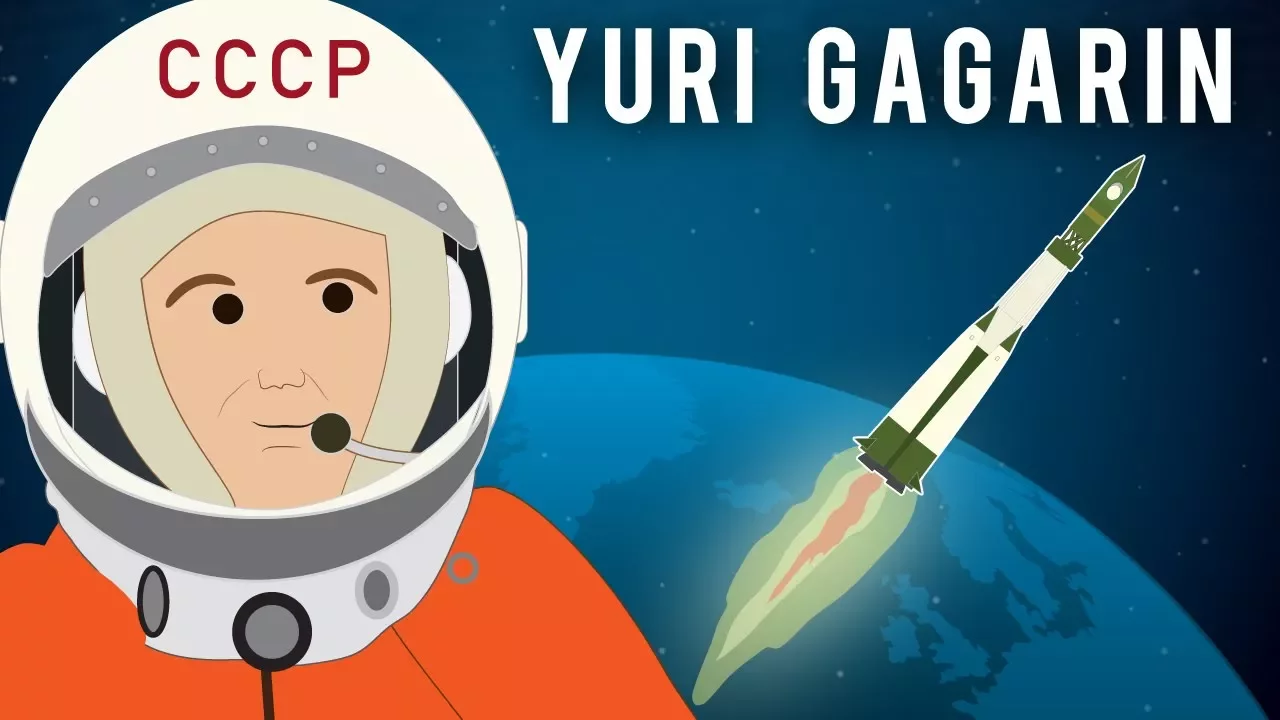
Yuri Gagarin: First Human in Space (1961) Explained
@Simplehistory
872.4K views•2017-12-19

25:00
Legacy of the Indian Subcontinent Partition | Inside Story
@aljazeeraenglish
52.9K views•2017-08-14

91:57
The Geopolitics of the Ukraine War and the Rise of Global Autocracy
@JordanHarbingerShow
468K views•2025-04-19
17:05
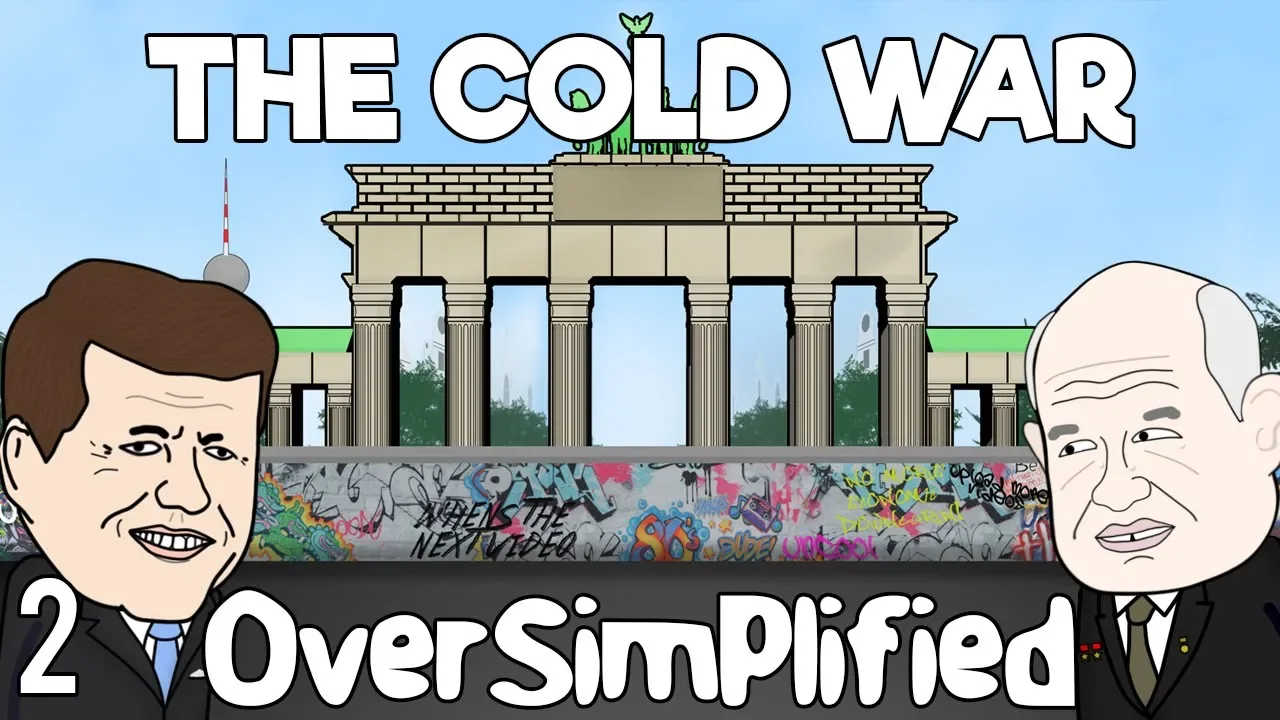
Understanding the Cold War: Superpower Conflicts and the Road to Détente
@OverSimplified
46.1M views•2019-01-24
Related Study Plans & Knowledge Roadmaps
Structured learning paths in History
history
1947 Partition: Politics, Borders & Legacies
01Foundations of British India and the Divide
02The Political Negotiations and the Mountbatten Plan
03Drawing the Boundary: The Radcliffe Line
+ 2 more learning modules
8h5 modules
Explore Roadmap
history
Dutch Golden Age: VOC, Stock Markets & Art
01The Rise of the Republic: Foundations of Hegemony
02The VOC and the Birth of the Corporation
03Financial Revolution and the Amsterdam Stock Exchange
+ 2 more learning modules
14h5 modules
Explore Roadmap
history
Simón Bolívar: Campaigns & Gran Colombia
01Colonial Backlash and Bolívar's Origins
02The Military Campaigns of Liberation
03The Political Vision: Unity and Authority
+ 2 more learning modules
9h5 modules
Explore Roadmap
history
Roman Empire (Augustus, Reforms & Propaganda)
01The Fall of the Roman Republic
02The Rise of Octavian: From Heir to Sole Ruler
03The Constitutional Settlements & The Principate
+ 2 more learning modules
12h5 modules
Explore Roadmap