On April 12, 1961, Soviet cosmonaut Yuri Gagarin became the first human to travel into space aboard the Vostok 1 spacecraft, completing a 108-minute orbit around Earth; selected from 20 candidates for the program, Gagarin was chosen partly for his modest background that aligned with Soviet propaganda values and his exceptional memory, mathematical skills, and fast reactions, though his mission was complicated by a malfunctioning cable connection between the descent module and service module during re-entry, forcing him to eject and parachute to safety near the Volga River, where he became a national hero before tragically dying in a military training accident in 1968 at age 34.
Yuri Gagarin: First Human in Space (1961) Explained
Added:Deep Dive
The geopolitical context of the Cold War and the origins of the Space Race between the United States and the Soviet Union.
![SACANI RESPONDE [ESPECIAL 55 ANOS MISSÃO APOLLO 11] - Ciência Sem Fim #256](https://i.ytimg.com/vi/dVQY0HdbEQs/maxresdefault.jpg)
SACANI RESPONDE [ESPECIAL 55 ANOS MISSÃO APOLLO 11] - Ciência Sem Fim #256
351.6K
The Space Race emerged from the Cold War division between the United States and the Soviet Union after World War II. Germany's V2 rocket technology was divided between the two superpowers through Operation Paperclip, which recruited German scientists like Werner von Braun to the United States. The Space Race became a proxy war where both nations competed for technological and military dominance without direct conflict, using space achievements as demonstrations of power. The Soviet Union achieved several firsts: launching Sputnik 1 in 1957, sending Yuri Gagarin into space in 1961, and conducting the first spacewalk by Alexei Leonov. These achievements put the Soviet Union ahead in the Space Race, creating pressure on the United States to respond with its own space program.
Click to watch →

VENTANA A LA CIENCIA 50 AÑOS ALUNIZAJE
260
The space race between the Soviet Union and the United States originated from the Cold War context. After World War II, both nations appropriated German rocket technology developed for the V-2 bomb. The United States developed its program under German engineer Werner von Braun, while the Soviet Union developed theirs under Sergei Korolev. The race was fundamentally competitive and driven by geopolitical tensions rather than purely scientific curiosity.
Click to watch →

O Mistério do PRIMEIRO POUSO NA LUA - COMO APOLLO 11 POUSOU NA LUA??
1.5M
After World War II, the United States and Soviet Union emerged as the world's two superpowers, creating a global polarization between capitalism and socialism. Both nations invested heavily in military technology, particularly missiles and rockets, leading to the Cold War—a political and ideological conflict lasting from the late 1940s to 1991. In the 1950s, both powers began investing in space exploration technology, initiating the Space Race as a competition for space exploration supremacy.
Click to watch →

The New Space Race Explained | Power, Moon & Geopolitics
740.8K
The space race began immediately after World War II during the Cold War between the United States and USSR (1945-1991). On October 5, 1957, the USSR achieved the first successful satellite launch with Sputnik 1, shocking the American public and government. In 1961, the USSR sent Yuri Gagarin as the first human into space. These achievements triggered significant insecurity in the United States, leading President Eisenhower to create NASA. The space race was fundamentally a political competition rather than purely scientific exploration, with both superpowers using space achievements to demonstrate ideological superiority.
Click to watch →

The Judica-Cordiglia Brothers & The Lost Cosmonauts of the Cold War | The Dark Histories Podcast
677
The Cold War space race emerged from post-WWII competition between the United States and Soviet Union. Both nations recruited German rocket scientists from the V2 program, which had achieved space flight in 1944. The Soviets launched Sputnik 1 on October 4, 1957, shocking the world. The Americans responded with Explorer 1 in February 1958, and NASA was established. Yuri Gagarin became the first human in space on April 12, 1961, followed by Alan Shepard and John Glenn. This decade-long competition showcased technological prowess and ideological superiority.
Click to watch →
Deep Dive
Basic principles of orbital mechanics, including orbital velocity, gravitational pull, and the difference between suborbital and orbital trajectories.

The MASSIVE difference between orbit and sub-orbit
629.6K
To reach orbit, a spacecraft must achieve orbital velocity of approximately 28,000 km/h (7.8 km/s), which allows it to continuously fall around Earth without deorbiting; in contrast, sub-orbital flights like Blue Origin's New Shepherd only reach speeds of about 3,000 km/h, coast above the Kármán line (100 km altitude), and return to Earth within minutes, experiencing brief periods of weightlessness because both the spacecraft and its occupants are accelerating at the same rate, not because there is no gravity in space.
Click to watch →

LANÇAMENTO NEW SHEPARD DA BLUE ORIGIN - AO VIVO
61.1K
Orbital flight requires achieving sufficient velocity to maintain continuous free fall around Earth, while suborbital flight reaches space briefly and returns. The key difference is velocity: orbital flight requires approximately 7.2-7.3 km per second (about 25,000 mph), while suborbital flight only needs to reach the Kármán line (100 km) and return. To achieve Earth orbit, a spacecraft must reach approximately 7.2-7.3 km per second. This orbital velocity creates the balance between gravitational pull and forward motion that keeps the spacecraft in continuous free fall around Earth. Suborbital rockets like New Shepard do not achieve this velocity. The distinction affects mission duration, cost, and capabilities.
Click to watch →

This is why I can't touch rockets anymore. *PHOTOSENSITIVITY WARNING*
289.8K
Achieving orbit requires reaching sufficient velocity (approximately 3.5 km/s) to escape Earth's gravitational pull, not just reaching high altitude. The video demonstrates that rockets cannot simply point at destinations due to gravitational forces, showing how orbital motion is essentially continuous free-fall. Players learn that pointing directly at a target results in missing it, that orbital mechanics require precise velocity vectors, and that gravity wells require careful trajectory planning. The progression from atmospheric flight to orbital mechanics illustrates the fundamental difference between suborbital and orbital flight.
Click to watch →

Histórico! Victor Hespanha se torna o 2º brasileiro a ir para o espaço | #OlharEspacial
29.9K
Suborbital flights reach space (above 100 km) but do not achieve orbital velocity. The New Shepard mission is suborbital, reaching approximately 115 km altitude but achieving only about 3 km/s velocity. Orbital flights require approximately 27,000 km/h (7.5 km/s) to maintain continuous orbit around Earth. At this velocity in horizontal trajectory, forward motion counteracts gravitational pull, allowing continuous orbit without crashing. Without atmospheric drag, objects could orbit indefinitely. The New Shepard rocket is only 15 meters long compared to Falcon 9's 40+ meters, carrying less fuel and thus unable to achieve orbital velocity. The rocket uses liquid hydrogen and liquid oxygen as propellants, producing water as the primary combustion byproduct. The rocket burns for approximately 141 seconds to reach space.
Click to watch →

OS MONSTROS VERMELHOS DO JAMES WEBB - Ciência Sem Fim News #23
114.9K
Suborbital rockets reach space (100 km altitude) but do not enter orbit, following a parabolic trajectory. Orbital rockets must reach approximately 27,000 km/h (orbital velocity) to maintain orbit around Earth. The key difference is that suborbital vehicles return to Earth after reaching space, while orbital vehicles achieve sufficient velocity to continuously fall around Earth. This distinction explains the massive cost difference between suborbital and orbital launches.
Click to watch →
Deep Dive
Technological precursor milestones, specifically the launch of Sputnik 1 and the biological telemetry gathered from early animal spaceflights.

Космическая гонка на пальцах ► Мудреныч - СССР против США | Реакция
181.4K
Sputnik 1 launched on October 4, 1957, marking humanity's entry into the space age. Sputnik 2 (November 3, 1957) carried Laika, the first living organism in orbit, proving biological spaceflight was possible. The USSR launched Luna 1 (January 1959) attempting lunar orbit, and Luna 2 (September 1959) became the first spacecraft to reach the Moon. The US launched Explorer 1 (February 1958) and Pioneer 4 (March 1959). This period established the foundation for all future space exploration, demonstrating that artificial objects could orbit Earth and reach other celestial bodies.
Click to watch →
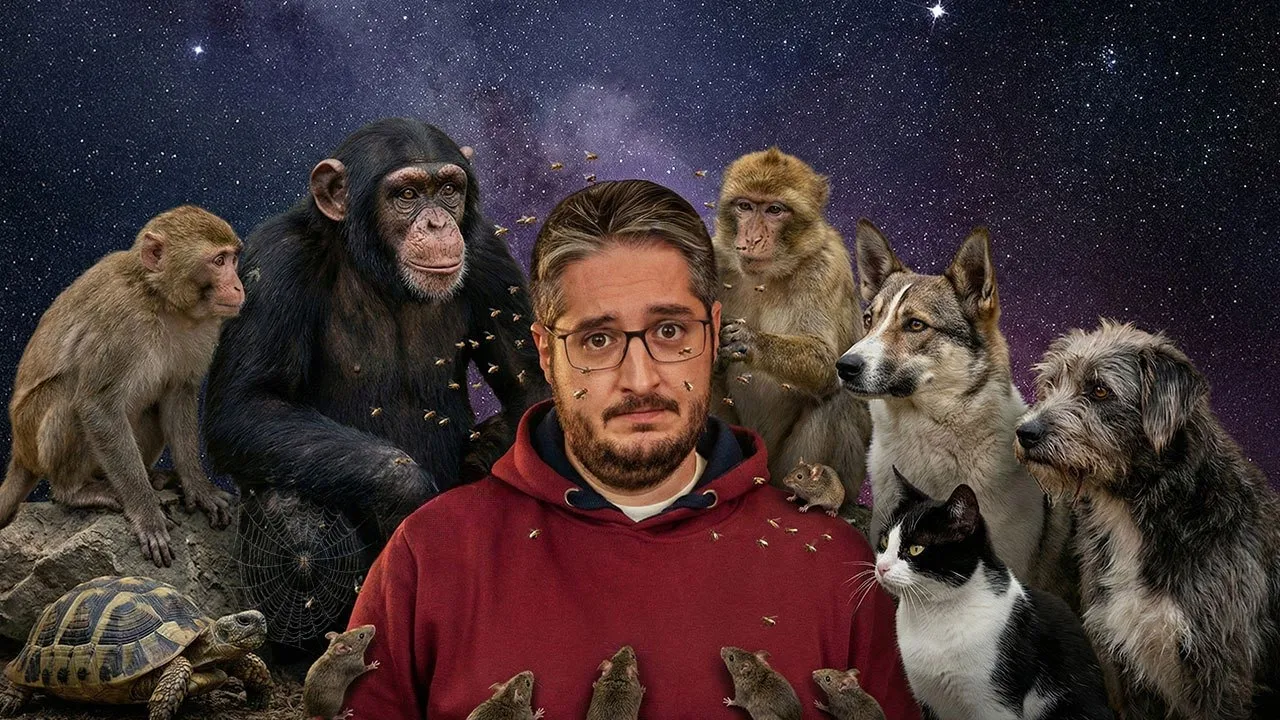
La storia degli animali nello spazio
49.3K
The concept of sending animals into space began in the 1700s with hot air balloon experiments, including a 1783 flight carrying a sheep, duck, and rooster. The real need emerged during the space race because scientists needed living organisms to study radiation effects on biological tissue. Fruit flies were the first space travelers on February 20, 1947, aboard a V2 rocket from White Sands, reaching 109 km altitude and crossing the Karman line (100 km). The V2 rocket, originally developed by Nazi Germany under Werner von Braun for military purposes, became the foundation for the space race after the war. Albert I, a macaque launched June 11, 1948, was the first primate in space but died from suffocation. Albert II (June 14, 1949) was the first primate to reach space but died during reentry. The Soviet Union launched nine dogs between 1951-1952 aboard R1 rockets, with the first pair (Dezik and Zigan) successfully returning on July 22, 1951. The most famous mission was Laika aboard Sputnik 2 on November 3, 1957. Laika (real name Kudravka) was not expected to return; she survived approximately 4 days before dying from stress and overheating. Sputnik 1, launched October 4, 1957, was the first artificial satellite—a 58 cm aluminum sphere that emitted a distinctive 'bip-bip' signal. This mission put the Soviet Union ahead in the space race by demonstrating the ability to achieve Earth orbit. The United States responded with the Mouse Capable project (1958-1959), launching 30 mice that mostly died from various causes including drowning, poisoning, and sensor malfunctions. On December 13, 1958, the United States launched Gordo (a squirrel monkey) aboard a Jupiter rocket, reaching nearly 1000 km altitude. The capsule sank in the Atlantic Ocean and was never recovered. Analysis showed Gordo was healthy until drowning, proving that primates could survive orbital conditions. On May 28, 1959, the Able and Baker mission launched two squirrel monkeys aboard a Jupiter rocket. Able died during surgery to remove sensors, and Baker was never recovered after the capsule sank. On July 28, 1960, the Soviet Union launched two dogs aboard a Vostok prototype to test the spacecraft that would later carry Yuri Gagarin. The launch failed catastrophically when the rocket exploded. On August 19, 1960, Sputnik 5 carried Belka and Strelka (two dogs), a rabbit, 40 mice, 2 rats, and 15 containers of organisms. All returned alive, becoming famous—Strelka later gave birth to six puppies, one gifted to President Kennedy's children. On February 22, 1961, France became the third nation to send an animal into space—a rat named Hector. In 1963, France launched Felet (a black and white cat) aboard the Véronique rocket, reaching 157 km altitude. The French trained 14 female cats, selecting Felet for the first mission. Between 1964-1966, China launched various animals including mice, rats, and dogs. The Soviets launched Cosmos 110 in February 1966 with two dogs for a 22-day mission, establishing a canine spaceflight record that remained unbroken until humans spent 8 years in space aboard Skylab 2 in 1974. On September 18, 1968, the Soviet Union launched Zond 5, an 'Ark of Noah' mission carrying two land tortoises, plant seeds, insects, bacteria, and other organisms to orbit the Moon. Between 1966-1969, the United States launched three Biosatellite missions carrying various organisms, all of which failed, leading scientists to conclude that while animals could survive space, they could not respond to emergencies. On January 31, 1961, Ham (a chimpanzee) flew aboard a Mercury-Redstone rocket, performing a parabolic flight (not an orbit) due to technical limitations. On November 29, 1961, Enos (a chimpanzee) became the first animal to orbit Earth aboard a Mercury-Atlas rocket. The mission was suspended after 90 minutes due to technical problems including 76 electrical shocks to Enos.
Click to watch →

Sputnik 1 Launch: The Dawn of the Space Age (1957)
441.6K
On October 4, 1957, the Soviet Union launched Sputnik 1, the world's first artificial satellite, which successfully opened the space age by transmitting radio signals back to Earth from orbit.
Click to watch →

La historia oculta de los viajes espaciales.
20.1K
On October 4, 1957, the Soviet Union launched Sputnik 1, the first artificial satellite, marking the beginning of the space age. This event shocked the United States and its allies, who had assumed technological superiority. The launch was prompted by the 1957 International Geophysical Year, which proposed launching the first satellite. Sputnik 1 demonstrated that the Soviets could place objects in orbit and potentially deliver nuclear weapons, fundamentally changing the geopolitical landscape.
Click to watch →

Борис Черток. Выстрел во Вселенную.
328.3K
In August 1957, the Soviet Union launched the first artificial satellite, Sputnik 1, using the R-7 rocket. When TASS announced the creation of an intercontinental missile capable of reaching the United States, Americans did not panic because they did not believe it was possible. However, when Sputnik 1 was launched and began transmitting signals, Americans experienced both excitement and fear.
Click to watch →
Deep Dive
Fundamental concepts of Earth's atmosphere, including the Karman line (boundary of space) and the high temperatures generated during atmospheric reentry.

Atmosphere | वायुमंडल | World Geography | SSC CGL Geography | World Geography For SSC CGL
191.8K
The thermosphere is the hottest atmospheric layer, reaching 1,500°C, and contains the ionosphere for radio wave reflection. The Karman line at 100 km altitude marks the boundary between atmosphere and space—travel beyond this point constitutes space travel. The exosphere (640-1000 km) is the outermost layer with the lowest air density, where Earth's atmosphere effectively ends. Communication satellites orbit in the thermosphere, and radio waves are reflected here for long-distance communication.
Click to watch →

🔴DIRECTO: ¡ANALISIS de la STARSHIP 12 de SPACE X! 🚀
2.6K
The Karman line at 100 km altitude marks the boundary between Earth's atmosphere and outer space. During reentry, spacecraft experience extreme heating from atmospheric friction, with temperatures reaching up to 6,000°C. The Starship uses its aerodynamic shape and heat shield tiles to manage thermal stress. The spacecraft uses the atmosphere itself to slow down, minimizing fuel consumption. G-forces during reentry can reach 1.8G or higher, representing the physical stress on the vehicle and any occupants.
Click to watch →

Karman Line - Andre X Jad - (Original Mix)
232.8K
The Karman Line is the altitude of 100 kilometers (approximately 62 miles) that marks the boundary between Earth's atmosphere and outer space, representing the threshold where space officially begins.
Click to watch →

Where does planet Earth end?
240
Earth's atmosphere consists of five distinct layers: the troposphere (0-20 km) where weather occurs and humans can breathe, the stratosphere (20-50 km) containing the ozone layer that protects Earth from harmful solar radiation, the mesosphere (50-85 km) the coldest layer where meteors burn up, the thermosphere (85-695 km) where temperatures reach 3600°F, and the exosphere (690-10,000 km) where air completely dissipates into space. The Karman line at approximately 62 miles (100 km) above sea level marks the boundary between Earth's atmosphere and outer space, named after Theodore von Karman who proposed this concept in the 1950s.
Click to watch →

Start Starshipa na żywo + łapanie boostera - AstroLive
55.2K
During atmospheric reentry, spacecraft travel at such high speeds that air molecules become compressed and heated to extreme temperatures, forming a plasma layer around the vehicle. This plasma is electrically charged and can block radio communications, creating a critical period where mission control cannot receive data. The heat shield tiles on Starship are designed to withstand these extreme temperatures. The reentry angle is critical: too steep causes excessive heating and structural stress, while too shallow may cause the vehicle to skip off the atmosphere. The atmosphere becomes progressively denser as a spacecraft descends, affecting reentry dynamics. The Karman line (100 km) marks the boundary between atmosphere and space, where aerodynamic flight becomes impossible and rocket propulsion is required.
Click to watch →
Prerequisite Knowledge
- Concept 01The geopolitical context of the Cold War and the origins of the Space Race between the United States and the Soviet Union.
- Concept 02Basic principles of orbital mechanics, including orbital velocity, gravitational pull, and the difference between suborbital and orbital trajectories.
- Concept 03Technological precursor milestones, specifically the launch of Sputnik 1 and the biological telemetry gathered from early animal spaceflights.
- Concept 04Fundamental concepts of Earth's atmosphere, including the Karman line (boundary of space) and the high temperatures generated during atmospheric reentry.
Subsequent Learning
- Step 01The immediate American response to Vostok 1, including Project Mercury (Alan Shepard and John Glenn) and President Kennedy's mandate to reach the Moon.
- Step 02The evolution of early Soviet spacecraft engineering, comparing the single-pilot Vostok design with the multi-crew Voskhod and long-lasting Soyuz programs.
- Step 03Advanced engineering developments in spacecraft thermal protection systems (TPS) and parachute recovery methods for manned capsules.
- Step 04The diplomatic and cultural legacy of Yuri Gagarin's flight, tracing how competitive space programs eventually evolved into cooperative endeavors like the ISS.
Gagarin's Flight
Aftermath
Gagarin's Flight
0:00Playing Section
- 1
Yuri Gagarin selected for Vostok 1 mission.
- 2
Launched April 1961, orbited Earth for 108 minutes.
- 3
Reentry faced cable failure, but he landed safely.
The FAI Landing Controversy and Technicality of the Record
While Yuri Gagarin is universally recognized as the first human in space, a significant historical debate surrounds the official certification of his flight. Under the rules of the Fédération Aéronautique Internationale (FAI) in 1961, a pilot had to land inside their spacecraft for the flight to be officially recognized. During Vostok 1, Gagarin actually ejected from his capsule at an altitude of about 7 kilometers (23,000 feet) and parachuted to Earth separately. Recognizing that this could disqualify the record, Soviet officials deliberately hid this detail from the FAI, falsely claiming Gagarin had landed inside the craft. Although the FAI eventually upheld the record after the truth was revealed years later, critics and historians point out that by the strict letter of international aviation rules at the time, Gagarin's mission did not technically meet the criteria for a completed piloted spaceflight, illustrating how Space Race geopolitics compromised strict scientific and sporting standards.
Deep Dive
The immediate American response to Vostok 1, including Project Mercury (Alan Shepard and John Glenn) and President Kennedy's mandate to reach the Moon.

Adventure - N&C EP#12 Pt.03
318
The American reaction to Gagarin's achievement was immediate. One month later, Alan Shepard was aboard Mercury III, and American tests proved it was possible to manually control a space capsule in a state of weightlessness. The Mercury program was accelerated in response. On May 25, 1961, President Kennedy announced to Congress his plan to have a man on the moon before the end of the decade, setting an ambitious goal for American space exploration.
Click to watch →

RUSIA FRENTE A EEUU: EL PRINCIPIO DE LA CARRERA ESPACIAL (EAE)
43.3K
The space race between the United States and Soviet Union was driven by strategic, military, ideological, and public relations motivations. Being first in space meant possessing superior science, technology, and economic systems. On April 12, 1961, Yuri Gagarin became the first human in space aboard Vostok 1, orbiting Earth for 1 hour 48 minutes. The US responded with Mercury capsules, conducting suborbital flights with Alan Shepard and Virgil Grissom. John Glenn achieved the first American orbital flight on February 20, 1962. The Soviets responded with larger Vostok spacecraft, launching Valentina Tereshkova as the first woman cosmonaut in 1963. President Kennedy's 1962 challenge declared an American would walk on the Moon before the decade's end.
Click to watch →
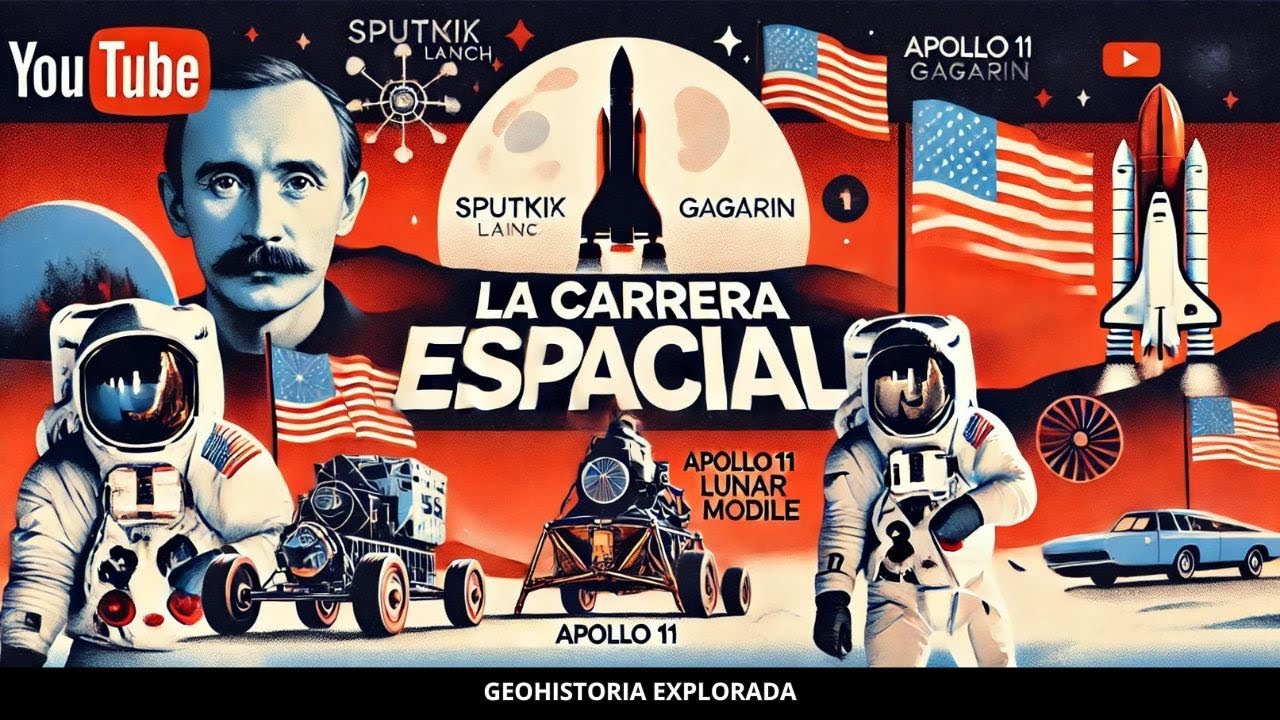
La Carrera Espacial | GeoHistoria Explorada
402
The United States intensified efforts to close the gap with Project Mercury, the first manned NASA program. Alan Shepard became the first American in space on May 5, 1961, followed by John Glenn's orbital flight in February 1962. President Kennedy's May 25, 1961 speech launched the ambitious goal of landing a man on the Moon before the decade's end, galvanized NASA, and significantly increased the budget. The Gemini program followed, developing critical techniques for lunar missions including orbital rendezvous, spacewalks, and human endurance for prolonged space flights. These achievements established the foundation for Apollo's success.
Click to watch →

a HISTÓRIA da EXPLORAÇÃO ESPACIAL em 1 HORA
1.9M
Post-WWII geopolitical tensions transformed space exploration into a matter of national prestige. The Soviet Union launched Sputnik 1 on October 4, 1957—the first artificial satellite—triggering the 'Sputnik crisis' and accelerating American space efforts, leading to NASA's creation in 1958. The Soviets continued advancing with Sputnik 2 carrying Laika and the Vostok program. On April 12, 1961, Yuri Gagarin became the first human in space aboard Vostok 1, completing one orbit before safely returning. President Kennedy challenged America to land a man on the Moon before the decade ended, driving the Apollo program through Mercury (orbital flight), Gemini (rendezvous testing), and Apollo (lunar landing). Apollo 1 suffered a fatal fire in 1967, killing three astronauts. After this tragedy, manned flights resumed with Apollo 7. Apollo 8 became the first mission to orbit the Moon, followed by Apollo 9 and 10. Finally, Apollo 11 achieved Kennedy's goal on July 20, 1969, with Neil Armstrong becoming the first human to walk on the lunar surface, declaring 'That's one small step for a man, one giant leap for mankind.'
Click to watch →
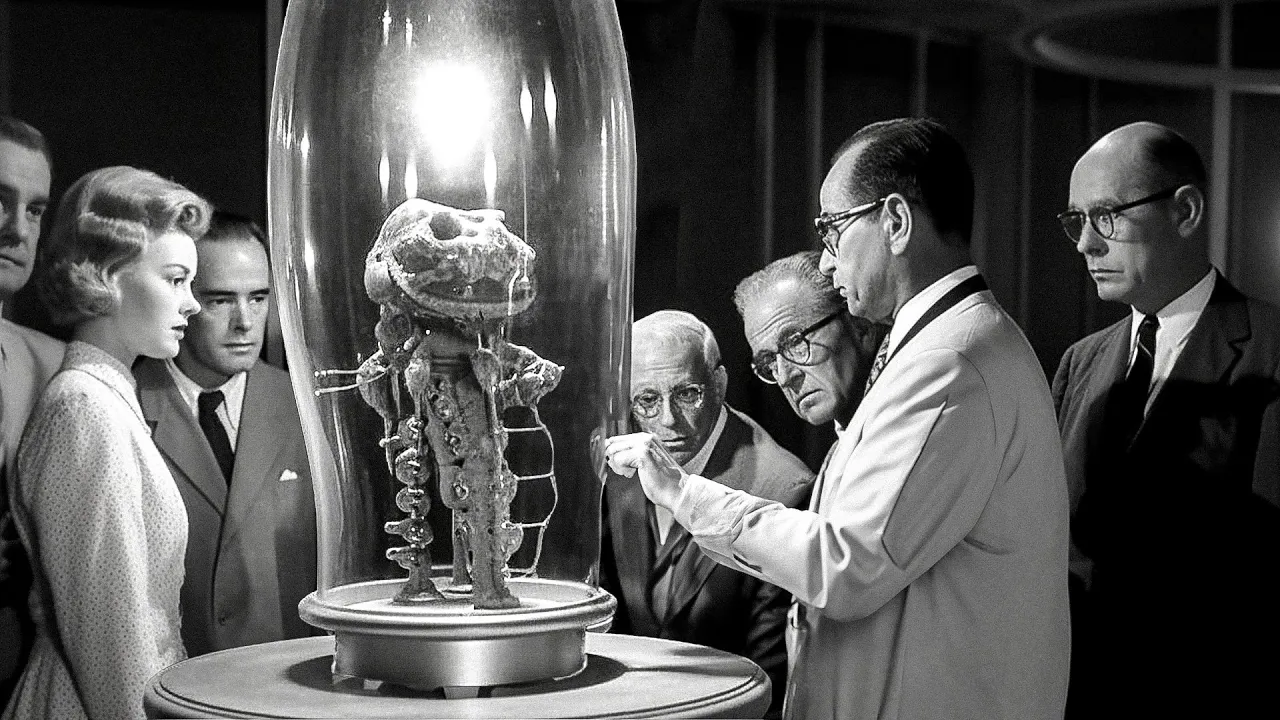
NEW Apollo 11 Declassified Files: What NASA Didn't Tell Us!
133.9K
In response to Sputnik, the United States announced Project Mercury in 1958 under President Eisenhower, selecting seven astronauts as America's answer to the Soviet challenge. Meanwhile, the Soviet Union achieved a major milestone on April 12, 1961, when Yuri Gagarin orbited Earth in Vostok 1, becoming the first human in space. This achievement was a severe blow to American morale and prompted President Kennedy to make a bold commitment to the Moon landing goal.
Click to watch →
Deep Dive
The evolution of early Soviet spacecraft engineering, comparing the single-pilot Vostok design with the multi-crew Voskhod and long-lasting Soyuz programs.

The Space Race/Apollo Program Part 6: Soviet Space Vehicles used during the Space Race
196
The Soviet manned space program developed three principal spacecraft: Vostok (6 flights, single cosmonaut), Voskhod (2 flights, 2-3 cosmonauts), and Soyuz (4 flights, up to 3 cosmonauts). Vostok consisted of a spherical descent module (8 feet diameter, 10,000 pounds) and equipment section with 12 high-pressure bottles, 10 thrusters, and louvered thermal control panels. All cosmonauts ejected at 23,000 feet due to high impact velocity. Vostok 1 (Gagarin) had a 10-minute umbilical separation delay causing module gyration. Vostok 6 (Tereshkova) was the first woman in space and first example of motion sickness. Voskhod adapted Vostok for 2-3 cosmonauts, including the first spacewalk (12 minutes) where Leonov drifted in space and his suit ballooned. Soyuz (14,000 pounds) included docking module, orbital module, descent module, and instrument module with solar arrays. Soyuz 1 (April 1967) failed catastrophically with 203 design discrepancies, causing cosmonaut Komarov's death.
Click to watch →

История космонавтики
863
The Vostok rocket stood 38 meters tall, primarily composed of fuel tanks for achieving orbital velocity. Its upper stage carried the Vostok capsule, occupying only 1/8 of the rocket's height, designed for single occupancy. Early Vostok missions required cosmonauts to eject at 7 km altitude using ejection seats, then descend separately via parachute while the capsule landed under its own parachutes. The Voskhod program introduced two major innovations: multi-crew capability (up to three cosmonauts) and soft landing technology allowing cosmonauts to land inside the descent module. Only two Voskhod missions flew, with Voskhod 2 enabling Alexei Leonov's historic spacewalk on March 18, 1965.
Click to watch →

The Most Launched Rocket - A History Of The R-7
511.6K
The pursuit of human spaceflight pushed the R-7 family to new extremes. Voskhod 1 carried three cosmonauts in a cramped capsule—the first multi-crew mission—while Voskhod 2 enabled Alexei Leonov's historic first spacewalk in November 1966. Soyuz made its maiden flight in 1966 with dramatically improved spacecraft design, but early missions revealed serious flaws: uncontrolled spinning, unexpected interactions between gyroscopes and Earth's rotation causing premature parachute deployment, and catastrophic system failures that killed Vladimir Komarov in 1967—the first in-flight fatality in space travel. Engineers responded with iterative improvements designated by letters (B, V, R, L, M), with Soyuz L carrying the Soviet Moon lander for testing. This period illustrates how pioneering space exploration required accepting significant risks while learning through experience.
Click to watch →

เครื่องจักรและพาหนะของโซเวียตสุดแปลกที่คุณไม่เชื่อว่าจะมีอยู่จริง
695K
The Soviet Vostok program successfully launched the first human into space in 1961 with Yuri Gagarin aboard Vostok One. The program also achieved the milestone of sending the first woman into space in 1963 with Valentina Tereshkova on Vostok 6. However, the Vostok spacecraft had a significant safety drawback: landing caused severe vibrations that could injure the cosmonaut. This led to the development of the Soyuz spacecraft, which replaced Vostok in 1963 and remains in use today, demonstrating how early space program innovations evolved through addressing practical safety concerns.
Click to watch →

KSP: Recreating the VOSTOK and the VOSKHOD Soviet Space Programs!
303.8K
The Soviet Vostok program (1961-1963) achieved humanity's first crewed spaceflight with Yuri Gagarin's historic mission and later set the record for the longest solo spaceflight (Vostok 5, 4 days 23 hours), while the Voskhod program (1964-1965) pioneered multi-crew spacecraft and the first spacewalk through its inflatable airlock design; both programs utilized the versatile R-7 rocket family, originally developed as an intercontinental ballistic missile, which evolved into the foundation for all subsequent Soviet manned space missions including modern Soyuz rockets.
Click to watch →
Deep Dive
Advanced engineering developments in spacecraft thermal protection systems (TPS) and parachute recovery methods for manned capsules.

🔴 EN DIRECT TEST DE LA CAPSULE ORION ( ARTEMIS: RETOUR SUR LA LUNE)
15.4K
The Orion capsule serves as the crew return vehicle for the Artemis program, transporting astronauts to and from the Moon. The capsule weighs approximately 3-4 tonnes (3,890 kg) for the crew module alone, with the complete launch vehicle including Service Module and propellant weighing approximately 21.25 tonnes. The Service Module weighs about 7.9 tonnes and contains the propulsion system and solar panels. The capsule is constructed by Lockheed Martin and delivered to NASA, where engineers install internal systems and equipment. The capsule features advanced thermal protection systems for safe atmospheric reentry and a sophisticated three-parachute recovery system with redundancy for safety. The capsule will land at approximately 16 km/h under parachute, significantly slower than the Soyuz capsule which experiences higher impact velocities. The system can withstand landing with reduced parachute deployment, demonstrating the robust engineering approach to human spaceflight safety. NASA selected ocean landing over land-based landing with inflatable cushions for enhanced safety, as water provides a more forgiving landing surface.
Click to watch →
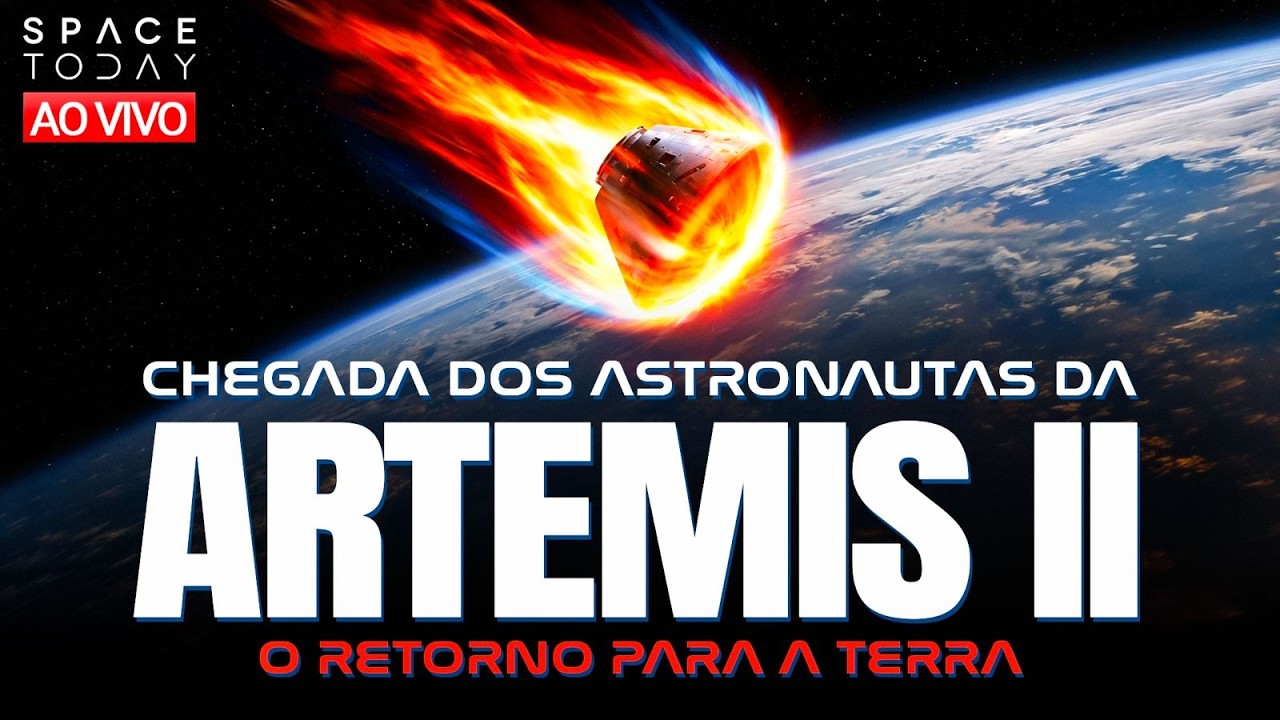
AO VIVO: A VOLTA DOS ASTRONAUTAS DA ARTEMIS II !!!!
69.6K
The Orion spacecraft uses a three-stage parachute system: first, drag parachutes deploy below 10 km to slow the capsule and align it; second, drogue parachutes deploy below 2 km for further deceleration; third, three main parachutes deploy to slow the capsule to approximately 27 km/h for splashdown. This staged approach ensures safe landing.
Click to watch →
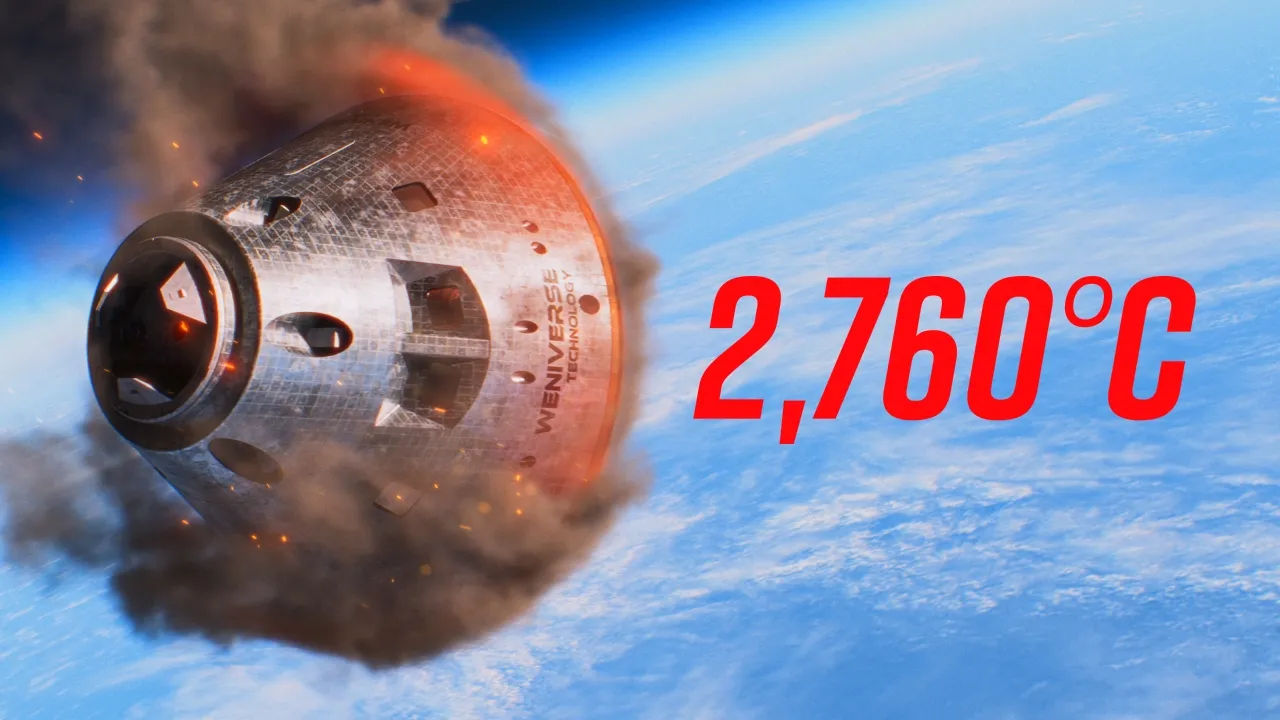
우주 귀환의 비밀: 극한의 열을 견디는 방법
151K
Spacecraft re-entry generates extreme temperatures (up to 2,760°C) due to kinetic energy conversion into heat through shock waves and plasma formation; thermal protection systems (TPS) have evolved from early ablative materials like MA25S and Inconel X in the X-15 program, through Apollo's ablation-based shields with 370,000 hexagonal holes, to the Space Shuttle's reusable silica tiles with white (reflective) and black (emissive) surfaces designed according to Kirchhoff's law, and now toward next-generation transpiration cooling methods that inject coolant through microscopic holes to form protective boundary layers.
Click to watch →

ARTEMIS II : Un Retour sur Terre à Hauts Risques
40.9K
The return of the Orion capsule from lunar missions represents the most dangerous phase of space travel, involving a complex sequence of engineering solutions. At 40,000 km/h, the capsule must fight against physics as air becomes a wall of fire. NASA employs skip reentry, where the capsule bounces off atmospheric layers like a stone skipping on water, reducing G-forces and enabling precise Pacific Ocean landing. The 5-meter thermal shield uses ablative AFAT material that burns away to dissipate 2800°C heat, while plasma formation creates a 7-minute communication blackout. Recovery involves 11 parachutes, including massive main parachutes covering a football field, followed by vertical repositioning balloons. After 10 days in microgravity, astronauts face physiological shock from Earth's gravity returning. This process validates the vessel that will bring the first woman and next man to the lunar surface.
Click to watch →

Dream Chaser HUGE Update "First launch incoming" that makes NASA crazily
89.5K
The Thermal Protection System (TPS) protects spacecraft from extreme aerothermal heating during atmospheric re-entry, with temperatures reaching 1650°C (3000°F). Dream Chaser uses approximately 2,000 hand-cut tiles, significantly fewer than the 24,000 used on the Space Shuttle, because Dream Chaser is smaller (about one-quarter the size) but uses larger tiles (10x10 inches versus 6x6 inches). The tiles are bonded using room temperature vulcanizing (RTV) silicone that withstands high temperatures.
Click to watch →
Deep Dive
The diplomatic and cultural legacy of Yuri Gagarin's flight, tracing how competitive space programs eventually evolved into cooperative endeavors like the ISS.

Космическая гонка на пальцах | Мудреныч | СССР против США
3.7M
The Space Race transformed from competition to cooperation. After Gagarin's 1961 flight, the USSR achieved firsts: first woman in space (Tereshkova, 1963), first spacewalk (Leonov, 1965), first soft lunar landing (Luna 9, 1966). The US matched with Apollo 8 (1968) and Apollo 11 (1969). Both nations launched orbital stations (Salyut, Skylab) and reached Mars (1971). The Apollo-Soyuz Test Project (1975) symbolized Cold War thawing, with crews shaking hands in orbit. This marked the transition from space competition to international cooperation.
Click to watch →
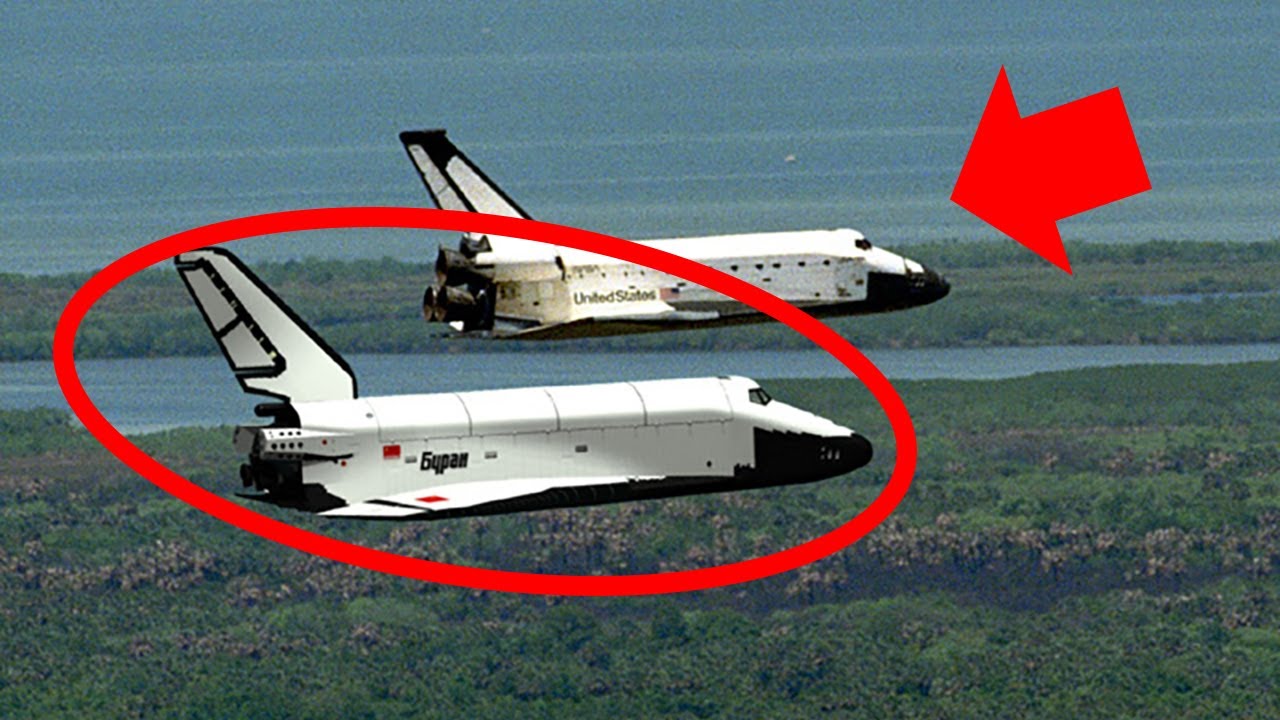
Russia Stole a Space Shuttle
268.5K
The failed Buran program inadvertently contributed to future international cooperation in space. After the Soviet Union dissolved in 1991, parts of the copycat shuttle were displayed in Russian museums. More significantly, the Buran's design compatibility with American systems enabled future collaborations. From 1995 onward, US space shuttles began linking up with Russia's Mir space station with minimal modifications, demonstrating how competitive space programs can eventually lead to cooperative international partnerships despite decades of rivalry.
Click to watch →
ЗВЕЗДА ПО ИМЕНИ МКС. Как работает самая большая космическая лаборатория
3M
The International Space Station emerged from decades of Cold War rivalry between the United States and Soviet Union. The official announcement came September 2, 1993, when Russian President Chernomyrdin and U.S. Vice President Gore declared a new genuinely international orbital project. The first station element, the Russian Zarya module, launched November 20, 1998. Technical challenges included developing compatible docking systems between American and Russian spacecraft, solved by the APAS adapter. The failed American Freedom program (1980s) was salvaged by incorporating its components into the new international station. The first construction expedition was STS-88 in December 1998, connecting the Unity and Zarya modules. The first permanent crew arrived October 31, 2000, marking Expedition 1. This transformation from competitive national programs to cooperative international ventures represents one of history's most significant diplomatic achievements in space exploration.
Click to watch →
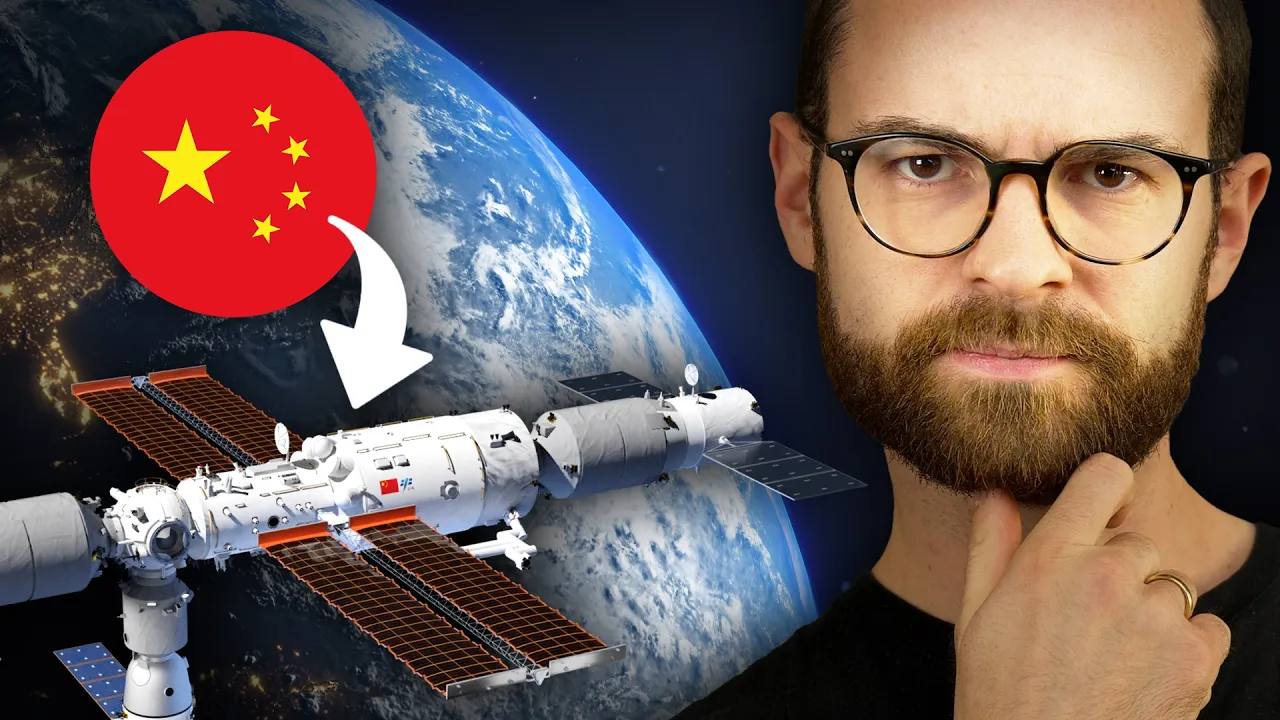
Überlassen wir China das Weltall? (Raumstationen)
35.1K
The Saljut program (1967-1986) and Skylab (1973-1979) represented early space station efforts during Cold War competition, with stations serving both scientific and military purposes. Mir (1986-2001) pioneered modular construction, assembled piece-by-piece in orbit, and demonstrated that international cooperation could transcend political boundaries. The ISS emerged from merging American Freedom Station and Russian Mir-2 projects in 1993, involving 15 nations. This evolution shows how space exploration transformed from national competition to global scientific collaboration, proving that 400 km altitude should be beyond political conflicts.
Click to watch →
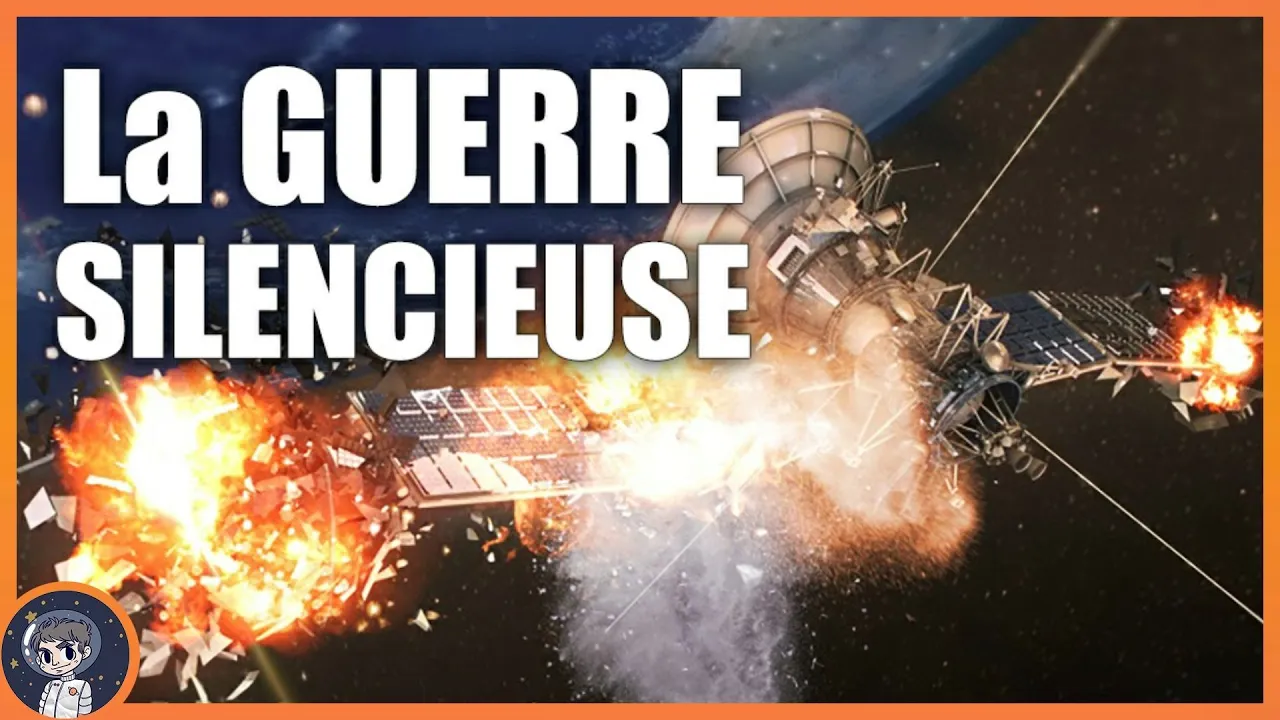
Va-t-on vers une GUERRE SPATIALE ? - Le Saviez Vous #26 - Le Journal de l'Espace
68.2K
The International Space Station (ISS) represents a successful model of international space cooperation, having served as an opportunity for collaboration among multiple powers including the United States, Europe, Russia, Canada, Japan, and Brazil since its creation. This contrasts with the militarization of space, demonstrating that space can serve as a platform for peaceful cooperation rather than conflict. The video concludes with Yuri Gagarin's famous quote from Vostok One on April 12, 1961: 'Looking at Earth from afar, you realize it is too small for conflict and just large enough for cooperation.'
Click to watch →
Gagarin's Flight
Aftermath
Gagarin's Flight
0:00- 1
Yuri Gagarin selected for Vostok 1 mission.
- 2
Launched April 1961, orbited Earth for 108 minutes.
- 3
Reentry faced cable failure, but he landed safely.
The FAI Landing Controversy and Technicality of the Record
While Yuri Gagarin is universally recognized as the first human in space, a significant historical debate surrounds the official certification of his flight. Under the rules of the Fédération Aéronautique Internationale (FAI) in 1961, a pilot had to land inside their spacecraft for the flight to be officially recognized. During Vostok 1, Gagarin actually ejected from his capsule at an altitude of about 7 kilometers (23,000 feet) and parachuted to Earth separately. Recognizing that this could disqualify the record, Soviet officials deliberately hid this detail from the FAI, falsely claiming Gagarin had landed inside the craft. Although the FAI eventually upheld the record after the truth was revealed years later, critics and historians point out that by the strict letter of international aviation rules at the time, Gagarin's mission did not technically meet the criteria for a completed piloted spaceflight, illustrating how Space Race geopolitics compromised strict scientific and sporting standards.
The geopolitical context of the Cold War and the origins of the Space Race between the United States and the Soviet Union.
Basic principles of orbital mechanics, including orbital velocity, gravitational pull, and the difference between suborbital and orbital trajectories.
Technological precursor milestones, specifically the launch of Sputnik 1 and the biological telemetry gathered from early animal spaceflights.
Fundamental concepts of Earth's atmosphere, including the Karman line (boundary of space) and the high temperatures generated during atmospheric reentry.
The immediate American response to Vostok 1, including Project Mercury (Alan Shepard and John Glenn) and President Kennedy's mandate to reach the Moon.
The evolution of early Soviet spacecraft engineering, comparing the single-pilot Vostok design with the multi-crew Voskhod and long-lasting Soyuz programs.
Advanced engineering developments in spacecraft thermal protection systems (TPS) and parachute recovery methods for manned capsules.
The diplomatic and cultural legacy of Yuri Gagarin's flight, tracing how competitive space programs eventually evolved into cooperative endeavors like the ISS.
872.4K views19.7Klikes3:04@SimplehistoryOriginal Release: 2017-12-19
Yuri Gagarin first man in space.12th of April 1961.
Yuri Gagarin was born near Moscow, Russia on March 9th 1934 and was the son of a carpenter.
Yuri joins the Soviet Air Force in 1955 and by 1959 he was training to become a cosmonaut.
In 1960, Gagarin was selected along with 19 other candidates for the Vostok 1 program.
Eventually the program was narrowed down to two possible candidates.
Gagarin and Gherman Titov both had excellent performance in their training and were short enough to fit in the Vostok cockpit.
Gagarin was perhaps selected because of his modest background which suited Soviet Union propaganda.
But also because of the other candidates voted for him.
His excellent memory skills,fast reactions and mathematical skills.
At age 27 on the morning of 12th of April 1961 Cosmonaut Yuri Gagarin was helped into his space suit and made his way to the launch pad.
He climbed into the Vostok spacecraft.
Wondering if he would return back to earth but was calm.
At 9:07 A.M. Moscow time as the engines rumbled Gagarin said "Let's go!"
The rockets blasted off into space and in ten minutes the Vostok spacecraft separated from the launch rocket.
Gagarin was in space.
He crossed the Atlantic Ocean then the Pacific Ocean and as his spacecraft passed over Africa he prepared to re-enter the Earth's atmosphere.
Which would not be easy.
He had orbited earth for 108 minutes during the flight as he made re-entry the cables joining the Vostok descent module to the service module failed to detach properly.
Almost causing disaster as it violently shook Gagarin.
Until they eventually pulled apart.
As he re-entered Earth's atmosphere he experienced forces up to eight times the pull of gravity.
But remained conscious.
Because the Vostok spacecraft had no engines to slow down its reentry upon landing Gagarin had to eject out and parachute to Earth.
He landed safely near the Volga river.
Yuri Gagarin was made a national hero of the Soviet Union.
It became a global celebrity.
He died on March 27th 1968, during an accident in a military training flight. He was just 34 years old.
Subscribe for more history videos.Get Simple History The Space Race today.
Thank you guys for all your support on the Simple History YouTube channel.If you enjoyed please consider visiting our patreon page.
There you can show us your support for the channel by donating and make a huge difference in what we're able to create for you.
Plus you can get early access on upcoming videos, so let's keep it growing, and thank you for being part of this amazing community.
Up Next
3:43
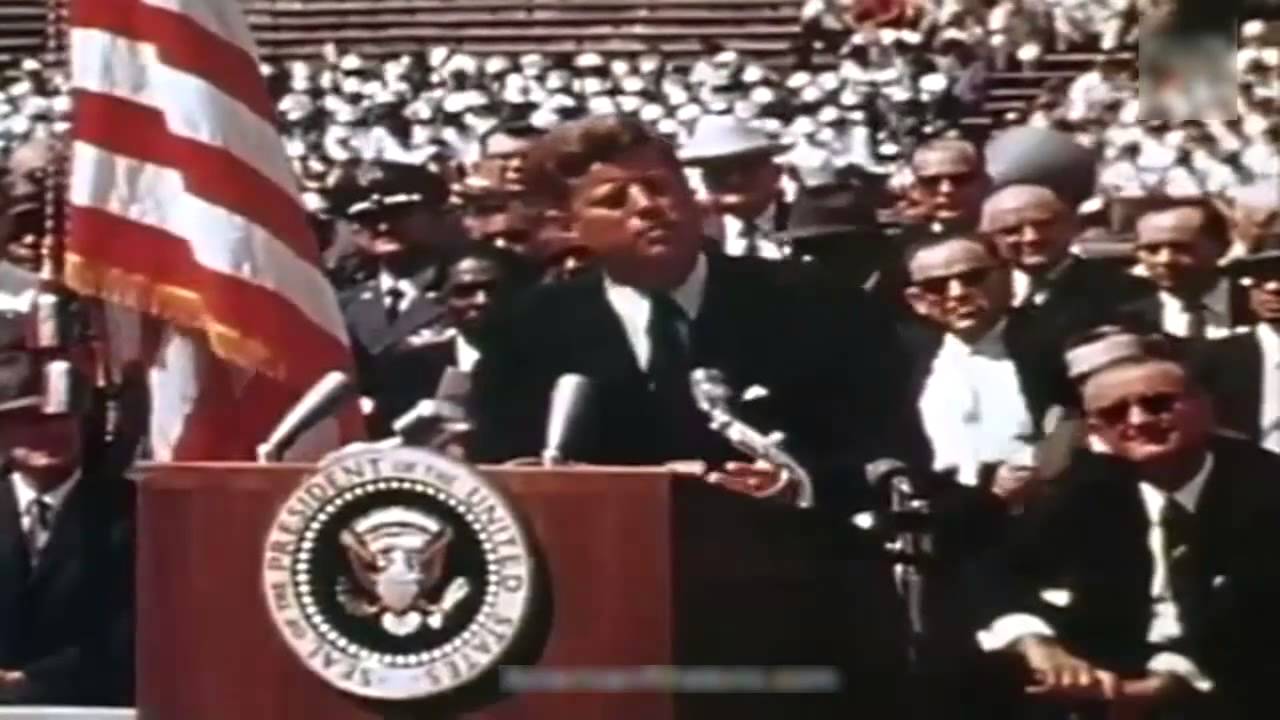
JFK's 1962 Moon Speech: Why We Choose to Go to the Moon
@JFKHomecoming
2.2M views•2013-07-22

33:02
The Great Schism of 1054: Causes and Consequences
@SacredCathedrals
113.5K views•2026-02-19

91:57
The Geopolitics of the Ukraine War and the Rise of Global Autocracy
@JordanHarbingerShow
468K views•2025-04-19

17:05
Understanding the Cold War: Superpower Conflicts and the Road to Détente
@OverSimplified
46.1M views•2019-01-24
Related Study Plans & Knowledge Roadmaps
Structured learning paths in History
history
Byzantine Iconoclasm: Theology, Art & Politics
01Foundations of Byzantium and Early Christian Images
02The First Iconoclasm: Leo III and the Crisis of Images
03Empress Irene, Nicaea II, and the Second Iconoclasm
+ 2 more learning modules
9h5 modules
Explore Roadmap
history
Iranian Revolution (Causes, Events & Legacy)
01The Pahlavi Dynasty and the Roots of Discontent
02The Spark of Rebellion and the Rise of Khomeini
031979: The Fall of the Shah and the Climax of the Revolution
+ 2 more learning modules
8h5 modules
Explore Roadmap
history
Mali Empire: Mansa Musa, Trade & Timbuktu
01Foundations of the Mali Empire
02The Trans-Saharan Gold and Salt Trade
03The Reign and Pilgrimage of Mansa Musa
+ 1 more learning modules
6h4 modules
Explore Roadmap
history
1947 Partition: Politics, Borders & Legacies
01Foundations of British India and the Divide
02The Political Negotiations and the Mountbatten Plan
03Drawing the Boundary: The Radcliffe Line
+ 2 more learning modules
8h5 modules
Explore Roadmap