In his famous 1961 Moon Speech, President John F. Kennedy argued that humanity should pursue ambitious, difficult goals because such challenges serve to organize and measure our best energies and skills, demonstrating that progress requires embracing complexity rather than avoiding it.
JFK's 1962 Moon Speech: Why We Choose to Go to the Moon
Added:Deep Dive
The geopolitical context of the Cold War, specifically the ideological and military rivalry between the United States and the Soviet Union.
Топ 10 СТРАНИ, които НЕ СЕ ПОНАСЯТ
175K
The Cold War was primarily an ideological and geopolitical struggle between the United States and the Soviet Union (later Russia) following World War II. The US promoted capitalism and freedom, while the USSR advocated for communism and centralized control. This rivalry manifested through proxy wars in Vietnam, Cuba, Afghanistan, and Korea, where both superpowers competed for influence without direct military confrontation. The competition extended to technological and military development, particularly nuclear weapons and space exploration.
Click to watch →

Geopolítica e Atualidades para a UFPR - #FOcaNaFederal
3.5K
The Cold War was both ideological (capitalism vs. socialism) and geopolitical (competition for global influence), beginning in 1945 or 1947 with the Truman Doctrine. The US sponsored insurgencies and military coups in countries moving toward socialism, while the Soviet Union supported similar movements including the Cuban Revolution. The Cold War created a bipolar world with two opposing blocs: capitalist (US-led) and socialist (Soviet-led). The US established NATO (1949) in Western Europe, while the Soviet Union controlled Eastern Europe and Central Asia. The Middle East, Africa, and parts of Asia were battlegrounds where both superpowers competed through proxy conflicts. The Cuban Missile Crisis (1962) was the peak tension, resolved when the US removed missiles from Turkey and Soviets removed missiles from Cuba.
Click to watch →

The Cold War: America vs. the Soviet Union | Full History Explained in Simple English
22.6K
The Cold War (1945-1991) was a period of intense geopolitical tension between the United States and the Soviet Union, characterized by ideological competition between capitalism/democracy and communism/communist one-party systems, without direct military conflict but featuring proxy wars, an arms race, and the space race; this rivalry shaped global politics, technology, and international relations for over four decades until the Soviet Union's dissolution in 1991.
Click to watch →

25.1 - A GUERRA FRIA: ENFRENTAMENTO POLÍTICO IDEOLÓGICO ENTRE EUA E URSS
251
The Cold War was a 45-year confrontation between the United States and the Soviet Union, beginning after World War II in 1945-1946. It was fundamentally an ideological conflict between capitalism and communism, where both superpowers competed for global hegemony. The United States and its allies formed NATO in 1949 as a military alliance, while the Soviet Union established control over Eastern European satellite states. This period established the bipolar world structure that defined international relations for nearly half a century, with both sides engaging in proxy wars, arms races, and diplomatic competition without direct military confrontation.
Click to watch →
Historia - Semana 15 - Pre San Marcos Ciclo 2025-I (Nuevo Ciclo)
149
The Cold War (1945-1991) was a period of indirect confrontation between the US and USSR, dividing the world into capitalist and socialist blocs. The rivalry was conducted through economic, political, and ideological means, with military tension that almost led to World War III. The peak tension occurred in the 1960s with the Cuban Missile Crisis. The Cold War included proxy wars like the Korean War (1950) and Vietnam War. Economic reconstruction was addressed through the Marshall Plan (US aid to Western Europe) and Molotov Plan (Soviet aid to Eastern Europe). Military alliances included NATO and the Warsaw Pact. The space race began in 1957 with Sputnik 1, leading to the Moon landing in 1969.
Click to watch →
Deep Dive
The early milestones of the Space Race, including the Soviet Union's launch of Sputnik in 1957 and Yuri Gagarin's historic orbit in 1961.

COMO É A VIDA DE ASTRONAUTA
173.8K
The Soviet Union achieved remarkable milestones in the early space race: launching Sputnik (the first artificial satellite) in October 1957, sending Laika (the first living creature) to space in November 1957, and finally sending Yuri Gagarin as the first human to space in 1961. Sputnik transmitted radio signals and orbited for 9 months. Laika died from cold and stress due to system failures but became a national hero. Gagarin was selected based on three criteria: excellent academic performance, humble peasant background, and short height (1.6m) to fit in the cramped Vostok capsule. The capsule was so small Gagarin could barely move and had to remain seated throughout the mission.
Click to watch →
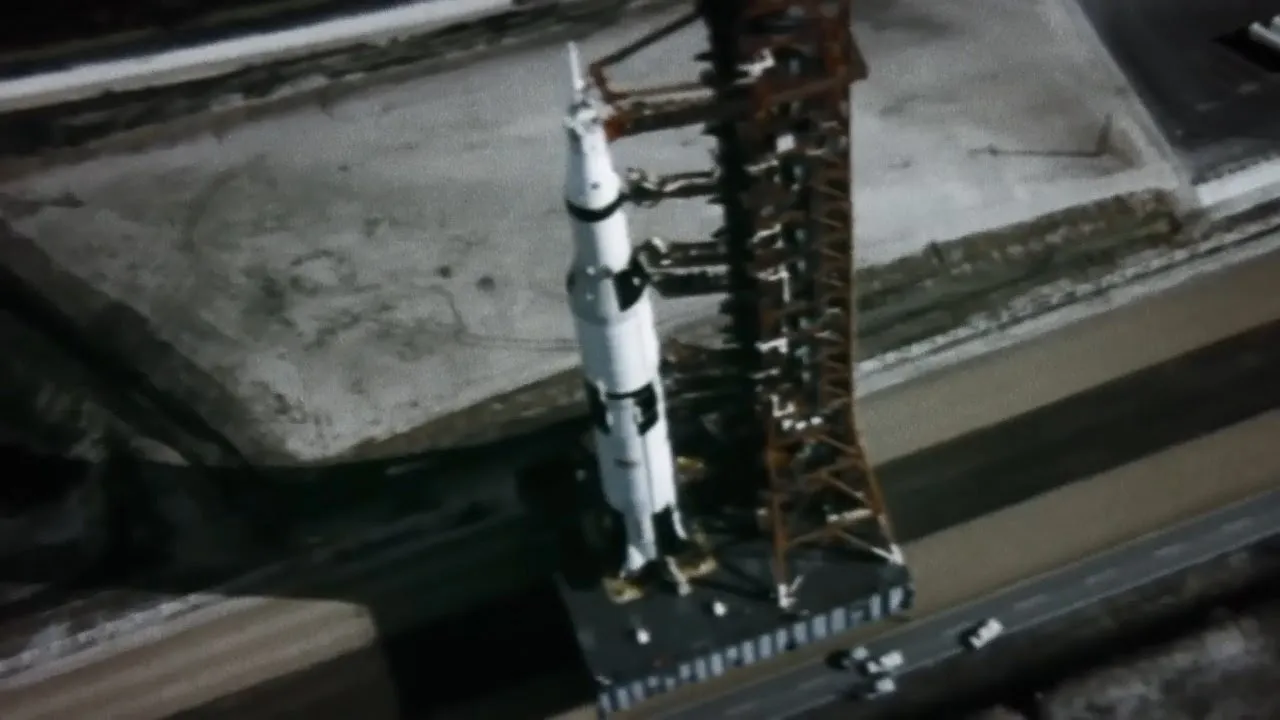
Código Rojo (2018) Episodio 3: El Espacio
244.6K
The Space Race began with Sputnik 1 on October 4, 1957, the first artificial satellite. The United States responded by founding NASA in 1958 with the goal of sending the first person to space. On April 12, 1961, Yuri Gagarin became the first human in space aboard the Vostok rocket, completing one orbit. His success came from Soviet missile technology—the R-7 ICBM. Despite a poor missile track record (a prototype exploded killing 100 people), the technology was adapted for human spaceflight. John Glenn's Friendship 7 mission in February 1962 completed three orbits, catching up with the Soviets. President Kennedy then set the ambitious goal of landing people on the Moon.
Click to watch →

The First Human in Space - A Mysterious Death
541.6K
The space race began on October 4, 1957, when the Soviet Union launched Sputnik 1, the first artificial satellite to achieve Earth orbit. This brief mission transmitted radio signals for 22 days before burning up in the atmosphere, shocking the world and prompting the U.S. to establish NASA and DARPA. The Americans also created ARPANET, the precursor to the modern Internet. On April 12, 1961, Soviet cosmonaut Yuri Gagarin became the first human in space aboard Vostok 1, orbiting Earth for 89 minutes at 29,000 km/h. His famous words 'Flight is proceeding normally, I am well' echoed around the world. Gagarin became an instant celebrity in Russia, with monuments and street names changed in his honor. However, seven years later, on March 27, 1968, Gagarin died in a plane crash while retraining as a fighter pilot, marking a tragic end to the Soviet space program's golden age.
Click to watch →

Vesmír, Pristánie na Mesiaci a Tragické Udalosti
260.3K
The space race began after World War II when both the US and USSR recruited German rocket scientists. On October 4, 1957, the Soviet Union launched Sputnik 1, the first artificial satellite. On November 3, 1957, Sputnik 2 carried Laika the dog, who did not survive. In 1958, the US launched Explorer 1, discovering the Van Allen radiation belts. In 1960, Sputnik 5 carried two dogs (Belka and Strelka) who survived. In 1961, Ham the chimpanzee became the first primate in space. On April 12, 1961, Yuri Gagarin became the first human in space aboard Vostok 1, completing one orbit. Alexei Leonov performed the first spacewalk lasting 12 minutes. These milestones marked humanity's first steps into space exploration.
Click to watch →

Вернувшийся Астронавт Наса Рассказал Всю Правду о Том Что Видел в Космосе
218.3K
The Space Race was a 20-year competition between the Soviet Union and the United States beginning in the 1950s. The USSR achieved the first major milestone on October 4, 1957, launching Sputnik 1, the first artificial satellite. Four years later, Yuri Gagarin became the first human in space on April 12, 1961, orbiting Earth once aboard Vostok 1. The US responded with Alan Shepard's suborbital flight on May 5, 1961, reaching 187 kilometers. This period established the foundation for all subsequent space exploration and human spaceflight.
Click to watch →
Deep Dive
The establishment and early mandate of NASA (National Aeronautics and Space Administration) in 1958 as a civilian space agency.
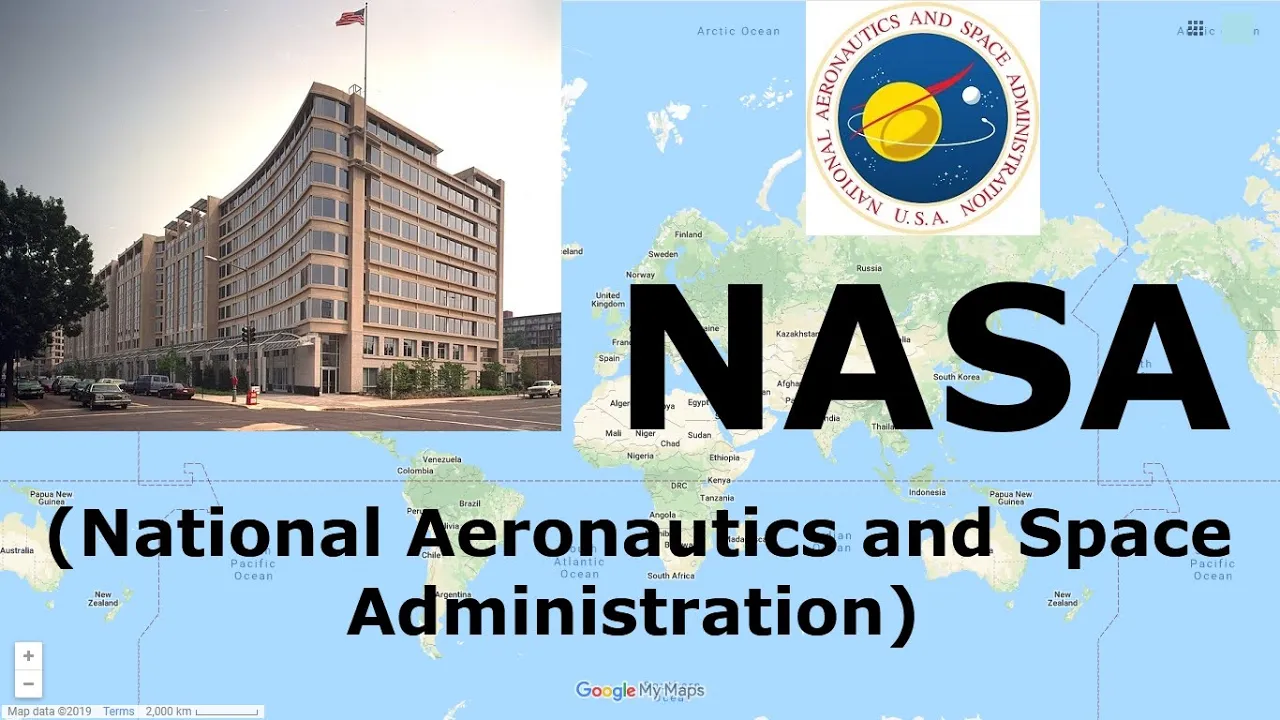
NASA (National Aeronautics and Space Administration) | United States Organization | @narviacademy
1.3K
NASA (National Aeronautics and Space Administration) is the United States' national space agency established on July 29, 1958, when President Eisenhower signed the National Aeronautics and Space Act. This followed the Soviet Union's launch of Sputnik I on October 4, 1957, which triggered congressional concern about national security and technological leadership. NASA succeeded NACA (founded 1915) and absorbed its 8,000 employees with a $100 million budget. The agency absorbed three major research laboratories and gained control of JPL in December 1958. NASA employs approximately 18,000 civil servants and supports over 312,000 jobs nationwide, working with contractors, academia, and international partners to advance space exploration and scientific discovery.
Click to watch →

The creation of NASA
300
NASA was created in 1958 from NACA (National Advisory Committee for Aeronautics, formed 1915) and other organizations as a response to the Space Race. The process began with NACA's rocket plane experiments from 1946, including the Bell X-1. After Sputnik 1's launch on October 4, 1957, the U.S. Congress and President Eisenhower agreed a new federal agency was needed for non-military space activities. NACA began studying the transition in late 1957, organizing a Special Committee on Space Technology on January 12, 1958, headed by Guyford Stever. On January 14, 1958, NACA Director Hugh Dryden published a report advocating for a national civilian space agency. Explorer 1 launched on January 31, 1958, becoming the U.S.'s first Earth satellite. President Eisenhower delivered an executive address in April 1958 favoring a national civilian space agency, and Congress passed the National Aeronautics and Space Act on July 16, 1958.
Click to watch →

The Story Of The Sputnik Moment. America Went Nuts In 1957
15.9K
In July 1958, Congress established NASA (National Aeronautics and Space Administration) as a civilian agency dedicated to peaceful space exploration. The legislation declared that space activities should be devoted to peaceful purposes for the benefit of all mankind. This represented a deliberate choice to separate civilian space exploration from military applications, establishing a framework for international cooperation in space.
Click to watch →
FILM: Richard Hoagland - NASA Revealed (Pt. 1 of 3)
48.4K
In July 1958, almost a year after Sputnik, President Eisenhower created NASA (National Aeronautics and Space Administration) as a civilian space agency through the Space Act. The idea was to get space out of the hands of competing military services and focus on civilian exploration. Eisenhower insisted on this being civilian to avoid the military services' competing agendas.
Click to watch →

41 - 2026 KPSS - Tarih - Soğuk Savaş Dönemi - II - Aydın YÜCE
35.8K
NASA (National Aeronautics and Space Administration) was established in 1958 by the United States to coordinate civilian space program activities. This followed the Soviet launch of Sputnik 1 and represented America's commitment to space exploration during the Cold War.
Click to watch →
Deep Dive
The basic concept of political rhetoric and how leaders use public speeches to mobilize national resources and shape public opinion.

SILO: Toda La Serie (Resumen) EN MINUTOS
615.6K
Political leaders use public rhetoric to manage perception and maintain control. Characters observe speeches designed to calm populations, distribute resources, and redirect attention from underlying problems. The manipulation of public narrative demonstrates how political leadership involves managing information flow to maintain support and suppress dissent.
Click to watch →

Kéri László Zalaegerszegen
23.1K
Political rhetoric shapes public discourse: (1) Leaders use symbolic language to communicate priorities, (2) Rhetoric can mobilize support or create division, (3) Political speeches are often analyzed for underlying messages, and (4) The gap between rhetoric and reality affects public trust. Understanding political rhetoric is essential for analyzing political communication.
Click to watch →

रवीः पलटवारको तयारी ! आरजुको भारत-कोशेली । कुशासनको आहालमा ओली । POWER NEWS
105.1K
Political leaders use rhetoric to create waves of public opinion and mobilize support. The video shows how Rabi Lamichhane's statements created additional waves in the national political environment. This illustrates the concept of political rhetoric as a tool for mobilizing public opinion and creating momentum for political change.
Click to watch →

แก๊งประชาธิปไตยโจรตะแบง 8 ปีจบวาระปี 70 ปลุกม็อบไล่ "บิ๊กตู่" กดดันศาลรธน. | ข่าวมีคม | TOP NEWS
79.1K
Political rhetoric can influence public perception and mobilize support for political movements. The speaker discusses how political leaders use specific language and framing to shape public opinion and mobilize support. This illustrates how political discourse involves not just policy positions but also the strategic use of language to influence public perception and build political support.
Click to watch →

Anger, fear, domination: Dark passions and the power of political speech
3.1K
Political rhetoric does not merely express pre-existing public opinion or sentiment; it actively shapes and transforms the opinion, sentiment, and character of the public. This is a fundamental insight that distinguishes effective political leadership from passive observation of public mood. The speaker contrasts this with the common assumption that politicians simply reflect what voters already believe.
Click to watch →
Prerequisite Knowledge
- Concept 01The geopolitical context of the Cold War, specifically the ideological and military rivalry between the United States and the Soviet Union.
- Concept 02The early milestones of the Space Race, including the Soviet Union's launch of Sputnik in 1957 and Yuri Gagarin's historic orbit in 1961.
- Concept 03The establishment and early mandate of NASA (National Aeronautics and Space Administration) in 1958 as a civilian space agency.
- Concept 04The basic concept of political rhetoric and how leaders use public speeches to mobilize national resources and shape public opinion.
Subsequent Learning
- Step 01The execution and developmental milestones of the Apollo Program, culminating in the Apollo 11 moon landing in 1969.
- Step 02The technological, scientific, and economic spin-offs of the 1960s space race that laid the groundwork for modern computing and materials science.
- Step 03The shifting geopolitics of space exploration in the post-Cold War era, including international cooperation on the International Space Station (ISS).
- Step 04Modern space policy and the rise of commercial spaceflight companies alongside public agencies aiming for Mars and lunar colonization.
Human Progress
Moon Quest
Human Progress
0:05Playing Section
- 1
Condenses 50,000 years of history to half a century.
- 2
Highlights rapid recent advances like writing and steam power.
- 3
Affirms human determination to pursue knowledge relentlessly.
Cold War Geopolitics and the Social Cost of Apollo
While JFK’s speech framed the Apollo program as a noble, universal quest for human progress, critics offer a more pragmatic and skeptical perspective. They argue that the Moon shot was primarily a Cold War propaganda tool driven by geopolitical rivalry with the Soviet Union, rather than pure scientific altruism. Furthermore, contemporary critics, including civil rights leaders, highlighted the massive opportunity cost of the program. They argued that the billions spent on space exploration should have been directed toward urgent domestic crises, such as systemic poverty, racial inequality, and urban decay—a sentiment famously captured in Gil Scott-Heron's protest poem 'Whitey on the Moon.' This viewpoint reframes the celebrated speech as a rhetorical justification for an expensive geopolitical vanity project that neglected pressing human needs on Earth.
Deep Dive
The execution and developmental milestones of the Apollo Program, culminating in the Apollo 11 moon landing in 1969.

Apollo 11
196
NASA was formed in 1958 as a separate agency from the Air Force to focus on space exploration. The Space Race began almost immediately, with the Soviet Union launching Sputnik in 1957, the first artificial satellite. Alan Shepard became the first American astronaut on May 5, 1961, launching into a suborbital flight. John Glenn became the first American to orbit Earth on February 20, 1962, completing three full orbits. Project Gemini was developed after Mercury to advance space capabilities, with the name referring to the astrological sign for twins representing two astronauts working together. Gemini missions tested larger capsules capable of carrying two astronauts, allowing for more complex operations. The first American spacewalk occurred during Gemini 4 on June 3, 1965, performed by Ed White. Gemini 6 achieved the first rendezvous of two spacecraft in orbit, with Gemini 7 being a 14-day endurance flight. Gemini 8 achieved the first space docking with an unmanned target craft. Gemini 11 set the Earth orbital altitude record of 739 nautical miles. Gemini 12, flown by Buzz Aldrin in November 1966, proved that useful work could be done outside the spacecraft without deadly exhaustion. President John F. Kennedy made a public promise in 1962 that the United States would land a man on the Moon before the end of the 1960s. The Apollo program ran from 1961 to 1972, with continuous development and testing. The program switched from the Titan II rocket to the Saturn V rocket, with three other test launch vehicles used in between. Apollo 4, launched in November 1967, was an unmanned mission that tested the Command Module's ability to be lifted into orbit by the Saturn V rocket. Apollo 5, launched in January 1968, was an unmanned mission that tested the Lunar Module's ability to land on the Moon. Apollo 6, launched in April 1968, was an unmanned mission that tested the Saturn V's ability to perform translunar injection. Apollo 7, launched in October 1968, was the first crewed Apollo mission, carrying three astronauts for an 11-day Earth orbit mission. Apollo 8, launched in December 1968, was the first mission to orbit the Moon, carrying three astronauts who orbited the Moon 10 times. Apollo 9, launched in March 1969, tested the Earth orbit rendezvous mission profile, carrying astronauts who practiced docking the Command Module with the Lunar Module in Earth orbit. Apollo 10, launched in May 1969, was the final dress rehearsal for Apollo 11, carrying astronauts who took the Command Module and Lunar Module all the way to the Moon, then descended to within 50,000 feet of the lunar surface. Apollo 1 was a disaster that occurred on January 27, 1967, during a launch rehearsal three weeks before the actual launch. A cabin fire broke out due to sparking between wires, and the crew (Gus Grissom, Ed White, and Robert Chaffey) were incinerated. The fire was caused by the use of nylon (extremely flammable) to hold components in place and the pumping of pure oxygen into the cockpit. After the disaster, all crewed Apollo flights were suspended for 20 months for investigation. Improvements included changing the air mixture from pure oxygen to a mixture of oxygen and nitrogen, redesigning the airlock door to swing outward for easier escape, and adding a method to fire off the top of the capsule with a parachute if a launchpad explosion occurred. At its peak, the Apollo program employed approximately 400,000 people and cost $25 billion (in 1960s dollars), making it one of the largest governmental agencies at the time. The program required dedicated facilities like the Johnson Space Center in Houston and the Kennedy Space Center in Florida. The Saturn V rocket was developed at the Marshall Space Flight Center in Huntsville, Alabama, designed by Wernher von Braun and his team. It was a three-stage rocket where the first stage provided bulk thrust to break gravity, then broke off to reveal the second stage, which would then break off to reveal the third stage. The rocket was 363 feet tall and produced 7,500,000 pounds of thrust at launch. The rocket burned approximately 3,000 gallons of fuel per second and was assembled inside a vertical assembly building. The launch was so powerful that it created a fireball that engulfed the entire launch area. Before computers were available, NASA used human calculators to perform complex mathematical calculations for space missions, including launch angles, thrust capacity, and trajectory calculations. NASA hired women with mathematics degrees to perform these calculations, solving trajectory and orbital mechanics problems by hand. On Apollo 11, Neil Armstrong was the mission commander who would walk on the Moon, Buzz Aldrin was the lunar module pilot who would accompany him, and Michael Collins was the command module pilot who would remain in orbit around the Moon. During Apollo 11's descent, the Lunar Module 'Eagle' experienced computer alarms (1202 and 1201) indicating system overload. The spacecraft was also going 'long' (too far from the landing site) due to residual oxygen combustion during undocking. Neil Armstrong had to manually override the computer and take control of the landing, using his training from the Lunar Landing Training Vehicle to make critical corrections.
Click to watch →
![SACANI RESPONDE [ESPECIAL 55 ANOS MISSÃO APOLLO 11] - Ciência Sem Fim #256](https://i.ytimg.com/vi/dVQY0HdbEQs/maxresdefault.jpg)
SACANI RESPONDE [ESPECIAL 55 ANOS MISSÃO APOLLO 11] - Ciência Sem Fim #256
351.6K
The Apollo program required approximately 8 years of development from Kennedy's 1962 announcement to the 1969 Moon landing. Missions Apollo 2 through 6 were unmanned test flights that systematically tested the Saturn V rocket, the command module, and the lunar module. This phased approach allowed NASA to identify and resolve problems before risking human lives. The Apollo 1 fire tragedy on January 27, 1967, killed three astronauts (Gus Grissom, Ed White, and Roger Chaffee) during a dress rehearsal test. The fire was caused by a short circuit in the electrical panels, and the 100% oxygen atmosphere inside the capsule turned it into a bomb. The hatch could not be opened from the inside, trapping the astronauts. This tragedy led to significant safety improvements, including redesigning the cabin atmosphere to use normal air and modifying the hatch mechanism.
Click to watch →
The Miraculous Survival Of The Apollo 13 Astronauts | Journey To The Stars
14.1K
The Apollo program emerged from the Space Race that began in 1957 when the Soviet Union launched Sputnik 1. President Kennedy announced the goal of landing a man on the Moon before 1970. The Moon was chosen as the first target because it is Earth's faithful companion, never more than a quarter million miles away. The program developed through Apollo 7 (first crewed mission, 1968), Apollo 8 (first circumlunar flight), Apollo 9 (Earth orbit test), and Apollo 10 (full mission rehearsal). Apollo 11 (July 1969) was commanded by Neil Armstrong, with Edwin 'Buzz' Aldrin as the second man on the Moon and Michael Collins orbiting. The Eagle (Lunar Module) had only one ascent engine that had to work faultlessly. The mission was successful, with Armstrong's famous words 'The Eagle has landed' and the first human walk on the Moon.
Click to watch →

Huevos con Patadas 01x23 - La Carrera Espacial
1.3K
Apollo 11 launched on July 16, 1969, and reached the Moon on July 19, 1969. The mission included a 2.5-day journey to the Moon, a 21-hour stay on the lunar surface, and a 3-day return journey. The crew (Neil Armstrong, Buzz Aldrin, and Michael Collins) executed a complex sequence of maneuvers: launch, Earth orbit insertion, trans-lunar injection, lunar orbit insertion, and finally the critical landing. The Lunar Module Eagle landed on the Moon on July 20, 1969, at 20:17 UTC, beginning the historic Moon landing.
Click to watch →

【ゆっくり解説】人類はどうやって月に行ったのか
187.2K
After the Apollo 1 fire tragedy in 1967 that killed three astronauts, NASA suspended human spaceflight for 20 months while investigating and correcting design flaws. The program resumed in 1968 with Apollo 7, followed by Apollo 8 (first Earth photos of the Moon), Apollo 9 (Earth orbit docking tests), and Apollo 10 (lunar orbit tests). Each mission systematically verified the Lunar Orbit Rendezvous approach. On July 16, 1969, Apollo 11 launched with Armstrong, Aldrin, and Collins, achieving the historic Moon landing on July 20, 1969, fulfilling Kennedy's 1962 declaration.
Click to watch →
Deep Dive
The technological, scientific, and economic spin-offs of the 1960s space race that laid the groundwork for modern computing and materials science.

CHINA LANÇA PORTA AVIÕES ESPACIAL LUANNIAO
52.9K
The Cold War space race drove innovations now essential to daily life: microwaves, ultrasound, and advanced materials all originated from space programs. NASA-developed technologies like specialized fabrics continue benefiting consumers. China's rapid progress—from no space agency in 1989 to lunar presence today—demonstrates how sustained investment transforms national capabilities. The 1984 Moon Agreement, rejected by major powers, has given way to competing blocs pursuing lunar data centers and resource extraction, with Helium-3 being crucial for future nuclear fusion energy.
Click to watch →

History of Space Race | Star wars | Cold War rivalry | World History | UPSC GS Paper 1
27.4K
The Space Race produced numerous technological innovations that benefited daily life, including wireless headphones, LED lights, frozen food, memory foam, water purifiers, infrared imaging, CT scanners, radio graphics, X-ray machines, anti-icing systems, and smoke detectors. These innovations emerged from space exploration research.
Click to watch →

The Moon Landing Myths Debunked
289
The space race produced numerous technologies that benefit everyday life: (1) CMOS sensors in digital cameras were invented by NASA engineers; (2) Satellite technology enables weather prediction, GPS navigation, and satellite TV; (3) NASA's crash-resistant foam, developed for astronaut protection, is now used in motorcycle helmets; (4) The zero-impact wrench, designed for space station maintenance, was adapted for consumer tools; (5) NASA's dimple design for the space shuttle was licensed to Wilson Sporting Goods for golf balls, improving their aerodynamics.
Click to watch →
How Space Tech Is Changing Life on Earth: 2020 Edition
78K
NASA's spin-off technologies, originally developed for space exploration, have been adapted to solve everyday problems on Earth, such as wool-based air filters for fire masks and COVID-19 prevention, fiber optic pressure sensors for robotic hands and medical biopsy needles, and Beowulf clusters that revolutionized supercomputing by using Linux on linked computers to make powerful computing accessible and affordable.
Click to watch →
CHM Live on the Road | SpaceAge NightLife: The Space Race with Glenn Bugos & Frank O’Brien
356
Computing evolved from ground-based calculations to onboard spacecraft systems. Gemini introduced computers for rendezvous and re-entry; Apollo relied on them for all mission phases. The space race emerged from Cold War tensions, beginning with Sputnik and escalating through Kennedy's Moon challenge. This competitive framework mobilized 400,000 people and 8% of federal budgets, demonstrating how national security concerns drove unprecedented investment in space technology.
Click to watch →
Deep Dive
The shifting geopolitics of space exploration in the post-Cold War era, including international cooperation on the International Space Station (ISS).
![🔴EN DIRECT LANCEMENT SPACEX CREW-7 (VOL HABITÉ - 4 astronautes - lancement spatial) [FR]](https://i.ytimg.com/vi/kc1CrQCLCLY/maxresdefault.jpg)
🔴EN DIRECT LANCEMENT SPACEX CREW-7 (VOL HABITÉ - 4 astronautes - lancement spatial) [FR]
37.6K
The International Space Station represents unprecedented international cooperation in space exploration, involving NASA (USA), Roscosmos (Russia), ESA (Europe), and JAXA (Japan). Despite geopolitical tensions, such as the 2022 Ukraine invasion, astronaut exchange programs continue without financial transactions between nations, demonstrating how space cooperation can persist despite terrestrial political conflicts. The ISS requires both American and Russian segments to function, with the Russian segment providing critical propulsion and Soyuz return capabilities.
Click to watch →
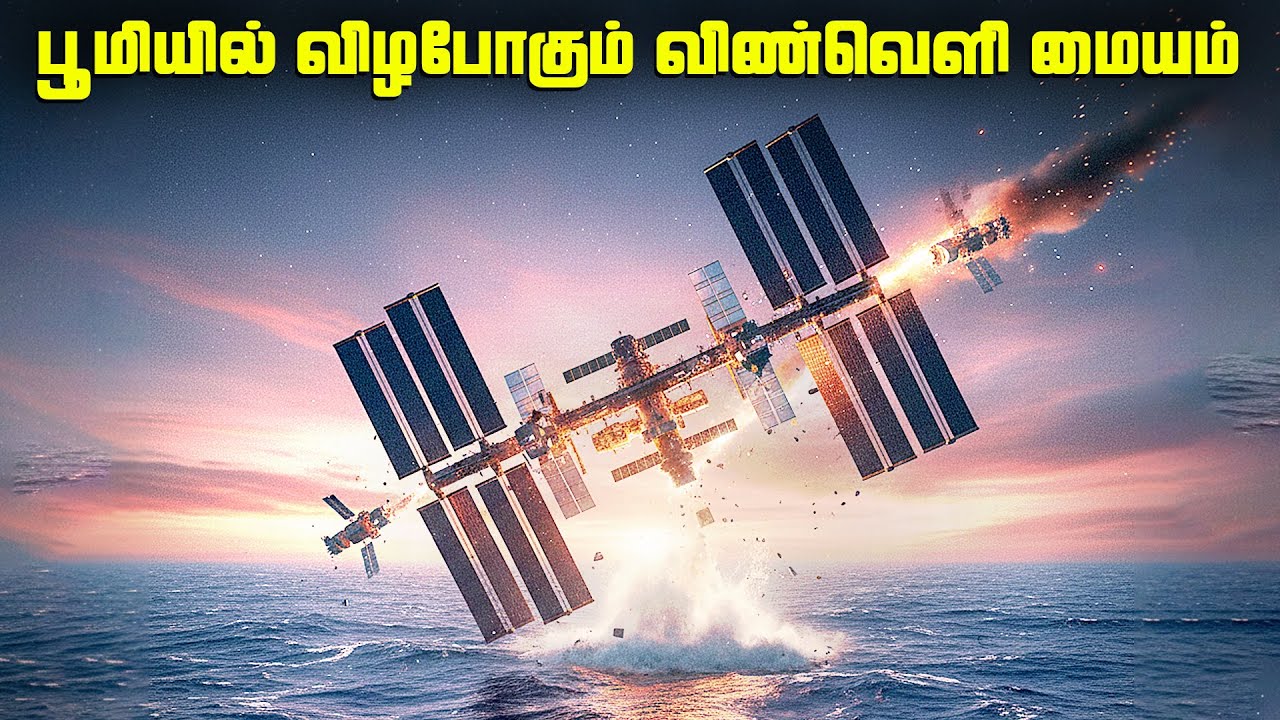
விண்வெளி மையத்தை அழிக்கும் திட்டம் - ISS Retirement
70.9K
The International Space Station emerged from Cold War space race tensions between the US and Russia, who initially planned separate stations (Freedom and Mir). After the Cold War ended, both nations recognized the need for a permanent space station for research difficult to conduct from Earth. The ISS was constructed over 10 years (1998-2008) through international cooperation, with modules assembled in orbit rather than built on Earth. The station orbits Earth 16 times daily at 400 km altitude, experiencing orbital decay requiring periodic reboosts every 3-4 months. Despite ongoing Earth conflicts, the ISS serves as a peaceful platform for global scientific collaboration, demonstrating space as a unifying force transcending national boundaries.
Click to watch →

What Russia's war means for the International Space Station
3.6M
After the Soviet Union fell and the Cold War ended, the US and Russia initiated peace talks where one of the first agreements was space collaboration. US shuttle astronauts docked with the Soviet Mir station, and Russian cosmonauts joined US shuttle launches. Russia was added to joint station plans, with the agreement that Russian scientists would help build the International Space Station instead of developing weapons in space.
Click to watch →
Space Knowledge: Jupiter & ISS | Zenith | Free Documentary
379.4K
The International Space Station represents a remarkable transformation from Cold War competition to unprecedented international collaboration. Beginning with President Reagan's 1984 announcement of Space Station Freedom during the Cold War, the project faced near-abandonment after the Challenger disaster. The Soviet Union's Mir program provided valuable experience in long-duration spaceflight and on-orbit construction. Following the fall of the Soviet Union in 1991, NASA partnered with Roscosmos through the Shuttle-Mir program, combining American technological resources with Russian expertise. This partnership evolved into the current ISS, jointly owned and operated by the United States, Russia, Europe, Japan, and Canada—the most expensive single construction project in history.
Click to watch →

A História da Estação Espacial Internacional (ISS)
87.8K
The Cold War drove rapid development of space stations. The Soviet Salyut program (1971-1986) launched seven stations, while the U.S. Skylab program (1973-1974) offered greater research capacity but collapsed due to budget cuts. Mir (1986-1999) became the most successful, hosting 125 crew members from multiple nations and setting endurance records. The 1975 Apollo-Soyuz docking symbolized thawing relations. After the Cold War ended, the U.S. and Russia announced joint station plans in 1993, culminating in the 1998 Intergovernmental Agreement involving 15 countries and four governing treaties.
Click to watch →
Deep Dive
Modern space policy and the rise of commercial spaceflight companies alongside public agencies aiming for Mars and lunar colonization.
Lo Último 80 🟥 CHINA PRUEBA SU NAVE PARA IR a la LUNA | Y más noticias
18.5K
An impactor 140 km in diameter would cause total human extinction, while the dinosaur-killing impactor was only 14 km. Future space colonization and resource extraction will likely be conducted primarily by robots to minimize human exposure to cosmic radiation. The space industry has transformed from government-funded propaganda missions to commercial enterprise. SpaceX has launched more rockets than all space agencies combined in history, primarily through private contracts. This commercialization has driven exponential growth without requiring proportional public funding, as companies operate on private capital and customer contracts. Modern space travel operates as a commercial service model where NASA pays for transportation from companies like SpaceX, analogous to paying a taxi driver. The year 2030 is projected to be pivotal: China plans lunar landing, Artemis 3 will land astronauts on the Moon, and the International Space Station will reach end of operational life.
Click to watch →
Tajny plan NASA ujawniony! Tak polecimy na Marsa i zbudujemy bazę na Księżycu.
674
The commercial space industry is undergoing a fundamental transformation from government-dominated exploration to commercially viable enterprises. NASA's decision to pause the Lunar Gateway program and redirect billions toward a permanent lunar base at the south pole demonstrates how public policy supports private sector development. Simultaneously, SpaceX prepares for an IPO valued at $1.5-1.34 trillion, positioning itself as a platform integrating space travel, artificial intelligence, and global telecommunications. Starlink's $10+ billion in annual revenue with 9+ million subscribers illustrates how commercial space ventures can achieve massive scale. This shift represents humanity's transition from viewing space as a domain exclusively for government agencies to recognizing it as a marketplace for private enterprise, with European private investment increasing 56% to €1.5 trillion in 2024 alone.
Click to watch →

SpaceX: Sind private Raumfahrtunternehmen gefährlich? | Markus Lanz vom 27. September 2023
323.2K
Space travel has evolved from exclusive government programs to commercial access. Previously, only state-sponsored missions like the Space Shuttle could send people to space. Now private companies like SpaceX enable individuals to travel to space using reusable rockets. This transition occurred because commercial entities developed technology to make space travel more accessible and cost-effective. The main challenge lies in landing the first stage, which contains approximately 70% of the rocket's value. Luxembourg pioneered space economy legislation in 2017, becoming the first European country to adopt space law, creating frameworks to support satellite communications and space mining. Investments in satellite communications can generate 20 euros in revenue for every euro invested. Meanwhile, space has become a strategic military domain, with nations like Russia, India, and China demonstrating capabilities by destroying satellites. This dual nature—economic opportunity and strategic vulnerability—defines modern space policy.
Click to watch →
Raumfahrt-News: SpaceX zerlegt letztes Starship, Isaacman & NASA, JPL Entlassungen, Raketenwerbung
53.8K
Russia's Roskosmos has implemented commercial advertising on state space objects starting in 2026, seeking private investment to reduce state funding burdens. The International Space Station, with its oldest module Zarya over 30 years old, requires controlled deorbiting planned for after 2030. NASA's Jet Propulsion Laboratory announced plans to eliminate 11% of its workforce as part of organizational restructuring. Blue Origin is conducting end-to-end simulations for its Blue Moon MK1 mission to the lunar south pole. Impulse Space aims to deliver up to six tons of payload to the lunar surface annually starting in 2028, using a combination of its Helios kick stage and dedicated lunar lander. Rocket Lab has secured over two dozen launches for JAXA customers by 2030. Emerging technologies include Sea Launch's 35 billion euro German North Sea facility, HyImpulse's hybrid rocket development, and research challenging dark energy theory through geometric expansion of Einstein's General Relativity.
Click to watch →

Destinácia vesmír: Ako miliardári Elon Musk a Jeff Bezos úplne zmenili dynamiku dobývania kozmu
12.7K
Space exploration is experiencing a renaissance where private companies are taking over roles previously held by government agencies. After decades of government-dominated space exploration, companies like SpaceX and Blue Origin are now leading the way. SpaceX, founded by Elon Musk, and Blue Origin, founded by Jeff Bush, represent two different approaches to space exploration. SpaceX currently holds near-monopoly status for transporting payloads to low Earth orbit. The Bush administration's policy shift in 2001-2002 enabled this transformation by allowing private companies to launch commercial and military satellites. These companies, initially seen as billionaire hobbies, have grown into major space exploration players.
Click to watch →
Human Progress
Moon Quest
Human Progress
0:05- 1
Condenses 50,000 years of history to half a century.
- 2
Highlights rapid recent advances like writing and steam power.
- 3
Affirms human determination to pursue knowledge relentlessly.
Cold War Geopolitics and the Social Cost of Apollo
While JFK’s speech framed the Apollo program as a noble, universal quest for human progress, critics offer a more pragmatic and skeptical perspective. They argue that the Moon shot was primarily a Cold War propaganda tool driven by geopolitical rivalry with the Soviet Union, rather than pure scientific altruism. Furthermore, contemporary critics, including civil rights leaders, highlighted the massive opportunity cost of the program. They argued that the billions spent on space exploration should have been directed toward urgent domestic crises, such as systemic poverty, racial inequality, and urban decay—a sentiment famously captured in Gil Scott-Heron's protest poem 'Whitey on the Moon.' This viewpoint reframes the celebrated speech as a rhetorical justification for an expensive geopolitical vanity project that neglected pressing human needs on Earth.
The geopolitical context of the Cold War, specifically the ideological and military rivalry between the United States and the Soviet Union.
The early milestones of the Space Race, including the Soviet Union's launch of Sputnik in 1957 and Yuri Gagarin's historic orbit in 1961.
The establishment and early mandate of NASA (National Aeronautics and Space Administration) in 1958 as a civilian space agency.
The basic concept of political rhetoric and how leaders use public speeches to mobilize national resources and shape public opinion.
The execution and developmental milestones of the Apollo Program, culminating in the Apollo 11 moon landing in 1969.
The technological, scientific, and economic spin-offs of the 1960s space race that laid the groundwork for modern computing and materials science.
The shifting geopolitics of space exploration in the post-Cold War era, including international cooperation on the International Space Station (ISS).
Modern space policy and the rise of commercial spaceflight companies alongside public agencies aiming for Mars and lunar colonization.
2.2M views31.3Klikes3:43@JFKHomecomingOriginal Release: 2013-07-22
We meet in an hour of change and challenge, in a decade of hope and fear, in an age of both knowledge and ignorance. The greater our knowledge increases, the greater our ignorance unfolds. No man can fully grasp how far and how fast we have come.
But condense, if you will, the 50,000 years of man's recorded history in a time span of about a half a century. Stated in these terms, we know very little about the first 40 years, except at the end of them, advanced men had learned to use the skins of animals to cover them.
Then about 10 years ago under this standard man emerged from his caves to construct other kinds of shelter. Only 5 years ago man learned to write and use a cart with wheels. Christianity began less than two years ago. The printing press came this year and then less than two months ago.
During this whole 50-year span of human history, the steam engine provided a new source of power. Newton explored the meaning of gravity. Last month, electric lights and telephones and automobiles and airplanes became available. Only last week did we develop penicellin and television and nuclear power. This is a breathtaking pace and such a pace cannot help but create new ills as it dispels old. So it is not surprising that some would have us stay where we are a little longer to rest to wait. If this capsule history of our progress teaches us anything, it is that man in his quest for knowledge and progress is determined and cannot be deterred.
We shall send to the moon 240,000 miles away a giant rocket more than 300 ft tall on an untried mission to an unknown celestial body and then return it safely to Earth. But why, some say the moon? Why choose this as our goal? And they may well ask, why climb the highest mountain? Why 35 years ago fly the Atlantic? We choose to go to the moon.
We choose to go to the moon. We choose to go to the moon in this decade and do the other things not because they are easy, but because they are hard. Because that goal will serve to organize and measure the best of our energies and skills. Because that challenge is one that we're willing to accept, one we are unwilling to postpone. And therefore, as we set sail, we ask God's blessing on the most hazardous and dangerous and greatest adventure on which man has ever embarked.
Up Next

46:20
DARPA's Secret History: Weapons, Espionage & Technology
@talksatgoogle
558.8K views•2015-10-01

33:02
The Great Schism of 1054: Causes and Consequences
@SacredCathedrals
113.5K views•2026-02-19

91:57
The Geopolitics of the Ukraine War and the Rise of Global Autocracy
@JordanHarbingerShow
468K views•2025-04-19
17:05
Understanding the Cold War: Superpower Conflicts and the Road to Détente
@OverSimplified
46.1M views•2019-01-24
Related Study Plans & Knowledge Roadmaps
Structured learning paths in History
history
Byzantine Iconoclasm: Theology, Art & Politics
01Foundations of Byzantium and Early Christian Images
02The First Iconoclasm: Leo III and the Crisis of Images
03Empress Irene, Nicaea II, and the Second Iconoclasm
+ 2 more learning modules
9h5 modules
Explore Roadmap
history
Iranian Revolution (Causes, Events & Legacy)
01The Pahlavi Dynasty and the Roots of Discontent
02The Spark of Rebellion and the Rise of Khomeini
031979: The Fall of the Shah and the Climax of the Revolution
+ 2 more learning modules
8h5 modules
Explore Roadmap
history
Mali Empire: Mansa Musa, Trade & Timbuktu
01Foundations of the Mali Empire
02The Trans-Saharan Gold and Salt Trade
03The Reign and Pilgrimage of Mansa Musa
+ 1 more learning modules
6h4 modules
Explore Roadmap
history
1947 Partition: Politics, Borders & Legacies
01Foundations of British India and the Divide
02The Political Negotiations and the Mountbatten Plan
03Drawing the Boundary: The Radcliffe Line
+ 2 more learning modules
8h5 modules
Explore Roadmap