


















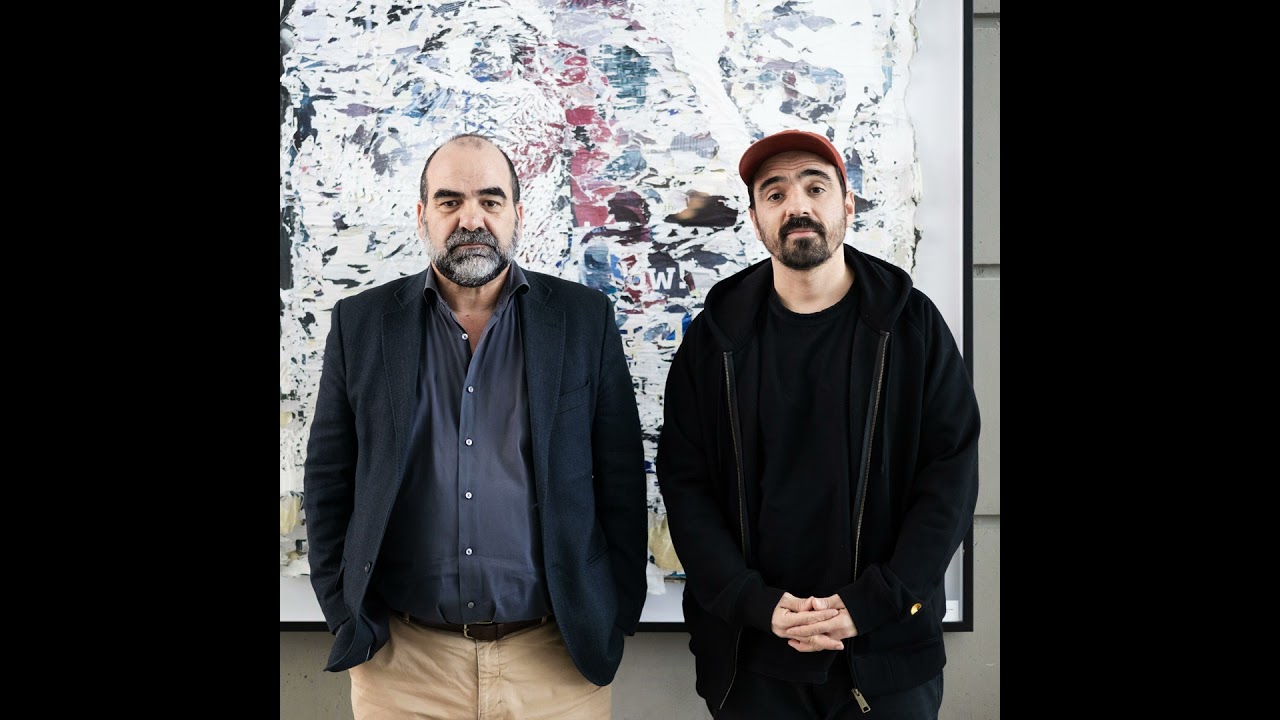
Shepard Fairey explains how his journey from making homemade t-shirts at a skate shop to becoming a renowned street artist demonstrates that powerful visual communication can emerge from humble beginnings; he emphasizes that effective public art transcends political boundaries by using compelling imagery that captures attention regardless of viewer predispositions, and that the placement of art in unconventional public spaces creates a unique power that differs from institutional or internet-based art experiences.
Shepard Fairey: The Evolution of Street Art and Democratic Populism
Added:Understanding the historical distinction between graffiti, street art, and traditional fine art.
Familiarity with the principles of Pop Art, particularly how artists like Andy Warhol utilized commercial imagery and mass production.
Basic knowledge of graphic design as a tool for political propaganda and social commentary, including Russian Constructivism.
An introductory concept of democratic populism and how public spaces can be used to bypass traditional, elitist art institutions.
Exploring the legal and ethical complexities of intellectual property, copyright, and fair use in visual arts, such as the controversies surrounding appropriation.
Analyzing the commodification of street art and counterculture, examining how subversive artists transition into commercial brands.
Studying modern 'Artivism' (art activism) and how contemporary artists use public installations to provoke dialog on global social and political issues.
Investigating the impact of digital media and social platforms on the democratization, archiving, and global distribution of ephemeral street art.
357.5K views5.8Klikes11:41Original Release: 2014-05-31
um um I take art very seriously but I don't always want to sound like I do the summer of 1989 which was the summer after my freshman year at rsy I was working at a skate shop and to supplement my very meager income from the skate shop I was making a lot of homemade t-shirts of different bands and skateboard company logos I had a friend who wanted to learn how to make stencils so I looked through the newspaper and found a picture of Andre the Giant and said why don't you make a stencil of this and he said no way I don't want to do Andre the Giant that's stupid my response was what are you talking about Andre the Giant's going to be taking over the next thing you know it had started to become this underground phenomenon where people that I didn't even know came up to me and said hey you have any of those under the giant stickers and it was like a a subcultural secret handshake and I didn't expect that but I saw a power to it that I was fascinated by this idea that public space is usually reserved for advertising and government signage and um anything other than that is actually you know an anomaly but it wasn't so much that the the sticker was uh was anything special I think it was the the process of dissemination and then my understanding that placing something in unusual spaces that is memorable has a power and I decided Well I've already accidentally stumbled onto something and done some work with with it I should take this and evolve it growing up in Charleston South Carolina I really didn't have a great knowledge of Contemporary Art but I always liked to draw and paint but when I started skateboarding at age 14 was when I really started to pay attention to Art outside of a lot of the quaint stuff I was surrounded by in Charleston and uh that that was through the album packaging of punk rock done by people like Winston Smith for the dead kennedies Raymond Petty bone for Black Flag Jamie Reid for the sex pistols and then the skateboard Graphics done by people like Jim Phillips for Santa Cruz um Vernon Court Johnson for po Peralta uh puss head for zorlac and you know from there um I started to take a little bit more of an interest in other graphic art and fine art forms including pop artists like Andy Warhol Roy lonstein um Jasper Johns Robert renberg I I really loved the the balance between accessible imagery and and and things that seemed like they could come from edting in appropriation deciding to you know juxtapose or configure images in a certain way but the artist bringing their own thing to it because that in some ways was analogous to The Ransom note style of of punk rock and the xeroxing that went into that once I learned how to shoot photo Emulsion screens multiple color things I could combine my illustration my photography collage it could all it would all be synthesized through the process of screen printing I I think it made me a lot more ambitious less uh you know less fearful as an artist so I started to use a cohesive color palette and I started to develop a a vocabulary of motifs that would um be useful to me in reminding people that it's not just the color scheme but this came from me this is a shepher fairy in the obey campaign because the star icon is in is in the image the exclamation point the arrow the red rays in the background as time went by and and as my project progressed and evolved I I realized that really there was no point in just pandering to the people that already agreed with me especially seeing the backlash to Nirvana's success even though I came from punk rock this idea of elitism not just being from the top of the pyramid down but also there's Fringe elitism as well that started to really uh emerge for me and that if I believed in in equal opportunity and being a populist that I couldn't be you know an elitist in the margins and and uh and say this isn't for you square Guy this is only for my cool Rebel friends the best art I think makes the world feel a little bit less terrifying it makes things feel a little more intertwined and one of the things that I I got out of seeing my work resonate with people I wouldn't have expected was this this potential to maybe cross-pollinate with a lot of different groups of people and have a dialogue happen that that could be beneficial to everyone I wanted to maintain my punk rock ideals when that made sense but I also wanted to infiltrate the dominant structure decide idea that a picture can be the thing that hits a viewer in the gut that makes their head follow their heart is such a such an important Concept in my work that no matter what I'm doing I like the idea that someone can't resist the visual Allure of an image and even if it doesn't align with their political predispositions that the image itself will be beckoning them to m over when I made the Obama hope poster I made it as a tool of Grassroots activism along the same lines as any of the posters I make the posters I made that were against the Iraq War and the Patriot Act a lot of a lot of the things that I I thought were dangerous about the bush presidency when I saw someone running for president that I thought really uh typified the antithesis of the Bush views I thought it made sense for me to support that person so even though some people considered the Obama poster as a departure from my Rebel Tendencies it it actually I thought was um a very logical approach to what was going on at the time in America a lot of people feel like Spectators in democracy they don't feel like they have the power to make a difference and I'm so glad that I have the Obama hope poster as a case study to say that I with very few Resources by you know a a political standards not involved with a corporation not involved with a political party was able to do something that seemed to impact a lot of people and and I think the more people that participate in democracy the better it works a lot of my work is about the symbols of Americana the symbol success and The Duality of a lot of those things that what might be seen as a as a positive symbol in one realm actually has a dark side that's that should be viewed with with a degree of caution the iconography of America is something that I like to celebrate visually but it's also I think um very ripe for symbolic critique these ideas of whose power whose Glory someone's power and Glory might be someone else's suffering and degradation something that that's about ego in the moment and not about not about how this is going to endure this ju Theos of the Beauty and the thing that might have harmful consequences to that beauty um in the same picture so that that that relationship has to be addressed is what I'm doing with those pieces I'm making work that I think may or may not Inspire someone to reconsider their position on something but if I don't put it out there in public I think it has less likelihood that it will make a difference you know the impact of St stumbling upon a mural or an illegal poster or a stencil there's a little bit of that that energy of the act of of defiance or the act of execution on a large scale the ambition um that I think transfers to the viewer in a way that's different from the experience on the Internet or in an institution I have to be an optimist that every action makes a difference and public art I do think impacts people sometimes very profoundly um and and sometimes it's a it's a hostile response want but anything that stirs the debate I I think has value I think the role of my favorite artist in society has been to give people things to dream about and reflect upon so to escape and to engage simultaneously bring pleasure and provocation potentially simultaneously it's when you have a clear head right before you go to bed and you're and you're open to reflecting upon things honestly that's the moment when we we we need to all have some art to be able to think about everyone knows how they feel when they experience great art whether it's music or or writing or visual art that it it transcends the petty side of humanity there's something great about it and I think that the more of that the better the less that's about producing widgets on the assembly line monotonously um without any space to dream and the more dreams that can be fulfilled you know that's where artists really fit in I think for
Up Next
31:56
Basquiat: The Polarizing Life and Art of an Icon
@Briefed_Mythology
101.8K views•2025-02-23

114:18
Christian Iconography: History, Theology, and Meaning | Fr. Panayiotis Papageorgiou
@Trisagionfilms
58.8K views•2020-02-21
7:48
Ukiyo-e Art: History, Woodblock Printing & Influence
@japanathand
6.3K views•2023-06-08

16:34
Earliest Depictions of Jesus in Art: 10 Ancient Images Explained
@UsefulCharts
5.9M views•2022-06-03
Related Study Plans & Knowledge Roadmaps
Structured learning paths in Art History
art-history
Gothic Cathedrals: Engineering, Light & Society
01The Birth of the Gothic: Romanesque to Suger's Vision
02The Structural Triad: Pointed Arches, Ribbed Vaults, and Flying Buttresses
03Theology of Light: Lux Nova and Sacred Geometry
+ 2 more learning modules
14h5 modules
Explore Roadmap
art-history
Pre-Raphaelites: Realism, Symbolism & Critique
01The Victorian Art Establishment and Academic Formula
02The Founding of the PRB and Radical Realism
03Medieval Revivalism and Literary Symbolism
+ 1 more learning modules
8h4 modules
Explore Roadmap
art-history
Street Art: From Subways to Art Market
01Subcultural Origins in Philadelphia and New York (1970s)
02The Subway Era and Style Wars (Late 1970s - 1980s)
03The East Village Scene and Early Gallery Crossover
+ 2 more learning modules
10h5 modules
Explore Roadmap
art-history
Classic Maya Art: Iconography, Glyphs & Ritual
01Foundations of Classic Maya Visual Culture
02Deciphering Maya Hieroglyphs & Text-Image Integration
03Sacred Geography and Cosmological Architecture
+ 2 more learning modules
14h5 modules
Explore Roadmap