![[Vật Lí 12 - 2K8 XPS] 1000 Câu Lí Thuyết Trọng Tâm Vật Lí Nhiệt & Khí Lí Tưởng - Buổi 1 | Thầy VNA](https://i.ytimg.com/vi/8i8zGVY6wIY/maxresdefault.jpg)

















![बिना एसी घर को ठंडा रखने के तरीके [Cooling down our homes sustainably]](https://i.ytimg.com/vi_webp/dYsCEgJ-O00/maxresdefault.webp)






Willis Carrier (1876-1956), an American engineer born in New York, invented the modern air conditioner in 1902 after solving a humidity problem at a printing press, applying principles of reversing steam heating by cooling air through tubes with liquefied ammonia; his invention revolutionized industries, transformed American society by enabling population growth in previously uninhabitable hot climates, and eventually became a household staple, though it now faces criticism for environmental impacts including high energy consumption and refrigerant emissions.
Willis Carrier: The Father of Air Conditioning's Impact
Added:Basic principles of thermodynamics, specifically heat transfer, phase changes (evaporation and condensation), and latent heat.
The concept of relative humidity and how air temperature affects its capacity to hold moisture.
The historical context of the Second Industrial Revolution, particularly the environmental control challenges faced by manufacturing industries.
Early historical methods of cooling, such as ice harvesting and basic evaporative cooling techniques.
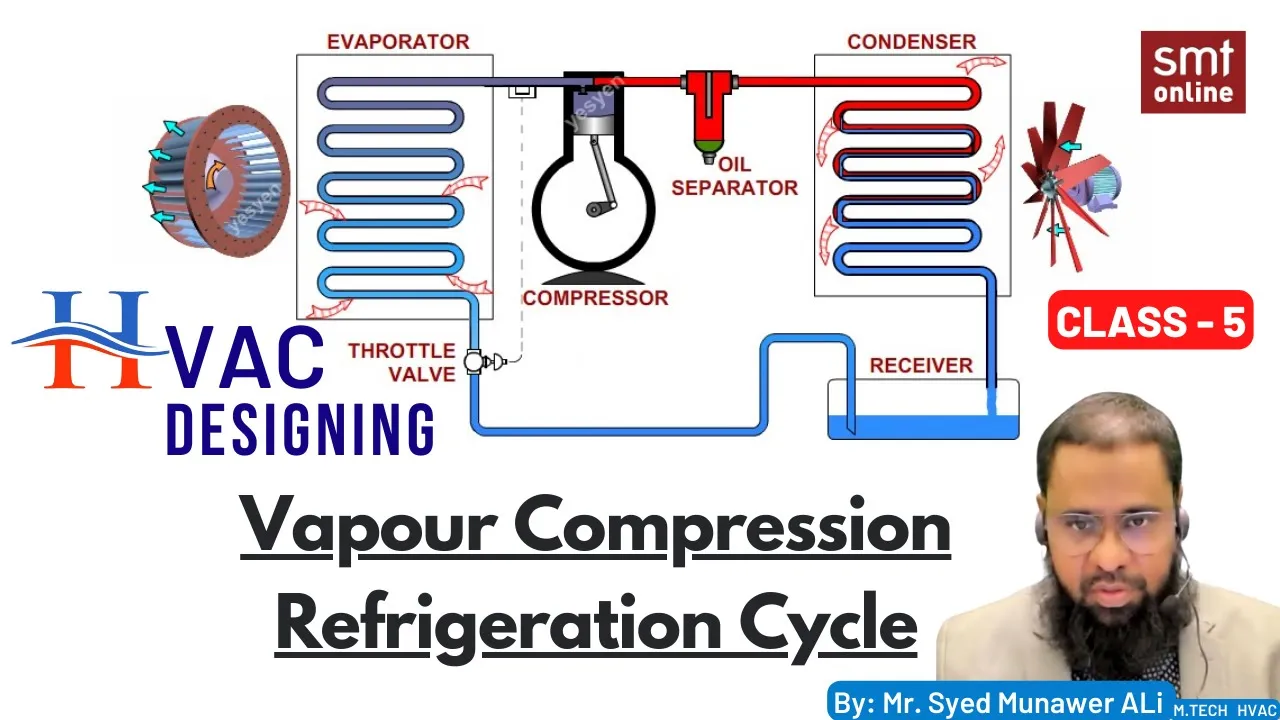
The mechanics of the vapor-compression refrigeration cycle and the evolution of chemical refrigerants from CFCs to eco-friendly alternatives.
The demographic and socioeconomic impacts of widespread air conditioning, such as the migration to warmer regions and the redesign of modern urban architecture.
Environmental challenges associated with global air conditioning, including energy grid strain, the urban heat island effect, and greenhouse gas emissions.
Advanced innovations in HVAC technology, such as smart climate control, geothermal cooling, and sustainable building designs.
20K views0likes19:24Original Release: 2019-12-02
a famous reporter once said along with finding fire the air conditioner is considered a treasure of mankind when it has contributed to changing the world and of course we don't forget to thank Willis carrier the father of the air conditioner who has dedicated his life to thinking about how to create a cooling machine for the world determined to change the mechanical practice Willis Havilland carrier was born on November 26th 1876 on a farm near Lake Erie in Angola New York USA he was the only child in the family a love for the job of repairing and sewing machines and household appliances this interest originated from his mother Elizabeth our Haven in addition he's also passionate about mathematics and always learns it whenever the opportunity arises Willis carriers a child who has good concentration and likes to practice rather than just study hardwood theory with his intelligence in 1895 carrier received a scholarship to study at Cornell University and graduated in 1901 with a degree in mechanical engineering he later worked for Buffalo forge company a company that makes stoves blowers and exhaust systems he designed wood and coffee drying systems as an engineer carrier's first task in the company was to design a heating system to heat wood and coffee after that he continued to research on the measurement of the capacity of those heating systems with the effort and dedication at work carrier was promoted to the position of Director of the experimental engineering department also at Buffalo forge carrier established the world's first industrial laboratory since the beginning of his career he has always been determined to move the practice of mechanical engineering into a more reasonable field because the engineers at the time didn't really understand the principles of machine operation they were forced to build design safety factors that led to inefficiencies carriers purpose is to let engineers understand why machines stopped working and report problems encountered then give the most reasonable solution as a result Buffalo forge engineers were able to design products better safer and more efficiently create a new breeze for MA as people began to understand more the cooling method also improved a lot however it takes a series of experiments and failures to find a breakthrough before carrier there was a lot of research related to cooling however no studies have been completed in the late 19th century the concept of air production began to emerge however this is just a moisture control method for textile factories to achieve higher levels of productivity then people use the cooling system combined from the humid air pipeline that travels around the building to preserve food cool beer drinking water or to protect important documents in carriers time cooling technology wasn't really noticeable it's just a fan system pushing heat from place to place in the stuffy hot room of the printing press and newspaper publishing in the summer of 1902 business owner Sackett williams issued a problem with the fact that the temperature and humidity were so high that the printing paper deformed after each print when printing in large quantities engineer carrier knows that he must find a way to keep the temperature and humidity in the room balanced at all times this allows the printer to work smoothly and the product to be error free carriers famous for its high concentration ability once he put all his intellect to solve the problem he will not let anything distract his mind in the words of mrs. scale Cooper author of the book air-conditioning for all America carrier once focused too much on work but forgot to prepare furniture for the business trip when he opened the suitcase he saw only a handkerchief finally the air conditioner model was built and officially operated by carrier on July 17 1902 in Buffalo this device was about the same size as the first computer carrier has applied his knowledge of the process of heating an object with steam and sought to reverse that process the principle is quite simple instead of pushing air through a heated tube he creates the flow of air through a tube cooled by liquefied ammonia the system consists of two main pipes one pipe for air cooling and one pipe for supplying air containing moisture as a result the system can control humidity at 55% inside the chilled air mass therefore the cooling system can preserve equipment in the factory and create the best conditions for printing with this cooling system carrier was dubbed the father of the modern air conditioner model according to some records and narratives the idea of the system appeared when carrier was travelling on a train in the fog if the air intake contains 100% moisture we'll adjust the output moisture with the existing knowledge hot air is pushed through coils containing refrigerant turning into cold air carrier regulates the humidity of that cold air and through it controls the humidity in the room although solving the humidity problem in the printing workshop this air conditioner system is very large quite bulky loud extremely expensive and very dangerous because of the use of ammonia as a well d agent this is a highly toxic compound continue the journey of improvement in 1906 carrier received a patent and continued its research on refrigeration and humidity control he was appointed head of a division of a company called carrier air however at the beginning of World War 1 the company eliminated the division due to budget cuts after that carrier and its colleagues set up their own company carrier Engineering Corporation at that time the system of controlling humidity and temperature contributed to the development of many other industries such as film food tobacco medicine textiles in 1911 carrier continued to introduce a formula for a reasonable moisture content to the American Society of Mechanical Engineers one of the most important scientific literature is the logical formula that establishes the relationship between relative humidity absolute humidity and dew point temperature in 1913 he developed a humidifier for a room such as an office or a lab it is the first stand-alone device to have fans Motors Eliminator and injectors in just one product in 1914 in Minneapolis the first household installed an air-conditioning system manufactured by carrier this is the home of famous gambler Charles Gates who is known as the million dollar game gates air conditioner measures 2.1 meters high 1.8 meters wide and nearly 7 meters long however the air conditioner has never been used because no one lives in that house but every year Charles Gates had to spend up to sixty thousand dollars on maintenance costs for the entire house you are watching videos on LMT channel don't forget to like and watch more new videos to support the group bring air conditioner in to life from 1917 to 1930 the main theater where people could enjoy the air-cooled atmosphere the first cinema to be equipped with air conditioning was new Empire Theatre in Montgomery Alabama in 1917 in the same year Central Park Theatre in Chicago quickly installed the air conditioning system and received a warm response from customer in 1922 carrier continued to make to break through steps for the air conditioner manufacturing industry the first is to replace toxic ammonia solder with the safer compound then dye rain in addition the next generation of air conditioners has been carrier minimized to a more compact size this improvement allows air conditioners to be installed in more places such as department stores office buildings on carriages or in small buildings next the period from 1924 to 1930 witnessed the popularity of air conditioners coming to many US government working facilities like the United States Senate the United States House of Representatives the White House the business center and many other important buildings across the United States however the era their conditioning hasn't come expensive installation costs also make air conditioners expensive even for the rich but things changed when entering the 40s and 50s the air conditioner manufacturing companies conducted research that air conditioning helps increase employee productivity a 1957 study by Miss Gail Cooper showed that 90 percent of companies affirmed that air conditioning was a key factor in improving work efficiency turn air conditioner into a tool for war after that due to the impact of the world economic crisis the demand for air conditioners dropped sharply and the development of the refrigeration industry was stopped to change the problem at the 1939 World's Fair carrier performed a snow cooled igloo with his system in front of millions of viewers carrier hopes to find the brighter future of this fledgling industry in the future however his hopes were not fulfilled due to the Second World War at this time most factories turned to produce products for the war in many places air conditioners were removed from shops for use by military production plants during this time thousands of air conditioners were also produced to keep the Army's food fresh and then damaged in hot climates air conditioners can also be used to preserve fighters to contribute to the war carrier also proposed using air conditioners to simulate environmental conditions in the air right at the ground to test the aircraft this is something no contemporaries think about thanks to this contribution carrier has been awarded many noble titles by both the military and industrial companies after World War two non-military products were produced normally and the economy in the US began to have important flourishes Americans start shopping for air conditioners and enjoy the cool atmosphere at home the cost of manufacturing equipment is getting cheaper making air conditioners a popular household appliance in the United States by 1946 thirty thousand home air conditioners were manufactured and supplied to people throughout the United States the demand for air conditioners at that time exceeded the supply by 1953 more than 1 million air conditioners were manufactured and sold throughout the United States but according to unofficial figures the actual number goes even further the machine that changes American society along with fire air conditioning is considered a treasure in July 1960 when the first air conditioners were installed for American households a Saturday Evening Post journalist admired enough that a revolution in air conditioning but France's more modest Lamond diplomatic reported that this was a slow warm afar cold conquest than a revolution at the end of the 19th century and the beginning of the 20th century the cinema only attracted visitors in winter in the summer these attractions are no different than the warehouses in the face of this situation the bobbin and cat cinema chain decided to cool its cinemas in Chicago since 1917 a successful bet expensive installation costs were promptly recovered in a summer other chains followed suit immediately signboards can be seen the theater is equipped with air conditioning stay in a cold theater the temperature is always at 38 degrees 20 degrees C then the size of air conditioner got smaller the price decreased manufacturers are starting to conquer households cars according to statistics in the 1960s in the u.s. only about 10% of households equipped with air conditioners but by 2000 this rate soared to 90 percent air conditioning becomes an indispensable item but most surprisingly the advent of air conditioners had a huge impact on the American population before the release of the air conditioner birth rates were observed to drop sharply nine months after the hottest periods at these times it is impossible to talk about giving birth the advent of indoor air conditioners has narrowed the gap to seasonal reproduction the number of newborns increases the number of deaths decreases the air conditioner has drastically reduced the mortality rate in the intense heat wave moreover air conditioners also change the appearance of the United States especially in the Sun melt the southern United States until the 1960s Americans tended to come north to get a job but the air conditioner was born to help the Sun Belt in the west and southwest America become more active and easy to live without an air cooler cities like Miami or Las Vegas would probably not be able to grow not only does it affect the population way of life and enjoyment of the American people air conditioners also have political implications the schooling regime contributed to the victory for mr. Ronald Reagan the Republican candidate in the u.s.
presidential election in 1980 a large proportion of Americans migrated north to south thanks to air conditioners for our elderly who want to have a retirement life in the sunday but those people tend to vote for Republicans American cities are also gradually changing with the development of air conditioners in order to keep the place cool the house was formerly built in the form of raised floors shaded gates adjacent rooms for ventilation now thanks to air conditioning people can build skyscrapers under the bright sunlight in places where people once thought it was only suitable to grow tomatoes price payable [Music] every utility has a price to pay their conditioners are alleged to be dangerous air polluters and marwa noid Hartman representing France nature environment Association on France 2 TV channel explained as follows the air conditioner is like a refrigerator using refrigerant gas inside if leaked this would be an extremely toxic gas for the environment this gas is much hotter than co2 sometimes 800 times higher than the gas used for gas therefore potentially this is a device that is harmful to the environment at phoronix a study found that at night the outside temperature increased by from 34 to 36 degree F from 1 to 2 degrees C resulting in more indoor air conditioners being run lastly air conditioners consume a lot of energy as moding energy consumption for air conditioners in the u.s. is equivalent to that of Africa s is equivalent but that hasn't stopped carrier Brand air conditioners from conquering the world for the past century sales of air conditioners have exploded in emerging countries like India China and Indonesia on average there are 10 air conditioners sold every second in the world and it is expected that by 2050 the whole world will have about 6 billion air conditioners thank you for watching a video on L&T channel don't forget to click the subscribe button and watch more new videos to support the group [Music] [Music]
Up Next

5:57
Refrigeration Cycle Explained | Vapour Compression Refrigeration Cycle
@girishshinde
1.8M views•2016-04-05

30:32
Ultrasonic Transducers: Resonant Frequency Measurement and Horn Design
@imajeenyus42
229.9K views•2017-02-22

54:16
Polymer Environmental Degradation: Mechanisms & Stabilization
@iit
1.8K views•2012-07-10
33:39
How a Student's Question Saved a NYC Skyscraper from Collapse
@veritasium
22.8M views•2025-04-26
Related Study Plans & Knowledge Roadmaps
Structured learning paths in Engineering
engineering
Building Acoustic Levitators: Physics & Arduino
01The Physics of Sound and Standing Waves
02Piezoelectric Transducers and H-Bridge Drivers
03Arduino Programming: Generating 40 kHz Signals
+ 2 more learning modules
14h5 modules
Explore Roadmap
engineering
Building Peltier Cloud Chambers: Particle Tracks
01Cosmic Rays & Cloud Chamber Physics
02Thermoelectric Cooling (TEC) Fundamentals
03Custom Liquid-Cooling Loop Design
+ 2 more learning modules
18h5 modules
Explore Roadmap
engineering
Yagi-Uda Antennas: Modeling, Build & VNA Test
01Introduction to RF and Antenna Fundamentals
02Yagi-Uda Antenna Design Principles
03Antenna Modeling and Simulation in 4NEC2
+ 2 more learning modules
18h5 modules
Explore Roadmap
engineering
ECG Monitor Design: Op-Amps, Filters & Noise
01Electronics & Breadboard Basics
02Op-Amps and Instrumentation Amplifiers
03Bioelectricity and ECG Fundamentals
+ 2 more learning modules
18h5 modules
Explore Roadmap