During the Spanish Civil War, the Soviet Union provided military hardware including tanks, fighter aircraft, and 700 military advisors to the Republican side, while the International Brigades—approximately 30,000 volunteers from over 50 countries—became the largest source of foreign support for the Republic, with volunteers from America, Britain, France, and Germany fighting primarily out of anti-fascist conviction rather than political ideology.
Soviet Aid vs. International Brigades in the Spanish Civil War
Added:Deep Dive
The fundamental political divisions of the Spanish Civil War, specifically the conflict between the Second Spanish Republic (Republicans) and the Nationalist rebels led by General Francisco Franco.
![Spanish Civil war [Every day]](https://i.ytimg.com/vi_webp/L_sqgrz5IaM/maxresdefault.webp)
Spanish Civil war [Every day]
2.7M
The Spanish Civil War occurred between 1936 and 1939, involving a conflict between two opposing factions: the Republicans and the Nationalists. The Republicans were supporters of the democratic, left-leaning Second Spanish Republic, representing a coalition of leftist and liberal groups. In contrast, the Nationalists were a falangist movement led by General Francisco Franco, combining conservative, monarchist, and fascist elements. The war ended with the victory of the Nationalists, leading to the collapse of the Second Spanish Republic. Following their triumph, General Franco established a dictatorship that governed Spain for 36 years, beginning in April 1939 and lasting until his death in November 1975. His regime suppressed political opposition, centralized power, and enforced nationalist and traditionalist ideologies. The war was marked by international involvement, including support from Nazi Germany and Fascist Italy for the Nationalists, and aid from the Soviet Union to the Republicans, though foreign intervention is not detailed in the description. The conflict remains a pivotal event in 20th-century European history due to its ideological polarization and its role as a precursor to World War II.
Click to watch →
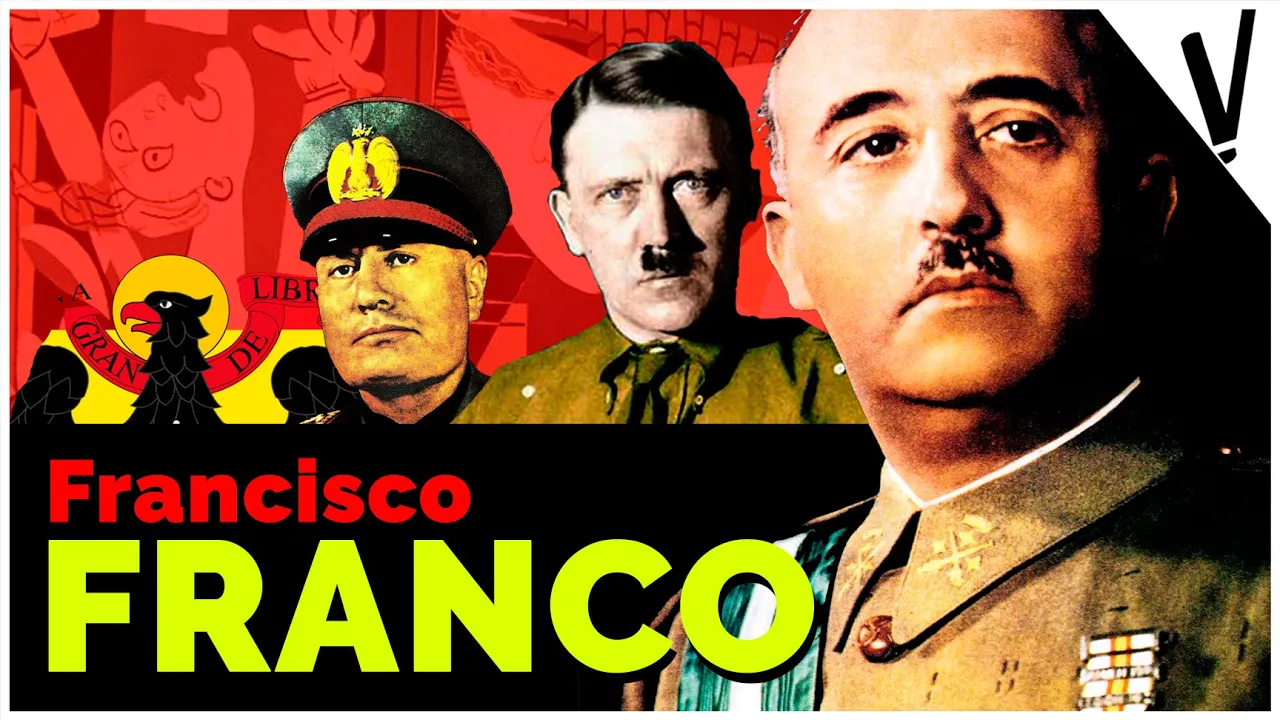
FRANCISCO FRANCO e a Guerra Civil Espanhola
70.1K
The Spanish Civil War (1936-1939) was a brutal conflict between right-wing Nationalists led by General Francisco Franco and left-wing Republicans, which began when Franco launched a coup against the Second Spanish Republic on July 18, 1936; the war attracted international intervention with Germany and Italy supporting Franco while the Soviet Union backed the Republicans, culminating in Franco's victory and the establishment of a fascist dictatorship that lasted until his death in 1975.
Click to watch →
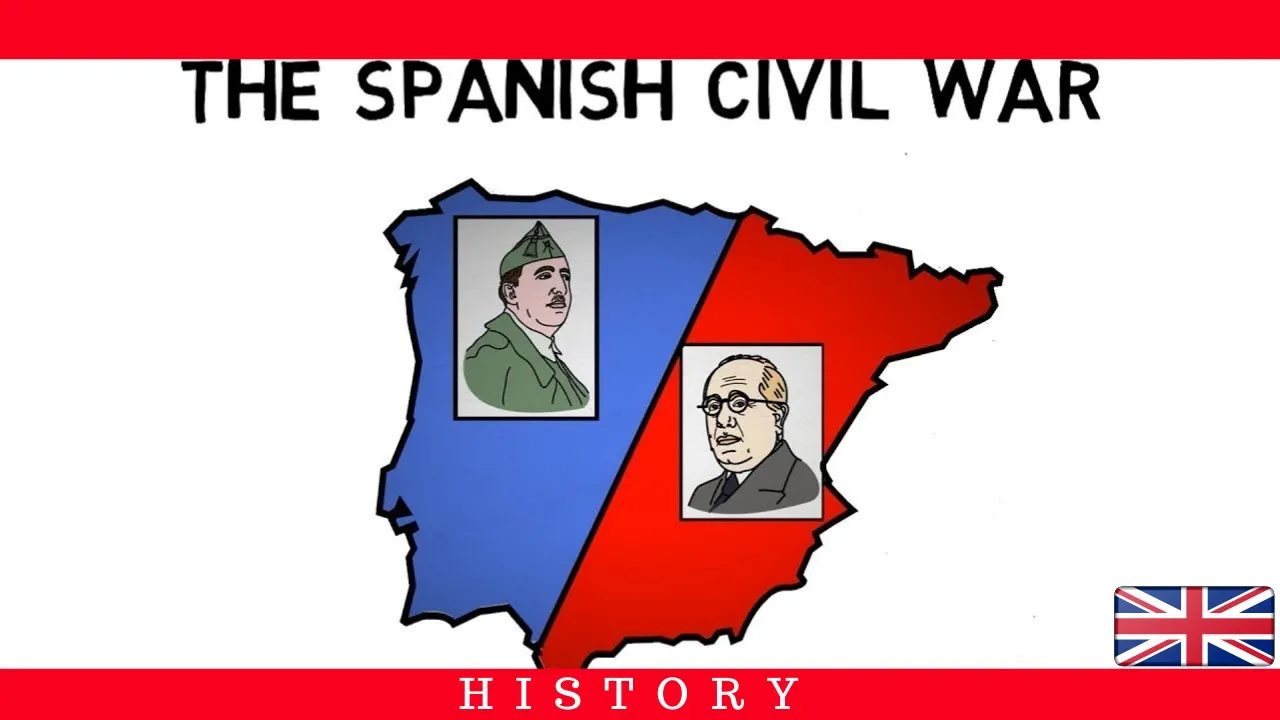
🇪🇸THE SPANISH CIVIL WAR (1936-1939)
53.4K
The Spanish Civil War (1936-1939) was a brutal fratricidal conflict between Nationalist rebels led by General Franco and Republican forces, rooted in deep social and political divisions following the establishment of the Second Republic in 1931; triggered by the July 1936 murders of José Castillo and José Calvo Sotelo, the war resulted in over 500,000 deaths, massive displacement of 450,000 exiles, and a decade-long economic crisis, ultimately serving as a rehearsal for World War II with international support flowing to both sides.
Click to watch →
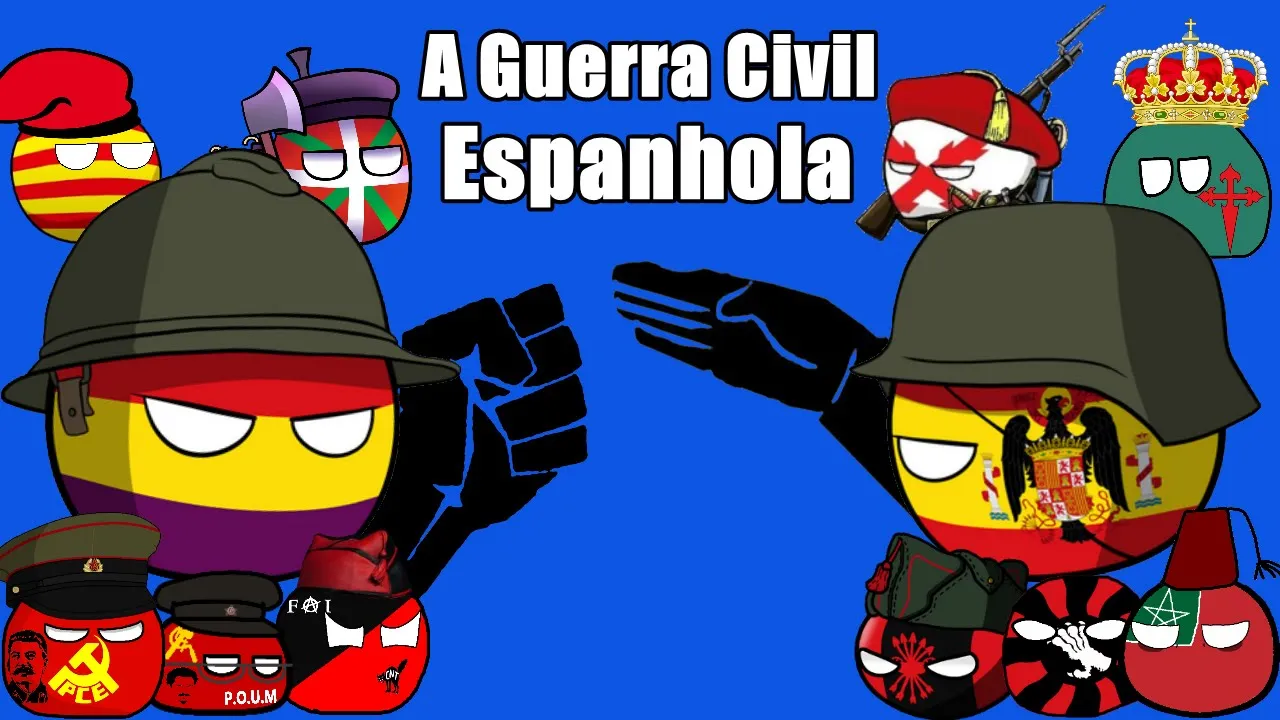
A Guerra Civil Espanhola
109.1K
The Spanish Civil War pitted two fundamentally different visions of Spain against each other. The Republican side was urban, secular, anticlerical (particularly anti-Catholic), and revolutionary, drawing support from industrial workers, urban bourgeoisie, intellectuals, and international volunteers. It included communists (both Trotskyists and Stalinists), anarchists, Catalan and Basque separatists, and liberals. The Nationalist side was rural, confessional (religious), counter-revolutionary, and traditionalist, backed by aristocrats, landowners, and conservative elites. It united monarchists (Carlism and Isabellines), Falangists, and regional nationalists under Franco's leadership.
Click to watch →
Spanish Civil War | 3 Minute History
475K
The Spanish Civil War (1936-1939) was a pivotal conflict that emerged from Spain's long history of political instability, economic depression, and deep ideological divisions between left-wing Republicans and right-wing Nationalists led by Francisco Franco; despite international involvement from fascist powers like Germany and Italy supporting Franco, and democratic nations like Britain and France practicing appeasement, the war ended with Franco's Nationalists achieving victory on April 1, 1939, establishing a brutal dictatorship that lasted until his death in 1975.
Click to watch →
Deep Dive
The geopolitical landscape of 1930s Europe, including the rise of totalitarian regimes in Germany, Italy, and the USSR, alongside the Western democracies' policy of Non-Intervention.

Всеобщая история 10 класс Мединский Чубарьян 12 параграф. Международные отношения в 1930-е.
176
With the Nazi rise to power, universal military conscription was restored and military industry expanded tenfold from 1933 to 1938. Germany violated the Versailles Treaty by entering the demilitarized Rhineland in March 1936. In November 1936, Germany signed the Anti-Comintern Pact with Japan, and Italy joined in 1937, forming the Berlin-Rome-Tokyo bloc. Soviet foreign policy sought cooperation with Western democracies, signing mutual assistance treaties with France and Czechoslovakia in 1935. However, military assistance was conditioned on French help, devaluing the agreements. Britain signed a naval agreement with Germany in 1935, allowing German fleet tonnage to reach one-third of British levels. London and Paris knew about Hitler's intentions to seize Soviet territory but expected mutual exhaustion of Germany and the USSR. This miscalculation fueled aggressor appetites. The Spanish Civil War of 1936-1939 saw Italy and Germany support Franco's rebellion while the USSR supported the Republican government.
Click to watch →

THE SPANISH CIVIL WAR - Episode 3: Battleground For Idealists (HISTORY DOCUMENTARY)
131.4K
France and Britain adopted a policy of non-intervention despite internal disagreements. French Prime Minister Blum wanted to protect Spain to prevent a fascist triangle, but British Prime Minister Baldwin feared another world war. On August 2, 1936, France proposed a non-intervention pact that Britain eagerly supported. This policy was pragmatic rather than heroic—it allowed all parties to pursue their ends without direct war. Spain served as a 'safety valve' to siphon off Europe's political passions. Under international law, the Republic was legally entitled to buy arms abroad, but non-intervention stopped this.
Click to watch →

Екінші дүниежүзілік соғыс
123.4K
The video covers the emergence of totalitarian regimes in Europe during the 1930s-1940s. Adolf Hitler established a totalitarian regime in Germany, while Benito Mussolini became dictator of Italy with his fascist party. These regimes expanded aggressively, with Germany annexing Austria and Czechoslovakia, and Italy conquering Ethiopia and Albania. The video also mentions Francisco Franco's regime in Spain, highlighting how multiple European nations were ruled by authoritarian leaders who suppressed opposition and pursued aggressive expansionist policies.
Click to watch →
Путин по-сталински, диктатура, геноцид | Документальный фильм "Битва за историю". Часть 2
146.3K
This extensive segment traces the emergence of totalitarian regimes in Europe from the 1920s through the late 1930s, examining how the Comintern functioned as a dиверсионно-подрывная organization to destabilize European democracies. It details the rise of Nazi Germany, including the 1932 elections that made the Nazis the largest faction in the Reichstag, the Reichstag fire and subsequent purges, and the systematic persecution that followed. The video chronicles the secret Molotov-Ribbentrop Pact of August 1939, which divided Eastern and Central Europe into spheres of influence, enabling both powers to invade Poland without direct confrontation. It covers the Soviet-Finnish Winter War of 1939-1940 and the brutal internal policies of the Soviet Union, including mass deportations of populations from occupied territories. The analysis reveals how Western powers pursued appeasement policies, culminating in the Munich Agreement of 1938, demonstrating how failure to confront authoritarian aggression enables its escalation into full-scale war.
Click to watch →

3e Histoire / Démocraties fragilisées et expériences totalitaires dans l’Europe de l’entre-2-guerres
36.5K
The 1930s witnessed the rise of totalitarian regimes and the fragility of European democracies. Hitler's Nazi Party exploited Germany's economic crisis, promising work and bread, then seized power through the Reichstag fire and established a dictatorship. Similarly, France faced economic crisis, unemployment, and far-right threats, leading to the Popular Front's 1936 victory. Spain's civil war saw Franco, backed by Nazi Germany and Fascist Italy, establish a dictatorship. Hitler's rearmament violated the Treaty of Versailles, creating jobs but pushing Germany toward war. The Munich Agreement exemplified appeasement, allowing German expansion while Hitler simultaneously allied with Stalin and Mussolini.
Click to watch →
Deep Dive
The role of the Comintern (Communist International) and Soviet foreign policy under Joseph Stalin, particularly the strategy of the 'Popular Front'.
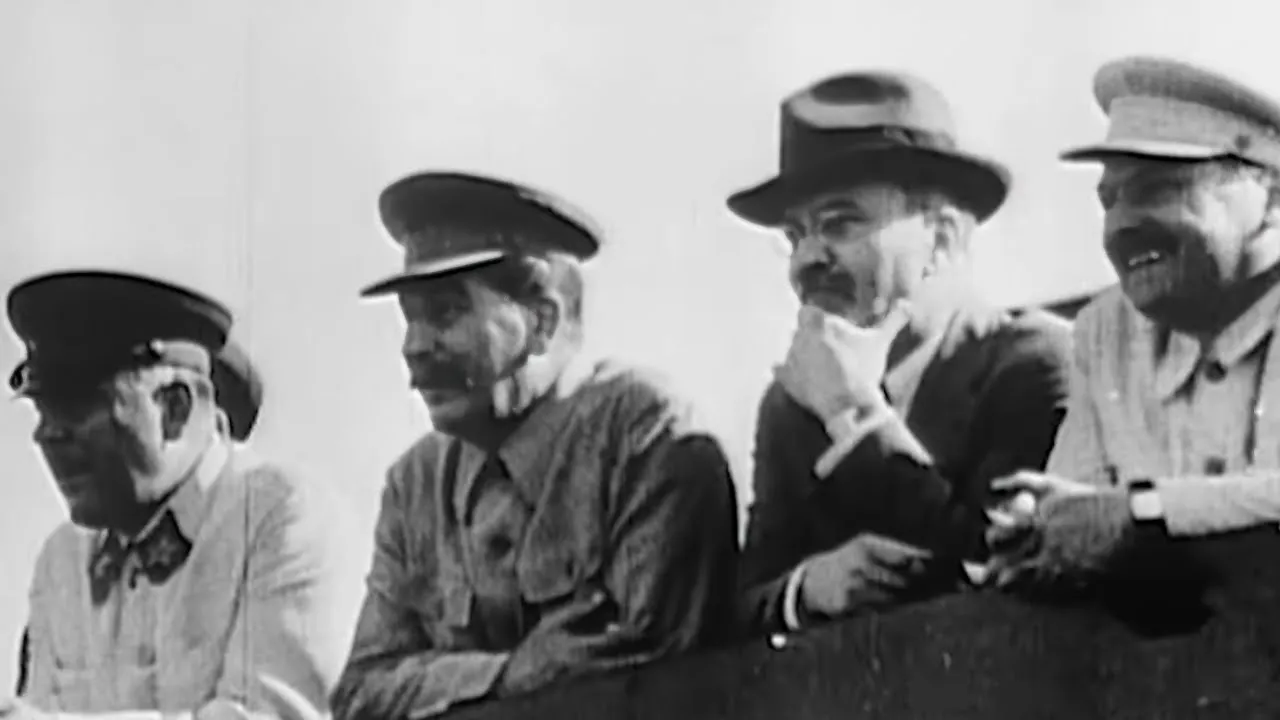
The Two Faces of Communism
566.4K
The Seventh Comintern Congress in July 1935 marked a fundamental strategic shift from class-based to Popular Front politics. Stalin abandoned sectarianism, recognizing fascism as an existential threat requiring broad anti-fascist coalitions. This represented a complete reversal of previous Comintern policy. The new approach allowed communists to participate in bourgeois governments and build alliances with social democrats, fundamentally changing communist international strategy.
Click to watch →

La Comintern
605
The death of Lenin in 1924 opened a war of succession in the Bolshevik leadership. Leon Trotsky gradually lost positions, and with him the idea of internationalist revolution disappeared. Stalin eliminated his competitors through intrigues and conspiracies. The Comintern ceased to be an actor with its own voice and became a battlefield of factions. Stalin claimed to be the heir of Lenin but did not agree with world revolution. He proposed consolidating socialism first in one country. In 1928, at the Sixth Congress, Stalin proclaimed that capitalism was in a terminal crisis and that revolution was back on the agenda. The main enemy was no longer the bourgeoisie but Social Democracy, which Stalin rebaptized as social fascists. The triumph of Hitler forced Stalin to rethink everything. A Nazi Germany represented a mortal threat to the Soviet Union. The Seventh Congress of the Comintern in summer 1935 gave official status to the Popular Front strategy, a broad alliance uniting Communists, Social Democrats, center parties, and all democrats willing to close the path to fascism. The old enemy, social fascist, had been proclaimed only a few years earlier. The change was so abrupt that many militants could barely follow it. This new tactic had much success in France, where the Popular Front won the 1936 elections. In Spain, a similar coalition was imposed. Communism suddenly regained respectability and political weight, but at the price of diluting revolutionary identity in anti-fascist patriotism. In July 1936, part of the Spanish army rebelled, transforming the initial coup into a civil war. Spain became the great geopolitical chessboard where great ideological forces confronted each other. The Spanish Communist Party arrived at the war as a force of small size but grew to 300,000 members by 1937. Their discipline and the fact that the Soviet Union was almost the only country willing to sell arms gave them disproportionate influence. The Comintern mobilized the International Brigades, tens of thousands of volunteers from more than 50 countries. Along with the brigadists came Soviet advisors, military advisors, and NKVD agents whose presence grew until it completely conditioned decisions of the government. By insistence of Communists, the popular militias were militarized and a regular army was reconstructed with a single command. In October 1936, gold reserves of the Bank of Spain traveled to Moscow to pay for arms. Under the government of Negrín, this dependence reached its culmination. In this internal struggle, Communists came head-on against the anarchists of the CNT and FAI, and against the heterodox Marxists of the POUM. The events of May 1937 in Barcelona marked the turning point. After street battles, the POUM was put outside the law. Its leader Andreu Nin was secretly detained and assassinated by Soviet agents. The revolution was stopped because the war had to be won first. The Comintern had its headquarters in Moscow, in a historic building near the Kremlin. International visitors were housed in the Lux hotel. The organization was organized around the Executive Committee (IKAI), with a Presidium, Secretariat, and network of departments extending to all five continents. Money was always important, with much of the Communist parties of the world depending on subsidies from Moscow transferred through discreet channels. This financial dependence reinforced political dependence. The Great Purge, one of the largest political purges in history, did not spare the Third International. It feasted on foreign Communists who were refugees in Russia, many of whom had heard of persecution in their home countries and were in love with the USSR. The Comintern was left mortally wounded. Much of the old guard disappeared in the Great Purge. Stalin privately referred to it as the little shop. On August 23, 1939, the Soviet Union and Nazi Germany signed a non-aggression pact with secret clauses to divide Poland and Eastern Europe. For the Comintern and Communist parties, this was a shock and humiliation. For years they had presented anti-fascism as their reason for being, and suddenly they had to demand neutrality. This schizophrenia lasted until June 22, 1941, when Hitler broke the pact and launched Operation Barbarossa. In a minute, everything changed again.
Click to watch →
コミンテルン 共産主義的独裁の極致
55.7K
This section examines how the Comintern's character changed dramatically under Stalin's leadership. After Lenin's death in 1924, Stalin shifted from world revolution to 'socialism in one country,' transforming the Comintern from a revolutionary organization into a tool for Soviet foreign policy. The Social Fascism theory labeled social democrats as the main enemy, leading German communists to reject cooperation with anti-Nazi forces. The Popular Front strategy (1934) reversed this, calling for alliances with anti-fascist forces. The Comintern's policies shifted repeatedly based on Soviet interests, creating confusion and betrayal for member parties. The Spanish Civil War demonstrated how Comintern intervention could determine outcomes, with Soviet advisors and weapons shaping the conflict.
Click to watch →
Беседа о том, строил ли Сталин коммунизм
114.1K
This segment examines the transformation of the Comintern from an international revolutionary organization into an instrument of Soviet foreign policy. The discussion explains that under Stalin, the Comintern's activities were increasingly directed by Soviet interests rather than by the international communist movement as a whole. The segment also explores the Soviet Union's role as the base of the international proletariat and the responsibility this role entailed. The segment also examines the Molotov-Ribbentrop Pact and its implications for Soviet foreign policy, including the justification for the pact as a strategic necessity to buy time for the socialist transformation.
Click to watch →
Ю.Н.Жуков и Е.Ю.Спицын в студии МПГУ. "Второе поражение Сталина"
482.9K
At the 7th Comintern Congress in 1935, Dimitrov delivered a speech calling on Western communist parties to participate in elections and form alliances with socialists and anti-fascists. This marked a dramatic shift from the traditional communist strategy of armed revolution to peaceful electoral politics. The Popular Front strategy proved successful: it won elections in Chile, gained significant support in Spain and France. This represented a major strategic change in international communist policy, moving away from revolutionary tactics toward electoral politics.
Click to watch →
Deep Dive
The basic distinction between state-level military intervention (such as sending advisors and hardware) and grassroots transnational volunteerism.
![[🇷🇺/🇨🇳] COMMENT FAIRE FACE À LA GUERRE HYBRIDE - avec @LouisDuclosOff](https://i.ytimg.com/vi/17k-wgDqhJ4/maxresdefault.jpg)
[🇷🇺/🇨🇳] COMMENT FAIRE FACE À LA GUERRE HYBRIDE - avec @LouisDuclosOff
73.4K
A critical distinction exists between volunteer soldiers fighting alongside Ukrainian forces and actual state military intervention. International volunteers enlist voluntarily and fight as individuals, not as part of foreign armies. France's Foreign Legion includes soldiers from around the world who become French soldiers through sovereign choice. In contrast, North Korean soldiers, Iranian forces, and other state actors have been openly engaged in combat against Ukraine. This distinction matters because volunteer participation does not constitute co-belligerence with another state, whereas direct military involvement by foreign governments does represent an act of war. The principle of sovereignty means that individuals can choose to fight for causes they believe in, but states cannot send their own military forces to fight another state's war without triggering formal war declarations. This distinction has significant legal and strategic implications for how international support should be characterized and responded to.
Click to watch →

ІЛЬЧЕНКО & ЯКИМЕНКО. Волонтери та УБД в політиці - гаряча тема. Попереду війна волонтерів. Граблі.
1.1K
Volunteers and combatants are fundamentally different categories that should be separated. Volunteer activity during the first year of war is an anomaly that should be addressed by law, as normal wartime conditions should not involve volunteer participation. After the initial month of war, the state should assume responsibility for organized, centralized military operations. The state should fight the state (Russia), not individual citizens or fragmented groups. When the state fails to perform its functions effectively, volunteers effectively become a shadow government. Instead of demanding accountability from the state, volunteers should organize and demand that the state take over their functions.
Click to watch →

(₽) либеральная печенька.. или простой лжец?? (НС 19.07.25)
11.5K
There is a fundamental distinction between volunteers who come to fight for ideological reasons and organized military forces sent by states. The motivation, organization, and control structures differ substantially between these types of military participants.
Click to watch →
War in Southeast Asia - THE NEW ORDER // HOI4 // USA - Ep 3
6.1K
Military advising represents an initial stage of foreign military involvement, followed by volunteer forces as a step toward full combat deployment. Advising provides strategic guidance without direct combat commitment, while volunteer forces represent a middle ground between advisory roles and full-scale military intervention. Each stage carries increasing political and military responsibilities.
Click to watch →

Live #447 ⁍ Guerra Russo-Ucraina - Trump-Zelensky: chi si stava confessando a chi? - Aggiornamento
40.7K
There is a fundamental difference between state military alliances and voluntary international support in conflicts. While Western countries have provided volunteers (including Canadians, Georgians, and Italians) to fight in Ukraine, this differs significantly from North Korea's official deployment of thousands of soldiers. The key distinction is that state military alliances involve formal agreements, official troop deployments, and coordinated military operations, whereas volunteer support is informal and lacks the same level of commitment. This distinction is crucial for understanding escalation risks, as state-level involvement can lead to broader conflicts while volunteer support remains limited.
Click to watch →
Prerequisite Knowledge
- Concept 01The fundamental political divisions of the Spanish Civil War, specifically the conflict between the Second Spanish Republic (Republicans) and the Nationalist rebels led by General Francisco Franco.
- Concept 02The geopolitical landscape of 1930s Europe, including the rise of totalitarian regimes in Germany, Italy, and the USSR, alongside the Western democracies' policy of Non-Intervention.
- Concept 03The role of the Comintern (Communist International) and Soviet foreign policy under Joseph Stalin, particularly the strategy of the 'Popular Front'.
- Concept 04The basic distinction between state-level military intervention (such as sending advisors and hardware) and grassroots transnational volunteerism.
Subsequent Learning
- Step 01The internal political conflicts within the Republican faction, such as the suppression of anarchist groups and the POUM by Soviet-backed elements (the 'May Days' of 1937).
- Step 02How the Spanish Civil War served as a tactical and technological testing ground for World War II for the USSR, Germany, and Italy.
- Step 03The ultimate collapse of the Republican war effort and the establishment of Francisco Franco's long-lasting authoritarian dictatorship.
- Step 04The post-war legacy, repatriation experiences, and political persecution (such as McCarthyism in the US) faced by returning International Brigade volunteers during the Cold War.
Soviet motive
Military aid
Volunteer force
Soviet motive
0:01Playing Section
- 1
Stalin aimed to distract enemies while strengthening Soviet forces.
- 2
Used Spanish conflict for strategic military buildup.
The Revolutionary Counter-Narrative: Soviet Intervention as Counter-Revolutionary
While traditional analyses often contrast the idealistic volunteerism of the International Brigades with the strategic calculations of Soviet state aid, an influential alternative perspective—championed by anarchists (CNT-FAI) and dissident Marxists (POUM)—argues that both forms of assistance ultimately stifled the genuine Spanish social revolution. From this viewpoint, Soviet material aid was not a generous military lifeline but a political weapon used by Stalin to suppress grassroots revolutionary initiatives in order to appease Western democracies. Under this counter-narrative, the Comintern-controlled International Brigades and Soviet advisors acted as instruments of counter-revolution, conducting political purges and enforcing rigid military centralization. This perspective suggests that by prioritizing Soviet foreign policy and crushing local revolutionary morale, Soviet intervention actually crippled the Republic’s war effort from within, offering a critical revision to the narrative of Soviet assistance as a purely supportive, albeit flawed, endeavor.
Deep Dive
The internal political conflicts within the Republican faction, such as the suppression of anarchist groups and the POUM by Soviet-backed elements (the 'May Days' of 1937).
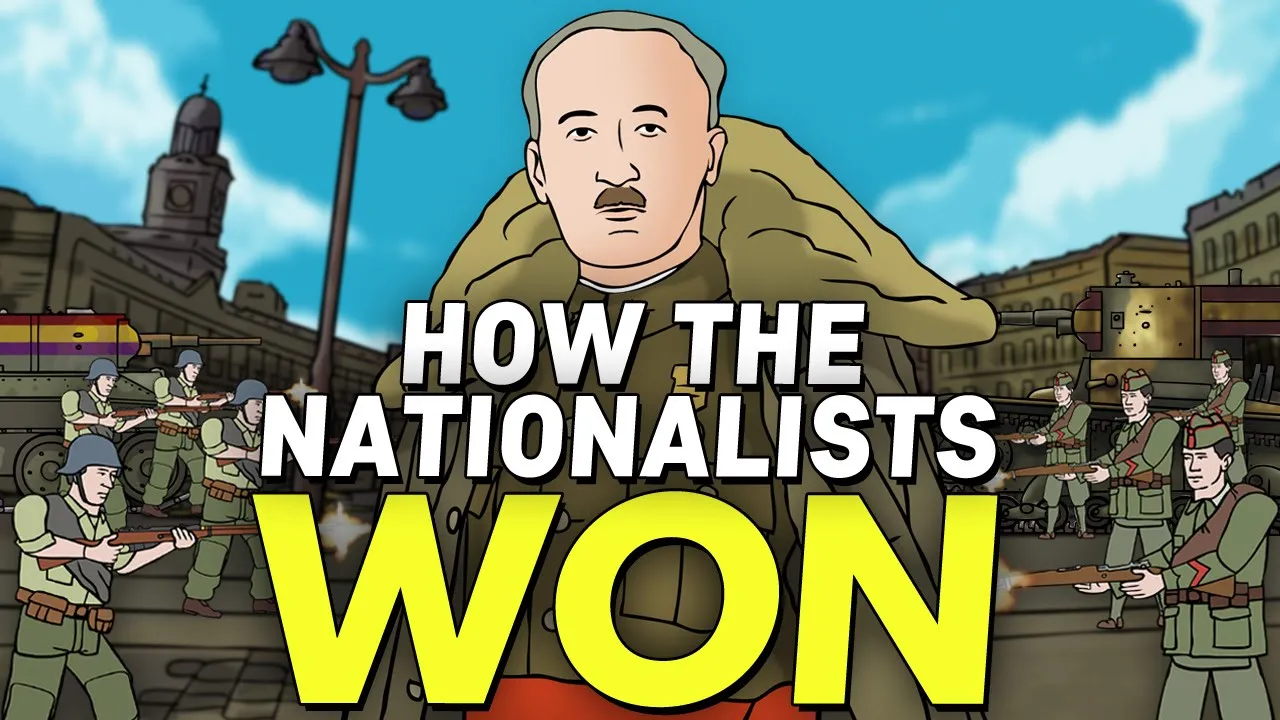
How the Nationalists Won the Spanish Civil War (ft. History w/Hilbert) | Animated History
1.3M
Unlike the relative order behind Franco's lines, the Republic under President Manuel Azaña was perpetually in a state of internal division with factions constantly squabbling. The most notable civil war within a civil war was the May Days of 1937, which broke out in Catalonia and pitted Republicans against far-left anarchist and socialist factions. This strike resulted in roughly 1,000 dead and 1,500 wounded, demonstrating how internal Republican conflicts weakened their overall position against the Nationalists.
Click to watch →

The Spanish Civil War | Anarchism, Communism, Falangism, Liberalism, Monarchism | Polandball History
464.4K
The Republican side consisted of liberals (effectively impotent), Basques (seeking autonomy), anarchists (CNT-FAI), communists (split between POUM and pro-Soviet factions), and 35,000 international volunteers from 53 countries. The Basques formed their own government with military currency and flag, seeking autonomy within the new Spain. The CNT-FAI controlled Aragon and Catalonia initially and seriously considered declaring an anarchist society but compromised by joining the Republican government. The POUM (anti-Soviet) differed from Trotsky on key issues, while pro-Soviet communists were under Moscow's control. George Orwell fought for the pro-Soviet faction. This coalition of liberals, anarchists, and two communist strains suffered from severe infighting throughout the war.
Click to watch →

EL ROBO PERFECTO: ¿Por Qué Stalin se Quedó con el Oro Español y Nadie Pudo Reclamarlo?
221
The Republican side in 1936 was an extraordinarily heterogeneous coalition including socialists, communists, anarchists, republicans, and nationalists, united by opposition to the coup but divided on everything else. Stalin had specific objectives in Spain that were not identical to those of any other sector of the Republican side. The main objective was to ensure that if the Republic won, the result would not be a socialist or anarchist revolution but a manageable bourgeois democratic regime. The May Events of 1937 in Barcelona resulted in the political defeat of the sectors that Moscow wanted eliminated, including the persecution of the POUM and the documented assassination of Andreu Nin by NKVD agents.
Click to watch →
Comment l'Espagne est devenue une dictature
770.9K
The Spanish Civil War quickly became an international conflict involving major powers. Mexico provided early military aid to Republicans. The Soviet Union became the primary Republican supporter, sending massive quantities of weapons, equipment, advisors, and financial assistance. However, this Soviet involvement created internal Republican divisions between PCE communists loyal to Stalin and anti-Stalinist POUM and anarchist factions who prioritized revolution over military victory. These tensions erupted into violence, such as the May 1937 Barcelona street fighting between syndicalists and POUM members, resulting in POUM dissolution and communist consolidation of Republican influence.
Click to watch →
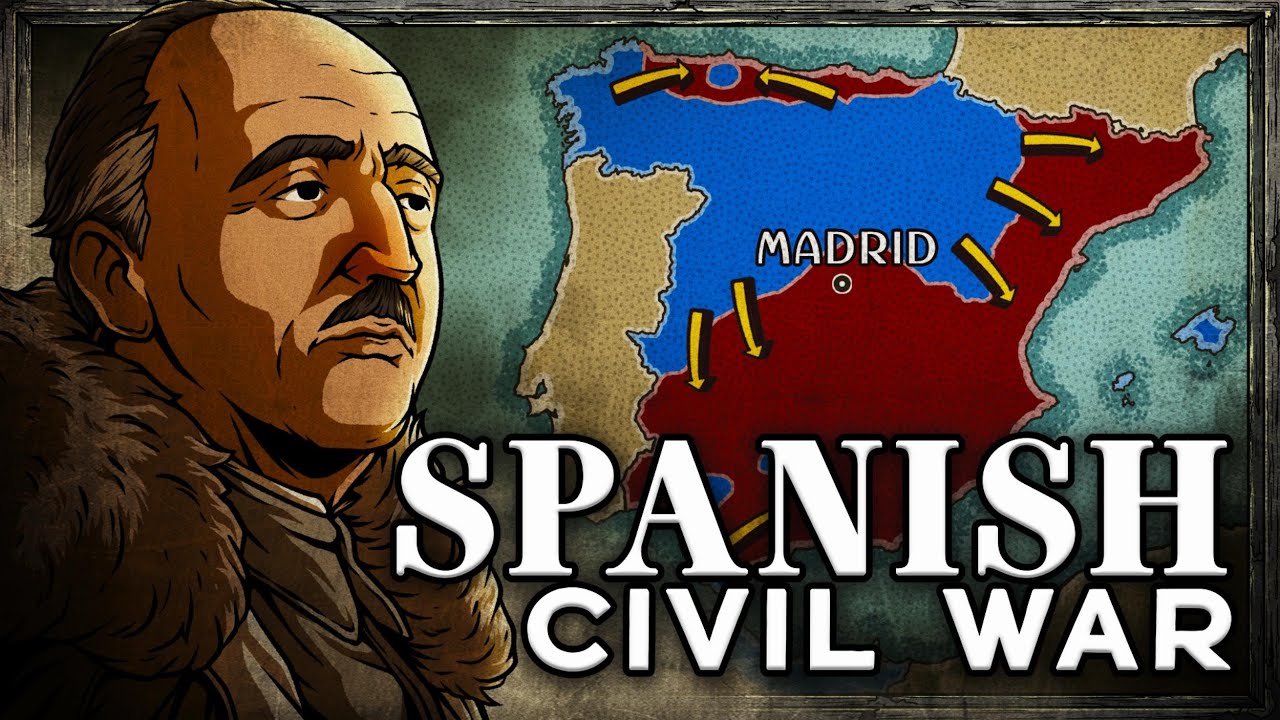
Spanish Civil War (1936-1939): Causes, Key Events, and Aftermath
313.8K
In May 1937, street fighting erupted in Barcelona between anarchists, anti-Stalinist Marxists, and Soviet-backed communists. Violence left hundreds dead and ended with suppression and fusion of anti-Stalinist factions, deepening Soviet dominance within the Republic. The May Days were downplayed by Soviet propaganda. George Orwell, who fought with anti-Stalinists, later wrote that no communist could admit truthful accounts of events, illustrating how internal divisions undermined Republican effectiveness.
Click to watch →
Deep Dive
How the Spanish Civil War served as a tactical and technological testing ground for World War II for the USSR, Germany, and Italy.
PM-SP 2019 - História Geral - 2ª Guerra Mundial - 25/76
35.5K
The Spanish Civil War (1936-1939) between fascist forces led by General Franco and leftist forces served as a 'laboratory' for World War II. Hitler and Mussolini supported Franco, using the conflict to test military equipment and tactics that would later be used in the war. The bombing of Guernica by German forces demonstrated aerial warfare tactics. The war consolidated the Rome-Berlin Axis alliance between Nazi Germany and Fascist Italy, demonstrating how fascist powers could support each other's expansionist goals. This conflict provided valuable combat experience and testing ground for weapons and strategies that would be refined during World War II.
Click to watch →

España ensayo de una guerra 1x02 Pactos
2.7K
The Spanish Civil War (1936-1939) served as a testing ground for World War II strategies, military training, and weapons development. It transformed from a local uprising into a battlefield for clashing irreconcilable interests. Major powers actively intervened: Nazi Germany, Fascist Italy, and the Soviet Union, while Western democracies adopted non-intervention. The war was the first chapter of what would become World War II, with Germany, Italy, and the Soviet Union using it to test forces and develop new tactics. Hitler and Mussolini immediately supported Franco, seeing the conflict as an opportunity to test new weapons, train soldiers in real combat, and establish Atlantic submarine bases. Mussolini sent 600 aircraft and 44,000 soldiers, while Hitler provided the Condor Legion with 5,000 men, 180 tanks, 180 artillery pieces, and 600 aircraft. These forces proved decisive in major World War II battles.
Click to watch →
segunda guerra mundial en color episodio 1
1.7K
The Spanish Civil War (1936-1939) served as a proving ground for the military tactics and weapons that would characterize WWII. Germany and Italy provided substantial military support to Franco's Nationalists, sending troops, aircraft, and modern weapons including tanks and bombers. Britain and France maintained non-intervention policies to avoid broader European war. The Soviet Union sent military advisors and volunteers. Approximately 30,000 international volunteers joined the Republican cause. The war demonstrated the devastating potential of aerial bombing against civilian populations, as seen in the destruction of Guernica in April 1937.
Click to watch →

14.00 Hrs Detrás de la Historia / La guerra civil Española
9.4K
The Spanish Civil War (1936-1939) served as a testing ground for the forces that would later fight in World War II. Germany and Italy used the war to test their military capabilities and develop new tactics, while the Soviet Union provided material support to the Republicans. The war also attracted volunteers from around the world, including the International Brigades who fought for the Republicans. The conflict demonstrated the failure of appeasement and the willingness of fascist powers to intervene militarily in other countries' affairs.
Click to watch →
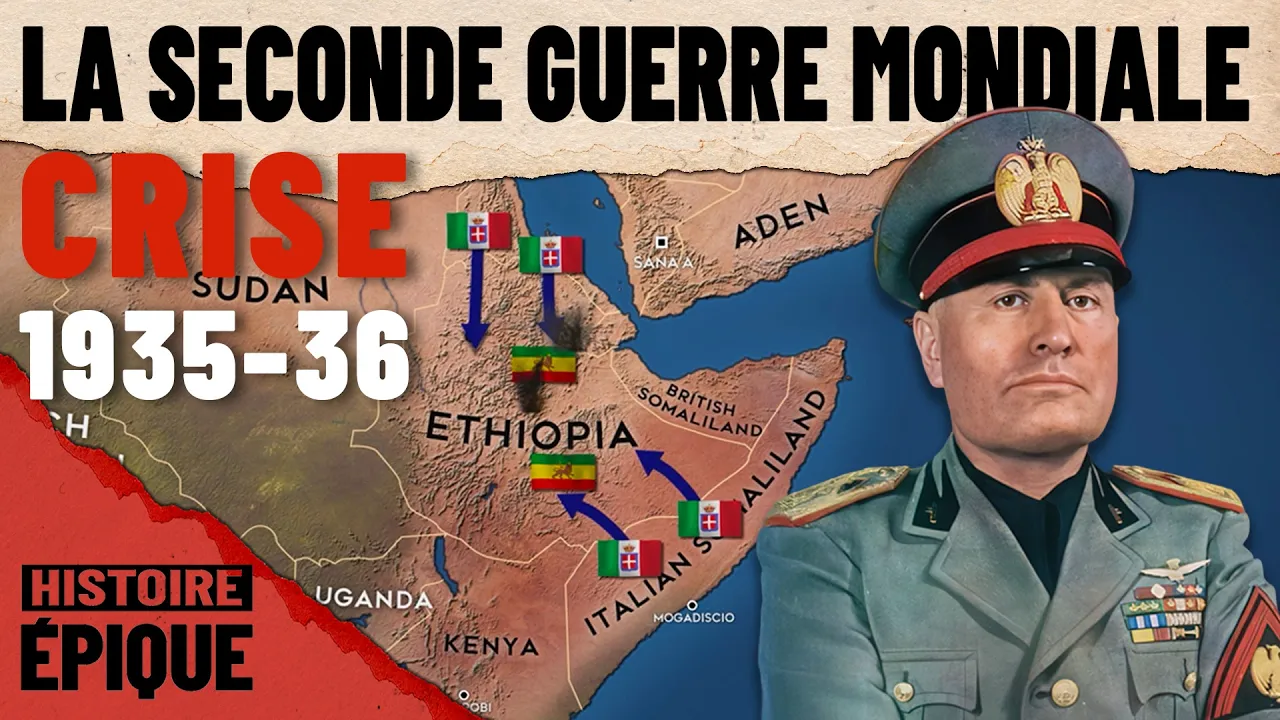
La route vers la Seconde Guerre mondiale : 1935 - 1936
3.7K
The Spanish Civil War (1936-1939) served as a testing ground for WWII technologies and ideologies. When Spanish nationalists launched a coup in July 1936, the Republican government held most major cities. International intervention followed: the Soviet Union supplied weapons and advisors; Italy sent troops, Blackshirt militias, and aircraft; Germany deployed the Condor Legion. The war demonstrated how fascist powers supported authoritarian regimes while democratic nations claimed non-intervention. The conflict killed thousands and showed how civil wars could escalate into full-scale international conflicts, with the eventual Nazi victory foreshadowing broader European conquest patterns.
Click to watch →
Deep Dive
The ultimate collapse of the Republican war effort and the establishment of Francisco Franco's long-lasting authoritarian dictatorship.

1939 El FINAL de la GUERRA I GUERRA CIVIL ESPAÑOLA I 13
4K
The fourth phase of the Spanish Civil War (January 1939) marked the final collapse of the Republican cause. After the failed Battle of the Ebro, Franco exploited Republican weakness to launch rapid conquests. Catalonia fell in just one month as most soldiers fled rather than resist. Franco's overwhelming military superiority in aircraft, tanks, and artillery, combined with total international abandonment (Soviet, French, and British support had ceased), made Republican resistance impossible. Madrid fell on March 28, 1939, after Casado's failed coup attempt. The last Republican ship departed Alicante on March 30, 1939. Franco's victory proclamation on April 1, 1939, declared the army defeated, marking the beginning of 40 years of dictatorship. Each April 1st, military parades reinforced the narrative of a defeated versus victorious Spain. The Francoist state was a totalitarian regime dominated exclusively by Franco as Generalísimo. Key laws included the Ley de Responsabilidades Políticas (February 1939), which criminalized left-wing affiliation and allowed prosecution for war crimes until 1969, and the Fuero del Trabajo, which modeled Mussolini's labor laws by establishing work as obligation rather than right, suppressing strike rights and eliminating working-class organizing power.
Click to watch →

American Reacts to Spanish Civil War | Feature History - McJibbin Reacts
8K
The Republican coalition proved internally divided, lacking the unity demonstrated by Nationalist forces. After the fall of the Alcázar in 1937, Franco unified the Nationalist movement and advanced toward Madrid. The siege of the capital lasted years, with Republicans remaining on the defensive despite Soviet aid. In 1938, Franco pushed Republicans toward the coast, cutting their territory in two. Civil war broke out within Republican ranks as anarchists expelled communists and began separate peace negotiations, but Franco rejected anything less than unconditional surrender. Barcelona fell in January 1939, and Madrid surrendered in March. Franco declared victory and established absolute dictatorship, purging former allies and opponents alike. Tradition and religion held supreme authority, while the economy was rebuilt at workers' expense. The monarchy was revived in 1947 with Franco as regent for life, selecting Juan Carlos de Borbón as heir in 1969.
Click to watch →
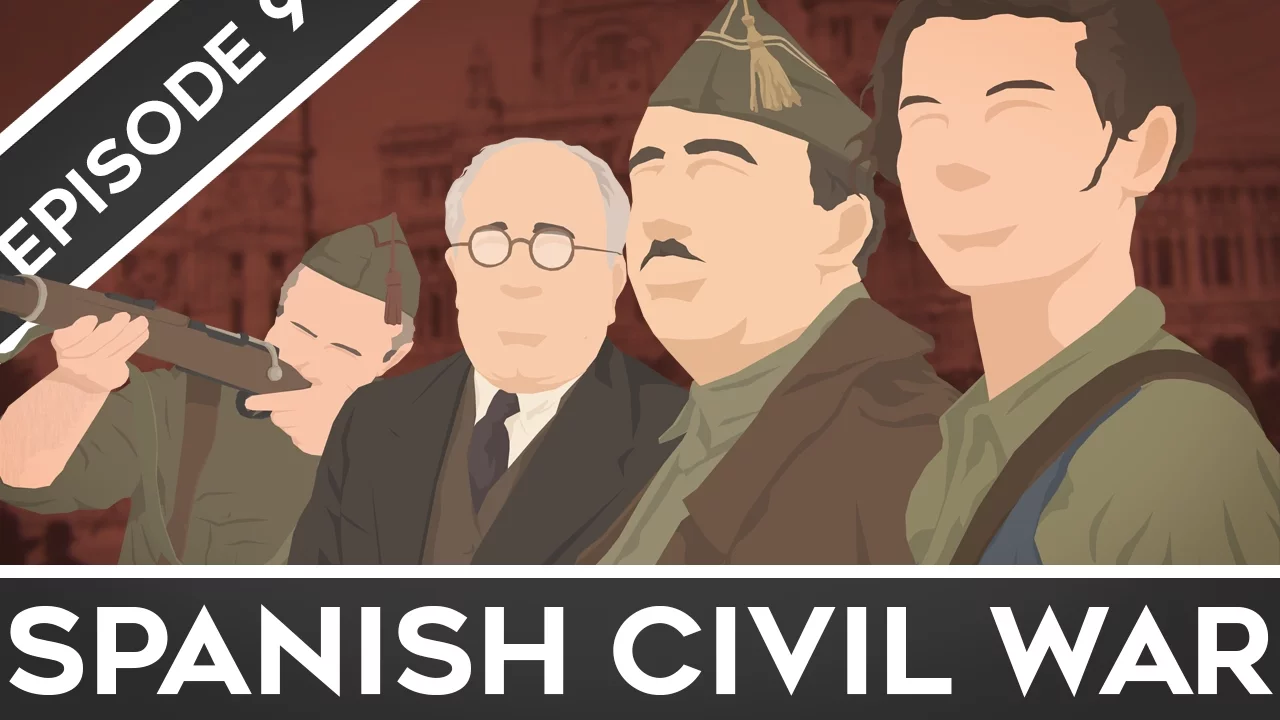
Feature History - Spanish Civil War
1.5M
Republican fortunes declined steadily: the Basque Country suffered intense bombing in 1937, and the 1938 offensive failed catastrophically. By 1939, Republicans were pushed to Catalonia, with no Allied intervention forthcoming due to British and French appeasement policies. Internal Republican divisions—between communists seeking power and anarchists resisting control—prevented effective resistance. Barcelona fell January 26, 1939, followed by Madrid March 26. Franco established authoritarian rule, purging former allies, reviving the monarchy, and suppressing workers. His dictatorship lasted until death in 1975, succeeded by King Juan Carlos I who implemented democratic reforms. The war's legacy includes persistent political polarization, with tendencies toward ideological labeling rather than compromise.
Click to watch →
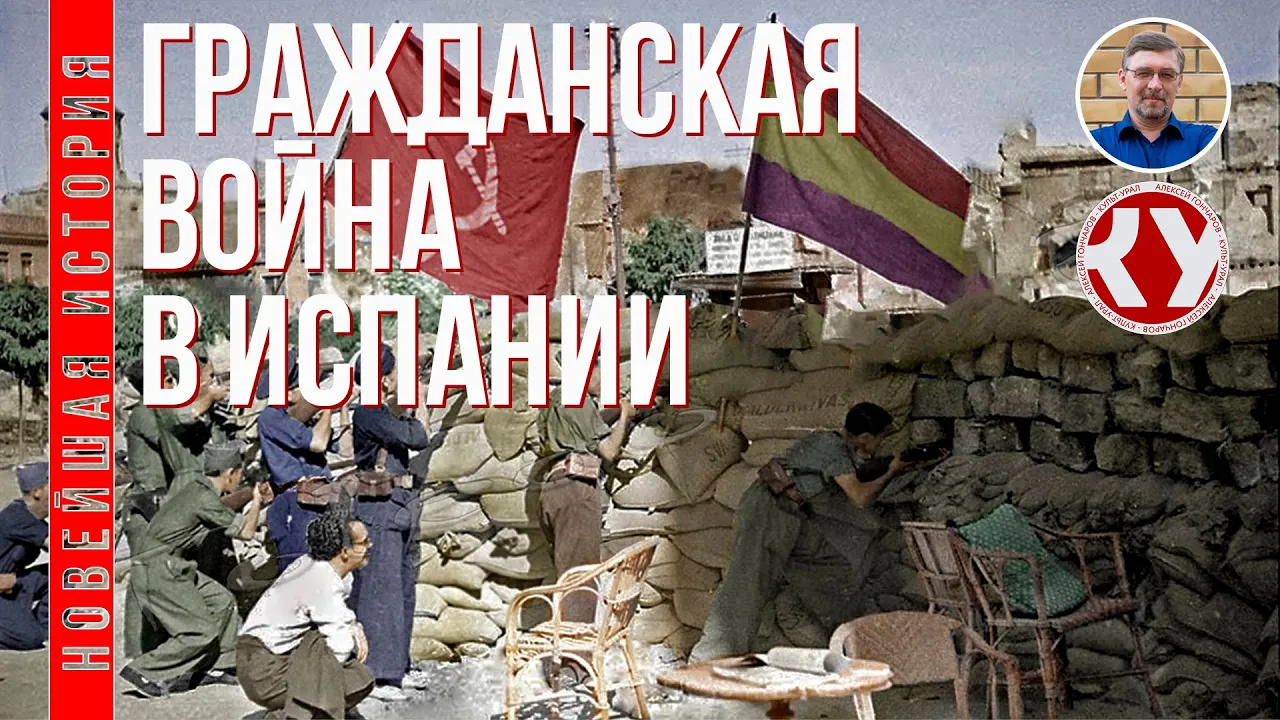
Новейшая история. XX век. #8. Гражданская война в Испании
5.7K
Republican military fortunes deteriorated as internal divisions destroyed discipline and coordination. The Aragon offensive in 1938 divided Republican territory, isolating Catalonia. Despite desperate efforts including the costly Ebro River offensive, Republican forces could not halt the Nationalist advance. By January 1939, Nationalist forces captured Barcelona, forcing the government to flee. Juan Negrín remained in Madrid until the final surrender in March 1939. General Francisco Franco established a fascist dictatorship lasting until his death in 1975, holding the title of Caudillo and generalissimo. The war resulted in approximately 450,000 deaths, with 600,000 Spaniards fleeing abroad, including cultural figures like Picasso and Ortega y Gasset.
Click to watch →
A Guerra Civil Espanhola
109.1K
By early 1939, Republican forces were completely encircled and defeated. Nationalist forces captured Madrid, Valencia, and the remaining Republican territories in less than a week. The Republican government collapsed entirely, with no meaningful resistance remaining. The war resulted in approximately 500,000 deaths and another 500,000 refugees. Franco established a dictatorship that lasted until his death in 1975. The victory represented a complete triumph of conservative, nationalist forces over revolutionary and liberal elements, fundamentally reshaping Spanish politics and society.
Click to watch →
Deep Dive
The post-war legacy, repatriation experiences, and political persecution (such as McCarthyism in the US) faced by returning International Brigade volunteers during the Cold War.

part 7- George Sossenko and Moe Fishman part 7
109
During the Spanish Civil War, volunteers who fought for the Republican cause faced significant political persecution upon returning to the United States, including harassment by the House Un-American Activities Committee, imprisonment for violations of the Neutrality Act, and restrictions under the House Suppressive Activities Act during the McCarthy era, which targeted organizations associated with communism and abrogated constitutional rights of Americans to join organizations of their choice.
Click to watch →

PASSÉ PRÉSENT: LES BRIGADES INTERNATIONALES
1.2K
After World War II, International Brigades veterans faced persecution in Eastern European countries. They were among the first victims of repression because their internationalist combat had not necessarily favored Moscow, especially during periods of ultranationalist policies. Many were Jewish, making them targets for antisemitism. In France, André Marty, a prominent brigadist and Communist Party leader, was accused of being a police officer. The French Communist Party suppressed the memory of International Brigades veterans for decades, beginning during periods of extreme paranoia within the party. This suppression was only partially rectified in the 1990s when the party began reappropriating this historical memory.
Click to watch →

Did Democracy Die in the Spanish Civil War? (Ep6)
578
American volunteers who fought in the Lincoln Brigade faced severe persecution upon returning home, illustrating how Cold War paranoia transformed anti-fascist activists into targets. Congress held hearings on the brigade in 1938, and FBI raids occurred in 1940 because authorities viewed international brigaders as communists seeking to subvert America from within. In 1953, the Lincoln Brigade was officially added to the Attorney General's list of subversive organizations, making service in Spain formal evidence of disloyalty to the United States. During McCarthyist hearings, veterans were pressured to name names and confess associations; some complied to save careers while others refused and were destroyed professionally. Many lost jobs, were pushed out of unions and public life as Cold War paranoia hardened. Their service in Spain was never treated as a badge of honor during this period, only celebrated within parts of the left as proof that ordinary people saw fascism coming and tried to stop it.
Click to watch →
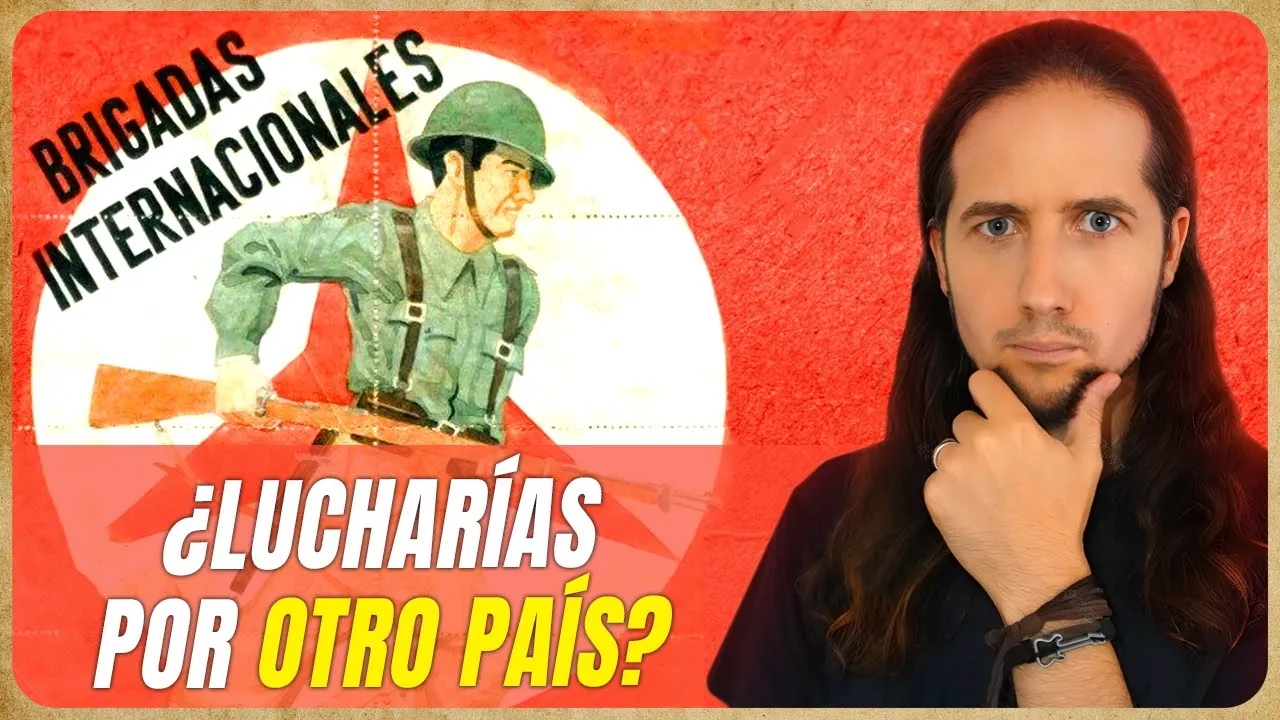
¿QUÉ FUERON LAS BRIGADAS INTERNACIONALES? | Manic Street Preachers - If You Tolarate This
51.9K
Following Franco's victory in 1939, international volunteers faced severe consequences depending on their nationality. Over 100 brigadists were executed by Francoist authorities, provoking diplomatic protests from various governments. Many others were imprisoned in labor camps or subjected to medical experiments conducted by Dr. Antonio Valverde Nagera, known as the 'Spanish Mengele' for his racist theories. German and Italian volunteers were repatriated to their home countries, where they faced persecution as political opponents. The last brigadists were released in 1943, coinciding with the turning tide of World War II and Spain's need to improve its international standing.
Click to watch →
Glorioso Mester - La Batalla del Jarama
82.5K
After the Spanish Civil War, approximately 35,000 International Brigade volunteers faced persecution in their home countries. Many were unable to return to their countries due to fascist domination or faced repression in democratic nations. The US government held congressional hearings attempting to designate the Abraham Lincoln Brigade as a subversive organization. Many volunteers subsequently participated in World War II, where they again faced persecution. The memory of the Spanish Civil War and the International Brigades has been recognized gradually over time, with acknowledgment of their courage and solidarity against fascism. The experience of the Spanish Civil War taught many about the importance of international solidarity and the consequences of political violence.
Click to watch →
Soviet motive
Military aid
Volunteer force
Soviet motive
0:01- 1
Stalin aimed to distract enemies while strengthening Soviet forces.
- 2
Used Spanish conflict for strategic military buildup.
The Revolutionary Counter-Narrative: Soviet Intervention as Counter-Revolutionary
While traditional analyses often contrast the idealistic volunteerism of the International Brigades with the strategic calculations of Soviet state aid, an influential alternative perspective—championed by anarchists (CNT-FAI) and dissident Marxists (POUM)—argues that both forms of assistance ultimately stifled the genuine Spanish social revolution. From this viewpoint, Soviet material aid was not a generous military lifeline but a political weapon used by Stalin to suppress grassroots revolutionary initiatives in order to appease Western democracies. Under this counter-narrative, the Comintern-controlled International Brigades and Soviet advisors acted as instruments of counter-revolution, conducting political purges and enforcing rigid military centralization. This perspective suggests that by prioritizing Soviet foreign policy and crushing local revolutionary morale, Soviet intervention actually crippled the Republic’s war effort from within, offering a critical revision to the narrative of Soviet assistance as a purely supportive, albeit flawed, endeavor.
The fundamental political divisions of the Spanish Civil War, specifically the conflict between the Second Spanish Republic (Republicans) and the Nationalist rebels led by General Francisco Franco.
The geopolitical landscape of 1930s Europe, including the rise of totalitarian regimes in Germany, Italy, and the USSR, alongside the Western democracies' policy of Non-Intervention.
The role of the Comintern (Communist International) and Soviet foreign policy under Joseph Stalin, particularly the strategy of the 'Popular Front'.
The basic distinction between state-level military intervention (such as sending advisors and hardware) and grassroots transnational volunteerism.
The internal political conflicts within the Republican faction, such as the suppression of anarchist groups and the POUM by Soviet-backed elements (the 'May Days' of 1937).
How the Spanish Civil War served as a tactical and technological testing ground for World War II for the USSR, Germany, and Italy.
The ultimate collapse of the Republican war effort and the establishment of Francisco Franco's long-lasting authoritarian dictatorship.
The post-war legacy, repatriation experiences, and political persecution (such as McCarthyism in the US) faced by returning International Brigade volunteers during the Cold War.
1K views15likes0:42@OranguTango-ww2HistoryOriginal Release: 2026-04-03
Stalin saw the Spanish conflict as a way of keeping Germany and Italy occupied while building up the Soviet Union's military strength.
About 700 military advisers were sent along with tanks and fighter aircraft.
It was something, but no match for the support Franco had received.
In fact, the largest source of outside [music] help for the Republic didn't come from a country at all, but from volunteers, the International Brigades.
About 30,000 left-wing Americans, British, French, and Germans signed up to fight in Spain.
Up Next

12:27
Adolf Galland: Luftwaffe Fighter Ace and Tactician (WWII)
@FORGOTTENHISTORYCHANNEL
66.3K views•2022-04-06

33:02
The Great Schism of 1054: Causes and Consequences
@SacredCathedrals
113.5K views•2026-02-19
91:57
The Geopolitics of the Ukraine War and the Rise of Global Autocracy
@JordanHarbingerShow
468K views•2025-04-19
17:05
Understanding the Cold War: Superpower Conflicts and the Road to Détente
@OverSimplified
46.1M views•2019-01-24
Related Study Plans & Knowledge Roadmaps
Structured learning paths in History
history
Byzantine Iconoclasm: Theology, Art & Politics
01Foundations of Byzantium and Early Christian Images
02The First Iconoclasm: Leo III and the Crisis of Images
03Empress Irene, Nicaea II, and the Second Iconoclasm
+ 2 more learning modules
9h5 modules
Explore Roadmap
history
Iranian Revolution (Causes, Events & Legacy)
01The Pahlavi Dynasty and the Roots of Discontent
02The Spark of Rebellion and the Rise of Khomeini
031979: The Fall of the Shah and the Climax of the Revolution
+ 2 more learning modules
8h5 modules
Explore Roadmap
history
Mali Empire: Mansa Musa, Trade & Timbuktu
01Foundations of the Mali Empire
02The Trans-Saharan Gold and Salt Trade
03The Reign and Pilgrimage of Mansa Musa
+ 1 more learning modules
6h4 modules
Explore Roadmap
history
1947 Partition: Politics, Borders & Legacies
01Foundations of British India and the Divide
02The Political Negotiations and the Mountbatten Plan
03Drawing the Boundary: The Radcliffe Line
+ 2 more learning modules
8h5 modules
Explore Roadmap