










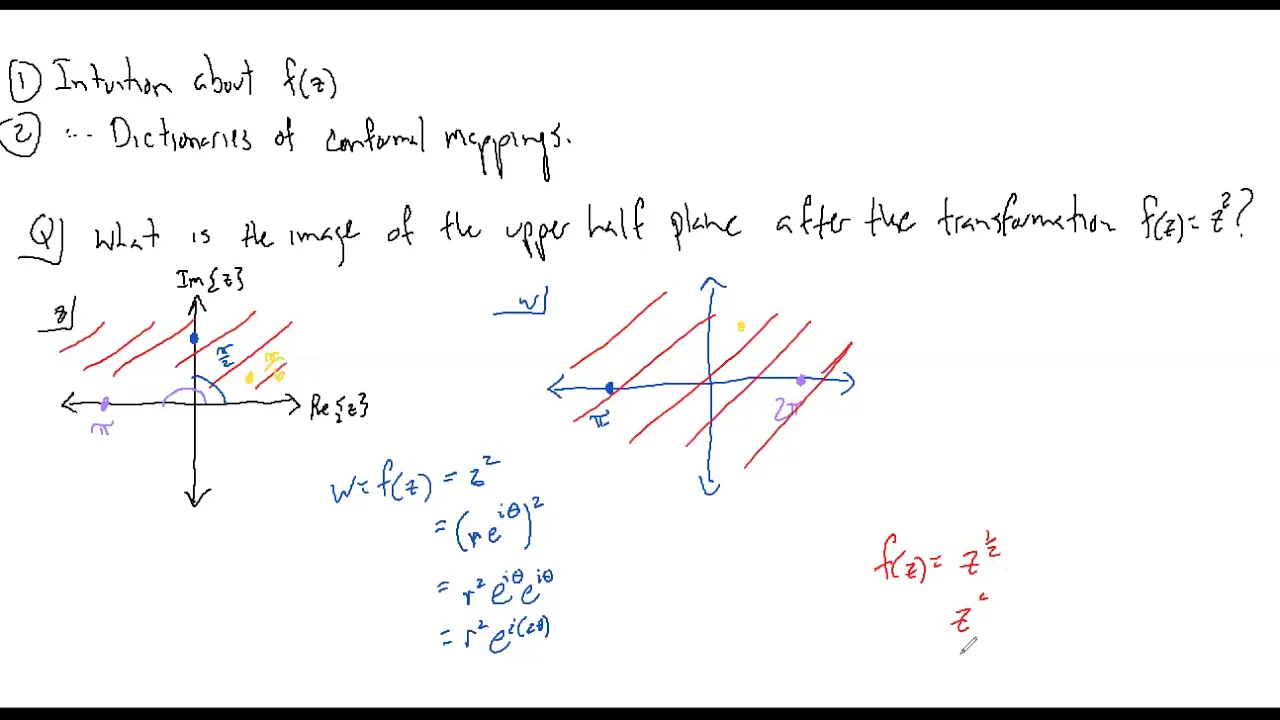







Conformal mappings are invertible mappings that preserve angles between intersecting curves, and they are characterized by analytic complex functions with non-zero derivatives; specifically, if a complex function f(z) = u + iv is analytic and its derivative f'(z) ≠ 0, then the mapping from the xy-plane to the uv-plane is conformal and preserves Laplace's equation, meaning that solutions to ∇²T = 0 in the original domain correspond to solutions in the mapped domain scaled by the square of the magnitude of f'(z).
Conformal Mappings in Complex Variables | MIT OCW Lec 3
Added:Basic complex arithmetic and geometric representation of complex numbers in the complex plane.
The definition and properties of analytic (holomorphic) functions, including the Cauchy-Riemann equations.
Fundamental concepts of multivariable calculus, specifically partial derivatives and the geometric interpretation of Jacobian matrices.
An introductory understanding of Laplace's equation and harmonic functions in two dimensions.
The study of Möbius transformations (bilinear transformations) and their geometric mapping properties.
Applications of conformal mapping to solve boundary value problems in physics, such as electrostatics, fluid dynamics, and steady-state heat flow.
The Riemann Mapping Theorem and its theoretical implications for mapping open simply connected domains.
The Schwarz-Christoffel transformation for mapping the upper half-plane onto polygonal domains.
152.6K views1.6Klikes36:00Original Release: 2012-03-29
The following content is provided under a Creative Commons license.
Your support will help MIT OpenCourseWare continue to offer high quality educational resources for free.
To make a donation or view additional materials from hundreds of MIT courses, visit MIT OpenCourseWare at ocw.mit.edu.
HERBERT GROSS: Hi, our lesson today is going to be concerned with looking at some of the ramifications of what it means for a complex valued function to be analytic.
And one of the side results, I hope, of today's lesson will be to show why, if the complex numbers had never been invented up until this point, they would have been invented, most likely to discuss mappings of the xy plane into the uv plane.
While I hope to make that clearer as we go along, for the time being, let's simply entitle today's lesson Conformal Mappings.
And by way of review-- and what I want to do here, you see, is emphasize the real part of complex variable theory.
Suppose I have the usual mapping from the xy plane into the uv plane given by u as some function of x and y and v as some function of x and y.
And you may recall this is back much earlier in our course in block 4, block 3, where we were labeling this as f bar of x, y equals u, v. No necessity here of talking about complex variables.
We're mapping two space into two space, the xy plane into the uv plane, by the mapping f bar defined by u and v being these functions of x and y.
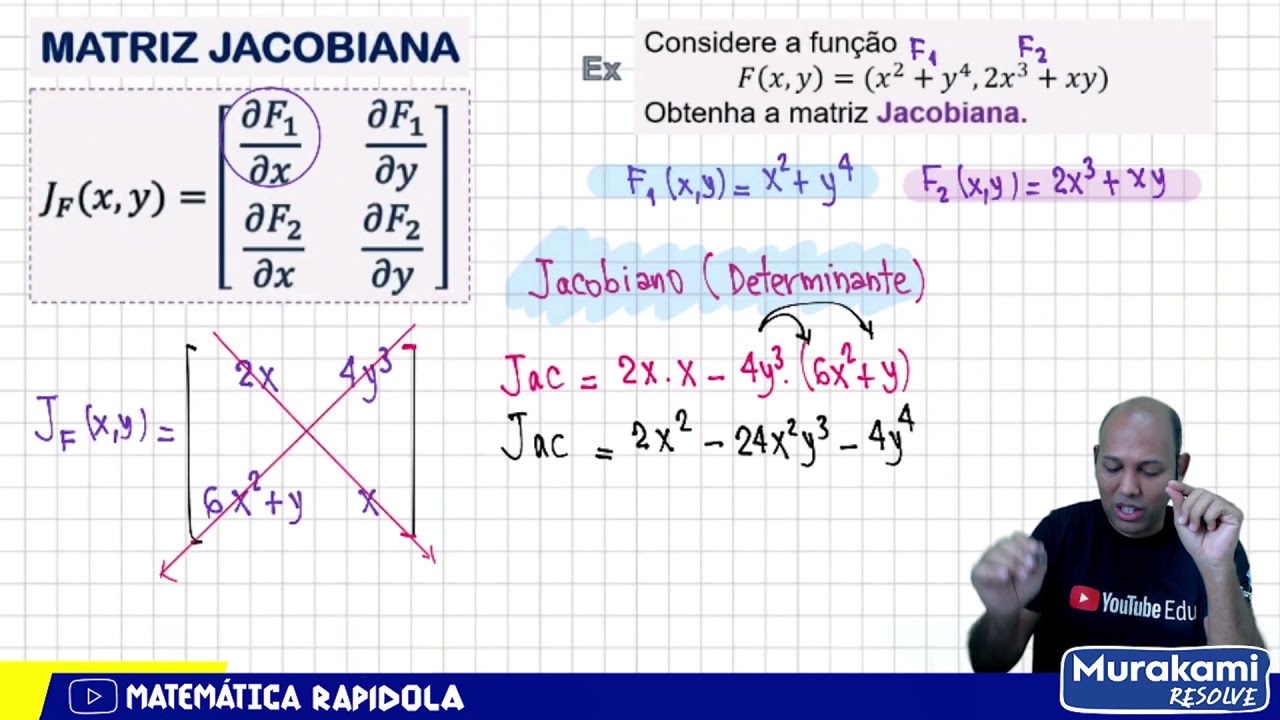
And what we saw was that this particular mapping was, at least locally, meaning in a neighborhood of a given point, in vertical, provided that the determinant of the Jacobian matrix was not 0.
In other words, that u sub x, v sub y minus u sub y, v sub x was not equal to zero.
And again, what I want you to see is that, up until this point, there is absolutely no knowledge that we need of complex variables.
Now, what is interesting is this.
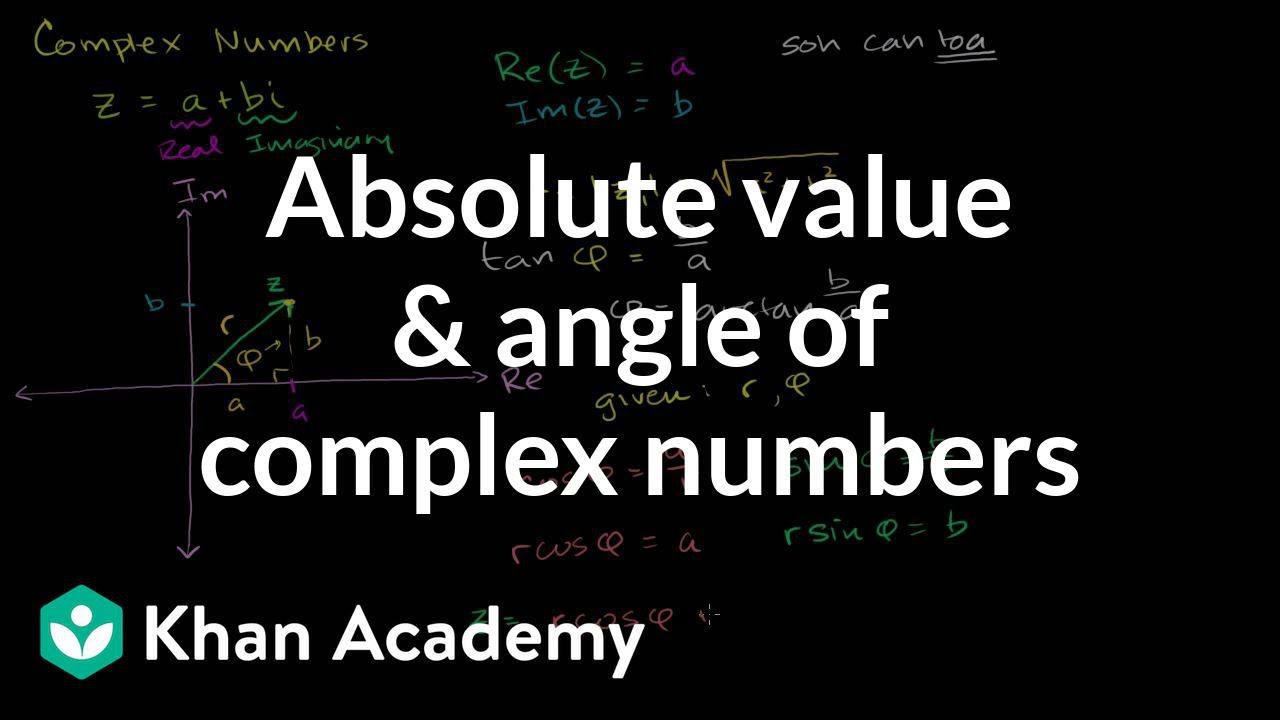
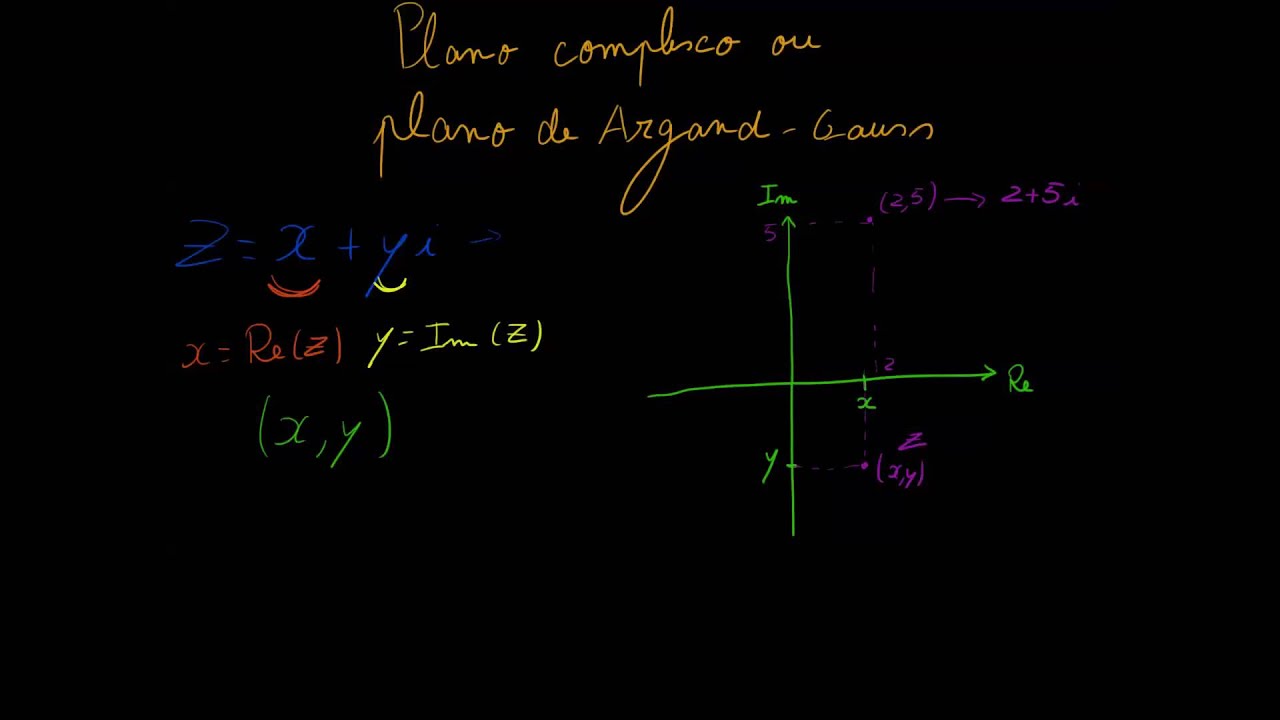
Remember that, when we introduced the complex numbers, we said that, graphically, their domain would be the xy plane, and that would be called the Argand diagram.
Now, you see, coming back to this little aside that we were making over here, if I now view the xy plane as being the Argand diagram, then what we're saying is that x, y names the complex number z.
u, v names the complex number w, namely u plus iv.
And since we're talking, now, about mapping complex numbers into complex numbers, f bar simply becomes some function f.
Now, the question that's more important is, why would one want this particular interpretation?
What particular interpretation?
The particular interpretation that I have in mind is to simply observe that, whenever I have a change of variables-- say, two equations and two unknowns-- u equals some function of x and y, v equals some function of x and y-- what I'm saying is I can always view this pair of equations as the single complex variable equation that f of z equals u plus iv, that, mechanically, by letting u be the real part and v be the imaginary part, I can invent the complex valued function u plus iv.
By the way, this is in much the same spirit that, when one talks about curves in the plane, one does not have to know anything about vectors.
I can talk about the curve x equals x of t, y equals y of t and then say, OK, let's introduce the radius vector R and then write that R is equal to xi plus yj, and this allows me to take two scalar equations and write them as one vector equation.
So I can certainly take two scalar, two real functions of two real variables and write them in terms of the language of complex functions.
The question, of course, is why would I want to do this?
We have already seen this in our very first lecture on complex variables.
For example, we knew how to handle things like cosine n theta without ever having to have heard of complex variables.
Yet we found that, by such things as De Moivre's Theorem, that there was some very nice enlightenment that the structure of complex numbers brought to real numbers.
In other words, then, perhaps by taking this pair of equations and writing them in the language of complex variables, I might, from the vantage point of the complex number system, be able to look down at the real number system and see some things very elegantly from a computational point of view, from a philosophical point of view, that I might not have been able to notice otherwise.
Now, because this is becoming a harangue, let's get on with the specific details and see if this doesn't become clear as we go along.
What we've already said is we can view this change of variables as being the real and imaginary parts of the complex function f of z.
In other words, let's invent the function f of z to be u plus iv.
Now, the point is-- let's assume, for the sake of argument, that f of z happens to be an analytic function.
What does it mean to say that f of z is analytic?
It means that f prime exists.
In particular, from our lecture of last time, not only does f prime exist, but if we want to write this quite simply, it turns out to be the partial of u with respect to x plus i times the partial of v with respect to x.
In particular, the Cauchy-Riemann conditions hold, which means that u sub x equals v sub y, and u sub y equals minus v sub x.
And by the way, to reinforce what I was just saying before, please observe that this particular relationship does not necessitate my knowing anything about complex numbers.
Given two functions u and v, functions of x and y, I can compute the partial of u with respect to x.
I can compute the partial of v with respect to y, the partial of u with respect to y, the partial of v with respect to x and see if these conditions hold.
At any rate, if these conditions do hold-- and notice how nicely the language of complex variables allows me to say that these conditions hold, namely all I have to say is that f of z is analytic-- then coming back to what the Jacobian meant-- remember what the Jacobian meant?
It was u sub x v sub y minus u sub y v sub x.
Coming back to this, I can now compute this very simply, simply by observing that another way of saying v sub y is to replace it by u sub x.
And if I do that, this term becomes u sub x squared.
If I now replace u sub y by minus v sub x, this becomes v sub x squared.
And so this expression becomes u sub x squared plus v sub x squared.
And if we now look here, notice that, since the magnitude of a complex number is just the positive square root of the sum of the squares of the real and the imaginary parts, this expression here is precisely the square of the magnitude of f prime of z.
Now, look, the only way that this can be 0, then, is if this is 0.
The only way this can be 0 is if f prime of z is itself 0 because the only complex number whose magnitude is 0 is 0 itself.
Now, what does this tell me, therefore?
This tells me that the system of real equations, u equals u of xy, v equals v of xy, is invertible if, when we write the complex function, u plus iv and call that f-- if f is analytic and f prime of z is not 0.
Again, notice, I could have stated that without the language of complex variables at all.
I could have said, look, suppose the partial of u with respect to x equals the partial of v with respect to y, and the partial of u with respect to y is minus the partial of v respect to x.
And suppose that u sub x squared plus v sub x squared is not 0.
Then this will be invertible.
Now, notice one of the properties is that there are a lot of invertible functions which do not obey these stringent conditions.
Consequently, one would like to believe that, if we're going to introduce the language of complex variables, that we would like to get much more out of this than just the fact that f of z maps the xy plane into the uv plane in a one-to-one, onto manner as long as f prime is not 0.
Let me point out that some invertible mappings are nicer than others.
Now, what do I mean by nicer?
Well, let's make up a definition here.
An invertible mapping is called conformal-- and maybe you can guess what this is going to mean-- if it preserves angles.
Now, what do I mean by preserving angles?
What I'm saying is-- let's suppose two curves meet at a certain angle in the xy plane.
When I map the xy plane into the uv plane in a one-to-one fashion, the two curves in the xy plane have images in the uv plane.
The question that comes up is, will the two curves intersect at the same angle in the xy plane that their images intersect in the uv plane?
Well, heck, maybe it's easier to do by means of an example.
Let's look at the usual linear mappings that we were talking about when we introduced the Jacobian in double integration.
Remember, one of the problems that we tackled was looking to see how we map, say, a parallelogram R to the unit square S by a linear mapping of the form u equals ax plus by, v equals cx plus dy.
Notice that, even though this map was linear, even though it was invertible, it obviously is not conformal.
Why isn't it conformal?
Well, the image of the line of the vector OA in the xy plane is O prime A prime in the uv plane.
The image of OB in the xy plane is given by O prime B prime in the uv plane.
Notice that in the xy plane, the vectors OA and OB meet at an angle, theta, which clearly is not 90 degrees, whereas their images intersect at a right angle.
In other words, this mapping did not preserve angles.
The image of an angle in the xy plane did not have to be the angle of the image in the uv plane.
Now, why, for example, would it be important to want to preserve angles?
Well, among other things, when we change variables, we sometimes don't want to change the physical significance of a problem.
In other words, we may be trying to solve a problem in the xy plane.
For convenience, we map the problem into the uv plane.
Well, it may happen that certain physical properties are present in the xy plane.
We may be talking about potential and force.
And maybe one family of lines intersects another family of lines at right angles.
We'd like to believe that we could have a mapping into the uv plane where, if the two lines met at right angles in the xy plane, their images would meet at right angles in the uv plane.
Well, let's not worry about that right now.
Let's simply emphasize the mathematics of a situation.
A conformal mapping is one which preserves angles.
And I now claim the very interesting thing, namely, if the mapping u as some function of x and y, v is some function of x and y-- given that mapping, suppose I form the complex function u plus iv equals f, and suppose that that function turns out to be analytic, and the derivative is not 0.
We just saw that that guaranteed that the mapping would be invertible.
I now claim that, in this special case, this mapping is also conformal.
That's a very beautiful result. In other words, the mapping u equals u of xy, v equals v is xy, is conformable as soon as we can be sure that the function f given by u plus iv is analytic and that f prime is not 0.
Now, why is this mapping conformal?
And again, the arithmetic of complex numbers comes in in a very handy way over here.
Namely, let's look to see what happens under the mapping.
All we're going to do now is change the language, not from the xy plane and the uv plane, but we are now going to look at the xy plane as the Argand diagram, where the point x0, y0 is represented by the complex number z0.
What I'm going to assume now is this.
Let's take the point z0, and let's take two nearby points, z1 and z2.
Now, z0 has some image under f.
Let's call it w0.
z1 has an image.
We'll call it w1 in the uv plane.
And z2 has some image, which we'll call w2.
Now, what we would like to do is the following.
Let's take the straight lines that join z0 to z1, z0 to z2.
Let's take the straight lines that join w0 to w2 and w0 to w2.
This is a vector.
We'll call that delta w1.
This is a vector.
In other words, we'll leave you as a complex number.
It's w2 minus w0, is delta W2.
This we'll call delta z1, for reference, and this vector we'll call delta z2, for reference.
Now, remember how one divides two complex numbers.
We divide the magnitudes, and we subtract the arguments.
Consequently, if I let theta be the angle in reference here, notice that theta is the angle obtained by dividing delta z2 by delta z1.
Namely, if I divide delta z2 by delta z1, I subtract the angles.
If I take the angle that delta z2 makes with the positive x-axis, subtract from that the angle the delta z1 makes with the positive x-axis, what's left is the angle theta.
Similarly, notice that phi, this angle over here, is the argument of delta w2 divided by delta w1.
Namely, I simply subtract the angle that delta w2 makes with the positive u axis.
I subtract from that angle the angle that delta w1 makes with the axis, and that result is phi.
Because to divide two complex numbers, we divide the magnitudes, subtract the arguments.
What I want to show is that, if the complex value function f is analytic and f prime is not 0, I want to show that theta equals phi.
Now, the way I'm going to do this is I will assume that we're in a very small neighborhood here so that what I'm saying is, what?
What does it mean to say that f prime exists?
Remember, f prime was the quotient delta w divided by delta z.
So for small values of delta z, delta w divided by delta z must be approximately f prime of z0.
We talked about that last time.
In particular then, delta w2 divided by delta z2 is one such ratio.
Delta w1 divided by delta z1 is another such ratio.
So for small changes in z, these two ratios should be approximately equal, meaning that the error is negligible when we go to the limit and that that approximate ratio is f prime of z0.
Now, looking at this ratio, the fact that these are approximately equal says that delta z2 divided by delta z1 is approximately equal to delta w2 divided by delta w1, noticing, by the way, that if f prime were 0, delta w1 and delta w2 would both be 0.
And that would give me a 0 over 0 form, which is indeterminant.
From a geometric point of view, notice that f prime of 0 may be viewed as a vector in the uv plane.
It has a magnitude, and it has a direction.
If f prime is 0, that vector is just a point, and a point does not determine a magnitude or a direction when you're talking about this type of ratios.
At least, it doesn't determine the direction.
It may determine a magnitude 0.
But at any rate, all we're saying is that, by the analyticness of f, we now know this property here.
But since these two numbers are approximately equal, their arguments must be approximately equal, and that says that theta is approximately equal to phi, where, again, I want to emphasize-- when I say approximately equal, I mean they are equal up to errors of second order infinitesimals, and those are the terms that go to 0 so fast that, in the limit, they don't appear.
This does not mean that these are almost equal.
It means, in the limit, they are equal, the usual way that I'm using approximations whenever I've talked about linearity.
Now, one application of conformal mappings comes up when we discuss the problem that we introduced in our discussion of Green's theorem about boundary value, steady state temperature.
Remember, we were talking about a region, R, enclosed by some curve, C. And I had a temperature distribution on C and inside R. I knew that the temperature satisfied Laplace's equation in R. That was called the steady state condition.
namely, the second partial of T with respect to x plus the second partial of T with respect to y was zero in R. I knew what he looked like on the boundary of R, namely on C.
And now what we said was, back in our study of Green's theorem, that this determined a unique function, T is xy, defined in this entire region R. And the problem is how do you determine what T looks like in the entire region R, just from this information alone?
Notice, again, at this point, I would never have had to have heard of complex variables to understand this problem.
How can I prove that?
Hopefully, in our discussion of Green's theorem and the exercises, you understood this problem.
Otherwise, you couldn't have done the exercise.
Well, at that stage, we hadn't talked about analytic functions.
Consequently, that's all the proof that we need that this problem makes perfectly good sense without complex variables.
This is a real problem defined in terms of real variables in a real world situation.
The key point-- and that's what's going to be the rest of this lecture-- is to prove that key point.
See, what happens is I don't like the problem the way it's stated over here.
So I say, OK, let me make a change of variables, the same way as I make a change of variables in solving definite integrals in ordinary calculus of a single real variable.
I make the change of variables, hopefully, to arrive at an integrand that is easier for me to handle.
There's no guarantee that the new integrand grand will be any more palatable than the old.
But the idea is I say OK let me map R from the xy plane into the uv plane by some mapping f bar that maps e2, into e2, two space into two space.
In terms of the language of complex variables, all I'm saying is I can view that mapping as a complex valued function of a complex variable.
I replace f bar by f, as I mentioned earlier in the lecture.
Well, the idea is, regardless of how I want to do that, suppose I now map R into some region, s, in the uv plane with a new boundary-- say, C prime.
That translates my problem from the xy plane into the uv plane.
If it happens I can solve that problem in the uv plane, the inverse mapping then comes back to give me the solution in the xy plane.
Now, the big problem that comes up is that, in general, invertible transformations do not preserve statements made in terms of a coordinate system.
In other words, for example, if u is some function of x and y and v is some function of x and y and that gives me an invertible mapping that maps the region R into a region S, there is no reason to assume that, just because this equation is obeyed in R, that t sub uu plus T sub vv will equal 0 in s.
In other words, this is a statement that depends on the coordinate system.
It's like saying that, when you wanted to compute the magnitude of a vector, you just took the square root of the sum of the squares of the components.
That was only true if you were using Cartesian coordinates.
If you use polar coordinates, you had to use a more elaborate computational recipe for a distance function.
See, the trouble is I can map this into the uv plane, but it may happen that Laplace's equation is not obeyed on the new region, S.
But the key amazing point is this.
If I now take the mapping induced by u and v and call that, again, u plus iv, call that function f-- in other words, if f maps the region R in the Argand diagram interpretation of the xy plane into the region S in the uv plane, where f is you plus iv, and f is analytic and f prime is not 0, then the amazing thing is that this is equal to 0 in R if and only if-- I might as well put this in here because it does go both ways by invertibility-- this is obeyed in s.
In other words, a conformal mapping preserves Laplace's equation.
What does that mean?
It means this.
Let's suppose that f is a conformal mapping-- namely, it's analytic, and its derivative is never 0.
I'm given that T equals T sub 0 of xy on C and that it satisfies Laplace's equation in R. I now make the mapping f.
Since f is invertible, it carries the closed curve C into a closed curve C prime.
And the interior of c is carried into the interior of C prime, which is S. And that gives me a new problem, namely T is some function of u and v in the uv plane on C prime, and it still satisfies Laplace's equation.
Suppose it happens that, because of the geometry here, I can solve this problem in the uv plane.
If I can do that, I simply find what t of uv looks like in S. Remembering that u is u of xy, v is v of xy, I plug this in.
This gives me t in terms of x and y, and that would be a solution in the region R because, you see, Laplace's equation is obeyed.
You see the key point is what?
That conformal mappings preserve the solution of Laplace's equation, and that is one of the very important applications of conformal mappings in the study of the real world.
And again notice I could have defined conformal without any reference to complex numbers, just in terms of preserving angles, and then have invented what I mean by an analytic function by studying the geometry, inventing the Argand diagram, et cetera.
But why not take advantage of the structure which already exists?
Well, at any rate, what I would like to do for the finale for today's lesson is to prove this particular result.
And the reason I would like to prove that is that, once and for all, this should review the chain rule for real variables.
It should show you how the chain rule is used and what happens with ordinary transformations from an algebraic point of view.
And finally, because the proof never makes use of complex numbers directly but only properties of u and v, where u and v are the real imaginary parts of a complex function, I think that this should psychologically eliminate the traumatic experience that complex valued functions have no real application.
You see, the thing I want to do is this.
I want to compute T sub xx plus T sub yy, given the transformation that u is some function of x and y and v is some function of x and y.
No assumptions about the mapping being invertible yet.
All I'm going to assume is that u and v are continuously differentiable functions of x and y so I can make whatever manipulations I want with these.
And what I would like to do is now compute the Laplacian T sub xx plus T sub yy as it would look in terms of u and v.
And the first thing I point out, quite simply, by the chain rule, is to take the partial of T with respect to x.
I simply do not what?
Take the partial of T with respect to u times the partial of u with respect to x, plus the partial of T with respect to v times the partial of u with respect x.
It's as if the us and the vs cancel.
This is the contribution of T sub x due to u, contribution of T sub x due to v. I add them up because you and v are independent.
I hope by now you remember this almost automatically.
Then, I want the partial of this with respect to x.
That means I want the partial of this expression with respect to x.
The partial of a sum is the sum of the partials.
That brings me from here to here.
Each of these is a product.
The partial of a product, I have to use the product rule for.
That's what?
The first times the partial of the second with respect to x plus the partial of the first, T sub u, with respect to x times the second.
Similarly, this term here becomes this?
The first times the partial of the second plus the partial of the first times the second.
And the key point is that I put these in parentheses here to emphasize the fact that these are still single functions.
Consequently, what I can now do is apply the chain rule to each of these expressions again.
Don't be thrown off by the subscripts u and v. Think of the whole thing in parentheses as being some function of u and v.
To take the partial of what's in parentheses with respect to x, I take the partial first with respect to u times the partial of u with respect to x, then the partial with respect to v times the partial of v respect to x-- in other words, leaving the details, again, for you to review.
This expression here becomes this.
This expression is what?
The partial of this with respect to u times the partial of u respect to x, the partial of this with respect to v times the partial of v respect to x.
And now taking these expressions and replacing these by this in our previous expression.
And, again, leaving the details to you, I wind up with the fairly complicated result that, in terms of the partials with respect to u and v, t sub xx is this fairly messy expression.
By the way, I do not have to do this whole thing over again to find the second partial of T with respect to y because this derivation is symmetric in x and y.
And if you don't believe this, you can do the thing over as an exercise and see what does happen.
I claim all I have to do now to get what the second partial of T with respect to y looks like is to go through this result.
And every place I see an x I replace it by a y because I'm just taking partials with respect to y rather than with respect to x.
Everything else stays the same.
So I now wind up with this expression here.
And now the interesting thing happens.
I just add these two expressions.
And I get-- well, I guess the technical word for it is a "mess."
I get T sub xx plus T sub yy-- actually involves five different terms.
There's a second partial of T with respect to u.
And the coefficient of that, you see, would be what?
It's u sub of x squared here.
It's u sub of y squared here.
So the coefficient of that is u sub x squared plus u sub y squared.
Again, without going through the details, I get a second partial of T with respect to v term and that, multiplied by v sub x squared plus v sub y squared.
Observing that the mixed partials are equal by continuity, I can combine the T sub uv terms and get that the coefficient is twice u sub x, v sub x plus u sub y, v sub y.
There's a term involving T sub u, whose coefficient u sub xx plus u sub yy and a term involving T sub v, the partial of T with with respect to v, whose coefficient is v sub xx plus v sub yy.
And so far, I've imposed no conditions on u and v other than that u and v were continuously differentiable functions of x and y.
And I hope that what this proves to you conclusively is that, when you translate Laplace's equation into an arbitrary uv coordinate system, you do not get just a T sub uu and T sub vv term.
There are five terms.
And if you're lucky, some of them happen to drop out.
And by the way, one hint here is, as you may remember from our lecture of last time, it happened that if u and v were the real and the imaginary parts of an analytic function or, without using the language of analytic functions, if u sub x equaled v sub y and u sub y was minus v sub x, it turned out that u sub xx plus u sub yy was 0 and v sub xx plus v sub yy is 0.
So in that special case, notice that we have the good luck that both of these two terms would vanish.
But in general, it's not true that for arbitrary functions, u and v, that they satisfy the Cauchy-Riemann conditions.
So now we're going to invoke what we know about conformal mappings.
Now we say, look.
Let's form the complex valued function, u plus iv, where u and v are as given over here.
If it turns out that the function, f, defined by u plus iv is analytic, then what do we already know from before?
We know from before that f prime is u sub x plus iv sub x, that u sub x is v sub y, that u sub y is minus v sub x.
We know that the square of the magnitude of f prime is u sub x squared plus v sub x squared.
By the way, since v sub x is just the negative of u sub y, v sub x squared is u sub of y squared.
So this can be written in this equivalent form.
Similarly, since u sub x is equal to v sub y, u sub x squared is equal to v sub y squared, so these are three different forms for expressing the square of the magnitude of f prime.
We also knew that, if this was analytic, that u sub xx plus u sub yy and v sub xx plus v sub yy is 0.
By the way, notice that what this does is that this is giving us a hold on all of the coefficients that we had over here.
In fact, it seems that the only thing left to worry about is what is u sub x, v sub x plus u sub y, v sub y.
Well, look at.
u sub x, v sub x plus u sub y, v sub y is simply this.
Notice that another name for u sub of x is v sub y.
And another name for u sub of y is minus v sub x.
Consequently, this expression is just v sub y v sub x minus v sub s v sub y.
These are numbers, so it's communitative here.
In other words, this is just this, so when you subtract them the result is 0.
That means, by the way, that, under the assumption that u plus iv is analytic, then we can say that u sub x v sub x plus u sub y v sub y is 0, so the T sub uv term drops out.
To make a long story short, all of our terms drop out except for the terms that involve t sub uu and t sub vv, where what we showed was that their coefficients were simply the square of the magnitude of F prime of z.
So in the special case that the mapping u plus iv is conformal, we have the remarkable result that the Laplacian is changed only by a non-negative factor as we go from the xy plane to the uv plane.
In particular, assuming that f prime of z is not 0-- and notice that that's the condition for the mapping to be conformal.
If f prime of z is not 0, notice that if this is not 0, this expression can be zero if and only if this expression is 0.
And that's precisely the result that we needed when we talked about the fact that Laplace's equation was preserved by a common formal mapping, and that is one of the most important reasons as to why many branches of physics, for example, use the theory of complex variables-- is that the derivative in terms of complex variables gives us a very nice language and some very nice computational holds that, technically speaking, we could have done without.
We could technically have speaking have done this all in terms of the language of real valued functions and constructed a very artificial language a very unnatural language.
But notice that, because the calculus of complex variables mimics that of real variables, we wind up with a very natural language from which we can operate, and this gives us a tremendous vantage point over the real world.
In other words, the complex numbers are not only real, but they are an advantage point over the so-called real number world.
At any rate, hopefully the exercises in today's assignment will help clarify this further.
Next time, we will look at, still, another aspect of the value of complex variables in the study of real variable theory.
But at any rate, until next time, goodbye.
Funding for the publication of this video was provided by the Gabriella and Paul Rosenbaum Foundation.
Help OCW continue to provide free and open access to MIT courses by making a donation at ocw.mit.edu/donate.
Up Next

9:44
Indexing Crystal Planes Using Miller Indices | Materials Science Tutorial
@pjshamberger
83K views•2014-07-29
28:10
Gain Recalibration in Hippocampal Path Integration: Math Theory
@1024kyz
144 views•2020-07-02

47:11
Nonlinear Systems and Pendulum Dynamics | MIT 18.03
@mitocw
71.8K views•2008-01-17

6:00
The Mathematical Impossibility of Accurate World Maps
@Vox
23.3M views•2016-12-02
Related Study Plans & Knowledge Roadmaps
Structured learning paths in Mathematics
mathematics
Non-Euclidean Geometry: Models & Geodesics
01Euclid's Fifth Postulate and the Birth of New Geometries
02Hyperbolic Space and the Poincaré Disk Model
03Geodesics: Defining Straight Lines in Curved Spaces
+ 2 more learning modules
15h5 modules
Explore Roadmap
mathematics
Knot Theory — Moves, Coloring & Polynomials
01Introduction to Topology and Knots
02Reidemeister Moves & Knot Equivalence
03Knot Invariants and Tricolorability
+ 2 more learning modules
12h5 modules
Explore Roadmap
mathematics
Category Theory: Functors, Monads & FP
01Mathematical Foundations: Functions, Composition & Types
02Introduction to Category Theory: Objects & Morphisms
03Functors: Mapping Between Categories
+ 2 more learning modules
12h5 modules
Explore Roadmap
mathematics
Complex Analysis: Residues & Contour Integrals
01Foundations of Complex Numbers
02Complex Functions and Holomorphic Properties
03Complex Integration and Cauchy's Theorem
+ 2 more learning modules
18h5 modules
Explore Roadmap