Synthetic rubber is manufactured through a multi-step chemical process: raw materials like naphtha (a crude oil byproduct) are converted into monomers such as styrene and butadiene, which undergo polymerization to form long polymer chains; these polymers are then modified with additives to enhance properties like traction and durability, followed by coagulation, compounding with additional ingredients, shaping through extrusion or molding, and finally vulcanization where heat and pressure cross-link the polymer chains to create the durable, elastic material used in tires, footwear, and various industrial applications.
Synthetic Rubber Production: From Monomers to Vulcanization
Added:Deep Dive
Basic organic chemistry, specifically the structure of hydrocarbons, alkenes, and conjugated dienes like butadiene.

CONJUGATION IN ALKENES/ STRUCTURE OF 1,3 BUTADIENE/ PASHTO @NASIBZADASSS
11.6K
Conjugation in alkenes refers to the alternate single and double bond phenomenon, exemplified by 1,3-butadiene (CH₂=CH-CH₂-CH₂), where sp² hybridized carbons form sigma bonds through linear overlap while unhybridized p-orbitals create pi bonds through sidewise overlap; this delocalization of pi electrons across all four carbon atoms results in intermediate bond lengths (1.48 Å for single bonds, 1.37 Å for double bonds) and significantly increased molecular stability compared to isolated alkenes.
Click to watch →
Alkane, Alkene & Conjugated diene | Unit - 2nd| 2nd sem. | B. Pharma | Organic Chemistry | Punit Sir
1.8K
Alkanes are saturated hydrocarbons with single bonds and general formula CnH2n+2, while alkenes are unsaturated hydrocarbons containing at least one carbon-carbon double bond with general formula CnH2n; conjugated dienes are hydrocarbons with two or more double bonds classified into three types based on double bond positions: cumulated (adjacent carbons), conjugated (separated by one single bond), and isolated (separated by two or more single bonds).
Click to watch →

B. Sc. Part I: Structure of 1,3-Butadiene; a conjugated diene. See PDF in Description.
1K
1,3-Butadiene (C4H6) is a conjugated diene with four carbon atoms, each undergoing sp² hybridization to form a planar structure with 120° bond angles. The molecule contains six C-H sigma bonds, three C-C sigma bonds, and two C-C pi bonds. The unhybridized p-orbitals of adjacent carbon atoms overlap to form a conjugated system, allowing electron delocalization across the molecule, which provides additional stability. This delocalization can be represented through resonance structures showing charge distribution across the carbon chain.
Click to watch →
# π- molecular diagram of 1,3 Butadiene#structure&bonding models#jntuk#jntuh#jntua#btech #chemistry
23.7K
1,3-Butadiene has the molecular structure CH2=CH-CH2=CH2, consisting of four carbon atoms with alternating double and single bonds. Each carbon atom contributes one p orbital for pi bond formation.
Click to watch →
![QO01 - Principais Funções dos Hidrocarbonetos (10/11) [Orgânica]](https://i.ytimg.com/vi_webp/DBuRqFFpFU4/maxresdefault.webp)
QO01 - Principais Funções dos Hidrocarbonetos (10/11) [Orgânica]
122K
Unsaturated hydrocarbons contain multiple bonds between carbon atoms. Alkenes have at least one double bond (CnH2n), with ethene (C2H4) being the simplest. Ethene is the fourth most produced substance globally, used for ethanol production and fruit ripening. Structural isomers like but-1-ene and but-2-ene demonstrate how the same formula (C4H8) produces different compounds. Alkynes contain at least one triple bond (CnH2n-2), with ethyne (C2H2, acetylene) producing extremely hot flames for welding. Dienes contain exactly two double bonds, classified as cumulated, conjugated, or isolated. Both dienes and alkynes share the formula CnH2n-2, requiring careful structural distinction. These compounds are essential in industrial chemistry, particularly for producing synthetic rubber and polymers.
Click to watch →
Deep Dive
The fundamental concept of polymerization, including the differences between monomers and polymers.
Polymerization | polymer full concept | pgt chemistry | up pgt chemistry | tgt science | BPSC TRE 4
413
Polymerization is the process where small monomer units combine to form large polymers. Monomers are the small repeating units, while polymers are the large molecules formed by their repetition. Examples include ethylene forming polyethylene and vinyl chloride forming PVC. Polymers are classified into organic (containing carbon) and inorganic (without carbon) types. Organic polymers include starch, PVC, and Teflon, while inorganic polymers include polyphosphoric acid and silicates.
Click to watch →

#Lec - 1 Unit - 15 Polymers | Pramod Sir.
950
Polymers are large molecules formed by combining many small repeating units called monomers. The term 'polymer' comes from 'poly' meaning many and 'mer' meaning units. Monomers are the smallest individual units that combine to form polymers, similar to how individual students form a classroom. Polymers are classified based on the types of monomers they contain: Homopolymers are formed when only one type of monomer combines with itself, where all repeating units are identical (e.g., polythene, teflon). Copolymers are formed when two or more different types of monomers combine together, where the repeating units are not all identical (e.g., nylon 66, rubber). Addition polymerization is a process where monomers with double bonds combine to form polymers without losing any atoms, such as ethylene monomers forming polythene through double bond breaking and new single bond formation.
Click to watch →
Polymerization!B.Sc 2nd Semester Chemistry With Objective!Day-21#bedkdian
9.3K
Polymerization is the process of combining small monomer molecules to form large polymer molecules. There are two main types: addition polymerization (monomers join without losing atoms, e.g., Teflon) and condensation polymerization (small molecules are eliminated as monomers combine). Key examples include Teflon (addition homopolymer from tetrafluoroethylene), PVC (addition polymer), Orlan (from acrylonitrile), Buna-S (synthetic rubber), and Terylene/Dacron (polyester). Natural polymers like cellulose occur in nature, while synthetic polymers like nylon, dacron, and PVC are man-made. A monomer is a single building block unit, and when many monomers combine, they form a polymer.
Click to watch →
ADDITION POLYMERIZATION | CLASS (1/1) | O Level | IGCSE | Organic Chemistry | 5070 | Sir Moosa Khan
4.6K
Polymerization is the process where small molecules called monomers join together to form larger molecules called polymers. The term 'polymer' comes from 'poly' meaning many and 'mer' meaning part or unit. A monomer is a single molecule that can combine with other monomers to form a polymer. There are two main types of polymerization: Addition Polymerization and Condensation Polymerization. Addition polymerization involves monomers joining together without losing any atoms, while condensation polymerization involves monomers joining together with the release of small molecules like water.
Click to watch →

🔴 LIVE |10th Science 1|9.Carbon Compounds|Board Exam 2025|Most Important Questions|Pradeep Sir
42.2K
Monomers are small units that join together to form polymers. For example, amino acids are monomers that join to form proteins (polymers). Polymerization is the process of joining many monomers together to form a polymer. Homopolymers are formed from one type of monomer repeated many times, while copolymers are formed from two or more different types of monomers.
Click to watch →
Deep Dive
An introduction to petrochemical refining and how crude oil is processed into chemical feedstocks.

(คลิปเต็ม) จาก 'ก๊าซธรรมชาติ' สู่ 'ปิโตรเคมี' | ฟังหูไว้หู (5 พ.ค. 66)
137.2K
Petrochemical industry feedstocks come from two main sources. Natural gas provides light hydrocarbons (ethane, propane, butane) used to produce plastics like polyethylene and polypropylene. Crude oil provides aromatic hydrocarbons (benzene, toluene, xylene) through refining. Thailand's natural gas is lighter, making it less suitable for producing heavier aromatic compounds, which are typically sourced from crude oil. The choice between feedstocks depends on availability and economic viability. This distinction is crucial for understanding how different hydrocarbon sources contribute to the petrochemical industry's product portfolio.
Click to watch →

Oil Refinery
303.9K
Crude oil is heated in a furnace and sent through a 200-foot tall distillation tower where it separates into different fractions based on molecular weight: LPG (lightest) at the top, followed by petrol, kerosene, diesel, heavy gas oil, and residue (heaviest) at the bottom; the residue, though called 'waste,' still contains oil particles and is used by the government to build affordable roads after cleaning.
Click to watch →

Crude Oil Refining Process
545.5K
Crude oil, a thick mixture of hydrocarbons with different boiling points, undergoes fractional distillation in refineries where it is heated to approximately 370°C and separated into various products based on molecular weight: bitumen (bottom) for roads, heavy fuel oil for ships and industry, diesel for trucks and buses, kerosene for aircraft fuel, naphtha for plastics and paints, petrol for vehicles, and LPG (top) for household cooking.
Click to watch →

പെട്രോൾ ഉണ്ടാക്കുന്നതെങ്ങനെ I How Crude oil process
22.5K
Crude oil, a fossil fuel formed from ancient organic matter over millions of years, is refined through fractional distillation in refineries where it is heated to 350-400°C and separated into various hydrocarbon products based on their different boiling points: petrol (185-380°F), naphtha (350-450°F), kerosene (450-650°F), diesel (650-1000°F), and heavy fuels (above 1000°F), with diesel containing the highest energy content per liter due to its larger hydrocarbon molecules.
Click to watch →

Petrolina exploradora te explica cómo es el mundo del petróleo
827.5K
A refinery is an industrial complex where crude oil undergoes physical and chemical processes to extract its many components. More than 2,000 products can be obtained from crude oil. The refining process begins when crude oil passes through a furnace heated to temperatures up to 400°C, turning it into steam. This steam enters towers divided by trays at different temperatures. As vapors rise, they cool and components settle on specific trays, each connected to ducts collecting different streams separated during processing.
Click to watch →
Deep Dive
The molecular basis of elasticity and the physical characteristics that define elastomers versus rigid plastics.

Chemistry Class 12 Unit 15 Chapter 03 Polymers L 3/4
126
Plastics are polymers with mechanical properties between elastomers and fibers. They have a wide range of properties. Rigid plastics have higher intermolecular forces, resulting in high tensile strength and modulus with very low elongation (examples: polystyrene, PMMA, phenol formaldehyde resin). Flexible plastics have lower intermolecular forces than rigid plastics but higher than elastomers, resulting in lower modulus and higher elongation. Their deformation is partially reversible - they return partially to original dimensions when stress is removed (examples: polyethylene, polypropylene).
Click to watch →

Conceitos e Definições
444
Elastomers are polymers that can recover completely and rapidly from large deformations exceeding 1000%. This property distinguishes them from other polymers like polyethylene. The ability to undergo large deformations is due to intermolecular cross-links that allow chains to stretch and return to their original configuration. The density of cross-links determines whether a material behaves as an elastomer (low density) or a thermoset (high density). This molecular mechanism explains why rubber can be stretched extensively and still recover its shape.
Click to watch →
Lec 3-Ch4-Plastics & Elastomers-Engineering Materials-Chemistry 2-FE-SEM2-MU-Admission Guruji
415
Elastomers are polymers with high elasticity that can stretch and return to their original shape. Key properties include: (1) Flexible polymer backbone made of long hydrocarbon chains (e.g., polyisoprene, polybutadiene), (2) Low crystallinity (amorphous nature) which allows chain movement and prevents restriction of elasticity, (3) Weak cross-links between polymer chains that enable shape recovery after stretching, (4) Large free volume between chains allowing easy chain movement, (5) Ability to undergo large deformations (several hundred percent) without breaking due to chain uncoiling and recoiling. The relationship between crystallinity and elasticity is inversely proportional - more crystallinity means less elasticity.
Click to watch →

Mod-01 Lec-06 Tire Mechanics – An Introduction
75K
Tires are made of vulcanized elastomers—long-chain molecules bonded by sulfur cross-links. Unlike metallic crystals, these independent chains can move relative to each other. Deformation is entropy-controlled: when stretched, chains become straighter with fewer configurations (lower entropy), seeking to return to coiled, higher-entropy states. The tube model describes molecular interactions creating viscous effects. At low frequencies, molecules recover fully between cycles, behaving like springs (F=kx). At high frequencies, insufficient recovery time makes the material rigid. This frequency-dependent viscoelastic behavior is fundamental to tire mechanics.
Click to watch →

VL13 Prof. V.L. Popov, Kontaktmechanik und Reibung. Rheologie von Elastomeren
613
Elastomers possess two fundamental properties distinguishing them from rigid solids: extremely low elastic modulus (10^5 times smaller than metals) and enormous deformation capability (up to double original size). These properties arise from their molecular structure - long polymer chains with weak intermolecular interactions existing in random coil configurations. When stressed, chains align and create restoring forces. Unlike rigid solids where elasticity derives from bond stretching energy, elastomer elasticity originates from entropy - the statistical tendency of polymer chains to maximize conformational disorder. Elastomers exhibit viscoelastic behavior characterized by internal friction and delayed stress response. When constant shear deformation is suddenly applied, initial stress is very high due to rapid chain alignment, but stress decreases over time as chains relax. Vulcanization (discovered by Charles Goodyear ~1800) creates cross-linked networks using sulfur bridges, transforming raw rubber into practical engineering materials.
Click to watch →
Prerequisite Knowledge
- Concept 01Basic organic chemistry, specifically the structure of hydrocarbons, alkenes, and conjugated dienes like butadiene.
- Concept 02The fundamental concept of polymerization, including the differences between monomers and polymers.
- Concept 03An introduction to petrochemical refining and how crude oil is processed into chemical feedstocks.
- Concept 04The molecular basis of elasticity and the physical characteristics that define elastomers versus rigid plastics.
Subsequent Learning
- Step 01The specialized properties and industrial applications of different synthetic rubbers, such as Neoprene, Nitrile (NBR), and EPDM.
- Step 02Industrial elastomer processing methods, including extrusion, injection molding, and calendering.
- Step 03Environmental impacts of synthetic rubber, focusing on recycling challenges, devulcanization technologies, and bio-based alternatives.
- Step 04Mechanical testing and characterization of vulcanized rubber, including tensile strength, viscoelasticity, and thermal degradation analysis.
Production Steps
Finishing Process
Production Steps
0:03Playing Section
- 1
Starts with crude oil-derived naphtha combining with gas to form monomers.
- 2
Polymerization links monomers using heat or catalysts into long chains.
- 3
Modification improves traits like traction and durability for tires.
Bio-Based Elastomers and Circular Devulcanization
While traditional synthetic rubber production relies on petrochemical-derived monomers and irreversible vulcanization, a major counter-perspective champions bio-based elastomers and circular chemistry. Critics point out that conventional synthetic rubber generates a heavy carbon footprint and produces non-recyclable waste due to the permanent cross-linking of sulfur vulcanization. To address these issues, green chemistry advocates for bio-derived monomers, such as bio-butadiene synthesized from biomass, to decouple production from fossil fuels. Furthermore, instead of traditional irreversible vulcanization, researchers are developing covalent adaptable networks (CANs) and advanced devulcanization techniques. These innovations allow the rubber to be de-crosslinked, reshaped, and recycled, directly challenging the linear, high-emission paradigm of classic petrochemical elastomer manufacturing with a sustainable, closed-loop alternative.
Deep Dive
The specialized properties and industrial applications of different synthetic rubbers, such as Neoprene, Nitrile (NBR), and EPDM.
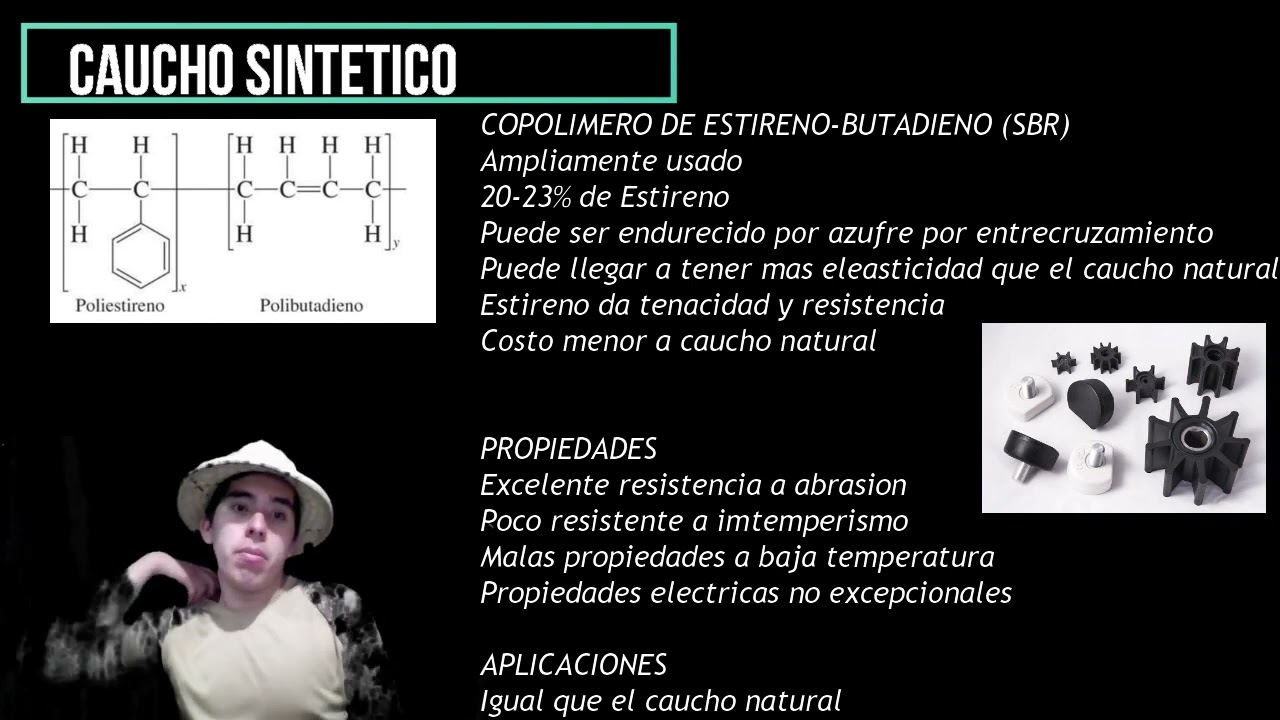
CAUCHO NATURAL Y SINTETICO
315
Synthetic rubbers emerged to meet unsustainable natural rubber demand, capturing ~70% of market share by 1980. Key types include NBR (nitrile-butadiene rubber) with 55-82% nitrile providing oil resistance but reducing flexibility, operating -50°C to 150°C; polychloroprene (neoprene) offering ozone, heat, weathering, and flame resistance through chlorine-containing structure; and silicone rubber with silicon-based polymers providing -100°C to 250°C temperature resistance and excellent electrical properties. SBR (styrene-butadiene rubber) contains ~20% styrene, enabling vulcanization for controlled hardness and greater elasticity than natural rubber at lower cost. All synthetic rubbers serve similar applications as natural rubber: tires, tubes, soles, and gaskets.
Click to watch →

Rubber Comparision | Synthetic Rubbers Uniqueness & Applications | #rubbercomparison
896
This video explains six types of rubbers used in engineering: Natural Rubber (latex from rubber trees, temperature range -50°C to 80°C, used in tires and hoses); NBR (acrylonitrile butadiene rubber, chemical and abrasion resistant, -35°C to 120°C, used in gloves and engine belts); Neoprene (chloroprene rubber, fuel and heat resistant, -40°C to 120°C, used in fuel hoses); SBR (styrene butadiene rubber, ozone resistant, -25°C to 90°C, used in tires); Silicone Rubber (silicon-carbon-hydrogen-oxygen compound, extreme temperature range -52°C to 300°C, used in seals); and EPDM (ethylene propylene diene monomer, high weather and UV resistance, -30°C to 150°C, economical for automotive applications).
Click to watch →
POLYMERS ONESHOT REVISION | MHT CET | BOARDS | COVERS ENTIRE CHAPTER & ALL QUESTION POSSIBILITIES...
100
Buna-S (styrene-butadiene rubber, 75% butadiene, 25% styrene) is stronger than natural rubber and used in tires. Buna-N (nitrile rubber) has excellent oil resistance from acrylonitrile content, used in hoses and gaskets. Neoprene (polychloroprene) resists petroleum products and sunlight, used in conveyor belts and cable insulation. Volcanization with sulfur or magnesium oxide increases strength. These synthetic rubbers demonstrate how monomer composition determines specific resistance properties for industrial applications.
Click to watch →

POLYMER ONE SHOT | DR. A. K. SINGH |
1.3K
Synthetic rubbers are man-made polymers with rubber-like properties: (1) Neoprene (polychloroprene) - monomer is chloroprene (2-chloro-1,3-butadiene), used in wetsuits and hoses. (2) Buna-N (nitrile rubber) - monomers are butadiene and acrylonitrile, used in fuel hoses and oil-resistant applications. (3) Buna-S (styrene-butadiene rubber) - monomers are butadiene and styrene, used in tires and shoe soles.
Click to watch →
Polymers One Shot | #BounceBack Series | Unacademy Atoms | IIT JEE Chemistry | Sakshi Vora
570.8K
Synthetic rubbers are man-made polymers designed to have specific properties. Buna-S (styrene-butadiene rubber) is a synthetic rubber made from the copolymerization of styrene and butadiene. It has good mechanical properties and is used in making tires, hoses, and various industrial products. Buna-N (nitrile rubber) is a synthetic rubber made from the copolymerization of butadiene and acrylonitrile. It has excellent resistance to oils and fuels, making it suitable for applications in automotive and industrial settings. Nitrile rubber is used in applications requiring resistance to oils and fuels, including fuel hoses, O-rings, and various industrial seals.
Click to watch →
Deep Dive
Industrial elastomer processing methods, including extrusion, injection molding, and calendering.
Park Systems Webinar: Rubber Elastomers 101
12.2K
Rubber processing employs multiple technologies: internal mixers combine raw rubber with additives at high temperatures; extruders shape compounds into continuous profiles; calenders produce thin sheets using heated rollers; and molds create complex shapes under heat and pressure. Vulcanization introduces crosslinking as a final step because once crosslinked, materials cannot be remolded. Thermoplastic elastomers bypass vulcanization entirely, enabling direct processing. Major applications include tires (75% of production), seals, gaskets, hoses, conveyor belts, footwear, automotive components, and medical devices. The global rubber industry is dominated by China, followed by the US and Western Europe. Quality control relies on standardized testing for mechanical properties ensuring consistent performance.
Click to watch →

FIRESTONE RUBBER CO. "RUBBER FOR INDUSTRY" 1940s FALL RIVER, MASSACHUSETTS INDUSTRIAL FILM 95724
39.7K
Calendaring transforms rubber into sheets and strips by rolling it to precise thickness using heated rollers. These sheets are cut into narrow strands for weaving into elastic products like suspenders and garters, or applied to textiles to create watertight flexible diaphragms. Extrusion represents a major manufacturing method where rubber is worked into a soft mass on warm-up mills, then fed continuously through extruding machines using augur-like screws. Steel dies shape the rubber into complex cross-sections with tight tolerances, producing items such as windshield weather seals, food freezer gaskets, and automotive shims. Both processes require subsequent vulcanization in autoclaves or heaters with steam atmosphere to develop the necessary physical properties.
Click to watch →

Designing with Medical Grade Silicone
2.6K
Three primary processing methods convert silicone from unvulcanized (deformable) to vulcanized (elastic rubber) state: Extrusion uses screws to force material through dies, requiring HCR with clay-like consistency that maintains shape during curing; Molding fills cavities with uncured silicone and applies heat/pressure, accommodating various viscosities including dip coating techniques; Injection molding processes liquid silicone rubbers for complex geometries. All methods require vulcanization to achieve elastic properties. Processing method selection drives material choices and vice versa, making this relationship critical for successful device development.
Click to watch →
Processing Plastics
783
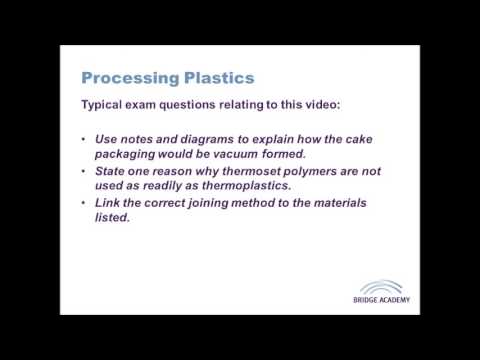
Polymer processing is divided into three main categories: molding processes (injection molding, blow molding, rotational molding, extrusion, calendaring for thermoplastics; compression molding for thermosets), forming processes (vacuum forming, thermoforming, line bending for thermoplastics), and joining processes (screws, snap fixings, captive nuts, adhesives, thermal welding, ultrasonic welding for thermoplastics; limited to screws and adhesives for thermosets due to their irreversible curing).
Click to watch →

Procédés de mise en forme des matières thermoplastiques
1K
Extrusion forces plasticized material through dies to create profiles, with two main variants: solidification (rapid cooling preserves shape) and deformation (material is softened before reshaping). The extruder includes a hopper, screw conveyor, and heated barrel where temperatures increase toward the tooling. Profiles pass through formers maintaining shape during cooling. Blow molding extrusion creates films by inflating tubes with compressed air, forming bubbles that are cooled and wound onto reels for later processing into bags and packaging. For hollow containers, a parison is extruded, placed in a mold, and inflated to conform to the mold's internal shape, with the neck formed by blow gun-mold interaction. Calendering produces flooring sheets using heated cylinders that roll material into precise thickness, sometimes with engraved cylinders for surface designs. These processes demonstrate how polymer processing adapts to different product requirements, from flexible films to rigid containers and decorative surfaces.
Click to watch →
Deep Dive
Environmental impacts of synthetic rubber, focusing on recycling challenges, devulcanization technologies, and bio-based alternatives.
【LBS】年間17万トンの廃棄ゴムを宝の山へ 豊田合成が挑む自動車業界の悲願「ゴムの完全リサイクル」
128
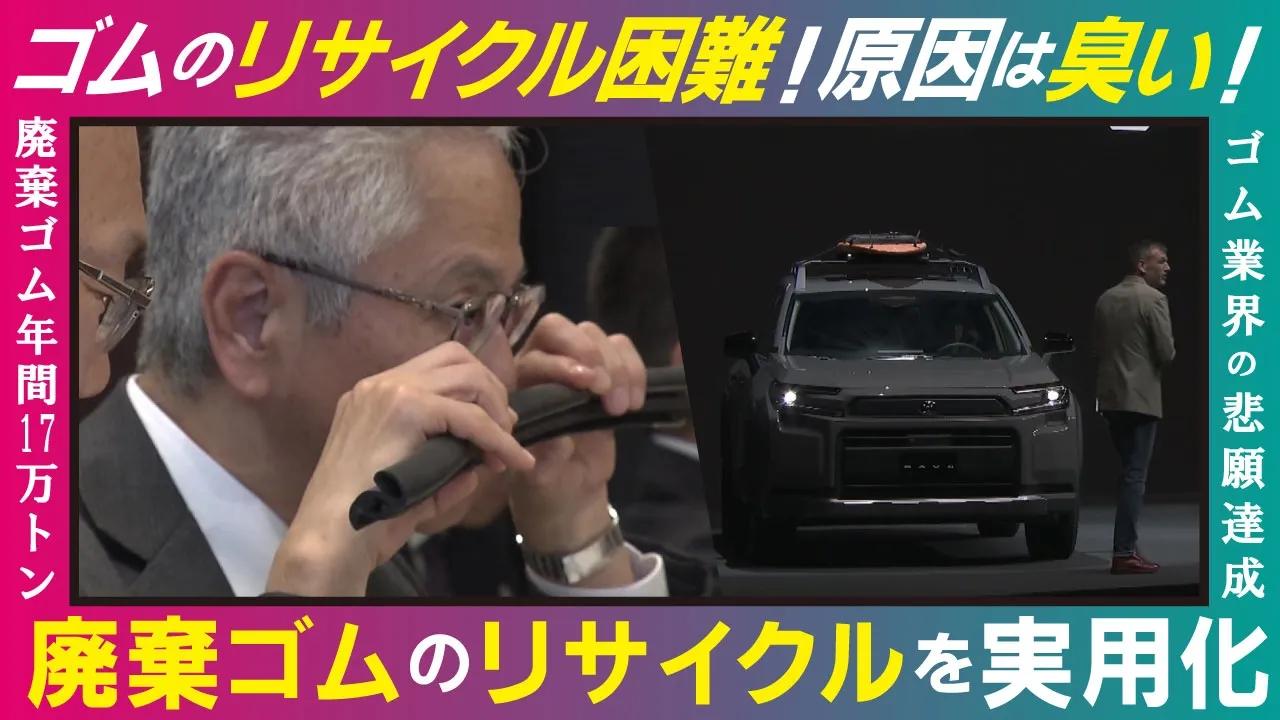
Toyota Synthesis has developed a breakthrough rubber recycling technology that solves the industry's long-standing challenge of recycling synthetic rubber, which is difficult to recycle once vulcanized. The key innovation is a steam-based odor removal system that captures sulfur compounds released during the desulfurization process, reducing odor levels from 853 to 263 (approximately one-third) and enabling recycled rubber to be blended at 20% concentration instead of the previous 5% limit. This technology, now used in Toyota's RAV4 SUV, addresses the environmental challenge of Japan's 170,000 tons of annual waste rubber and paves the way for expanded recycling including end-of-life vehicle rubber.
Click to watch →
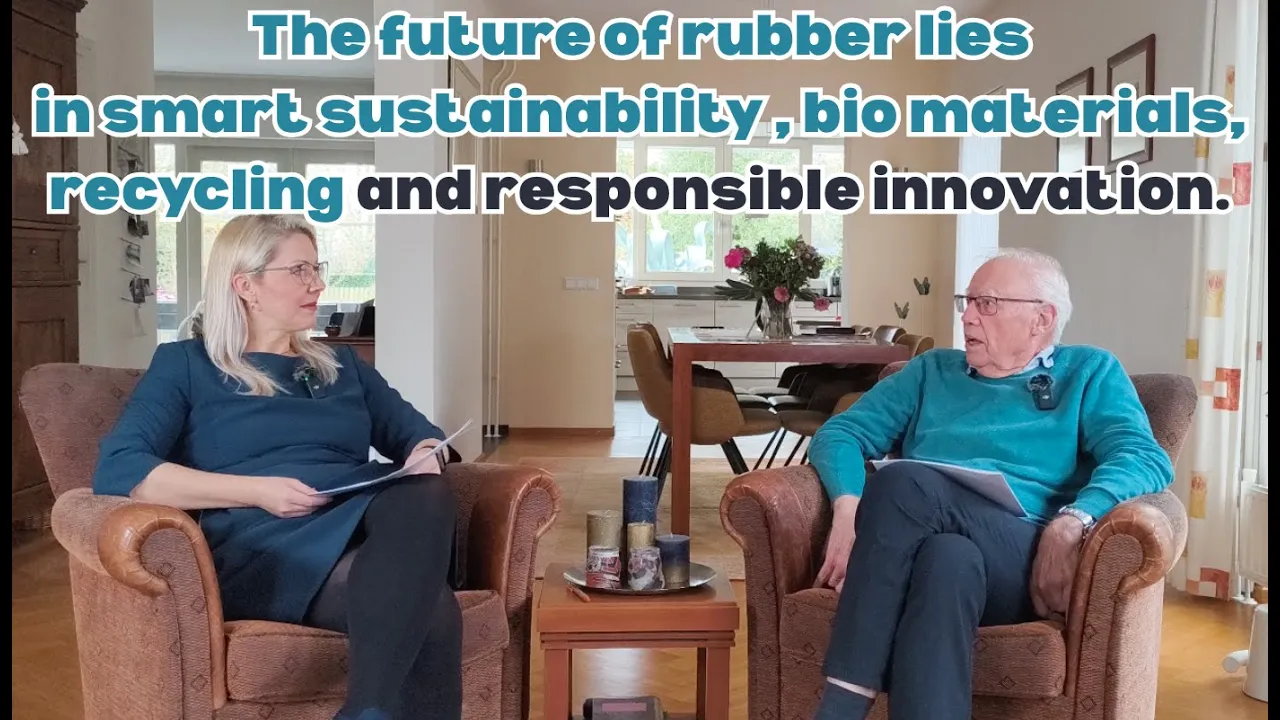
Why Rubber Recycling Is Still So Hard
233
Vulcanization creates permanent cross-links that define rubber's shape and properties, making recycling extremely difficult. Only 10% of rubber applications (thermoplastic rubbers) can be recycled, while 90% (particularly tires) cannot. During WWII, devulcanization was practiced when natural rubber was scarce, but became obsolete when supplies returned. EPDM succeeded in devulcanization because its strong carbon-carbon main chains survive while weaker sulfur bonds break. Passenger car tires using SBR/BR face greater challenges because their butadiene components spontaneously rebond after breaking. The recycling hierarchy prioritizes approaches from least to most sustainable: landfill/incineration, pyrolysis, mechanical recycling, chemical recycling, and finally devulcanization at the top. Tires contain 12-20 different components with varying compounds, making separation nearly impossible. The ideal solution would separate tires back into original building blocks before processing, but this remains technically challenging.
Click to watch →
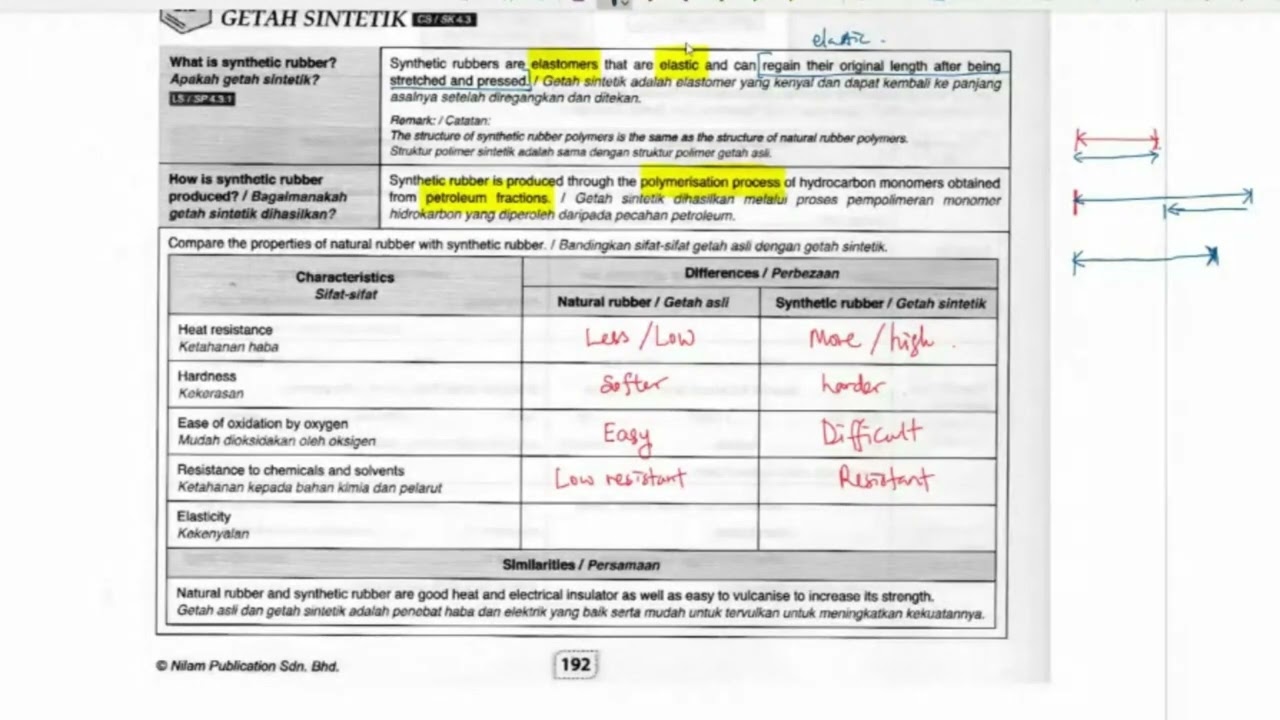
F5 Chapter 4 Part 3
107
This section addresses the environmental challenges and solutions related to synthetic rubber waste. Tires represent one of the largest waste products from synthetic rubber and are difficult to dispose of due to their non-biodegradable nature. Improper disposal leads to land pollution, creates breeding grounds for mosquitoes, and emits toxic chemicals that pollute the environment. Recycling methods include converting tires into rubber powder, which can be used to make rubber tiles for playgrounds, rubber mats, and stadium tracks. The section also covers natural polymers (protein, starch, cotton, cellulose, isoprene) and the vulcanization process where sulfur atoms form cross-links between rubber polymer chains at carbon-carbon double bonds, improving elasticity and strength.
Click to watch →
New Rubber Technology Video Tour
13.5K
New Rubber Technologies has developed a patented devulcanization process that reverses the vulcanization reaction in rubber waste, transforming granulated rubber crumb into chemically reactive polymer capable of serving as a partial or complete substitute for virgin rubber in both rubber compounds and thermoplastic elastomer applications, thereby addressing the environmental challenge of disposing of vulcanized rubber waste that cannot be easily recycled through conventional means.
Click to watch →
Waste to Worth: Can Rubber Recycling Solve Our Environmental Crisis? #recycle #environment #rubber
551
Rubber recycling involves mechanical processing (fringing, granulating, milling) followed by chemical methods like devulcanization (breaking sulfur bonds to restore malleability) and pyrolysis (thermal decomposition in oxygen-free environments yielding oil, gas, and char), while sustainable alternatives like guayule and Russian dandelion offer renewable rubber sources with smaller carbon footprints, representing key innovations in addressing rubber waste challenges.
Click to watch →
Deep Dive
Mechanical testing and characterization of vulcanized rubber, including tensile strength, viscoelasticity, and thermal degradation analysis.

class 12 chemistry chapter 15 polymers one shot || polymer one shot class 12 || bahulak class 12 🔥||
50.3K
Vulcanized rubber has increased tensile strength, reduced water absorption, and improved resistance to oxidation. It can be stretched to twice its original length.
Click to watch →

Ten Days National Level Lecture Series I Day-6 I Dr. Wasudeo B. Gurnule I 26/01/2022
138
Rubber composites are characterized using various techniques: mechanical properties (tensile strength, modulus, elongation at break) measured using Universal Testing Machine (UTM); tear resistance testing; thermal properties analyzed using TGA (Thermogravimetric Analysis) for thermal stability; dynamic mechanical analysis (DMA) for viscoelastic properties; morphology examined using SEM for particle dispersion; spectroscopy (FTIR, Raman) for molecular structure analysis. MDR (Moving Die Rheometer) analyzes curing characteristics, providing parameters like T90 (time to 90% maximum torque), minimum torque (compound viscosity), maximum torque (cross-link density), and optimum cure time.
Click to watch →

रबड़ | Rubber | प्राकृतिक रबड़ | natural rubber | संश्लेषित रबड़ | class12unit15video4
26K
Vulcanized rubber has improved properties: (1) Higher elasticity and tensile strength, (2) Better resistance to oxidation, (3) Reduced water absorption, (4) Improved electrical insulation properties, and (5) Better resistance to temperature changes. These properties make vulcanized rubber suitable for various applications including tires, electrical wire coatings, and industrial products. The relationship between sulfur content and rubber hardness allows manufacturers to control properties for specific applications.
Click to watch →
Our test machine failed to break this Ameralabs resin | Resine Review
967.3K
Mechanical testing evaluates material performance through systematic bend and tensile strength tests. The bend test applies increasing force until failure, measuring both force requirements and deformation capacity. TGM7 demonstrated exceptional flexibility, bending many times before breaking, while XVN50 showed greater resistance to initial bending. Tensile strength testing measures breaking force, with XVN50 achieving fifth-place performance among tested resins. Results reveal fundamental trade-offs: softer materials bend more easily but require less force to initiate failure, while rigid materials offer higher tensile strength at the expense of flexibility. Post-curing effects cause gradual strength development over the first month.
Click to watch →
VULKANISIR BAN PESAWAT..?? | Vlog Mengulik Sebagian Kecil BPPT Part-II
22K
Elastomers are classified into synthetic and natural types, with material formulation involving selection of raw materials and recipe development. Testing methods include: (1) Rheometers to determine rubber maturity and processing time, (2) Carbon dispersion analysis to ensure uniform filler distribution, (3) Mechanical property testing (tensile, compression, hardness), (4) Dynamic mechanical analysis (DMA) to measure material properties under movement, and (5) Temperature testing to measure heat generation under stress. These tests ensure materials meet specifications before manufacturing.
Click to watch →
Production Steps
Finishing Process
Production Steps
0:03- 1
Starts with crude oil-derived naphtha combining with gas to form monomers.
- 2
Polymerization links monomers using heat or catalysts into long chains.
- 3
Modification improves traits like traction and durability for tires.
Bio-Based Elastomers and Circular Devulcanization
While traditional synthetic rubber production relies on petrochemical-derived monomers and irreversible vulcanization, a major counter-perspective champions bio-based elastomers and circular chemistry. Critics point out that conventional synthetic rubber generates a heavy carbon footprint and produces non-recyclable waste due to the permanent cross-linking of sulfur vulcanization. To address these issues, green chemistry advocates for bio-derived monomers, such as bio-butadiene synthesized from biomass, to decouple production from fossil fuels. Furthermore, instead of traditional irreversible vulcanization, researchers are developing covalent adaptable networks (CANs) and advanced devulcanization techniques. These innovations allow the rubber to be de-crosslinked, reshaped, and recycled, directly challenging the linear, high-emission paradigm of classic petrochemical elastomer manufacturing with a sustainable, closed-loop alternative.
Basic organic chemistry, specifically the structure of hydrocarbons, alkenes, and conjugated dienes like butadiene.
The fundamental concept of polymerization, including the differences between monomers and polymers.
An introduction to petrochemical refining and how crude oil is processed into chemical feedstocks.
The molecular basis of elasticity and the physical characteristics that define elastomers versus rigid plastics.
The specialized properties and industrial applications of different synthetic rubbers, such as Neoprene, Nitrile (NBR), and EPDM.
Industrial elastomer processing methods, including extrusion, injection molding, and calendering.
Environmental impacts of synthetic rubber, focusing on recycling challenges, devulcanization technologies, and bio-based alternatives.
Mechanical testing and characterization of vulcanized rubber, including tensile strength, viscoelasticity, and thermal degradation analysis.
120 views2likes3:09@Chemistry-For-EveryoneOriginal Release: 2025-04-13
How is synthetic rubber made? Have you ever wondered how that stretchy material in your tires or sneakers is created?
Let's take a closer look at the fascinating process of making synthetic rubber. Synthetic rubber is a man-made material that offers a great alternative to natural rubber. It is primarily made from prochemicals which are derived from crude oil. The journey to create synthetic rubber involves several important steps. First, the process begins with the extraction of raw materials. One key ingredient is NAFTA, which is a byproduct of refining crude oil. Nafta can be combined with natural gas to produce essential building blocks known as monomers. Two common monomers used in synthetic rubber production are styrene and isoprne.
Next, these monomers are transformed into different types of synthetic rubber. For instance, when styrene and butadine are combined, they create styrene butine rubber, often referred to as SBR. This type of rubber is widely used in tire manufacturing due to its excellent properties. The third step is polymerization where the monomers are chemically linked together to form long chains. This process can be initiated using heat or catalysts depending on the specific type of synthetic rubber being produced. After polymerization, the resulting polymer may undergo further modification. This step is crucial as it involves adding chemicals to improve specific characteristics such as traction or durability. These enhancements are particularly important for applications like tires where performance is key.
Once the polymer is modified, it is coagulated into a solid form which often looks like small crumbs. These crumbs are then washed and dried to remove any leftover solvents or water, ensuring a clean product. The next phase is compounding and shaping. The dried rubber crumbs are mixed with various additives to achieve the desired properties. This mixture is then shaped into its final form using methods like extrusion or molding. Finally, the last step is vulcanization. During this process, the rubber is heated under pressure to cross-link the polymer chains. This step significantly boosts the strength and durability of the rubber, making it suitable for a wide range of applications.
Synthetic rubber is used in many industries from automotive tires to construction materials and even consumer goods like footwear and sports equipment. Its versatility and durability make it an essential part of modern manufacturing. Understanding how synthetic rubber is made not only highlights the importance of polymers in chemistry education but also showcases the differences between natural and synthetic polymers.
Up Next

8:00
The Tire Manufacturing Process: From Rubber to Road
@Factora_eng
98.2K views•2023-11-26
30:32
Ultrasonic Transducers: Resonant Frequency Measurement and Horn Design
@imajeenyus42
229.9K views•2017-02-22
54:16
Polymer Environmental Degradation: Mechanisms & Stabilization
@iit
1.8K views•2012-07-10

33:39
How a Student's Question Saved a NYC Skyscraper from Collapse
@veritasium
22.8M views•2025-04-26
Related Study Plans & Knowledge Roadmaps
Structured learning paths in Engineering
engineering
Building Acoustic Levitators: Physics & Arduino
01The Physics of Sound and Standing Waves
02Piezoelectric Transducers and H-Bridge Drivers
03Arduino Programming: Generating 40 kHz Signals
+ 2 more learning modules
14h5 modules
Explore Roadmap
engineering
Building Peltier Cloud Chambers: Particle Tracks
01Cosmic Rays & Cloud Chamber Physics
02Thermoelectric Cooling (TEC) Fundamentals
03Custom Liquid-Cooling Loop Design
+ 2 more learning modules
18h5 modules
Explore Roadmap
engineering
Yagi-Uda Antennas: Modeling, Build & VNA Test
01Introduction to RF and Antenna Fundamentals
02Yagi-Uda Antenna Design Principles
03Antenna Modeling and Simulation in 4NEC2
+ 2 more learning modules
18h5 modules
Explore Roadmap
engineering
ECG Monitor Design: Op-Amps, Filters & Noise
01Electronics & Breadboard Basics
02Op-Amps and Instrumentation Amplifiers
03Bioelectricity and ECG Fundamentals
+ 2 more learning modules
18h5 modules
Explore Roadmap