

















![[발달심리학] Chapter 1. 발달심리학의 개요](https://i.ytimg.com/vi_webp/EVpFnfNws44/maxresdefault.webp)








Developmental psychology addresses three fundamental questions: (1) Nature versus nurture - what determines development? (2) Plasticity - when is development open to change? (3) Continuity versus discontinuity - is development gradual or stage-like? These questions define every developmental psychologist's perspective and guide research and practice in understanding human growth across the lifespan.
Developmental Psychology Ch 1: History, Theory & Applied Directions
Added:Basic understanding of general psychology, including the definition of psychology as a science and the scientific method.
Familiarity with the fundamental debate of 'nature versus nurture' regarding human behavior and development.
An awareness of basic biological concepts, such as genetics and brain structure, that influence human growth.
Introduction to early philosophical perspectives on human nature, such as John Locke's tabula rasa versus Jean-Jacques Rousseau's innate noble savage.
In-depth analysis of specific stage theories of development, such as Jean Piaget's cognitive-developmental theory and Erik Erikson's psychosocial theory.
Study of specialized research methodologies in developmental psychology, including longitudinal, cross-sectional, and sequential designs.
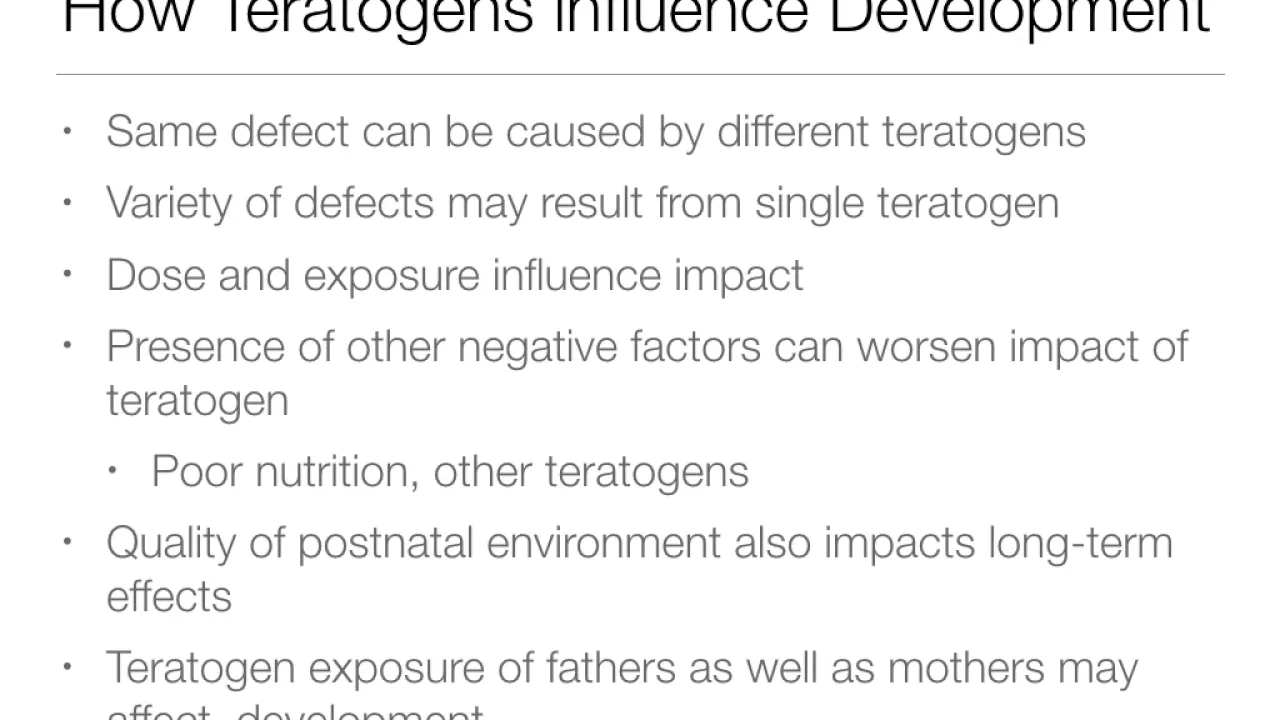
Exploration of prenatal development, genetic foundations, and the impact of environmental factors (teratogens) during pregnancy.
Investigation of applied developmental psychology domains, such as early childhood education, parenting styles, and developmental psychopathology.
64.7K views1Klikes47:57Original Release: 2017-11-06
Welcome to the first class of developmental psychology, psych 240, spring 2007. As you know, today we're going to have two lectures. On Monday, we are starting a little bit early. We're going to be here at 9:00. We're going to be watching a video together. It won't be passive watching. I'm going to be discussing the video as I go along. As I told you guys uh in our previous meeting, um that is the one thing that is not on the slides that is going to be on the exam. So, um you can watch the video at the leisure of your own dorm room or your room at your family's place, but the discussion will not be there. So, I highly encourage that you're here to share the video with us.
Today we're going to go over chapter one which is history theory and applied directions. So I talked a little bit about why developmental psychology is important and it's not only important for those people who are planning to become developmental psychologists but also for all of you guys who one day may find yourself a mother or a father. It is actually um very informative when you look back because this is not distant past for you. 10 years ago you were a child and so you remember these moments very clearly too. So I think that you can make a lot of connections between your own life and what you see in the entirety of this course. Now uh development is understanding constancy and change. And for us developmental psychologists uh it is actually through conception through adolescence it says but there's something called lifespan development that is not the topic of this course but lifespan development actually covers old age as well right and you know who's interested in aging at psychology department here at becant and that is Michelle yes so if you're interested in uh the molecular basis of aging. You can obviously work with her.
Uh and so uh it has applied importance because what we learn as developmental scientists, we are responsible not only to tell other researchers who are doing research in the field but also parents and educators, policy makers as well. So what we learn can impact education can impact um how we treat our children.
What are the common practices? It is interdisiplinary meaning it doesn't stand on its own. As a developmental psychologist, no one has the luxury to say I'm only interested in this and nothing else. Because development itself has both social components, cognitive components, physical components, biological, maturational components. So a developmental psychologist cannot close his or her eyes to one of these areas. They have to know. You can't just say I'm interested in cognitive underpinnings of such cognitive process and I'm not interested in any social processes because in development they go hand in hand and one always affects the other. So you have to be informed. It is also dynamic. As times change so do the contexts that have children grow up in them. And so we need to understand not only the development of the child but also the changing times as well. It's dynamic in several respects. There are several different domains of development. There's physical development, cognitive devel development, and emotional and social development. In this course, we're going to focus more on both cognitive and emotional and social development. Though we will talk a little bit about physical development as well. Your book has a whole chapter on it that I am not including. If you're interested, please go ahead and read the chapter. So there are different periods in development. We will focus a little bit on prenatal which is before the baby is born and is in the womb, right? It's from conception to birth. Infancy and toddlerhood, we're going to pay a lot of attention to its birth to two years.
Early childhood, 2 to six years of age.
Then there's middle childhood adolescence and here you are emerging adulthood. So you are actually at one developmental period in time right now.
Um what sometimes you know makes me lose my mind while reading exams is the improper use of terminology regarding children.
Sometimes some students keep calling a newborn a child which is a baby but a fouryear-old a baby. These are developmental periods that are um defined in the literature.
So do not use them interchangeably. They refer to different time periods. Okay?
So be sure that you're using the correct terminology when you are writing an answer or talking about developmental psychology in general. So developmental psychology is based on theories and today we're going to see many theories however very superficially because I'm going to talk about most of them uh in depth in the following classes. Uh but what is a theory and why is it and why do we care about theories?
Can anyone have a theory? Theory is an orderly integrated evidence-based. What does evidence-based mean? What is evidence in science? It's empirical evidence. Correct? It's it's evidence that comes from research. So it's evidence-based set of statements that describes, explains, but most importantly predicts behavior. If a theory falls falls short of predicting, then it has less power to explain as well. So we want a theory to do these three things because it predicts. We can come up with hypothesis that are based on the theory and we can do new research to further further the theory or to contest some of the teachings of the theory. Uh why are they important? Well, they provide meaning into our research.
They organize our research and they also provide an understanding of how to improve both research but also in practice what we do with children.
So theory is extremely important. Theory is not something you come up with when you're in bed thinking about developmental psychology. It is a comprehensive and cohesive set of predictions that actually ex aim to describe expl explain and predict behavior. So there are three central questions of developmental psychology.
If you're taking this class for a second time, print out the new slides because I made some rearrangements. Uh so these central core questions define every developmental psychologist where they stand on issues.
So nobody's free from thinking about these three questions. One of them is the role of nature versus nurture in development.
And along with it, I'm going to talk about each of these at length. Uh along with it comes a second subquest of plasticity. When is development open to change and when is it not open to change? The second question is whether development is continuous or discontinuous. Right now it may not make a lot of me meaning to you because you know the word continuous. You know the word discontinues but you might actually find it hard to imagine how development can be continuous or discontinuous. We are going to talk about this and is there one course of development or many?
Do we expect all children to go through the same steps? Do we uh do we expect similar developmental profiles from different children or can we expect differences? So the first one sources of development nature versus nurture. This is such a prevalent question.
There are no longer simplistic answers to this question but I can tell you that years ago when I applied for masters I took a um science exam bim uh and at that exam the question related to developmental psychology and I wanted to do developmental psychology for my masters was about nature versus nurture. So I was very happy I could answer the question. Obviously I got into the master's program but it told me again that this was a a very important question. Some when somebody went back and wanted to test um you know prospective students knowledge about developmental psychology they wanted to learn about what they thought based on given evidence about nature versus nurture. What does it mean? Nature are the inborn biological givens. It is who you biologically are and it's based on genetic inheritance. It's based on the genetic inheritance you get from your family members. Nurture on the other hand is the physical and the social world that you are immersed in and it is influenced and influences both biological and psychological development. Okay. And so there are these two forces and they don't have to be perceived as opposing forces. They're actually complimentary. So the big question then which one determines what the child will be able to do? Now some questions may more easily fall into one of these areas. For example, we might ask, why is it that every infant gradually learns to walk on two feet? Well, there are biological components to it. There's actually, albeit a little minimal physical constraints of the environment as well.
All children are kind of born into environments that allow them to become bipedal. The other questions though sometimes are harder to answer. So here you can say, well, I see a lot of nature in this. But other questions like does your intelligence depend on the intelligence of your parents or does it depend on your academic background and the amount of importance your family place on your education? Uh that's a question that we can answer and in answering that we will probably use both nature and nurture together to varying degrees. One may also say there's an interaction. Those parents who come with a genetic inheritance of intelligence are actually also the parents who place a lot of value on education. How do you know?
Maybe they create contexts that are rich in educational opportunities. So there is also possibilities for interaction. So it would be naive to say it's nature or nurture. This is not like supporting a football team. It's not like galatasar versus penarbache. Obviously, they interact. A related issue to nature versus nurture is stability versus plasticity. What if nature and nurture interact to produce developmental outcomes? And does the timing of this interaction matter? Does it matter when they interact?
Plasticity is the degree to which and the conditions under which development is open to change and intervention. Meaning you might be able to mold abilities, make them better or even constra constrain them at certain windows of time. Now, but what are these windows?
How big are these windows? Right? and do they exist in human development? Stability on the other hand is usually associated with heredity.
These are lifelong characteristics and these also may point to certain early experiences that establish patterns. But stability should bring to mind not being open to change, right? It is stable. It won't change.
Whereas plasticity is responsive to experience. So on Monday when we watch the video, we're actually going to talk about stability versus plasticity quite a bit. So watch the video in mind with these three core questions in mind.
You're going to see a lot of examples that actually appeal to these questions. A balanced view embraces both continuous and discontinuous change. But hold on, I didn't yet talk about continuous versus discontinuous. I'm coming to that.
Before though we said there might be windows of time when change can happen or there might be windows of time when certain things need to happen so that developmental outcomes unfold. So a critical period and this is usually conf confusing for most students. There are critical periods and there are sensitive periods. Now we're going to talk about both. A critical period is a period during which specific biological or environmental events are required for normal development to occur. In other words, if these environmental events or biological factors weren't in place, normal development will not happen. What makes it critical though is that even if it happens later, those developmental outcomes will not manifest.
That is what is critical about the critical period. So in a window of time if certain things if certain environmental and biological uh factors do not exert themselves then the developmental outcomes you're expecting will not happen. So these are um obviously geese.
Uh, and as you know, geese imprint when they hatch from an egg. Between 13 and 16 hours, they need to see a moving object or a being, an organism. It doesn't well many experiments have proved that it doesn't have to be a living object. But then they basically attach and start both mimicking and following that organism. Correct? That's why when uh little geese hatch they start following their mother who happens to be the organism that is around in that period of time. What happens if it's not their mother? As you all know, do you all know they can imprint to human beings to moving boxes. A box put on a train for example, battery operated train, which is very sad if you think about it, right? And so um this is a critical period. If they see no one in that critical period of time then they will not show this imprinting behavior. Okay. So it either presents itself and happens in that developmental time period that critical period or it doesn't. Okay. This is rare in humans. But there are some critical periods and we will talk about them.
For example, dark reared animals or humans uh have problems with their visual systems. If they are not exposed to light in a certain given period of time, then the visual system will not develop according to plan. And also, have we heard of theeladomite before? No. Okay.
Doublemite is a pill and back in the day uh they did not know that it had side effects. But if it's taken between the 38th and 46 days of pregnancy, do you see how small a time window this is? 8 days. If if it is taken then then it causes unalterable changes in the fetus.
basically in the limbs, the arms and the legs. So the kids may be born with flipper-l like arms and legs or no arms and no legs. Now they didn't know this back in the day. They actually thought that this drug which was in some countries like Germany sold without prescription that it was so common. It's like aspirin. They thought that this drug had the potential to cure morning illness. in mothers. What's morning illness? So it's very common. So those women who were experiencing a lot of it would go to their doctors and the doctors would prescribe this. And so they then a very unpleasant surprise gave birth to children who had these deformities. For a while nobody understood why it was happening. And so we are going to watch a seven minute video uh from New York Times that actually gives us a little bit more information. So this is the part of class where again it is uh I am investing in the future.
[Music] Afternoon several announcements. Every doctor, every hospital, every nurse have been notified. Every woman in this country must be aware that it's most important that they check their medicine cabinet, that they do not take this drug. In the early 1960s, no drug struck more fear into the hearts of pregnant women. One of the most horrifying episodes in medical history than theolyomide. It changed our relationship with the drugs we use. One reason US drug laws are so strict theomide and became an example of what many saw as corporate greed at its worst. British theolyomide children so far have not received any compensation from the rich company that made the drug which crippled them so brutally. But this dark chapter is only part of the enigmatic story, one that continues to reverberate today. I had used up every other alternative when I took theide.
[Music] In 1960, a new wonder drug was slated to arrive on American shores. A sedative that was said to also treat a range of other ills. A hypnotic, as the doctors call it, that was the answer to a prayer. Its generic name was fit.
The hallmark defining quality of theomide was its safety. So say it that in Germany there was no prescription needed. The German company that developed theomide, Chem Grunenthal, claimed that even pregnant women could take it. The drug company had handed out samples of this drug all over the place, starting with employees of its own company. On Christmas Day in 1956, a baby girl was born in Germany without ears and she was the daughter of an employee of the drug company and no immediate connection was made to the soon sold nearly as well as aspirin in some European countries. We received it in quantities like a thousand pills.
There was tremendous pressure all over the world to get this wonderful new drug on the market. They had two million tablets ready to go the moment the FDA approved the drug, which was almost a foregone conclusion until one doctor came along and began working at the FDA. It just so happened that my first application was for the drug salinomide.
I got this because I was new and they thought I should have an easy one to start on.
But Dr. Kelsey was uneasy with what she saw as the lack of rigorous scientific studies and the slipshot presentation of safety data provided by Groommanthal and William S. Merryill, the US distributor of the drug. The best thing that could be said about theolyomide at the time was simply that you could not kill a rat no matter how much theomide the rat ate.
With theomide being prescribed for morning sickness in other countries, Kelsey became particularly concerned with what effect it might have on a developing fetus. In June of 1961, an article appeared promoting its safety during late pregnancy. It was allegedly written by a doctor, Ray Olsson, but in fact, the article was written by the medical director of the drug company.
About 6 months later, long ignored evidence became public in Germany, linking the to a rash of birth defects.
Although hundreds of thousands of pre-market samples had been provided to American doctors, Dr. Kelsey's stubborn delay of the drug's approval for more than a year had prevented a similar scale of tragedy from unfolding in the United States. Dr. Kelsey was absolutely a unique hero in American history.
But theomide's reach continued to be felt across the rest of the world, including in Trinidad and Tobago, where Jazelle Cole was born. When I came along, I'm a firstborn and they were young married couple. I mean I was never unloved or not wanted or anything like that but u I would be foolish to think that it was easy for them. My disability is uh the official term is focalia coming from the Greek meaning shorter arms or flipper like I think people always expected I would have been angry and I'm certainly not angry and never have been. Long discussed but seldom implemented. Major regulatory reforms were finally forced on the pharmaceutical industry following the theolyomide scandal. For some time, President Kennedy has tried to get Congress to approve new controls, but without much success. Now, with theomide scare, most of the opposition has melted. Largely, the same FDA guidelines that we live under today were created in immediate wake.
These regulations were too late for theomide thousands of surviving victims across the world who soon became the story. Philip of Brad is one example.
Her mother rejected her. 10-year-old Carl Davies lead a relatively normal life for a boy without arms.
Another young mother, her husband, her sister, and her doctor are charged with the mercy killing of her deformed infant. I'm one of the lucky ones and that my parents were adamant that I was their daughter and their daughter first before anything else and it was treated as such. Many were put in homes because they just didn't know what to do. Some families battled with doctors to have amputation of fingers and toes and whatnot to accommodate these prosthetics. Many families were broken irrevocably.
Instead of quickly settling, the drug companies dug in with Grunenthal originally arguing that the children's deformities were caused by everything from nuclear fallout to botched home abortions. Anything but theomide.
It was a very long and difficult process.
Most cases were eventually settled, but litigation continues with some survivors saying the original settlements cannot cover the cost of their specialized care. Grunenthal didn't apologize to its victims until 2012, 50 years after the tragedy unfolded. They issued a statement saying that it has taken them the 50 years to come forward to say anything because they were shocked. They don't have a right to be shocked. The shock doesn't belong to them. Despite all that theomide's victims endured over the decades, they could long take solace in one simple fact. Theomide is now banned everywhere. They now ban the drug was banned in 1962 and I would have liked to have seen it never used again.
You can watch the full video if you wish. The link is in the slides.
Basically how it unfolds later is that tells us that actually is effective in um treating certain illnesses and several doctors are now trying to use it with cancer patients because it obviously stunts growth. It cuts the blood supply and so if it could be used to cut the blood supply to developing tumors then it does a very good job. See these side effects were seen with pregnant women. There weren't these kind of drastic side effects with adults who were not pregnant. So the idea is not that telidomide was a very dangerous drug and affected everyone but at a critical time period it affected women who were carrying a child and so I think this makes crit the idea of a critical period a little bit more clear in your minds what it is. So it did irreversible damage. It could not be compensated for later. We couldn't reverse it. Right?
And there is a different kind of period which is called the sensitive period. Sensitive periods are the broad windows of opportunity for certain types of learning. So they're not as limited as critical periods. They're longer in duration too. Uh they represent a less precise and often longer period of time which are optimal time periods for learning skills and abilities. And I'd like to emphasize it says optimal meaning it is the best time. It it is learned faster and easier but it doesn't mean it can't be learned later. For example, age of second language learning. This brings us to our second question and that is whether development is continuous or discontinuous.
And so when we think about continuous development, we are basically thinking that uh nothing changes qualitatively but all the change that happens is quantitative. The child becomes able to do more of something. Their memory span grows for example. They can hold in mind more items. Right? Uh but when we think about discontinuous development it is telling us that at different periods in development there are different ways of thinking in the child. The child is capable of different systems of reasoning it will be become clearer.
So if development is gradual and continuous then we are expecting to see a quantitative change. It just keeps getting better and better. And if we were dealing with lifespan we might also see decreases too. But when we're thinking about discontinuous wait there's a problem here.
those who have printed out the slides please there's there's a problem this should have been discontinuous discontinuous and um could you guys make a note uh so that I can change it and post the slides over again. So in the case of discontinuous change just like a mayfly that becomes a pupa and then an adult from a larvae at each stage there is something qualitatively different the organization the mental operations even the biological organization in the case of a mayfly might be different so it's not just a case of things increase in number they also quantitatively change. So one stage does not resemble the other perfectly. There are four criteria for developmental stages. But when I say stage, who comes to your mind?
K. Very nice. Anybody else?
Freud. Very nice. Who? P. P. P. I got P.
Somebody was faster than you. Colberg. Ericson.
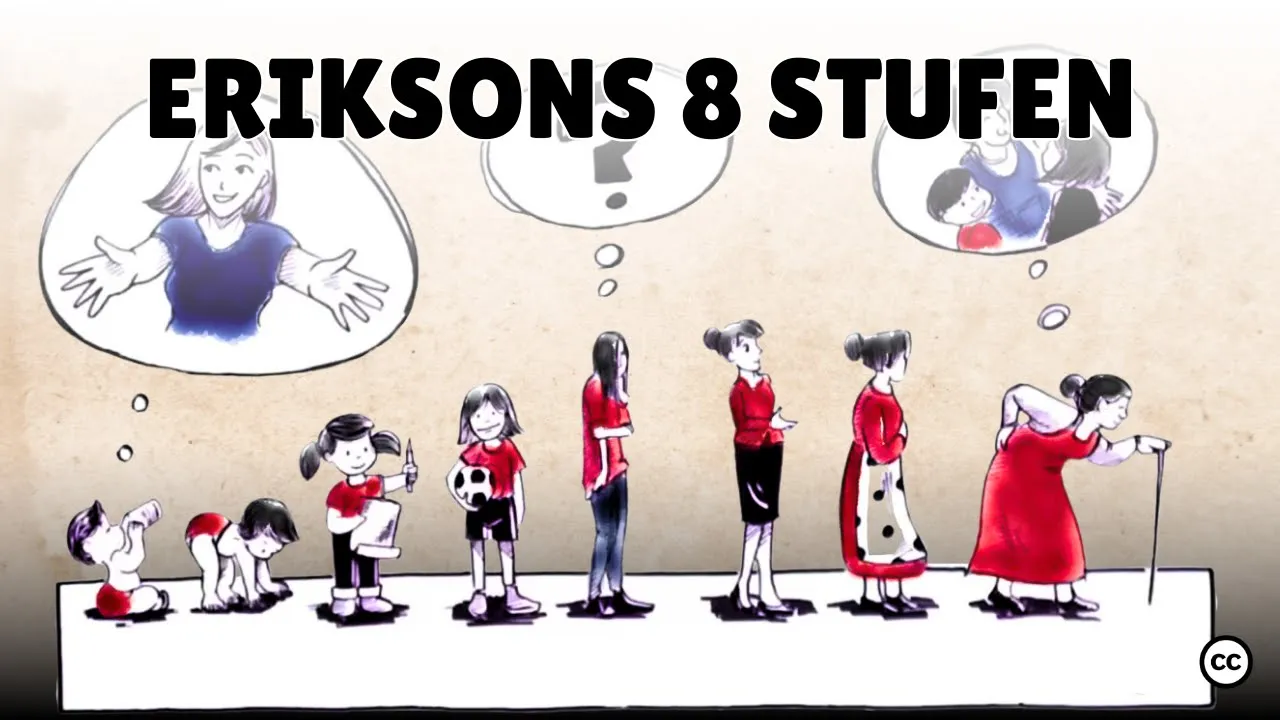
Yes. Which is eight stages. Yes. Eight stages. Okay. We will talk about Ericson too today. And so what are stages? The four defining qualities of stages. This was an exam question last year. So if you have the slides, put a star next to it.
So stages of development are distinguished by qualitative change. The shift in stages happens across multiple domains of knowledge and thought. So it is not just one narrow area that's changing. The shift applies to multiple subabilities or ability groups. It's not just one area. The change from one stage to the next is rapid. It's fast.
The changes that happen during stage shifts form a coherent pattern. Meaning it makes sense how the abilities or children's performance in different ability areas differ from one stage to the next. They form a coherent pattern.
And we will talk about PGE and I think stages are going to become so much clearer when we talk about PG. Um we're going to go into depth in the sensory motor and the pre-operational period in the coming class I believe chapter six.
Uh and um we will but I would like to warn you PJ is more than stages. Uh and you will hear from me more if you take 350 with me next year. I'm going to talk three hours about it. Uh and so but for now for it just to act as a reminder and anchor in your minds p is fine. And question three is there one course of development or many and this is related to another question that many find interesting especially those who are interested in clinical psychology that would be individual differences. What is within the normal norms and what isn't? What is abnormal? Right? Do we expect one course of development? Do we expect several? Yes. And it brings us to the roles of context, role of culture and the interactions of genetics with context and culture. See, we talked about this with the first question too.
These three questions are very much related to one another.
Contexts are unique combinations of personal and environmental circumstances and they may result in different developmental path. There are different factors that are um that have effect on context like heridity and biological makeup, environment and circumstances. And so it will basically this question is concerned with how the contexts interact with the child with the baby uh and produce developmental outcomes. All right. So in 15 minutes I'm going to summarize the historical views of the child at least uh in western countries and then we're going to go off to theories after the break.
Okay.
So in the medieval era uh childhood was perceived by adults to be up till seven or eight years of age. Now this probably seems like a very ridiculous idea to you guys. So basically they thought that the 10-year-old was an adult, right? I mean there How old was Romeo and Juliet? Do you remember?
13, 14, 13, I believe. And they were adult enough to have romantic relationships, try to be in a stable relationship, right? Uh the whole problem was their families. Today if you have a 13 year old who's trying to get married it's how we have perceived also the demands from childhood has changed right we'll talk about that so at this point in time they saw children children being children seven eight and younger as being vulnerable and they needed to be protected.
Then came the Puritan era in the 1500s. Uh children are born stubborn and evil. The teaching the religious teachings said they need to be civilized and there were harsh discipline practices because the idea was to get the evil out of the child. Uh and here children were expected to be little adults. And when you look at the portraits from the time, you see children in miniature adult clothes. But then came the enlightenment. Uh, and John Lockach told us that children's characters are shaped entirely by experience. So they're not born evil. It is what we present to the child. It is the context in which the child develops that makes the child this way or that way. And so for him the child was an empty slate. And um he actually was the forefather of behaviorism uh because he thought that the environmental stimuli could affect the behavior of the child and who the child was going to become. Here children are seen as passive. They are the recipients of outside information. Uh hence the individual differences depend on the context in which they grow up.
Jeanjacuso saw the child as the noble savage. This is different from how Lach viewed the child. According to him, the child has an innate sense of morality.
So they're born good this time, right?
He had a child- centered philosophy and he to thought that maturation took care of it. As children grew up, if we didn't abuse children, if we didn't provide environments that impeded their development, they would grow up to be noble human beings. Darwin then started the scientific revolution.
Now in his theory of evolution, he watched different organisms from birth until adulthood. And later as you know he uh has the famous concepts of natural selection and survival of the fittest. He saw a biological component to all of this that genes are passed on from one generation to the next.
uh and some theorists got the idea that if we could watch how children develop, we will see how humans evolved in their development. This was later abandoned.
Nobody really supports this idea anymore. But it caused uh different theories and different research to be carried out with children.
Then we come to um the present day.
Whoa, I went through that in six minutes instead of 15. All right. Uh let me go on a little bit further and stop at the meaningful place. Uh so in the early study of development very much influenced by Darvin and how organisms develop G.
Stanley Hall and Arnold Gazelle wanted to figure out what are the normative changes. So if you take any child, what should we expect from a child when they are 18month-olds, a baby when they're 18 month olds, from a toddler when they're two years of age, from a child when they're four years of age, say in language development, in social development, in reasoning. And so they started collecting large bunches of data from children on many different abilities and they basically came up with age related averages which are called norms. That's why it's called the normative era. Uh and they then were able to track the maturational processes of children.
Before them this wasn't done. Today it might sound like a ridiculous idea to you. We now know when children speak.
For example, we expect the first words between eight months and 18 months. There are exceptions. Um but we expect a child to walk between one and two years of age, right? We we have certain uh time windows in mind, but this wasn't spelled out before. And according to these researchers, children know their developmental needs. So they basically seek experiences that help them to mature. Then comes Alfred Benet and Theodore Simon. Now these gentlemen were in France and the French government wanted the same thing. They wanted norms but they wanted it for a different reason. They wanted for educational purposes. They wanted to figure out who they should place in special needs classrooms and who should be in regular classrooms. In order to do that, you need to be able to identify children. And so they came up with one of the first intelligence tests that is still revised and being used today, the Simon Bay intelligence test.
And they through this in intelligence test also showed that there were individual differences in development. So two children could be at 8 years of age but one child could have strengths in one ability while the other child could have strengths in a different ability for example. And this brought back the questions of how does different individual and environmental differences affect the development of intelligence.
James Mark Baldwin according to your book is one of the underrated theorists of the time. We talk less about it. Uh but he basically was a proponent of the idea that nature and nurture interact to produce developmental outcomes that we can't actually rely on one to explain child development. Uh and he actually gave a lot of credits to the child making meaning. So the child is not passive. The child is not absorbing all the information or the stimuli that is given to him. The child is actively making meaning and the environment either supports or hinders this process.
Oh, and here comes who is this?
Freud. Yes.
Now Freud brought with him the psychoanalytic perspective.
Psychoanalytic perspective for children is not practiced a lot today but it is a part of our theoretical history. We need to know about it. And also while there are a lot of jokes about Freud he had very substantial contributions to both developmental and clinical psychology literatures. Today we're going to talk about developmental literature.
So um he was a stage theorists uh and he thought that childhood stages involve conflicts between biological drives and social expectations.
We will talk about Ericson too but let's start with Freud. For him uh there were three parts to the personality. The id, the ego and the super ego as you know.
So the baby born I reb's child the six-month-old is comprised of id. It's the largest portion of the mind. It's unconscious. It's present at birth. It's source of all biological needs and desires. So according to Freud is all drives. He's hungry. He needs to be fed and uh he basically has also sexual impulses that manifest itself in feeding. So he feeds. Uh then comes the ego which is the conscious and rational part of the mind. Uh and it emerges early in infancy and it redirects it impulses acceptably. And so uh at times when the impulses cannot be satisfied, it will find more appropriate outlets.
Super ego develops in early childhood.
It's the conscience. It develops from ages 3 to six where the child will internalize the expectations the social expectations of the parents and will become uh a person who has all three parts but can manage successfully the id through using the ego and the super ego.
So this was Freud. We will so uh I am sorry to say this is the one time we will talk about Freud in this class.
After this we won't talk about him. Uh as you can see fraud psychosexual stages are five from oral to anal to phallic to latency to genital. And um we have to though think and talk about a little bit about what he contributed to psychology and developmental psychology in particular. He did extend the areas of inquiry of psychology. He highlighted the childhood period. Correct. He basically saw the reason for many adult problems as stemming from their childhood experiences. So all of a sudden childhood became not only an area where ch where people learn but that they also are affected psychologically. Um he highlighted personality and its relation to early experiences. The interplay between the conscious and unconscious. This actually has great cognitive significance. So if you're if you're a cognitive psychology person, if you're cognitively oriented, if you're thinking about decision- making, for example, memory and stuff, Freud had a lot to offer at the time for these ideas that were he wasn't alone in thinking about conscious and unconscious, but he was one of the most vocal proponents of it. He brought a developmental perspective to adult personality.
uh and uh he also I'd already said this he also put forth the case study method where you take one case and you study it in detail and write a report about it so that it can be used in further research and is used a lot in clinical psychology. Uh what are the criticisms? It he has overemphasized the role of sexual impulses.
He did not, this is interesting, he did not investigate his ideas on child development. Although he had a very comprehensive and cohesive theory that is linked to childhood experiences, he never studied children. And his theory, it was built on a biased and limited sample. Does anybody know who his sample was?
Austrian wealthy Austrian mostly women who were educated. They were wealthy but they were also sexually repressed. So many of you have taken research methods from me last semester.
We know what a biased sample is. This is quite a biased sample in this regard.
Okay.
Up Next
3:15
Ainsworth's Strange Situation: Attachment Theory Explained
@thibs44
4.1M views•2009-01-17

68:32
Cognitive Skills for Differentiated Instruction | Teacher PD
@BrainWareLearning
631 views•2017-12-17

9:55
Thinking, Fast and Slow: Daniel Kahneman Animated Book Summary
@FightMediocrity
2.3M views•2015-06-05

6:40
The Nocebo Effect: How Beliefs Can Cause Real Harm
@CGPGrey
10.4M views•2013-12-23
Related Study Plans & Knowledge Roadmaps
Structured learning paths in Psychology
psychology
Neuroscience of Creativity: Networks & Training
01Foundations of Creative Cognition
02The Cognitive Neuroscience of Insight & Fixation
03The Triple Network Model of Creativity
+ 1 more learning modules
15h4 modules
Explore Roadmap
psychology
Imposter Syndrome: Etiology & CBT Framework
01Defining the Imposter Phenomenon
02Socio-Developmental Etiologies
03CBT Fundamentals & Thought Distortions
+ 2 more learning modules
15h5 modules
Explore Roadmap
psychology
Adult ADHD: Executive Dysfunction & Scaffolding
01Neurobiology of the ADHD Brain
02The Core Triad of Executive Deficits
03Executive Dysfunction and Emotional Regulation
+ 2 more learning modules
12h5 modules
Explore Roadmap
psychology
Loneliness: Evolution, Neurobiology & CBT
01Evolutionary Origins of Human Connection and Loneliness
02The Neurobiology and Physiology of Chronic Loneliness
03Maladaptive Social Cognition: The Psychological Loop
+ 2 more learning modules
12h5 modules
Explore Roadmap