The Strange Situation is a standardized laboratory procedure developed by developmental psychologist Mary Ainsworth that assesses the quality of a child's attachment to their caregiver by observing how the child responds to stressors including an unfamiliar stranger, separation from the caregiver, and the caregiver's return; researchers specifically examine the child's reunion behavior to determine attachment security, which reflects the balance between the child's attachment needs and exploratory tendencies.
Ainsworth's Strange Situation: Attachment Theory Explained
Added:Deep Dive
John Bowlby's foundational evolutionary theory of attachment and the innate human drive for proximity to a primary caregiver.

Attachment Theory Explained: Bowlby & Ainsworth Overview
328.7K
Bowlby defined attachment as a lasting psychological connectedness between human beings, involving emotional bonds between caregiver and child through comfort, care, and pleasure. Influenced by Freud, Klein, and Lorenz, he emphasized that early childhood experiences shape later development. Bowlby proposed an evolutionary basis for attachment, arguing that forming bonds to specific individuals is biologically innate. His four key characteristics include proximity maintenance (desire to stay near attachment figures), safe haven (seeking comfort during fear), secure base (exploring from a safe foundation), and separation distress (anxiety when separated). These concepts form the foundation for understanding how early relationships shape lifelong psychological patterns.
Click to watch →

Developmental Psychology - Socioemotional Development In Infancy - CH5
26.1K
John Bowlby's evolutionary theory of attachment proposes that children are biologically pre-programmed to form attachments with caregivers because this increases survival chances. Infants produce innate social release behaviors like crying and smiling that trigger caregiver responses. Caregivers don't need to be biological mothers—fathers, grandparents, or adoptive parents can serve as attachment figures. Research by Bowlby found that care and responsiveness, not just feeding, are the primary determinants of attachment. A child initially forms only one primary attachment, which acts as a secure base for exploring the world and serves as a prototype for all future social relationships. Bowlby identified a critical period for attachment development between 0-5 years—if attachment doesn't develop during this time, children suffer severe developmental consequences including reduced intelligence and increased aggression. Lack of attention leads to brain abnormalities, demonstrating that attachment is not merely wanted by children but is a fundamental developmental necessity.
Click to watch →

Attachment - Revision
53.3K
This section presents Bowlby's evolutionary theory of attachment, which proposes attachment is biologically predetermined for survival. Key concepts include: innate and adaptive behavior providing evolutionary advantages, social releasers (crying, smiling) that elicit caregiver responses, secure base (caregiver providing protection and allowing exploration), monotropism (one key attachment is more important than others), critical period (approximately two years for attachment formation), and internal working model (mental blueprint for future relationships). The evaluation includes support from Brazelton's research on social releasers and Ainsworth's Strange Situation, but also notes limitations: Schaffer and Emerson's multiple attachments contradict monotropism, and the theory is socially sensitive as it implies mothers should stay home as primary caregivers. The section then covers Ainsworth's Strange Situation procedure, a controlled observation with 8 stages assessing proximity seeking, exploration behavior, stranger anxiety, separation anxiety, and reunion behavior. Three attachment types were identified: secure (66%), insecure-avoidant (22%), and insecure-resistant (12%). The evaluation notes good validity and inter-rater reliability (94% agreement) but cultural bias concerns.
Click to watch →

Главный элемент психологического и физического здоровья ребёнка.
50.1K
Attachment theory is directly associated with John Bowlby, a psychiatrist and psychoanalyst who laid the foundation for understanding how early attachment experiences influence later relationships. The primary attachment system represents a genetic predisposition that begins during pregnancy and continues through early infancy. The child is initially in the mother's womb, and after birth, the first months involve complete dependence on the mother. This creates a motivational system for the child to be with the mother, feel her presence, and maintain physical contact, which is fundamental to survival and emotional development.
Click to watch →
![КАК ЛЮБИТЬ РЕБЕНКА или теория привязанности Джона Боулби [Психотерапия #65]](https://i.ytimg.com/vi/daNEu0z0lyU/maxresdefault.jpg)
КАК ЛЮБИТЬ РЕБЕНКА или теория привязанности Джона Боулби [Психотерапия #65]
14.8K
John Bowlby developed attachment theory through observations of institutionalized children who struggled to form relationships. He challenged Freudian views by emphasizing relationships over biological drives. Drawing from ethology, he proposed imprinting—a genetically innate learning process enabling attachment formation. Bowlby explained this through evolutionary factors: children in primitive societies needed to signal caregivers to survive. He studied activating behavior systems that trigger parental care, examining how these systems are influenced by internal and external factors and become fixed during sensitive developmental periods.
Click to watch →
Deep Dive
The concept of a 'secure base' and how infants balance the need for safety with the desire to explore their environment.

L’équilibre entre sécurité et exploration chez le jeune enfant | Podcast petite enfance
209
John Bowlby and Mary Ainsworth developed attachment theory, explaining that young children need a secure attachment figure who is stable, predictable, and attentive. This figure provides what researchers call a 'secure base' - a point of reference similar to a harbor for a boat. The boat can explore the sea knowing it can always return to the harbor. This secure base allows children to discover and explore the world with confidence. The same dynamic appears in daily routines: children observe environments, approach objects, return to adults for reassurance, then explore again. This cycle helps children regulate emotions and build confidence through repeated experiences of venturing out and returning safely.
Click to watch →

PADRÕES DE APEGO de Mary Ainsworth (Resumo)
124
A secure base is a fundamental concept in attachment theory. A child explores the environment because they know they can return to the caregiver or that the caregiver will return to them regardless of what happens. This exploration depends on emotional security. Therefore, it is crucial that caregivers are responsible and fully dedicated to the baby's care and attention from birth. These behaviors are complementary, not opposite.
Click to watch →

ПСИХОЛОГИЯ СЕМЬИ ТЕОРИЯ ПРИВЯЗАННОСТИ БОУЛБИ
5.9K
Around 6 months of age, infants begin to use their primary attachment figure as a secure base from which to explore the environment. When the attachment figure is present, the infant feels safe enough to explore and learn about the world. When the attachment figure is absent, the infant returns to them for comfort and reassurance. This secure base function is crucial for healthy cognitive and emotional development.
Click to watch →

Attachment and the Internal Working Model pt1 Dr. Siobhan Hugh-Jones
10.6K
Bowlby developed his ethological theory of attachment in response to Freud's secondary drive hypothesis, arguing that infants have an innate need for human connection rather than staying near caregivers only for feeding. Influenced by evolutionary theory and Konrad Lorenz's work on animal imprinting, Bowlby proposed that attachment behaviors like gazing, smiling, and crying are fixed action patterns wired into babies from birth. His maternal deprivation hypothesis stated that children need warm, intimate, continuous relationships with primary caregivers between ages 1-3 for healthy development. Mary Ainsworth later expanded this by introducing the secure base concept, explaining how caregivers help children balance competing needs for safety and exploration. Healthy attachment develops when caregivers sensitively respond to children's needs in different contexts.
Click to watch →

Una base sicura
2.3K
The secure base concept, developed by John Bowlby, describes how children use their mothers as a safe reference point for exploring the world. Humans, unlike many animals, require this attachment to develop autonomy. When interiorized, it creates secure attachment characterized by self-confidence, self-esteem, resilience, and the ability to face difficulties with serenity. This secure base becomes an internal resource that allows individuals to recover strength and restart after setbacks.
Click to watch →
Deep Dive
Basic developmental milestones of infancy and toddlerhood, particularly social-emotional development between 12 and 24 months.

🔔 SIGNOS de ALERTA de los 12 a 24 meses 😱 ¿Qué no es normal en el DESARROLLO del BEBÉ al año?
721.5K
This comprehensive section covers developmental milestones and warning signs for children aged 12-24 months across three domains: motor, social-emotional, and language development. Motor milestones include walking independently by 18 months, stacking blocks by 18 months, running and kicking a ball by 2 years, and developing handedness by 2 years. Warning signs include stereotypic movements, inability to walk independently, and stereotypic object use. Social-emotional milestones include intentional interactivity by 12 months, mirror self-recognition by 18 months, symbolic play by 15 months, and attention jointness by 24 months. Warning signs include lack of communication intent, absence of symbolic play, and rigid routines. Language milestones include babbling by 12 months, responding to 'no' by 15 months, producing words by 16 months, and two-word phrases by 24 months. Warning signs include stopping to babble, not responding to 'no', and not producing two-word phrases. Language comprehension should reach 50% by 24 months, 75% by 3 years, and nearly complete by 4 years. Individual variation in development is normal, but parents should consult healthcare providers if warning signs are present.
Click to watch →

360 Degree Series | Most Imp. MCQ’s #1240 | 200 IMP Topics 🔥| NORCET 9 | Dr. Shailendra Sir
14.3K
At 12 months: feeding themselves, first meaningful word, responding to name, stranger anxiety (6-8 months), saying bye-bye. At 18 months: throwing a ball, walking alone, climbing stairs (but not descending), walking backward. At 3 years: tricycle riding, telling stories, dressing themselves, copying circles, parallel play, fear of dark. These milestones represent important achievements in gross motor, cognitive, and social development during the first two years and preschool years.
Click to watch →

"1 to 2 Years Baby Milestones | Walking, Talking & More!" #milestones #1-2 year.
10.8K
This video provides a comprehensive overview of developmental milestones for children between 12-24 months, covering four key areas: (1) Gross Motor Skills - walking independently by 12-18 months, attempting stairs, pushing/pulling toys, and running by 18-24 months; (2) Fine Motor Skills - using spoons, drawing lines, stacking blocks, opening containers, and turning pages; (3) Language Development - progressing from 5-10 words at 12-18 months to 20-50 words and two-word combinations by 24 months; (4) Social-Emotional Development - spending time alone, imitating others, asserting independence, and engaging in pretend play. The video also identifies critical red flags requiring medical attention: not walking by 15 months, not speaking by 18 months, not pointing, avoiding eye contact, preferring isolation, or not responding to name.
Click to watch →
Desarrollo del Niño 2 Años | ¿cuáles son los logros que debe tener? con Consejos Prácticos
708
Children between 12 and 24 months progress through key developmental stages: at 12-13 months they begin walking with assistance and exploring textures; by 14-15 months they walk independently and imitate daily activities; at 16-17 months their vocabulary expands to 5-10 words and they understand simple commands; by 18-20 months they develop problem-solving skills, combine words, and express emotions; at 21-23 months they show increased independence, fine motor control, and social awareness; by 24 months they walk confidently, speak in short phrases, and engage in creative play. Each child develops at their own pace, and parents should celebrate every milestone with patience and love.
Click to watch →

अपने शिशु के लिए 1-2 साल के Developmental Milestones : जानें और समझें!
6.3K
This comprehensive overview covers key developmental milestones for toddlers aged 12-24 months. At 12-15 months, children improve hand-eye coordination by transferring objects between hands and begin using 2-3 syllable words like 'mama' and 'dada'. Between 15-18 months, they develop independence by eating alone, pointing to objects, and walking without support. They also recognize family members and familiar objects. By 18 months, social skills advance as they play with peers, copy actions, and use pronouns like 'I' and 'you'. At 21-24 months, fine motor skills improve through coloring, puzzle-solving, and sorting by size, shape, and color. Children become more autonomous, make decisions independently, and follow single-word instructions. Parents are encouraged to read colorful books and engage in interactive learning activities.
Click to watch →
Deep Dive
Fundamental principles of psychological research design, specifically structured observational laboratory procedures.

How to Answer A-Levels Psychology Paper 2- Research Methods for AS
51.6K
Structured observations involve researchers using a checklist of specific behaviors they are looking for during observation. This approach increases reliability among observers because everyone is looking for the same set of behaviors, keeping the observation consistent across all observers. An example is Bandura's Bobo doll study, where observers counted how many times children showed aggression toward the doll, providing specific behavioral targets for measurement.
Click to watch →

How To Design A Study. (syllabus 9990 section C) with Structured Observations
3.9K
A structured observation study requires researchers to systematically define the population and sample (who), specify the behaviors to be observed (what), determine the timing (when), identify the location (where), and establish standardized procedures (how) with operational definitions of behaviors to ensure reliability and validity; ethical considerations such as obtaining parental consent and using deception must be justified, and researchers should acknowledge limitations like reduced control in field experiments.
Click to watch →

AQA A Level Psychology |Designing and Evaluating Research Methods| Live Stream
277
This comprehensive section covers fundamental research design decisions in psychology. Researchers must choose between natural experiments (using naturally occurring environmental variables like disasters) and quasi experiments (exploiting pre-existing participant characteristics like gender). For experimental design, independent groups designs eliminate order effects by using different participants per condition, unlike repeated measures designs. Observation methodology requires decisions about participant/non-participant status, controlled/natural settings, covert/overt observation, and time/event sampling. Critical to both approaches is defining behavioral categories precisely to ensure reliability and prevent ambiguity. Controlled observations offer greater scientific compatibility through variable manipulation and replication, while natural observations sacrifice control for ecological validity. Both face internal validity challenges when participants modify behavior due to awareness of observation.
Click to watch →

Research Methods: Lesson 19 - Observational Design
1.4K
Observational design in psychology involves planning how researchers systematically observe and record behavior, with two main approaches: unstructured observations (recording everything continuously, suitable for small-scale studies) and structured observations (using behavioral categories and sampling methods like event sampling or time sampling to quantify data); to ensure reliability, researchers must establish inter-observer reliability by having multiple observers independently record the same behaviors and achieving over 80% agreement.
Click to watch →
Tema 9: La observacion | Fundamentos de investigacion | UNED
1.6K
Effective observation requires carefully designed instruments with field formats that remain open and flexible, and category systems built on theoretical frameworks. Key decisions involve determining behavioral levels (molecular vs. molar) and ensuring categories are exhaustive and mutually exclusive. Sampling strategies must address both interpersonal timing (fixed or random selection) and intrapersonal participant selection (focal sampling for depth, multifocal sampling for breadth). Researchers must define sessions as specific recording periods distinct from total observation time, and recognize that at-libitum sampling serves only preliminary purposes.
Click to watch →
Prerequisite Knowledge
- Concept 01John Bowlby's foundational evolutionary theory of attachment and the innate human drive for proximity to a primary caregiver.
- Concept 02The concept of a 'secure base' and how infants balance the need for safety with the desire to explore their environment.
- Concept 03Basic developmental milestones of infancy and toddlerhood, particularly social-emotional development between 12 and 24 months.
- Concept 04Fundamental principles of psychological research design, specifically structured observational laboratory procedures.
Subsequent Learning
- Step 01The specific attachment classifications resulting from the experiment: Secure, Insecure-Avoidant, Insecure-Resistant, and Disorganized attachment.
- Step 02How early childhood attachment styles predict socio-emotional development and relationship patterns in adolescence and adulthood.
- Step 03The Adult Attachment Interview (AAI) and contemporary models of adult romantic attachment styles.
- Step 04Cross-cultural variations in parenting styles and how they influence performance and interpretation in the Strange Situation protocol.
- Step 05Therapeutic interventions and parenting programs designed to foster secure attachment, such as the Circle of Security.
Strange Situation
Secure Attachment
Strange Situation
0:00Playing Section
- 1
Introduces the standardized lab procedure for assessing child attachment.
- 2
Records a toddler's reactions to a stranger and mother's brief absence.
- 3
Highlights the critical reunion behavior as a key indicator.
The Temperament Hypothesis and Cultural Critiques
The Temperament Hypothesis, championed by developmental psychologist Jerome Kagan, offers a major counterpoint to Ainsworth's Strange Situation. Kagan argues that the procedure measures a child's innate, genetically determined temperament rather than the quality of the parent-child attachment relationship. For instance, a child classified as 'insecure-resistant' may simply possess a highly inhibited, naturally anxious temperament, whereas a 'secure' or 'avoidant' child may naturally be more bold and resilient. Additionally, critics highlight significant cultural biases within the Strange Situation. Developed in a Western, middle-class context, its classifications do not translate universally. For example, in cultures that emphasize independence (such as Germany) or constant physical closeness (such as Japan), children's behaviors in the laboratory often reflect normative cultural child-rearing practices rather than actual attachment security. These critiques suggest that the Strange Situation oversimplifies developmental psychology by overlooking biological predispositions and cultural diversity.
Deep Dive
The specific attachment classifications resulting from the experiment: Secure, Insecure-Avoidant, Insecure-Resistant, and Disorganized attachment.

ТЕОРИЯ ПРИВЯЗАННОСТИ и её 4 типа. Эксперимент "незнакомая ситуация"
22.1K
Attachment theory identifies four distinct attachment types based on the Strange Situation experiment. Secure attachment (Type 1) shows calm responses to separation and joy upon reunion, forming when parents provide consistent care. Anxious-avoidant attachment (Type 2) involves strange, inconsistent reactions to separation, forming when parents neglect children. Anxious-avoidant behavior (Type 3) appears as minimal reaction to separation, representing a coping strategy where children abstract themselves from stress. Disorganized attachment (Type 4) shows unpredictable, confusing behavior, often linked to severe trauma like abuse. Long-term studies indicate these types form based on parental behavior and remain stable in 70-80% of cases.
Click to watch →

Stiluri de atașament și relații de cuplu – Seminar de Familie | Beniamin Zeiler
139
Researchers conducted an experiment with three-year-old children and their mothers to study attachment styles. The procedure involved three stages: (1) The mother takes the child to a strange room with toys, (2) The mother leaves the room while the child interacts with a stranger, (3) The mother returns and the child's behavior is observed. This experiment revealed three distinct attachment categories based on how children responded to separation and reunion with their mother. The findings demonstrate that children form emotional attachments to their parents by the age of three, and the way they attach to their parents during this critical period determines how they will attach to romantic partners in adulthood.
Click to watch →
![Attachment Theory - Thuyết Gắn Bó: Vì sao bạn yêu như thế? [Dưa Leo DBTT]](https://i.ytimg.com/vi_webp/eeW1qpEN9p8/maxresdefault.webp)
Attachment Theory - Thuyết Gắn Bó: Vì sao bạn yêu như thế? [Dưa Leo DBTT]
32.5K
In 1970, psychologist Mary Ainsworth conducted experiments with mother-child pairs to observe attachment behaviors. Children were placed in a room with a stranger, then the mother left for 20 minutes and returned. The experiment revealed three distinct attachment groups: Secure attachment (children cried when mother left but were happy when she returned), Avoidant attachment (children showed no reaction to mother's departure or return), and Disorganized attachment (children displayed inconsistent, confused emotional responses). Approximately 50% of children showed secure attachment, 35% showed avoidant attachment, and 15% showed disorganized attachment.
Click to watch →
Taller Apego y mentalización: entender para vincular y reparar
8.5K
In the Strange Situation Test, Ainsworth identified three main attachment classifications: Secure attachment (approximately 50-55% of children) - children who become distressed when the caregiver leaves but are quickly comforted and regulated when the caregiver returns. Insecure-avoidant attachment (approximately 25%) - children who appear unaffected by the caregiver's departure or return, showing little distress. Insecure-ambivalent attachment (approximately 10-15%) - children who become highly distressed when the caregiver leaves but have difficulty being comforted when the caregiver returns.
Click to watch →

Thais Gibson | Why You Love the Way You Love: The 4 Attachment Styles Explained!
704
The strange situation experiment, developed by John Bowlby and Mary Ainsworth at Cambridge University, observed infants' responses to separation from and reunion with parents. Securely attached children showed distress during separation but were easily comforted upon reunion. Anxiously attached children became extremely clingy and distressed during separation and clung desperately upon return. Dismissively avoidant children withdrew from parents upon reunion and maintained distance. Fearfully avoidant children displayed ambivalent behavior, approaching then rejecting parents repeatedly.
Click to watch →
Deep Dive
How early childhood attachment styles predict socio-emotional development and relationship patterns in adolescence and adulthood.

Ep. 42 - Relação entre Irmãos com Saúl Jorge Lopes
232
There are two important moments of attachment: in early childhood and in adolescence. Early childhood attachment should be primarily with family members, creating bonds that are absolutely indestructible. Adolescence represents a different type of attachment focused on liberation and independence. The quality of early attachment significantly influences the quality of adolescent attachment and subsequent relationships. What is given to children during birth and early childhood determines much of what happens later in life.
Click to watch →
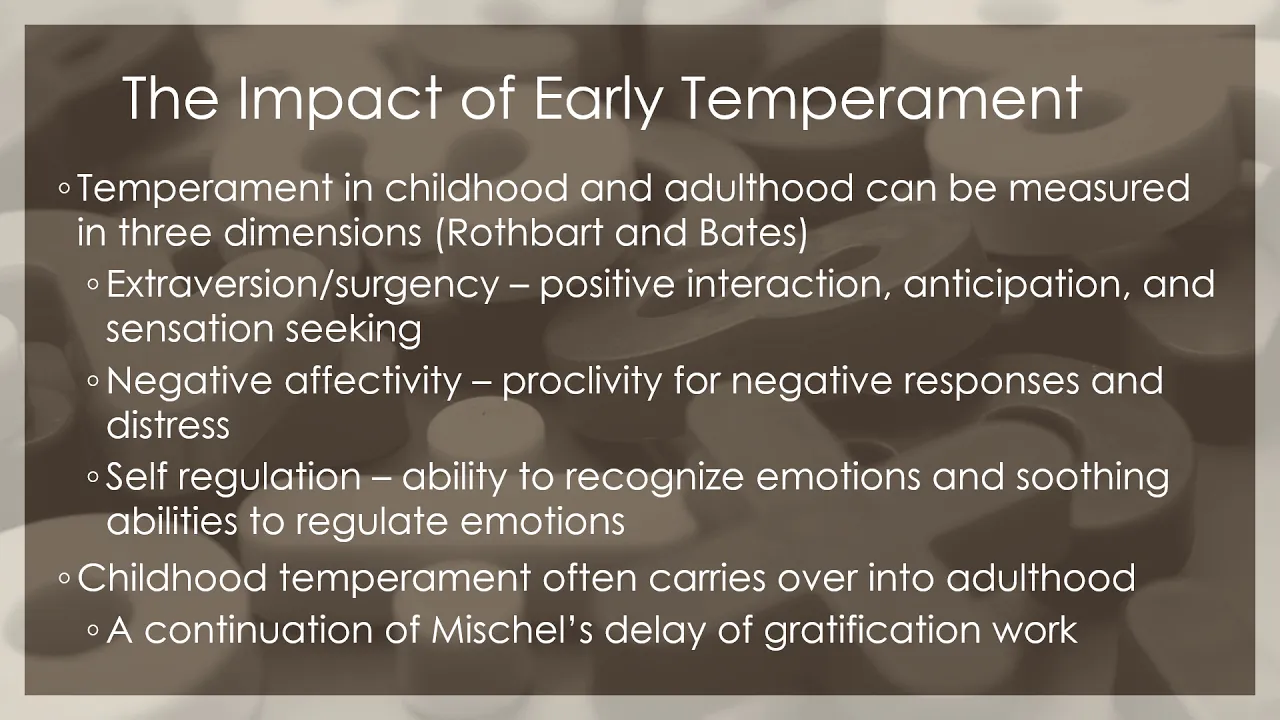
Module 9 Part 2 Temperament and Attachment Lifespan Development Recording
1.1K
Attachment patterns persist from infancy into childhood and adolescence, though they may shift slightly: (1) Secure attachment in adolescents (called secure-autonomous) maintains many friends without excessive worry about their presence; (2) Dismissing avoidant attachment leads to preferring solitude and discomfort in social situations; (3) Preoccupied attachment involves craving company but creating problems in relationships; (4) Unresolved/disorganized attachment involves fear-based proximity seeking combined with anxiety in social situations. These patterns correlate with later outcomes including social behavior, risk-taking, and relationship quality.
Click to watch →

感情コントロールは才能じゃない|1歳からの土台づくり
763
The Minnesota Longitudinal Study of Risk and Adaptation, begun in 1975, tracked children for over 30 years using laboratory behavioral observations. This landmark research revealed that attachment patterns observed at 12-18 months can statistically predict adult relationship outcomes. Adults exhibit three conflict resolution styles: constructive (open discussion), avoidant (emotional withdrawal), and explosive (dramatic attention-seeking). The Strange Situation Procedure classifies infants into secure, insecure-avoidant, and insecure-ambivalent attachment categories. Secure attachment develops from consistent caregiver responsiveness, while insecure patterns emerge from inconsistent or unresponsive caregiving. These early attachment templates persist into adulthood, influencing friendship quality in adolescence and romantic partnership dynamics in adulthood.
Click to watch →

CONFLICT TO CONNECTION | SUNDAY SERVICE | 11TH FEB | CELEBRATION CHURCH INTL
35.4K
Attachment style research demonstrates that early childhood experiences with primary caregivers create subconscious templates for all future relationships. Children who experienced inconsistent or unresponsive caregiving develop attachment patterns that affect their adult romantic choices, career decisions, and interpersonal relationships. These patterns operate unconsciously, meaning adults may not even realize they are repeating childhood relationship dynamics.
Click to watch →
Socioemotional Development in Early Adulthood (CHFS 2107 - Chapter 10 Lecture)
129
Early childhood attachment patterns have profound and lasting effects on adult relationships. Research demonstrates that infants who were securely attached at age 1 remained securely attached 20 years later in adulthood, showing remarkable stability in attachment styles. Longitudinal studies reveal that insecurely attached children at age 8 showed lower social initiative, less pro-social behavior, higher social anxiety, and greater loneliness at age 21. These findings establish that early relational experiences create foundational templates that shape how individuals approach relationships throughout their lives, with secure attachment predicting healthier, more stable romantic relationships in adulthood.
Click to watch →
Deep Dive
The Adult Attachment Interview (AAI) and contemporary models of adult romantic attachment styles.

Therapeutic Alliance Part 6: Attachment Types and Application
1.7K
The Adult Attachment Interview (AAI) identifies four attachment types through retrospective analysis of childhood experiences. Secure attachment involves detailed, coherent descriptions of parenting as loving and caring, with high self-reflection. Earned secure attachment develops through later positive experiences like psychotherapy. Dismissing attachment involves few childhood memories and ascribed low importance to attachments, reflecting avoidant childhood patterns—these individuals want to connect but fear attachment and cope through solitude or fantasy. Preoccupied/anxious attachment features contradictory, entangled narratives without recognizing inconsistencies, reflecting childhood anxiety—these individuals connect quickly but struggle with separation anxiety and fear not being loved. Unresolved/disorganized attachment shows disorientation and breakdown in describing emotional experiences, often linked to trauma, abuse, or maltreatment. Approximately 70% correspondence exists between parental and child attachment styles, with 80% stability from 12 months to 6 years. Therapies focused on the interpersonal relationship and emotions toward the therapist—transference-focused therapy and mentalization-based therapy—most effectively change fundamental attachment systems.
Click to watch →

TU97: The Dynamic Maturational Model (DMM) of Attachment With Guest Patricia Crittenden (Part 2)
7K
The DMM addresses limitations of existing attachment assessments, particularly the Adult Attachment Interview (AAI), which was designed for parents of six-year-olds and produces misleading results when applied to adolescents or adults without equivalent life experiences. The DMM uses modified versions of the AAI adapted for different developmental stages, including age-appropriate questions about romantic relationships and friendships. In adulthood, the model identifies advanced strategies including delusional idealization (idealizing dangerous attachment figures despite evidence of harm) and externally assembled self (identity constructed from external sources rather than internal generation). These strategies represent extreme adaptations to chronic danger and require specialized therapeutic approaches. The DMM also introduces 'cannot classify' as a formal category replacing disorganized attachment, acknowledging that some cases don't fit traditional categories.
Click to watch →

Attachment and the Internal Working Model pt3 Dr. Siobhan Hugh-Jones
4.6K
The Adult Attachment Interview (AAI) is a clinical assessment tool developed by Mary Main that evaluates an adult's internal working model of relationships by analyzing how they think and talk about past attachment experiences with primary caregivers, including events like death, separation, and abuse; through psycho-linguistic analysis of language and narrative coherence, the AAI classifies individuals into secure autonomous, insecure dismissing, insecure preoccupied, cannot classify, or unresolved disorganized states of mind, which have been shown to correlate strongly with infant attachment classifications and predict long-term mental health outcomes, supporting Bowlby's theory that secure attachment representations are essential for psychological well-being.
Click to watch →

Dr. Andrew Sodergren: Learning How to Love: Attachment, Morality, and Psychotherapy, Part 1 of 2
2.7K
The Adult Attachment Interview (AAI) is a semi-structured interview assessing adults' attachment experiences. Categories include: Secure (coherent, non-defensive storytelling about attachment experiences); Dismissing (defensiveness, minimizing importance of attachment); Preoccupied (excessive focus on attachment memories, difficulty stopping attachment narratives); Unresolved (disrupted narratives indicating unresolved trauma). Meta-analyses show parents' attachment status strongly predicts children's attachment to them (74% correspondence for secure vs insecure, 63% for all four categories). Studies conducted the AAI during pregnancy then assessed babies at age 1 show these strong linkages. This demonstrates how our own attachment experiences shape our capacity to be caregivers and influence our children's attachment security. The AAI status correlates with various psychopathologies: preoccupied with anxiety and mood disorders; dismissing with externalizing disorders and eating disorders; unresolved with borderline personality disorder and antisocial personality traits. Research by Grazyna Kochanska shows secure attachment promotes early conscience development (resistance to temptation, compliance, understanding of moral self). Robert Enright's forgiveness research links secure attachment with greater forgiveness capacity and less pseudo-forgiveness (dismissing hurt rather than genuinely processing it). Securely attached children show greater empathy, better ability to infer others' needs and feelings, and more compassionate responding. Adults with secure attachment demonstrate better caregiving responsiveness, improved conflict management in marriage, and more satisfying romantic relationships.
Click to watch →

I 4 STILI DI ATTACCAMENTO ED I RELATIVI MODELLI OPERATIVI INTERNI
789
Attachment patterns significantly influence self-esteem, identity development, and romantic relationships throughout life. Secure attachment fosters healthy self-worth and relationships, while insecure patterns create difficulties in intimacy and communication. Disorganized attachment produces six developmental trajectories: viewing self as acceptable but caregiver unavailable, as victim and caregiver threatening, as dangerous and others threatened, as savior and caregiver weak, feeling guilty for not fulfilling needs, or feeling responsible for caregiver's emotions. These patterns become particularly influential during adolescence for identity formation. The Adult Attachment Interview (AAI) studies attachment in adolescents and adults through narrative interviews. Attachment is an integral part of personality that persists from childhood through adulthood, shaping how individuals perceive themselves, others, and the world.
Click to watch →
Deep Dive
Cross-cultural variations in parenting styles and how they influence performance and interpretation in the Strange Situation protocol.

ما اساليب التنشئة الاجتماعية والرعاية الاسرية؟ || مادة علم النفس والاجتماع || جيل 2008 مع جاد سرحان
184
Parenting styles are determined by two variables: love/acceptance and control/discipline. The four styles are: (1) Democratic - high love and control, promoting dialogue, independence, and positive outcomes; (2) Authoritarian - high control without love, using punishment and one-sided communication, leading to aggression and low self-esteem; (3) Neglectful - low love and control, leaving children unsupported, associated with criminal behavior; (4) Permissive - high love without control, spoiling children and creating dependence. Cultural variations exist: Japanese culture emphasizes collectivism and cooperation, American culture emphasizes individualism and personal achievement, and Jordanian culture emphasizes community participation and social solidarity.
Click to watch →

11.3 Social Emotional Development: Attachment
2K
While attachment patterns are universal across cultures (all cultures show secure, avoidant, resistant, and disorganized attachment styles), cultural differences influence the distribution of these attachment types. For example, German parents encourage greater independence in children, which may explain why more German infants display avoidant attachment styles compared to American babies—infants internalize expectations of independence and show less distress at separation. Similarly, Japanese mothers rarely leave babies in care of strangers, making the Strange Situation particularly stressful for Japanese infants, who then display more resistant attachment responses due to heightened clinginess and anger at separation. Despite these cultural variations, parental sensitivity remains important across all cultures.
Click to watch →
Decolonizing Psychology as a Scientific and Ethical Necessity by Heidi Keller - IACCP 2024
357
The Strange Situation is an assessment tool to assess children's attachment quality through a series of short episodes of laboratory-based observations of a child and usually the mother. The crucial situation is the second reunion when the mother comes back after a brief separation. This procedure is highly inappropriate in many cultural environments where children are not used to being alone with an adult or with two adults in one room, where people live more outdoors than indoors, and where structured sets of toys are not available. Despite this, the procedure is applied in many different and diverse areas, with results interpreted to fit the theoretical framework.
Click to watch →
AQA A Level Psychology - Ainsworth's Strange Situation & Cultural Variations
185
Ainsworth developed the Strange Situation as a controlled observation method to measure attachment strength between children and caregivers. The procedure used a standardized 9x9 foot room with 16 squares, observed through a one-way mirror, and consisted of eight episodes. From 100 American infants aged 12-18 months, three attachment types emerged: Secure (66%, Type B) showing distress on separation and comfort-seeking on reunion; Insecure Avoidant (22%, Type A) showing little response to separation; Insecure Resistant (12%, Type C) showing high distress and difficulty being comforted. Evaluation points include: the method is culture-bound and designed for American babies; findings are ethnocentric, suggesting secure attachment is ideal, but in Japan insecure resistant is more valued; high inter-rater reliability (94% agreement) supports validity; attachment types link to Bowlby's internal working model. vanor and Cronenberg's meta-analysis of 32 studies across eight countries (1,990 children) showed secure attachment as most common globally, but with cultural variations: Insecure Avoidant highest in Germany (35%); Insecure Resistant highest in Japan and Israel. Criticisms include: the method is culture-bound; sample sizes in individual studies were small; 27 of 32 studies were in individualistic cultures; research studied countries rather than specific cultures, ignoring within-country variations.
Click to watch →

Chapter 13 - Families
153
The four traditional parenting styles do not adequately capture parenting practices across all cultures. Good parenting looks different in different contexts and reflects the values and beliefs of a given culture. In Egypt, Iran, India, and Pakistan, authoritarian parenting teaches children to inhibit expression of their own wants and needs, consistent with cultural expectations, and is not associated with lower self-esteem. Chinese parenting, described as 'strict affectionate parenting' (guan), involves warm, supportive, physically close relationships with strict control, which differs from Western authoritarian parenting and produces different outcomes. Collectivist cultures emphasize family needs over individual needs, and this affects how parenting styles function.
Click to watch →
Deep Dive
Therapeutic interventions and parenting programs designed to foster secure attachment, such as the Circle of Security.
Apego seguro y Círculo de la seguridad. Mercedes Laboisse y Leticia Garcés
541
Secure attachment is the foundation of healthy relationships, developed in early childhood through responsive caregiving; the Circle of Security program, created by Glen Cooper, Kent Hoffman, and Bert Powell in 1985, helps parents recognize when children are either exploring (upstairs) or seeking connection (downstairs), enabling them to respond appropriately and build secure bonds despite their own attachment histories.
Click to watch →
Revise with Me: Early Experience and the IWM - Attachment- AQA A-Level Psychology
152
The Circle of Security Project is a parenting intervention program designed to help parents develop more secure relationships with their young children. The program aims to increase parental awareness of children's signals and promote responsive caregiving. This application of attachment theory demonstrates how understanding early attachment processes can inform practical interventions to support healthy child development and prevent the transmission of insecure attachment patterns across generations.
Click to watch →

Attachment Theory In Action: Circle of Security with Glen Cooper & Diedre Quinlan
1.4K
Circle of Security offers multiple program levels serving different purposes. The Intensive program is a rigorous 10-day training plus two years of supervision designed to build clinical capacity in professionals. The Parenting program is a manualized video series accessible to non-clinicians who work with caregivers, requiring only reflective functioning skills. The Classroom program addresses the unique challenges teachers face with multiple children simultaneously. These programs form a continuum from prevention (Parenting/Classroom) to intervention (Intensive). The decision to make the Parenting program accessible to diverse practitioners (peer advocates, paraprofessionals) rather than requiring clinical degrees was driven by scalability needs identified through partnerships like Bill Gates Foundation.
Click to watch →
Circle of Security-Parenting
11.8K
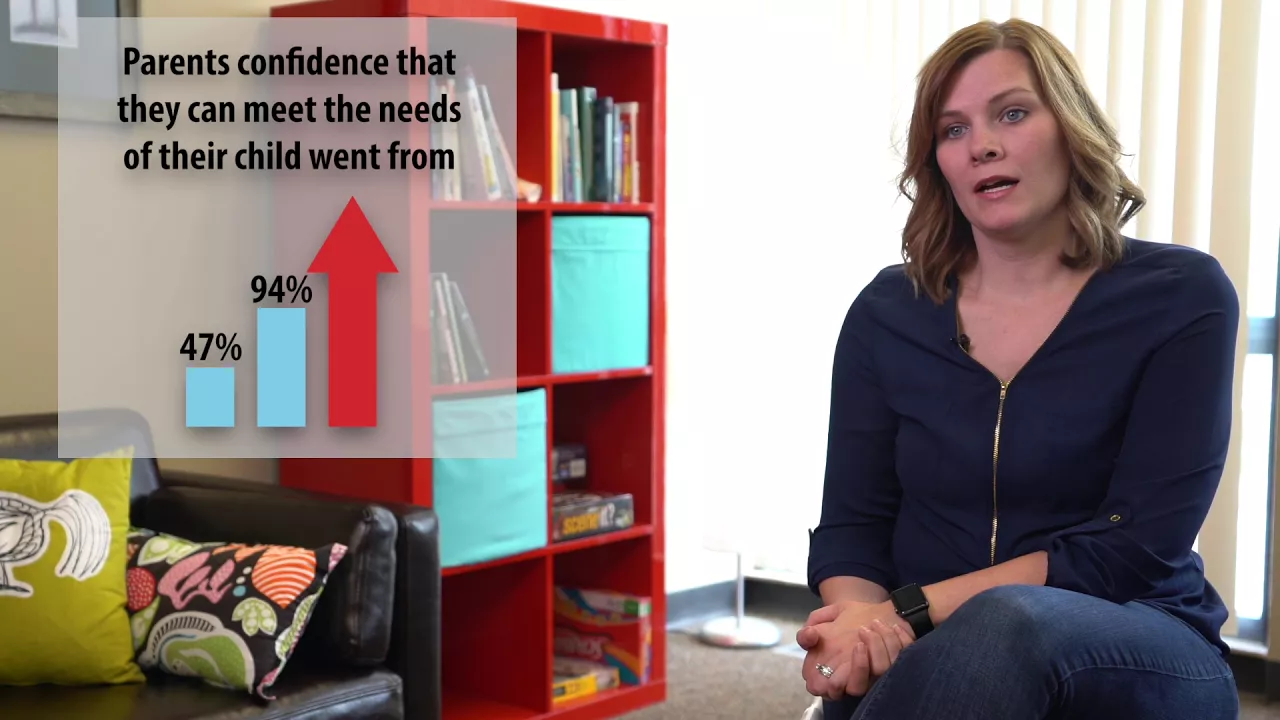
The Circle of Security-Parenting program is an 8-week evidence-based parenting class that teaches caregivers to interpret children's behavioral signals as meaningful communication about their social-emotional needs, enabling more effective responses that strengthen the parent-child bond and reduce the likelihood of requiring costly interventions later in life.
Click to watch →

The Circle of Security: Building Healthy Child-Parent Attachment
12.1K
The Circle of Security is an eight-week parenting program that helps caregivers understand their child's emotional needs by recognizing three fundamental attachment needs: (1) the need to explore and discover the world (going out on the circle), (2) the need to return for comfort and protection (coming in on the circle), and (3) the need for caregivers to provide safety and guidance (hands on the circle). The program teaches parents to reframe challenging behaviors as communication of unmet needs rather than misbehavior, using a roadmap approach to identify when children need to explore, be welcomed back, or have their feelings organized. By learning to read their child's emotional cues and respond appropriately, parents can build secure attachments that promote healthier, happier children with better self-esteem, stronger friendships, and more effective problem-solving skills.
Click to watch →
Strange Situation
Secure Attachment
Strange Situation
0:00- 1
Introduces the standardized lab procedure for assessing child attachment.
- 2
Records a toddler's reactions to a stranger and mother's brief absence.
- 3
Highlights the critical reunion behavior as a key indicator.
The Temperament Hypothesis and Cultural Critiques
The Temperament Hypothesis, championed by developmental psychologist Jerome Kagan, offers a major counterpoint to Ainsworth's Strange Situation. Kagan argues that the procedure measures a child's innate, genetically determined temperament rather than the quality of the parent-child attachment relationship. For instance, a child classified as 'insecure-resistant' may simply possess a highly inhibited, naturally anxious temperament, whereas a 'secure' or 'avoidant' child may naturally be more bold and resilient. Additionally, critics highlight significant cultural biases within the Strange Situation. Developed in a Western, middle-class context, its classifications do not translate universally. For example, in cultures that emphasize independence (such as Germany) or constant physical closeness (such as Japan), children's behaviors in the laboratory often reflect normative cultural child-rearing practices rather than actual attachment security. These critiques suggest that the Strange Situation oversimplifies developmental psychology by overlooking biological predispositions and cultural diversity.
John Bowlby's foundational evolutionary theory of attachment and the innate human drive for proximity to a primary caregiver.
The concept of a 'secure base' and how infants balance the need for safety with the desire to explore their environment.
Basic developmental milestones of infancy and toddlerhood, particularly social-emotional development between 12 and 24 months.
Fundamental principles of psychological research design, specifically structured observational laboratory procedures.
The specific attachment classifications resulting from the experiment: Secure, Insecure-Avoidant, Insecure-Resistant, and Disorganized attachment.
How early childhood attachment styles predict socio-emotional development and relationship patterns in adolescence and adulthood.
The Adult Attachment Interview (AAI) and contemporary models of adult romantic attachment styles.
Cross-cultural variations in parenting styles and how they influence performance and interpretation in the Strange Situation protocol.
Therapeutic interventions and parenting programs designed to foster secure attachment, such as the Circle of Security.
4.1M views11.6Klikes3:15@thibs44Original Release: 2009-01-17
but can the Essential Elements of home life be translated into a standard laboratory setting for controlled scientific study after conducting extensive observations of parents and children at home a student of bulbi Mary answorth devised such a procedure called The Strange situation which places the child under some stress it has become the most widely used standardized way to assess the quality of a child's attachment to their caregiver so here the researchers are recording how 14-month-old Lisa responds in this attractive but unfamiliar setting how will she react to a stranger what will happen when her mother leaves the room and when she returns it's Lisa's behavior when her mother Returns what psychologists call The Reunion that they are particularly interested in there's most importantly is to look for the type of balance that a child strikes between an attachment need on the other hand to explore the P material once Lisa has settled down to play a stranger enters the room and sits in the chair reading a magazine where's the bow where's the bow after a couple of minutes The Stranger attempts to interact with Lisa soon after lisabeth gets a queue to leave the room [Music] The Stranger tries to comfort Lisa but in [Music] vain Lis Beth comes back into the room and the camera records how Lisa reacts now the first part of the procedure is over and Lis Beth settles Lisa down again the stranger leaves them alone together and soon after Elisabeth goes too Lisa is on her own her distress is plain to see once again the efforts of the stranger to console Lisa are to no avail [Music] but lisabeth manages to calm her almost at once and shortly afterwards the observation ends Lisa showed outward signs of what's called secure attachment
Up Next

104:33
John Bowlby's Attachment Theory in Psychotherapy Explained
@TheWeekendUniversity
181.1K views•2020-04-19

68:32
Cognitive Skills for Differentiated Instruction | Teacher PD
@BrainWareLearning
631 views•2017-12-17

9:55
Thinking, Fast and Slow: Daniel Kahneman Animated Book Summary
@FightMediocrity
2.3M views•2015-06-05

6:40
The Nocebo Effect: How Beliefs Can Cause Real Harm
@CGPGrey
10.4M views•2013-12-23
Related Study Plans & Knowledge Roadmaps
Structured learning paths in Psychology
psychology
Neuroscience of Creativity: Networks & Training
01Foundations of Creative Cognition
02The Cognitive Neuroscience of Insight & Fixation
03The Triple Network Model of Creativity
+ 1 more learning modules
15h4 modules
Explore Roadmap
psychology
Imposter Syndrome: Etiology & CBT Framework
01Defining the Imposter Phenomenon
02Socio-Developmental Etiologies
03CBT Fundamentals & Thought Distortions
+ 2 more learning modules
15h5 modules
Explore Roadmap
psychology
Adult ADHD: Executive Dysfunction & Scaffolding
01Neurobiology of the ADHD Brain
02The Core Triad of Executive Deficits
03Executive Dysfunction and Emotional Regulation
+ 2 more learning modules
12h5 modules
Explore Roadmap
psychology
Loneliness: Evolution, Neurobiology & CBT
01Evolutionary Origins of Human Connection and Loneliness
02The Neurobiology and Physiology of Chronic Loneliness
03Maladaptive Social Cognition: The Psychological Loop
+ 2 more learning modules
12h5 modules
Explore Roadmap