















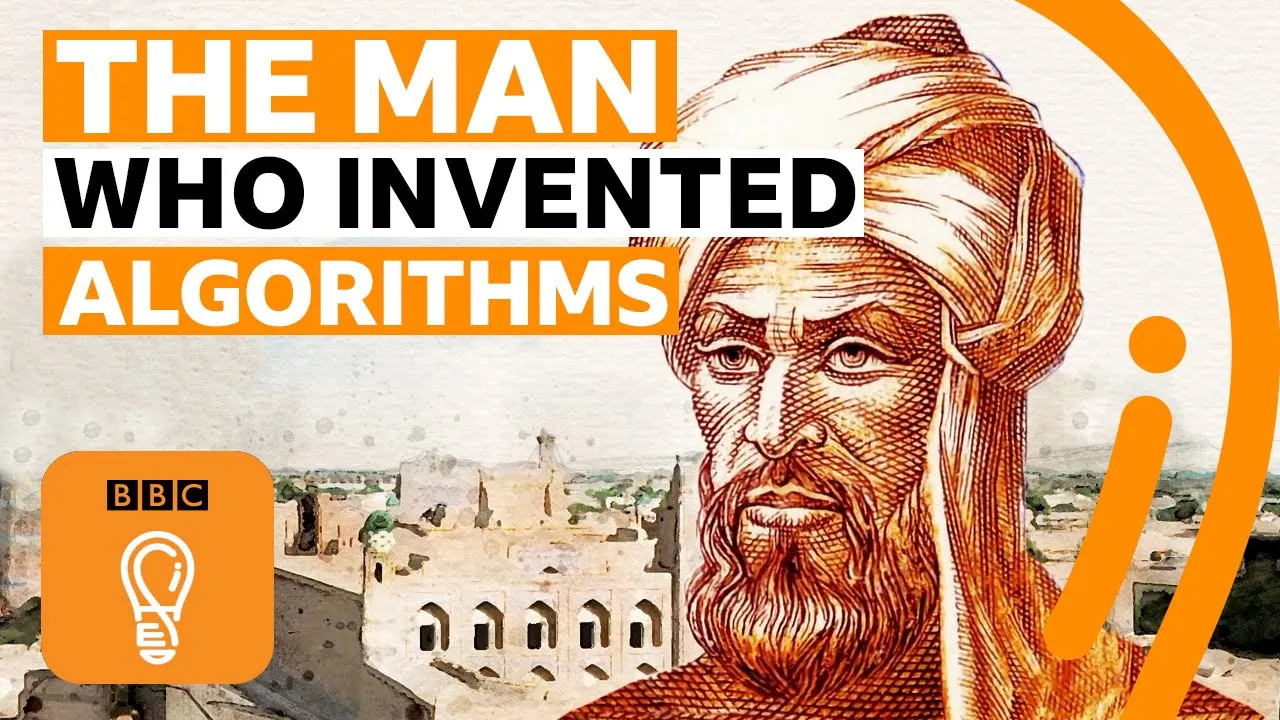







The Islamic Golden Age (9th-14th centuries) produced groundbreaking mathematical advances that underpin modern technology; Al-Khwarizmi's work on quadratic equations established algebra as a systematic discipline, while the House of Wisdom in Baghdad facilitated the translation and synthesis of Greek, Persian, and Indian knowledge, transmitting innovations like the Hindu-Arabic numeral system and frequency analysis for cryptography that continue to shape fields from aviation to computer encryption.
Science in a Golden Age: Al-Khwarizmi & the Origins of Algebra
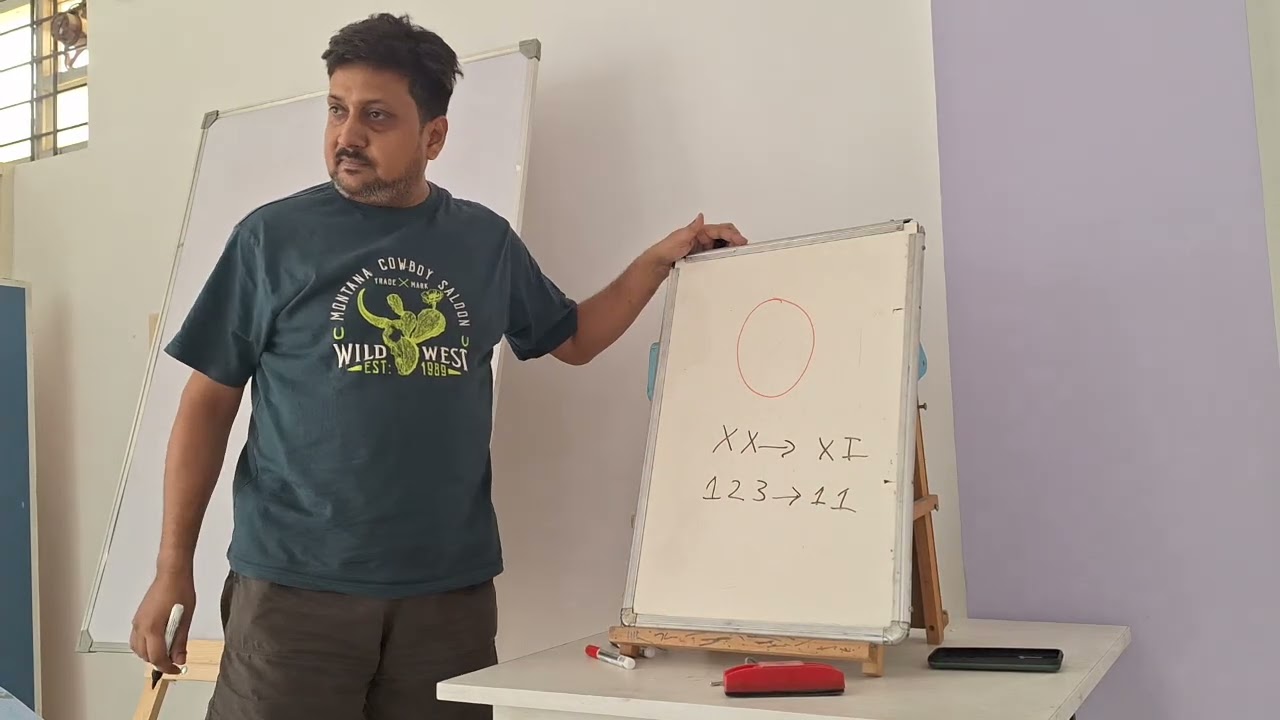
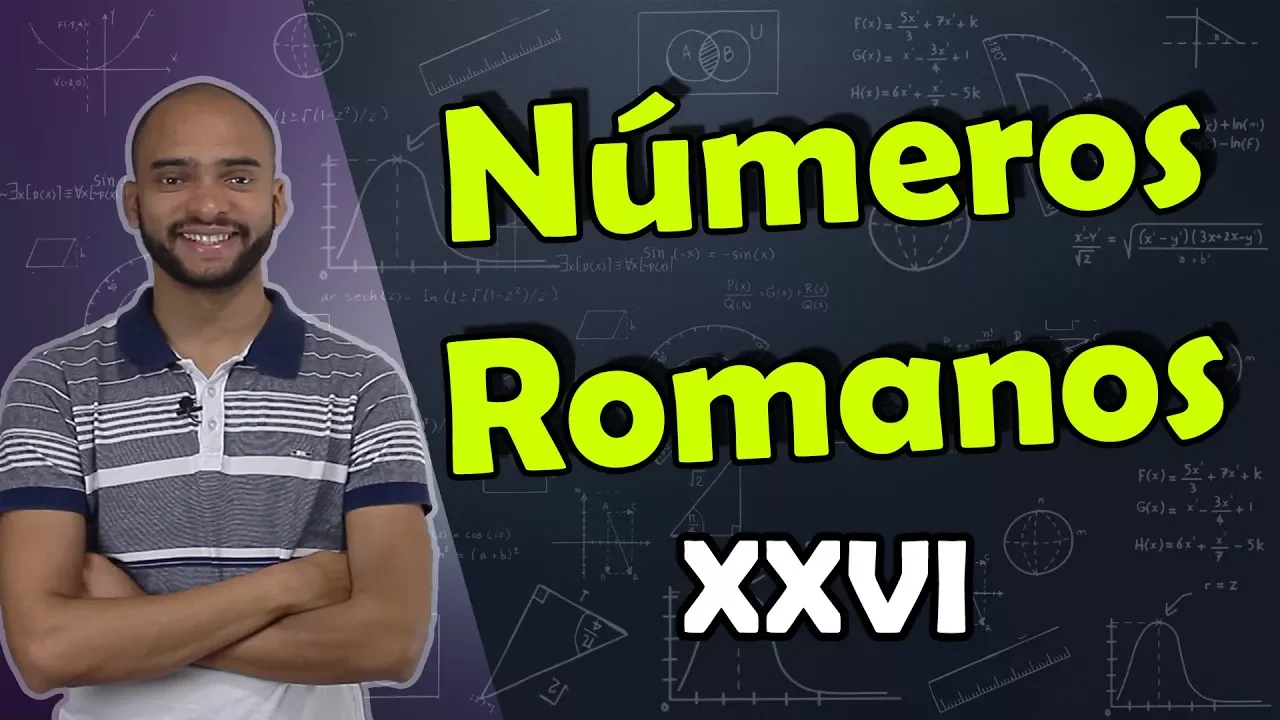
Added:Basic arithmetic operations and the transition from Roman numerals to the Hindu-Arabic numeral system.
The conceptual understanding of variables and solving for an unknown in basic equations.
General historical awareness of the Islamic Golden Age and the House of Wisdom in Baghdad.
Elementary geometric principles, as early algebra relied heavily on geometric proofs.
The development of modern symbolic algebra and the transition from rhetorical (word-based) algebra to symbolic notation.
Algorithmic theory and the mathematical foundations of computer science, tracing back to the etymology of 'algorithm' (from Al-Khwarizmi).
Modern cryptographic applications, including how algebraic number theory secures digital communication and encryption.
The role of algebra and coordinate geometry in modern navigation, aviation technology, and GPS algorithms.
375.6K views9.7Klikes25:03Original Release: 2015-10-20
[Music] There have been so many great advances in science over the past 100 years.
Everything from relativity and quantum mechanics to electronics, computing, and space travel. But none of this progress would have been possible without the mathematization of science and the development of algebra. The term algebra can be traced back to the Arabic word algebra which has its roots in the title of a manuscript written around 820 during a time I refer to as the golden age of science. This was the period between the 9th and 14th centuries when scholars in the Islamic world first applied the principles of mathematics to science. I'm Jim Alili, a British professor of theoretical physics, but born in Baghdad. I'm going to look at how the mathematical underpinnings of science apply today and trace their roots back to this golden age.
[Music] Aviation is one of the most remarkable achievements of modern science.
And in order to be sure that the planes we build stay in the sky, we've needed to master the mathematics of flight. This is Wing Commander Andy Green, who's a jet pilot and a mathematician. Okay, we are straight ready to go.
And you have a mathematics background.
So you understand more than most the mathematics involved in aviation and flying. Absolutely. It's it it is a great way to be able to understand how to fly an airplane to understand the dynamics of what's actually going on in the aircraft because I can actually dig into the equations and understand the science behind it.
The mathematics that I'm interested in is something called a quadratic equation. Uh a square equation. the unknown quantity x times itself. That square law equation, the the essential basic quadratic is fundamental to how much lift an airplane can generate, how fast it needs to fly. It is the basis of all aviation. It's actually not as complicated as many people might think.
If we think about lift and and there are some various constants uh and then there's half row v^ squ. So it looks complicated with lots of symbols, but if you bracket all this, all it's saying is lift is some number times the square of the velocity. Very simply, if you go twice as fast, v^ squ, you will get four times as much lift. Which is why arerabatic airplanes are powerful. They need to fly fast to do those very crisp, very precise maneuvers.
If you want, for instance, to roll the airplane, then if you double the speed, you will roll four times as fast. And at 75 knots, we're going to want to roll now. 1 2 3 4 5 little over 5 seconds.
When Andy increases his speed V to twice as fast because the lift depends on V squared, there's four times as much lift. So, he can roll the plane four times as fast. So, that's 150 knots.
Rolling left now. Just over 1 [Music] second. Our modern methods for solving mathematical problems like these involving quadratic equations go all the way back to the golden age. in fact to the wonderfully titled book which translates as the compendious book on calculation by completion and balancing. It was written by the 9th century Persian mathematician Alarismi. Now Alarismi wasn't the first man to solve quadratic equations. They go all the way back to antiquity. But he was certainly the first mathematician to provide the general method, the technique, the recipe for solving them, what we would today call the algorithm, a word derived from alorism's latinized name algorithm. He was also rightly regarded as being the father of the field of algebra. Even the term algebra comes from the word aljabur in the title of his book. What's most remarkable about this mathematical textbook though is not that it has any equations in it because Alarismi wrote his whole book in words alone. Alarism's book contains many practical everyday problems of the time such as dividing up land, paying laborers or splitting up inheritance.
Businessmen and traders would have found the equations particularly helpful.
Qatari businessman Ali Sultan Alhajri grew up in the desert raising camels and still keeps a herd today.
So Annie, these are beautiful camels.
Thank you. Um how important are camels in uh Arabian and Bedawin culture? Well, camels are very important in the Bedwin culture for transportation, for milking, for meat. It's it's very important.
Yeah. And if I wanted to buy a camel, I mean, what sort of price would they fetch? Racing camel is very expensive, you know, run between 50,000 to several million real. Wow. Yes. The beauty camels very expensive. You're talking about several millions, you know. It's not This is jealous again. They're both jealous. Yes. They want the attention.
So, it's very very important. I mean, very expensive. Rand up to 20 million real. Yeah. Maybe more. A simple one is maybe 5,000 2,000. I ask you this because I want to use the value of a camel to carry out a particular mathematical calculation. Wow.
I want to give you a problem and show you the sort of thing that Alarismi wrote about in his book of algebra. I'm going to use the example of a man who dies owning just one camel, which of course has to be sold. Now what if that camel fetched 80 dirhams. The man has a friend to whom he bequeeds a quarter of his money. He leaves a widow to whom he bequeeds 1/8 and he has three sons. How much does each son get? He would set up the algebraic equation where the unknown quantity the thing al is part of the equation. This is what we would call x in algebra today. So the way I would write it is 80 = 80 / 4 + 80 / 8 plus 3x three sons each receiving x. That's what we have to work out as me work through the algorithm the recipe to work this out. So if I simplify this I have 80 = 20 + 10 + 3x. So 80 is 30 + 3x. I take the 30 to the other side. 80 - 30 = 3x. 50 = 3x. And so x is 50 over 3, which if I'm correct is 16 and 2/3 durhams. This sort of algebraic equation was something very complicated for the people at the time.
showed the recipe for carrying out very important calculations that would have been used in everyday life. That's right, isn't it?
[Music] Andy Green isn't just a pilot. He's also a world record holder. In 1997, he became the first and only driver to officially travel on land faster than the speed of sound. It is the longest standing record in history. And up till this point, nobody has broken it. That's about to change. We're building a new car to go a lot faster.
We are now building a Blood Hound supersonic car. It is going to be a car like no other. Blood Hound has been designed using the latest engineering techniques and complex computer modeling. To create such an advanced vehicle, the Blood Hound engineers have solved thousands of equations. We're going to the limit of modern technology. 1,600 km an hour or 1,000 miles an hour, 40% faster than the speed of sound. And when traveling that fast, some of the most important equations deal with drag, the force of resistance that the car needs to overcome to reach 1,600 km an hour.
In exactly the same way that uh lift will increase by a factor of four when you double the speed, the drag on a vehicle will also increase. how much drag you will experience is again a square law and it's even more extreme in the land speed record context because of course we're going so much faster that v square term is so enormous for blood we're looking at 1 1600 km an hour square that it becomes a very big number and the amount of drag is immense to create such an advanced high-speed vehicle as well as quadratics the blood hound engineers have also needed to solve many other types of equations what's so impressive is Kawarismi's work on quadratic equations then inspired other later mathematicians to solve even more complicated equations and another great Persian Omar Hayam who's regarded as one of the greatest medieval poets in my view was an even better mathematician he was solving cubic equations involving a quantity times itself times itself again and this is also important for blood hound because the amount of power that's needed from the engines is a cubic equation It's extraordinary that they made that step to the cubic equation.
They gave us the final building block because it's not only when we double the speed, we have four times the drag, but it takes 8 times the power. It's that cubic * 2 * 2 and it becomes a very very large number. It's that V cub which produces such a huge power requirement.
The fact they discovered it in medieval times is astonishing.
[Music] Alarismi was just one of the many scholars who flourished in the 9th century.
Although he was Persian, he spent his academic life in the city of Baghdad, which had become a renowned center of learning. During the first century after the birth of Islam, Muslim armies conquered vast swaves of the old world.
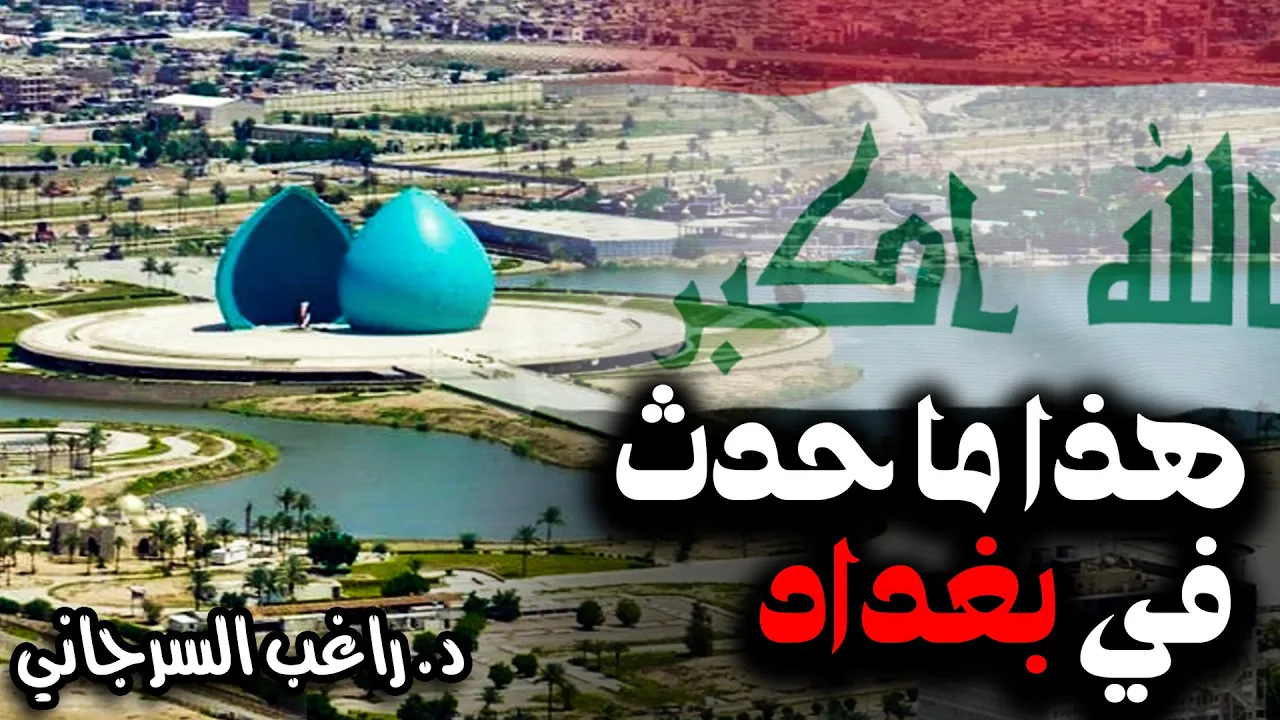
They defeated the Persians and entered Iraq. In 762, the Abbasid caiffs established their capital in the newly founded city of Baghdad from which they ruled over their great empire for the next five centuries. And it was in Baghdad that they established the famous Betal Hecma or the House of Wisdom. Now, it's not known exactly where this was or even if it was a single academy, but we do know that Baghdad quickly became the greatest center of knowledge of the medieval world.
The Abbassad rulers were generous patrons promoting knowledge and scholarship. At the Slemania Library in Istanbul, I'm meeting Professor Ramadan Sheshen. He studied the origins of the house of wisdom.
There was there, there were Christians, there were Jewish scholars. Although it was under the opaces of the Islamic Empire and being translated into Arabic, many of these scholars came from all sorts of religions all working together in this one big movement.
Translation was central to the early work of the house of wisdom. Dr. Peter Star has studied this translation movement extensively.
I think the translations are very central to uh the flourishing of sciences in Islam. one finds that uh the entire corpus of Greek scientific literature finds its way into Arabic. So they were translating essentially from Greek mainly from Greek but also other languages are important as well um from Persian ultimately from Sanskrit. When did this start? So at the end of the 8th century uh we find the translations really picking up. But this is the Abbasid. Yes, it's above all the Abbasid period. The earliest translations tend to be in those subjects which will serve the empire most. Medicine, uh, astronomy, philosophy, mathematics.
Yeah. So without this remarkable translation movement that went on for two centuries, there wouldn't have been a golden age at all. I think that puts it very well.
[Music] The House of Wisdom was much more than just a library or translation house.
This was the high point of Islamic civilization, an unrivaled center of scholarship and learning. Drawing on Greek, Persian and Indian texts, the scholars there amassed a vast collection of world knowledge and then built on it through their own discoveries.
[Music] A significant example of this use and development of knowledge from other civilizations was in geometry. Islamic decoration is famous for its intricate patterns and geometric designs developed over the centuries.
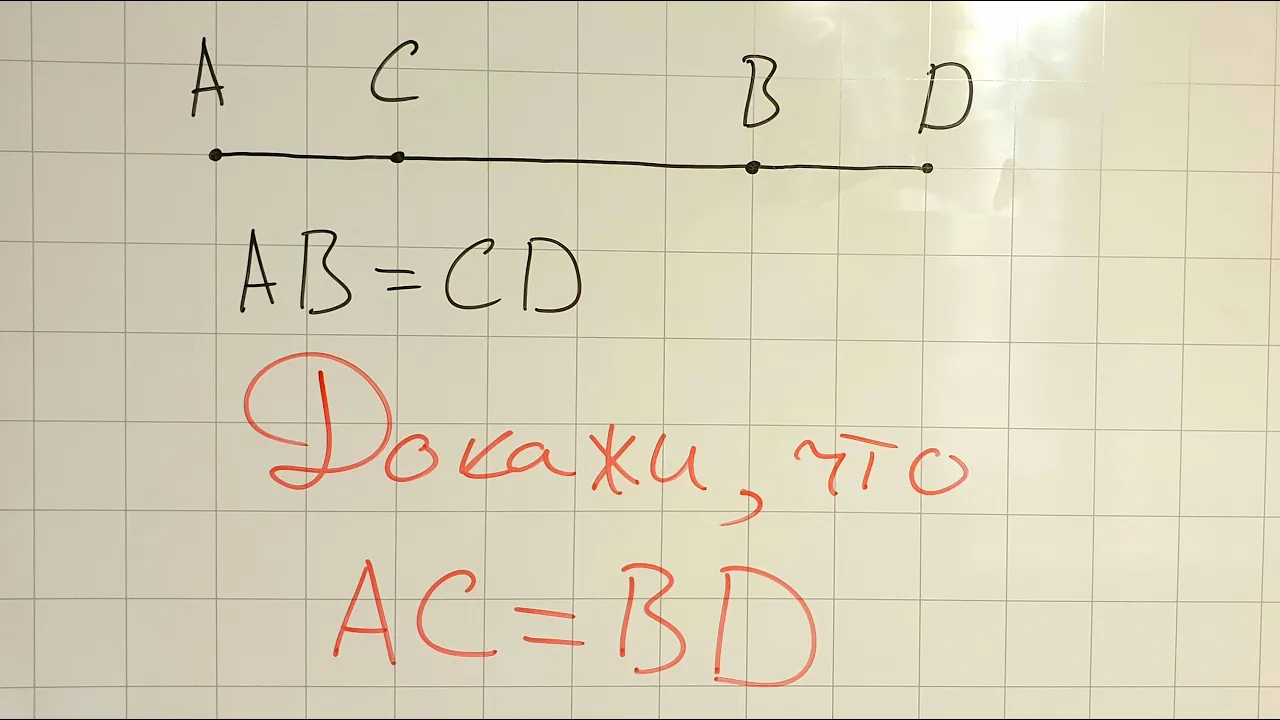
Very often these were derived from earlier cultures Greek, Roman, Baantine, Persian and Central Asian. They took that knowledge and created from it these beautiful patterns. But geometry wasn't just about beauty. Ohism and other scholars from the House of Wisdom translated books about mathematics and geometry in order to apply that knowledge to their world.
There are very practical reasons for studying geometry that the Arabs have now an enormous empire. You need to measure it.
You need to tax it. The book of elements of Uklid, Uklid's elements was presumably a very text. Yeah. Yeah.
Building on the translations they studied, the scholars of Betal Hecma improved upon the measurements of the Greeks, enabling them to create more accurate maps of the world. Their mastery of geometry also allowed these scholars to make astronomical calculations and describe the movement of the moon, planets, and stars.
For shop owners and merchants, one of the most fundamental aspects of mathematics was simply how to write numbers down. In the golden age, there were several systems in use, including using Arabic letters for numbers, similar to Roman numerals. But Alarismi advocated a different number system. The number system we use today, the decimal system, is called the Hindu Arabic numeral system. It's called Hindu because it comes originally from India.
Arabic because it came by the Islamic world and scholars in Baghdad like El Pismi transmitted it first to the Islamic world and then to the rest of the world. Everywhere today we use this decimal system 1 to nine and the zero and we forget how difficult it was before it existed. So imagine if I wanted to add up my bill but not using the decimal system using Roman numerals instead.
Let's see how awkward that would be if I first write these numbers down using Hindu Arabic numerals.
42, 16 and 14. Now I can add these up very easily. The 16 and 14 makes 30 plus the 42 is 72. How about in Roman numerals 42 would be X L I. 16 is X VI.
14 is X I V right I have to break this down now how many so XL is 40 so that actually four X's uh and then I I and then I have another X V I and then I have an X and four I's okay so now I have six X's X X X X X X uh and then I have a V. And then I have 1 2 3 4 7. So that's another V. Two I's.
They give me another X. So finally I have 1 2 3 4 5 6 7. That's L X X I I which is 72.
So, I've got the right number, but it took a lot longer to [Music] calculate. In the late 12th century, the Italian mathematician Fibonacci traveled the world and came across these numbers in the Islamic Empire. In 1202 he wrote his book Libra Abachi the book of calculation in which he promoted the use of Hindu Arabic numeral system over the Roman numerals describing its many benefits for both merchants and mathematicians alike. However, uptake of the system was slow both in the Islamic world and in Europe. In Florence in 1299, they banned these numerals on the pretext that they were easier to falsify than Roman numerals. However, common sense eventually prevailed and the numeral system was adopted throughout Europe in the 15th century, 600 years after it was introduced to the Islamic world. One of the most important fields of modern mathematics is computer encryption. From email confidentiality to government security, encryption plays a big role in an increasingly online digital world.
And the study of encryption goes all the way back to the 9th century and the work of another famous mathematician from Betalhikma. This is a very interesting book. I'm trying to figure out exactly what it's telling us. It's a book by Elkindi, the philosopher of the Arabs.
Now, Elkindi was a great polymath. He was a philosopher. He was a mathematician. He was a musician. And I think the part here he talks about he's got a disc with the Arabic alphabet and he talks about counting the number a particular symbol appears. El Kindi figures out the idea of frequency analysis that when a letter appears a certain number of times if it's more common than other letters you can work out what it is. Ali's text is the earliest known description of frequency analysis. But that text was only discovered in 1987. Before that, we had no idea that this supposedly modern technique for studying encrypted messages was in use over a thousand years ago. Now, one of the oldest and most simplest ways to encrypt a message to make it secret is simply by substituting each letter by a different one. Let me show you. Imagine we have a simple sentence. Ali was a famous scholar. Now provided we have the key the encryption key which is also called the cipher which by the way comes from the Arabic word suffur which means zero. With the cipher I represent each letter with a different one. So by looking at the table I would see that a corresponds to l and l corresponds to k for ki k corresponds to v and so on.
In this way, I can turn this sentence into something that's not readable unless you have the cipher. What if we have a paragraph like this which looks completely like gobbledegook without the key, without the cipher? I can't work it out. Now, if you don't have the cipher, you can use frequency analysis to try and figure out the meaning. I know that the five most common letters in the English language are E, T, A, O, and I. So, if I replace these into that text, I can start to see patterns emerging. For instance, if I look at the most frequently occurring letter in the text, it's W. So, I'm guessing W is most likely E. And I carry on like this until I start to recognize individual words. So, for instance, a threeletter word that that begins with T and ends with E is most likely the. That gives me the code for the letter H and so on.
[Music] Developments in mathematics weren't the only legacy of the golden age. The translation movement had introduced scholars to a wide range of subjects and they made advances in fields as diverse as astronomy and medicine. They took the mathematics they developed and applied it to optics, chemistry, and engineering. Science was now no longer just a philosophical pursuit. The mathematization of science paved the way to a multitude of scientific advances. Next time, we look at state-of-the-art robotic engineering.
So, you can see it moves not like a robot, but a very human and fluid movement. but discover that the idea of automatic machines goes back over a thousand years.
That's fantastic. In a sense, this is an early programmable.
We find out about complex mechanisms such as clocks, musical instruments, and water pumps. As the water moves the water wheel around, that's moving backwards and forwards. It's like a double piston.
and investigate whether Abasiban Fernas could fly all the way back in the 9th century.
[Music]
Up Next
104:23
The Birth of Algebra: A Historical Journey | Stanford
@stanford
220K views•2012-12-11
4:43
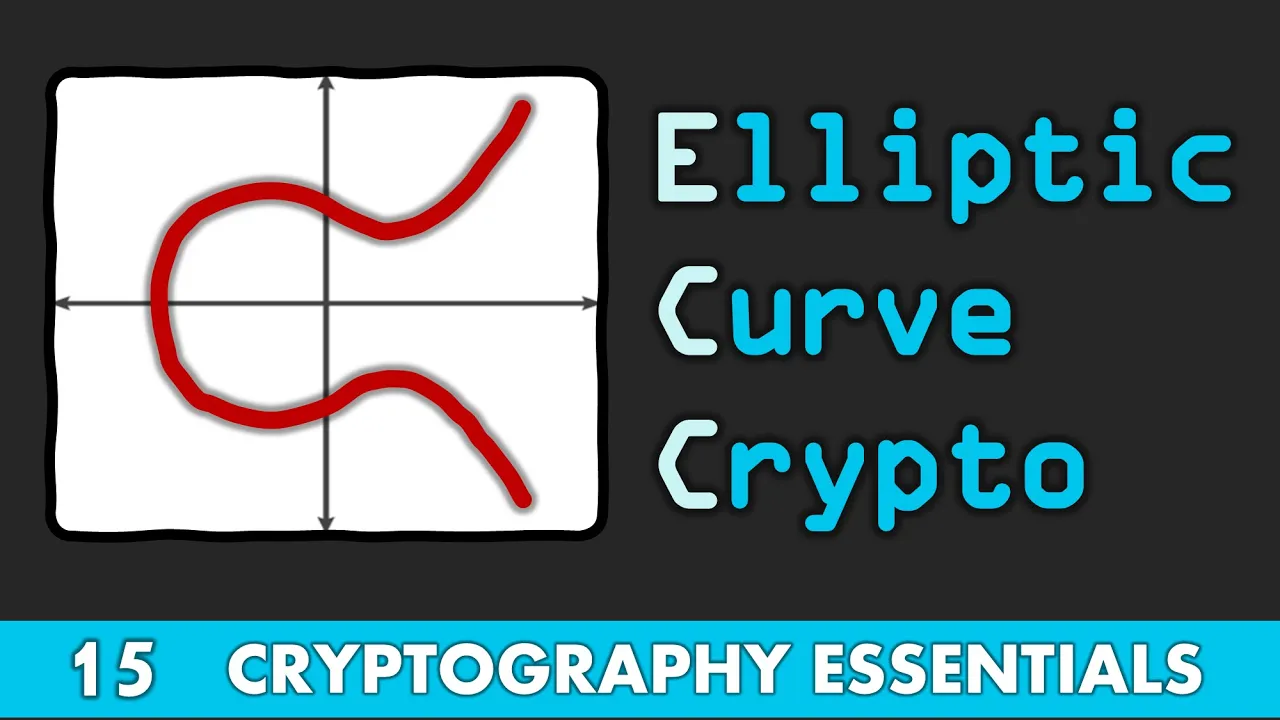
Elliptic Curve Cryptography Explained: ECC, ECDSA, ECDH
@PracticalNetworking
28.5K views•2024-10-21
10:44
Fourier Series Introduction: The Big Idea Explained
@DrTrefor
387K views•2021-05-03
6:00
The Mathematical Impossibility of Accurate World Maps
@Vox
23.3M views•2016-12-02
Related Study Plans & Knowledge Roadmaps
Structured learning paths in Mathematics
mathematics
Tensor Calculus: Vectors to Riemann Curvature
01Mathematical Foundations: Linear Algebra & Calculus
02Covectors, Dual Spaces, and Tensor Basics
03The Metric Tensor and Index Gymnastics
+ 2 more learning modules
40h5 modules
Explore Roadmap
mathematics
Gödel's Incompleteness: Logic, Proofs & Limits
01Introduction to Formal Systems & Hilbert's Dream
02Set Theory, Cardinality, and Cantor's Diagonal Argument
03Arithmetization and Gödel Numbering
+ 2 more learning modules
14h5 modules
Explore Roadmap
mathematics
Galois Theory: Fields, Groups & Solvability
01Foundations of Abstract Algebra: Groups & Fields
02Polynomials & Field Extensions
03Splitting Fields & Symmetries
+ 2 more learning modules
24h5 modules
Explore Roadmap
mathematics
Non-Euclidean Geometry: Models & Geodesics
01Euclid's Fifth Postulate and the Birth of New Geometries
02Hyperbolic Space and the Poincaré Disk Model
03Geodesics: Defining Straight Lines in Curved Spaces
+ 2 more learning modules
15h5 modules
Explore Roadmap