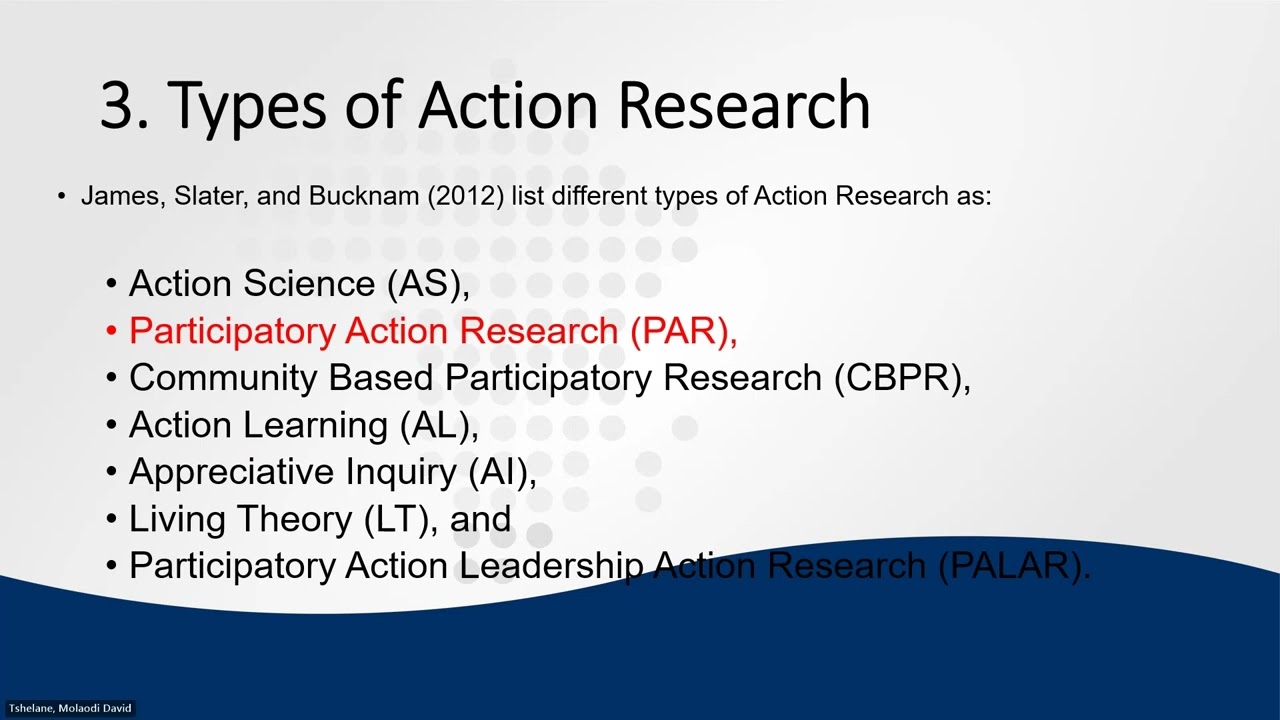

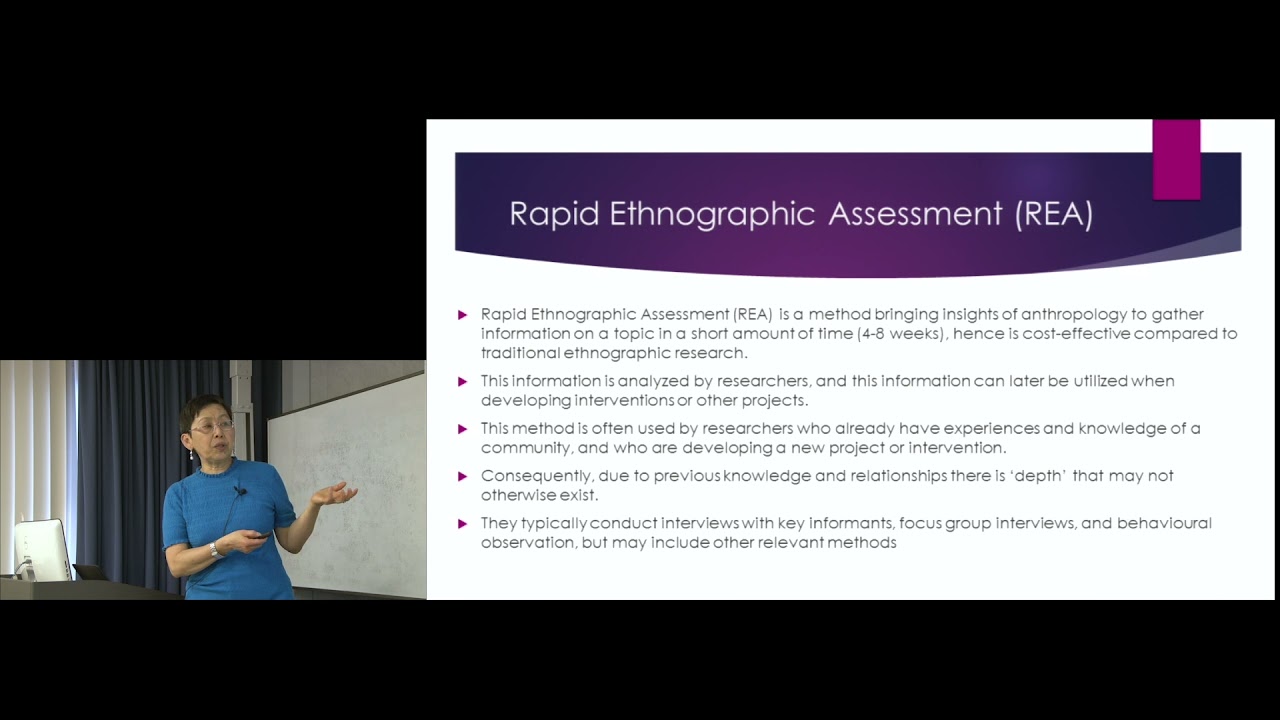






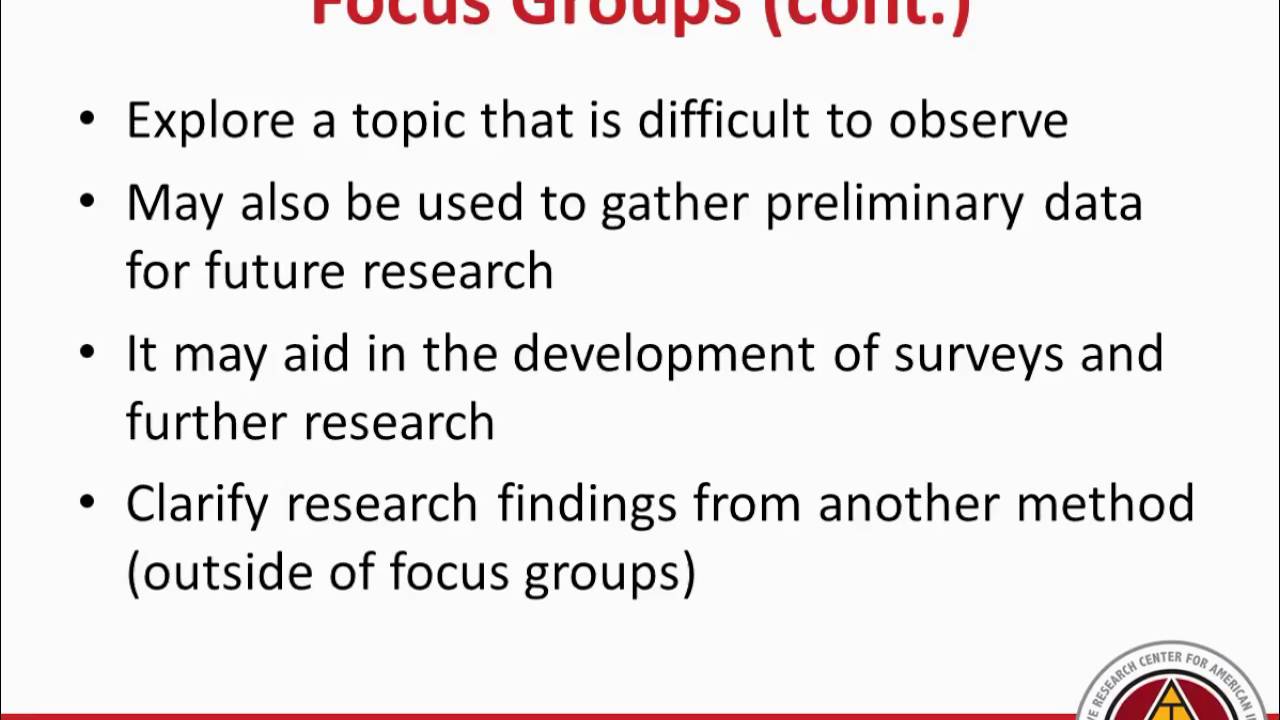





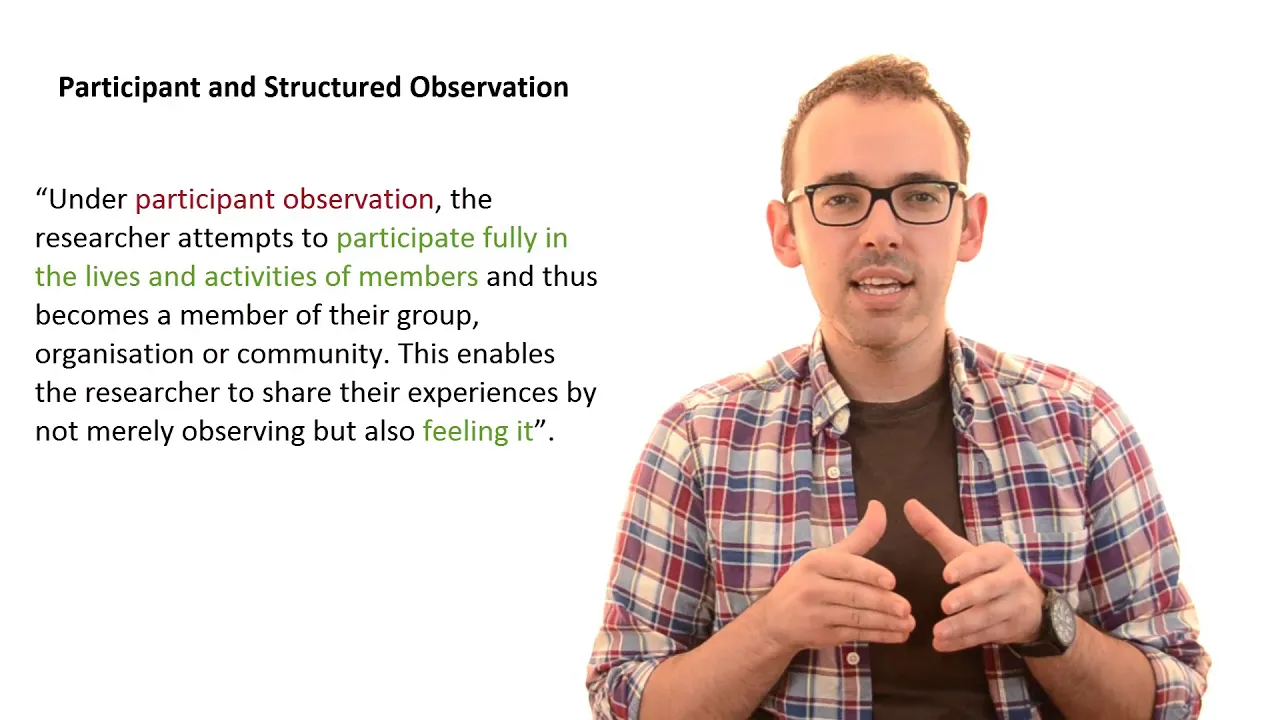












Photo elicitation and PhotoVoice are participatory action research methods where researchers either provide pictures for discussion (photo elicitation) or ask participants to take their own pictures (PhotoVoice), which helps participants feel more comfortable discussing sensitive or emotional topics, creates a relaxed bond, bridges cultural gaps, and provides richer data than traditional interviews alone; however, these methods are time-consuming, unsuitable for quantitative research, and require careful ethical considerations regarding consent, privacy, and participant safety.
PhotoVoice & Photo Elicitation in Participatory Action Research
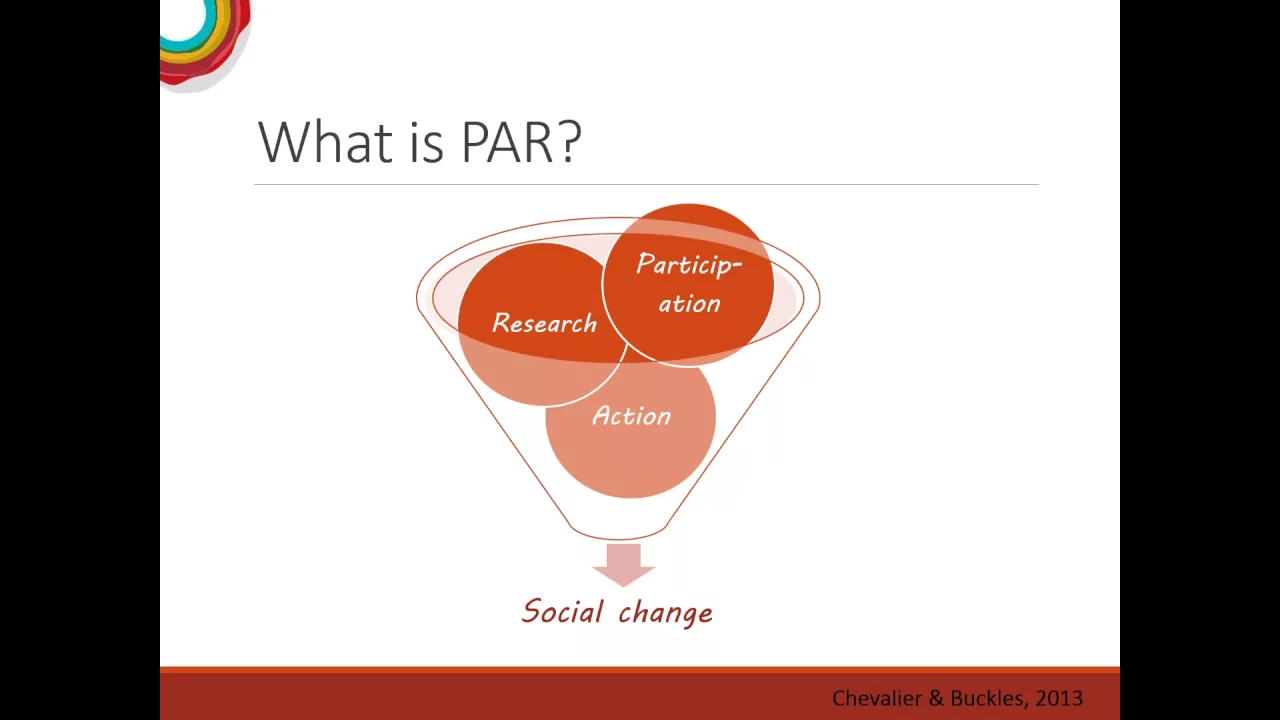
Added:Core principles of Participatory Action Research (PAR), specifically the emphasis on collaborative, community-led inquiry rather than researcher-dominated studies.
Fundamentals of qualitative data collection methods, such as semi-structured interviewing and focus group discussions.
Basic ethical frameworks in social science research, including informed consent, power dynamics, and the representation of marginalized groups.
The distinction between traditional researcher-driven observation and participant-centered visual methodologies.
Advanced thematic and visual analysis techniques for coding both participant-generated photos and their accompanying narratives.
Ethical and legal complexities unique to visual methods, such as copyright, third-party consent in public spaces, and digital privacy.
Strategies for designing and facilitating community photo exhibitions to advocate for policy change and community action.
Adapting visual methodologies to digital and mobile platforms, such as mobile photovoice and digital storytelling in resource-constrained global contexts.
16.5K views267likes12:57Original Release: 2018-11-19
[Music] hi welcome to this video lecture about Toto elicitation and Photovoice I'm a great fan of this method because when I used it in Bolivia it had a great added value for for my research I did research on ecological sanitation and I basically asked people to make five pictures of the changes in their lives after an ecological sanitation project and it helped me to gain a lot more information than I would have got it by only interviews so it has a few major advantages unfortunately also some disadvantages for example that it takes up a lot of time to do it but more about that later in this photo elicitation is basically a method where researcher makes two fish pictures and discusses those pictures with participants and Photovoice is a method in which the researcher asks the participants to make the pictures and then we discuss those pictures in an interview in this video lecture I'm going to explain you more about the method Photovoice and I will show you an example of a Photovoice method that I conducted in the slums of Kampala I'm not going to do the Photovoice method so I'm going to participate and I'm gonna ask him to make pictures for me too later on disgust and turn it all right thank you very much for your participation and thank you so much for having me I brought the camera this is it and like I told you I asked you to make some pictures for me to pictures of the things you really like about this community guys and they took pictures of you very much dislike yes exactly so this is the camera and you can make those for pictures and by way of presence to show my appreciation to you you can fill the rest up with personal pictures then we discuss the four pictures that you make for me I hope you're going to like it the assignment and I'll be coming back good yeah oh that's nice to hear great [Music] yes they come here oh thank you very much okay yeah I see it just the mole that's nice okay now going to the city the others I'm going to defend her pictures and in about an hour hour and a half I'll be back [Music] [Music] [Music] okay so I went over to you it's nice to watch them together coming together to see one go so this interview continues quote for quite some time discussing all four pictures as you can see the pictures are very useful to discuss the topics that the participant chooses to talk about let's go any meantime through some advantages and disadvantages of this method so let's start with the advantages first of all photo elicitation and photo voice are very suitable for two taboo subjects or emotional subjects and also for opinions because people rather talk about a picture then about themselves so it feels better for the participant to talk about a picture when the conversion concerns atubu subjects also you have a more relax and open bond with the participants and it bridges social and cultural gaps it comes also a bit more active because you're actively talking about pictures rather than passively sitting one-on-one in an interview and of course most participants find it a quite fun exercise and it provides more info than just interviewing analyzing the pictures provides additional data so you can first of all talk about the pictures but you can also use the pictures themselves to analyze in Bolivia for example I did research on an ecological sanitation project and I used the photo voice method and apart from analyzing the interviews I could also analyze the pictures what I found out for example was that 15 out of 16 people made pictures of the kitchen garden so you can also look at your pictures and see what what people capture in their pictures and analyze that so it can provide useful data as well let's go to the disadvantages photo elicitation and photo voice are not really suitable for quantitative research maybe a little bit if you are analyzing the pictures and counting how many people make pictures of kitchen gardens for example but it's not really suitable for a quantitative research it is also not suitable if you want to do research on dangerous situations because you don't want to put the people into danger when they are making pictures for you it can also be quite time-consuming and especially when you're using disposable cameras and you have to you know come back later to develop the camera and pictures and then go back again and that's also a reason that there could be a higher dropout rate because when you come back to the participant it can turn out that he or she is all of a sudden on holiday or she's not at home and decided all of a sudden not to participate anymore sometimes there's a lower acceptance by the participant for using cameras especially when they're not used to using cameras another disadvantage is that researchers interpretations can be different of the pictures that people made you can eliminate though this problem by asking more researchers to interpret the pictures people could also make all the pictures than assigned that can happen always when people don't fully understand what you assigned them for then they can make different pictures then you expect it and sometimes it can become quite an expensive enterprise there are also some ethical considerations that you might want to address first of all you may need informed consent especially when you're working with children you may want to have a form in which the parents approve for the children to participate in your research sometimes there are recognizable faces in the pictures and it's not always ethical to use those pictures for your research and last how will the pictures be obtained like I said sometimes people put themselves into this difficult or dangerous situations and that's also an ethical consideration that you need to make beforehand in how far are the participants going to be safe in this method so in this video lecture I applied the Photovoice method let's quickly flick through the whole procedure of applying photo voice first of all when inviting your participants there's a few things that you need to address and I would suggest to see the video lecture interviewing for all the things that you need to address when you invite participant such as explaining the purpose of your research what are you going to do with the data etc and then give an extra instruction of the whole method and explain how the camera works if necessary then give a few days for the participants to make the pictures and after a few days pick up the camera and arrange a date for the interview and when you are using disposable cameras you need to go to develop the pictures and then go back to the participant for the interview and then you're going to interview the participant themselves and let's talk about that quickly in the next slide start in formal and show their personal pictures if you make if you let the participant fill up the whole camera with personal pictures I would suggest to start with showing the personal pictures because it breaks the ice for the participant it's nice to see their personal pictures then put the pictures that a participant made for you on the table and let the participant choose the first picture to talk about start with open general questions like what did you capture in this picture or can you explain me this picture then follow the layering of interviewed interviewing towards the values of the participants their normative preferences their perspectives on the subject that they are dressing if you want to know more about this I would suggest to see the video lecture about interviewing [Music] you
Up Next
12:58
Sociological Theories of Aging: Disengagement, Activity, Continuity
@rasyidahjalil4288
6.2K views•2021-04-24
54:57
Contemporary Sociological Theory: Micro, Macro, Integrative
@NaSESYNC
45.7K views•2016-02-17

19:23
How to Analyze Conversations Scientifically | Elizabeth Stokoe | TEDx
@TEDx
1M views•2014-12-04
9:41
What is Sociology? The Sociological Perspective Explained
@crashcourse
4.6M views•2017-03-13
Related Study Plans & Knowledge Roadmaps
Structured learning paths in Sociology
sociology
Celebrity Culture: From Hollywood to TikTok
01Foundations of Celebrity Sociology
02The Rise of Micro-Celebrity & Digital Platforms
03Parasocial Relationships & Algorithmic Intimacy
+ 2 more learning modules
12h5 modules
Explore Roadmap
sociology
Hostile Architecture: Space, Power & Control
01Introduction to the Sociology of Space
02Social Control and Surveillance in the City
03Hostile Architecture and Defensive Design
+ 2 more learning modules
12h5 modules
Explore Roadmap
sociology
Loneliness Epidemic: Third Places & Isolation
01Foundations of Social Capital and Community Cohesion
02The Death of Third Places and Urban Space Erosion
03The Privatization of Leisure and Atomization
+ 2 more learning modules
12h5 modules
Explore Roadmap
sociology
Sociology of Tourism: Gaze, Power & Heritage
01Foundations of the Sociology of Travel and Leisure
02John Urry and the 'Tourist Gaze'
03Staged Authenticity and Cultural Commodification
+ 2 more learning modules
14h5 modules
Explore Roadmap