










![SACANI RESPONDE [URANO E NETUNO] - Ciência Sem Fim #137](https://i.ytimg.com/vi/oz8eHgI3gSI/maxresdefault.jpg)








This video examines fundamental philosophical debates about time's nature, including absolutism (time exists independently of events, as proposed by Plato and Newton) versus relativism (time depends on events, as argued by Aristotle and Einstein), and explores questions about time's structure (whether it is linear or branched), and existence across time (presentism claiming only the present exists, eternalism asserting past and future also exist, and the growing block theory suggesting new present moments are continuously added to the past).
The Philosophy of Time: Absolutism, Relativism, and Eternalism
Added:Basic Metaphysics and Ontology: Understanding the branch of philosophy concerned with the nature of reality, existence, and what it means for something to 'be'.
Newtonian vs. Einsteinian Physics: A foundational grasp of how classical physics viewed time as an absolute, uniform flow, contrasted with modern physics where space and time are relative and unified.
Philosophical Realism: Familiarity with the concept of realism, which posits that a reality exists independently of our conceptual schemes, beliefs, or perceptions.
McTaggart's A-Series and B-Series: Examining J.M.E. McTaggart's famous paradox on the unreality of time, which distinguishes between time as change (past/present/future) and time as static relations (earlier/later).
Presentism vs. Eternalism: Deep-diving into the specific ontological debates about whether only the present exists (Presentism) or if all points in time are equally real (Eternalism/Block Universe).
The Arrow of Time and Entropy: Exploring how the thermodynamic law of entropy and statistical mechanics explain the psychological and physical direction of time.
Temporal Logic and Free Will: Investigating how different theories of time affect the philosophical debate on determinism, fatalism, and human agency.
The Metaphysics of Time Travel: Analyzing the logical possibility and paradoxes (such as the Grandfather Paradox) of travelling through time under different philosophical frameworks.
207.2K views9.4Klikes8:56Original Release: 2021-05-18
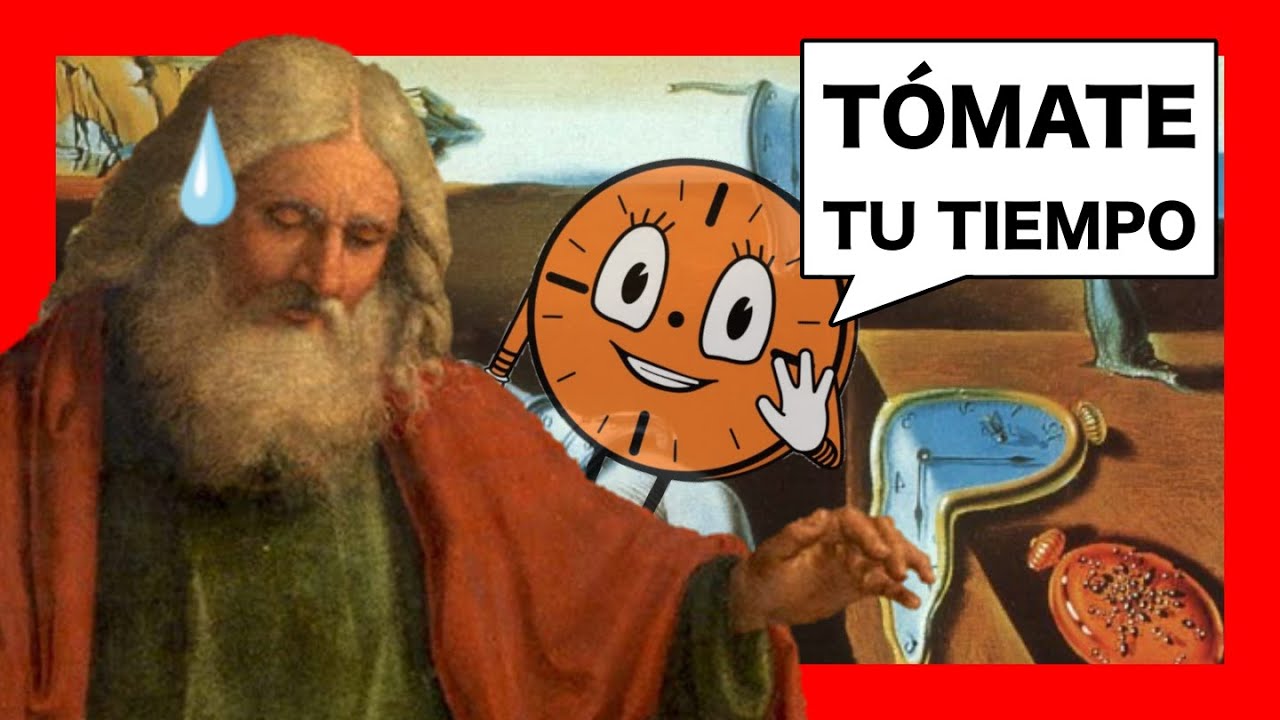
time what even is time we talk about time all the time in our daily lives and it's difficult to imagine a world in which time doesn't exist for all we know it might just be impossible since the beginning of the universe around 14 billion years ago the arrow of time has moved forward into the future at a constant speed and this has had philosophers scratching their heads over what the exact nature of time actually is does time always move at this speed or can it slow down or even be reversed is time travel possible some philosophers have even questioned whether time even exists at all the nature of time has some massive implications for our understanding of physics consciousness and all those other philosophy topics we know and love so in this video let's have a look at some of them just to warn you this video gets weird at times so perhaps it's best we start with something a bit more simple a million years might have passed since the start of this video all right that's about as simple as discussions about time can be but we can do a thought experiment to make things a little easier to understand what if at some time the universe paused all the galaxies would stop in their movement across the universe all the planets inside them would remain frozen in their orbits around their stars and all the atoms inside them would do the same perhaps god had pressed the pause button on the universe's remote control as he went to make a pot noodle if this is possible that there really could be a stretch of time in which no events or things occurred then it's also possible that you clicked on the video a million years ticked over and then the universe resumed exactly where it was a million years later and we would never know now that is some acid level thinking if the answer to the thought experiment is yes and we can imagine a stretch of time in which no events occur or even occur at a different rate this suggests that time exists independent of the stuff that happens within it this view is called absolutism and has been defended by plato and newton with absolutism time is like a tupperware that holds some leftovers where the tupperware is time and the leftovers are all the stuff that happens in the universe this view does have some intuitive appeal as we normally think about time as this unchangeable entity that has always been there and has continued moving forward at a constant rate however if the answer is no this suggests that time is dependent on the stuff that happens within it this view is called relativism and has been defended by aristotle and einstein with relativism time doesn't exist over and above the temporal relations between the events that occur in other words time exists because stuff happens and if nothing happens then there's no time this view also has appeal since einsteinian relativity has been so consistently accurate in its explanation of the nature of the universe all right so we can never be sure that the universe doesn't freeze now and then while time still moves on that's fantastic and it certainly doesn't keep me awake at night in cold sweats of existential terror however things become even weirder when we think about the structure of time the common understanding is that time is a line but all lines have shape so what shape does it have the standard model that most people assume to be correct is that time is a straight line that extends forever in both directions and which doesn't branch into any different timelines if this sounds right then we agree with plato if time exists independent of the events that occur within it and there can be stretches of time in which no events occur then time must be absolute and its features must exist necessarily but even if we assume that plato is correct this still doesn't tell us about what these features are and so it's unhelpful in that sense if this sounds wrong then we side with aristotle if time is dependent on the events that occur within it then whatever features time has must depend on whatever happens it just happens that time appears as a straight line however this still works on the assumption that in our universe time really does have a straight line but does it really i mean who among us is totally straight perhaps we should take more seriously claims that argue that time isn't a straight line but rather that time is bendy or discontinuous perhaps it does branch off here and there into separate streams in which different timelines have come to pass it could be that there are even multiple different time streams that run alongside each other in which time is defined on the relations between events in their own streams but never those in a different stream and then there's the question about the direction of time we know time can move forward but could it move backward or side to side can it throw some moves on the dance floor and wave its hands in the air like it just don't care there are many different theories on the nature of time but unfortunately our troubles don't end there even with all that considered there's a final question we can ask about time does it make a difference where inside time something exists in other words does the existence of a thing depend upon whether we're talking about the past the present or the future well there are two different views that could provide an answer on the one hand is presentism which holds that the present is all that exists and that there's no such thing as the past or the future if a presentist were to make a list of all the things that exist it would only have things which exist now we would be on the list but socrates and theseus incorporated wouldn't because their homes are the past and future which don't exist while it seems unbelievable this view does have some appeal because there is a sense in which socrates clearly doesn't exist now we're comfortable to say that socrates existed and that he exists no longer but this view also falls into some problems if we can still talk about socrates and agree on what we mean then what the hell are we talking about if socrates doesn't exist as presentism claims then what does the word socrates actually refer to on the other hand we have eternalism which holds the objects from the past and the future exist as well as the present in other words socrates and theseus incorporated do exist but just not right now we might not be able to see them or interact with them and they might not have any space-time coordinates in the present but we should nonetheless include them on our list of existing things on this pure eternalist view a thing's location within time does not affect their ontological status whether that thing exists or not but to make things even more confusing there's a more specific strand of the theory where it does this view is called growing universe theory and it views time as fresh slices of the present being added to the past if we made a list based on this theory it would constantly increase in size as things move from the present into the past we live as it were on the edge of the proverbial time knife each new moment is a new entry on the list and we're forever on the forefront of all things that exist until the time comes where we move into the past for good and you know what if nothing else i think that's pretty damn cool [Music] right so there's clearly some debate about time whether it's absolute or relative whether time has ever been curious about its sexuality and whether the past or the future actually exist it's no stretch of the imagination to argue that time is the most important factor in our lives it decides when meetings happen dictates when trains and buses leave the station and severely limits how long i can last in the bedroom time is perhaps the most mind-bending of all the mysteries that we've not yet decoded and it represents a neat crossover between physics and philosophy i find that's always where the good stuff happens thank you very much for watching peace and love and i'll see you in the next video you
Up Next
9:41
McTaggart's A-Theory & B-Theory of Time Explained
@DrBowersOfficeHours
13.8K views•2015-05-14

164:01
John of Damascus on Holy Images: A Theological Defense
@BannedBooks
139 views•2026-04-25

68:32
Should We Destroy the Machines? Big Tech Surveillance Critique
@TheStoriesWeTell303
167.9K views•2025-11-30
4:57
The Myth of Sisyphus: A Greek Legend of Eternal Punishment
@TEDEd
8.6M views•2018-11-13
Related Study Plans & Knowledge Roadmaps
Structured learning paths in Philosophy
philosophy
Frankfurt School: Critical Theory & Culture
01Foundations of the Frankfurt School and Critical Theory
02Horkheimer & Adorno: The Critique of Instrumental Reason
03The Culture Industry and Mass Deception
+ 2 more learning modules
12h5 modules
Explore Roadmap
philosophy
Philosophy of Language: From Frege to Austin
01The Linguistic Turn: An Introduction to Language in Philosophy
02Gottlob Frege: Sense and Reference
03Early Wittgenstein: The Picture Theory of Meaning
+ 3 more learning modules
15h6 modules
Explore Roadmap
philosophy
Feminist Epistemology: Standpoint & Injustice
01Introduction to Epistemology and Feminist Critiques
02Sandra Harding and Standpoint Theory
03Donna Haraway and Situated Knowledges
+ 2 more learning modules
12h5 modules
Explore Roadmap
philosophy
Environmental Philosophy: Ethics & Deep Ecology
01Foundations of Environmental Ethics & Anthropocentrism
02Biocentric Individualism and Animal Liberation
03Ecocentric Holism and Deep Ecology
+ 1 more learning modules
10h4 modules
Explore Roadmap