


![김요한 전북대 철학과 [예술철학과 사랑] 제3강 20세기 예술과 미학_역사와 역사들 1부_20250929](https://i.ytimg.com/vi/sne8JJNdUxg/maxresdefault.jpg)








![[달달레슨 19화] 긴각출발 3뱅크💥계산이 필요없는 데칼코마니 시스템💥이런 시스템 있었다니💢](https://i.ytimg.com/vi/0yASZthVVOc/maxresdefault.jpg)

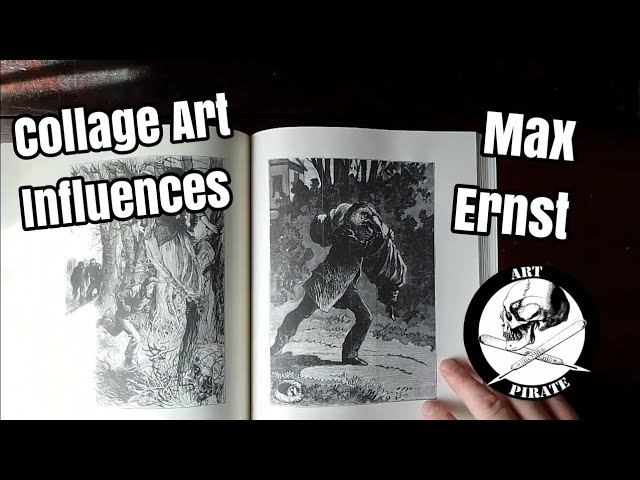
!['Une Semaine de Bonté [A Week of Kindness]' by Max Ernst](https://i.ytimg.com/vi/u5wLxO_YMqg/sddefault.jpg)
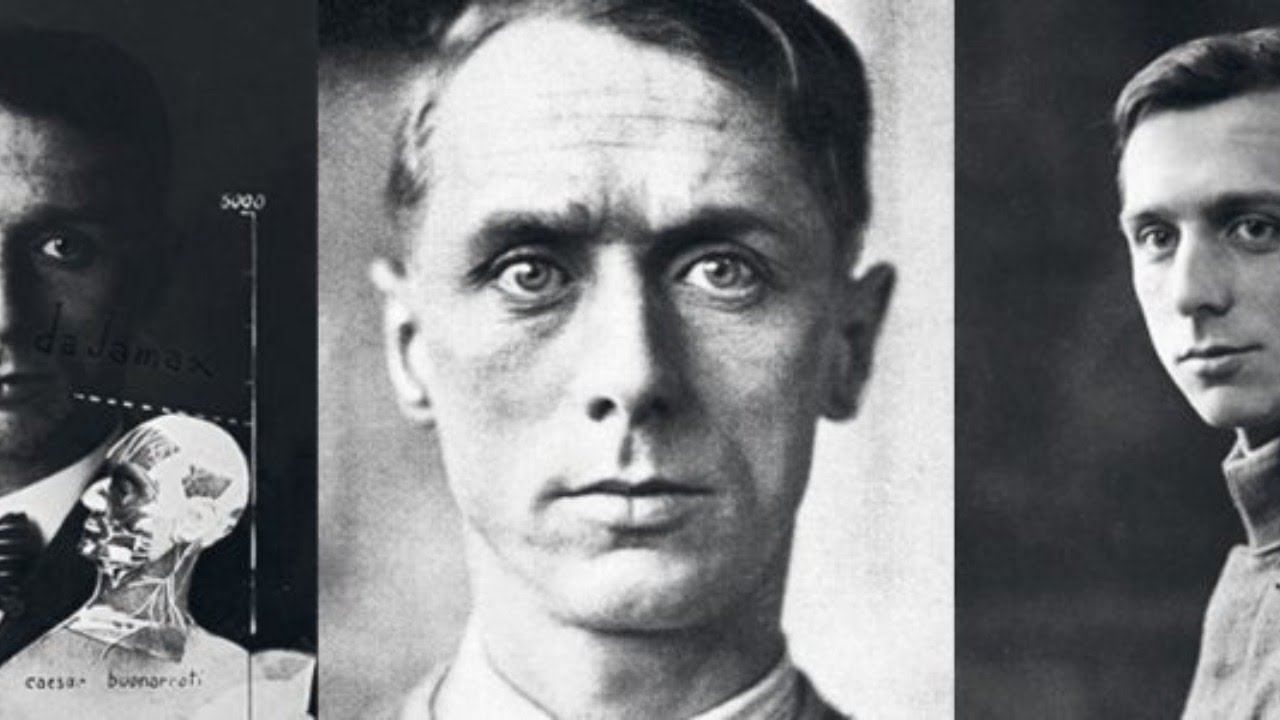






Max Ernst (1891-1976), a pioneering Dada and Surrealist artist, revolutionized modern art by developing innovative techniques such as frottage (rubbing on found textures) and decalcomania (transferring wet paint between surfaces), while working across diverse media including painting, sculpture, collage, printmaking, and bookmaking; his transformative approach of recontextualizing everyday images and objects into visionary dreamscapes exemplifies how artists can use chance-based methods and interdisciplinary experimentation to expand creative possibilities beyond traditional boundaries.
Max Ernst: Beyond Painting | MoMA Curator Explores Surrealist Art
Added:Understanding the core tenets of the Surrealist movement, particularly its focus on the unconscious mind, dream imagery, and the subversion of rationalism.
Familiarity with the Dada movement and how its anti-art philosophy laid the groundwork for Max Ernst's transition to Surrealism.
A basic understanding of Freudian psychoanalysis, especially concepts of free association and the unconscious, which heavily influenced Surrealist methodology.
An introductory awareness of traditional fine art mediums to appreciate how Ernst's 'beyond painting' techniques departed from standard academic practices.
Advanced study of Ernst's specific automatic techniques, such as grattage (scraping paint) and decalcomania, and how they challenge artistic agency.
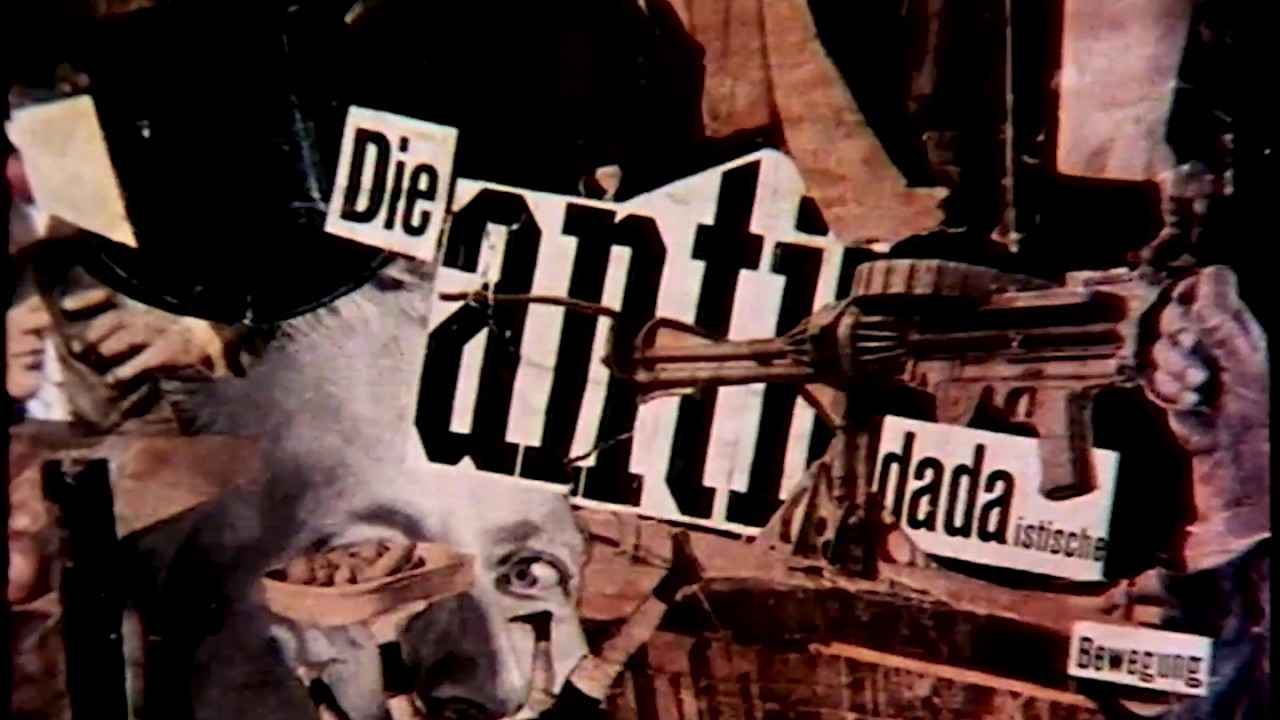
Exploration of Max Ernst's collage novels, such as 'Une semaine de bonté', to analyze visual narrative and the subversion of 19th-century print media.
Investigating the influence of Max Ernst and other exiled European Surrealists on the rise of Abstract Expressionism in New York during the 1940s.
Examining the curatorial challenges and methodologies involved in preserving and exhibiting fragile, mixed-media avant-garde artworks in modern museums like MoMA.
257.2K views4.7Klikes10:02Original Release: 2017-10-05
Welcome to the wild and fabulous world of Max Ernst "Beyond Painting."
If everybody will pause.
This is a wonderful photo of Max Ernst taken in 1941 by Arnold Newman and it shows Max Ernst sitting in Peggy Guggenheim's apartment here in New York City where he lived out part of World War II.
Ernst was born in 1891 in a little town just outside Cologne in Germany.
He went on to serve for four years in the German army during World War I, and he returned from that experience traumatized to Cologne where he founded Cologne Dada.
So, this is the exhibition.
One of the fabulous things about this show is that it is drawn virtually entirely from the Museum of Modern Art's own collection.
There are 100 works on view here and as you look around you can see that Max Ernst is an artist who works on paper.
He makes print portfolios.
He makes books.
He makes oil paintings.
He makes collages and he makes reliefs.
So we're looking at a group of collages and over paintings that Max Ernst made while living in Cologne in the 1920s, 1920 and in 1921.
So one thing So one thing that's very fun to do in the show is to pay attention to all the little inscriptions that he puts on things.
Here he's made it a little hard for you to see but if you look along the bottom it says, "La Biciclette graminée garnie de grelots …” blah, blah, blah, which translates, we did this for you, as "The Gramineous Bicycle Garnished with Bells the Dappled Fire Damps and the Echinoderms Bending the Spine to Look for Caresses."
The way that he made this picture is he took a pedagogical chart, a teaching chart, that was used to, I believe, illustrate the mutation, the metamorphosis of brewer's yeast cells.
So he takes this poster and the first thing he does is he turns it upside down.
He goes in with black paint and he begins to cover over...to over paint, to censor out parts of the original image.
He adds along the bottom this wonderful little gray platform or stage which sort of angles in like that.
And if you think about how, in old fashion, a Renaissance painting, the device that's used to construct an illusionistic perspectival space, that kind of orthogonal recession, as one of the key things.
But, of course, Ernst quotes it.
He sets the stage and then at the same time other parts of the picture are so resolutely flat. he goes in and he adds little wheels and gears and these great kind of flippy flappy...I don’t know what you would call them…fins on the side of what was a yeast cell.
And it now looks for all the world like some sort of tightrope walker.
So he creates this great animated...I think one author has described it as a circus, right, kind of a circus fantasy from something that at the start was prosaic and didactic.
So all of these are over paintings or collages that use found imagery in different ways.
So I’m just looking here… “Weib, Greis, und Blume.” So now, again, you get the little text here, his signature.
So Ernst, even before leaving Cologne, is thinking about...he's thinking about what happens if you translate his collage or his over painting strategies into the larger format of oil on canvas.
This work was one that he began in 1923.
He completed and then he went back to it later just like it was a found poster, a reproduction, but it's his own picture.
He said one of the things that he loved about this was that it enabled him to achieve a much insaner effect, right?
So a more immediate, hallucinatory quality that I think comes through.
Okay.
So should we look at other things?
Okay.
So what we're looking at here is one of my very, very favorite groups of works in the show.
It’s 16 images selected from a portfolio of 34 that was called "Histoire Naturelle" or "Natural History" that Ernst published in 1926.
The technique used to generate these images is called frottage which is a French word for rubbing.
And if you get in close to any one of these, you can see that the way that Ernst generated these pictures was by placing paper over found objects, found textures, and then he would rub.
And then he would rub over those found textures.
So now he's gone from found imagery to found materials, again, another way of having an assist, a collaborator, something, from the real world that he is using to provoke images in his art sort of as a quasi-automatist technique.
And then he goes back in, right, and selectively adds details to transform what could have just been an inert pattern into these strange beings and beasties.
He welcomed the way that reproduction, printing processes removed his image one further step from the tactile material physical thing because it heightens the illusionism of them.
Anyway, this is called, this collage, "Loplop Introduces Members of the Surrealist Group" and Loplop was Ernst's most beloved and well-known alter ego.
He described Loplop as a hybrid creature that was half bird, half human.
This was first published in a surrealist magazine.
It's almost an advertisement of sorts for who belong to the surrealist movement at the moment this was created in 1931.
And as you go through it, saw this point out.
You can see Max Ernst right there.
There's Salvador Dali; Paul Eluard who collaborated with Ernst in some of his poetry books; Andre Breton; the photographer, Man Ray; Luis Buñuel, the great filmmaker; Tanguy; Giacometti—they're sort of all there.
Passing by I should point out that Max Ernst, beginning in the mid-30s, started to make sculptures so we're very lucky to have some examples of those in the collection too.
And,he in 1941, escaped from Europe and moved to the United States and here on this wall, and this picture in particular, is one of the first that he completed upon his arrival in 1941.
Its title is "Napoleon in the Wilderness."
It's work that he began in France before he left and then completed in the United States, in California.
Apparently, he drove to with Peggy Guggenheim in her convertible on a road trip across country from the East Coast.
It was produced using a technique that is referred to as the decalcomania.
The way that he makes all these different textures and variegated tones and colors is by taking a pane of glass or paper, pressing it in wet paint and then transferring it to the canvas that again produces a chance or a semi-automatic texture.
He wrote about this work subsequently as one that perhaps was an inadvertent expression of how he felt himself to be at the time that he could empathize.
This isn’t a triumphant Napoleon in the wilderness.
It's not a victorious Napoleon.
It's Napoleon in exile on the island of Alba painted at a moment when Ernst himself is living in exile.
The latest works in the show or the last work, the culminating work which is, in fact, the most recently acquired.
It's a book called "65 Maximiliana" that Ernst created in collaboration with a book designer and publisher called Illiazd.
so just in brief, what this is, "65 Maximiliana," is an homage on Ernst's part to unsung 19th-century astronomer named Wilhelm Ernst Tempel or maybe it's Ernst Wilhelm Tempel.
I can't remember.
Anyway, Ernst is in there somewhere and the title "Maximiliana" refers to the name of a planetoid that Tempel discovered in 1861 and named after the then king of Bavaria.
But, of course, Max Ernst I'm sure, with his penchant for self-reference and self-mythologizing, must have loved that Maximiliana contains the name Max and that Tempel's first name includes Ernst.
So there's always kind of that circling back.
We love concluding the show with this because if you think at the beginning of Ernst looking at these small microscopic worlds, and then by the end of his life looking up right to the planets and to the stars.
And back to his saying when asked, "What is your favorite occupation?" he's always saying, "Seeing.” This project and this homage to an unsung astronomer who has parallels with his own life seems like a very poignant way to end.
Up Next

9:09
Salvador Dali and Surrealism: Art Techniques Explained
@DaliEducation
91.8K views•2009-05-27

114:18
Christian Iconography: History, Theology, and Meaning | Fr. Panayiotis Papageorgiou
@Trisagionfilms
58.8K views•2020-02-21
6:12
Duchamp's Readymades: How MoMA’s Curator Explains Art’s Big Shift
@themuseumofmodernart
239.9K views•2017-04-20

16:34
Earliest Depictions of Jesus in Art: 10 Ancient Images Explained
@UsefulCharts
5.9M views•2022-06-03
Related Study Plans & Knowledge Roadmaps
Structured learning paths in Art History
art-history
Gothic Cathedrals: Engineering, Light & Society
01The Birth of the Gothic: Romanesque to Suger's Vision
02The Structural Triad: Pointed Arches, Ribbed Vaults, and Flying Buttresses
03Theology of Light: Lux Nova and Sacred Geometry
+ 2 more learning modules
14h5 modules
Explore Roadmap
art-history
Pre-Raphaelites: Realism, Symbolism & Critique
01The Victorian Art Establishment and Academic Formula
02The Founding of the PRB and Radical Realism
03Medieval Revivalism and Literary Symbolism
+ 1 more learning modules
8h4 modules
Explore Roadmap
art-history
Street Art: From Subways to Art Market
01Subcultural Origins in Philadelphia and New York (1970s)
02The Subway Era and Style Wars (Late 1970s - 1980s)
03The East Village Scene and Early Gallery Crossover
+ 2 more learning modules
10h5 modules
Explore Roadmap
art-history
Classic Maya Art: Iconography, Glyphs & Ritual
01Foundations of Classic Maya Visual Culture
02Deciphering Maya Hieroglyphs & Text-Image Integration
03Sacred Geography and Cosmological Architecture
+ 2 more learning modules
14h5 modules
Explore Roadmap