

















Constitutional democracies face gradual erosion through five mechanisms—partisan degradation, charismatic populism, separation of powers manipulation, electoral machinery attacks, and public sphere undermining—requiring courts to serve as protectors of democratic principles while balancing judicial independence with accountability, as demonstrated by comparative analyses of India, the United States, and other nations experiencing democratic decline.
Justice Chandrachud & Tom Ginsburg on Saving Constitutionalism
Added:The fundamental concept of Constitutionalism, specifically how it differs from mere rule by law and how it seeks to limit government power.
The principle of Separation of Powers and the role of Judicial Review in maintaining institutional checks and balances.
The core theories of Democratic Backsliding, including how modern democracies can degrade through legal or constitutional means rather than violent coups.
A basic understanding of the Indian Constitutional framework and the historically activist role of the Supreme Court of India.
Comparative Constitutional Law, analyzing how different nations (such as India, the US, and Hungary) structurally resist or succumb to authoritarian pressures.
The 'Basic Structure Doctrine' in Indian jurisprudence, exploring how the judiciary limits the legislature's power to amend the Constitution.
The concept of 'Militant Democracy' and constitutional self-defense, examining how democracies can legally protect themselves from internal subversion.
The tension between Judicial Activism and Democratic Legitimacy, evaluating when court interventions protect rights versus when they infringe on democratic processes.
48.9K views1.2Klikes1:01:04Original Release: 2019-10-22
ADITI MODY: So I'd just like to tell you a little bit about the University of Chicago and our center in Delhi.
The University of Chicago in establishing a center in Delhi in 2014 draws upon a very long and rich history of excellence and scholarship, research and teaching that is related to South Asia.
Many people don't realize that we teach over 12 Indian languages at the University of Chicago at the PhD level.
The center in Delhi in the last five years that we have been set up already serves as a base for undergraduate, graduate, and professional students who are studying in the region.
In the last academic year, we have hosted over 130 events, workshops, and seminars.
And over 140 faculty across disciplines from the University have visited the center in Delhi since our opening.
The center also catalyzes interdisciplinary and cross-cultural discourse and rigorous debate and intense inquiry, for which the university is very well-known.
It is also the site of regular programming that engages our alumni in the region.
The center also houses a couple of very interesting institutions that I'd like to tell you about.
We have the India Office of the Energy Policy Institute of the University of Chicago, EPIC as we call it, which is based right here in the center.
And EPIC colleagues leverage the unique government and industry partnerships to conduct applied economic research across India, not just at the national, but also at the state and local levels.
Research projects are currently underway in over 10 states.
And their model includes carrying out foundational research to solve vital problems.
A major project that EPIC has launched here has been the star rating program, where our researchers are working with the state pollution control boards and other partner organizations in Odisha, Maharashtra, and Jarkhand towards strengthening environmental regulations through transparencies.
Additionally, EPIC also works with [INAUDIBLE] on modeling energy needs and resource requirements in India and as a knowledge partner for distribution reforms.
We also house that data center for development at the University of Chicago.
In fact, my colleague Leni Chaudhuri is right here.
She is our country director for the TCD.
And this was set up with generous support from the Tata Trust and uses a very unique approach that harnesses rigorous, evidence-based UChicago economics research and combines it with strategic outreach and partnership not just with government, but industry and innovators.
Of special interest for the TCD are policy problems in energy, environment, health, water, sanitation, and development economics.
And their research portfolio spans over 40 projects in more than a dozen states currently on a wide range of pediatric areas that include health medicine, labor economics, urban development, energy, and environment.
We have a large project that we have over here, something called the IIC, the International Innovation Corps.
And this is a social impact fellowship that is housed as part of the University of Chicago Trust and the Harris School of Public Policy.
And this brings young professionals, a lot of students, I hear, that might be of interest to them, in contact with government and nonprofit organizations for periods of one to three years.
The IIC Fellows, as we call them, conduct comprehensive research, design sustainable solutions, implement and iterate interventions, and evaluate outcomes.
And they have worked on more than 25 projects.
While our global centers-- we have centers not just in India, but also in Beijing, Hong Kong, and Paris-- illustrate the importance and commitment of the university in various regions, they are nothing but a springboard for our collaboration throughout the world.
We seek to build our engagement around the bottom-up approach of our faculty and invest in more comprehensive relationships with key partners.
I know everybody is here to hear from our keynote and distinguished panelists.
And although they need no introduction, please bear with me as we try and give very brief remarks for each of them.
Of course, we are very privileged to have with us Honorable Justice Dr. Chandrachud.
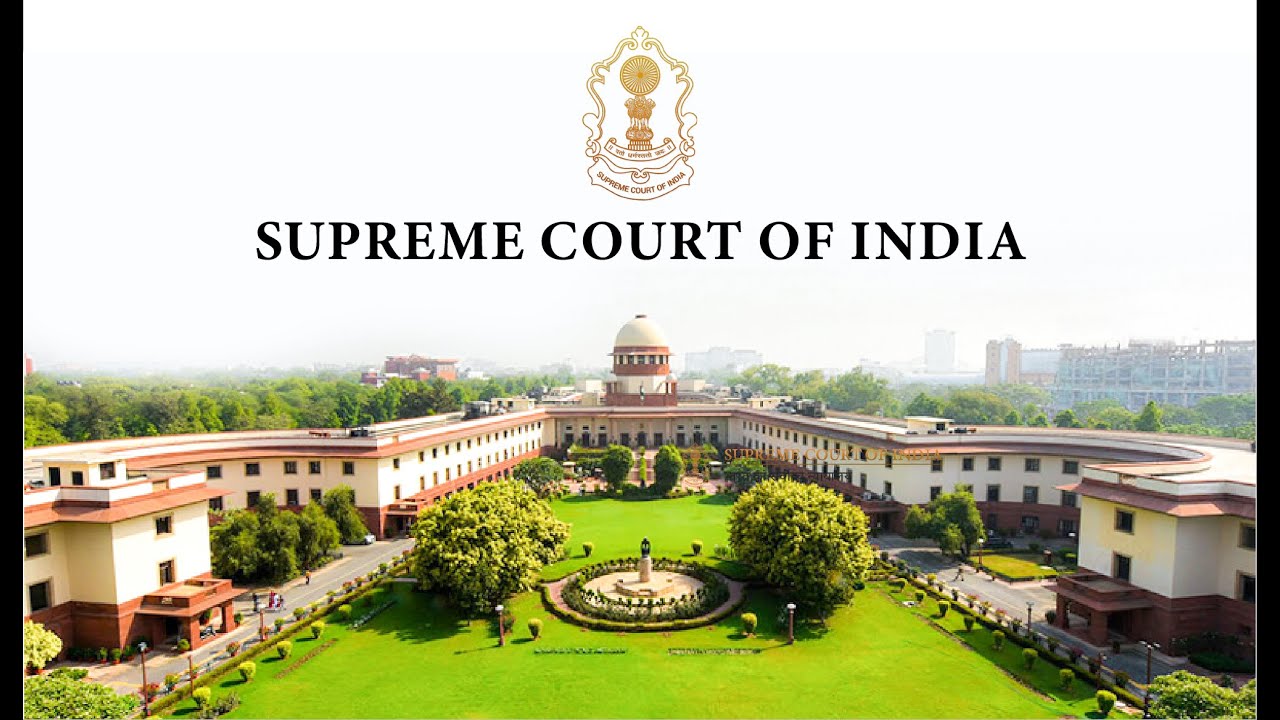
He is a sitting judge of the honorable Supreme Court of India and he has, in the past, served as additional Solicitor General before being elevated to the judiciary.
Above all, he is a legal scholar, having graduated from Harvard Law School and has served as a visiting professor of comparative constitutional law at the University of Mumbai, as well as Oklahoma University of Law in the US.
During his tenure as Supreme Court judge, Justice Chandrachud has delivered landmark judgments.
Among his most notable judgments is the Ninth Bench decision affirming the right to privacy as a fundamental right and decisions decriminalizing adultery and same sex relationships.
He is a strong voice for women and has authored powerful dissent in the Aadhaar judgment, holding that the Aadhaar program supports some constitutional infirmities and is violative of fundamental rights.
Thank you so much, sir, for taking time to be with us.
[APPLAUSE] We are also delighted to have our own professor, Tom Ginsburg.
He's a Leo Spitz Professor of International Law, the Ludwig and Hilde Wolf research scholar, and professor of political science at the University of Chicago.
Before entering academia, Professor Ginsburg served as a legal advisor to the Iran-US claims tribunal in the Hague in Netherlands.
He is a co-founder of the Comparative Constitutions Project that analyzes the constitutions of all independent nation states since 1789.
He has authored several award-winning books, including Judicial Review in New Democracies, The Endurance of National Constitutions, Judicial Reputation, and of course, his latest book today that we are discussing, How to Save a Constitutional Democracy, which he has co-authored with another UChicago faculty, Aziz Huq.
Mr. Arvind P. Datar is a senior advocate practicing at the Supreme Court of India.
Mr. Datar, thank you especially for all your efforts to make this evening possible.
He is an authority on constitutional and tax law and has authored every legal commentaries on a range of subjects, including constitutional law, income tax, excise, and companies law.
He is visiting faculty at the National Judicial Academy at Bhopal and the Tamil Nadu State Judicial Academy at Chennai.
He has delivered guest lectures at several international universities, including Cambridge and is a founding trustee of the Palkhivala Foundation and a director of the Nani Palkhivala Arbitration Center.
Last, but not the least, we have our very own Payal Chawla.
She's an alumni from the University of Chicago Law School.
And she is a founder of the country's first and only all woman law firm that specializes in commercial transactions and disputes.
Her firm, JusContractus, was founded in 2013 and has since then won several awards.
She was also named one of the minds that should matter by Forbes India.
Payal has fought epic battle with the corporate giant and her fight was the subject of an award-winning biopic, which we actually screened right here at the University of Chicago center in Delhi.
She is an expert on arbitration and a prolific writer.
Not only is she an alumnus of the University of Chicago Law School, but she is a Rotary Scholar and a Russell Baker fellow, and serves as the Director of the Nani Palkhivala Arbitration Center.
With that, I'd like to hand it over to Payal to start our discussion.
[APPLAUSE] PAYAL CHAWLA: Tom, many congratulations on this book.
I never thought I was going to say this about a book on constitutional law, but this is a page turner.
You know, what I found absolutely fascinating is that it's set in the backdrop of the United States, but you've covered countries like Hungary to Singapore to India to Turkey.
And yet, it all feels so relevant.
So right to begin with, what motivated you to write this book?
TOM GINSBURG: Thanks very much.
Well, that's easy.
It was the election of Donald J Trump in November of 2016 which, of course, was a big shock to me and to many others.
And me and Aziz, my co-author, plunged our energy from that moment into scholarship.
We decided that we had to understand what was going on.
And there's sort of two premises of the book.
One is that the United States is not exceptional.
You know, Americans have this notion of American exceptionalism, that whatever happens in the rest of the world, well, we're different.
And it turns out we're not different.
We are subject to the same forces that we observe around the world.
And actually, I would argue the responses should also draw from comparative experience.
So we're trying to integrate American constitutional studies with comparative constitutional studies.
The other sort of a presumption, or assumption, of the book is that when you [AUDIO OUT] cases of democratic backsliding and erosion, and that's phenomenon [AUDIO OUT] with, slow death of democracy, not a sudden military coup or communist revolution.
Those things are all very 20th century.
Nowadays the way democracy dies is very slowly, but through sort of a series of death by 1,000 cuts, if I can use the Chinese metaphor.
And what we noticed is that, in all of these instances that we observed of democratic backsliding, the law was a critical instrument for the erosion of democracy.
And so our response was that the law must be also part of the toolkit for responding.
And so that's what we're trying to do, diagnose the channels by which erosion occurs, and come up with some practical responses.
PAYAL CHAWLA: In the book, you've identified five mechanisms that lead to democratic erosion.
What are those mechanisms?
Can you just briefly talk about them?
TOM GINSBURG: First, I want to say, before talking about the mechanisms, the sort of agents of democratic erosion-- we identify two.
So the first is what we call partisan degradation, which is when a political party is playing the game of democracy and then just decides, you know, we don't have that much chance for winning in the future.
We're just going to end this democratic game.
Or we're going to seize control of the apparatus and change the Constitution so we never lose power.
And we have some examples of that.
I actually think one of the biggest examples is some elements of the Republican Party in the United States who are seeking to change the rules to eliminate people's ability to vote.
The other is what we call charismatic populism.
What do I mean by that?
There's a lot of discussion of populism around the world.
And populism, of course, sometimes is a good thing.
You get populism when the elites are out of touch and the people feel that they have to respond.
But this particular form of what we call charismatic populism we think is very dangerous for democracy.
And what is it?
It's the idea that you sometimes see this-- Erdogan in Turkey, Trump in the United States, Orban in Hungary, Chavez in Venezuela-- all of these people had in common that they would identify themselves as speaking for the people, the unified people.
Not a plural society, not a society with internal division, but a single people which only they could speak for.
The leader had a unique sort of connection with the people and an ability to speak for them.
And sometimes, then, the phrase is whatever I say is what the people want.
Now the reason that's extremely dangerous is because such characters have no need for intermediate institutions.
And in fact, are quite suspect of them.
Anything that comes between the people and the leader-- legislatures, civil society, the media, courts-- those are all potential enemies.
And so that's an agent that we observe.
And I think that's what's going on in the United States.
The mechanisms-- I'll just very briefly say some of the things that we see going on.
So one technique is to sort of undermine the system of separation of powers which underlies many constitutions.
And here we observe sort of slightly different strategies when it comes to courts than with legislatures.
When it comes to courts, the strategy is to pack the courts with your supporters and to manipulate the personnel in the court so that you have friends there.
And then you don't have to worry.
Then the law is on your side.
When it comes to legislatures, we see a slightly different strategy, which is generally to bypass them.
One very sharp example is Hugo Chavez-- actually, his successor, Nicolas Maduro, when he lost the election to the National Assembly in Venezuela a few years ago, he said that's fine.
We're suspending the National Assembly.
We're going to create a constituent assembly.
And the people will govern directly.
And of course, the people are those who are curated into that position.
So that's a strategy.
We observe the erosion and attacks on the electoral machinery.
In my country, it's through drawing district lines.
So we sometimes say in the United States, the voters don't pick the politicians.
The politicians pick their voters, because they draw the constituencies they want.
And a third and very important thing is attacks on [AUDIO OUT] public sphere.
And [AUDIO OUT] democracy depends on a big sphere of public debate.
But when you attack journalists-- last year was the worst year for journalists in history, more journalists murdered around the world than any prior year; when you attack civil society-- new registration requirements, tax harassment, things like this, NGO laws in various countries; and when you attack, ultimately, the very idea of truth, then things are going off the rails.
And then I fear for the viability of constitutional democracy.
I'll say one last thing, which is I really feel like universities have a really important role to play here.
Because universities are places we're devoted to finding the truth and to rigorous inquiry, regardless of where it takes us.
And sometimes we see attacks on universities.
In Hungary, for example, they effectively did close-- Viktor Orban did close-- the central European university, using that demonic figure of George Soros to blame for all the problems and sending them away.
But a free society cannot function without free inquiry, free universities, free press, and free civil society.
PAYAL CHAWLA: Does any of what Tom has said resonate with you from a judicial perspective with regard to India?
ARVIND DATAR: Well, of course-- [TAPS MICROPHONE] --everything that he said has such a great resonance in terms of our experiences in India and in terms of the work which we do.
To just give you four broad themes which have permeated our law and which really speak of democratic erosion, whether you have the debates on constitutional amendments in the 1960s and 1970s; or whether you have the debate on the exercise of emergency powers, particularly in the 1970s and 1980s; whether you have the debate on the restraints on the ordinance-making power, which is essentially to bypass the legislature and pass ordinances by executive fiat; whether you speak of the conflict between the center and the state in relation to the national capital territory of Delhi, on the issue as to what powers can a union territory exercise in the legislative and executive sphere.
So all the debate on federalism in India, which has progressively sharpened as the nature of the federal polity has changed.
So each of these reflects, in a great way, the tussle to retain the essentials of democratic functioning and the dangers which you foresee if you give up that space.
But apart from these conceptual challenges to preserving democracy and to foresee democratic erosion, I think I'd like to share something personal, which is the perspective of a judge.
Because when you decide individual cases, you realize that constitutional law changes in incremental stages.
And democratic erosion, in that sense, doesn't take place through sweeping changes.
But it takes place through very small changes, which left unguarded, open up the danger of eventually, cumulatively, affecting the democratic polity.
So it's in these incremental stages that judges have to be extremely careful when they apply the law.
There is no case, in that sense, which is too small to not really affect the society and the constitutional system in the wider context.
So whether it be in the context of the freedom of speech and expression cases of a single individual who is tried or who is jailed or who is denied bail because that person said something which is perhaps contrary to what populism would feel as an [INAUDIBLE].
I think it's in these small cases where the real strength or the weakness of the system eventually reflect.
And therefore, as a judge, I perceive that the whole theme in the book about the gradual erosion of democracy across the world, if we don't allow ourselves to meet challenges to democracy, they're very, very significant.
Which is not to say that there is a particular challenge coming from a particular source.
It's just that we have to be extremely careful and guard ourselves against the gradual erosion of democratic space.
And then finally, I must, of course, tell you that when I was coming here, Arvind asked me a short while ago, he said did you read the judgment of the UK Supreme Court today?
And that's exactly what they have been speaking about.
I mean, this was a case where the whole issue was as to whether the poor the advice rendered by a duly elected government to the queen to prorogue Parliament was justiciable and if it was, whether it would be overturned.
And they said that, well, it affects the parliamentary democracy in a very significant way.
Because it prevented Parliament, by being prorogued for five out of the eight weeks before the exit took effect, from applying its mind to how it would want to control the executive.
So by denying the executive, thereby denying parliament the space to control the executive in that sense, they didn't call it a constitutional fraud.
But they called it certainly something which was null and void, as an excess of the past.
Very significant wording, because ordinarily, advice tendered by an elected government to the title or head to prorogue is not justiciable.
So this is really, in that sense, carved out a new part and set defense for the future.
PAYAL CHAWLA: Did you read the judgment on the way here?
[LAUGHTER] ARVIND DATAR: As much time as it took to travel from the Supreme Court to the University of Chicago.
Yes.
PAYAL CHAWLA: So do you think that in India, because of the overlap between the legislature and the executive, there's just much more burden on the judiciary to protect, there's much more pressure on the judiciary to protect constitutional rights?
DY CHANDRACHUD: Before I answer that question, I just wanted to-- before I came, I was just glued to the TV for about 20 minutes.
I saw the BBC and the CNN news.
And in the light of what Tom also said, this person who started was a lady called Miller.
And you see her photograph on the BBC.
She looks of Asian origin.
And she started the battle.
When she first wanted to challenge it, they said you have no chance of success.
Because what advice the prime minister tenders to the queen is not justiciable.
And there is no chance.
But nevertheless, she filed the case.
She succeeded first round.
She came in the second round.
And I was surprised that they received so many threats, intimidation, they had to get police protection.
I mean, in a country like UK, there was so much of a threat to her liberty, and so on, and so forth.
But she fought all the way.
And it was a stunning 11-0 victory.
And the board [INAUDIBLE] by the Supreme Court was that the prime minister's advice was unlawful.
And they said it has never happened in British history.
That what the prime minister had done was characterized and labeled as unlawful.
And they kept saying the word that the prime minister had been called out.
He had been called out.
That's the phrase we constantly use.
Now coming back to your answer, yes.
I think it's ultimately, in my experience, a little bit, the judiciary is going to save.
Because what happens is, I think, historically, as well, both the elected government always finds that the judiciary is coming in the way, whether it's the US, the UK.
They always find that kind of a problem.
And in my experience in our federal structure with so many rules and pressures, what happens is very often the governments are-- perhaps because of electoral politics, because of the World Bank [INAUDIBLE],, they are pulled to take decisions which may not be constitutional.
But it has to be taken to meet the needs of the people.
For example, it could be reservation.
It could be other kinds of steps.
It could be various kinds of taxes.
Where do you go but you challenge it?
For example, the 50% limit was laid down only by the Supreme Court.
Otherwise, it would have crossed [INAUDIBLE] there's no limit to it.
So the only check and balance I see, in India, at least, is the judiciary.
Because of the compulsion of politics, the compulsion of the executive, it is there.
And again, what is happening all over the country, when I keep seeing, particularly in Tamil Nadu and so on and other [? places,?] you have, in theory, parliamentary democracy.
But if you see the number of days the legislatures function, it's very, very less.
The number of days, actually, the bills are discussed in the legislature is very, very less.
And again, you have got a system of a kind of a one party rule, where there is no kind of inner party democracy.
There's generally a kind of dynastical kind of thing prevailing.
In all this background, I think the only bulwark of freedom of liberty is the judiciary.
PAYAL CHAWLA: Tom, you speak about the role of courts in the American context and as a protector of rights.
But in the American context, you have judges that are political appointees.
And in the current context, where you have a Republican Senate, you have a Republican White House, and you have a Republican court, in a sense, do you believe that it's adequate to protect rights of people?
TOM GINSBURG: One of the general problems is when judges take on more roles, as the British Supreme Court has just done, as the Indian Supreme Court has done over many decades, is the risk of what we call the judicialization of politics, that political questions get thrown to the judiciary.
That has sort of [INAUDIBLE],, which is the politicization of the judiciary.
So it's sort of a dangerous and delicate balance.
And we're in a situation in the United States where we have really moved to a politicized judiciary.
The judiciary is playing a major role.
Our last presidential election, in my view, was decided because of the judiciary, because of the decision of the leader of the Senate, Mitch McConnell, not to even give a hearing to Obama's nominee and thus to make the election about the Supreme Court.
Because many people might not be disposed to sort of the moral record of Donald Trump, but they felt very strongly about those appointments.
So when we're fighting elections over who gets to appoint judges, that's a perversion of democracy.
I think we've really gone down a bad path.
So what can we do about it?
Well, there's a lot of things.
Now there's a lot of interesting talk of reform.
Our constitution says that judges will serve, during good behavior, for life.
Many other countries' constitutions do so, but also have a retirement age, by statute.
Those retirement ages are considered unconstitutional in the United States.
So we have this problem with judges serving till, well, John Paul Stevens served till he was 89 years old.
Which gives an incentive to the politicians to appoint the youngest person they can find who's close to them.
Which by definition, is someone we don't know anything about, we don't know enough about.
We're taking a relatively young person and giving them six decades of massive power over this society.
It's a crazy way to go.
Many people, like me, think we should impose term limits on the Supreme Court.
And we have various creative ways to do that.
There's also the problem of how you get out of our current dilemma, you know, should we pack the courts?
Should we expand the courts, expand the federal judiciary?
And I have a particular view, which is that we should expand the federal judiciary.
Because we don't have enough judges.
But we should do so in a way that's bipartisan and restores the status quo ante and sort of goes back to a system where judges were not seen as being major politicians.
PAYAL CHAWLA: My next question can be answered either by [? Yeshwant?] or Mr. Datar.
So it's a follow up question to what Tom said.
The judiciary in India has fiercely protected its independence.
And we have had political attacks on the judiciary.
The latest judgment, and [INAUDIBLE] had also been a part of that, the [? NJAC,?]
which makes a distinction now between the independence of the judiciary and the Bangalore principles on misconduct.
Do you believe that misconduct can be used as a tool to be an attack on the judiciary?
And if so, does the Supreme Court need to do something as an in-house procedure for itself which balances the rights of the people, on the one hand, as well as protect the judiciary from those attacks?
And if so, what can that procedure be?
So it's a longish question.
[LAUGHTER] ARVIND DATAR: Let me begin by saying that the independence of the judiciary is not a concept which was meant to insulate the judiciary from being accountable.
And by accountable, I don't mean in terms of your accountability to an electorate, as the executive is answerable to the electorate.
I mean an elected government and a parliamentary form of democracy is ultimately answerable to Parliament and through it, to people.
The judiciary, by its very nature, does not have a majority at an [INAUDIBLE].. So when I speak of accountability, it's not accountability in that sense.
So when you talk of judicial independence, the idea is not to insulate the judiciary from, in that sense, not abiding by rules of ethical behavior.
But to insulate the judiciary from wanton attacks on its own institutional integrity, should I say, as a judicial system.
The problem today that I see is this.
They're twofold.
The attacks on the judiciary, which can really undermine not just the independence but the confidence of the judiciary, is just out of the technology of the age in which we live.
Almost any order, any judgment that the court delivers today is a subject matter of comment on social media.
And you have 10,000 different citizen journalists who are entitled to say what they want to say, who do not have the restraints of mainstream media, be it electronic or print.
And there is no response, there is no platform on which the judge can respond when you hear or see what is this shout in the social media.
So in the name of securing the accountability of the court, it's important to understand that you need to trust your judges and you need to trust your courts.
Because if that element of trust towards the judges and the courts disappears, then I think there is a serious problem you have in the democratic setup itself.
Now in so far as judicial accountability is concerned, I think we need to have a system which is more nuanced than what we have today.
Because our constitution today basically speaks of two possibilities.
One is to impeach a judge for wrongful behavior, and the second, which is what is usually exercised, when you have a difficulty with a judge, the only other option is to transfer that judge.
Now impeachment is not necessarily an answer in every situation that you can think of in terms of judicial misdemeanor.
Similarly, transferring a judge is no solution to a judge who has a problem in the place where she or he is posted.
So we need to devise-- we have the in-house procedure, for instance, where allegations against a judge are scrutinized at the first level by an inherent in house committee consisting of judges themselves.
But I think we need to have a more nuanced, a more balanced procedure, where perhaps we also demand some degree of accountability in terms of the extent of what the judges do.
Not the outcomes of their decision making, which has to be ultimately left to the court, to the judge herself.
But some measure of accountability in terms of assessing the product which is coming out of every court, the amount of judicial time that is being devoted to cases, the number of adjournments which are granted.
And this is not just because judges grant adjournment.
It's also because the bar almost sometimes expects that it's a legitimate demand that you must adjourn cases.
And as you go down to the district courts and the lowest courts in the system, that's even more so.
You have a threat of a strike if a case is not adjourned.
So I think the problem of the balance between the Bangalore principles on the one hand and of seeking accountability is not so much a simplistic sort of issue of bringing the judges to book as I think it is of a wider dialogue within society.
Of what is it that ails the system?
And then, how do you really find answers within the system, perhaps with a change in legislation, but even more so by developing principles within the judiciary to find solutions to the issues which we face.
DY CHANDRACHUD: I think that was very good.
I personally feel that the questions have to be taken to the Supreme Court level, the high court level, and the lower court levels.
And maybe one solution could be some kind of a permanent committee of very eminent retired judges, say a panel of eight or 10 there on the committee.
And for any inquiry, you can take three out of those people.
And then the complaint can be referred to them, and they can make a recommendation to the Chief Justice or the concerned person.
But right now there is no such established mechanism.
And I think it's a matter of time before it has to come.
Because as you rightly put it, because of the media, because of any kind of reporting going on, and so on and so forth, what's worse is the rumors which are not answered.
And that makes it worse, you see.
Because [INAUDIBLE] to the person.
One does an independent inquiry, people know what's happened, and that settles the matter.
You also must have a huge protection for frivolous, useless complaint, which [INAUDIBLE] is famous for what they call the blank petitions.
So this has to be really taken up.
Because [INAUDIBLE] under high court judges [INAUDIBLE] the [INAUDIBLE].
There has to be some kind of a mechanism which will deal with this particular thing.
And because what's worse is the justice is most vulnerable.
There is no way he can respond to it, you see?
Some allegations are made.
There's no way he can go to the media.
He can't go to the press.
But somebody has to protect the system also.
PAYAL CHAWLA: Tom, you've spoken about election being a very important element of a liberal constitution democracy.
And I know that the issues on elections in the United States are different from those in India.
You've spoken about redistricting and gerrymandering.
So if you could just briefly talk about that and also tell us, do you think that the Indian system's better?
[LAUGHTER] TOM GINSBURG: It's hard to do worse than our system.
DY CHANDRACHUD: [INAUDIBLE] TOM GINSBURG: Yeah.
So gerrymandering, it's a funny word.
It means when you have a district that looks like a salamander, like a worm that kind of goes around and doesn't make any geographic or coherent sense, a district that just looks crazy.
And so the core of our problem is rooted in our constitution.
Our constitution, our founding fathers were writing this document before there were political parties.
And they were actually trying to prevent the rise of what they called factions.
And they turned out to be quite wrong and very soon we had political parties.
But in their wisdom, they said that the elections for our national representatives will be decided in the manner of which the state legislatures choose.
So state legislatures, they thought, would run the elections.
But they didn't imagine that the state legislatures would be partisan bodies.
Which, of course, they are.
And that means that you have this problem of the state legislators, who are currently sitting, trying to draw up districts, as I said, picking their own voters so that they will stay in power forever.
And you have districts that look crazy and are not coherent.
So that's the major problem.
We also have voter suppression, active efforts to suppress voters.
And all of this plays out really intensely every 10 years because of our census.
The Constitution requires a census, a complete enumeration of actual people living in the United States every 10 years.
It's about to happen after the 2020 election.
And so there's a lot of positioning about that.
We had a constitutional case earlier this year about whether Donald Trump and his administration could include in the census a question about are you a citizen or not.
And the Democrats didn't want that question.
Because the census is supposed to count every person, whether they're a citizen or not.
And the Democrats thought if you have that question, many people would not fill out the census.
If they're not a citizen, they would be afraid.
But the constitution says every person.
So there was a fight about that.
The Trump administration lost that one.
The reason it has such high stakes is because whoever gets to control the census or whatever numbers that come from the census will lead to a readjustment and that means redistricting.
And so we're about to have much litigation.
The courts end up being the decision maker in this regard.
It's a real mess.
And clearly, there would be a much better way to do it, which some states have adopted.
We now have 17 American states which, as a matter of their own constitutions, have independent electoral commissions that draw the boundaries.
And we know, political science has shown us, that elections in those states are more competitive, responsive to changes in the electorate and such, and just better than where the partisan bodies are really running the elections.
And of course, India's has the ECI.
And it's just a much better way to go.
I think there is a separate territorial boundaries delimitation.
Leave that stuff to technocrats.
That should be a technical decision, not a political decision.
So this is one area among several in which the Indian constitution is superior to that of the United States.
PAYAL CHAWLA: OK.
I'm going to come to my last segment before I open up to questions to the audience.
And that's on free speech.
So to you, sir, on Article 19(1), do you think 19(2) is now an impediment?
Should we be moving to a more First Amendment type of regime in India?
ARVIND DATAR: You know, honestly, I don't think that the Constitution is ever an impediment, at least not a constitution like ours.
I think that it's the way we work the Constitution and the way we adjudicate upon the Constitution which really makes a critical difference.
Otherwise, the best constitutions can fail, and the most imperfect constitutions can be made to work much better, depending on how you work them, essentially.
You must understand that when the Constitution was framed and it was drafted, it was drafted in the context of a particular social and historical perspective.
And that was a perspective of the aftermath of partition.
It was the perspective of a blueprint for governance, which we had in terms of the government of India Acts of 1919 and 1935.
So essentially, the Constitution drew a lot on our experience with some form of legislative democracy, imposed a chapter on the fundamental rights, and then drew a whole lot of balances between free speech and public order, between property and social control, a whole lot of balances which you find running across the Constitution.
Now I think the balances which the constitutionalists sought to draw are, in fact, a source of strength for our constitution.
Because the balances essentially leave the Constitution sufficiently open textured for constitutional statesmen-- states persons, rather-- constitutional judges, those who work the Constitution, including civil society, to actually benefit from the open textured nature of our constitution.
So I think far from being this balance between 19(1)(a) and the restraint which is imposed by 19(2) being a sort of an impediment, I think it is this sort of balance which allows us to render a degree of interpretative stability in the working of the Constitution.
So I don't think really that we need to move more towards the First Amendment model in the United States.
That's a matter of judicial interpretation.
Because just to the social and the historical perspective in which the Constitution was drafted has changed, that's not a need to change the constitutional provisions just to change the way we interpret the Constitution and how we apply it from day to day, which is I think far less an intrusive or invasive a procedure than attempting to change a provision.
Because any provision for change in the Constitution, I think, meets different parameters.
A change for interpretation is certainly less intrusive, and you can alter your approach to the Constitution depending upon the problems of the day, which perhaps is a more desirable way out.
PAYAL CHAWLA: Tom, to you on the First Amendment, has it been effective against President Trump?
TOM GINSBURG: So we look at all these channels for democratic erosion.
Then we evaluate the American Constitution against those channels.
And basically, we get-- in the United States, we'd say a C minus.
It's not a great Constitution.
But one thing we do have is the First Amendment.
And that turns out to be, I think, very useful.
It's in contrast with the approach taken in many European countries.
They use this idea that they call militant democracy that was developed after World War II.
The idea in Germany and Italy and many other countries is that you had to limit certain forms of speech in order to protect democracy, limit certain political parties from running.
And there's a long history of [AUDIO OUT] banning particular parties, most importantly, South Korea banned a pro-North Korean political party.
That's called militant democracy.
We think it's a bad idea, particularly, in the context of democratic erosion.
Because if you think about it, who's making those decisions?
Some government agent or someone the government has appointed.
And that means, of course, that it's a powerful tool for suppressing opposition.
We haven't seen in Europe these countries which suppress hate speech and suppress these political parties.
It hasn't prevented the rise of far right wing movements in those countries.
So we really prefer the American approach here.
Not that every country has to have exactly the First Amendment, but freedom of speech is so critical.
And it's been very important in [AUDIO OUT],, particularly in an era of news, facts being questioned, they can always be answered.
And that's what we have to do.
PAYAL CHAWLA: Just as a follow up question, would the First Amendment have been as effective had you a more conventional president, or does President Trump's persona allow his caricature and that's why the maximum attacks are coming from the comedians, as opposed to your conventional press?
TOM GINSBURG: I mean, the press is also very split now.
It's very polarized.
I think actually one of dangers which we identify in this book, which I haven't seen too much other writing on, is actually the abuse of speech, not by people in this society, but by the people in power.
So If you think about it, the President of the United States could tweet about me tomorrow.
You know, Ginsburg's a communist or something like that, or a terrorist.
And I would have no remedy against that.
The power of government reach now is maybe as great a threat to civil society as speech that emanates within civil society.
So we are actually in favor of a remedy, a libel remedy or libel action against government officials who abuse and willfully abuse their speech in order to protect that civil sphere.
But broadly speaking, we think it has been effective.
You know, a more conventional president, it would just the ordinary run of the mill thing.
There wouldn't be a threat of democratic erosion.
So it would be about the same.
PAYAL CHAWLA: So any questions in the audience?
AUDIENCE: PAYAL CHAWLA: Please state your name and profession.
Introduce yourself.
AUDIENCE: My name is Tenna.
And I'm a journalist.
First of all, Mr. Tom, what you said-- politicians pick their voters.
Actually, recently, in the lower house election, the general election recently, 43% of the politicians, the MPs, they are criminals.
And 33%, they have heinous crime charges against them.
So that is true.
Ordinance, how a bill is passed, or something like that-- Supreme Court is the guardian of fundamental rights.
OK.
And so my question is-- PAYAL CHAWLA: Tell him your question.
AUDIENCE: --my question is how will the people save a constitutional democracy when they don't know about the Constitution?
If I question here that who is the attorney general of India, I would like to be wrong, but half of the people sitting here, they won't know that.
[INTERPOSING VOICES] PAYAL CHAWLA: Could we not have comments?
Just a question-- AUDIENCE: How will you we save when the mass has not known about the Constitution, sir-- even they don't know about how many fundamental rights we have.
TOM GINSBURG: Perhaps I'll just say one thing and then pass it on.
But in the United States, 90% of Americans support the First Amendment, but a third of the people can't name any of the freedoms in it.
A third of Americans cannot name all three branches of our government.
So we also have this problem.
But the point is that, in our country, at least, enough people do at least mobilize and lead.
It's not to say that constitutional education is not absolutely important.
It's absolutely critical that people understand what's in there.
And actually, I think a danger in the Indian context from my point of view, is that the Constitution is longer than my book.
It's a thick document which, I'm sure the professional lawyers here, know [AUDIO OUT] around.
But the ordinary citizen would be incapable of doing so.
So that's why there's a need for what I would call civic education, that the important things people are made aware of.
ARVIND DATAR: I'll just add this.
In fact, I wanted to say this in the course of my answer to one of Payal's questions, but I'll say it now.
Which is there's a limit to what you can expect in a constitutional system from change through courts.
And I think to cast the burden on courts to bring about all changes towards the strengthening of a constitutional democracy is perhaps not an appropriate way of approaching the problem.
I think it's equally important for us to engage with civil society, with institutions.
Because the courts are obviously a very, very important fulcrum in the preservation of constitutional democracy.
But the courts are not just the only institution.
And if we tend to focus only on the courts, then you really lose the impact of what other wings in society, including those of the state, as well as non-state actors, have to do in order to preserve democracy.
On your question as to how would you expect people to, in that sense, perpetuate and reaffirm democracy if they're not aware of each of their constitutional rights, I'm not sure that's really correct.
Because my perception is that almost every Indian citizen is an armchair commentator on the political system.
[LAUGHTER] Every Indian-- yes!
Every Indian who goes to pray, she or he knows that your right to pray, your right to conscience exists because it's protected by the Constitution.
It is recognized by the Constitution.
It may exist, and as I have said, it does exist, even independent of the Constitution.
But it's recognized and protected by the Constitution.
So in terms of spreading the message around, I think it's important that we do spread the message around by talking to children in schools, by getting people involved in civic governance.
But I think people are aware of the huge impact which their decisions as voters tend to make on changing the polity.
And the course of our electoral history in India is itself an indicator of the fact that people do count.
DY CHANDRACHUD: Just on a lighter note, and then, something serious.
You mentioned about the members of parliament not knowing-- or 90% not knowing the Constitution.
In fact, in 1931, when Mr. Palkhivala-- and we are jointly having a lecture in the Palkhivala Foundation.
He was speaking at Madras with the late [? Raja-ji.?]
And when he started by making the comment that all members of Parliament have to take an oath that they will uphold the Constitution, but there is no obligation that they ever read the Constitution.
So that's the comment he made.
But I'll tell you one thing.
I was in for a very pleasant surprise.
Because we always see this kind of rambunctious proceedings on TV.
People are shouting, and so on and so forth.
But I've given evidence before four or five parliamentary committees on behalf of the Madras Bar Association.
And I was very pleasantly surprised to see the members of Parliament very learned, very well-read, and asking very, very pointed questions.
And the report's also of very high quality.
So then I realized that-- don't just go by what you see on TV.
There's a lot of work going on in parliamentary committees where, if the bills are referred to them, the select committee's goal is to make very important recommendations.
So we must respect and understand that, as well.
No, no.
I mean, before we criticize people, I think we should also know that good work also is being done.
PAYAL CHAWLA: So we are completely out of time.
But one last question.
[INAUDIBLE] AUDIENCE: So my name's [INAUDIBLE].. I'm just a citizen of India.
The question is this.
Do we see judicial reform happening anytime soon?
And if so, would it be part of the legislature to bring that out or the judiciary itself?
And the reason I ask the question is because, as we heard, the onus for much of saving the democracy, the constitutional democracy, will come up to the judiciary.
And we see, at least in India, that the judicial system has a lot of cholesterol, backlog cases we've heard of, you know, divorce cases going all the way up to the Supreme Court.
So where do we see that reform so that we can end up saving constitutional questions?
ARVIND DATAR: Well, in judicial reform you can speak often from two perspectives-- one, reforming the structure of the judiciary, and two, making the judiciary more functional in terms of its ability or efficiency in disposing of cases, which you have stressed upon when you talked about the fact that divorce proceedings come up to the Supreme Court.
Every one of us, as judges, here these transfer petitions, which is essentially a petition by one of the spouses for a transfer of the case from one jurisdiction in one state where the other spouse has filed a petition for divorce to another state in the system where the spouse moves the court is residing.
Why should the Supreme Court be hearing these cases, which we get by the multitude?
Well, that's a problem of the federal structure.
No high court can transfer a case from one state to the other.
You're right, that we need to evolve solutions to make our courts more functional.
Otherwise, the great threat that our courts are going to face is the threat of dysfunctionality, just by virtue of the large volume of cases that our judges have to deal with.
It's a difficult choice there.
Because one way to do it, which a lot of systems across the world have found, is to exclude judicial review as you go higher.
Our model is based on broadening of access to justice.
That's how the Supreme Court would deal with cases where there is an imprisonment for a term of three years, or five years, or seven years.
Many, many, many legal systems in the world wouldn't just have their final courts of appeal or the Supreme Court dealing with the kind of cases, which we should be getting.
Should the Supreme Court hear these cases?
Should we not hear the cases?
It's very difficult. It's a Hobson's choice.
If you say that you're not going to hear a certain category of cases, you're going to make your work easier in the sense that you will reduce the burden of cases.
But then, you're going to face the possibility of undealt with errors in the judicial process.
So where do you draw the line?
I think the answers to all of these is not necessarily in terms of legislation.
But just in terms of judicial policy making itself, where judges talk to judges and you devise means to deal with the problem.
And I think that really is critical.
Because there is no point in saying that, well, let's hope for Parliament to bring about a change in the legal system.
Parliament will do it.
And Parliament keeps on doing it.
In terms of individual legislations, you've had changes in the Arbitration and Conciliation Act, for instance.
But there are a lot of things that judges themselves can do.
And I think it's important for the judiciary to address those problems itself and try and see how we can implement better technology, for instance.
Our courts have made enormous progress and strides in terms of incorporating the benefits of information technology in terms of financial and judicial data [INAUDIBLE] or in terms of the information which we are now providing to litigants.
So I think that's really work in progress, where we have definitely made some achievements, and we have some achievements.
But there is a lot of work to be done for the future.
DY CHANDRACHUD: I want to ask one question to you on this question of see, we have got this problem of huge areas of 40% judicial vacancies are there.
Why aren't we trying to implement a system of adult judges?
I mean, so many courts, people are retiring at 62, which is a very, very young age.
A lot of people have at least 10, 12 years of good life into them.
So why can't we are more adult judges?
Is it not a good thing to seriously think of appointing adult judges, particularly in courts with these vacancies are huge?
ARVIND DATAR: I think that you've made a valid point, because the Constitution does provide for the appointment of adult judges.
The Supreme Court has had adult judges in the past.
When the famous [INAUDIBLE] was heard, 13 judges had to sit for hearing the case.
And they had to appoint three retired judges as adult judges, a few retired judges as adult judges to man the day-to-day work of the court.
In the high courts, for instance, judges retire at the age of 62.
Now 62 is very, very young.
You retire your judges at a time when they're at the peak of their mental abilities.
Many of our district judges come into the high courts at the age of 57 or 58.
And they are left with four or five years to be on the bench before they retire.
Now judges of the Supreme Court can retire at 65.
There's a very plausible, if not even more plausible, a very strong argument, judges of the high court should be retiring at the same age as the judges of the Supreme Court.
If you're good enough to serve as a judge of the high court, or as a judge of the Supreme Court until a particular age, why you not good enough to serve as a judge of the high court, or the district court?
And the problem is simply this.
I'll give you the example of the Allahabad High Court.
I was a Chief Justice of that high court.
The sanction strength of that high court is 160.
If the high court today has about 110 judges-- I'm not sure what the exact figure today is-- but if the high court has 110 judges, the simple question is, where are you going to find 50 more judges from the bar, or even from the district judges, to make as judges of the high court?
And you're going to have the attritions by virtue of the constitutional provision the next two years.
People who are then at the age of 62 are going to retire.
And it's very difficult to fill up vacancies for the simple reason that you need people of merit.
You need people of integrity.
There's a whole constitutional process which is followed in assessing the credentials of a candidate involving the judiciary, the government.
So the whole process takes time and it's bound to take time if you really want to have a qualitative process.
So I think the answer to that is really to have more adult judges.
Also, think out of the box, to my mind.
For instance, why don't we tap members of the bar who may not have become full-time judges for the entirety of their careers, but whose integrity is beyond doubt, whose credentials are beyond doubt?
And you could appoint them to different high courts, high courts which are different from the high courts where they are practicing, for short terms, maybe for two years or three years.
Say a person with experience in commercial law, why should that lawyer, for instance, whose credentials are not in doubt, be appointed as a judge of a different high court to serve for a period of three years, to deal with a specific backlog of cases, the cases relating to arbitration, or those cases relating to intellectual property?
Or why can't we have [INAUDIBLE] judges of the high court or retired district judges who will come into a high court which has a large burden of undisposed of criminal cases, who will come and deal with the oldest criminal appeals?
So a group of say 10 judges will then be devoted to only disposing of the old criminal appeals?
So we'll have to think out of the box.
Merely saying, well, what are the judges doing about filling up these vacancies?
What is the government doing to fill up the vacancies?
The coalition is working hard to fill up the vacancies.
I know that.
The government is working hard to fill up the vacancies.
The point of the matter is if you need quality, if you need inclusion, that process is going to take time.
And we need to really supplement our conventional processes of selection with short term appointments, as well.
PAYAL CHAWLA: [INAUDIBLE],, can I please call upon you to deliver the water?
Thanks.
OK.
My last question.
[INAUDIBLE] AUDIENCE: Good evening, all.
I'm Sura from law faculty, Delhi University.
So sir, my question to the panelists is that, in Brexit bill recently, the Parliament and the members of the cabinet voted against the government's motion.
Whereas in Indian Parliament, even going against the directions of the party [INAUDIBLE] disaffection, disqualification as [INAUDIBLE] So I would like to know your opinion on which constitution is at crisis at the moment?
Which constitutional democracy is at crisis?
TOM GINSBURG: Just very briefly-- look, I want to speak more generally.
So there's the kind of narrative that we often tell, which is that the concentration of power in the executive, the disappearance of parliaments-- parliaments around the world are very unpopular.
In the United States, only 10% of the people think Congress is doing a good job.
So that's the least popular branch.
And so it all falls on the judiciary and the executive.
But I'm seeing, now, some signs around the world that parliaments are coming back.
Britain today, with the help of the courts, or the Parliament coming back.
Brazil, which is a country where many of you will know the firebrand populist elected.
He's been able to do almost nothing of his program because the Congress is not going along.
And you go down the list, there's many other countries where we see-- Italy, actually, where the government just reformed and the populists were pushed out.
The one I give very low ranks to is my own country.
Our Congress is not acting very well.
And there's a reason they're not very popular.
I don't want to say much about India, because I'm just too uninformed.
DY CHANDRACHUD: Your question, actually, like he says, is a Hobson's choice.
The [INAUDIBLE] deal came because of the massive defection that took place at that point of time.
You had this [INAUDIBLE] syndrome, which took place in those days.
And so the remedy was to have an anti-defection bill and say that, if you're elected on party X, unless a certain percentage moves, you'll be disqualified.
And of course, it's a big provision that you lose the freedom of speech, the freedom of things.
But the point is that you must speak in terms of a party.
I personally feel that there could be certain issues where that [INAUDIBLE] should not apply.
But it's a very important, national, momentous occasion.
It's better to have freedom.
But then till the [INAUDIBLE] change, nothing can be done.
AUDIENCE: My name is [NON-ENGLISH SPEECH].. I am just an ordinary citizen of this country.
And for a democracy to work properly, you've got to have multiple parties.
But with the current regime, our current situation we have, we are moving towards the uniparty system.
So what is the constitutional role?
I mean, as a constitution, what is the role it is going to play to have a more effective democracy in our country?
DY CHANDRACHUD: Today we have a one party majority.
But that's been earlier also.
From 1950 to almost '65, it was almost a one party rule.
And then there it was in most of the states, also.
So there's ebbs and flows.
And you had a coalition regime.
Again, you have got one party in the majority.
Who knows what will happen 10, 15 years down the line?
So that really doesn't matter, as far as our constitution is concerned.
I think there are enough checks and balances to take care of a single party majority or a coalition.
Both have got pluses and minuses.
And we just take it as it comes here.
[INAUDIBLE] four year rule.
In a span of 24 years, this is just a blip or a semicolon.
It doesn't matter.
TOM GINSBURG: And again, from my point of view, from the definition of democracy we have, it's not just elections.
You also have to have freedom of speech, and you also have to have the rule of law.
Because those are the things which ensure that elections will continue to go forward.
But as long as elections are continuing to go forward and they're free and fair, then the actual party system is not a consequential matter.
SHIVANGI SHARMA: On behalf of Oxford University Press, I would like to thank the University of Chicago center in Delhi and the Palkhivala Foundation.
Honorable Dr. Justice Chandrachud, thank you so much for gracing us with your presence today.
Mr. Datar and Ms. Chawla, thank you so much for your insights and the questions.
Oxford University Press is a Department of the University of Oxford and the largest University Press in the world.
We publish in 102 global languages and have been present in India for over a century now.
Our association with Professor Ginsberg is a special one.
And I extend my congratulations for this book.
The copies of the book are available outside.
And kindly join us for tea.
Thank you so much.
Up Next
21:51
Environmental Racism, Public Health, and Zoning Inequalities
@LastWeekTonight
5.6M views•2022-05-02

24:30
BRICS Pay and de-dollarization: A New Financial Order Emerges? | 55 chars
@DannyHaiphongYT
164.6K views•2024-10-22
88:05
Democracy, Governance, and War in Oil Exporting Nations
@UChicago
852 views•2015-08-10
10:19
Explaining the Saudi-Iranian Proxy Conflict in the Middle East
@Vox
18.2M views•2017-07-17
Related Study Plans & Knowledge Roadmaps
Structured learning paths in Political Science
political-science
Economic Statecraft: Sanctions & Chokepoints
01Foundations of Geoeconomics and Economic Statecraft
02The Mechanics of Weaponized Interdependence
03International Sanctions: Types, Implementation, and Efficacy
+ 2 more learning modules
12h5 modules
Explore Roadmap
political-science
Central Bank Independence: Politics & Policy
01Foundations of Central Banking and Monetary Policy
02The Time Inconsistency Problem & Inflation Bias
03The Delegation Model and Designing Independence
+ 2 more learning modules
12h5 modules
Explore Roadmap
political-science
Consociationalism: Power-Sharing & Stability
01Democratic Dilemmas in Divided Societies
02Introduction to Consociational Democracy
03The Four Pillars of Consociational Design
+ 2 more learning modules
12h5 modules
Explore Roadmap
political-science
Rebel Governance: Legitimacy, Economy & State
01Foundations of Rebel Governance and Statehood
02Establishing Political Legitimacy and the Rebel Social Contract
03Wartime Economies and Rebel Resource Management
+ 2 more learning modules
14h5 modules
Explore Roadmap