

















African American artists from the Black Arts Movement era through the 1990s strategically employed blackface minstrelsy imagery and racial stereotypes in their artwork as a form of visual satire to critique systemic racism, challenging audiences to confront uncomfortable racial realities rather than simply celebrating or condemning these images; this artistic strategy transformed historically dehumanizing racial tropes into tools for political commentary and cultural critique.
The Minstrel Stain: Black Visual Satire in African American Art
Added:The history and iconography of 19th and early 20th-century American minstrelsy, including caricatures like the Jim Crow, Mammy, and Zip Coon stereotypes.
The political and aesthetic goals of the Black Arts Movement of the 1960s and 1970s, which sought to establish Black cultural autonomy.
The concept of artistic subversion, specifically how artists appropriate and recontextualize harmful imagery to disarm its original power.
Monographic studies of key contemporary artists who utilize racial satire, such as Betye Saar, Robert Colescott, Kara Walker, and Michael Ray Charles.
The translation of visual minstrel critiques into other media, such as Spike Lee's satirical film 'Bamboozled' or contemporary television.
The discourse around 'Post-Black' art, exploring how younger generations of artists address or bypass historical racial tropes.
The curatorial and ethical debates surrounding the exhibition of racially charged, offensive, or controversial art in public museum spaces.
335 views4likes1:32:29Original Release: 2020-03-26
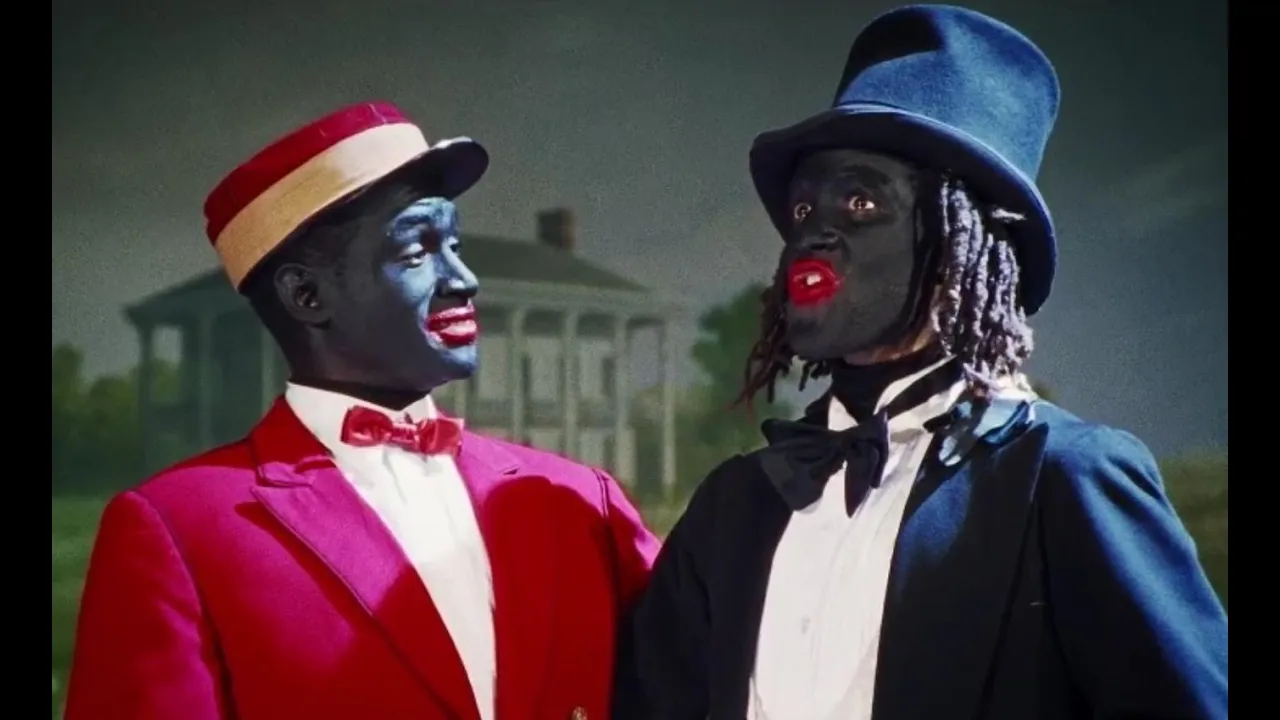
good evening it is such an honor and a pleasure to be able to introduce the second of the Richard D Cohen lectures the newest of the lecture series at the Hutchins Center I'm the newly appointed assistant professor of history of art and architecture and African and African American Studies and I am on leave this year and back to Harvard's campus to find and start to find a home house that I can turn into a home which is an activity not unrelated to introducing Professor Richard J Powell the scholar who's made a home for so many in the field by the power of his example and his curiosity and care for the discipline of the field his lecture today on the African American reinvention of blackface minstrelsy is entitled the minstrel stain Richard Powell is the Duke University Dean of the humanities professor of African African American Studies and the John Spencer Bassett professor of art and art history he's one of the fields tireless stewards serving as chair of Dukes art in art history department from 1998 to 2001 while he is both an associate and a full professor serving as well and serving as the editor-in-chief from 2007 to 2010 of the art bulletin the world's leading english-language journal for art history his work has earned him recognition from the 2013 Lawrence a Fleischman award for scholarly excellence in the field of American art history from the Smithsonian's archives of American Art to the 2016 college art Association's most distinguished scholar award the same organization that's elected our own Suzanne Blier as president just today [Applause] but art historians have long known what these awards represent which is that Professor Powell is truly the headwaters of the field of african-american art history and visual culture so if you'll stay in picture me standing before you as just one of hundreds of scholars and curators and artists who's had their imagination and work shaped by Professor Powell perhaps all genuflecting to him you'll get a sense of the warmth of the crowds that accompany me in spirit as I offer him a short introduction of tribute today nearly 20 years ago just a few months after I began my freshman year here at Harvard College I received a book entitled black art and culture in the 20th century from an administrator in the then titled afro-american Studies department at the time Harvard had no art historian focused on black culture and art history and so I was busy trying to craft for myself a course of study she saw how passionate I was about the field and so she inscribed the book simply with great expectations as many of you know this is one of Richard pals books it is one of his four books eight exhibition catalogues and by my last count over 71 essays and articles that you've produced over these decades on topics ranging from primitivism to post-modernism with titles including landmark works such as homecoming the art and life of William H Johnson - cutting a figure fashioning black portraiture from 2008 what I'd value so much about the introduction that the book offered me was the frame that it gave me about the capacious as' of the field of black cultural production and the strategies that artists employed to produce knowledge into question narratives I will forever be grateful for the blessing of that gift the foundation that it gave me for the field and the work that I do I now know that it would be impossible to enter the field of african-american art history without passing through the barreled archway that his scholarship represents as a professor it would be unthinkable to design a course on african-american art history without his scholarship like serving students a Swiss cheese version of the field filled with holes we're probing insights about black figuration and black satire should be how could you teach a course and not include one of Professor pals many curatorial contributions including exhibitions on artists like David Hammons or Katherine Dunham poet activists Essex Hemphill to name a few all of these exhibitions have taken place around the u.s. and some in Europe at institutions like Phillips academies addison gallery of American art to LACMA or the New Orleans Museum of Art today the field is abuzz with the discoveries of one of his most recent exhibitions the stunning Archibald motley Jazz Age modernist show at the Whitney Museum began at the Nasher it expands upon themes that are present in our own Cooper galleries exhibitions the art of jazz which is stunning exhibition that we're so fortunate to have here in an interview with Duke University professors Mark Anthony Neal professor pal stated that he wanted to reframe our sense of the painter Archibald motley jr. seeing him as less of a a noble gentleman and more as a man in the thick of the action as you said who would go into the scenes that he would paint then retreat to his studio to produce the master works that we now celebrate it occurred to me that this description was an apt summary a professor pal himself in the thick of the action who then to retreats to his studio he is also an artist and office to produce the landmark scholarship that we celebrate now there are a number of things I could go on to say about professor Powell's landmark exhibitions and scholarship yet yesterday professor Cheryl Finley offered a beautifully synoptic introduction of his career so instead of replicating that I thought I would leave you with what many of you might not know unless you had the good fortune to to work with him as I have and that is to get a sense of commitment to the development of the field consider this example some time ago professor pal convened a workshop on diaspora African arts and black aesthetics at Duke University we've all been to fantastic workshops and this was nothing short of a stellar experience but it contained a unique feature the presenters were not esteemed professors they were six advanced graduate students that he selected and I was fortunate to be among them the audience was comprised of junior and senior faculty members from universities around the country including editors from Duke University Press we all presented chapters of our dissertation I cannot overstate what an inspiration it was to those of us that were there to present but in hindsight I see it more now as a moving tribute to Professor pals commitment to the health and continuation of the field of african-american art and I'm pleased to say that all six of those presenters including myself have gone on to gainful employment and fantastic physicians including curatorial posts at Smithsonian's Museum of african-american history and culture and Harvard University in closing I'd underscore that yesterday professor Powell asked us how does black visual satire work why is it a topic worth exploring and it occurred to me that this is a variant of the question that Professor Powell has put to countless scholars about the field in general how does the field of black cultural production work and why is it worth exploring his scholarships remind us that is to say about the stakes of the field the expansive breath of his object of study moved pulling so much into the world of the world excuse me into its midst from political satire to paintings reminds us of a deep historical knowledge required to read culture today and also reminds us that that that there's a level of visual literacy required for understanding our culture it is in short scholarship that makes us understand not only the significance of a work of art of move of different media but makes us see the signal importance of the discipline of our history itself please join me in offering a warm welcome to Richard Powell thank you so much Sarah skip back and kind of get used to this enjoying it I didn't do this yesterday but let me just take a few minutes to just thank all of you um Harvard University the Hutchins Center the Cooper gallery this has been a really important opportunity and an occasion for me not I mean not just being with friends and and and colleagues but but having an opportunity as as a scholar to think deeply about a topic and to have a forum of fellow colleagues to to engage and discuss it sounds like it's not that big of a deal but it's really really important and we don't have a lot of opportunities in african-american arts scholarship to do this so I'm indebted I'm grateful thank you thank you thank you today's lecture is called the minstrel stain and I have a little epigraph by Carol Walker this is from a series of drawings that she did called do you like cream in your coffee and chocolate in your milk but this particular image has the words attached to it demeaning portraits should be seen and not heard in 1980 robert cole scott painted a double portrait of one of the most beloved dance partners of Hollywood's golden age but in the artist is characteristic way Shirley Temple black and bill Robinson white posed an affront rather than an affirmation instead of the popular conception of a deferential but jovial all-black man instructing a spirited little white girl in a complicated dance step coast got painted a lascivious tongue wagging Caucasian man oddly a blond-haired brown skinned prepubescent girl her wide eyed gaze brazenly meeting his amidst and excessive simulated Arcadia Robert Cole Scott's racial transpositions and allusions to african-american subservience were by 1980 a curious although occasionally explored thematic strain in American art these stereotypic characterizations and racial reversals more symbolic than illusionistic were in effect a dash of insult and betrayal from an earlier time but couched in a satirical frame of mine that given that earlier moments heightened black consciousness and race pride often felt strange and precipitously veering towards parody this artistic impulse of the 1960s through the 1990s towards an incongruous emblematic racial about-face and the insertion of stock races characterizations of African Americans into pictorial narratives is the phenomena this lecture will investigate black visual SATs attires in this period seemed especially interested in artistic strategies and personae that subscribed to these radical interventions and it is my objective to make sense of these provocations in light of a cultural moment when both artists and audiences were invested in relatively straightforward celebratory black images the specter of 19th century in early 20th century blackface minstrelsy loomed large over these troubling artistic elements and yet selected african-american visual satirist like robert cole scott and their other cohorts incorporated these irritants into works during the Black Arts Movement years and throughout the nascent post modernist decades of the 1980s and the 1990s why artists chose to venture into these racially problematic territories when the cultures most insistent rallying cry was black is beautiful is the question along with how this minstrel stain captured the artistic imagination and embedded itself in that eras most iconic works the early to mid 19th century performer of blackface Thomas Dartmouth rice is widely referred to as the father of American minstrel see Dan Rice donned rags and cotton wig adopted the most exaggerated gestures and broken English from enslaved and impoverished African Americans and applied burnt cork and other colored pigments to his white skin in order to portray racial blackness and to perform his much admired jump Jim Crow routine before too long the American stage was inundated by white entertainers in blackface whose broad characterizations and distortions of black bodies and culture were staples of the American theater well into the 20th century and perhaps not as well-known was blackface minstrel sees popularity outside of the US attracting music-hall audiences in England continental Europe and as far away as Australia New Zealand and Tasmania although blackface minstrelsy and its allusions to the institution of slavery and life in the southern United States were considered quintessentially American to foreign audiences for many 19th century European blackface performers these same acts reminded them of their own minstrels the itinerate commedia dell'arte actors in italy and france whose costumed masked and heavily made-up actors also trafficked in stock character types the commedia dell'arte characters that represented the zany or the servants tricksters and other lowbrow types in early modern Europe usually wore brown or black masks and occasionally black or dark brown face paint and conversely the commedia dell'arte is most iconic and often tragic character pijo usually performed in pantomime and wore a loose-fitting white shirt white baggy pantaloons and a ghastly complexion derived from white facepaint this brief account of European and American performing art traditions that utilized face painting in black and white is key to understanding the modern and contemporary expressions of this theatrical practice in that it indicated not so much an attempt to trick audiences into believing these characters were real or closely resembled actual people but rather it indicated the actors desire to theatrically and symbolically represent the racial cultural or social other operative in these ephra mentioned miss traditions is the nineteenth-century ethnicity ssin samuel coleridge-taylor samuel taylor coleridge's theory of suspended disbelief where audiences overlooked the limitations of theatrical illusionism so as to not interfere with the performances drama turn dramaturgical propositions in the audience's acceptance of them comparable in a sense to the ritualized painted face and body decorations of many African peoples and of some Native Americans these affer mentioned minstrels embraced their painted personas with such a passion and personal sense of metamorphosis that despite the makeups patent superficiality they succeeded in conveying their audiences they conceded they succeeded in convincing their audiences of their respective characters assume personality traits whether pitiful ludicrous ferocious or benign the American minstrel tradition is also imbricated in advancing selected racial stereotypes such as the wide girth and bossy mammy the elderly and obsequious Uncle Tom and the woolly-headed almost feral and behavior [ __ ] blackface minstrel form these popular roles for decades and along with the countless literary and visual representations of these same racial distortions and cultural exaggerations the sensory and psychological ramifications of these stereotypes made a permanent impression on the American psyche in addition the promotion of these racial stereotypes is not confined to white performers writers or visual artists indeed African Americans to have embodied these same broad characterizations although it is debatable whether black artists as presumed cultural insiders have transformed these stereotypes into less pernicious and more nuanced persona the selected works of three Harlem Renaissance era african-american artists writer George S Schuyler sculptor sergeant Johnson and painter Palmer see Hayden are some of the earliest examples of a return to minstrel see in african-american art via the satirizing of the practices discourses and trappings of American racism George s Skyler's 1931 novel black no more playfully subtitled being an account of the strange and wonderful workings of science in the land of the free ad 1933 1940 racism in jazz age America and of how racism was a highly profitable social commodity for those times Skyler's black no more is the story of a scientists who invents a medical procedure that makes african-americans appear Caucasian and as a result ignites via a dizzying array of subplots a succession of interpersonal deceptions and far-fetched national conspiracies with disastrous and hilarious results this satirical novel makes vivid how Americans how America's preoccupation with race in these years fueled Sutter futures around racial hegemony interracial sexuality and even for the race men of that day like wev Du Bois and Marcus Garvey naked opportunism for socio-economic ascent and political clout instead of the none-too-subtle channeling of minstrel sees racial turnabout's that Schuyler explored in black no more sergeant Johnson and Palmer Hayden took somewhat different artistic routes by prominently featuring black subjects who easily aligned with recognizable racial stereotypes and stock black characters in the early 1930s sergeant Johnson created a series of sculptures drawings and prints each featuring a domiciliary full-figured black woman flanked by small children as Johnson's itching divine love suggests the traditional Madonna theme in Western art has been substituted for a black mammy here sharing her largesse with two infants one white and one black Johnson blurs in these works the black mother's righteous selflessness with a constitutive full-bodied servitude and consequently disturbs the audience's preconceived notions of this cultural type in either direction Palmer Hayden's tenth Calvary trooper operates in a similar ambiguous interpretive terrain the titular subject one of the Buffalo Soldiers who served and racially segregated United States army regiments appears more like a caricature than an equestrian war hero his black faced pink lip profile resembling the disembodied head of a Jolly [ __ ] mechanical dank nevertheless Hayden's painting is an ironic eulogy for the 10th Calvary which around the same time the artists painted this canvas was experiencing marked reductions in their numbers and significant structural changes to their celebrated military units Hayden's Calvary man assumes a resolute dutiful bearing in this pictorial send up with his fair lady faithfully appearing in the distance and his carousel like under sized steed exhaling cartoonish puffs of hot air the artistic trade in races imagery and in the conventions of blackface minstrelsy were not only present in the works of artists like Palmer Hayden Sergeant Johnson and George Schuyler these same problematic elements and impulses were the staples of peeler african-american entertainment in the 20th century visitors to theaters and nightclubs that catered to black audiences were exposed to african-american comedians and other performers who acted a fool or engaged in hokum the latter a mode of performance that using a southern black American voice awry and a servic sense of humor and often a countrified unfashionable demeanor enlisted black audiences in multi-layered call-and-response routines and playful banter around shared black experiences what these African American performers knew was that their off-color humor and critical insights into pre civil rights era black lives were especially applicable explicable to black audiences and accepted by them through the adoption of a disarming yet incisive minstrel mask a persona whose symbolic alterity and faux camouflage allowed it to utter uncomfortable truths and bear witness to perceived injustice 'as by the mid 1960s these racial subterfuges in pre civil rights era black america seem tame especially considering that decades burgeoning rhetoric and concrete expressions of black agency in 1966 writer Leroy Jones encapsulated the necessity for a cultural realignment among African Americans proclaiming quote there will be some of us who will not be Negroes who know that indeed we are something else something stronger that there are some of us who know we are black people end of quote this call for a rehabilitated racial self-consciousness among African Americans not only from Jones but from a broad spectrum of black intellectuals and activists formed the ideological core of what will be called the Black Arts Movement a cultural insurgency that utilizing the literary vision and performing arts placed black people and their political conditions at the center of creative works from cataclysmic scenes of revolutionary actions and violence to the pictorial details of articulated bodies African faces and halo like natural hairstyles the Black Arts Movement made black sovereignty its narrative rationale couched in an expressionistic pan-african aesthetic we black people know what our reality is continued Jones look out of your window or into your heart you and you know who we are where you are you know what you feel you know what you have to do Laroy Jones's directions and incitements to black people in 1966 revealed his work of late in the theater having recently produced several important off-broadway plays Dutchman in 1964 and the slave in 1964 not long before establishing the black art Repertory Theatre a recurring feature of these and other black theatrical productions in the 1960s will oddly enough minstrel scene or to be more precise the introduction of racial stereotypes and the vestiges of blackface in contemporary plays so as to satirically underscore by way of antithesis a radically different revolutionary path for black people for example in the 1965 short play jellow Jones used the old Jack Benny radio program and as Ray parte between Benny and his black servant Eddie Rochester Anderson as the foundation for an ideological conversation in stages turning the subservient rat fester nee Rochester into a marauding black rebel this artistic sleight of hand that is proclaiming one's blackness and cultural ideational independence from a white power structure by satirically using some of the most egregious and racist emblems and tropes of the past is not something that on the face of it can be easily understood which inspired was a nuanced stratagem that gave the stereotype a new repertoire one that included the assertion of a black political agenda while simultaneously eviscerating the stereotype of its racist venom and 1 dimensionality the Black Arts Movement summarized theater historian Mike SEL appropriated and deployed blackface in a fashion that both purified its insurgent potential and disabled its role in the commodification and denigration of African Americans although the metamorphosis of slave like subservient figures like Aunt Jemima into black rebels during the Black Arts Movement years has been noted by countless art historians the exact personas these stereotypes were changed into has not received close scrutiny nor have the satirical projects that they served been sufficiently examined artist Geoff Donaldson's unconstrained black woman in his 1963 Aunt Jemima and the Pillsbury Doughboy for all of its art and licensed artistic license in the implied battle between these two product icons had real-life resonances in many of the published photographs from the spring 1963 race riots in Birmingham Alabama Donaldson's critique of not just American racism but of capitalism's poisonous covenant with Madison Avenue was also present in Joe Overstreet's the new Jemima and in Marie de Pillars Aunt Jemima and a people of the Sun Uncle Remus three works of pop art envisaged with a decidedly african-american twist and in a droll highly satirical manner artist Betty Tsar's well-known assembler the liberation of Aunt Jemima is arguably the more complex statement in this group combining within a glass fronted box the repeated image of Aunt Jemima from actual pancake boxes ceramic imprinted racist memorabilia circa 1970s afro kitsch a miniature pistol and rifle and the store-bought ingredients for making an incendiary projectile comparable in form and effect to a multi segmented confrontational and prophylactic in kisi and Condy of Central Africa's Congo people's SARS 1973 assemblage functioned similarly in that it did not so much proclaim freedom from the stereotype as it conjured an effigy that via its marshaling of negative imagery and inflammatory elements subverted the stereotype for alternative revolutionary purposes to additional Jemima s-- also illustrate the extent to which some artists advanced the idea of rehabilitated stereotypes but as evidenced in their unbridled satires and shocking narratives they vaulted the moralizing tendencies of their artistic counterparts in an especially scandalous drawing from um in time entitled jameelah's pancakes robert cole scott takes Donaldson's pairing of two product icons to the extreme for grounding of voluptuous Jemima and her tall pancake stack with a series of sexually explicit pictorial vignettes performed by her with Kentucky Fried chicken's founder in bran icon Colonel Harland Sanders rather than a satirical jab at racial stereotypes and Madison Avenue Co Scott puts Aunt Jemima on an equal basis with Colonel Sanders a statement of sexual and racial egalitarianism that was quite radical for the times another stereotype of faced from this period was the 1972 film Georgia Georgia directed by Steve Bachman from a screenplay by Maya Angelou about a temperamental black entertainer Georgia Martin played by Diana sands and her contentious relationship with other African Americans her live-in maid played by Minnie gentry and her inner demons the film notoriously concluded with the mammy maid who throughout the film routinely brushes the black divas hair in unseemly bosomy sessions murdering Georgia because of a trattoria s-- interracial fling and immodestly restraining the entertainer between her open clasping legs light years removed from sergeant Johnson's all-embracing ever-loving mammy and Jeff Donaldson's self-defensive heroine Maya Angelo's race avenging Aunt Jemima harkens back to rat fester in Leroy Jones is 1965 jello a convert from Uncle Tom etude isms and a black rebel whose destructive attributes apart from the recently murdered Malcolm X and Robert Franklin Williams civil rights activist and author of Negro and guns were virtually unheard of in the mid-1960s in other words there is this kind of insertion of these of these stereotypic figures who go beyond the pale also in 1965 was the off-broadway premiere of the farcical day of absence Douglass turn Awards reverse minstrel show with black actors in white face performing the roles of whites in a small southern town on a day when perhaps channeling George Skylar's black no more all of the town's blacks have mysteriously disappeared the experience of seeing african-american actors sporting clown like white face paint and speaking in exaggerated southern drawls was transformative for audiences touching a sentient chord in them and more importantly inviting them into the satirical of burlesque where such theatrics were welcomed and the plays intended targets white racism and black complicity were deemed censurable Ward's day of absence had an especially important place in thinking about minstrel see and its utility during the years of the Black Arts Movement possibly inspired by the 1961 off-broadway production the blacks French author Jean Janae's ritualistic massed play about white racism and black revenge day of absence shared with Janae's the blacks the fenoli and precept black skin white masks as its epitaph carried out in glaring racial parodies and role play between demarcated oppressors and the oppressed the other common denominator between the two plays is the efficacy or rather the tactical self evidence of the white mask for black actors or for black artists and it's ritualized hegemonic insignia providing both its wares and the audience with a scenario that reverses the power equation by shifting social worth and the dramaturgical objects of sympathy Douglas Turner Ward's other source of inspiration for day of absence may have been one of the widely published photographs of Bobby Simmons the Selma Alabama teenager who while participating in the legendary Selma to Montgomery March in the spring of 1965 covered his dark brown face with a pasty sunscreen and scraped the words vote onto his forehead like day of absences white faced black actors Simmons white mask was both parodic and symbolic criticizing institutional racism while concurrently and in all likelihood unintentionally performing a work of body art in the manner of the French mime Jean Charles Deb blows pillow 1970 was a banner year for first minstrelsy in art one of the most significant examples being Larry rivers I'd like Olympia in blackface a painted construction comprising two cutouts Tandy canvas canvas sculptures inspired by Edouard Manet's iconic Olympia but one version with a black Olympia a Caucasian servant and a white cat added it is worth noting that rivers who was already interested in social artifice in his work and issues of identity both racial and ethnic treated this dual presentation of Olympia a commentary on race and desire that arguably lashed out at multiple socio-sexual regimes as a hybrid painting sculpture which subliminally articulated the performative dimensions of his minstrel show extending beyond the walls and encroaching into the audience's sphere film goers in 1970 were also presented with the black skin white masks concept due in no small part to increased chance taking in Hollywood and a relaxing of the film industry's historic constraints on controversial subject matter one of that year's most scandalous films Brian De Palma's high mom is a multi-threaded satire comedy on youthful itinerary personified in the lead character played by a 27 year-old Robert De Niro said in New York City and framed by that particular Milius occurrences of amateur re adult film making politics inspired community theater and domestic terrorism the most memorable scene in hi mom the most memorable scenes in hi mom draw attention to the two different forms of minstrel see black face and white face in the first instance a white radical pornographic filmmaker sympathetic to black causes is accidentally filmed through his high-rise apartment window while in the act of painting his naked body black including to the last hesitant brushstroke his white penis the second instance of minstrelsy and hi mom is a black-and-white interlude that purportedly documents an evening of performance art entitled B black baby the sequence shows a black guerrilla theater troupe in white face similar towards black actors in day of absence at first giving a group of white suburban theatre goers the artistic whom are the authentic experience of being black including covering their white faces with black greasepaint and encouraging them to eat hog maws but in due course holding the audience hostage at gunpoint robbing and beating them and sexually assaulting one of the women in the group finally the black actors step out of their menacing characters and announce that B black baby has ended to which the white suburban Knights breakout in applause idiotically expressing thanks for a thrilling theatre experience and for being shown how responsible they are for racism the other filmic overture to minstrel see in 1970 is watermelon man director and screenwriter melvin van peebles parable of Jeff Gerber a white middle-class insurance salesman who inexplicably wakes up black one day much to his chagrin and surprisingly to the mixed reactions from family friends co-workers and strangers van peebles casting of the dark skinned actor african-american actor comedian Godfrey Cambridge as Jeff is crucial to the film's satire making Cambridge's real-life blackness and his initial full body cosmetic and wig transformation into a white man key to the audience's ability to grasp van peebles intent and to understand American racism and its epidermal ization of social value beauty and self-worth the film's beginning the white Jeff lying on a tanning bed and solitarily using exercise equipment and the film's ending shown here on to my immediate right from the black Jeff practicing martial arts in a tenement basement in concert with a spectrum of african-american men and boys not only satirically juxtaposed a superficial solitary desire for fitness with more resourceful collective actions for health and well-being but frame watermelon man's racial metamorphosis in the context of the corporeal and progress towards a self-aware culturally grounded ready for battle modern black man the creators of contemporary blackface no matter how well intended or racially or sympathy sympathetic the maskers might be usually fail at making their audiences co-conspirators in the works satirical accusatory project setting aside for the moment satires a priori locus in misapprehension the pioneering post modernists Cindy Sherman could not have assumed in 1976 that the public would have accepted the artistic worth of her bus riders series in which her swarthy makeup and simulated african-american female personas essentially enacted a late 20th century version of the worst 19th century blackface performances imaginable as with earlier blackface minstrels Sherman's whiteness and his privilege made her assumed Africana t suspicious and like subsequent explorers of an ideational blackness from Nikki Lee this is a Chinese artist her 2001 hip hop project to racial dozy owls 2015 racial outing and excoriation by contemporary social media neither the art label nor the kindred spirit defense give contemporary blackface a high ranking station in the creative discourse and substantive discussion concerning race but what if the artist is of African descent and like a artist Adrian Piper in her bitterly satirical and deadpan 1981 drawing self-portrait exaggerating my negroid features she lays bare the perceptual fault lines of blackness and consequently the unreliability and capriciousness of human recognition and DISA similar to of course it helps that Piper was well known in the art world and that this cultural milieu was receptive to and perhaps even fascinated by Piper's racial plasticity beginning in the 1980s many african-american artists forced audiences to deal with uncomfortable racial realities and often adopting a satirical stance within these works they troubled viewers certitudes on the actual workings of race and specifically blackness in the world as a 1982 follow-up to his Shirley Temple black and bill Robinson white Robert Cole Scott revisited in listening to Amos and Andy a satirical rumination on race and perception not conceptually dissimilar from Adrianne Piper's self-portrait in listening to Amos and Andy Cole Scott uncovered the unexpected consequences of an auditory version of blackface in which an african-american woman and her son exult in listening to two real-life white comedians Freeman godson and Charles Carell impersonating african-american characters on the Amos and Andy radio program instead of solely targeting the denigrating aspects of blackface Co scott revealed parallel worlds where white entertainers produced black stereotypes while black audiences found pleasure in their own re-imaginings of those impersonations the latter symbolized in the disembodied cigar weaving black waving black hand extending from the depicted radio cabinet that a vast gulf existed between God's ends and corals black mimicry and the average African Americans will de fantasize seemed to be call scott's main point visualized in the paintings to atmospherically distinct racially segregated circles of activity although the ironies of contemporary white face by african-american artists were not entirely lost on audiences who encountered them during the Black Arts Movement years mostly in the context of experimental black theatre and in films like hi mom and watermelon man subsequent examples of white face from the 1980s left many viewers confused and often hostile towards their implementers when in the fall of 1980 artist Howard Deena Pindell premiered her short video free white and 21 wearing a blonde wig pale makeup and sunglasses to represent a racially insensitive arrogant white woman the mainly white female and feminist crowd who saw Pen Dale's piece questioned the works portrayal and challenged Pindell for her criticism a similar satire audience disconnect transpired when an attempt was made in 1989 to publicly exhibit artist david hammons how you like me now a portrait of the black civil rights activist Jesse Jackson but with blond hair blue eyes and white skin opposite Washington DC's National Portrait Gallery unlike the rejection that pin Dale's free white and 21 experienced from her targeted white female gallery goers Hammonds audience Washington DC's mostly African American public was unaware that Hammonds was African American nor was the public armed with a cultural context that might have prepared them for his targeted denunciation via white face of institutions like the National Portrait Gallery the negative reaction that how you like me now generated from the black bystanders who witnessed its Street installation resulting in a skirmish with the artworks installers present company included and it's force removal was against the imagined perpetrators of this assumed erasure of Jackson and not against Hammonds is ironic but misunderstood criticism of institutional racism captioned in spray-paint with hip-hop artist ku Modi's 1987 bragging browbeating atham of the same title despite the mixed responses from audiences in the postmodern era to black face white face and stereotypic black figures their subliminal overtures to sexual transgression characterized in the stigmata of blackness or in the case of white face its insinuations of racial genocide and cultural ideological impurity offered fantasy ecla black artists a menu of cultural touchstones that infused their work with a much sought-after satirical Verve robert cole Scott was an early diviner in this regard using these minstrel stains to reveal racial fissures and sexual hypocrisy and to criticize comparable regimes of a perception and desirability one of Cole Scott's earliest and most explicit references to Aunt Jemima I gets a thrill to when I see dick ooh encapsulate Smith Stroh sees psychological force on the heels of the Black Arts Movement while also foreshadowing the racial conundrums and visual cluster bombs artists like Adrian Piper Howard in apon Dell and David Hammons will soon plant playfully quoting vellum de Kooning's 1950s woman series and Mel ray Moses Mel ray Moses 1976 send-up of the same series I get a thrill to when I see Dooku made these prototypes the pictorial via for venturing into satires more hazardous confusing terrains by placing on Jemima in a vortex of abstract gestures and disembodied white female appendages Coast got interjected the notion of racial amalgamation into recent art history and in tandem with this call Scott paradoxically challenged the presumed superiority of white spectatorship putting the paintings Abstract Expressionists brushstrokes and their allusions to more culturally fraught discolorations and stains in competition with and insight on Jemima zwei died inclusive purview that hiding behind on Jemima and her inscrutable grinning mask is an equally complicated flesh-and-blood black woman was a message proffered by several contemporary black women artists in the wake of Betty Saar and Maya Angelo's early 1970s African rather art projects riffing off of SARS emancipatory revolutionary identity for Aunt Jemima artist Rene Cox created the liberation of Lady Jaye and UB in which a heightened black perspicacity is mixed with a critique of Madison Avenue and it's racist compartmentalizing of black personas for profit one can help but take from Rene Cox's emancipating Raja a super woman character here along with the stereotype turn fashion models roshumba and Rodney Charles a parody of the idea of genuine black liberation and that Lady Jaye and UB have been traded for an upgraded and yet likewise absurd version of racial branding almost coincident with Renee Cox's digital spoofs were Beverly McKeever's painted self-portraits as a black faced fright-wig wearing and house dress cloud house dressed clown house coat dress clown shown eating watermelon engaging in common household tasks and occasionally dancing and playfully wrestling with a half-naked white the innocuous everyday situations in which mckeever located her Jemima like alter-ego in contrast to Cox's media informed cartoonish settings contributed to her paradoxical character above weird and familiar presence whose pivotal place in these paintings as framed by McKeever in lucious oil pigments on canvas unsettled the assumed idiosyncrasy or revulsion such black female stereotypes typically convey McKeever's couplings of this stirring black caricature with a white man broached America's deep-seated fears and fantasies about sexual liaisons between the races but unlike the sex scenes in Robert Coast gotcha Jemima pancakes McKeever's interracial horseplay alluded to a kind of easy intimacy or a filial bond between the stereotype and whites that could be interpreted as more seditious than interracial sexual attraction similar artistic conceptualizations of the normality and the invisibility of minstrel see and racial stereotypes in contemporary life and their role in formulating satirical statements against institutional racism and other targets have emerged since of these Afra mentioned artworks one example was artist Jefferson Pender's 2006 video installation Juke consisting of ten unamplified video monitors Juke featured close-ups of ten african-american women and men filmed against stark white backgrounds in uniformly dressed in white t-shirts as gallery goers done each video monitors attached headphones they experienced each monitor each video monitors respective black actor limps lip-syncing recordings of stereotypic white music such as Loretta Lynn's little red shoes Johnny Cash's mercy seat and Patti Smith's rock-and-roll [ __ ] among other recordings with each filmed black person's performance of whiteness Pinder Pender's intended targets gallery vis and gallery visitors contemplated their own racial and cultural presuppositions about racial identity and music another example of contemporary blackface in service to visual satire was when new york-based artist Jason Muhsin Sirkin 2010 adopted the character of the hip-hop dois n Hennessy young men for his mock series of YouTube primers on successfully navigating the contemporary art world here muscles parody seamlessly shifted between satirizing the alleged genius of vaunted hip-hop personalities and lampooning a hopelessly self-important art world like the black comedians from the chitlin circuit era who performed in front of black audiences in an impecunious african-american clown mode such as Jackie moms Mabley and Dewey pigmeat Markham muscles comic hip-hop masquerade minstrel minstrel show allowed him to criticize the often farcical world of hip-hop and at the same time to voice unfiltered uncomfortable truths about the mercurial contemporary art scene and it's awkward encounters with african-american artists and subject matter comparable in many ways to Robert Cole Scott's listening to Amos and Andy Jason muscles Hennessy Youngman character in Jefferson Pender's Juke questioned cultural legibility and supposed racial essential isms by setting conceptual booby traps in their respective artworks around race and class one can see how early twenty-first century art audiences in spite of an assumed visual literacy and some knowledge of social history were either confused or offended by the minstrel stain and its constitutive dis equilibrium in which neither blacks nor whites are culturally privileged visually idealized or narrative Lee grounded in a comfortable reality for Jason Muhsin Jefferson Pender at Beverly McIver and other 21st century traffickers in these masked critiques the only way the visual arts could ever approximate the labyrinthine implications of race and racism is through the hyperbolic absurdist lens of a satire it takes a bold person writes novel as Paul Beatty about the black satirist to buy a dime bag of absurdity Carol Walker the fantasy a CLA's most brazen absurdists and satirist emerged during the same period as robert cole scott's heir apparent with her incisive critiques of rest racism sexism whitewashed histories self victimization and every Satur is his favorite target moral hypocrisy walker's works on paper her videos and her art installations all employed the black stereotype as the most appropriate vehicle for astute Lee depicting one racism's psychological impact on human nature and to the instability of meaning as put forth in pictorial accounts and other discursive modes Walker's silhouette as slaves and masters rather than enacting the received narratives of black victimization and white brutality up ended these thrice tall tales with her own representations of abuse profligacy licentiousness and cruelty perpetrated across the racial and sexual spectrum in 2014 Carol Walker's musings and artistic powers all came to a crescendo with a 35 feet tall 75 feet long and 26 feet wide sculpture of a mammy sphinx made from it from gigantic blocks of processed white sugar entitled a subtlety or the marvelous sugar baby and omage to the unpaid and overworked artisans who have refined sweet tastes from the cane fields to the kitchens of the New World on the occasion of the demolition of the domino sugar refining plant walker's massive art project in collaboration with the new york-based art commissioning and presenting organization creative time was one of the most important art events in the summer of 2014 employing a large crew of fabricators and installers and attracting thousands of art aficionados tourists celebrities as Beyonce up there and curiosity seekers to its temporary makeshift exhibition space in Brooklyn New York conceived in the hybrid human feline form and posture of an Egyptian sphinx the main sculptural figure in a subtlety deviated from the ancient prototype with its pronounced African features large buttocks exposed female genitalia and in the manner of a black southern US man me a handkerchief bound head surrounding the gigantic mammy Sphinx and carefully dispersed throughout the deserted plant were 13 cast in sugar covered in molasses five feet tall stylized sculptures of African boys servants each posed in a stereotypic plantation job carrying large baskets toting clusters of bananas etc in contrast to the mammy sphinxes imposing mass and wholly original form the 13 voice servants with their caricatured anonymity modeled brown surfaces and allusions to mass-produced kitsch exude it a fugitive provisional impression betraying in their moulded forms their disintegrated friable states and in the end contributing to the works titular allusions to being subtle obscure and fundamentally imponderable thinking about carol Walker's none too modest a subtlety in the context of visual satire the question that arises is whom or exactly what is this works intended target of criticism the sugar industry we the insatiable consumers of sweets or the transatlantic slave trade and his dependence upon black and brown unpaid and overworked laborers perhaps but one suspects that none of these Afra mentioned villains were walkers true targets and that she had more approximate objects in her satires riflescope carol walker's more likely pray in a subtlety were her sensors the mostly faceless but outspoken arbiters of community decency who occasionally obstructed the public's displays of her art as well as the black cultural critics who since she exploded onto the art scene in the mid-1990s have disparaged her work and leveled personal attacks against her in her mammy Sphinx his most explicit derriere raised point of view walker communicated to her censors and critics alike to kiss her you-know-what in a way not dissimilar from the corporeal taunts and comebacks that define a black female vernacular mode of signifying and yet like the previous examples of misrepresent a misrecognition towards satirical statements of art a subtlety was itself visually lampooned upon its unveiling by hundreds of online mobile photo sharing instagram users often for exhibitionist obscene purposes no matter how noble or celebratory intone walker's title for this work seemed she certainly knew that in this postmodern moment of moral skepticism and collective distrust a work of art input in the public arena especially a visually complicated one would be subjected to not just serious criticism but internet trolling and mockery Walker's own playful edict which served as his lectures opening epigraph demeaning portraits should be seen and not heard along with her drawing of a Mami's head atop of ceramic figurine or a nesting doll is perhaps the route for how audiences might best engage with such problematic racist and satirical images pointedly and yet without the assumption of the stereotypes misleading and ambiguous contexts that that it can be satisfactorily constrained universally purposed or thoroughly comprehended in conceiving of her mammy Sphinx not enveloped in the colourful calico or a busy gingham but rather in stark crystalline whiteness Walker is perhaps reaching back several decades earlier when radical black artists like Robert Cole Scott developed a cadre of mechanisms for dealing with minstrel see in the stereotyped designs that to paraphrase Mike cell connected the minstrel stain to a repertoire of insurgent representational and material discursive strategies that constructed a blackness that was definitely difficult to reify Walker's a subtlety was likewise a black enigma whose symbolic whiteness not only proclaimed for it an ironic allegiance to a fenoli in' skin mask equation but a satirical stance as well were the dual messages of the stereotypes ghostly after-effects and its incessant often maddening and invariably irrepressible dream work coexist thank you thank you I'd be happy to have a conversation with you that's great Rick questions comments professor Jeff oh okay later you percolate questions comments within the context of your discussion of black face white face I would like to propose an example or another example from popular culture that struck me a great deal when I moved to the United States from France when I became a great fan of the original series Star Trek there was one episode which I remember distinctly because the enterprise was visiting a planet where the inhabitants were half black half white and one member was escaping the planet because he was the victim of extreme discrimination and Kirk and Spock couldn't understand why because everyone was white on one side and black on the other but the the dominant individuals in the culture said yes but he's black on the wrong side were most of us are black on the left side and white on the right side but he's white on the right side or vice versa I can't remember but it would be an example of one of those modes of popular culture that in a very satirical way is poking fun and undermining racism but including the black and white face together in a single image I'd be interested to know how you would factor that into your discussion in terms of the the history of the minstrel see and of course the the way in which popular cultures in integ provides an integral element in the whole span of images that you're them you're showing us and and putting in that context that's a fascinating description of a Star Trek segment that I've never seen but it's but I'm particularly animated by it because this is a series from the late sixties early seventies in the same time periods all of these images and examples that I'm showing you and we all know that Star Trek as a series made an effort to kind of encapsulate in their in their scripts you know narratives and plots that would kind of talk about these larger philosophical kind of issues I remember watching Star Trek when I was a student at Morehouse and one of my professors there was Luther Weems who later on became Naim Akbar he was very involved with the Nation of Islam and was one of those early pioneering psychologists interested in in race and interested in the role of race in psycho analysis and and and and in clinical studies and I was always intrigued that he loved Star Trek and that he often would you know after watching it would come in and talk about these these shows and the kinds of narratives that they wove which he really felt had some real important things to say about America and psychology and how we interact with one another and so I I don't know if I can really answer your question other than I'm really really intrigued with the idea that in this well actually this show uses paint a lot I it comes on me-tv in Durham North Carolina and I watched it on Saturday nights you know well just watch the Riesling album but there are a lot of people who always have kind of paint on their face but I've never seen that one so I would just beg you to just give me a chance to watch that whole segment and just to follow up on that I also became maybe I shouldn't admit this in a scholarly intellectual educational context I became a fan of the second series Star Trek The Next Generation okay and I know that or I heard that Whoopi Goldberg when she heard they were making a new series wanted to have a part written for her in the new series because she was so in fire than the original one that the there was an officer who was black who was in charge of communications on the bridge and she felt that was so empowering that except that that show was just so inspired there was a new goal she wanted a part and she became one too thank you I'm sorry I can't respond but that is fascinating I'm gonna dig into that yeah and you know how much Star Trek junkie I never saw that episode I never saw you saw you've seen it it's pretty good okay we're gonna go home YouTube and that's you know the first well I don't know about the first interracial kiss but yeah members no kisses exactly the captain right was a big deal and they dealt with other forms of interracial speciall the Klingons and they would cut sometimes oh yeah with the people on the starship all kind of nasty kind of say I like the fact that you included our Latino Harlequin because I wrote an essay once about the relationship between that black mask and often he was represented with a black and white mask mm-hm and the two characters of dimensional stage bones in Tamil yes and I think that the mass just split off and became you know which is popularized and of course Harlequin is wearing black and white or it's an outfit that is back to what you just said clothed it's it's a split outfit that has patchwork on it checkerboard these these these patterns that implicitly and I'll be talking about this tomorrow when we look at some Robert Cole Scott paintings this is a kind of an emblem that speaks to Lisa has been appropriated as a racial in a metaphor well in some of the Harlequin masks and and you know ape-like features a monkey like features or you know negroid features you know you don't have to be a genius to make the connection right so anyway I love it questions comments yes Oh Cheryl Cheryl first oh I'm sorry okay I looked right past your oh sorry I didn't know there's another mic so then I guess following up on the same line there's a photograph by Hank Willis Thomas in collaboration with Sanford Biggers that you may know entitled crossroads 2012 so this is an image I don't know that anyone can really see it it's on my phone it's the image that accompanies a call for papers for the black portraitures three conference in Johannesburg this fall and I guess the question I have this is based off of a nineteenth-century albumen print that Hank found in an archive and so I'm curious you know again thinking back to some of the prints and drawings from the 19th century some of the more performative images from the 19th century considering minstrel shows and and that that kind of genre if there's something like this that you may have come across and kind of not only thinking back to that that memorable Star Trek episode Thank You Claude but but also this image or a version of it Hank has done in a lenticular photograph so the kind of yeah oh you you know it though don't you I thought you knew it I'm sorry oh okay so the image is based off of a 19th century portrait that's just of a man standing actually he's standing and he has half black and half white if you can kind of see and in an earlier there's a couple of different versions of this but about a year to ago at ICP and I guess it must been maybe at least two or three years ago at ICP which was then located in Midtown on Sixth Avenue in the 40s he had the corner window installation and so you could go by he sees different versions of this image and kind of changing positions but in the lenticular photograph because you can it's a 2d image but when you walk by it it changes so on one side he's white and then he turns to black so I I just thought I'd bring that to your attention if it might be something that you would consider it's really really interesting and I think it's the my might the form of the side of me that is really preoccupied with how all of these artists literal eyes black and in other words it's it's one thing to kind of reference race and and and to perform you know particular kinds of perceptions or misperceptions of the other but - but to transform the body by virtue of something as artificial as white paint or black paint to me is takes this into another realm it raises the specter of an audience that will hopefully or I'm assuming that the artist feels that there's some sort of collective understanding that we are now entering the symbolic world but it's a symbolic world that nonetheless has its locus in reality and to me that's fascinating that that that our nineteenth-century performers you know are thinking about theatricality and performativity in such a way as to find a way to send a message through through through symbolism you know and that we are continuing that that that that narrative with in this case Sanford and and and Hank Hanks Hanks project and all the other examples that I showed it's really really interesting yeah thank you yeah there's one before me right okay so thank you yeah I wouldn't yesterday during your wonderful lecture you said that black visual satire relies heavily on comedy and today we were laughing at many of the images and I wonder if you could talk a little bit more about humor because to me humor could be us laughing could be one of two things it could be that we get the satire or that we are agreeing with the stereotype and then you're and what if you can discuss this particular in relation to this Instagram photos of Kara Walker's work because the photos that you showed my interpretation it was very different when I saw those Instagram images I looked at it as revealing racism that exists within the society and you looked at it as mocking care Walker's peace sort of making fun of her and what she was trying to do as an artist I mean are those two different things to different interpretations what is the role of humor how do you interpret humor yeah humor I mean this is a project that has has fascinated so many scholars and so many thinkers I'm thinking about bearson's you know on laughter written you know over a hundred years ago and and he tries to grapple with how how what makes people laugh and there's a there's a passage in that segment and I'm probably miss quoting it but but he talks about you know the the absurdity the hilarity of watching a person of African descent you know dressed in in kind of a coat and Tails or something like that actually if I quote that quote him correctly he's commenting on what somebody else has said as that which replicates or that which invokes humor you know whom humor does a lot of things is sometimes it's humor is cringing my wife is always hitting me upside my head when I laugh at things because she thinks I'm trying to be I'm laughing at it because it's funny but I'm really laughing because I'm really kind of oh wow they went there oh it's kind of cringe humor you know so so and I think that this is what's working with all these works and Carol Walker I have to say is is an artist who I think has is has realized has discovered that that that she can she can push different buttons on people depending on who they are and where they are in the world and and and perhaps in the in the context of sugar babies and and how it got instagrammed you know to death in in all sorts of ways I can't help but feel she must have known that that they're putting something out in the world like this putting her work out in the world not in an art gallery but in a public space that's that's kind of that was the event that everybody went to in Brooklyn in the summer of 2014 that it was going to elicit many many different kinds of of responses I'm sure there were people who knew nothing about the role of sugar in in the transatlantic slave trade she tried to communicate a little bit of that you know through labels and what-have-you just like David Hammons tried to communicate through how you like me now that this portrait of Jesse Jackson is looking at a building where his portrait could not could not could not be there were it not for you know again the white paint and the blonde hair and the blue eyes and and and and one can smile at that one can one can get mad with that I mean that's that's the kind of realm that that satire kind of finds places us in it's it's it's an unstable world it's an it's an uncomfortable ground and I think that what has fascinated me so much about this project again is that artists willingly knowingly move into a direction that is unstable and will sometimes invoke humor sometimes will invoke anger I mean in some instances it invokes a physical altercation and and and and yet they do it because I think they realize the power within that that that that object that they've created and in the ideas that will be generated out of that sounds good thank you so much for this fantastic talk the question actually made me think of another one that I had but I guess I would first say I I see part of the contribution of this fantastic project is one that offers us a chance to look at what I guess Terry Smith might call the pre histories of contemporary art right thinking about a piece an art bulletin a few years back and in this case you're asking us to consider I think the pre histories of this feature of a minstrel see to do with the suspension required to look at these objects and I and in that spirit I just wondered whether or not a performance that's occupied my interest might come into your project too and that is the mask of blackness do you know about the it's not much so in the 17th century in King James court and 16 eight he in he has a mask a playlet right a performance short play in which we have the first instance of blackface I mean in the English Court his consort then Queen asks the the playwright to essentially re-signify blackness and on the cusp of sort of the new world being created such that she and her ladies are painted in black as as princesses from the continent of Africa brought to Britannia to be cleansed of their blackness and the next play is called the mask of beauty which took place the next year because it they couldn't scandalize the court by washing the women in front of everyone so took place in the subsequent day and it's always occurred to me that that play occupies a feature role in our discipline and I wonder whether or not the suspension that that the play is kind of incomplete ending requiring the next play the mask of beauty to continue is an inauguration of some and Illuminati you know I'm so glad you brought this up Sara because it brings back something that I tried to say a little bit about and it's it's again it's that we know what's underneath the paint we know who that person is really and and and that kind of takes that allows us to kind of enter this this this world this fantasy world this play world of and and something as simple as paint you know can can allow the mind to to kind of you know do this do this this this journey this sojourn to to Africa you know to to to a kind of a history a narrative of conquest then and and and empower and and and it allows the performers to as you said um um reappear you know in this other in this other mode and and this is the West you know this is this is this is a narrative of the West you know how how these these performances can play out and at the same time we can then come back to to doing what we do which isn't necessarily all that glorious or celebratory or or or moral you know again the role of the theater in this in this kind of in this project that we're talking about is is something that again as I was thinking about this writing at this over the past few months it dawned on me how how how so central the stage then the end and the power of the stage is in in these in these kind of discursive modes oh yes and I must say that I'm sure most people here I mean it's just magisteria incredible thank you thank you so much for such why that was why when skip said BJ I said later because I had to take it in you know and I'm not even sure that the quit the commentary I have is really well thought out because of the richness of the but first of all as you spoke the question about humor actually as you spoke one text that came to my mind throughout his Freud jokes and their relationship to the unconscious yeah so I think I mean I think almost everywhere I mean that text him coming to my mind but my mom substantial question is your your opening epigraph which lays an emphasis on visuality at the expense of say of the text of what is reaching and what is read posses attention which I want you to sort of clarify a lot because it seems to me that with the richness and the multi-genre multimedia scope of your presentation it seems to me that and I may be wrong about this because there seemed to have been a division between a fairly stable regime of spectatorship in the period of the Black Arts Movement when the emphasis was on satiric all in version of the received image of the male of minstrelsy - the postmodern period when moral hypocrisy you know makes that kind of you know if you want provisional certainty of the reception of spectatorship more problematic if you I mean I don't I'm sure you've seen my lonely exam ethnic notions all of which has sweeping review of these of the tradition it seems to me that it's very it's a tough act to sort of pin down the certainty of response because I have used many of these texts in my classes it's and sometimes I go through class uncertain of what I will get because sometimes they're so unpleasant so bracing that I lose it I rather I actually lose control of my as a teacher in the classroom all that times it works so there is no so I'm I was bit intrigued by this division that you make between a more or less certainty that is satire will be will work people will get it in the black hats movement and I've become somewhat more problem I may have gotten it wrong but this my this is my sense you know so I'm saying that the the richness of your presentation and the the vastness of the media of course the emphasis was on the visual you know but you you dealt with films with place I mean on any number of the films and place you mentioned I can think of the kinds of of struggles interpretive struggles I've had to wage between which place I actually cared for and like which ones I hated you know so at any rate as I said these are preliminary observations thank you so much on your comments you've given me so much to think about and reflect on I will say though that when I with my epigraph I mean nothing Carol Walker does is straight she is she's playing with us so when she says demeaning portraits should be seen and not heard the reality is in that whole series she is throwing out words at us and she's she's preaching to us but but they're also they're false they're they're words that throw us curveballs you know just as the images throw us curveballs you know and and and and yet your comments really won't make me want to kind of go back to this this this lecture and to think more deeply about the power of texts versus the power of image or how they how they conspire to to drive us crazy back to Freud you know I'm also intrigued with what you said about the 60s let's say versus the 90s or the 60s versus the 80s in the sense of Barack of amiri baraka and his plays and the kind of and how that use of that material seemed to be understood within the context in which it was produced versus the challenges that a howardino Penndel might have had or a David Hammons or a Carol Walker might have had towards the end of the of the 20th century and and the irony there is that one might have assumed that at the end of the 20th century we are all we are much more visually literate but the reality is is that we're probably less literate because we're so inundated with all these images it's hard for us to make sense of all the images that kind of come to us you know via the internet you know via you know Twitter or Instagram what-have-you so so I was say in some ways you know this is a moment that is more of a challenge for us in terms of of things that we think we understand and but may in fact might not understand not that not that an earlier period was simpler I don't want to I don't want to kind of put that on the 60s and 70s as oh it was so obvious you know cuz I'm pretty certain there were some people who were probably taken aback by by baracus plays or yeah yeah and and really and didn't didn't just an the subtlety of using these these characters away the way he used them yeah yeah I don't know if I could thank you for your comments I just have to I have to chew on all of that but but thank you but there's never been a time in the history of satire parody ever when everyone agreed on the interpretation yeah some people you know or the the lion at some of the elephant right yeah some in the monkey right you just some people read things literally some people read things figuratively in the same culture the same age the same gender the same sexual orientation that's what interpretation is about floating signifier indeterminate and Carol Walker is probably telling us that images are are perhaps just as problematic and challenging for us to kind of make sense out of I mean text can be deceptive but images really can throw us curveballs and and just as you saw earlier with my images by sergeant Johnson and particularly sergeant Johnson I mean his women are all embracing loving but there's no question they also have this kind of rootedness in Hattie McDaniels from Hollywood during that same time period I'm not going to talk about this at any great length tomorrow but but sergeant Johnson worked alongside Robert Cole Scott's father they were both Pullman porters in in California and and and and it's just worth knowing that that that artist who did those images would become a model for uncle Scott as he moves through his his career but I'll talk more about that tomorrow where's the Amos and Andy painting the Cole Scott oh you know who owns it yeah I want it I'll look it up for you I didn't put credits on all my slides I apologize for that but his works are all in good places because they're now really people love him he's he's so collectible and so important you know by the way for those of you don't know all the lectures in them the Cohen lecture series will be published by Yale University Press and Richard Cohen our good friend and patron also said to me when he endowed the will put up the money for the lecture series I'll also pay for the cost for all the illustrations so that everything that you're seeing will be in in Rick's brilliant book but BJ said a best Magisterial are you really knocking it out of the park brother this is great give it up for Rick now please [Applause]
Up Next

14:57
Howardena Pindell: Inner Circle | Art21 Extended Play
@art21org
100.7K views•2024-11-20

114:18
Christian Iconography: History, Theology, and Meaning | Fr. Panayiotis Papageorgiou
@Trisagionfilms
58.8K views•2020-02-21
7:48
Ukiyo-e Art: History, Woodblock Printing & Influence
@japanathand
6.3K views•2023-06-08

16:34
Earliest Depictions of Jesus in Art: 10 Ancient Images Explained
@UsefulCharts
5.9M views•2022-06-03
Related Study Plans & Knowledge Roadmaps
Structured learning paths in Art History
art-history
Gothic Cathedrals: Engineering, Light & Society
01The Birth of the Gothic: Romanesque to Suger's Vision
02The Structural Triad: Pointed Arches, Ribbed Vaults, and Flying Buttresses
03Theology of Light: Lux Nova and Sacred Geometry
+ 2 more learning modules
14h5 modules
Explore Roadmap
art-history
Pre-Raphaelites: Realism, Symbolism & Critique
01The Victorian Art Establishment and Academic Formula
02The Founding of the PRB and Radical Realism
03Medieval Revivalism and Literary Symbolism
+ 1 more learning modules
8h4 modules
Explore Roadmap
art-history
Street Art: From Subways to Art Market
01Subcultural Origins in Philadelphia and New York (1970s)
02The Subway Era and Style Wars (Late 1970s - 1980s)
03The East Village Scene and Early Gallery Crossover
+ 2 more learning modules
10h5 modules
Explore Roadmap
art-history
Classic Maya Art: Iconography, Glyphs & Ritual
01Foundations of Classic Maya Visual Culture
02Deciphering Maya Hieroglyphs & Text-Image Integration
03Sacred Geography and Cosmological Architecture
+ 2 more learning modules
14h5 modules
Explore Roadmap