








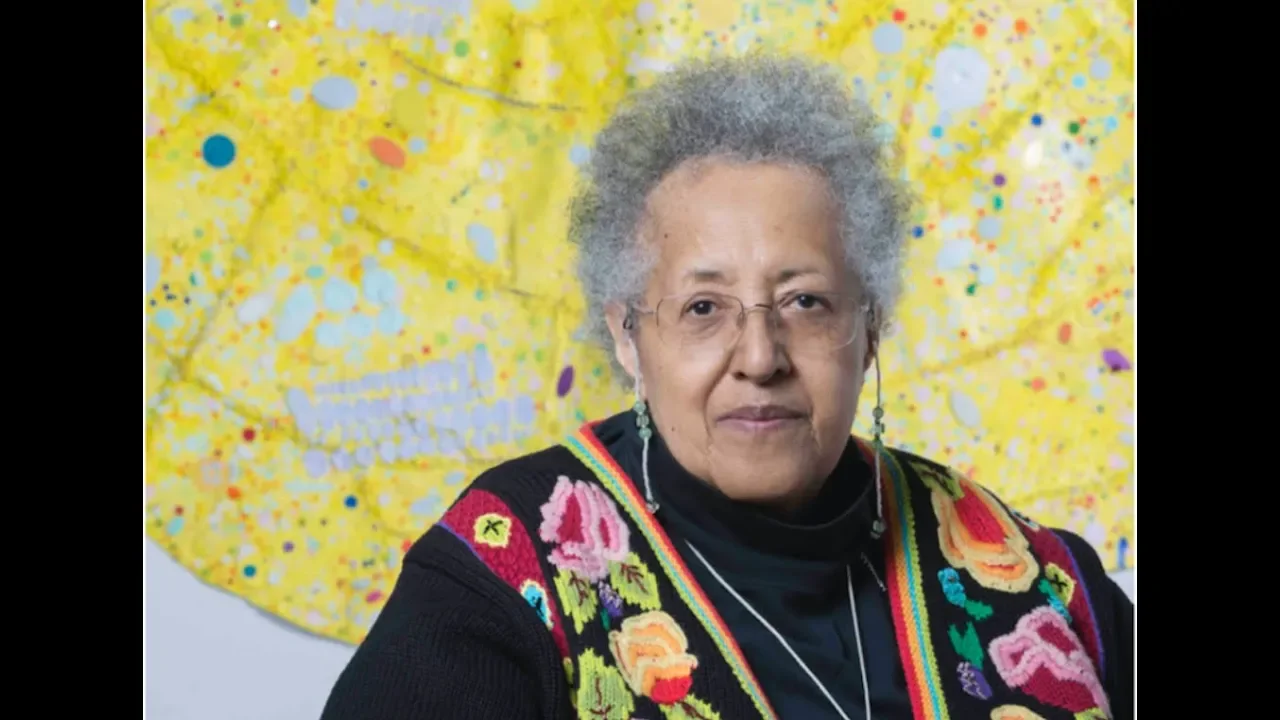





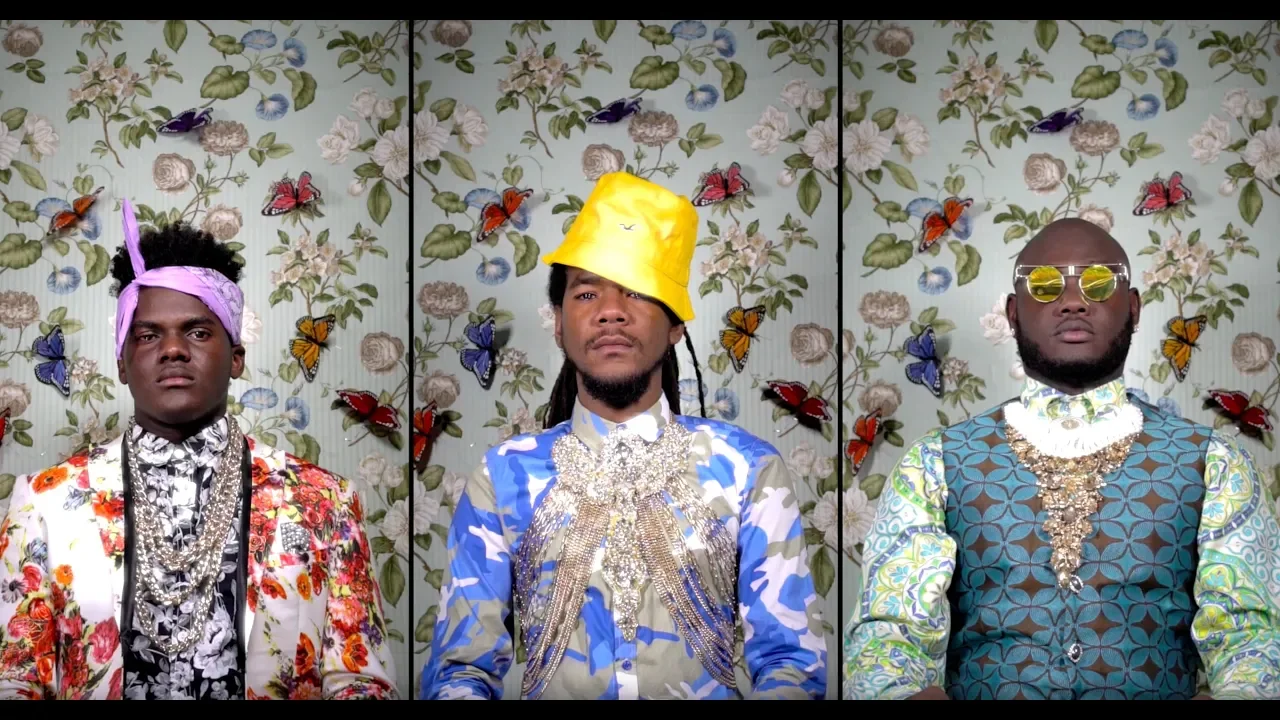

Howardena Pindell, an African American abstract artist born in 1943, developed her distinctive style of spray-painted dot paintings after witnessing racial discrimination as a child when she noticed a red circle marking on utensils at a root beer stand indicating they were for non-white patrons; her work explores how personal trauma and systemic prejudice can be transformed into universal artistic language through abstraction, using circles and numbers as recurring motifs that speak to both individual and collective human experiences.
Howardena Pindell: Inner Circle | Art21 Extended Play
Added:An understanding of mid-20th-century Abstract Expressionism and Minimalism, particularly how artists used grids, geometric forms, and repetitive systems.
The historical context of the Civil Rights and Feminist Art Movements of the 1970s, which shaped the opportunities and themes for Black women artists.
The concept of 'Process Art,' where the physical act of making—such as cutting, spraying, and numbering—is fundamental to the artwork's meaning.
Basic familiarity with how personal trauma, memory, and systemic racism can be expressed metaphorically through non-representational art.
An in-depth analysis of Pindell's landmark video art piece 'Free, White and 21' (1980) and its overt critique of racism in the feminist movement.
The study of 'Institutional Critique' in art history, examining how Pindell and her peers fought for the inclusion of artists of color in major museums.
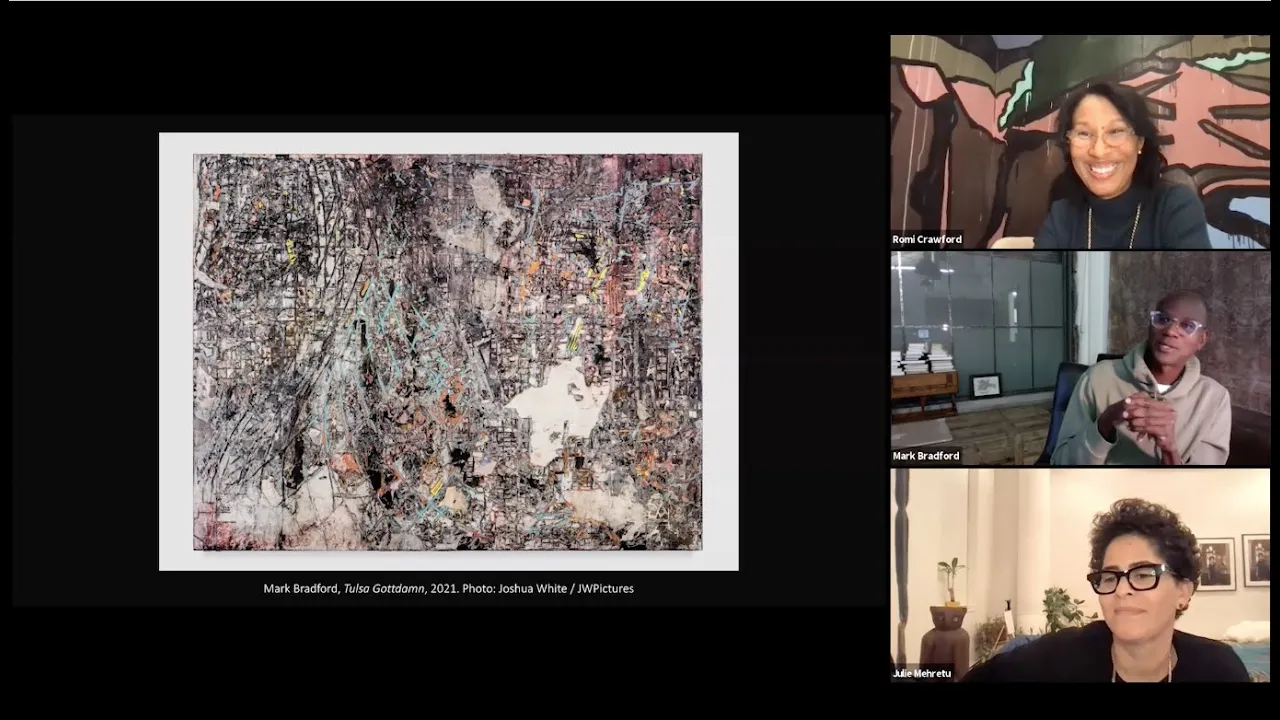
Exploration of other prominent Black abstract artists, such as Sam Gilliam, Julie Mehretu, and Mark Bradford, to compare their approaches to materiality and identity.
An investigation into the use of data, statistics, and 'nonsense numbers' as conceptual tools in contemporary art to challenge institutional biases.
100.7K views2.4Klikes14:57Original Release: 2024-11-20
(calm music) - As a child, my parents had reproductions in their house, and some of them were really corny.
(hole puncher snipping) (calm music) But in the guest room, they hung a textured painting by Van Gogh.
So I scrambled up on the chair and I touched it.
That's what stuck to me, that painting would have a kind of texture to it.
(calm music) It's almost a kind of exhilaration.
The process of being an artist I find very fulfilling.
I feel a sense of freedom.
(calm music) The templates are on the wall.
That's great, yeah.
- We're decorating the rooms.
- Oh, I like that, I like that.
(Howardena laughing) - Do you wanna put some shapes on this one?
- Mm-hm, let's see, that way?
I like that way. - Yeah.
Or that way?
- I kind of like this.
- [Erin] You kind of like that?
- Yeah, 'cause I'm very, I love this wiggly thing, and I'm tempted to put a shape like this, but without that change there on this edge, in here.
- [Erin] Oh, okay.
- My intention is that it would pull over into this.
- Gotcha, yeah, okay.
- And then with this, I think I would like to put that up.
- [Erin] Okay.
- 'Cause I really want that dark to come through something.
- [Erin] Okay.
- I see abstraction as an intuitive expression of someone's experience, both good and both bad.
At least you get the general idea.
Let's see.
(calm music) When you work with abstraction, you're working with your own intuitive feelings about space, color, line, shape.
Its purpose is almost a way of opening up our thought process, because you're reading someone else's language and you're interpreting it through your own language.
Did you wanna do a painting that was a dimensional?
Did you wanna do a painting that was about numbers?
I felt challenged by that.
The circular format is a kind of internal gravity.
It's so compact and you can make something that has a lot of tension in it.
It's an iconic form in nature.
And I could look at the planets, the stars, the moon, molecules, it's all around us.
(calm music) I'm fascinated by the circle.
(calm music) And so back in the early seventies, I started spraying dots, through templates, which I made by punching out file folders, and I would spray through the template.
(calm music) (paint spraying) I make the basic drawings for the spray paintings.
The studio manager, Erin, handles the spray equipment.
(calm music) My father was a science math person, and I don't remember getting a doll at Christmas, but I was given a microscope.
I was very curious, and I used a dropper to put some drinking water on a slide and looked under the microscope and there were all these microbes swimming around in the drinking water.
And it was all kind of at random, they were just all over.
(calm music) It was like drama 'cause things would collide or move around, or they wouldn't run into each other.
And there was no particular reason other than they were just in water.
So that microscope made a difference because I saw things in motion at random.
(calm music) Oh my Lord.
Oh my God, Virgil.
Here I am with Nancy.
I don't know how old I was.
Oh, this is amazing, it's my parents' house on Wayne Avenue in Philadelphia.
That's incredible.
This is my father.
57.
He loved reading.
April 14th, my birthday.
(pictures rustling) Oh God, it's really interesting, that's, my grandmother's house.
Oh, this is in Hamilton, Ohio, which is southern Ohio.
And my grandmother had a little bit of land and a house, and she grew her own food.
I didn't know if there were grocery stores in Hamilton.
(calm music) I was triggered in terms of my memory of circles.
My parents and I went to Ohio to visit my mother's mother.
We drove to Northern Kentucky and there was a root beer stand, and my father liked root beer, and we were given chilled mugs the same as everyone else, except there was a big red circle on the bottom.
And that basically meant that these were the utensils that you used for non-whites.
(calm music) And that kind of shocked me.
For years, I keep noticing circles.
I mean, just the shock of seeing that.
(calm music) I like drawing numbers, but I have no idea what meaning they have.
So I call them nonsense numbers.
It came from seeing my father write numbers as a mathematician.
I think they're beautiful, beautiful things to see.
It's an essential part of our life.
It's almost like our heart.
Without our heart, we have no life, where everything's numbers.
(calm music) - You feel good with your dot colors?
- Oh yeah, I love it, I love this pea soup.
(people talking simultaneously) - Howardena, you used to handpunch all of your dots.
- With one single hole punch.
(Howardena laughing) This is my third year at Dieu Donné.
- [Woman] This is your third year?
- Third yeah, yeah.
- [Woman] Over a hundred pieces?
- Hundred pieces, yeah, yeah.
Well, I looked at a sample of colors and I like this, I call it like pea soup green.
(everyone laughing) And then with the purple blue, and then it goes from like dark to light.
I like the gradation.
- This might be silly question, but how Howardena, did you ever think that you would be this big?
- Are you kidding?
I don't even believe it.
I don't believe it now.
You know, when Amy sent that text to me about Hong Kong.
I was like, oh my God.
(Howardena laughing) (calm music) It's almost like it's too late.
It sounds strange, but, when I would've appreciated it, I guess when I was younger, I felt isolated.
At that point I didn't have a dealer.
Some of the rejections would be from white collectors.
Why should I buy an abstract work from a Black person when I can get it from a white person?
This is what Black artists were running into.
I worked at the Museum of Modern Art for about 12 years.
It was mainly white and male.
Hostile questions too were coming from some of the women art historians.
"What did I do to qualify for my job at the Modern?"
- You know, you really must be paranoid.
Those things never happened to me.
I don't know anyone who's had those things happen to them.
But then of course, they're free, white, and 21, so they wouldn't have that kind of experience.
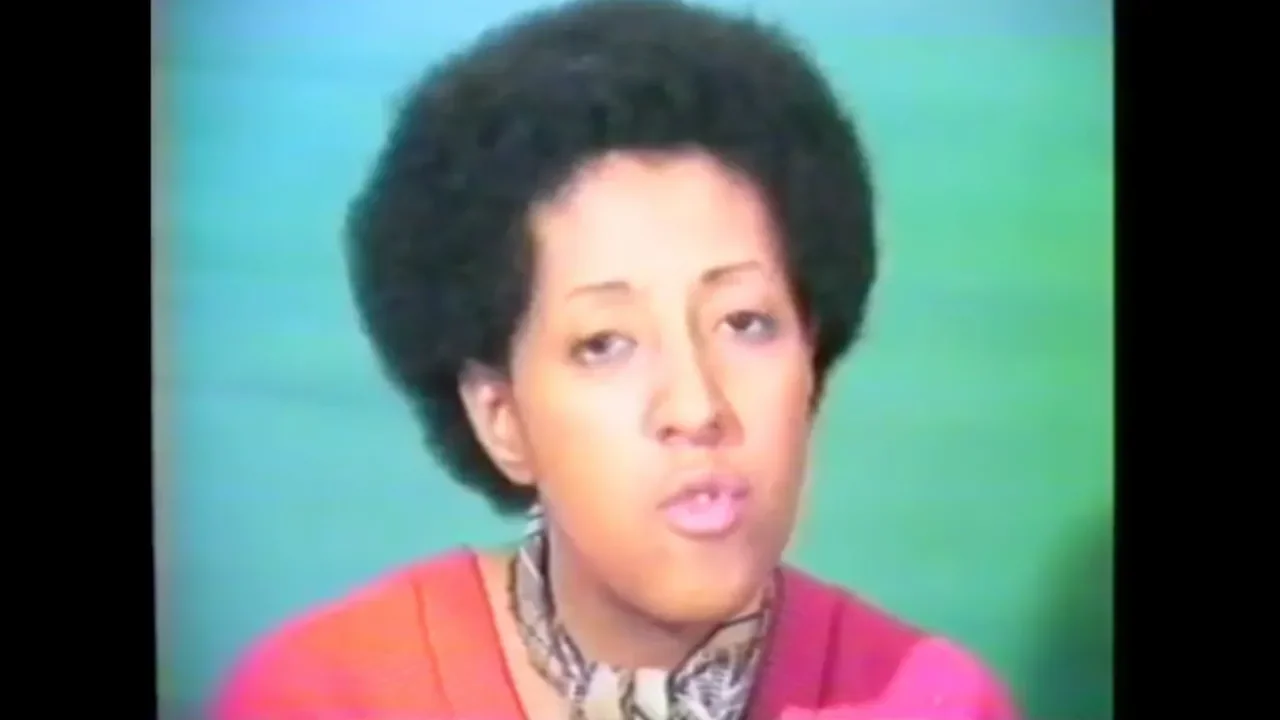
- Free, White, and 21 was a video piece that I did in 1980, which was around the time when I had resigned from my job at the Modern.
- However, she felt that a white student with lower grades would go further, therefore she would not put me in the accelerated course.
- Well, I was kind of annoyed at the white women's movement, and I also wanted to deal with some of the racist stuff in the art world.
And so I decided to be myself and then to dress myself up as a white woman criticizing me.
- You know, I hear your experiences and I think, well, it's gotta be in her art.
That's the only way we'll validate you.
And it's gotta be in your art in the way that we consider valid.
If it isn't in a, you know, used in a way, if your symbols aren't used in a way that we use them, then, we won't acknowledge them.
In fact, you won't exist until we validate you.
And, you know, if you don't wanna do what we tell you to do, then we'll find other tokens.
- And I just did this narrative and it goes back and forth, and at the end, I pull off like I'm pulling off my skin, but it's almost like I'm pulling off another layer.
It was first shown in a show Ana Mendieta that I put together at A.I.R.
It was way in the back and I had a little metronome so it would tick as you watch the video, and the whites freaked out.
They went wild.
They were not happy with it.
It's been shown in Berlin, Scotland, and Ireland, and the Modern had it on view for a while, which is kind of ironic.
(Howardena giggling) - Well, you ungrateful little, after all we've done for you.
(calm music) - Even though early on, my work faced a lot of rejection, I just kept going.
I just didn't give up.
You know, I just kept pushing and the work matured in spite of a hostile environment.
I was used to the work being rejected or mocked.
I mean, it's an irony it's the same work I'm showing now.
Literally, some of them are the same pieces and it's the opposite reaction.
(calm music) I seem to have more inhibiting physical boundaries, but the art side of me is still there.
And I can step out of my own restricted container and be able to express what I feel, whether I'm limited physically or not.
It's a life source for me.
It's just, I don't get tired of being an artist.
I get tired of other things, but then I feel like I can come here and make art.
And it's not born of expecting recognition, I'm just doing my work.
(calm music)
Up Next
35:07
American Art Movements: 1900s Evolution Timeline
@behindthemasterpiece
14.2K views•2025-10-02
60:59
The Mathematics of Perspective in Renaissance Art and Modern Applications with Sarah Hart
@GreshamCollege
29.8K views•2021-10-25
7:48
Ukiyo-e Art: History, Woodblock Printing & Influence
@japanathand
6.3K views•2023-06-08

16:34
Earliest Depictions of Jesus in Art: 10 Ancient Images Explained
@UsefulCharts
5.9M views•2022-06-03
Related Study Plans & Knowledge Roadmaps
Structured learning paths in Art History
art-history
Vienna Secession: Rebellion, Klimt & Schiele
01Fin-de-Siècle Vienna & Academic Historicism
02The Secession Movement & Klimt's Decorative Symbolism
03Gesamtkunstwerk & the Wiener Werkstätte
+ 2 more learning modules
9h5 modules
Explore Roadmap
art-history
Gothic Cathedrals: Engineering, Light & Society
01The Birth of the Gothic: Romanesque to Suger's Vision
02The Structural Triad: Pointed Arches, Ribbed Vaults, and Flying Buttresses
03Theology of Light: Lux Nova and Sacred Geometry
+ 2 more learning modules
14h5 modules
Explore Roadmap
art-history
Pre-Raphaelites: Realism, Symbolism & Critique
01The Victorian Art Establishment and Academic Formula
02The Founding of the PRB and Radical Realism
03Medieval Revivalism and Literary Symbolism
+ 1 more learning modules
8h4 modules
Explore Roadmap
art-history
Street Art: From Subways to Art Market
01Subcultural Origins in Philadelphia and New York (1970s)
02The Subway Era and Style Wars (Late 1970s - 1980s)
03The East Village Scene and Early Gallery Crossover
+ 2 more learning modules
10h5 modules
Explore Roadmap