
![[#탁현민의더뷰티플] 첼로의 숲 | 2024년 11월 2일 토요일 | 다시 8회](https://i.ytimg.com/vi/d_8tBn5eHKg/maxresdefault.jpg)
















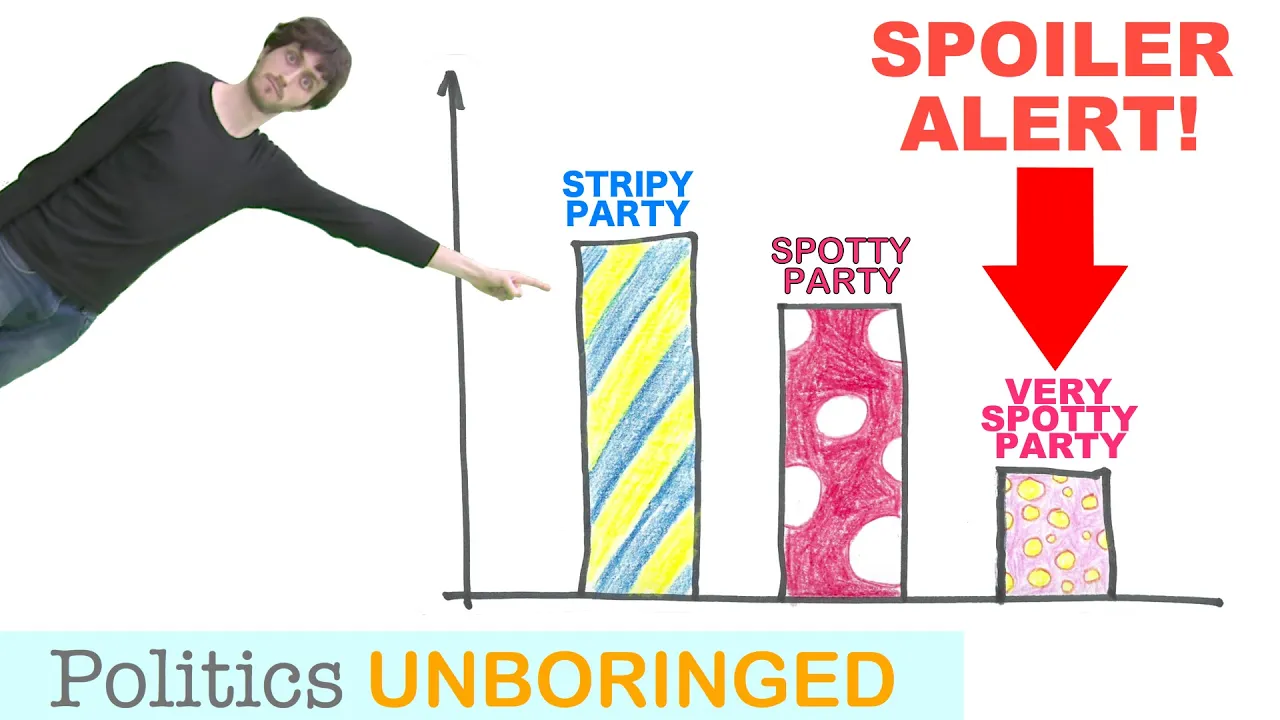


The UK's First Past the Post (FPTP) voting system creates a fundamental democratic tension where a party can win a majority of parliamentary seats (51%) with only a plurality of votes (37%), meaning 66% of voters have no meaningful representation. This system, while providing clear governance through single-party majorities, can result in significant misrepresentation of the popular will, as demonstrated by the 2015 UK election where UKIP received 13% of votes but only 1 seat (0.2% of parliament), and the Liberal Democrats received 8% of votes but only 1% of seats. The system's local constituency-based approach means individual voters' influence is limited to their specific geographic area, potentially making their vote feel meaningless if their constituency consistently favors one party.
Penguins, Politics, and the UK's Electoral System | Hello Internet Analysis
Added:In the last episode, you put that bit of sort of lagnneap bonus footage at the end. And I think you put that lagnap footage in because it like justified you, but I think it justified me. Like it it vindicated my memory. And you think it vindicated your memory? I I put that that little that little audio clip at the end in to vindicate me. However, there was a problem when I exported it that it did not include your audio. It only included my audio. And if you only listened to my side of the conversation, it definitely sounded like you were right. But trust me, people, I was right.
Uh, that definitely would not work in court. That wouldn't work in court. I'm presenting this evidence, your honor, and it actually makes my client look guilty, but trust me, it makes him look not guilty.
We have very little followup before we get to the business of penguins and politics which I think are going to dominate this podcast. Yes. We talked about emoji and my ignorance of emoji and to sort of set the record straight and help me better understand how emoji works rather embarrassingly everyone has been pointing out a video on the computer file channel which of course is my channel. But I must hasten to point out, I do not make all the videos. In fact, I make hardly any of the videos on there, and I do not watch all of the videos on there. It's run by my friend Sean. And he made the video with Tom Scott all about emoji, which I had watched some of to be fair, but kind of had forgotten bits of it. So, when everyone's saying, Brady, how can you not know this? You've got a whole video that you made about it. I have not made a video about it. A video was made about it on my channel, but not by me. Mhm.
So, it is a bit awkward and embarrassing, but it's not like I made the video and then forgot all this stuff. To be fair though, you could not possibly be expected to remember everything that has happened in all of the videos that you have made. How many topics have you covered for which you retained no knowledge now? I mean, it must be it must be hundreds of topics.
That is I I guess it will have gotten to the point now where there are videos I completely have forgotten making, you know, having made. I will also say that I am sometimes caught out slightly embarrassed in conversations for the same phenomenon where someone is asking me about a detail of something in my video and of course I have made vastly fewer videos than you and I I find that my brain almost just dumps a huge amount of the knowledge that I have acquired once the video making process is over.
Yeah. And so I am really aware of how if I'm ever thinking about linking back or vaguely referencing one of my videos, I will have to watch that video again because I can't remember all the stuff that I researched about it. Like I'm to to pull one out of the air. I I remember putting together a video about how the primary election system works in the United States. And I remember being very interested in that. And today I could not confidently tell you very much about the details of how that works. I would I would need to reference my own video even though I made it. So these things can slip through the mind even if you do create them. The thing that's even worse is I actually still haven't gone back and watched it all. I I was going to say, can are you about to enlighten me on the process by which emoji are selected? No. I'm just going to recommend a fantastic computer file video featuring the brilliant Tom Scott.
It was a really good video. It has been.
It has been a good one. It is a good one. But Tom is very good. He puts together a lot of good ones. Yeah. But I still haven't gone back and watched it.
But speaking of YouTube, we only have one more follow-up item here. Yeah. I I think this is this isn't even really a follow-up item. We basically have a tiny segment now which is called YouTube halfassery. We can't have a segment that I can't pronounce. Gray, you just make me look bad every week. Half assery.
Half assery. There you go. It's perfect.
It's it's perfect. Brady, don't don't overthink it. You're doing great. This isn't exactly halfassery so much as just as just like a complaint that that I want to formally lodge with YouTube.
Okay. And it is there. I'm not exactly sure how new it is, but it is their autoplay feature now. Are you familiar with this new autoplay feature? Well, I thought autoplay was really old and then it went away and has it come back or is this different to what I'm thinking of?
You're going to have to help me out here. Okay, so what they have had for a long time and what I believe they used to call autoplay was if you link to a video that is in a playlist, the the uh YouTube will automatically play the next video in that playlist. Okay. But it feels like within the past 6 weeks or so, if if someone sends you a YouTube video and they say, "Oh, here, watch, you know, watch this this funny cat video." And you click on the link, right? And there's a cat doing something funny for 10 seconds. The instant that video is over, YouTube automatically starts playing another video. Don't they give you like a 10-second countdown or something, but it's really hard to figure out where to click or There's a little dial on the screen that that counts down from five or maybe it counts down from one. I don't know. whatever it is, it seems to go by so fast and it's really hard to figure out what to click to stop it. Yeah. Yeah. And I know that I have done it wrong almost every time because I think like the center of the circle has a little triangle which it says like play like oh do you want to skip this countdown and just immediately want I I know I've messed it up many times trying to not play the next video and always end up playing it anyway. But I find this feature just so anti-user is the best way to put it or it's user hostile. Nobody would request this and say, "Oh, you know what I would love? I would love if every time I went to a YouTube video, it also showed me a random YouTube video that I did not request. Nobody would nobody would want this." There is one person who may request that. you because like if someone has just watched a CGP Gray video, I think it's more likely than not the recommended next video will be another CGP Grrey video. So actually if anyone benefits from this, it's you and and me. I well I I don't I don't think it is because as far as I can tell when I have occasionally watched YouTube videos that have been produced by you know any of of of the of the people in our circle who make educational videos the next video just seems to be random. Okay. It's not like if I watch a Smarter Everyday video, the next one is a Smarter Everyday video as well. It's it's bizarre. It's absolutely bizarre. and they're using their their you know who their who knows whatever it is their magic algorithm to select a video out of the ether for you to watch next. It's just such a hostile system and and I know what YouTube is doing. Like the only reason that something like this happens is I have to imagine a bunch of board members at YouTube sitting around smoking their cigars right in a dimly lit evil looking meeting room saying we need to inflate view numbers for advertisers so we can make more money.
How can we best do this? I know. Let's make sure to randomly start playing videos at every possible opportunity.
And oh well users love it. No, users will hate it. But it'll definitely at least double our view numbers, which will also double our revenue. When I think of this feature, that's how I imagine this went down in a meeting.
Like, I would love to hear from YouTube.
Tell me, YouTube, what do you think is the benefit to users of this feature? I can't I have a very hard time imagining a convincing argument for that. Well, of course, I can I can imagine what they'd say. They'll say, "Oh, it's helping them discover new and amazing content they would never have otherwise have found.
We are using our clever algorithm to navigate them through the the jungle and help them find the best possible content. I can easily imagine what their lame answer will be. Yeah, I'm sure that's what they would say, but their mouth would just be smelling like bullit the whole time that we're speaking.
That's all it would be. It's like, "Oh god, can you please turn away? Like, don't talk to me directly when you're saying this." I must admit, I felt a bit dirty even saying it because it is dirty. It's a lie. It's a lie that you tell yourself and that you tell others.
Netflix are the masters of this. I mean, you need a you need a degree in computer science and the reflexes of a Jaguar to avoid the next film or the next TV show starting at the end of a Netflix show.
Like, because the screen shrinks and they say, "This is going to start in 10 seconds." And you're like, you've got your little like Apple remote or your computer going, "Oh, where do I which which button do I click here? Main how do I how do I stop it from Oh, the next one's already started." It's very funny.
It's very funny that you mentioned this because I was actually going to use Netflix as the counterfactual to this.
We have recently signed up with Netflix and we've been using it a little bit and I actually really like their autoplay feature when you're binge watching television. Of course, right? I I think that like that is nice. That is exactly what I want. I was like, "Hey, guess what, Netflix? You're right. I do want to watch the next episode of Daredevil.
Please just keep it playing on the screen. like let's let's let's work our way through this. Uh I don't watch movies very often on Netflix though, so I don't know. Do they start playing a random movie when your movie ends? I don't think they do. I'm applying it more to TV as well, like when I'm watching something like at the moment we're watching u the Good Wife and you always get the next one straight away.
And I'm going to quote you back to you.
M I remember you talking about uh Kindles, I think it was, and finishing a book and saying, "Can't I just have a few seconds to just absorb what happened and think about it and not have another book like recommended to me immediately?" I think that's what Netflix do at the end of an episode or a show when something's just happened and you've had a finale. I feel like I want just a few seconds to absorb it or maybe turn to my wife and talk about what just happened. Not not be sort of panicking trying to think, "Oh no, how can I stop the next one starting? I don't want to see I don't want to catch the first few seconds of the next one cuz it might spoil something or ruin the moment.
Like, and I can't believe you don't think that. I can't believe you don't think. Hang on, guys. Just give me a second. Well, at least let me make a simple command to say, "Let's have the next episode. Don't just shove it at me.
Don't throw it at me before I've had time." Yeah, I'm I'm I'm I'm realizing actually last Yes, last night we did watch in my house a movie on Netflix and it it did not autorecommend another movie, right? And I would completely feel that way of, hey guys, give me a second. You I've just watched The Hobbits and I need a little time to just recover to grieve. You can't you can't start playing Legally Blonde right away because it's just it's just too much.
It's too much of a tone shift, right? So they they don't do it with movies, but with TV and particularly I feel that a lot of the Netflix TV is designed to be watched right in a row. So I I don't I don't have that feeling at the end of an individual television episode. Usually at the end of a TV episode, my my exact thought is I need the next one right now. I'm not saying don't make it easy to watch the next one. I'm just saying don't make it almost compulsory and difficult to avoid cuz like I like I always have like my wife saying quick stop it stop it before and I'm like I don't I don't know where to click. I don't know how to stop it. And like the next one has started before I figured out how to work my Apple remote. And I'm at the wrong angle for the infrared. And I I'm like, oh no, the next one's already started. And like see, every everything about this to me is really funny because one, I love the notion of the technological problem as being 50% of the problem in your house. TV setups, like actual physical TV setups are always very difficult about which remote and what's the input and how to do this. And I don't live my life like that where I'm almost always watching Netflix just on an iPad with my headphones and so I can just reach out with my hand and exactly press the button that I want and there's none of this remote nonsense. Or when my wife and I watch TV, we don't actually watch it on a TV. We just have a an iMac that functions as a television. So it's just the big computer. But yeah, once you have remotes in, yes, there's going to be panic and problems and things are going to go all wrong. And it seems like maybe you are more susceptible than that to most people. But I don't think Netflix are as evil as the way YouTube are doing it, but I still think they haven't nailed it. And I think you're being too kind on them. I would say that the Netflix feature can be genuinely customer ccentric. And you know that it is because they don't have ad numbers that they are potentially trying to inflate. And as far as I can tell, they are always showing you the next thing in a sequential series. As opposed to YouTube, which almost certainly is just trying to inflate ad numbers and as we have discussed many times, has no concept of serial content. No concept at all. Uh there just two other minor points while while we're while we are uh talking about this that I just wanted to mention which when I originally set up my RSS subscription so that people could use RSS to get my videos. I had a huge number of people say, "Oh, but but don't you know on your YouTube channel there's a there's an RSS feed that people can sign up for so they can be notified of of when you have a new video up." Mhm.
And since we know that YouTube seems to be changing the way that their business works, one of the things they have now done is they have taken away the built-in RSS feeds. So, I've heard from a lot of people who who used to be tracking all of their videos from various channels in order with RSS. That is now not an option. YouTube has taken that away. And apparently the subscription section on YouTube that people used to be able to go to to see all of the videos, see all the channels that they have subscribed to, it used to have a feature called collections where you could arrange a bunch of channels together to say, "Oh, I want to see all the new videos from my favorite educational YouTubers." So here's Crash Course and here's periodic videos and here's CGP Grey and I can see new ones from this group. And I got a whole lot of emails from people saying that YouTube has also removed this feature.
So, it's just it's so clear like piece by piece YouTube is taking away all of these little abilities for the user to control and keep track of their own viewing experience. And they just keep pushing more and more of these features that sort of do it automatically or they want to try to handle it for you. And I don't I don't like that. I don't like that at all. I just want to say do keep watching our videos on YouTube though, people. Um, like I feel I feel like we spend all our life telling people how awful YouTube is and yet it's like our job. Well, you can watch my videos on RSS or on YouTube. I'm I'm perfectly fine either way. Please don't send Brady and I tweets or emails about how you can turn off the YouTube autoplay feature.
I'm I am very aware that this is a possibility. I'm sure Brady knows that you can turn off the YouTube autoplay feature as well. Uh, but there are many reasons why it won't work unless you're logged in or it's remembered your preferences or you use a different browser. So, we're just complaining about it because we come across it kind of a lot. But yes, I do know that you can turn it off, but it is it cannot you'll still run into it even if you try to avoid it. Cool. I'm just trying to avoid a million emails. All right. Well, good luck with that. Yeah, they've already been sent. That's the problem. I didn't say it in the beginning. So, we've we've already gotten them and people never send the oh, I'm sorry email, which actually I wouldn't want anyway because it would just double the email load. This week's episode of Hello Internet is brought to you by harry's.com. Harry's was started by two guys passionate about creating a better shaving experience for all men. Not only does Harry's deliver a superior shave, but they also cut out the middlemen offer an amazing shave at the fraction of a price of drugstore brands. Their starter kit is just 15 bucks. That includes the razor, three blades, and your choice of Harry's shave cream or foaming shave gel. As an added bonus, get $5 off your first purchase with our code HI. That's just the letters HI.
With that code, you get an entire month's worth of shaving for just 10 bucks. And it's a real 10 bucks.
Shipping is always free. They don't charge you at the end $20 shipping for a $10 product. It's just a straight clean $10 price. They are highquality German engineered blades and they care about the quality of their shave, which is why they bought and own the German factory that makes them. And I also noticed when checking out their website, you don't just have to buy Harry's online. There's also now a Harry's Corner shop that's in New York. It looks pretty cool. There's a giant H on the floor. It's very slick layout. If you're in New York near 64 McDougall Street, you should go check them out. Tell them hello internet sent you. So once again, if you are looking for the superior shaving experience at a fraction of the price, go to harry's.com and use our offer code hi to get your first very good-looking shaving kit.
What a weekend we had. I saw a whole lot of you, Brady. That sounds rude. We finally had our long awaited Star Wars Penguin Bristol Zoo David Browse Meet Hallow Internet extravaganza.
Yes, it was held on Extravaganza is the word. It was Saturday May the 9th and only a small number of people were there. And at the risk of being a bit mean to the people who wanted to come but didn't get tickets, I think we should talk about what a fun day we had and tell people a bit about it. the good and the bad, the highs and the lows, the laughs, the tears, the good times, the bad times.
Any other opposite things I could say? I I don't know where you're going with this. And also, it didn't it didn't to me seem like a small group of people there. There were like 40 people there, all told. Yeah, but a lot more people wanted to come who didn't get tickets.
Okay. Yes. I guess if if we're looking at the set of people who wanted to come versus the set of people who came, it was a small number of people. But I'm thinking of it from the perspective of oh, you and I, right? We we show up at the zoo and there's a crowd of 40 people standing around. That's a lot of people.
I guess I live near Bristol. You you came up on the train, you and your wife, you came up and uh and met with met with us and we we went for lunch and you walked over the the uh Clifton Suspension Bridge, one of my top five favorite bridges. And you you got to see it. I was very impressed with the Clifton suspension bridge. It looked very nice, even though half of it was under renovation at the time. You took a photo. Were you doing that just to sort of to humor me, to make me feel good, or did you actually want a photo of it? I would never humor you in in such a way, Brady. I thought it was great to get a photo of you and I in front of the bridge. Yeah, I thought that was really good. You know, and you have to you have to remember the day. This this is this is the thing I you need the photographs otherwise future you will will never will never remember what past you did unless you have photographs. That's true. I'll be saying, "Greg, you never came to the bridge." And you'll be saying, "Yes, I did." And I'll be going, "No, you didn't." And then you'll say, "Well, look at this. This is why we need proof." I do this all the time. I I take pictures of stuff just to remember that it happened at some point. So, yeah, I wanted to get us on the bridge. And it was it was the world's most lovely day to walk across a bridge and go to the zoo. We really lucked out with the weather, which was nice. We did indeed.
So we we arrived at the zoo and we uh met with all the various people who who had come along. Mhm. Uh and the the first part of the day was a zoo expert whose name I believe was Nigel. He was like a curator of birds and he gave us all a special little talk about the penguins. Uh because this whole day was raising money for African penguins, the conservation of them which is done at the zoo and down in South Africa. And at that point, the first surprise of the day was sprung upon you. You know, I like surprises. I know. I know you like surprises and you like being given objects. And those two things both happened. Much much to my surprise, you had sneakily arranged for a penguin to be named after me at the zoo. Is is that the best way to describe how this how this came out? I was I was almost overwhelmed and confused when it happened and I was trying to think who did this and I I think you you did this.
You arranged this. Well, I suggested it.
It's it's actually very unusual for animals at the zoo to be formally named.
Mhm. And I think only one or two penguins of the numerous penguins at the zoo have names. But but because we managed to with the help of our viewers raise so much money for the conservation of penguins and because maybe they just thought we were nice guys, the zoo said, "Okay, we will we want we're going to name a penguin CGP Gray." And they had a couple of newborn chicks. So I went along on the Thursday before and said, "All right, let's get some photos and video footage of the penguin. So when Gray finds out, I can put a video on YouTube or a blog and we can, you know, show everyone what the penguin looks like. So I went along to the zoo and they had not yet chosen the penguin and there were there were two chicks. So I turned up at the enclosure with the the keepers and they said, "All right, well, which one are we going to call CGP Gray?" And the decision was made so easy by the fact that there was one big fat very gray fluffy penguin called Gray with a gray number tag on its wing just sitting there next to its dad doing nothing. And the other one was nowhere to be seen. The other one was off having adventures. So I said, I'm going to choose that one. The other penguin having adventures is informally named Brady.
Well, that's not the case. But the but the big fat slow one doing nothing procrastinating.
Yes. Is this how you think of me? Yeah.
Asking for its father to vomit into its mouth.
That is CGP Gray. So um and I will tell you the penguin that is named after Gray or is named CGP Gray is the one wearing the wing tag number A20583. You'll need binoculars or very good vision to see because the tags are very small. So that is you and there's a certificate. They gave you an official certificate to to do it. And there's these official database of zoo animals and that's going to be officially amended to have your name on it. So it becomes the real deal. But the thing I didn't tell you and the thing I only just found out is we don't actually know what gender CGP gay is. And that is not something we will find out until it has its six monthly health check. When they take a sample and send it off, they don't like lift up the feathers and have a look. They do it with science. So in about 4 months time, we will find out if CGP gray the penguin is a boy or a girl. And presumably by that time it'll be more of a black and white penguin, not such a gray penguin like it is at the moment. When you say they do it with science, do they do it with a DNA test? Is that what you mean?
I think so. I think they they take a bit of blood and they also take like feather samples and they do it with that. So, I'm presuming they just Yeah, they must just do it with DNA. You know about chicken sexers?
Yes. But what do they do that? What's the skill to that? The skill to being a chicken sexer is being able to quickly identify the sex of a chicken. And there are some very funny videos of chicken sexers at work picking up chickens very quickly, pulling up some feathers, and then putting them in a pile, whether they are the whether they are male chickens or whether they are female chickens. Yeah. See, I thought that I thought they'd do that with the penguins, but I think they like to touch them as little as possible and, you know, keep it keep it real. I'm sure CGP Gray the penguin would also prefer to be touched as little as possible. Yes. So, if people go to the show notes by hopefully by the time this goes out, we will I will have got Mike together properly with Gray and we'll have pictures available and uh there's a little video of the of the penguin. Uh, but the the challenge I want to throw down is I want people to go to Bristol Zoo and take their own pictures or have a selfie with CGP Gray the penguin in the background. And if you do that and sort of tweet it or email it or whatever, you are going to get the love at least from me, maybe even from Gray.
It's going to be quite a challenge to find that penguin in that enclosure.
Yeah. I mean, first of all, you got to go to Bristol Zoo. So, but but even once you're there, this is this is people going to be the hardest Where's Waldo ever. Yeah. Especially when Gray grows up a bit and looks like all the other penguins. At the moment, he's quite unique cuz he's fluffy and gray and all the other penguins are black and white.
But in a few months when he becomes black and white, you're right, that's going to be that's going to be hardcore.
This is basically the challenge is on easy mode now, but in in so if you want to practice while it's easy, now is the time to go and then you can go later and show off your amazing penguin identifying skills later on. Because they did say the zookeeper did say that all of the penguins eventually develop a unique pattern of of black spots on the front of their chest. Indeed. So maybe maybe someone when CGB Gray is an adult can find him or her and take a picture and show us the unique pattern of spots on CGB Gray. Do you feel any kind of attachment or bond? Like are you now curious about sort of this penguin's future or are you just like whatever you stupid Brady or are you going to be like like do you think you'll go to the zoo again to see it or anything?
This this is this is the crazy this is the crazy irrational thing that does work where I think oh yes for for nonsensical reasons I do feel like I hope that penguin turns out okay I I hope he has a great life in the zoo or in South Africa if they re reintroduce him into the wild. I don't know if they do that. I don't I don't think that will happen to that penguin. It could get transferred to another zoo but I don't think they would release that to the wild. I don't know. I don't know. I don't even know what I'm talking about.
I feel like CGP Gray the Penguin would vastly prefer the easy zoo life than living in in South Africa. That might be much harder. I have already told them that I want to go along and film the six-month health checkup when they do take him in and take blood and feathers and stuff. And I have also told Gray that I'm going to I'm going to take some extra special pictures and do extra updates for the um for our Patreon supporters. So, if you follow Hello Internet on Patreon, you will occasionally get like an extra high-res picture and like health updates and stuff, mainly because I think only those people are kind of interested enough to be subjected to such minutia of our life. I think that is an excellent excellent thing to put on the Patreon.
Yeah, I was more I was more flattered than I expected to be and I and it was it was a very nice if quite surprising and and and slightly derailing for for a few moments thing to have done to me.
So, thank you very much for that, Brady.
And of course, thank you to the zoo for doing it. Did you have you told your family about it yet? Okay, so I did tell my my family about it and particularly when I was telling my parents, the very first question out of their mouth was, "Why didn't Brady get a penguin?" That was the the first question. Well, I'll tell you what. I am more than happy for you to have the penguin cuz I find that far more amusing. But but I will say something that happened later on and ruined the chronology of the day cuz later in the day the zoo actually did spring a surprise back on me. Mhm. And it wasn't that they've named a lion or something after me, but what but what they do do is they do have a very limited number of animals that people can adopt.
Uh and for example, in the penguin enclosure, there's one penguin that everyone adopts. I think it's called something like Polly or something like that. Polly the penguin. Uh, but they made a special exception and they have made me the official adopter of CGP Grrey the Penguin. And actually, oh, look at that. I have this in front of me here. Hang on. It's in a box. I have to open this box. But I've even got I have an adoption certificate which which I'm holding in front of me and we'll we'll put a scan on the, you know, notes and stuff like that. Certificate of adoption. This is to certify that Brady Haron has adopted CGP Gray the penguin.
And I've got you have parental responsibilities. I know. I've got all these birth certificates and it's really like official looking um document. It's really nice. It's somewhere between a real birth certificate and having a cabbage patch kid. But um but anyway, that's fantastic. So I was not left out.
You may have a penguin, but I kind of have I have adop I have the adoption of you. So everyone was a winner and everyone came away with a little certificate. I will keep mine and probably display it in some way. What Gray will do with his Well, who knows? Who knows? Who knows if he even still has it? But I'm sure he does. I'm sure I'm sure even robot Gray couldn't throw that one in the trash. It is in my wife's handbag as we speak. Oh, she's going to carry everywhere. Is she like uh maybe that's the plan. I don't know. Maybe it was it was a really fun little moment. Uh it was really good. We then all and I cannot tell you how beautiful the weather was. We then went into the penguin enclosure and went to like the public talk and like another zookeeper came out and like did the talk to everyone about penguins while they were feeding them fish and stuff like that. CGP Gray was just hiding in the corner with his mom or dad. Uh he or she did not partake of the fish cuz Gray's too young for that sort of thing. But all the other penguins were just freaking out and eating tons and tons of fish. I do have to say that is the moment that I felt the closest to CGP Grey the Penguin was when there was a huge huge amount of activity and hustle and bustle going on in this penguin arena and he or she decided that the corner was the best place to be. The corner behind a bush basically by himself. Well, asleep asleep if we're going to be honest that the CGP Gray was sleeping the whole time. And there was a moment when the uh the zookeeper sort of said, "Oh, and by the way, thank you to Hello Internet for coming and your support for the penguins." Like she'd obviously been told to say this and clearly had no idea what Hello Internet was and it sounded like the most robotic thank you. But it was really funny and yet I felt strangely proud. Like I was like, "Oh, wow." Like we're a real thing now because a zookeeper sent us to a crowd of people. And I just said this is this was all this was all you were doing, Brady. I had nothing to do with that. You pulled this whole thing together. I mean, the the day like you you made the day happen and you well, you should you should take pride in the zoo, man. The zoo did all the organizing. I just barked a few instructions and gave a few tips and said, "Oh, it'd be funny if you named a penguin after Gray and stuff like that."
It was Abby from the zoo. He did all the actual work. So, thank you to her. So, anyway, now all of this time, by the way, not only were we joined by 30 to 40 Hello Internet listeners, we were joined by David Prow, Darth Vader himself. He wasn't just going to swan in at the end.
He actually came and listened to the talks and was uh was hanging out with us. It was great. I got a chance to to shake the hand of a man who has crushed many people's throats through telekinesis. It was quite the honor. It was good. So, from the from the penguin enclosure, although it was a beautiful day, we did what all kind of nerdy people do and went inside to watch videos.
Honest. Honestly, that did feel like the most perfect moment for us. like, "Look at this beautiful day. We're going to go inside and watch a movie." Yeah. So, we uh we went into a little nice little sort of education center they have at the zoo where they'd set up a little uh makeshift cinema. We were given some biscuits and some tea and we hung out a bit and then we all took our seats and it was time to watch It was time to watch Star Wars Episode 4, A New Hope with Darth Vader in the audience. Yes.
It was a special time, wasn't it? It It was a very special time. It was a very special time.
Now, I want to I want to say something about this little moment. We're watching Star Wars. We're sitting down. The lights are off. The movie begins. And the way this worked is when we were talking about originally, we're going to be watching Star Wars. One of my initial concerns was which version of Star Wars are we going to watch? Is the zoo just going to handle this? How is this going to work? And I wanted to make sure that we watched a version that I may have. Okay, I'm not going to deny it. A version that I do have, which is the Star Wars despized editions. So for people who may be unaware, the despized editions are this kind of amazing amazing piece of work where I think it's a team of people have gone through and done their best to collect as much of the original footage um that has been made available from Lucasfilm from the original Star Wars and kind of um correct the colors and clean it up but also take out all of the George Lucas special edition. in nonsense stuff that was added in what was it the late '9s I think was a special edition. I'm not 100% sure. Well, there are a few different special editions, weren't there? It was kind of the meddling was kind of done in stages. That was Yeah, that was one of the things as well.
There are several versions of this, but I don't I don't I don't know exactly who is behind this, but I can tell you that if I was if I was in charge of the government, I would give the people who have done those despized additions a medal of cultural preservation of the highest order. It's an amazing It's an amazing piece of work to see. Uh, the only thing that's a little bit weird about watching them is that the resolution sometimes flips a bit from kind of lowresolution footage to high resolution footage if they weren't able to to like get a couple of shots uh in high resolution because the only high resolution versions available are ones with specialized crap all over them.
Yeah. So, the way this worked is is we discussed it and we're like, "Okay, obviously we have to watch the despized editions." So, in my defense here, Gray, you didn't even have to tell me this. I basically came to you and said, "This is what we're going to do."
And you you were like, "Of course." You were like you were you I felt like you were a bit proud of me. Like I said, we're going to we're going to go for despized, aren't we? I had already thought about this and taken the bull by the horns. I had already discussed this with the zoo. Like I was I was all over this. I didn't need to be told this. To be fair, of the two of us, I would probably say that you are the bigger Star Wars fan. H I think if if you could rank Star Warsitude, you would be higher on this than I am, right? And we we've discussed this many times. I think it's because you're like you are slightly older than I am. I can't remember. Did you did you see them in the theaters or not? I don't remember. I saw the only one I saw in the theater was Return of the Jedi, but Okay. Okay. Yeah, that would make sense. So, yeah, I never saw any of them in the theater. I only ever saw them on on VHS as a kid. So, but anyway anyway, this is this is all to the side. Yeah. Uh, I had given you the dspecialized edition and then you gave the despecialized edition to the zoo.
You'd actually given it to me um quite a long time ago, like almost a year ago.
You you right. Yeah. Whenever whenever we first started talking about this, I gave it to you and then I think the day before the zoo, I I gave it to you again just to make sure. I was like, "Oh god, we got to watch the specialized edition." You you sent it to me again, but I said, "Don't worry, I've already given it to them. I I I I sent it to them. them. I said, "This is the one to show." They said, "We'll have a DVD as backup." And I said, "Don't worry. This is the one to show." And I had electronically sent it to them. I said, "Make sure this works. Play it up on the big screen first. If there's a problem, let me know. I'll bring it on a USB.
But, you know, this is a there's a very particular version we want to show." And they were they were they didn't know from Adam, but they were like, "All right, we'll just we'll just play what you what you sent." I I'm I'm absolutely sure that the that the zookeepers are like, "Okay, nerds. It's like, I don't know why you're being so picky about this, but whatever, guys. But this this is basically the nerd equivalent of like, there can be no green M&M's in our M&M bowl. Like, it has to be this exact file. Okay, guys. Yeah. But so anyway, when we when we start to watch the movie, suddenly there is a moment where there are stormtroopers riding dinosaurs basically. And I thought, "Oh my god, this can't be." But I was I was I was confused because I thought, wait, it's been a long time since I watched the dspecialized edition. Were there some shots that they just couldn't get any they couldn't get clear versions of? And so were there a couple of shots with specialized stuff in it? Yeah. They had to just throw their arms in the air and say, "We can't save that one or something." Yeah. So, but and as the movie is going on, I'm kind of getting more and more confused.
and I'm seeing stuff from the specialized edition, but there's also a couple of shots where I'm thinking, "No, I know that one Lucas put extra crap in, but the extra crap isn't there." So, do I just badly remember the dspecialized edition? I basically was having a kind of anxiety attack in the back of the movie theater trying to think about like what what possibly happened and like am I just misremembering? I thought the the dspecialized edition was the greatest thing that humanity has ever produced.
You you were giving out medals a minute ago. I know. And then I was like, do I just do I just not remember it? In particular, there's there's a thing like there's one shot where R2-D2 was hiding in a cave and I know for a fact CGI rocks were put all in front of him in a way that makes no sense, but that wasn't in this version. So, I was like losing my mind and I thought, "Oh my god, I can't I don't know what's happening."
But as it was going on, it became more and more clear, especially when a dinosaur walks in front of the screen and literally blocks out the entire frame for a couple of seconds. I was like, "Okay, no, this is definitely the special edition." Yeah. Or a special edition. Yeah. A special edition. And I thought, "I don't know how this happened." And I thought, I gave I gave Brady the file. And I know Brad like Brady passed it on. And I thought, "Oh my god, I have made a terrible mistake."
Like, well, you know, what did I do? And I'm trying to pull out my phone and look on Dropbox to see like which version of the file did I give. But you live on like the outer rim planet, so you have no cell phone connection. anywhere in that whole town as far as I can tell, which is a slightly other complaint of mine. But so I couldn't get Dropbox and I was freaking out. I was I just couldn't believe it. And then we get to the scene, oh god, where Han Solo is talking a CGI job of the hut and steps on his tail and there's like a squeaky sound when he steps on his tail. And I swear when that came on screen, I had to leave. I had to step out. I couldn't deal with it. I pretended like I had to go to the bathroom. I really didn't. I just had to walk out of the room for a minute and like catch my breath and not also watch that absolutely horrible horrible scene doubting myself and I thought I somehow messed this up and all I was thinking of is is one of our earlier conversations where I talk about how I don't have any regrets. Uh this is going to be one of the things that I will regret until the end of time. I made people watch the specialized edition. Not only that, I made David Prow, Darth Vader himself, watch the specialized edition. And if if it couldn't be any worse to add one additional dagger into my heart, there were three people with us that day who had never seen Star Wars. Absolute Star Wars virgins. And what do they see for the first time? The specialized edition. M and I did not know how this happened.
Yeah. So I have to say my heart sunk as well and I did have a like a bit of a moment not least of all because I'd told people before the screening that we were going to watch the despized one as well.
So I'd kind of bragged that don't worry we've got it under control guys and then we show them that some of those nonsense scenes. But I have to say after I got over the initial shock, I didn't I didn't take to it quite as badly as you, but it it certainly was a a a up of some scale. The the thing that is amazing is is the the movie from my opinion, like it still shines through the special edition, right? And is still definitely enjoyable. There's one thing that I I I wonder. So, I've occasionally heard that that younger people cannot tell the difference between the original Star Wars movies and the prequel Star Wars movies, which is always horrifying to me whenever I hear this that there's there's kind of no distinction drawn.
And I was as we were watching the specialized edition, I thought, huh, I can kind of understand maybe why that would happen because everything that has been added in the specialized version is is like the same kind of just childish or distracting stuff that is all over the screen that just doesn't need to be there, that doesn't add anything to the plot. Yeah. He sprayed some of that crap all over the good stuff so it matched the bad stuff. Yeah. And I I was kind of I was watching it and thinking like, oh yeah, I could see how the tone of these movies is much less different if you're watching the specialized edition, at least in the very beginning of of Star Wars. Um, so when Gray says specialized edition, as he keeps saying, he means special edition. Yeah, specialized as opposed to despized. But yeah, that's Yeah, my my bad. My bad. No, no, I know.
We know what you mean. I would be curious for feedback of people who've who've seen that as the first time like do do they notice all of this stuff.
Does this detract? Like I would want to do like an AB testing on on groups of the population who haven't seen Star Wars and see what you know what do they think of the special the special version versus the dspecialized edition. Does it make as much of a difference as I feel that it makes or what I actually I almost don't want to admit but is possibly quite likely am I just extremely sensitive to the changes because I love the original version so much. Well, I I would just I would be really curious to know. I'm going to say to my credit first I I knew it was the wrong edition well before you did. Like I was very attuned to some very subtle differences early on. Uh, I like you, I was thinking, oh, did the special did the despecializers um, you know, have to make some compromises, but I knew something was wrong very quickly. So, I'm going to say that to my credit to big myself up as a Star Wars fan. Oh, well, well, yeah, you noticed you noticed a scene difference that I would never have noticed. Yeah, I noticed sort of that the sky was different in a scene and things like that. So, so, so I'm thinking, oh, I'm I'm Mr. Star Wars hero for that. But just to bring things back down to earth for everyone, and I'm sure people have guessed this by now already, it was me who cocked up spectacularly. I supplied the wrong file because I after the film, I went up and checked, did they put a DVD in or something and not use my file? And the DVD they bought as a backup was still there in its plastic wrapper. So, and I'd seen them start a computer file, so it could only be the file I supplied.
And then it occurred to me what I'd done wrong. But we were talking about it in the car afterward and you realized that you had done a spotlight search for Star Wars. Yeah. And dragged over a file and apparently you you have a copy of the special edition which is which is amazing to me. Well, this is I don't And you you've watched it enough that Spotlight thinks it's the it's the version you want. That's not the case.
But anyway, I did have I did have both the despecialized and that special edition. I don't want to incriminate myself, but I imagine I had the specialized edition once when I very quickly needed a Star Wars scene for research purposes and and probably just Well, that Yeah, that that's the only reason I have the despized edition is is as well. I need it for research purposes for fair use research purposes. I'm working on something like Redletter Media. It'll never be out, but I'm working on it. I'm working on it. No, but anyway, so I I I took the wrong version, just copied it across and didn't check. But funnily enough, as I as I look back o over the mistakes I made, there was an opportunity to pick this mistake up, like an episode of Air Crash Investigation where you look back over the things that went wrong and you find those moments where some engineer could have done something differently or some pilot could have flicked a different switch. I did have that moment where I could have saved the day because I did check a few days before just to make sure the file worked. like does this video even play and are the end credits there? Is the start there? And are there scenes in the middle? So I randomly looked at a scene in the middle of the film and by coincidence it was the scene where Han Solo has his little uh interaction with Greedo in the cantina of all the scenes that interesting. So, I watched and thought, "Okay, let's watch to see if the shooting see the uh shooting happen."
And the shooting happened and it had that, you know, extra blast that was added where Greedo shot first. And I was like, "Oh, so in the desp that's that's what was there.
That's interesting. I never knew that."
Hm. And thought no more of her. So after telling everyone beforehand that I got a good addition and u telling Gray and that I stuffed up and actually I I have not yet apologized to everyone who came for that mistake. So this is my public apology. It's my MIA culpa. It was entirely my fault. It was not my intention. I'm embarrassed by it. I'm not surprised by it because I'm rubbish and always stuff things up. But um there you go. Sorry Gray. Sorry Zoo. Sorry everyone. I want to be clear. I'm not going to let you take 100% of the blame because I was I was thinking later on initially when I found out it was it was you I I had this huge like oh thank god sigh of relief but later on I decided no no no I should have handled this the same way that I did uh and a lot of u moments when you're teaching where everybody triple checks stuff and so I thought I should have checked the file as well. I should have had a backup. So this is also partly my fault. I will not let you take 100% of the blame. That that's kind of you. I mean I I don't agree but you can have you can you can have 5% you can have 5% of the blame if it makes you feel better. Uh so I will take 40% of the blame. Afterward the man himself comes up the movie has ended. We have we have applauded him. I have to say that was one of my favorite moments from the day is the very first scene when Darth Vader steps steps onto the starship. Everybody spontaneously just let out a big clap. Except I think you booed. Did you? Someone booed. I booed cuz I thought it's like the villain.
You've got to boo the villain. Like I thought that was the thing to do. And everyone else was cheering like he was a hero. If they just cuz he's in the room doesn't mean Darth Vader's not the baddie. But he but Darth Vader is awesome. I have that but that was my absolute favorite moment of of the whole day is Darth Vader coming on screen and it's like the man himself is sitting here and everybody except Brady cheered and yes, you're right. You know, booing is totally fine. Yeah. But yes, so then then after the movie he went up to the front and he was taking questions and it was great.
Yeah. Isn't he a charming man? He is he is a very charming man. Very charming man. Yeah. So he actually said, "I do not believe this. I do not believe this is true." But he said it's only like was only like the second time he'd watched the whole film from start to finish.
Yeah. I was I was squinting my eyes at that answer. I thought I'm not sure I 100% believe this. I mean, you know, I can imagine maybe he's just watched it in fractions like a million times, but doesn't ever watch it from start to finish. But that is quite possible, actually. That is quite possible. But anyway, that's what he said. And I, you know, we'll take that as our exclusive our exclusive line. Our public policy will be, "We watched Star Wars with David Prow for the second time he had ever seen the film." Yeah. And he told us some nice little anecdotes and bits and pieces, and I guess we'll leave those for the people in the room to enjoy and savor because they were the lucky ones to be there. And then he posed for a bunch of selfies and signed autographs for people. I saw your wife went up and got a selfie with with the man. I noticed it was it was uh it was great. You and I got a photo with Darth Vader as well. Definitely. Definitely. I wasn't going to miss that opportunity.
Yeah. Uh and then and then once once David had done his duty for for the zoo and for us, he was able to depart and uh it all go spinning off in his tie fighter, however you want to imagine it.
Uh in fact, my favorite part of the day was earlier on when there was a bit of like a traffic jam and we were outside and like I was trying to get out the way and David was following me on like he had like this motorized scooter cuz he's got a leg injury and he was following me and it was like I was being followed by Darth Vader in a TIE fighter. Stay on target. Stay on target. So anyway, he and his wife departed. We were very grateful to them. And then we had a chance to hang out with people and also do some selfies. And we did say we were going to do some signatures. And I thought we might have to sign a few posters and things like that. Uh what I did not expect was the incredible amount of technology we were asked to sign. By my count, I signed two Kindles. one with a keyboard, one the beloved paper white, three iPads, and five or six phones. Yeah, it it was it was very expensive signing. I was very nervous for this. When someone hands you their phone, I remember this in Alabama as like, oh, you know, haha, you know, one or two people had to sign sign phones. But then to have a line of people who are holding their iPads or phones, it's like this is this is a lot of pressure not to mess this up to do a good signature. Yeah. Cuz I reckon I must mess up one in three signatures.
Yeah. Yeah. If if uh I have a I have a video of me doing a time lapse of signing stuff of signing posters and you can see on there, you know, whatever it is, one out of 10 or so, you can see that I have to like bin the poster because I apparently can't sign my own name. M but you don't have that option when as a well you know we have seven eye devices that you need to sign in a row. You need to get it right. It has to be done right. It's hugely pressureful.
I'm I'm I'm happy to do it. Uh but boy is it a lot of stress. It's a lot of stress. So I felt relief every time someone came up with a poster. It was bit like oh thank god I'm not going to accidentally ruin possibly one of the most important technological devices in your life with my terrible signature. I felt like bit of a pretender signing the Kindle. I think it was clearly a cake cuz you're the you're the famous Kindle complainer and like they got you to sign it and then they're like, "Oh, Brady, will you sign my Kindle, too?" And I'm like, "Well, okay." But clearly you just feel bad cuz I'm here and you got to get me to do it too now. But anyway, you got you got to catch them all. You got to catch them all. You need both signatures. All right. Yeah. It increases increases the resale value.
People came from very far and we appreciated all the Was it Italy?
Someone came from Italy. bunch of people from Scotland. Yeah, there there was someone from Boston as well. It was uh it was good. I was I was doing my best all day long to try to try and and be able to talk to everybody at least for a little bit. And the the group was as always big enough to be slightly intimidating, but small enough that I felt like, oh yeah, I did get a chance to say hello to everybody and and that was is genuinely nice. I mean, as I kept saying to everybody on the day, it is also just a kind of very strange experience from my perspective, but it was it was it was really good to be able to meet people and and say hi. And I really I really like the whole format of the day of, oh, we have stuff to do like like we're just a group of people and oh, we're going to the zoo and we're going to look at penguins and now we're going to watch a movie. It had a very very different feeling to something like Alabama, which which was an event. So, I I I quite enjoyed today and I I felt for me anyway, it made it much more natural to just kind of talk to people uh as as we're walking around and and doing stuff in the day. So, I I had a I had a pretty good time, although I was very exhausted by the time it was over. Yes. And I had an excellent time, too. Thank you, everyone. One more time, thank you people. Thank you, Zoo. And we look forward to seeing your pictures with uh CGP Gray the Penguin. Thanks, everyone.
Now, most importantly, after this, you came back. I don't live in Bristol. I live outside Bristol. You came back to uh to my place cuz you was you decided to spend the night uh down this part of the world. So you you stayed at uh at our house and you got to meet Audrey. Yes, I stayed at Chatau Harin. You did. And I did get to meet Audrey and Lulu. I mean, I've met Lulu before. Yes. Never touched Lulu because I don't want to make her too nervous or too upset. Did you touch her this time?
No. No. I I I wasn't going to bother.
You should. No, you make her sound like some savage beast. She Everyone touches and pets her. She's lovely. No, no, no.
It It is It is the exact opposite. It is the exact opposite. She is very calm and she is very sweet. But I I feel that with dogs, I don't want to bother them, right? If if she wants to come up, that's perfectly fine. But I was very happy to have Lulu around, but I was not going to go bother her, especially when she's lying on her doggy bed. If a dog is lying on their little doggy bed, that should be a safe space for them. They shouldn't have people coming up and poking them and petting them. They should always feel safe in their little doggy beds. Well, you more than made up for it with the amount of touching of Audrey that occurred. Audrey, however, is a very, very friendly, super happy little dog that I was very happy to pick up and to give belly rubs and to play with and to throw little toys for. And it was very exciting to meet Audrey. So, that was that was also a high point of the trip. I kind of felt like you hogged Audrey a bit from your wife. Like because your wife quite liked Audrey and you were you were always the one holding and petting her. I I I was I was not doing the hogging. No, that's that's not that's not true. That's that's not true at all. No. Anyway, if anything, I got far too little Audrey time and my wife was constantly holding Audrey is the way it seemed from from my perspective.
That's how it is with Audrey. If you haven't got her, like every every second you're not holding her seems like an eternity. And yes, Gray did get to see the room that has antlers in it. Before you start doing the thing that you always do, I want to get it on record that I think your house is extraordinarily well decorated. I don't go in there and I'm not like repulsed, which is what you always seem to think, but is and 100% not the case at all. I know. And everyone, Gray was very nice.
He wasn't making jokes about the house.
He was very complimentary and he was a lovely house guest and we had a very nice time.
This episode of Hello Internet has been brought to you by Fracture. And if you've not heard of them before, you should really check them out. Basically, they're an online service which lets you print a photo or image directly onto glass. Now, it's a really nifty technique, very cool product for your house. Basically, you'll get delivered your picture. It can come in all sorts of sizes, and it will be all ready to put on the wall with a screw hanger already included and like a special backing. No frames, no messing around.
It's all ready to go. Really striking.
If you'd like to see more, the website is fractureme.com. You can order them in all sorts of sizes from a small 4.8 to 6.4 in right up to a big one which is 28.8x 21.6. Now, besides your own photos, you can also order artworks. I think it's a really good idea for a gift because it's a really personal thing when you give a friend or a loved one a picture that shares some kind of memory between the two of you. But this has the added bonus of being like a really cool technology.
So when you give it to them, it's a bit of a talking point like, "Oh, look at that. How does that work? Oh, it's printed on the glass. That looks really cool." Also, since learning about fracture, I've been thinking about another cool thing you could do. Cuz basically, I've heard there are lots of business people who order these things and they get like their logos or icons fractured onto glass using this technique. So, I was thinking, imagine getting like a fracture or picture or some kind of graphic for every element on the periodic table and then hanging them on your wall as a giant periodic table, like a massive art installation.
If you're any good at hanging things in straight lines and lining things up, which admittedly I'm not. I think that would be brilliant and you can steal that idea. You go ahead and do it. Now, there's a very special offer for you listeners. If you order one of these, go to fractureme.com. So, it's all one word, fractureme.com. And then when you check out, enter the code Hello Internet.
Hello Internet. That means you'll get 15% off your first order, and they'll know you came here from the show. This is a really cool product. If you actually want to see in action, they've got a nice little video on their website, too. So, go and check them out.
And thank you to Fracture for sponsoring our show. Maybe we should get a Fracture of CGP Gray the Penguin. I reckon these fractures are the sort of things Gray would hang in his house, too, cuz they're kind of minimalistic and cool.
I have a little paper cut. Oh, you have a paper cut. Brady's paper cuts. Yeah.
Oh, yeah. You kind of you kind of sang that. So, my paper cut is something I occasionally am guilty of, too, but I but there are times when it's more acceptable than others. My paper cut is when people send you a link to something in email, but more often on something like Twitter or social media and they don't tell you what the link is to. So someone might tweet, "Hey Brady, you should look at this and there's a link which and you cannot tell from the link what it is or have you seen this or you will love this or I I bet you hate this or check it out and you have no idea what you're clicking on and what you're going to go to." And it could be something really worthwhile that you're glad you saw, or it could be a complete and utter waste of time. Whatever it is, I know less and less now because I have pretty much imposed a blanket ban on clicking on links when I'm given no idea what the link is going to be. Is that is that your hard and fast policy now? It's well like like all of my policies, it's more honored in the breach than the observance, but it's poorest. Yeah. But but I am I am trying. This does not apply to PE to trusted sources. So if Gray sends me a link and says, "Watch this video," and it just says YouTube.com/xyz43789. And I have no idea what the video is going to be, I will watch it because Gray is a trusted source. But if someone I've never met before emails or tweets and says, "Brady, you have to see this." I'm not going to click on that cuz it could be something awesome or it could be a complete waste of my time or it could be a joke or a prank or and I'm just like, "No, go away." If they say, "Check this out, Brady. It's, you know," and they tell me what it is, I can then make an informed decision. Mhm. Um, so do you have a position on this? Uh, I mean, this surely this comes under some sort of internet etiquette that you will have a policy on and have read about and know all about cuz you know everything about the internet.
I I I believe that what people are doing when they do this is they are trying to be intriguing and they are hoping that their intriguingness gets you to click on the link, right? I I think that's what's going on in people's heads. They are failing, right? But if anybody has spent a long time on the internet, particularly I feel like the old slash dot days, you learn pretty fast. You don't just click on a link, right? Just just for fun. You don't want to play link roulette with your eyes and with your brain because you never know what you're going to see. There are things that once you see them, they can never be unseen. And so, yes, you don't play link roulette when someone just sends you a random link. It's not going to happen. I know tweets have limited characters, but give me some context or at least make your case. I probably still won't click on it cuz you may then be lying, but um but that will help. The only thing in my life which is somewhat like this where I do click on the links is again when you say someone you know sends you something. Yeah. And there's one person in particular who's kind of bad at this. But lots of people do this where I will just get the people I know who know me well enough to be sending me iMss will just send me a URL and so it'll it'll just be like a YouTube URL.
I cannot stop my brain from always assuming when you when presented with no context that whatever I'm about to click on is going to be horrible or that it's going to be some kind of problem that I have to deal with for the rest of the day. Like someone stolen your video or something. Yeah. Ex Yeah, exactly like that. Or, you know, oh look here, you know, whatever. There's a whole there's a whole universe of things that are sometimes problems that you have to deal with. And so whenever I receive a contextless link from someone I know very well, every single time I have a moment of, oh god, what is this going to be?
And I click on it and it's just, I don't know, maybe someone needs a title for their video or it's, you know, it's just something that they want to show me.
There's no reason that it's anything bad. But I my brain just assumes that it's going to be bad news and that it's a problem and it makes me sad. So I do not appreciate the contextless links either. And I try to do them as little as possible, but every once in a while you do. You just send someone a link and then, you know, for fear of you digging through iMessage and then incriminating me terribly, I do feel like I I try to do that with you. If I send you a link, I try to put some kind of context on it, as in, you know, I want you to watch this. I made it or something like so you so you're not playing that roulette.
Yeah, I feel like you're pretty good with that. I feel like you're pretty good with that. It's probably because of of your policy of not clicking on random links. You're much more you're much more aware. That's what I think. Okay.
Anyway, that's my paper cut. I don't want to harp on it. I've dealt with it.
There's something else that uh just came into my head the other day and it's one of those things I I wanted to ask you about cuz you seem to know everything and have an answer to everything. So, I thought you'd know the answer to this.
Now, I'm worried. I I noticed like for a few days in a row that there were I know you don't read news sites, so this doesn't actually apply to you, but you're aware that news sites exist and you know, I am aware of the news as an industry. Yes. And for a few days in a row, I saw stories about semi famous people dying. And these were people who, I'm going to be honest, I probably hadn't heard of. Like, you know, this old this old lady has died and she was famous for some hit song she sang in the 1950s or this guy directed some film in the 1970s that was really popular and I I don't know it. So we're getting so you quite often see stories about people famous people dying and sometimes you've heard of them and sometimes you haven't but there's always there's always one of them every couple of days. So and so old person has died at the age of 83. she was a famous ballet dancer from the 1960s and caused a sensation with some controversy or something and you're thinking, "Oh my gosh, now as the media becomes more and more saturated and I get older and older, is there going to be a time in 20 years or so when there's just going to be so many famous people or so many people that did things that I may know about that the news industry is just going to be like 40 people dying a day?"
Because I if I was shown a list of all the people who are older than me who I may have heard of, that list is going to be massive now. Like it's going to be full of cricketers and sportsmen and movie stars and politicians and all these people have to die eventually. And is there going to be a glut at some point as we all get older and older that every day there's going to be, oh no, now that cricketer who I liked when I was a teenager has died. Oh, and today that TV star who I used to watch in that soap opera in the 1980s died. Like, are we gonna get a sudden like, is this death thing going to get crazy eventually?
Are are you worried that newspapers will be filled with the deaths of notable people and they won't have space for other things? No, no, no, no. But what I'm saying at the moment is when the when someone dies, it is it's like it's unusual. Huh, so and so died today. Who would have thought?
But that's because the people who are dying at the moment are from an era when there weren't as many famous people. So there aren't the number of famous people is increasing. Yeah. So there are at the moment there aren't too many people dying. It's kind of manageable. There's only one maybe one a day who who who is worthy of a news article. But it feels to me that in 30 or 40 years maybe the number of people dying who by the same criteria are worthy of coverage is going to just have increased exponentially and my head's going to explode for the number of people dying that I that I have an interest in. Isn't this an argument for the role of editors? This that the editors just have to be more rigorous in their selection of who is who is worth reporting on. No, because because say if there is some day uh in the distant future where three of my boyhood cricket heroes die and one TV actor and one movie star and one politician from my hometown all die on the same day. I would be curious to know about all of those things. What I'm saying is, is there a is the number of noteworthy people going to get so high that it's just going to be hard to comprehend or is there some fact I'm missing about distribution of days or distribution? Like for example, I know I've reached a point in my life now where the number of famous people who are younger than me has become quite significant. So for example, I will probably die before Taylor Swift. So, I it's unlikely I will read the news story about this pop star of the, you know, 2010s who had a whole bunch of hit singles has died at the age of 83 or something. I'm not going to read that story, am I? Because I'm probably already dead. But there are a lot of people older than me who are the new stories I probably will read. And I'm wondering how many of them there are and how dense that's going to become.
You know what's happening here, Brady?
No. I think you're beginning to deal with getting older. That's what's happening here. Because as you grow older, yeah, the number of people that you are just aware of in the world in any way in any way, their notability, right, increases as a function of time.
Okay. The number of people that you could have possibly heard about and have any interest goes up. Yeah. But as as you are getting older, you are now more aware of those who you are aware of who have died. Yeah. Right. And when you're when you're thinking backwards about, oh, it seemed to be less, it's I I think it's it's much less that oh, there more famous people now and it is vastly more you knew of fewer people. Yeah. Right.
And so that's true. So, I can imagine like I can imagine now like some very very old person when that old ballet dancer from the 1950s dies who I've never heard of, they probably have heard of them and they're thinking, "Oh my god, not another one. Oh, they're they're dropping like flies." I I forget it immediately. Yeah, I understand that.
So, uh it's it's a bit like like I kind of I'm trying to think but there is also this there is also the fact there are more famous people now and more media now. So there are more. It feels like I feels like I will have more targets when I'm older than my my grandmother did.
Like you know I I agree but I would bet that we're talking about a like an order of magnitude difference in the effect that the the increase in the number of famous people has increased the supply of potential deaths that you are aware of by 10%. But your aging has increased your knowledge by 300%. Right. Right.
Right. So like they are both contributing to this factor, but one of your inevitable death and and your inevitable aging is increasing to this vastly more than the fact that there are more famous people on on YouTube now than there were before. That's what that's what I'm thinking is happening. I like how you described it as my inevitable death. Like there's not even a slim chance I'm going to avoid it.
Throw me a bone, Gray. Throw me a bone here. I I was I was trying to talk in your terms. I you know I I don't actually put the chance of my own death at 100%. So, but I figured you're the kind of guy who would just assume that it's 100%. Do you not put your chance of death at 100%. No, I don't. No, I don't think that's What percent do you put it at? I'm extremely likely. You know, it's it's it's it's 99 with a bunch of nines, but it's it's not 100%. No.
This sounds like a topic for another day. with the famous people thing. I think I remember when I was younger being confused about why people cared about famous people dying, but this was largely a function of the fact that I was a teenager or I was in my early 20s. And so I just didn't I didn't have much of a connection with very many notable people because I hadn't been alive long enough to follow their careers or have any kind of level of interest in them now. But now that I am much older, I'm aware that I can much more sympathize with why people get upset when notable people who they don't know personally die. So now I can I can understand on a much more intuitive level when a famous actor dies, it is upsetting if you have seen a lot of their movies. Yeah. And you you you you feel like you have much more of a connection to them. Yeah. I wouldn't say I get upset very often when notable people who I don't know die, but I do get affected. So, I don't want to I don't want to make it seem like I'm sitting here reading through a news website in tears because some actor has died or something. But that was not the thing that I was trying to imply. I was I was just trying to say that like I have come to this conclusion as well of like, oh, now as I'm sitting here, there are many more people whose whose death I would be aware of than when I was 17 and just an idiot. But are you saying you've now come to the realization of this and you understand why silly people like Brady are affected or are you saying you do get affected as well now?
Yeah, I would I would say I I I get more affected. I mean, you know, I almost don't even want to mention this cuz people will just, you know, they'll start like a little flame war. I was really really sad when I found out that Steve Jobs died. Yeah. And that was the first celebrity death that I can say genuinely affected me.
And that was partly because it felt like oh this is a person who has affected my life quite directly because I use products that the person has produced a lot and also it was something that my you know my in my family Apple is a big topic of conversation and so in many ways it feels like oh I've been talking about this person with people who are close to me for very many years and now that is over right that that that little part of our interaction is done now And so that like that that was the probably the first one that I felt I felt like oh I I feel sad in a way that is not rational because I don't know this person but it is a side effect of having been aware of a person in a particular way. And when I was much younger you know I would hear about notable celebrities dying and be like why is everybody so sad about this? But it's just because I hadn't been old enough to have any kind of connection with another person.
I don't know there's a weird thing I think about sometimes which is that there are a large number of internet personalities and people that I have known for a long time people I've been aware of on the internet sometimes going back to college and before people whose careers I have followed and they're not people that I know and sometimes I think huh there are people I've been following for 15 years maybe or 10 years and there are enough of them and none of them have yet died and sooner or later some some person in this little group of people is going to die as well. And that's going to be strange. I feel like I'm I'm waiting for the first internet person death in a strange way where it's like, oh, the death of this person would not make the news and they're a person that I don't know, but I would certainly find out about their death and that would be strange and affecting even though I've never spoken to this person and I and I know nothing. I don't know them personally in any way whatsoever. I don't know. I just this just got morbid very fast. I've had a few people in my videos die. So, you know, who who in my videos still and I might sometimes go through one of my old videos for some reason. It's like, "Oh, can't believe that person's not here anymore."
Yeah. This is it's a it's a numbers game, you know, when you start interacting with large. I mean, how many people must you have interviewed for various videos? Yeah, I guess. I mean, you know, yeah, hundreds and hundreds.
So, yeah. And and once you start talking about hundreds of people, it's not even a oh, we're just waiting for everybody to die of natural causes. There's car crashes and all kinds of accidents and tigers and things. Yeah. And because and because they're sort of, you know, some of them are a bit older because they're sort of, you know, learned professors and things like that. So, of course, the Yeah. Anyway, there you go. Famous people die. It wouldn't be at hello internet if we didn't talk about death in some way. Yeah. If we didn't suddenly veer into a sad topic.
What are you up to today, internet?
Listening to the show perhaps on a computer. I just have like a casual question, but do you have anything important at all on that computer? Your work files, your documents, your PhD thesis, your photos of your baby, your photos of your dog. Have you backed those things up recently or ever? I'm guessing you might not have. That situation, it makes me nervous. Do your friend Gray a favor and go to backblaze.com/hello and sign up to protect all of the digital files in your life. If you're like me, that might represent a pretty significant chunk of your entire life. Computers, they are wonderful but fragile things. At any moment, a hard drive can go bad and everything on that hard drive is lost forever. I actually had this happen to me a long time ago before Back Blaze existed when I was in college. I had a hard drive go bad my senior year and I lost everything I ever made in college.
It was pretty disastrous. All that stuff just gone. There was no data recovery place, no nothing. But if you go sign up at Back Blaze, my fate will not befall you automatically without even having to think about it. Back Blaze will just make a copy of all of your data and keep it safe in the cloud and then if something goes bad, you can get it back.
All is not lost. Back Blaze has over 150 pabytes of data on their services. A number so large it's impossible to even begin to understand. And they have restored over a billion files for their customers. a billion files that might have been lost but then were saved. If you use Back Blaze, you can access your data from anywhere. You can use your iPhone app, you can use your Android app, and you can see what your files are from anywhere in the world. The company was founded by Ex-Apple engineers, but they are platform agnostic. It will work on your Mac and it will work on your PC. Now, what does it cost you to preserve all of your digital life? It's just $5 per month per computer for unlimited backup. Do you have a lot of data? I have a lot of data. I couldn't possibly pay by the bite. Five bucks unlimited. Sold. I have Back Blaze running on my computer right now. You should too. Pause the podcast. Go to backblaze.com/hello internet. It will make me feel so much better. It will allow you to sleep at night. Please do this.
backblaze.com/hello internet.
Let's move to a topic that is much calmer will not incite any emotion people will be totally cool with and that is the UK general election. Yes, let's talk politics now. This will be the nice way to calm down is let's discuss politics. Can I do my like big butt covering caveat thing at the start before I start poking you with a stick? Disclaimer away.
I am not massively passionate about politics.
Um I so don't think like I am putting any sort of positions on the table at any point if that comes about. And also I am not as knowledgeable as Gray about voting. I don't think anyone who is not an expert, a professional expert on voting is as knowledgeable as there's gray about voting. Um, but I'm happy to talk to him about it because we've just had an election and let's do it. I'm just going to do an executive summary and I know this will upset people for being wrong, but whatever. The UK general election just happened.
basically the ho the whole parliament which is all the all the members of the parliament that represent the different electorates or constituencies around the country all get thrown out every constituency around the country votes to reelect or elect a new representative that will come together to form the parliament. Uh the feeling was that it was all going to be a big tangled mess and we were going to have so many different people from various parties that no one would have much of a majority and we would end up with a big hung parliament and it would be really hard for one to have enough people to form a government. As it turned out the the ruling con the party that was already in power, the conservative party which was ruling via a coalition had a very successful election. surprised everybody. Got the majority of seats in the house just and enough to form a government. So we now the Conservative Party, the sort of the right-wing party in the UK won the election and just has a majority. From an American perspective, there are many parts of that description which will make no sense. Yeah, I know. I know. I know.
TLDDR there is a conservative government in the UK. Yeah. Right. That's that's that's the result of it. Yeah.
Now, can I ask you a Let's ask one big burning question right from the start.
Uhhuh. Do you vote?
Like, are you uh like are you allowed to vote first? Okay. So, yes, this is going to be like a whole big story. Okay. I'll just sit back. Say something really loud when you're finished. All right. Just to wake me up. That's right. Yeah. Just go Yeah. Go play with the dogs. Talk us through it, but don't talk us through it in too much detail. I I I will I will I will try to do this as briefly as I possibly can. Uh the short answer is that I can vote in UK national elections. There's this whole complication about the European Union existing and people moving all over the place. But the the bottom line is that if say someone from Italy moves to the UK, even though they are allowed to to live here, they are not allowed to vote in national elections. But the UK has a unique agreement with Ireland, of which I am a citizen, that Irish citizens are allowed to vote in national elections.
So under most normal circumstances, a person in my situation would not be allowed to vote, but because of some particulars, I am allowed to vote. Okay?
And just to answer the same question in case it's in people's heads, because obviously I have this Australian accent and I also live in the UK, I am allowed to vote and that is because I am a UK citizen. I have a British I have a British passport due to sort of a birthright involving my father. So I am I am a fullyfledged UK citizen unlike Gray who is here on an Irish passport, right? I'm a dirty immigrant basically.
Yeah. Uh actually are are are regular Australians allowed to vote in the national election? I don't think they are. Do you know what I thought the answer to that was? No, but I saw a friend write something on Facebook the other day where where he talked about the fact he just realized the whole time he was here he could have voted and he didn't. M so the answer is I don't know the answer but I wouldn't rule it out.
We are both eligible to vote Gray and I is the upshot to that. So the next question is did you vote? Okay. So the way it works here is that you fill out a little a registration card that comes around in every October or so to basically let the government know, hi, I'm a person who resides at this address and yes, I am legally allowed to vote.
They then they put you on the roll basically, right? And then when when you fill that out that you get added to this big list of people who are allowed to vote and unlike many places in America, you cannot turn up on the day and just say, "Oh, hey, I want to vote. Can you register me now?" It's like, "No, no, no. This has to be done in advance." So, you need to be on this list. And so, this this comes around and I always make sure to fill out this little form so that I'm I'm on the list uh you know, so that you you you're eligible to vote in various elections. Now, I have to confess something to you, Brady, because I was entirely unaware that there was an election going on until the last time we were recording this podcast. No. And when it was over, you made some casual remark to me about the upcoming election. And I just went along with that. I went, "Oh, yes. Hm." Right. and the conversation sort of moved along and I was writing down on a piece of paper UK election date question mark right as a thing to look into after the conversation was over. So I only I only learned of the election whatever it was 2 weeks ago when we recorded. That's crazy to me. Like that's just been everywhere. It's like everyone else in the country is like for God's sake let it end. I'm so sick of it. And you're writing down notes going hm an election's going on.
The reason I was looking into it is because it's an obvious topic for a video. And when we hung up the the phone after that, I immediately was, "Oh, let me look up when the date is." And I saw that it was relatively soon. And I ended up doing some initial research to try to make a video for it, but then quickly realized I was not going to be able to do it in time. And so, yes, it did come to kind of bite me in the butt because had I known about it ahead of time, I would have been able to make the video in advance. But I did not have a video this year for that reason. Oh, we have to back up for a second because this is going to sound incredibly confusing to Americans. This is not like in America where everybody knows until the end of time when all of the elections are going to take place. The the UK elections don't take place every x number of years for various complications that we won't get into.
You can have an election that happens early. They just have to happen once every I think it's five or six years now. I forget cuz it changed recently.
There has been some changes on that in recent years. I think you should read read up a bit more. But I I looked into it and yes, the the way that it can happen has changed and the the date for this election has been known for a long time. Like this this is the first time where the election wasn't quite as random as it has been in the past.
Things have firmed up a bit there. But anyway, it it is firmer, but you still have uncertainty in when the date is going to be. you still only know when the maximum date is going to be unlike I'm fully aware of when all of the presidential elections for the rest of time will happen because I can count by four. Yeah. Uh and that's so that's not the situation here. And that's why in theory for someone it could be a kind of surprise that there's an election going on. Okay. So a couple of weeks out you knew it was coming. So getting back to the did you vote question on on election day people who were following me on Twitter knew that I had dedicated a week to administrative tasks to catch up on a whole bunch of stuff. And it was during this week that the election day was happening. And I have to admit that I had no intentions of going out to vote because I thought I got a whole bunch of other stuff to do. But the thing was I had Brady in the back of my mind and I thought at some point you had mentioned that you wanted to talk about the election on upcoming podcast. I thought I know Brady's going to give me a hard time about if I don't vote. He he was like a little a little angel on my shoulder saying you should probably go out and vote. You've got that so wrong.
But anyway, continue. This was what was in my mind. This is what was in my mind.
But I thought, you know what? I really can't. I've got too much to do. There's there's too much stuff that I'm feeling bad about being way behind on. I got to get this stuff done.
But so during the day, at one point, I go out to run some errands. And as I'm going out to run some errands, I literally on the same side of the street walk right by a gigantic sign that says polling station pointing into a library and there are people on the inside clearly welcoming welcoming me in to go vote. Okay. And so I thought now I'm going to feel like a real jerk if it's right here. It will take 2 seconds and I don't actually step in to go vote. So I step in to go vote. Just before you say what happened next. Yes. If you didn't even know the election was on, how on earth can you know who you're going to vote for? I was wondering if you were going to pick up on this part because I hadn't seen any of the debates. I hadn't been aware of any of the issues being discussed. I could not be a more uninformed voter. This is you are the advertisement for one of the biggest problems with democracy in my opinion because you but that's this like I was keenly aware that this was a very funny moment of every oh you tell people oh everybody should go out and vote I I doubt that there was a person less informed in the nation walking into a polling station at that moment than myself. Do you know Gray, that proves to me that you don't watch the news?
Because despite the fact you didn't even know the election was on, I guarantee you are in the upper echelon of people who knew about what to do. Cuz I I see interviews with people on the street on the news where they go out and do vox pops and they say, "Who are you going to vote for for prime minister and they don't know who the prime minister is or they don't know what party's in power?"
Or they don't you know, people's ignorance never ceases to amaze me. So, even though you didn't know the election was on, I am more comfortable with you voting than the majority of people who voted that day. But anyway, oh, thanks Brady. That feels like a condemnation of the masses, but I will take it as a compliment of me. Thank you. So, you've walked into this library. What happens next? I go in there to vote, but then I discover a thing which I did not know, which is that you're not allowed to just vote anywhere. You have to vote at a very particular place. And oh, what is this nonsense? I can't just like you can't take my vote here now. No, they they tell me that they can't take my vote.
That the vote is based on where you live and they give me the address of the place that I have to go to actually vote. And I take a look at it and I know exactly where it is because they're all kind of local spots. Yeah. I think, well, this is exactly the opposite direction that I'm going to go in. And well, shrug my shoulders. I tried. I tried, Brady. And so I just kept walking on and doing my errands. Okay. So you didn't. But but you didn't. Wait, wait.
The story is not over. Oh wow. There there is more. It gets very exciting.
This is amazing. So, I run all of my errands and then I'm thinking I'm going to go back home and the place that I have to vote is past where my home is.
I'm just going to go home. Yeah.
However, as you may be aware, I now have an Apple Watch. And on my way home, I looked at the Apple Watch and frowned because I had not gotten in the amount of walking and motion that I needed to for the day. And so then I thought, well, I guess I might as well walk to the voting station. Okay. So, entirely to fill a ring on my Apple Watch, I walked past my house and to the polling station and I go in to vote and I tell the lady my name and I tell her my address and she says, "You're not listed on this this polling station. You can't vote here." I know that's the case already and I'll tell you why. The fact you didn't know where to vote tells me you didn't get a polling card sent to you. And if you didn't have a polling card sent to you, it tells me that you weren't on the right name and address on the list. Well, the thing is I know I I filled this out. Like I try to fill out this paperwork all the time and I am terrible with physical mail. There is always a huge pile of unopened physical mail in my house because I hate it.
Yeah. And so it is very possible that there was a polling card in there somewhere, right? But I go to this location and they tell me, "No, my name isn't on this list." And then they ask if I moved recently, which definitely was the case. And they tell me, "Oh, don't worry about it. It's no problem.
you can go to this third location to vote if that's which happens to be right around the corner because I basically moved right around the corner. Yeah. Oh, great. Okay, here we go. Once again, I go to a third location to vote only to have them tell me that no, my name is not listed there either. As a person who had no intention to vote, I ended up walking to three polling stations to try and vote. Was not able to vote at any of them. But luckily, it doesn't matter because my vote would not affect the election anyway. And it worked out well because I was able to close all of my Apple Watch activity loops. So, that's my story of trying to vote. Democracy in action. Hey, I'm not I'm not going to ask who you would have voted for cuz that's no one's business and I don't want to start that. But, you did know who you were going to vote for if you got in. Or were you just going to look at the paper and see whose name you like the look of? Or have you got like have you got leanings that would have just said well I always vote left or right or center and I just would have you just would have ticked whoever represented your party of choice. What was what was your plan? What the reason why I felt comfortable going in and voting even though I knew literally nothing about any of the politics or any of the people involved in these politics was that I I had a vote that was a kind of strategic vote that was not relevant to the particular policies of any of the parties. Okay. So that's why I could feel like, oh, I can go vote uh in good conscience as opposed to just like, you know, randomly scribbling next to a name. So that that's why I feel like I didn't need to to watch the news to know which way I was going to do it. And that's not something you want to discuss. That's kind of a political thing, is it all? No, we we'll we'll leave it at that. The vote was not relevant to politics. Cool. So did you vote Brady? I did vote. Mhm. And I come from Australia where voting is compulsory. So it is kind of ingrained to me that on election day you vote and the luxury of having the choice to not vote is quite novel to me. So part of me sometimes thinks I think I might not vote today just cuz I can. Mhm. Uh but that would not go down well in my house.
My my wife is very uh thinks it's great that people vote and everyone should vote. And if basically any year when I jokingly say I think I'm not going to vote this year, she just looks at me and says you are voting my friend. So, so I have no choice about voting. Does she tell you who to vote for? No, no, she doesn't. No, she doesn't tell me who to vote for. She's like, she just thinks people should vote. She thinks it's important. So, I kind of I kind of and she is right. So, I But I do it more because of her pressure than than wanting to make a difference. I live in quite a safe seat as well. So, I I feel I can't have a huge effect uh in what I would do anyway. um whether I was voting for the person in power or uh against them. But I did have a funny story. So to expand on what Grad explained, the one thing he didn't include cuz he doesn't seem to realize this is that if you are on the electoral role about a day or two before the election, you receive a polling card with your name and address, details about where to vote, and uh also your voting registration number. I think you have some code number associated with you. I am aware of that because I've received those before. Okay. I had mine and basically you can you don't have to have it with you. They can tick you off the list without it, but if you have your polling card, it makes life really easy cuz they just take your card off you, take you off the list and you vote. So I went along to the local church. Churches often host the election, which I find so funny with this whole separation of church and state. One of the three places I went to was a church and the other one wasn't explicitly a church, but was officially religiously affiliated. Yeah, I just find that mindblowing as an American every time I've done it. Do they not do that in America? Are polling booths not held in churches? Depending on the state, there may be states that do do it in churches, but at least at least where I grew up, it was always schools and we have a much stricter separation of church and state.
So the the walking into a church just feels so weird on election day. It's usually like a church hall or a site.
It's not usually not you don't like walk down the aisle and go and they haven't like put things on the altar where you put your No, no, no. you have to vote on the altar and the priest is handing you the ballot. So, I don't want people thinking it's some crazy religious thing. It's just convenient cuz most towns have a church and they usually have a hole where you can do that. It makes 100% sense from a logistical perspective. Yeah. So, anyway, I turned up at this church, my wife and I, with our voting card. Just outside the church, at the gate to the church, there's all the political people hoping to, you know, give you a piece of paper or just smile at you and hope you vote for them. I'm used to that. That's normal. That's fine. I walk past them. I already know how I'm going to vote. And I walk through the church grounds, but in this vestibial area, there's this guy in a suit and he says, "May I have your may I see your polling cards, please?"
And I'm like, "Oh, okay. Well, you know, I'm in the polling booth now, and here's this official dude. This is obviously part of the process." So, I show him my polling card, and my wife shows her polling card. And he starts writing down our numbers on this list. So, I'm thinking, "Okay, you know, they're checking off the numbers and stuff. This is how it's all working." And then suddenly it just it's something strikes me as wrong. And then I noticed like that he's wearing like a rosette for one of the political parties. Mhm. And I'm like like who are you? Where are you from? And he doesn't answer. He's taking all this information. And I ask him again like a bit more firmly and he doesn't tell me. And then once he's got the numbers and written them down. I ask him a third time. Like I'm not creating a scene really, but by this by this point it's probably noticeable that I'm unhappy. I say, "Who are you? Where are you from?" And he says he's from this political party and he's just taking information. Now, this is normal. They do they do this like the political parties do this for their own research purposes and and that's fine. I accept that. But I felt like I was a bit tricked because this guy wasn't outside with all the other people. He was like in like this the Holy of Holies. He was in the he was in the church. He was in he was like really close to the polling booths. Mhm. I don't remember what I said, but I did. But I was really unhappy. There was nothing I could do.
And I just walked in sort of shaking my head and saying, "I think this is a bit out of order." And I walk in. Two steps later, this official guy, cuz now I'm in the room where all the polling booths are, comes up to me and says, "Excuse me, sir. Are you unhappy with what just happened?" He obviously knew something was wrong. And he obviously heard or saw this this incident. And I said, "As a matter of fact, yes, I'm really displeased. I thought that guy was part of the polling process. I wouldn't have given him my numbers. I'm really displeased. I don't think he should be there. He should be out with all the others." And this guy said, "You're right. I'm sorry. We I think he was allowed there earlier when it was raining and he shouldn't be there." And I said, "Well, go and make sure he crosses my number off his list cuz I don't want him having my details." And my wife, who's like really embarrassed, says, "I don't care. He can, you know, I'm" She just wants me to shut up cuz cuz I'm cuz now she thinks I'm creating a scene. I'm not creating a scene. Of course not. Of course not. I am being firm. So he then goes off and like deals with this guy obviously. So I'm all riled up now. And then I And then I go up to the person who is supposed to cross me off the list and they give me my papers and they're like really apologetic. They all feel really bad about what's happened. I think I think basically the people running the polling station know that they've stuffed up and they're probably worried I'm going to kick up a huge scene and get them in trouble. So they all come up and apologize to me and I sort of smoothing over and made some joke jokes with them and I went and voted and then I went back outside and he was a bit further away from the door by this point and he said sorry and I said no problems have a nice day but I think he knew I was still a bit unhappy about the whole thing. So my voting experience of kind of, you know, exercising democracy was not like, you know, the the sunny pleasant thing it could have been. It was me being all funny. And then my wife's just shaking her head going, I can't believe I can't believe you. You know, I'm being like Abraham Lincoln. You know, I believe in democracy and I believe in my rights and I'm carrying on like I'm like some when really I was just a bit riled up by some guy getting in my grill.
Brady Harren, defender of the sanctity of elections. Yeah. Well, there are two things that I think are important. The sanctity of elections and the privacy of data. And this guy was like smashing both of them in my face. So, it was a perfect storm. And I think I kept my cool, but I was firm. And, you know, my wife's really lovely and wouldn't wouldn't have, you know, wouldn't disagree with anyone or have a conflict.
So, I felt a bit sorry for her, but but I'm like, "No, this is this is wrong."
And like on the drive home, I'm saying, "I'm sorry. I just think it's, you know, I think it's important." and she goes, "Oh, okay. I respect that, but whatever." I presume you don't want to reveal who you voted for. No, just cuz it just gets people all riled up and it's like it's irrelevant. It like it doesn't it doesn't really matter. And I and also I don't care that much. I respect everyone's view no matter how extreme or liberal or right or left or center or whatever. I just like whatever. Let's all just vote. I think if everyone just votes for what they think is best best for them and their friends and their people and the people they care about and or the people they choose to care about, it'll it'll work itself out. But that leads to the next thing, doesn't it? Does it work itself out? Yes. Is the system fair? Again, for people who are British, sorry to rake over stuff you already know other than unless you're like gray and don't watch the news. Sorry to rake over stuff you already know, but there have been a few little controversies to do with this election to do with who got in and who got how many votes. Obviously, I don't know anything about any of the controversies that happened during the election. Yeah. But and and I didn't follow it, but the morning the morning after basically I thought, "Oh, I do want to see the results. Like, I'm just curious to see how this worked out." And uh I was pretty riled by the way things turned out, right? And I also want to put my own little disclaimer in here, which is that when I do my videos, I try very hard to never mention particular political parties. Yeah. Because people's brains just turn off the instant you mention particular political parties and they they stop thinking about it in terms of fairness and they start thinking about it in terms of of like their sports team winning and the only thing they care about is their sports team winning. Yeah. So, so we are I'm about to talk about particular political parties, but I guarantee you, dear listener, I could barely know less about their particular policies. I am not advocating really for or against anybody. I just want to talk about it in the abstract. But unfortunately, since we're talking about a particular election, we can't have this conversation in terms of gorillas and tigers. We have to talk about the particular parties and the way things worked out. And unfortunately for you also, one of the parties you're about to talk about, and I suspect almost sound like you're going to sort of say they got a raw deal, is the most controversial party in the election. The reason this election is particularly gling is while I still think that America has everything you could want to go wrong with elections, America basically does.
The UK is a a particularly interesting example of how first pass the post voting can go wrong. Y because of the ways that this system happens to be set up and because the the UK for various reasons has been able to hang on to having multiple parties in a way that the United States and lots of other places that that use first pass the post don't.
So in the US, you always get it kind of like, oh, it's Republicans and Democrats and it's about evenly split because that's the stable state of this system, but the UK still exists in a kind of unstable state where there are multiple parties and that ends up in just absolutely bizarre results. Mhm. The short thing that I think is really quite appalling is if you take a look at the votes. So the party that won were the Conservatives. Yes. And I'm looking at some pie charts here. I'll put them in the show notes. On a nationwide level, 37% of people voted for the Conservatives. Yeah. Now, because the UK is is divided into a bunch of constituencies, the way this works is the election isn't really taking place on the national level. It's 600 some odd local elections for who is going to be the member of parliament of the Shire, right? So they are going to pick their MP and their MP is then sent off to Westminster to represent the Shire in Parliament. MP is their member of parliament and you have these constituencies. So every every constituency is saying we want to send Billy Blogs from the Conservative Party to be our member of parliament for the next 5 years or we want to send Jane Smith from the Liberal Democrat party.
We want to send her to go and be our member of parliament for the next 5 years. And all these people then come together 650 o however many. And it's based on who has the weight of numbers there decides who forms the government.
The MPs go off to parliament and if one party is able to get a majority of the seats in parliament, yeah, they have complete control over the government.
Yes, they basically get to make laws.
And the reference here for Americans, the reason this is a little tricky to explain is that the UK system does not have the same kind of checks and balances that the US system has. And I'm not I'm not saying that to say that it's worse or better, but just that it's different. So that the thing that blows most Americans minds is that the the prime minister is not the same as the president. In in Britain, you don't vote directly for prime minister. You are just voting for your local member of parliament. And if your party gets the majority of seats in parliament, they basically get to pick who is going to be prime minister who just happens to be one of those members of parliament. they decide to make him like their their man or woman, their boss who just Yeah. who just happens to be one of the members of parliament. And this is why from an American perspective, you can get really bizarre things that happen where no election occurs, but the prime minister changes. And that's because the party in charge has decided, oh, we don't like how this guy's doing things. We're going to vote him out just amongst ourselves and put somebody else back in place.
That can happen. And I understand that's bizarre to Americans, but just seeing seeing we're catering to Americans so much here, I think we also need to point out during in in 99% of cases during the election, it's not a mystery who the prime minister will be. Yeah. You know, ahead of time, in fact, the election is quite presidential in that way. And although you're voting for uh your member of parliament, your little man or woman to go off and represent you, most people don't even know who their representative is and they just go into the polling booth, look for the name of the party who who is associated with the prime ministerial candidate they prefer and just tick that person's name. So it is a battle to be between two prime ministers. But yeah. Yeah, it it is it is funnally backwards like the practicalities of it because yes, it is almost run as though it is a presidential election but there is the actual mechanics of it kind of have nothing to do with that. It's very it's it's a strange and interesting system.
Uh but but the but so the long and short of it is if you get 51% of the seats in parliament because you also pick the prime minister, you don't have any kind of opposition. You just get to decide what it is you want to do and you get to pass those laws. For the most part, please people don't email me with with lots of kind of stuff, but like rounding it off, 95% of the time that's the case.
You have 51%. You're in charge. Fair enough. The weird thing is because the of the way first pass the post works, because of the way the local constituencies work, the end result is that 37% of the voters for the conservative party happen to win 51% of the seats in parliament. Yeah. But then that also means because the 37% of the voters got 51% of the seats, they also basically have 100% of the power in the government. And this is one of the things that I have a real problem with is allowing a plurality but not a majority of of citizens basically to dictate the direction of the entire country. That's that's really what kind of sticks in my craw most more than some of the other things that we will talk about is is this very notion that the largest group gets to act as though they are a majority even though they are they are by no means a majority. That is a frustrating system and I think that that is very undemocratic. The thing is, like I said, I know you're a big expert on this and I don't feel particularly passionately about it and also I don't really like first pass the post voting, but that's what we've got. But I think the thing here is there are actually two there there are two arguments going on here at the same time. Mhm. And I know you're aware of the subtlety, but I'll point this out anyway. No, no, please do. There is a debate about what voting system should be used in these each of these constituencies to choose our John Doe or our our Sally Jones to go off to parliament. Mhm. That and that's an argument to have. Who's going to represent us? How are we going to decide our individual representative to represent me here in the hills and you there down in the city and stuff, right?
But then the other argument is the parliamentary system. Should we have these constituents and and be represented in this geographical way or should we be represented by some, you know, committee that that um that represents all our views and how we all wanted to vote? And and it seems most people like the constituency model. I agree that when you talk to people, people value the idea of a local representative. Yeah. So, if we're going to have that system, I think we're always going to have this problem where you can do very well, let's just say that there's this there's this party that they're called the UK Independence Party, UKIP, in the UK. And what happened in this election, and it's one of the things that's being raised, is they got about what do they get? 10%. They got 13% of the vote. They got 13% of the national vote. Now, they're a very controversial party cuz they're to do with immigration and they're a nationalist party, but all of that aside, they got 13% of the vote and they only got one seat in the parliament, right? Which which turns out to be.2% of parliament. Yeah. So, that that's the that's the direct disparity to compare. And everyone thinks that's very unfair. And maybe they're right.
And I think Gray thinks that's unfair.
And maybe he's right.
I'm not entirely convinced that it's unfair. Tell me why. Well, the thing is they spread themselves thin and they make a bit of noise everywhere and they're going to get some votes everywhere, but that doesn't mean there's not there is only one constituency in which the majority of the people in that constituency, it's the plurality of the people want their person. Let me tell you a story. Just just to be clear though, they didn't win a majority of the seats even there. They won a plurality of the seats. Let me tell you a story. You tell me a story.
In 1974, your one of your most beloved countries, Netherlands, Holland, whatever you want to call them. Let's call them Netherlands. Is that going to make you happiest? That's perfectly fine. The Netherlands, whatever you want. They they like Holland, too. They had an awesome soccer team in 1974 and at the World Cup of soccer they they set the tournament al light and everyone was really excited by them and it looked like they were going to win it. They got to the final and they stumbled at the final hurdle and they lost the final to Germany. I think it was held in Germany so they probably gave the Germans an advantage but anyway they lost. Very sad. The next year 1978 they were still very good. people thought maybe they'll do it this time.
Again, they got to the final. They got right to the end and again they were really unlucky and they lost the final.
They were kind of the bridesmaids again.
And then in 2010 they finally they made it to the final again. Finally. Was this going to be their moment? Made it all the way to the end. Just lost the final to Spain 1 nil. They lost. Mhm. Now, it feels to me under a gray model, we would say, "You've done so well so many times in so many different countries and so many different tournaments against so many different people. Let's just give you a World Cup trophy. I know you've never actually won one. You've never actually won it, but you've done so well and you've proven yourself to be a good soccer team. We're going to give you a trophy anyway." I think the same thing applies to this election. If UKIP are going to put a candidate in all these 600 odd seats and you know get 10% of the vote in that one and 10% of the vote in that one and 15% of the vote in that one and they keep doing well but they never win they never win the final. Are we going to say, do you know what? You did so well again over so many seats that even though you never won, let's just give you a whole bunch of seats in the parliament anyway. This, I think, is an interesting argument and this I feel like is the the technicality argument uh where you're right, they basically didn't win any of the elections. And again, people, please don't email us. We are very aware of uh some of the complicating factors like UKIP running a candidate in almost every constituency and not every party does it that way. So maybe their reasons why their votes are are seem larger than they should be.
Like we're aware of all of this, but so but so when when you talk about winning a local constituency, my view on it is the constituencies are the exact same problem as the national election but just smaller. The whole problem in my view is the idea which like seems comical if you think about it that a single person is going to represent in any meaningful way the views of a large group of other people. Well, this is no longer about voting then is it? This is actually about the whole parliamentary system. Like who like how are we represented? Are we represented? Like cuz the everything's going to come down to that problem. The president of the United States comes down to that problem. The president is an interesting case because the president in large extents is a kind of veto like that is the the president's primary power. Uh so put put that put put that to the side for a moment. But if you zoom down to any single constituency like I looked it up the numbers for the constituency in which I live has voted for the same party for as long as it has ever existed and almost always by a 60% margin. That right there is the fundamental problem.
That the idea that that person or whoever that party happens to run every single time for more than half a century for for for more than twice my lifetime that that party completely and utterly represents the interests of this particular section of London. That doesn't make sense and it I don't think that it is it is fair. And in this case, at the very least in this constituency, it is a majority. It's a majority of the voters who are selecting that candidate. But it still means that for all of time, the other 40% of people who live in that constituency never have any influence or representation at the national level. But there the only the only true alternative the only totally fair alternative is that each of the 65 or 70 million or however many people live here in the country have one representative for them and we have a and we have a parliament that has millions and millions of people in it so that we are all represented on every vote on every law. You have to you have to at some point well yeah but here's the thing that that argument is the direct democracy argument right is is say okay do you want to have a direct democracy where the people vote directly on the laws you know I I think you can make pretty convincing arguments that that's not a good idea but but there is an enormous degree of difference or or there's enormous amount of of space in which there are options between direct democracy and a single representative per however many tens of thousands of people are in each constituency. Yeah.
And this is this is one of the reasons why I like I I made those voting videos to show that there are several systems that allow people to still have local representatives which they value. I think overvalue, but it's what people want and still have national parliamentary results that better reflect the actual will of the people.
That is is my issue is that I think when you when you look at like I'm looking at these pie charts on my screen right now which would which show right the 37% blue for the votes which end up with 51% in terms of representation and then I mean it's not even just UKIP it's it's I mean looking at this looking at this chart right you have UKIP had 13% of the vote they end up with less than 1% of the seats the liberal democrats they got basically 8% of the vote they get 1% of the seats. The Greens got 4% of the vote. They get 2% of the seats. Like it's that to me when you look at that, I don't care who the parties are. I don't care what they stand for. I think this this result where a third of the people end up with 100% of the control and 66% of the people end up with no control and no meaningful representation. that delegitimizes the entire process in my mind. It makes it hard to say why does why does this ruling government have legitimacy when only 37% of the people voted for it? I I find it very difficult for a government to make a convincing argument why they should have 100% of the control. The reason why I don't like local representation so much is because if you control where those borders are drawn, you control the entire election.
You know, if if someone said to me, I get to to redraw these boundaries, you know, I I could I could instead make it a an almost completely different government, right? I could put together a coalition of any other government that I want. And that's one of the reasons why I think the local representation thing is just overvalued. people people don't realize how much where those boundaries are drawn will wildly affect the elections before we come on to that all right cuz that is that again that's a separate issue and I know the two are tied together because having power gives you but let's leave the the issue of boundaries aside and manipulating boundaries let's just stick for what bit longer yeah the UK luckily doesn't really have that problem the boundary commissions are pretty good in the UK but it but where those boundaries end up still does change the elections Yes.
Okay. Let's put that to one side then.
Let's talk bit for a bit longer about this whole issue of Tories only the Conservative party, sorry, only got 37% of the vote and they're in power and these other ones, you know, imagine a parliament that did represent all the voting like you know 37% 30. What a complete and utter quagmire log jammed mess that would be. Is there not something to be said for the for the argument that you need to engineer the system so that whoever you decide is the winner, whoever does win based on whatever voting system you use is then given some power is given some potency.
Cuz if we had a committee in Westminster in London deciding our laws that was based on this makeup of 37% and 30 odd% and 13% they would just never get anything done. Don't you need to say, "Okay, for better or worse, this party has won the election. Let's just give them some power for five years because otherwise the comp you just can't govern without power." You can't have some wishy-washy committee to come back to the World Cup of Soccer. Can you imagine if they all played all their games for a month and then everyone said, "Well, we think we think Spain were 33% the best team and the Netherlands were 28% the best team and Australia were 5% and England were 2%." and they just carved up the gold trophy and gave everyone a piece of the trophy. That would be ridiculous. You have to you have to have your competition and then say, "Okay, one person gets the trophy, one person gets the power, and for the next four years or 5 years or whatever it is, you are the champions or you are the government, you have the power, and let's come back again in 5 years and do it all again." I see what you're saying here. However, this is a situation. And the reason why it it really bothers me is you're talking about the national level. You're talking about rules that absolutely affect everyone.
And I never understand this argument of we just need to like we just need to just do stuff. We need to just be able to get stuff done even if it is very clear that people don't agree with each other. And at the at the at the national level, when you're talking about things like you're talking about things like national defense, you're talking about national infrastructure, national healthcare, all of these vastly important issues.
I don't understand the argument that if we if we can't get people to agree on these very important issues, we should just let whoever happens to be the largest group but not a majority just decide everything. I I don't see why people are so allergic to compromise because sometimes compromise doesn't work. Like like if you're here, let me ask you something, Brady. Right. Here's here's the thing. Here here's the the reverse scenario because I think what happens is people look at the current system and then kind of back into reasons why they think it's good. But but imagine like like I think about it from a classroom scenario and and let's say you have you know 20 kids in a room and you say okay kids here's what we're going to do.
We're going to let you decide some of the rules for the classroom. Now, the first thing we have to decide though is how how are we going to decide rules that will affect everybody? How many votes do you think we need in order to make a rule that is going to affect everybody? I think all humans have a have an innate sense that if you're going to do something that affects everybody, you should have at least a majority of people agree. I can't imagine you would have anybody in this situation where you haven't set up a system arguing that if six kids can agree together, they don't need to compromise with anybody else, they can just set rules for the entire classroom of 20. You're talking about a very black and white situation here, like a like a guilty or not guilty on of a jury or today we're going to go to the zoo or today we're going to go to the museum. I mean the things that are argued in parliament are very nuanced. Yeah. But the the bottom line is that a law is either passed or a law is not passed.
Well, again that's a very that's a very again that's a very simple uh statement of what happens when laws are created and there's huge amounts of compromise and negotiation. No no no stop stop right there though. There is compromise and negotiation if the party is forced to compromise and negotiate. Right. But currently the Conservative party does not need to compromise and negotiate with anybody because they have a majority of seats.
So they have the 100% of the power. Wow.
You really don't watch the news much, do if you think that that small majority that the Conservative party have and the political situation is going to make it easy for them to push laws through. But anyway, I'm not you but you know you know what I'm saying here, right? They they they rounding it off. Yeah. They have a huge amount of control. Yes, there are always things around the edges with these systems, but it doesn't change the fact that what is being discussed is largely under their control. I think if you had a different situation just every everything would just become a stick in the mud. Every every minor thing would just get held up by political opportunism and arguments. And I mean I mean you know there are many like most countries have some kind of proportional representation and it's not like they're all falling to pieces and they can't get anything done. What just needs to happen is at a national level you need to get more people on board.
And I think that that's totally fine.
Now, a as you go as in a sense as you go down the power chain, as you start talking about um more and more local stuff, then then I'm more okay with kind of giving up on compromise and and and allowing smaller groups maybe to have more power. But I just think like the national level is the most important level. And if if your party can't get an actual majority of the people supporting you, you should have to compromise and work with other parties. But I think that if if you were able to actually get a majority of the citizens of a nation to support your political party and elect you into office, I like that parliamentary systems then do give you an enormous amount of leeway. I think that that like that is a good way that parliamentary systems work. And on on the flip side with America, like the American system, people always always complain about how slow and how cumbersome it is and how hard it is to get anything done. But that whole system is designed to slow everything down.
It's designed to have elections at different times. So you you can't get anybody ever having a majority. And I'm not always sure that that's good. I feel like if if a majority of people want to vote in a particular party, that party should have more leeway. So I do like that in a parliamentary system. I just don't like it when it is a small number of voters who have ended up basically because of borders and because of an unfair voting system with the majority of the power and then act as though the majority of citizens have actually voted them in which is not at all the case.
Okay. Now, everyone who voted in the UK election, well, this is not true, but I'm going to say anyway, everyone who voted in the UK election knows how the political system here works. Let's use that as an assumption. Do you think weren't you just telling me that the vox pops demonstrate that nobody knows how it but for the sake of argument we're going to use for the sake of Okay, let's pretend we have nothing but informed voters. I mean, if you're going to have an idealized parliament where everyone sits around and compromises and nuts things out and doesn't just go on TV and have arguments, then ideulation for a minute. No, I I don't understand what you're I am arguing the exact opposite that they have ended up in a situation where they don't need to compromise. No, what I was saying is you're being you're being quite academic about how parliament works. So, let me be academic about how the voters work for a minute and let's pretend all the voters, you know, perfectly understand the system.
Okay. Could you argue that the reason we have say 13% UKIP is because people vote and don't like kind of feel like well they're not going to get in anyway. If they knew that 13% of their vote was going to put 13% UKIP candidates in the house, they may vote differently. This is a demonstrated effect. This is called the nursery effect. And it is it is without doubt true that people are more likely to vote for candidates and political parties that they don't think are likely to actually win. Right? This is this is true across the board. And so it's true for the Greens. It's true for the for UKIP that it is likely they have a larger percentage of votes than they would get under an actual pure uh representative system. Well, this all feels quite self-correcting. Yeah, this to me just even further delegitimizes the whole system because even when you're looking at the votes and trying to figure out how did people want to vote, you you don't even or I should say you know for certain that these percentages aren't even necessarily accurate representations of how people would vote if they were dealing under a proportional system. The whole thing is just it's just garbage. It's absolute garbage. I find it so interesting that you are so passionate about this topic and you're so passionate about the way we're governed and the fairness or the unfairness of it and yet you take absolutely no interest in the actual governing and you didn't even know there was an election on because the reason that I don't take any interest in it is is precisely because I know that my vote counts for Jack. It doesn't count for anything and I have absolutely no influence on this whole system. You know, the constituency in which I live is never going to vote for a different candidate. not not not even close, not ever, you know, not until the end of time. And so I like living here, but as long as I live here, you know, my vote doesn't count for anything. So that's why like I can I can be extremely frustrated with this system and be very interested in the mechanics of how better systems work and care nothing at all for how the like the particulates of how the government is working because I have absolutely no influence on those things. How do you know it's not working then? How do you know it's not working?
How do I know what's not working? Like, how do you know the system isn't working and we're not being well governed if you don't know how we're governed? What I mean is that the system is not representing what I think is the will of the people that you see in the way the votes are distributed. That's what I mean. I'm not I'm not talking about like, oh, are the trains running kind of thing. I mean that that the the national level government is not any kind of reflection of how the people are expressing their votes. That's not what But do you know that like the debate or the conversations aren't being shaped by it? Like obviously the number of people with their bums on the chairs in the in the building don't represent the percentage of the votes, but do you know that there aren't more subtle things at play here cuz everyone knows these numbers, right? Like and everyone knows another election is coming. Do you not think that polls and like I know this is a bit wishy-washy, but I don't think I'm not sure what you're asking here. Well, everyone's Are you asking, do political parties pay attention to these polls?
You bet they do. Like, of course, the Conservatives care a lot about the fact that UKIP gets such a big percentage.
And if I was if I was the political strategist for the Conservative party, I would be very worried about those high numbers for UKIP. And it seems from the little bit that I know that it is very likely that the Conservatives have changed some of their policies to try to woo UKIP voters. So, that is correct.
you you are quite I I agree with you. I don't know if you're correct, but I agree with you. It does seem that way as well to me. I mean, that's my guess. I don't know. But that says to me that says to me, look, you know, I don't care about this, and I think the voting system is rubbish, too. But this says to me, if if the the party that's governing is being shaped by this 13% of the vote that you keep got, then even though they haven't got the bums on seats, they are shaping the debate and the way we're governed. and something's working somehow a bit. It happens to be sort of like a compromise, but it's like a crappy second order effect. You would never design the system intentionally to work this way. If the the growing number of green voters slightly influences the Labor government to change their policies in particular ways, that is a benefit. But there are much better ways to design a system to do that on purpose without negative effects that the current system has. That's that's my frustration. Has any country got it right at a national level in your opinion?
Everybody everybody has their problems.
I don't want to single out anybody in particular, but I I would say that in the developed world, the US and the UK, and I would include Canada, have particularly interesting combinations of problems that all exacerbate each other in unfortunate ways.
many of these things is like the first pass the post system which is common to all three of them is terrible but all three of them also have other things that make it worse and so while many other countries that use different systems or even within the UK uh parts of the UK use things like single transferable vote which I do quite like it's not exactly proportional but if you have a slightly better voting system it can greatly mitigate other problems that the country has. Gray, you just complet you completely answer that like a politician. Like when they say to the politician, "What are your policies?"
And they just then start slagging off the opposition. I said I said, "What's a good one? Who's doing it right?" I know you don't want to like get people jumping on your back, but could you name a bunch of countries or just like like I'm just kind of feeling like you're just downing the US and the UK and Canada and maybe rightly, but I'm I just want to know where to look for someone who's who's doing it right.
I don't I don't want to name anyone in particular. People will just get mad. Do you like Australia? I'm from Australia.
So, I just The only one I'll ask you about specifically is Australia because that's where I'm from. Yeah, it's it's I was wondering if you can ask about Australia because the funny thing about Australia is they have the alternative vote, but as we discussed on a previous podcast, they do it in the worst possible way, but I still think it's better than than the way the the UK system works. It's still not very good.
Okay. So, there are better ones than Australia out there. Yeah, there are definitely better ones in Australia.
Okay. Will you tell me off air which country does it right so I can go and read about them? I won't tell anyone. We we can we can we can talk some of the particulars off air.
Okay. Gosh, if imagine what would be like off air if this is us being like podcast restrained. Yeah. I still just say that like the first pass the post really really makes things worse.
And the problem on the national level about misrepresentation is the same problem you have at the local level about misrepresentation when you are only going to select one representative.
You know if if you if you look at any of the smaller places it's it's really interesting like if you just look at Scotland the Scottish National Party was really helped by the first pass the post system. Yes. because people have been showing it on Twitter, this funny little map of the UK that it basically looks like Maggie Simpson because most of the country is blue except for Scotland which is this yellow head. But it's a similar thing where uh the Scottish National Party basically took every single seat in Scotland, which makes it look like everybody in Scotland voted for the Scottish National Party, but like that's not the case. Uh you know that's that's not the case. But if you if you voted anything except Scottish National Party in all of Scotland, you basically you basically don't have any representation. And first pass the post helped them in that way where they got 5% of the vote, but they ended up with uh nine almost 10% of the actual seats in in parliament. So it's just like there's a whole system is just weird. You know, if you can distribute your voters so that you get a plurality of votes, uh you know, that's awesome for you as a political party. But if you know if you can't do that, it it's it's terrible for you. So I'm I'm just frustrated with the whole thing. You you make some good points and you and you know well I mean you do seem like the sort of the wishy-washy let's all let's all let's all sit in a circle and each be fairly represented and have a big hug and then we'll all just compromise. And I guess I've sounded a bit more I've sounded a bit more ruthless like I'm giving out world cups and dismissing the losers to go and suffer for years and if you don't if you don't win on the day you never win. But you seem a bit you seem to want to reward losers. Look, let me ask you something. Let me ask you something. Okay. Do you do you think a third of the people should be able to decide whether or not the whole country goes to war? Like this is the kind of stuff that happens on a national level.
Yeah. That's that's why it matters. Like you know what I think if you're going to declare war, you need to get more than a third of the people to agree with you.
You shouldn't be able to say, "Oh, we're the biggest group." Okay, let me let me put the opposite argument let me put the opposite argument to you. If some invading force is coming and pointing their nuclear missiles at you and they're just about to blow you off the face of the earth, do you think a group of 600 people should sit around and hold hands and think, "Oh, what do you think?" No. No. What do you think? No.
No. What do you think? Let's put another vote. No, let's just have someone in charge and bloody press the button. Let me ask you something. Don't you think, right, in in an existential situation, people would agree, right? people if if the problem is big or do you want to give someone power? I am I am very happy to lay it on the table and this is this is this always happens in these conversations.
People act as though humans can never possibly agree on anything and like humans are actually very good at this kind of stuff. I if you have a big obvious problem with a big obvious solution, what do what do you think?
You're going to have people not agreeing about that? Of course people are going to agree. I mean, it does happen. But anyway, I mean, you're right. Necessity is the mother of invention, and it's probably also the mother of compromise.
But that's exactly right. And and and let me tell you, we're decorating our house at the moment, as you know. And oh, don't before you even start before you even start, this is what I was just about to say this exact thing that you're going to talk about. The reason people imagine that committees argue and bicker and and do all of this stuff is because the smaller the stakes, the more people can feel free to argue about this kind of stuff. And so when there's a huge debate and you can't get anybody to agree, usually it's it's like it's not over something that is absolutely vital if it goes one way or the other, right?
This is this is the this is the bike shed effect, right? Everybody wants to argue about what color to paint the bike shed, right? And so you'll have a huge argument in a committee about that. But when you when you get down to like important stuff and you're bringing experts to the table, it's a lot easier to get people to agree on important stuff than it is unimportant stuff.
Well, that's not exactly what I was going to say. I was going to say that we're decorating the house at the moment and we don't always agree on what color paint to use, but in the end, I have given the power to my wife, so we don't end up with rooms painted different colors. She just I've given her the power to decide. And I think there's something to be said for giving someone power to decide things. But you voluntarily you voluntarily gave that power over, right? You you have implicitly agreed to to go along with what she said. This is what a coalition is. This is what a coalition government is, right? We're, you know, you don't always get our way, but we're kind of agreeing to go along with you. But I can guarantee that if she came back with some kind of fuchsia that she wanted to paint the whole house and the dogs in, you would withdraw your consent because that would be stupid. It just sounds like you want a big committee of millions of people. And I don't I don't want I think the parliament is way too big. I I think that's actually one of the problems is there's too many seats.
I think you need to keep you need to keep national parliaments and national governing bodies at something under a Dunbar number, right? You need like a hundred people so that the people who are actually working with each other have some notion of who the individuals are. I don't know what a Dunar number is. Uh Dunar number is about 120. It it's basically how many humans can a single human meaningfully keep track of like the relationships between them.
Okay. M and and so like if I was emperor of the UK Yeah. One of the very first things I would do is like, listen, we're cutting this parliament down by a divisor of six, right? And we're going to have bigger constituencies, each of which send more representatives so that it is more proportional. But you can expect 600 people to meaningfully work with each other in any particular way.
Yeah. But but that, you know, like that's a separate issue. And I think like the EU suffers from that a little bit with like gigantic parliaments.
Yeah. of listen guys like you know you can have proportional representation with a hundred people that's close enough like a 100 people is going to get your error within 1%. Okay, that's fine.
But but yeah, 600 people is a crazy number of people. So, it definitely needs to be smaller as well. But yeah, I'm not some I'm not some hippie. I just think if it's a big problem, people will be able to agree on that. Or like like the war thing. People will either vote yes, this is a war to get involved in or no, it is not. It's not like there's 10,000 options. It's it's an important thing. You'll get agreement. Your faith in humanity restores my faith in you, Gray. And it has been a pleasure talking about voting with you because you certainly think a lot about it and know a lot about it. I have no faith in humans.
Up Next

Why Third Parties Struggle in American Politics: Explained
@TheAtlantic
261.9K views•2016-06-20

BRICS Pay and de-dollarization: A New Financial Order Emerges? | 55 chars
@DannyHaiphongYT
164.6K views•2024-10-22
Government Surveillance Methods: 10 Ways You May Be Watched
@BeAmazed
1.6M views•2017-04-09
Explaining the Saudi-Iranian Proxy Conflict in the Middle East
@Vox
18.2M views•2017-07-17
Related Study Plans & Knowledge Roadmaps
Structured learning paths in Political Science