



















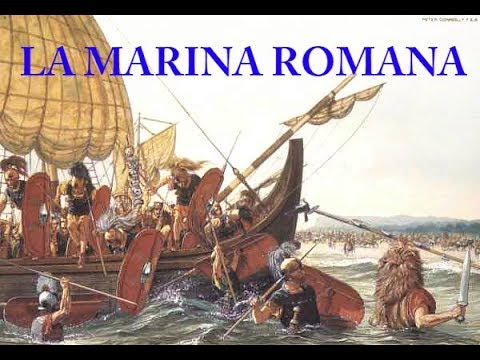
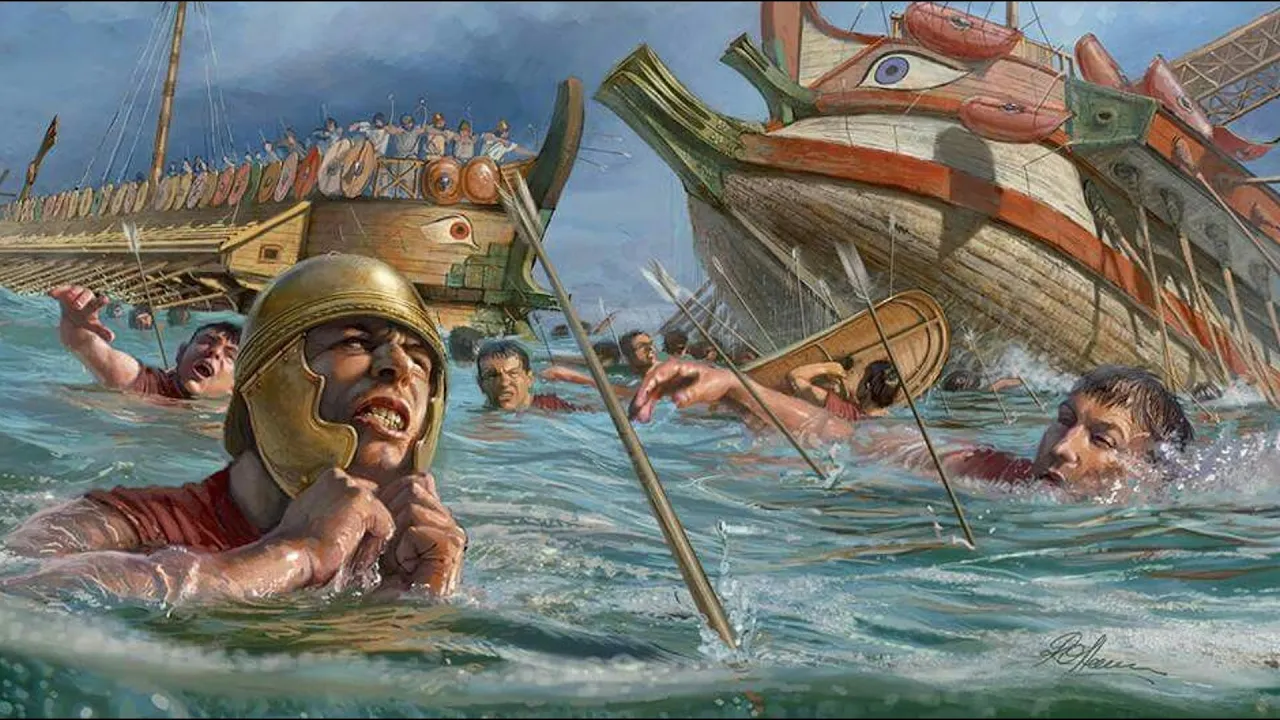

The Battle of Actium (31 BCE) demonstrates how strategic logistics and naval superiority determined the outcome of a major ancient naval conflict, as Octavian's general Agrippa systematically disrupted Mark Antony's supply lines from Egypt, forcing Antony into a desperate sea battle where he lost his fleet and ultimately the war, despite Antony having initially held the tactical advantage in quality ships.
The Battle of Actium: Naval Strategy in Roman Civil War (31 B.C.E.)
Added:The rise and fall of the Second Triumvirate, specifically the political rivalry and division of territory between Octavian and Mark Antony.
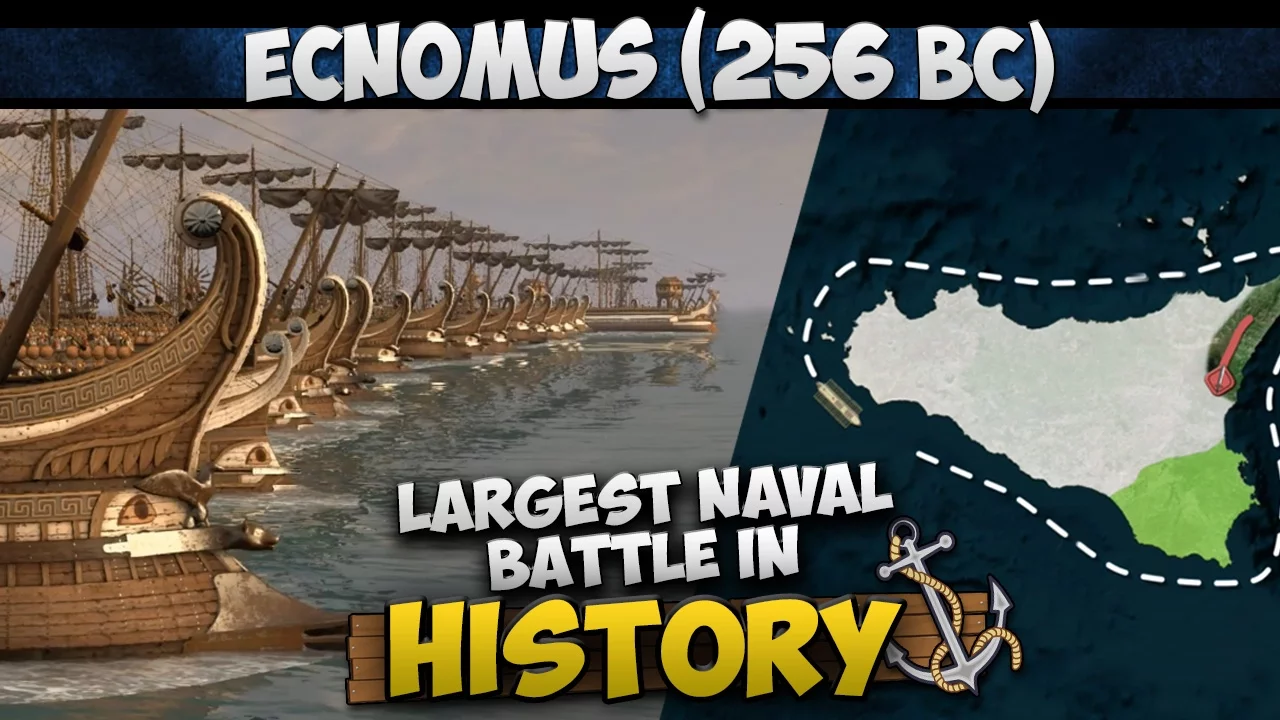
Basic principles of ancient Mediterranean naval warfare, including ship designs (such as quinqueremes), ramming tactics, and boarding maneuvers.
The geopolitical alignment and strategic importance of Ptolemaic Egypt under Cleopatra VII to Mark Antony.
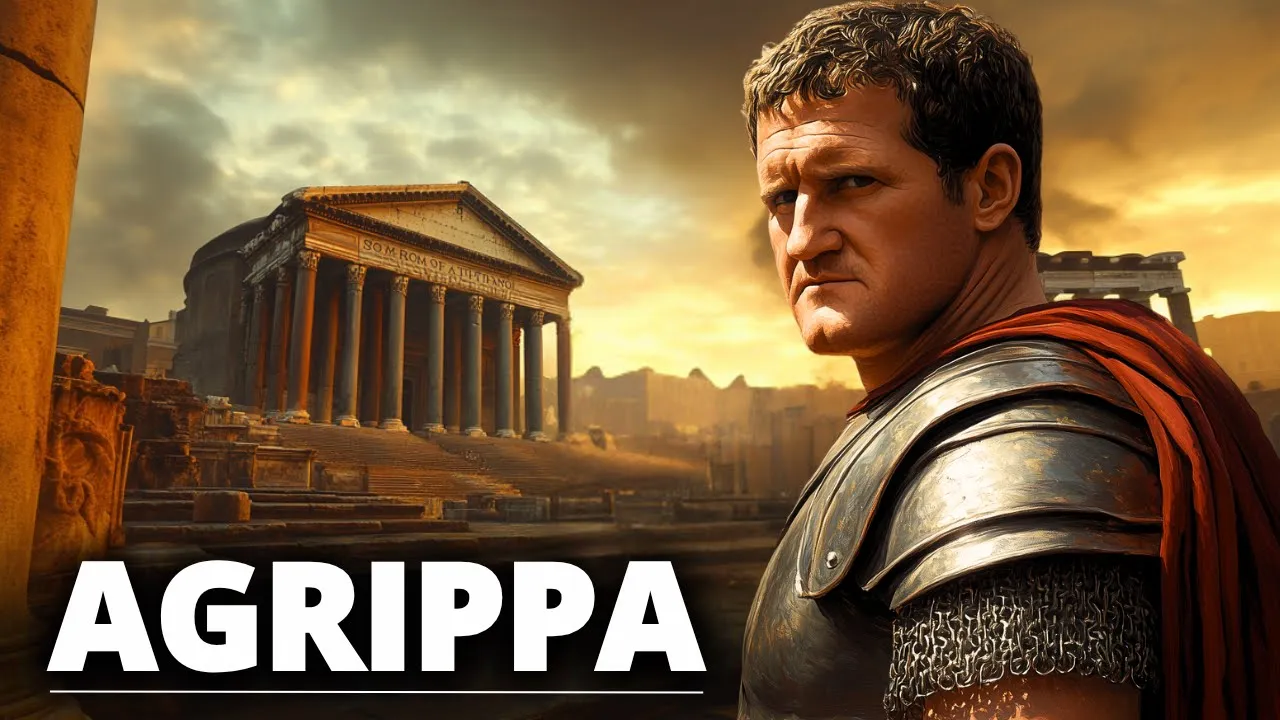
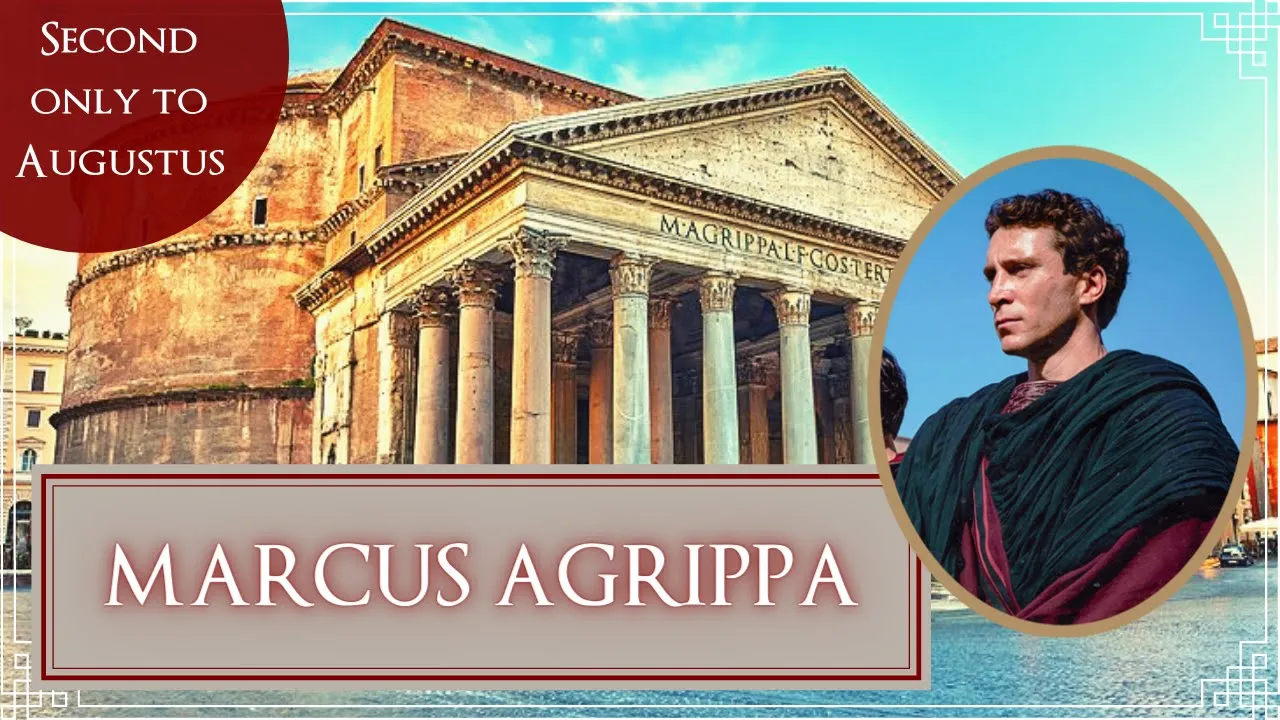
The role of Marcus Vipsanius Agrippa as Octavian's primary military commander and his reputation for tactical innovation.
The transition of Rome from a dysfunctional Republic to the Roman Empire, leading to Octavian's ascension as Emperor Augustus.
The establishment of the 'Pax Romana' and how the political outcome of Actium stabilized the Mediterranean world.
The evolution of Roman naval dominance (Mare Nostrum) and the permanent establishment of professional standing fleets.
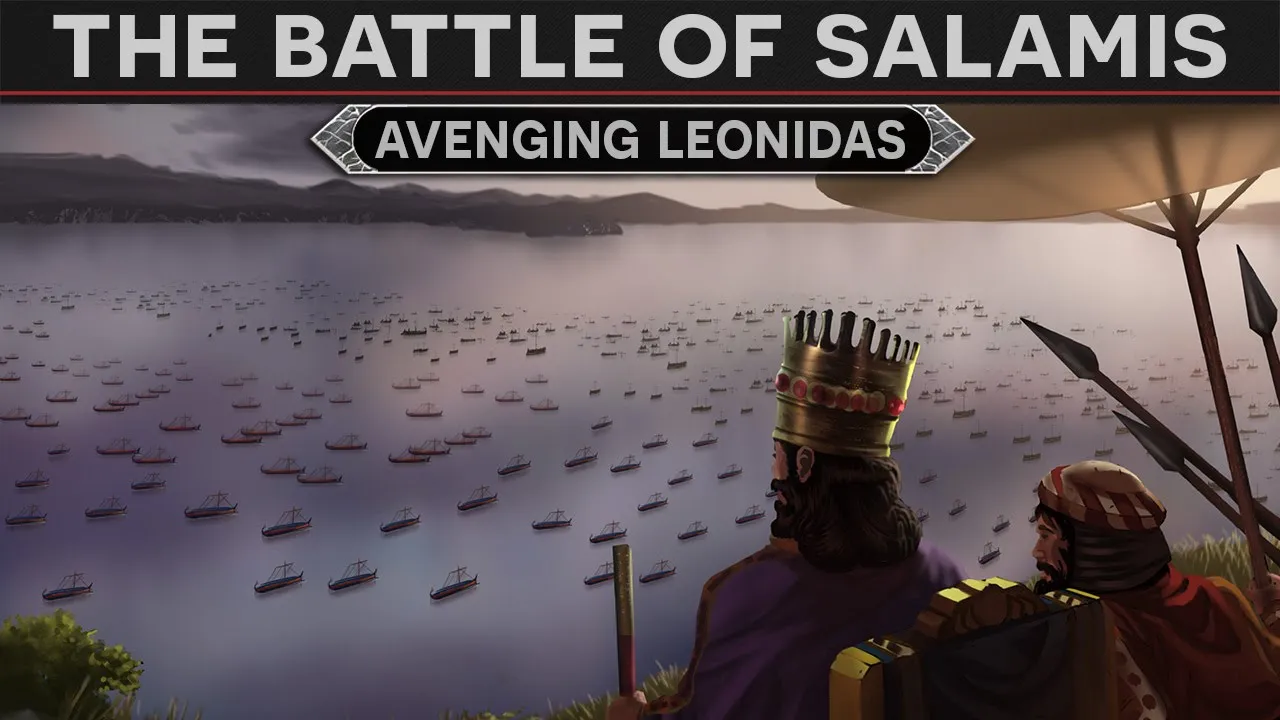
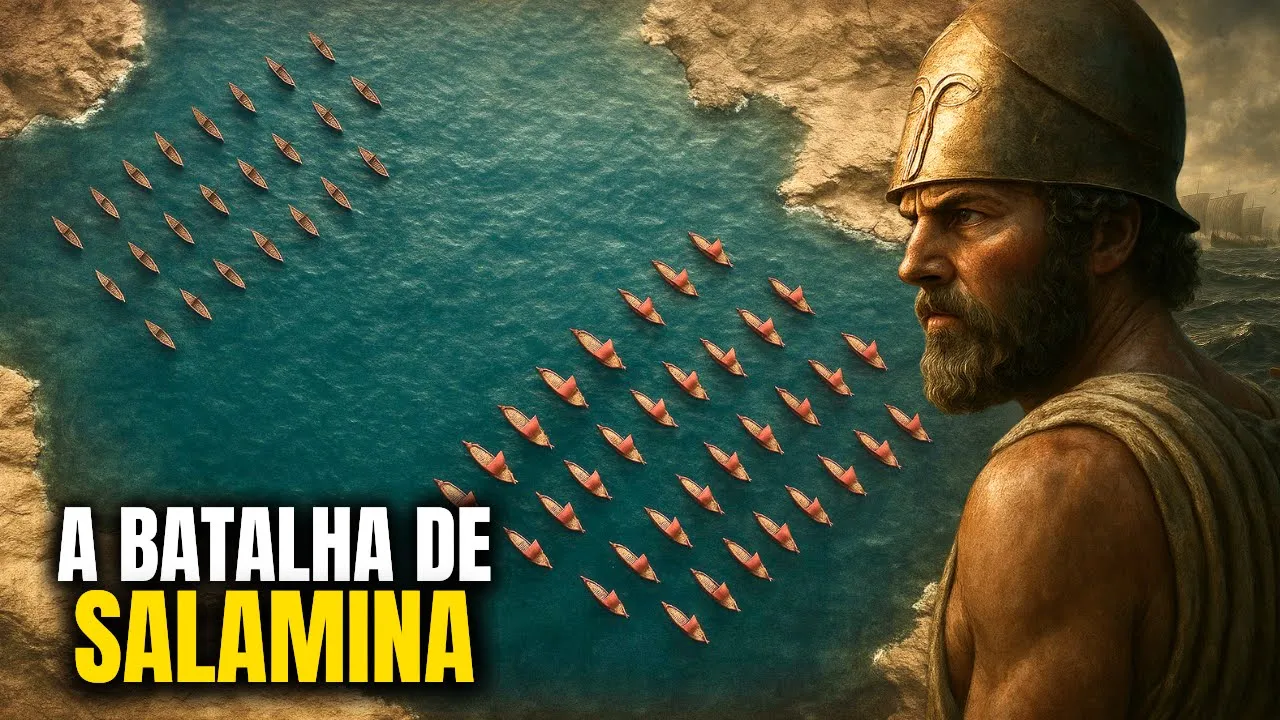
A comparative study of Agrippa's logistics-heavy naval doctrine against other classic naval battles of antiquity, such as the Battle of Salamis.
1.2M views34.2Klikes22:29Original Release: 2022-12-17
In 31 B.C.E, Octavian began his third year as consul.
Octavian and Antony had intended to share power for this year as a public display of unity, but instead, the two were at war.
To their credit, Antony and Cleopatra possessed the foresight to see that a war was coming, and had spent much of the previous year moving armies into Greece.
This was where Antony intended to make a stand.
Critics of Antony had long said… Pompey made his stand in Greece, and failed.
Brutus and Cassius made their stand in Greece, and also failed.
Why on Earth would Antony try the same failed strategy for the third time in a row?
Antony’s reasoning, and I actually agree with him here, was that if he marched into Italy with a significant number of Egyptians and other eastern allies, it would be construed by the Romans as a foreign army.
When faced with what they would perceive to be a foreign invasion, all of Italy would unite behind Octavian.
Antony’s analysis was that he had to defeat Octavian abroad, so that he could leave the foreigners behind and walk into Italy with a 100% Roman army.
So, Antony now had to decide where to fight.
In the east, Greece was probably the best when it came to military recruitment.
It also didn’t hurt that Antony was quite personally popular in the region.
All things considered, fighting in Greece for the third time in a row actually made a lot of sense.
As Antony slowly moved his armies over to Greece, he set up a bunch of outposts and spent the better part of a year recruiting locally as fast as he could.
One issue complicating things was supplies.
Antony was supplying his armies all the way from Egypt, meaning that he had a constant flow of ships criss-crossing the Mediterranean.
If he ever wanted to cross to Italy, he would have to use these ships to do so, meaning that he would have to stop the grain transport for potentially months.
If he made the crossing without any food, he would be forced into the position of plundering Roman cities at the head of a foreign army.
Not a good look!
With all of this in mind, Antony set up on the western coast of Greece.
He had naval superiority over Octavian, so his plan for the near term was to sit back and force Octavian to make the extremely risky crossing into Greece.
Back in Italy, Octavian’s right hand man Agrippa was devising his own strategy.
He gathered some of Octavian’s best ships into a small fleet on the southern coast of Italy, and hand-picked sailors to crew them who had experience in both the Illyricum campaign and the campaign against the Boat King Sextus.
When they were ready, they sailed off blindly into the open water, with nothing to guide them but the Sun and the stars.
After 3 or 4 days of sailing, they caught sight of land.
It was the naval base of Methone, currently under Antony’s control.
After days in the open sea, with no navigational tools beyond their own eyeballs, they hit their target exactly.
The Romans were poor sailors, and preferred to follow the coastline whenever possible.
They were capable of sailing in the open water, but they always had to be prepared to arrive hundreds of kilometers off course.
This is why the Lighthouse of Alexandria existed, incoming ships were often coming in after several days in the open water with no Earthly idea where they were.
Agrippa was one of the few Roman generals with actual naval experience, and with the help of the best and brightest in the Roman navy, he was able to execute this maneuver with pinpoint precision.
Agrippa quickly besieged and then captured the base at Methone.
What was the point of all this?
Remember what I said about Antony supplying himself all the way from Egypt?
Think about it… [slowly] Thiiiiiiiink aboooooooooooout iiiiitttttttttttttt… A-ha!
Methone was the perfect base from which to intercept those ships!
The attack on Methone was a high risk, high reward operation, but it came off perfectly, and now Agrippa and a tiny fleet were behind Antony’s lines wreaking havoc on his supply ships.
Pretty soon, Agrippa began to escalate his attacks by storming a bunch of lightly defended bases along the coast.
Just as Antony was beginning to realize what was happening in the south, Octavian launched his own surprise attack in the north.
He crossed into Greece quite a bit earlier in the year than Antony had been expecting.
Quite a bit further north than Antony had been expecting as well.
This whole strategy was the brainchild of Agrippa, and it was another combined land-sea assault.
Let me reiterate that Romans did not think like this!
Agrippa had a particular talent for these kinds of combined attacks, and he had Antony’s head spinning.
He was now backed into a position where he had to either march south or march north, and with either choice he would be making a major concession to the enemy.
He chose to march north to face Octavian.
As a consequence of this choice, Agrippa’s fleet picked up the pace, intercepting and capturing more and more of Antony’s ships coming from Egypt.
Octavian marched south until he reached the town of Actium, at which time he occupied a hill on the northern side of the straight, and waited.
By the spring, Antony had gathered his army and initiated a bunch of minor attacks that were intended to push Octavian off that hill, but none of them worked.
Around this time, Octavian and Agrippa met up to revise their strategy.
And by their strategy, I mean Agrippa’s strategy.
The naval operation to the south was going a lot better than expected.
They were capturing a crazy number of Egyptian grain ships, and it seemed that Antony was more or less powerless to do anything about it.
Their fleet was slowly growing while Antony’s was slowly shrinking.
The two agreed that they were so well positioned that they could afford to play the waiting game.
If Antony wanted to attack their defensive hilltop position, let him.
Otherwise, do nothing.
Over the summer, Antony tried to cut off Octavian’s access to fresh water, but he failed every time.
Later in the summer, Agrippa’s supply disruptions to the south started to have their intended effect.
Antony was forced to cut rations.
Some of Antony’s eastern allies were growing increasingly alarmed at his conduct of the war, and took this opportunity to slip away with their armies.
Antony was livid, but he wasn’t in a position to stop them.
By August, Agrippa’s fleet had so many extra ships that he was able to just openly sit off shore and intercept any Egyptian grain ships that escaped his patrols elsewhere.
Antony’s fleet was reduced to hiding in the straight.
Antony decided that he needed at least a couple of supply ships to get through if he was to continue the fight.
He decided to break the blockade.
He waited for a foggy morning, and launched a surprise attack.
As Antony’s ships left the straight, they encountered some small ships, which immediately turned and fled.
Antony was encouraged by this, and gave chase through the fog.
Minutes later, he stumbled across the bulk of Agrippa’s blockade fleet, much larger ships, who immediately turned and attacked.
Antony’s fleet was forced to turn and flee back to the straight, and we’re told that casualties were quite heavy.
Either Agrippa was able to successfully bait Antony out into the open water, or it was just a happy accident.
Either way, it was impressive seamanship, converging on Antony in the fog like that.
No other living Roman would have had the skill or the foresight to manage a fleet like this.
After this defeat, the Senators in Antony’s camp began to lose their nerve and make their way back to Octavian.
Late in August, Antony met with his top advisors.
They were completely out of food.
He told them that they could not stay here any longer.
They had to withdraw from Actium.
Some advisors urged Antony to withdraw north into Macedonia.
They recommended regrouping, yielding the seas to Octavian, and seeking a decisive battle on land.
Many of Antony’s grizzled Roman veterans were in this camp.
Others urged Antony to seek a decisive battle at sea.
Cleopatra and many of the remaining eastern allies were in this camp.
They argued that despite their earlier losses, they still had a strong and experienced fleet.
If they yielded the sea, the whole fleet would be squandered.
Why not use it, and see if they could make something happen?
Antony decided to fight at sea.
Some have said that this decision was unduly swayed by Cleopatra, but under the circumstances, and given the options, I think it was the right call.
The plan to flee inland with no food…the plan sucked!
The only people calling for it were a few Roman generals who thought that naval warfare was beneath them.
If Antony had yielded the seas to Octavian, he would have been stuck in Greece with a dwindling army and no further support from Egypt or the east.
It was not a serious plan.
If they fought at sea, there was at least a chance of victory, and if not that, at least a chance to fight another day.
Maybe there is a hidden third option that they should have considered, but I can’t think of it.
Let me just sidebar here for a second.
Antony had begun this campaign in an overwhelmingly strong position.
There had been basically no fighting over the summer.
Skirmishes, one minor battle at sea, but nothing serious.
Now, Antony was leaving Actium with his tail between his legs, hoping that maybe the whole thing would come out as a draw.
This was all Agrippa’s doing.
He won the battle without firing a shot.
Not literally, but ‘ya know, metaphorically.
This was all positioning, and logistics, and coordination between land and sea operations.
Things that Antony didn’t really pay attention to.
Things that most Roman generals didn’t really pay attention to.
But they’re the things that win wars.
Antony waited about a week for favourable winds.
During this time, he crewed up as many ships as he could, and burned the ones that he could not use for battle.
We are told that during this week there was some kind of covert attempt to kidnap Antony, and that it was almost friggin’ successful!
Sadly, that’s all we know about this incident, but if somebody wants to take that one sentence from Plutarch and turn it into a dang movie, I would watch it!
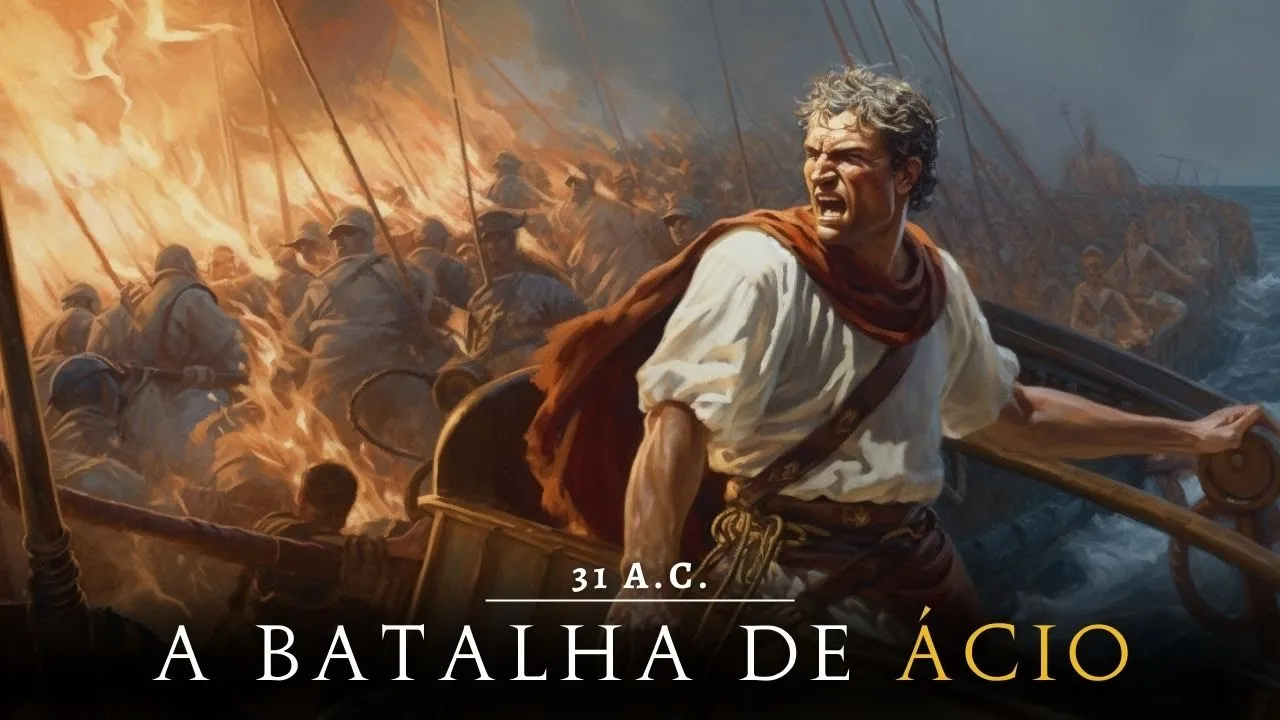
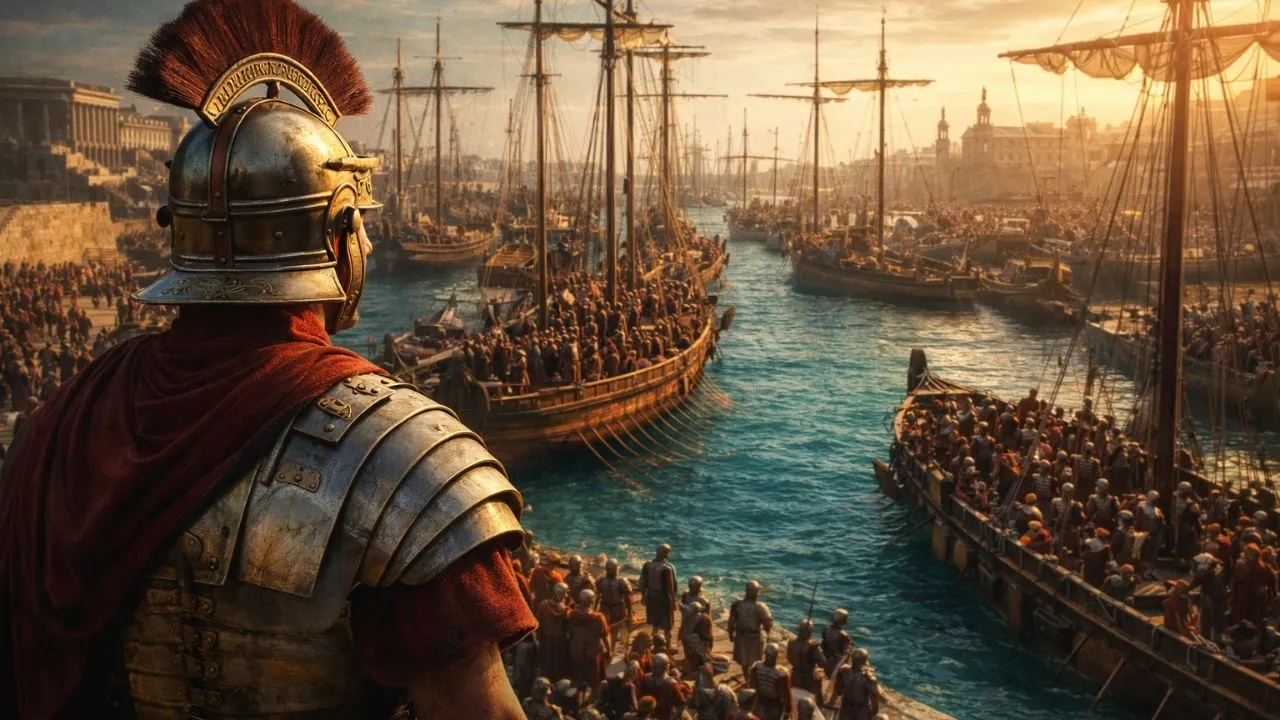
On September 2nd of 31 B.C.E, Antony attempted to break Agrippa’s blockade.
It was a windless morning so he arrayed his ships in a crescent formation near the shore, and waited.
He held many of the Egyptian ships, including Cleopatra’s flagship, in reserve.
By this time, Agrippa had captured so many Egyptian ships that his fleet outnumbered Antony’s.
But many of these ships were big bulky things that were designed as cargo transports, not ideal for battle.
Antony’s fleet, on the other hand, mostly consisted of state of the art warships.
Agrippa had the quantity, Antony had the quality.
Accordingly, Agrippa’s strategy was to lure Antony out into the open water so that he could overwhelm him with superior numbers.
Antony’s strategy was to lure Agrippa towards the mouth of the straight so that his state of the art ships could dominate the space.
Antony commanded from his right flank, because he knew that’s where most of the action would be.
Agrippa commanded opposite him.
Octavian watched from a distance.
Both sides loaded their ships with soldiers, knowing full well that once the ships made contact with each other, the whole thing would devolve into hand-to-hand combat.
Agrippa could fit 40,000 soldiers onto his big bulky transports, while Antony could only fit 20,000 on his warships.
The remaining armies could do nothing but watch on helplessly from land.
Antony ordered his 50,000 remaining soldiers to escape east if possible, no matter the result of the coming battle.
Each fleet wanted the other to attack first.
There was a standoff that dragged on all morning.
Antony was the one who actually needed this battle to happen, and so it fell to him to initiate.
Around mid-day, Antony ordered the ships on his right forward.
Agrippa’s ships responded by rowing backward to lure Antony’s ships into the open water.
Other ships saw this activity happening, and began to push forward.
Within minutes, there was activity all along the line, and according to Plutarch, it “took on the character of a land battle.” After 2 or 3 hours of fighting, Antony’s overextended right began to run into trouble.
He diverted ships from the centre to reinforce.
Sensing Antony’s weakness, Agrippa did the same.
It was at this time when Cleopatra’s ships that were standing in reserve sprang into action.
As one, all 70-80 ships belonging to Cleopatra raised sails, and made a beeline for the weakened centre of the battle.
But they weren’t moving in to help.
They were making a run for it.
Most of the other ships had prepared for battle by either taking their sails down, or totally dismantling them and leaving them on shore to make room for extra soldiers.
Once Cleopatra’s ships got moving and were through the sporadic fighting in the centre, there was no stopping them.
Seeing what was happening, Antony literally jumped ship and swam for a smaller, faster vessel.
He rallied about 40 ships of his own, and followed Cleopatra out of the battle.
Once they were in the clear, Antony transferred to Cleopatra’s flagship, and we are told that he refused to speak to her for 3 days.
According to Plutarch, he “went forward to the prow and sat down by himself in silence, holding his head in his hands.” We are never told whether this whole thing was a prearranged plan between Antony and Cleopatra, or if Cleopatra’s flight had caught Antony by surprise.
The fact that the Egyptian fleet had been held in reserve the whole time with their sails assembled and ready to go suggests that this was a pre-arranged plan.
But at the same time, the fact that Antony had to swim to another ship in order to make his escape suggests that it was not.
Why did Antony refuse to speak to Cleopatra for 3 days?
Was it from a sense of humiliation, or was it from a sense of betrayal?
I genuinely do not know, you’re free to make up your own mind.
But it wasn’t all bad.
Antony had gone into the Battle of Actium kinda hoping for a draw, and in the immediate aftermath, that’s what it looked like.
Both sides had lost a bunch of ships, but Antony had escaped with 1/3rd of his fleet and 100% of his treasure.
And by his treasure I mean Cleopatra’s treasure.
They had enough money to raise another army and continue the fight.
Plus, they still had those 50,000 soldiers back at Actium who were in the process of escaping to the east.
From such a weak position going into Actium, this was basically a win.
Except…it wasn’t.
Back at Actium, when the rest of Antony’s fleet figured out that Antony and Cleopatra were fleeing, something like 130 ships surrendered to Agrippa on the spot.
On land, Antony’s army of 50,000 did not flee to the east as instructed.
They sent a message to Octavian.
They wanted a deal.
They told him that they would switch sides if he would agree to give them a share of the spoils from the battle that they had just technically been on the losing side of.
Octavian agreed.
And now, with the defection of the legions and the capture of so many of his ships, Antony’s position was not so secure.
Agrippa and Octavian found themselves with unrivaled naval superiority over the entire Mediterranean, and it wasn’t even close.
Antony still had 20,000 soldiers stationed in Libya, but by the time he arrived there, they had already heard about the fiasco at Actium, and they refused to follow his orders.
If you’re counting, that’s 70,000 soldiers that Antony had lost not in battle, but to defection.
Antony and Cleopatra returned to Egypt empty handed, with fewer options than they had imagined.
The actual Battle of Actium may not have been decisive, but the aftermath certainly was.
Octavian and Agrippa were in no rush to push Antony.
They had absolute naval superiority, and that wasn’t going to change any time soon.
Octavian made contact with all of the eastern monarchs, and reassured them that their positions were secure and their relationship with Rome would not be changing.
With these words, Octavian dismantled the Donations of Alexandria and Antony’s plan for a restructured Roman east.
Octavian also took this opportunity to discharge a lot of soldiers, everybody over a certain age.
His financial obligations were immense.
He didn’t have the means to pay them right now, but with all of the incoming defections, he had no use for such a massive army anymore.
Agrippa accompanied the soon-to-be discharged veterans back to Italy.
Amid all of this turmoil, Armenia fell back into Parthia’s sphere of influence.
A decade of Antony’s work had been undone in an instant.
His Parthian campaign had been for nothing.
Agrippa wrote to Octavian from Italy.
Discharging the veterans was not going well.
Octavian still owed each of them farmland for their retirement, and he had no farmland to give them.
There was a growing consensus that Octavian was just stringing them along.
There was now open talk of armed rebellion.
Octavian traveled to Rome to meet with the veterans.
He told them that Egypt would fall within a year, and that after Egypt, he was done.
After Egypt, he would fulfill all of his promises.
There was a lot of grumbling, but after some negotiations the veterans stood down.
It’s possible that Octavian offered to pay them a bonus or something.
Octavian spent the rest of the winter making preparations.
In the spring, he departed Italy and led an army into the Roman East.
The intervening time had made it clear that Antony’s support was only growing weaker by the day.
The Egyptian campaign would not be difficult.
Up Next
24:42
Rome's Transformation: From Republic to Empire (27 BC - 14 AD)
@Knowledgia
158.6K views•2023-12-18

33:02
The Great Schism of 1054: Causes and Consequences
@SacredCathedrals
113.5K views•2026-02-19
91:57
The Geopolitics of the Ukraine War and the Rise of Global Autocracy
@JordanHarbingerShow
468K views•2025-04-19

17:05
Understanding the Cold War: Superpower Conflicts and the Road to Détente
@OverSimplified
46.1M views•2019-01-24
Related Study Plans & Knowledge Roadmaps
Structured learning paths in History
history
Byzantine Iconoclasm: Theology, Art & Politics
01Foundations of Byzantium and Early Christian Images
02The First Iconoclasm: Leo III and the Crisis of Images
03Empress Irene, Nicaea II, and the Second Iconoclasm
+ 2 more learning modules
9h5 modules
Explore Roadmap
history
Iranian Revolution (Causes, Events & Legacy)
01The Pahlavi Dynasty and the Roots of Discontent
02The Spark of Rebellion and the Rise of Khomeini
031979: The Fall of the Shah and the Climax of the Revolution
+ 2 more learning modules
8h5 modules
Explore Roadmap
history
Mali Empire: Mansa Musa, Trade & Timbuktu
01Foundations of the Mali Empire
02The Trans-Saharan Gold and Salt Trade
03The Reign and Pilgrimage of Mansa Musa
+ 1 more learning modules
6h4 modules
Explore Roadmap
history
1947 Partition: Politics, Borders & Legacies
01Foundations of British India and the Divide
02The Political Negotiations and the Mountbatten Plan
03Drawing the Boundary: The Radcliffe Line
+ 2 more learning modules
8h5 modules
Explore Roadmap