














![INTEREST GROUPS Influencing Policy Making [AP Gov Review, Unit 5 Topic 6 (5.6)]](https://i.ytimg.com/vi_webp/2VC0BZEE8Fw/maxresdefault.webp)
![Holding the BUREAUCRACY Accountable [AP Gov Review Unit 2 Topics 14-15 (2.14-15)]](https://i.ytimg.com/vi_webp/zxo0fWVSRlM/maxresdefault.webp)
![AP Government UNIT 2 REVIEW [Everything You Need to Know!]](https://i.ytimg.com/vi/FepoztzFG4E/maxresdefault.jpg)








Federal bureaucracies are categorized into four main types: cabinet-level executive departments (like State, Defense, and Treasury) that provide services through sub-agencies; independent agencies (such as CIA and NASA) whose heads require Senate confirmation; independent regulatory commissions (like FCC, FTC, and SEC) that create and enforce rules with punishment authority; and government corporations (like USPS and Amtrak) that operate like businesses but often need government subsidies. These bureaucracies perform four primary functions: serving clients (FDA, CDC), maintaining the union through revenue collection (IRS) and security (DHS, DOJ), regulating economic activity (OSHA, SEC), and redistributing economic resources (Social Security, SNAP). Bureaucracies gain power through congressional delegation of authority and by maximizing their budgets, while also leveraging the expertise of their staff to influence policy implementation.
Types of Bureaucracies Explained: Crash Course Government & Politics
Added:Hi I'm Craig and this is Crash Course: Government & Politics and today we're going to do something we try to do a lot at Crash Course, punch eagles. Also help you understand the news better.
Now we're not going to explain it like Ezra Klein, well we sort of will, or break it down into graphs and charts like Nate Silver, or slow jam it like Jimmy Fallon.
We're not going to slow jam it, Stan? Instead Bureaucrat Jimmy and I are going to give you some tools you need to better understand news stories and opinions about government and politics by describing the various types of bureaucracies that affect our lives.
Ain't that right, BJ? Yeah.
[Theme Music] There are a number of ways we can try to make sense of the vast federal bureaucracy, and one of the most straightforward is to categorize the different agencies by type. Now labeling 'em this way doesn't actually tell us what they do but you'll see them labeled this way in books and articles so you should be familiar with the terms that political writers use.
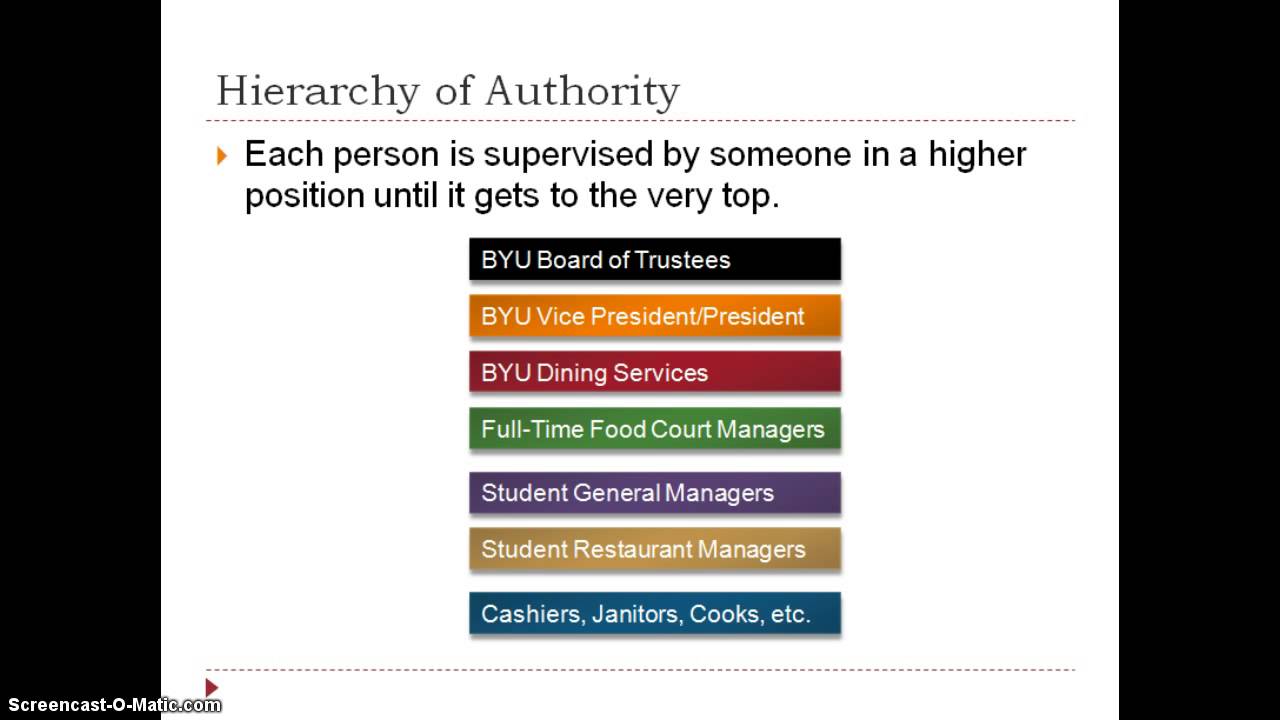
The first type of bureaucracy is the cabinet-level agency, also called the executive department.
Each of the fifteen departments is usually headed by a secretary, except the Justice Department, which is run by the Attorney General. You can find a list of the executive departments in any good textbook and I bet there might be a list on the internet somewhere too. Maybe.
But the ones you hear the most about are the State Department, the Department of Defense, and the Treasury Department. Others, like the Department of the Interior or Housing and Urban Development you usually only hear about when there's a new secretary, or a scandal.
Executive departments mostly provide services through sub-agencies. For example the FBI is technically part of the Department of Justice and the FDA is part of the Department of Health and Human Services. There are also independent agencies that are very similar to executive departments because their heads require Senate confirmation. Well their whole body requires -- their -- I'm talking about the head like they're the boss -- the head of the agency.
The best example here is the CIA: Central Intelligence Agency, but NASA is another independent agency.
Next we have the independent regulatory commissions which are supposed to be further removed from presidential oversight, which makes them independent. You can recognize them because they're usually called commissions, like the Federal Communications Commission, the Federal Trade Commission, and the Securities and Exchange Commission. They all have rule-making authority and the power to punish violations of the rules, often through fines. If you pay attention to stories about banking, especially banking malfeasance, you'll find plenty of stories about SEC fines.
Last, and pretty much least, frankly, are the government corporations that are supposed to make profits but in fact tend to rely on government subsidies to stay afloat. The U.S.
Postal Service and Amtrak are the best known, and for most Americans these are the agencies with which we have the most contact, especially the post office.
A more useful way to think about bureaucracies is in terms of what they actually do, their functions. Although the problem here is that many bureaucracies have more than one function.
Maybe the Thought Bubble can help us out. Thought Bubble! Let's do this!
Some bureaucracies primarily serve clients. Many of the sub-agencies of the cabinet departments fit this bill, with the most obvious being the Food and Drug Administration, which serves the public by testing and approving new drugs; the Centers for Disease Control, which tries to do exactly what the name expects; and the National Institutes of Health, which, among other things, sponsors research that improves citizens health. All of these agencies are under the auspices of the Department of Health and Human Services. Another good example of a client-serving agency is the Department of Agriculture, which in addition to rating meat administers the Supplemental Nutrition Assistance Program, which is the snappy new name for food stamps.
A second function that many agencies perform is to maintain the Union. One way agencies maintain the Union is by collection revenue, because without money the county doesn't function.
The main agency in charge of collecting revenue is the IRS. A second form of maintaining the union is providing security for its citizens. The Department of Justice, which prosecutes federal crimes and protects civil rights, and the Department of Homeland Security, which, among other things, is in charge of airport security, are the main agencies that ensure internal security. Bureaucracies also keep Americans safe from external threats. This is the job of various intelligence services like the CIA and NSA, and especially the Department of Defense.
A third function of bureaucracies is to regulate economic activity, primarily by creating and enforcing rules and regulations. Some of the agencies primarily charged with enforcing regulations are housed within executive departments, like OSHA, within the Department of Labor.
Others like the FCC and SEC are independent.
The fourth major function of bureaucracies is closely related to regulating economic activity. Some bureaucracies have the primary function of redistributing economic resources.
Agencies concerned with fiscal and monetary policy handle the inflow and outflow of money in the economy through taxes, spending and interest rates. Providing direct aid to the poor or welfare is another function of bureaucracies that is even more complex and controversial.
Most of these agencies, like the Social Security Administration provide direct services so we can see the overlap between the function of agencies.
Thanks Thought Bubble. I've been suggesting that even though they aren't mentioned in the Constitution, bureaucracies are pretty powerful, so I should probably explain where that power comes from. Basically, Thor's hammer.
Actually no, it doesn't come from that at all. It comes from Congress, which, as we've seen, delegates power to executive agencies in varying degrees. But once the agencies exist they create powers for themselves by maximizing their budgets. Bureaucracies lobby for their own interests and the bigger and more important they are the more money they get from Congress.
We tend to think that the nation defense is important, so the Department of Defense is able to convince Congress to give it lots of money. Although mo' money can lead to mo' problems as Biggie helpfully reminded us. Money is also probably the most important lever of power in the U.S.
In addition to getting money for themselves, another source of bureaucratic power is the expertise of bureaucrats themselves.
The President, and especially Congress, will often rely on bureaucratic experts to tell them how a policy will be implemented. The source of their power is the expert's command of useful information.
You shouldn't underestimate this, as any number of technology companies will tell you.
So those are two ways of thinking about bureaucracies. I hope that they're helpful and at least when you hear about the FCC issuing a fine for Janet Jackson's "wardrobe malfunction" or something, you'll understand who's doing the punishing. And when you read about Congress cutting SNAP funding you'll be like "Oh snap! That's tied up with the farm bill!"
Thanks for watching. I'll see you next episode.
Crash Course: Government & Politics is produced in association with PBS Digital Studios. Support for Crash Course: Government comes from Voqal. Voqal supports nonprofits that use technology and media to advance social equity. Learn more about their mission and initiatives at voqal.org. Crash Course was made with the help of all these wardrobe malfunctions. Thanks for watching.
Up Next
Bureaucracy Basics: US Government & Politics Explained
@crashcourse
1.6M views•2015-05-09

BRICS Pay and de-dollarization: A New Financial Order Emerges? | 55 chars
@DannyHaiphongYT
164.6K views•2024-10-22
Federalism Explained: US Government & Politics Crash Course
@crashcourse
3.8M views•2015-02-14
Explaining the Saudi-Iranian Proxy Conflict in the Middle East
@Vox
18.2M views•2017-07-17
Related Study Plans & Knowledge Roadmaps
Structured learning paths in Political Science