





![राज्यपाल [Governor] Rajasthan Polity | For All Exams | By Rohit Sir #apnipadhai](https://i.ytimg.com/vi/nmctscf9beg/maxresdefault.jpg)



![INTEREST GROUPS Influencing Policy Making [AP Gov Review, Unit 5 Topic 6 (5.6)]](https://i.ytimg.com/vi_webp/2VC0BZEE8Fw/maxresdefault.webp)






![AP Government UNIT 2 REVIEW [Everything You Need to Know!]](https://i.ytimg.com/vi/FepoztzFG4E/maxresdefault.jpg)




A bureaucracy is a complex organizational structure used by large-scale institutions to coordinate work through specialized offices, tasks, rules, and principles of organization, employing experts who divide complex tasks efficiently; in the U.S. federal government, bureaucracies implement laws, create enforceable regulations (acting like legislatures), and settle disputes through administrative adjudication (functioning like courts), though this concentration of power raises separation of powers concerns since the bureaucracy, while technically part of the executive branch, can easily overpower Congress and the judiciary, and despite public frustration with forms and procedures, bureaucracies remain essential for managing complex governmental functions efficiently and maintaining stability through accumulated expertise.
Bureaucracy Basics: US Government & Politics Explained
Added:Hi, I'm Craig, and this is Crash Course Government & Politics, and today, we're gonna talk about bureaucracies, just as soon as I finish filling out these forms. Do I really have to initial here, here, and here on all three copies, Stan? Regulations say so? All right. I'm just kidding. I don't really have to fill out forms in triplicate in order to make an episode of Crash Course, but this kind of stuff is one of the main reasons that people don't like bureaucracies.
Americans tend to associate them with incomprehensible rules and time-wasting procedures and probably most annoying - actual bureaucrats. But bureaucracies are a lot like our extended families, in that we largely don't understand, or at least don't appreciate, the important role that bureaucracies play in our lives, mainly because of all the forms, and because my cousin who always ate all the cookies from the jar at Grandma's house.
[Theme Music] So what exactly IS a bureaucracy? I don't like to do this, because I'm arrogant and lazy, but sometimes it's helpful to go to a dictionary when you need to find out what a word means. So here's a serviceable, political science-y definition: "A bureaucracy is a complex structure of offices, tasks, rules, and principles of organization that are employed by all large scale institutions to coordinate the work of their personnel."
Two points to emphasize here: First, bureaucracies are made up of experts who usually know more about the topic at hand than you do and who are able to divide up complex tasks so that they can get done. Second, all large scale institutions use bureaucracies, so the distinction between big business and big government is, in at least this respect, bogus, or what I like to call a false dichotomy. Is that too pretentious to say "false dichotomy," Stan?
I don't care, I'm saying it. False dichotomy!
So if people hate bureaucracies so much and compare them unfavorably with Google and Amazon, why do we have them? Well, the main reason is that bureaucracies are efficient. They make it easier for governments to accomplish tasks quickly and to basically operate at all. In the US, federal bureaucrats fulfill a number of specific important functions.
One, bureaucrats implement the laws that Congress writes. Have you ever read a law? They're pretty complicated. It's a good idea to have experts who can interpret them and put them into action. Two, bureaucrats also make and enforce their own rules. But this isn't as action hero-ish as it sounds. And three, they settle disputes through a process called administrative adjudication, which makes them kind of like courts.
Now, since I know that all of you have been paying extremely close attention to these episodes, you know that at least two of those functions are problematic in ways that go beyond making rules that seem Byzantine or stupid or both - Byzantupid.
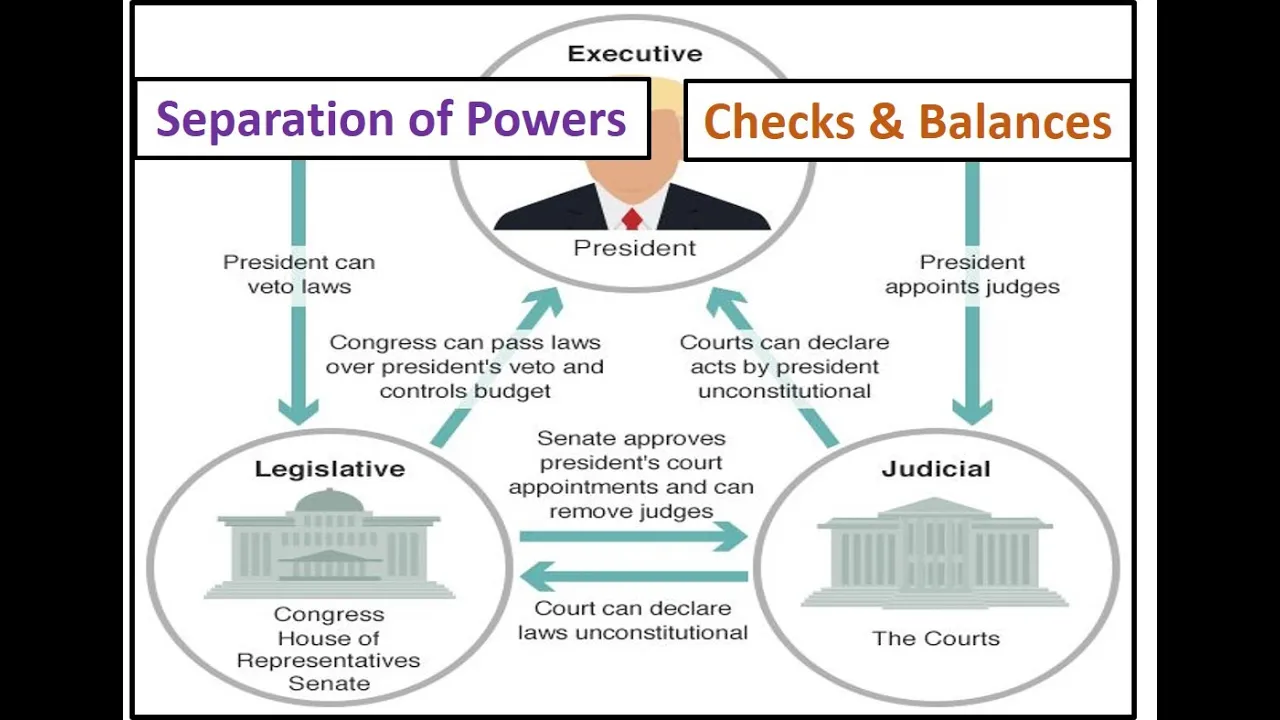
The big concern here is the separation of powers, which you remember is the idea that power is divided between three branches of government. Technically the federal bureaucracy is part of the executive branch, but it's so big that it dwarfs the other two branches and can easily overpower them, much like I overpower this eagle.
"That's right eagle. I make my own rules, like a bureaucracy."
But an even more troubling, to some people, aspect of bureaucracies is what they actually do.
So let's go to the Thought Bubble. Bureaucracies don't just enforce the rules; they make new ones called regulations. In doing this, they're acting like a legislature, especially since the rules have the force of law and people can be punished for breaking them. For example, if you say "Sh%t Sticks" on TV, the FCC can fine you, just like the local law enforcement would if you broke a state law against speeding. And don't say "Sh%t Sticks" to the cop. But according to the Constitution, Congress is supposed to make the laws, so if you're a constitutional formalist, this is going to give you fits.
On the other hand, the rule making process allows for a degree of popular participation that goes way beyond what happens in Congress. In 2014, Congress called for the mandatory notice and comment period on new FCC rules on the issue of net neutrality. Any person can read the proposed rules which are not easy to understand and offer a public comment, including suggestions for new rules using the internet. The bureaucracy is required to read the comments and they could be incorporated into the final rules that are published in the federal register.
So in a way, federal rule-making is more democratic than congressional law-making, but it's still not in the constitution. Administrative adjudication raises similar separation of powers issues, but they're less problematic because the constitution gives congress the right to establish courts other than the Supreme Court and it doesn't say that these can't be administrative tribunals that are part of bureaucratic agencies.
Many low level bureaucratic positions are filled through competitive exam-based civil service procedures which are supposed to ensure a level of expertise and take politics out of the staffing process. But many upper level bureaucratic leaders especially cabinet secretaries and also ambassadors are very political. For one thing, they're appointed by politicians who may be repaying favors or trying to pack the agencies with like-minded favorites.
For another, bureaucrats engage in bargaining and protect their own interests, the very thing that politicians do all the time. Thanks Thought Bubble.
So the first reason we keep bureaucracies is because bureaucracies are useful. They do get things done even though it might not be as quickly as we'd like. And some of these things are things we want done, like inspecting our meat so we don't get E. coli or Salmonella or Mad Cow Disease. One response to this that we'll talk about later is to get rid of public bureaucracies and contract their tasks out to private companies. There's something to be said to this. After all, in a lot of ways UPS does a better job of getting packages to us than the postal service does. And I also have a lot more fun at the private bowling alley than the public one. There's no such thing as a public bowling alley.
If there is, I'm going. Might be free.
But the main argument for privatization seems to be cost. And that one might not always be true. It seems unlikely that a private corporation would spring up to inspect meat.
And although we can rely on pricing to signal that our chicken wings are salmonella free, I don't think it's a good idea. So in addition to being useful and filling roles that the private sector might not fill, one of the reasons we have so many bureaucracies is because Congress keeps making them and delegating power to them.
If we didn't have bureaucracy, Congressmen and their staff would be taking on all the oversight and enforcement of their own laws. In addition to creating its own separation of powers problem, this might be kind of chaotic, considering that potentially the entire House of Representatives could be replaced every two years.
One advantage of bureaucracies is a certain amount of stability in the built-up expertise that comes with it. Probably the main reason why we don't change bureaucracies though is that doing so is really difficult. Once Congress makes a bureaucracy it's usually permanent for a number of practical and political reasons. We'll get into those reasons next time.
So I'm going to wrap this up with a little bit of a reminder about Federalism, based on a largely unwarranted assertion. I bet that if you ask most Americans to give an example of a bureaucracy they will say the DMV. Most people will tell you a DMV horror story of the time they had to wait in line for four hours just to renew their license and when they got to the counter a clerk told them that they didn't have the right forms and they needed to post a money order, and not a credit card or a check or even cash and that anyway they had to go on break and I had to come back in fifteen minutes and all I wanted was my license-- AAAAAAH the DMV!
And I sympathize with this predicament but I feel the need to remind anyone who has had this experience at the DMV, that it's a state bureaucracy, not the federal bureaucracy.
Most of the bureaucrats you meet in your daily life: teachers, policeman, tax assessors are officials of your state government, not the federal government, like Bureaucrat Jimmy.
Which is pretty much what the Framers intended.
So it's a good idea to be thoughtful about which government we're going to transfer our anger towards and to rage against the correct machine. That's what federalism's all about.
Thanks for watching. I'll see you next week.
Crash Course: Government & Politics is produced in association with PBS Digital Studios. Support for Crash Course: U.S. Government comes from Voqal. Voqal supports nonprofits that use technology and media to advance social equity. Learn more about their mission and initiatives at voqual.org. Crash Course was made with the help of these soulless bureaucrats. Thanks for watching.
Up Next
Understanding OIRA Review Process: A Guide to Regulatory Oversight
@TheFederalistSociety
68.5K views•2019-04-09

BRICS Pay and de-dollarization: A New Financial Order Emerges? | 55 chars
@DannyHaiphongYT
164.6K views•2024-10-22
Federalism Explained: US Government & Politics Crash Course
@crashcourse
3.8M views•2015-02-14
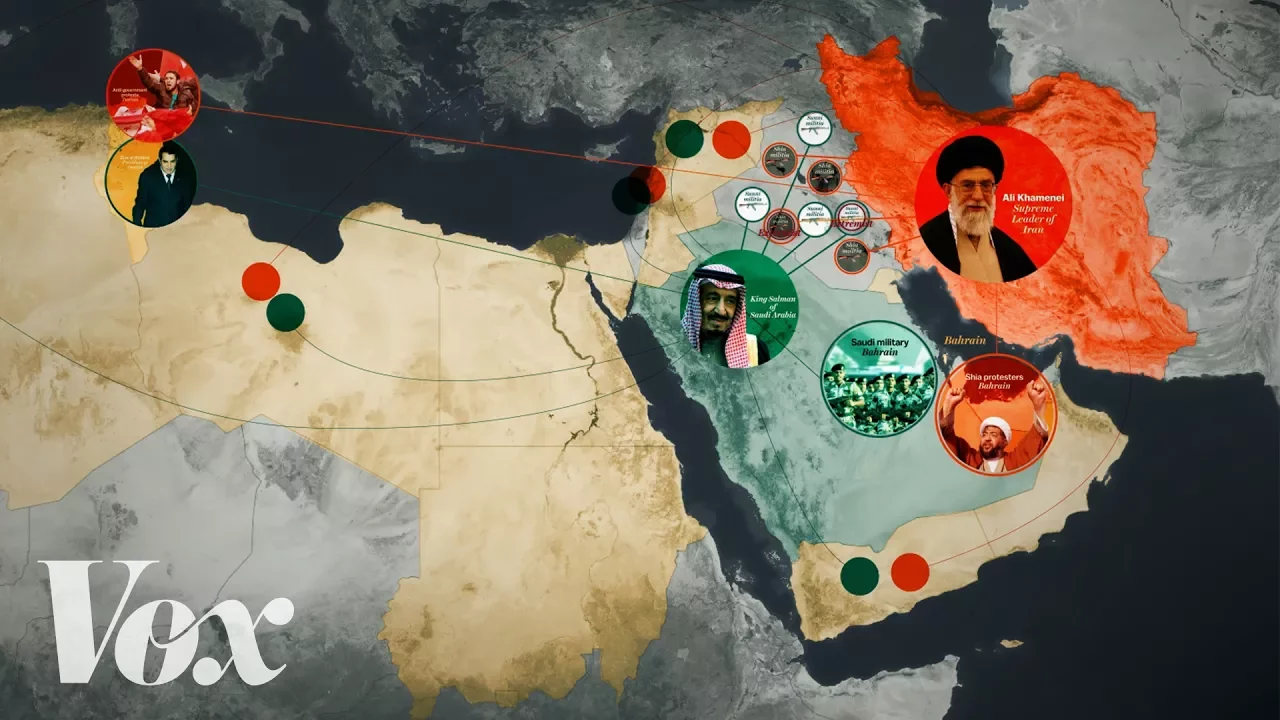
Explaining the Saudi-Iranian Proxy Conflict in the Middle East
@Vox
18.2M views•2017-07-17
Related Study Plans & Knowledge Roadmaps
Structured learning paths in Political Science