









![The Untold Stories Of The Haitian Revolution [PT.1] | Chronicles of a Zoe](https://i.ytimg.com/vi/eT2ZhkICVdc/hqdefault.jpg)









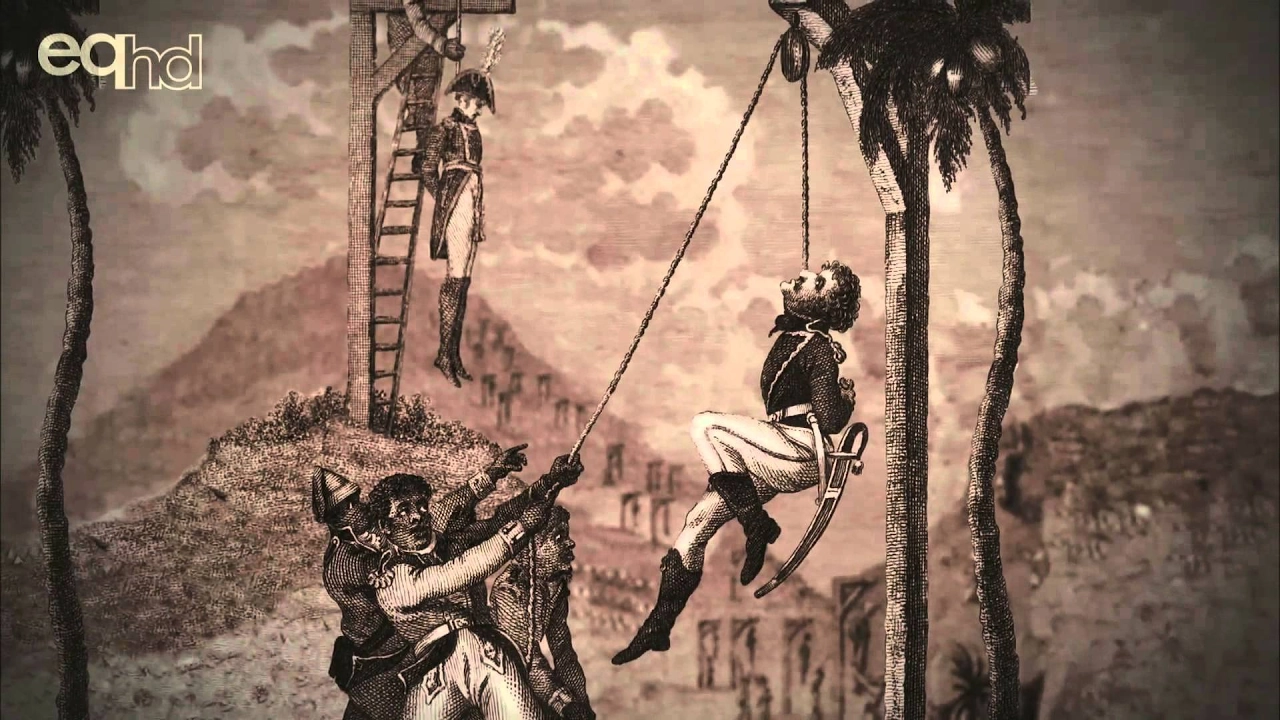
The Haitian Revolution (1791-1804) was a unique historical event where enslaved people successfully overthrew their oppressors, making Haiti the second American nation to achieve independence and the world's first government led by liberated slaves; this revolution emerged from Saint-Domingue's plantation-based economy, which relied heavily on enslaved labor to produce sugar, coffee, and indigo for European markets, creating a deeply stratified society with whites, free people of color, and enslaved Africans each facing distinct grievances that converged during the revolutionary period.
The Haitian Revolution: Slave Society of Saint-Domingue
Added:The structure and operation of the Transatlantic Slave Trade, which brought millions of enslaved Africans to the Caribbean.
The economic system of mercantilism and how European empires generated wealth through highly profitable plantation colonies.
The core ideals of the French Revolution (1789), specifically 'liberty, equality, and fraternity,' and how they destabilized colonial political structures.
Enlightenment philosophy regarding natural rights, social contract theory, and the critiques of absolute tyranny.
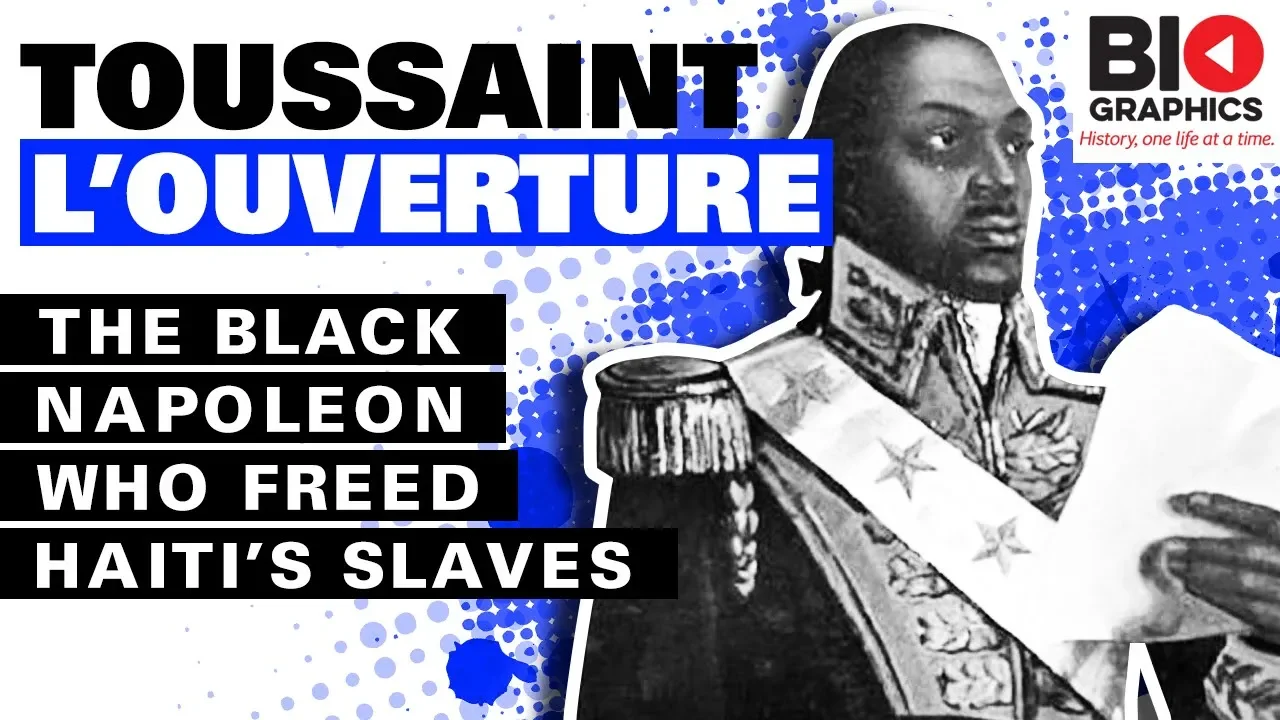
The military phases of the Haitian Revolution and the strategic leadership of key figures like Toussaint Louverture and Jean-Jacques Dessalines.
The challenges faced by the newly independent nation of Haiti after 1804, including global diplomatic isolation and economic embargoes.
The history of the French indemnity of 1825 and its long-term devastating effects on Haiti's economic development.
A comparative study of the American, French, and Haitian Revolutions to analyze which populations actually gained rights in each conflict.
1.2M views32.3Klikes9:11Original Release: 2020-01-18
Saint-Domingue, 1791.
Only a year before, the man had been a warrior in the Congo.
Captured by his enemies, he was sold into slavery, crammed into a festering ship's hold.
More than one out of every seven captives taken died before they ever saw western shores.
But he's one of the "lucky" ones.
He at last makes it to the plantation where he will likely die.
He learned this from one of the few enslaved men who speaks his language.
They will be raising sugarcane, a dangerous and exhausting task with a harvest season lasting from December to July.
Half the new arrivals will die of disease before the year is out, and if they try to escape, they face punishments ranging from whipping to amputation.
The men who harvest the cane have cuts all over their bodies, the women who process it are missing arms from the crushing machines, or have massive burns from the boiling vats of sugar.
The death rates are so high, his guide says, plantation owners don't bother providing food or clothing.
They just buy more enslaved people when the current group is worked to death.
But not for much longer, he says.
it is good [that] this new arrival is a warrior, because they have use for warriors. There's going to be a revolution.
"Birth of the People" by Demetori The Haitian Revolution is a unique event, both an offshoot of the French Revolution, and an anti-colonial struggle.
Haiti would become the second American nation to successfully win independence.
And it remains, to this day, history's only example of enslaved people successfully rising up against their oppressors, an act that stunned the world and reshuffled the political order.
From inspiring movements in other colonies, to forcing Napoleon to sell Louisiana to the United States, its effect would be profound. But there is no good ending for the people that fought and died to create the world's first government led by liberated slaves.
For the example of Haiti's revolution, including the violence of its rising, caused other nations to do everything they could to weaken the young government: Policies that, 200 years later, still impact Haiti and contribute to its current difficulties.
But the roots of that instability were there from the beginning.
Because the economy of the French colony of Saint-Domingue, later known as Haiti, was largely devoted to a single plant. In Saint-Domingue, sugar was king.
French settlers arrived on the island of Hispaniola via Caribbean piracy.
And though the island had been Columbus's first landing place in the Americas, after a century as a Spanish colony, it was neglected and sparsely populated.
By 1625, French pirates had begun setting up agricultural settlements on the western side, importing large numbers of African slaves.
By 1697, the division was official, splitting Hispaniola into the French Saint-Domingue in the West, and the Spanish Santa Domingo in the east.
And within 50 years, Saint-Domingue was a crucial part of the Atlantic trade, because Saint-Domingue, as it turned out, was the ideal place to grow three products that Europe and its North American colonies couldn't get enough of.
The first was indigo, a plant that produced a rich blue dye; Next was coffee, the beverage of choice during the Enlightenment; but mostly, it was sugar, the substance Europeans couldn't get enough of, whether raw or converted to Rum and the tiny colony of Saint-Domingue produced about half of the coffee and sugar consumed in Europe.
It was by far the wealthiest colony in the Caribbean, if not the world, and the jewel of France's imperial crown.
In fact, one in every 25 Frenchmen had a job supported by the Saint-Domingue trade.
But there was trouble underneath the surface of this economic power house.
Because Saint-Domingue was a slave society, a place that didn't just have slavery but was structured entirely around the bloody institution.
And the different classes of people living in the colony all had different and overlapping grievances that would all explode once the burning fuse of revolution moved from America to France to the island itself.
So when the revolution exploded in Saint-Domingue, it was not a single revolt, but multiple different risings focused on different issues, as much a civil war as a popular uprising.
Now, this gets really complicated and nuanced fast, but to understand what's going to happen, we have to give you a rundown of how society on Saint-Domingue stood in the 1780s, right as revolution was starting to brew in Paris.
We're going to look at three parts of Saint-Domingue's population: the whites, the free people of color, and the enslaved.
The white plantation owners, known as the Big Whites, lived in huge estates.
The City of Le Cap in the colonies north looked a little like Paris, with street grids and a massive theater. Their sons and daughters, dressed in the most current fashions, and read newspapers brought daily from Paris.
In fact, many of these "Big Whites" didn't even live in Saint-Domingue, preferring rather to hold court in huge estates in France, while others managed their land and finances.
Though rich, the Big Whites chafed under French economic policies, which forbade them from diversifying the local economy or selling their product to any place but France, even though British Barbados and America wanted their goods.
And as the American colonies rose up, these Big Whites found themselves identifying with revolutionary plantation owners like Washington and Jefferson, and began to wonder if they too could win more economic freedom with a similar Declaration of Independence. Below these "Big Whites" were these so-called "Little Whites", Frenchmen who arrived trying to make enough money so that they could go home rich.
They were the bookkeepers, the plantation overseers, or shopkeepers.
They, in other words, fulfilled any job that did not require physical labor.
These Little Whites resented the big whites for their money and power, looked down on the enslaved as inferior, and considered the colonies free people of color, often richer and better educated, as economic rivals.
The Free People of Color require a bit of explanation, as they were a fairly unique class to the Caribbean.
In the early days of the colony, men outnumbered women heavily, and there were few female colonists.
This led to a large number of French men having coerced, or violently forced, relations with female slaves.
In some cases these French men freed and married the women or freed the resulting children.
Over time, this created a class of people known as the Free People of Color, who became a distinct economic force.
You see, under the laws of France, the Free People of Color were not equal.
They couldn't vote, for instance.
But they could hold land and inherit property.
And unlike the Little Whites, who were always taking their earnings back to France, the Free People of Color stayed put, and built multi-generational fortunes.
As a result, many prospered, often coming to own plantations with their own enslaved workforce.
Indeed, new arrivals to the colony from France often crossed the color line to marry into this group, due to their wealth and local connections.
Like the Big Whites, they dressed in French fashion, or at least they did, until a series of racist apartheid laws championed by the Little Whites and sweeping in after an aborted 1758 slave revolt, came into force.
These new laws barred them from public office, disallowed wearing European-style clothes, and restricted where they could live.
Official documents had to indicate that they were colored, since many of these people of color might only have one black grandparent, and could easily pass for white.
And a bizarre charts tract blood-quantum to figure out exactly how black someone was.
With a fairer system still within living memory, the three people of color would see the French Revolution as an opportunity to gain legal equality as citizens, though don't mistake that for abolitionism.
They often saw themselves as separate from the recently arrived enslaved, and opposed the idea of emancipation.
And then there were the enslaved, a group that outnumbered all the other groups ten to one, and a population that died so fast, due to disease, mistreatment, and the tortures of forced labour, that a third of all enslaved people kidnapped from Africa went to Saint-Domingue.
Recently arrived from different areas, they spoke a common French Creole, and developed voodoo, a system of religious beliefs that melded African religious elements with Catholicism.
And while any open resistance was put down with violent punishments, including being thrown into boiling sugar, eaten alive by insects, or blown up with gunpowder, the enslaved developed other methods of economic sabotage. In some cases, they might go on strike, disappearing until a particularly cruel overseer was fired, and groups of escaped slaves, known as Maroons, lived in the mountains, raiding plantations for supplies and carrying out guerrilla warfare.
But there were also more everyday forms of resistance: Slow work, faking illness, or pretending not to understand tasks, tactics that proved so effective that the colony's white population were thoroughly convinced that the enslaved were stupid and lazy, an attitude that caused them to fatally underestimate the threat when the revolution came, and the battered enslaved turned their machetes to a different use.
Because while there were divisions in class, even among the enslaved, they did have a unifying cause.
They wanted freedom and to put the plantations to the torch.
Special thanks to our Educational-Tier patrons! (Listed above!)
Music: Créte-à-Pierrot by Tiffany Roman
Up Next

27:15
The Haitian Revolution: Saint-Domingue Uprising | World History
@khanacademy
269.9K views•2010-03-29

33:02
The Great Schism of 1054: Causes and Consequences
@SacredCathedrals
113.5K views•2026-02-19
8:49
Mali Empire Origins: Sundiata's Victory and the Gold Trade
@extrahistory
2.4M views•2018-04-14
17:05
Understanding the Cold War: Superpower Conflicts and the Road to Détente
@OverSimplified
46.1M views•2019-01-24
Related Study Plans & Knowledge Roadmaps
Structured learning paths in History
history
Byzantine Iconoclasm: Theology, Art & Politics
01Foundations of Byzantium and Early Christian Images
02The First Iconoclasm: Leo III and the Crisis of Images
03Empress Irene, Nicaea II, and the Second Iconoclasm
+ 2 more learning modules
9h5 modules
Explore Roadmap
history
Iranian Revolution (Causes, Events & Legacy)
01The Pahlavi Dynasty and the Roots of Discontent
02The Spark of Rebellion and the Rise of Khomeini
031979: The Fall of the Shah and the Climax of the Revolution
+ 2 more learning modules
8h5 modules
Explore Roadmap
history
Mali Empire: Mansa Musa, Trade & Timbuktu
01Foundations of the Mali Empire
02The Trans-Saharan Gold and Salt Trade
03The Reign and Pilgrimage of Mansa Musa
+ 1 more learning modules
6h4 modules
Explore Roadmap
history
1947 Partition: Politics, Borders & Legacies
01Foundations of British India and the Divide
02The Political Negotiations and the Mountbatten Plan
03Drawing the Boundary: The Radcliffe Line
+ 2 more learning modules
8h5 modules
Explore Roadmap