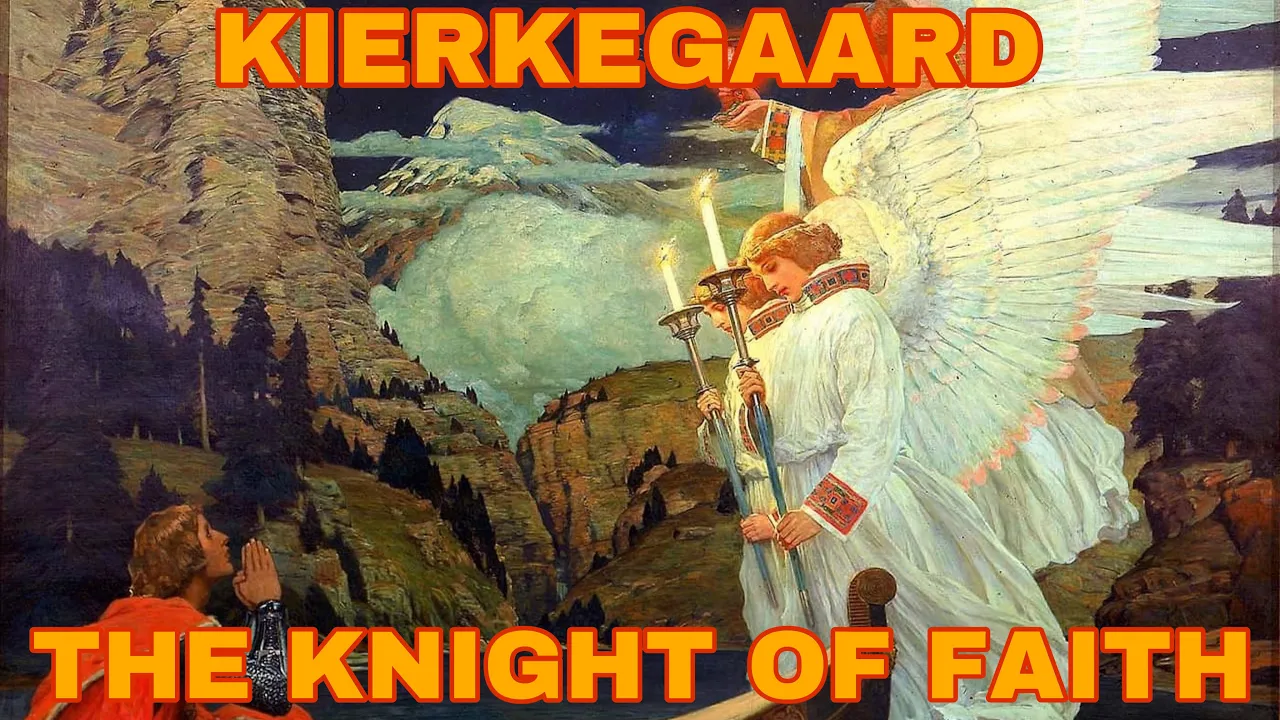


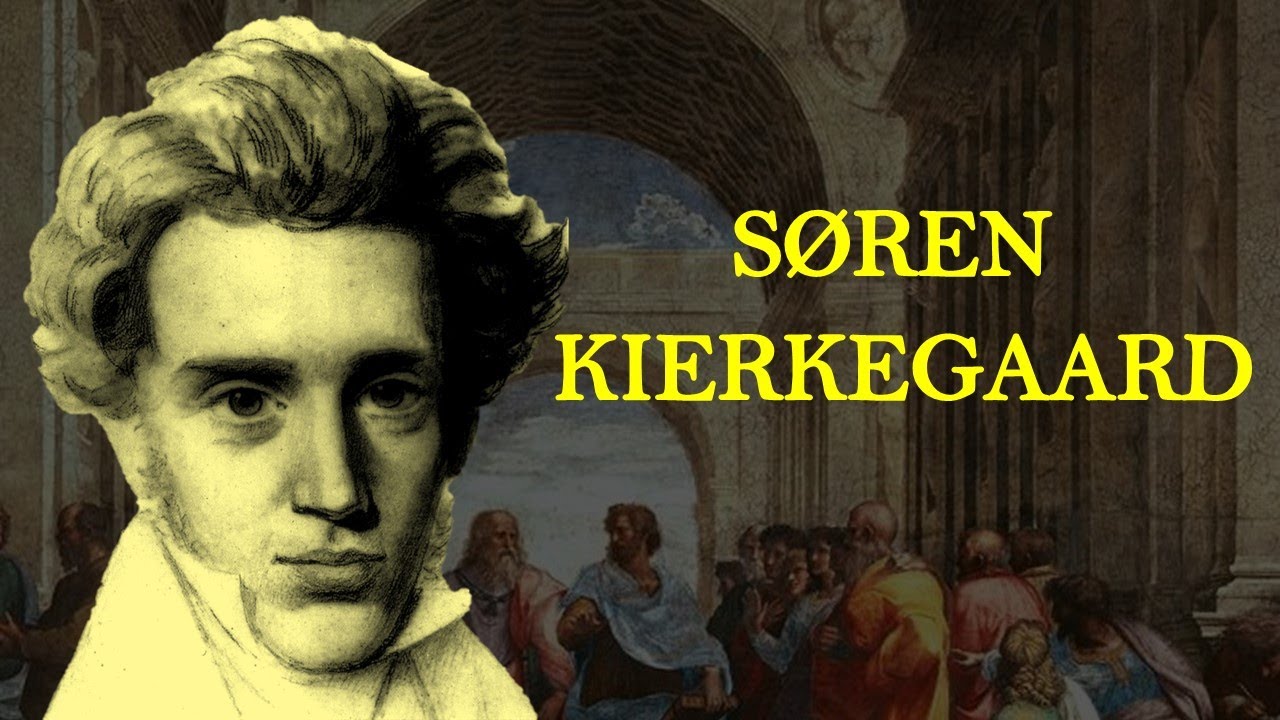

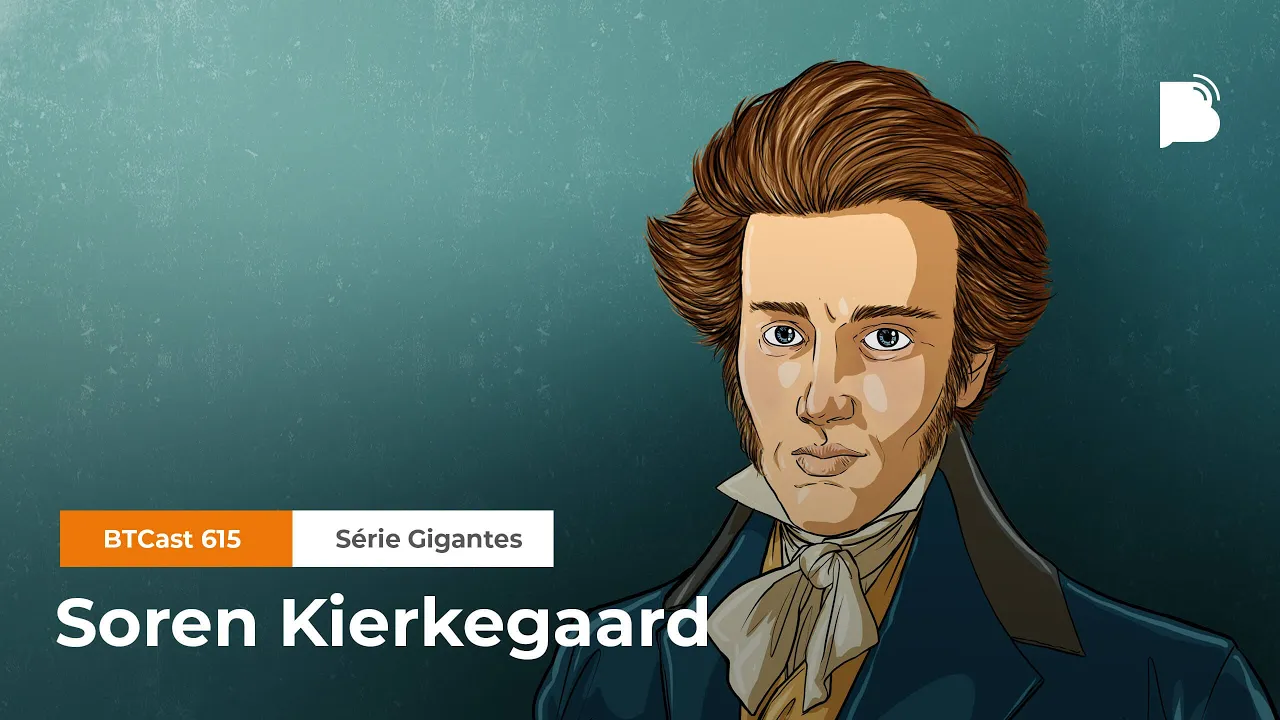







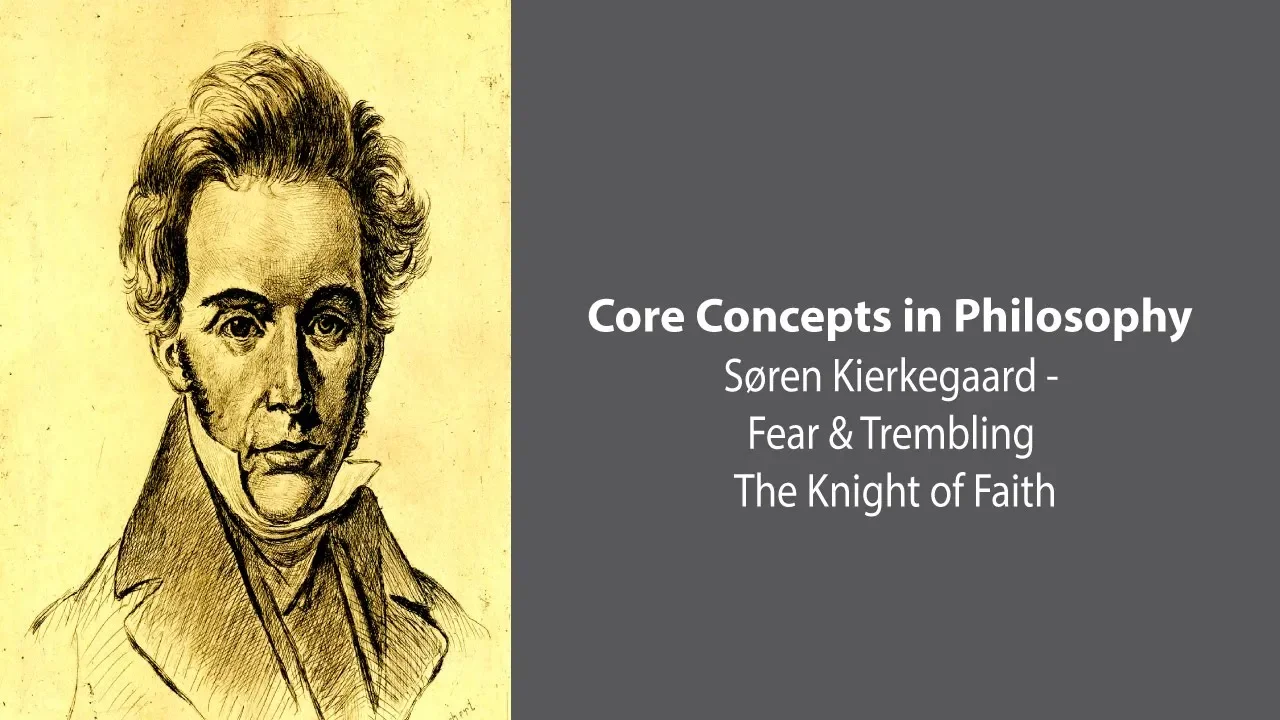










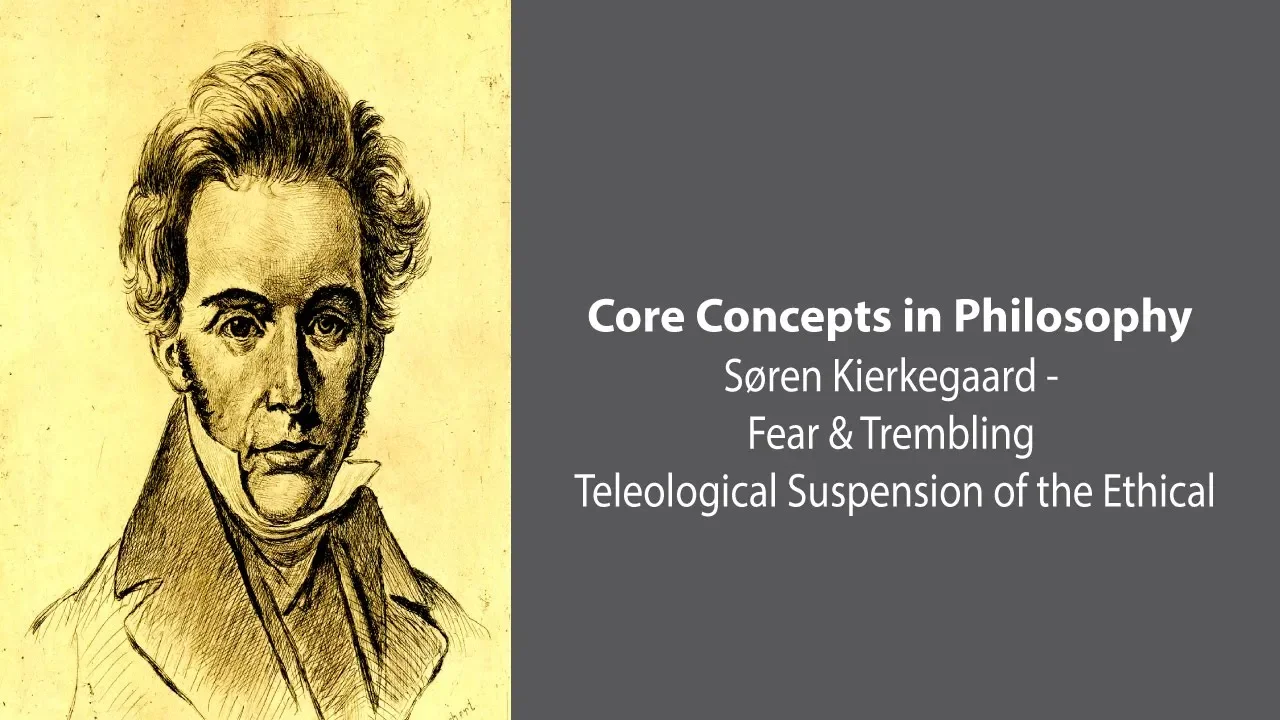
In Kierkegaard's Fear and Trembling, faith is a passionate leap into the infinite that moves between the infinite and the finite, beyond the binary of knowledge and ignorance. The knight of infinite resignation renounces everything and rests in infinity (like Socrates), while the knight of faith passes through resignation but moves beyond it, regaining everything by virtue of the absurd. Abraham exemplifies the knight of faith, undertaking a teleological suspension of the ethical—sacrificing his son Isaac based on God's private command—whereas the tragic hero (like Antigone) only suspends one ethical movement for another within the sphere of norms. Faith is incommunicable and belongs entirely to the world, distinguishing it from the ethical sphere of social norms.
Kierkegaard's Dialectic of Faith in Fear and Trembling
Added:Hi everyone!
Before I get started, I just want to give a quick shout out to my podcast, Overthink, which I co-host with my dear friend and fellow philosophy.
Professor David Pena Guzman.
You can find us wherever you find your podcasts, as well as here on our YouTube channel.
You'll hear great episodes.
At least I think they're great!
Um, that are conversationally oriented and meant for folks that don't have a philosophy background on topics, including gaslighting, walking, trees, polyamory all kinds of things that David and I bring our philosophical background to bear upon in conversation.
Now to the content for today, which is Kierkegaard.
We'll be talking about Kierkegaard's view of faith as he develops it in fear and trembling, a book from 1843, which he wrote under the pseudonym.
Johannes de Silentio.
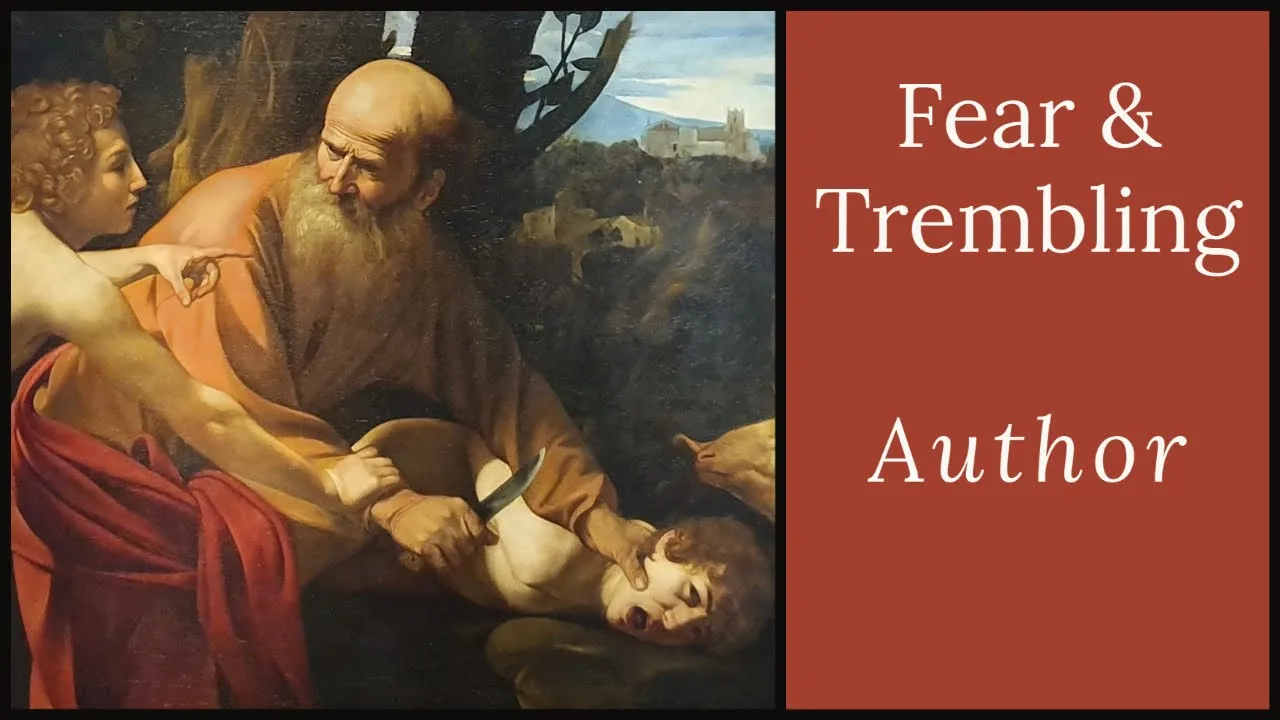
Kierkegaard describes the dialectic of faith using the biblical story of Abraham and Isaac, which you find in Genesis.
In this story, Abraham, who's a very old father.
He's been waiting for Isaac to come along.
God has promised him Isaac for decades, and then only late in his life do he and his wife, Sarah ended up having a son.
Isaac.
Isaac is Abraham's pride and joy.
So imagine Abraham's surprise when God tells him that he needs to go up to Mount Moriah and sacrifice Isaac, killing him.
Abraham has faith in God.
And so he starts on this journey.
He takes Isaac up mountain Moriah, struggling with the fact that he's going to have to kill his beloved son, until the very last moment, God intervenes and gives Abraham a Ram to sacrifice instead, saving Isaac's life.
The story is meant to show the depth of Abraham's faith and the fact that through his faith in God, he ended up being willing to sacrifice everything.
But through that willingness, getting everything back again.
Kierkegaard is very interested in this story because, for him, faith is an important resting place for philosophy.
He's concerned with the way that most philosophy tends to go past faith or go past doubt in its aim of finding certainty or knowledge.
Kierkegaard actually thinks that faith is superior to certainty or knowledge.
Rather than moving through doubt in order to get to knowledge, kierkegaard wants us to move through doubt in order to get to faith and rest in that faith.
Faith itself, he suggests, is beyond the binary between knowledge and ignorance.
It is a passionate leap into the infinite that takes you back and forth between the infinite and the finite.
Faith is willing to renounce everything, but doesn't actually renounce everything.
In fact, it regains everything by virtue of the absurd.
It's not faith in something determinate, but rather a general orientation to our very existence that transforms our relation to the world.
And this movement of faith between the infinite and the finite is based on the absurd.
Let's be a little bit more specific about this using two characters that Kierkegaard develops in this text, the Knight of infinite resignation and the knight of faith.
The knight of infinite resignation is the person who renounces everything, maybe is an ascetic, uh, doubts, is skeptical, rejects the shackles of finitude and aims for this moment of resting in infinity, aims to make that their entire existence.
The knight of infinite resignation is the person who goes about nobly in the world almost as if they're alien to it.
He uses Socrates as an example of this, Socrates as a person who doubted everything and believed that he was wiser than other people, because he knew how much he didn't know.
He knew that he knew nothing.
For Kierkegaard, this movement of infinite resignation is not something to be sought after as a goal.
It's actually pretty easy for us to do.
Um, and it, it doesn't have the kind of rewards that faith has.
So he contrasts the knight of infinite resignation, this person who honestly has kind of a superiority complex with how they're living in the world, with what he calls the knight of faith.
The knight of faith looks pretty similar to your average person in everyday life.
You wouldn't necessarily notice them as having something special or superior to them because the movement of faith is made almost seamlessly.
Unlike the movement of infinite resignation.
Kierkegaard talks about the, uh, image of a ballet dancer who is so skilled, that when they've been pirouetting up in the air, I think a pirouette involves going up in the air.
Um, they land back down and it's perfectly seamless, right?
Or you might think about a gymnast who's able to stick the landing.
In a way that looks effortless.
As opposed to the knight of infinite resignation, for whom it's obvious that coming back down to earth is a real challenge.
And that they're, you know, condescending to come back down to earth.
The knight of faith passes through infinite resignation, but then moves beyond it.
Again, they're willing to renounce everything, but then they get it all back by virtue of the absurd.
The act of faith is not recognizable by any outward marker.
It belongs entirely to the world.
The knight of faith brings together the worldly.
What Kierkegaard calls the economic, the finite, with God, with the religious, and with the infinite.
Whereas the knight of infinite resignation is only on the side of the infinite.
He doesn't actually seem to think that everyone can make the leap of faith.
The leap of infinite resignation is easier to make.
But Abraham, he speculates, is such a night of faith.
Although this is speculation because the pseudonym in which he's writing, Johannes de Silentio, says explicitly that he's a poet, but not a man of faith.
He doesn't understand Abraham.
Another contrast that Kierkegaard makes in this text between faith and the other of faith is the difference between faith and the ethical, or the night of faith and the tragic hero.
The ethical, according to Kierkegaard and he's drawing heavily on Hegel here, is the sphere of norms of social life, of everyday existence with others.
The ethical is the space where you're going to find yourself in moral dilemmas about what course of action should you take.
And the sphere of the ethical is characterized by the tragic hero.
Take Antigone, for example, one of the examples that Kierkegaard uses.
Antigone is caught between the law of the gods and the law of the state.
She wants to bury her brother because the law of the God says that she needs to in order for him to pass into the afterlife successfully.
But she also needs to obey the law of her city, Thebes, which says that she can't bury her brother because he's a traitor.
For Kierkegaard, even though one of these is the law of the gods, both of these are happening within the space of the ethical of social norms, because they have to do with specific moral codes that you can either choose to adhere to, or not choose to adhere to.
So the law of the gods here is still very much a human law for Kierkegaard.
It's not actually on the level of faith or of the religious, because faith for him is outside the very sphere of justifiability, of norms, of laws of rules.
In choosing to bury her brother Antigone is rejecting the law of the state and abiding by the law of the gods.
And in doing so she's making a decision about an ethical dilemma that's happening within the sphere of the ethical.
She's suspending one ethical movement that of obeying the laws of the state for another.
This is not what Kierkegaard has in mind with the Knight of faith.
This is not Abraham's problem.
Antigone can articulate her moral dilemma to other people in her city.
It's communicable.
Whereas abraham's moral dilemma is essentially incommunicable.
God's command is directly given to Abraham in a way that, were he to describe it to other people, would sound absolutely incomprehensible.
People would think that Abraham was mad, that he was hearing voices, hearing things.
And so Abraham is not caught in an ethical or moral dilemma.
Rather,, he is caught between the entire sphere of the ethical, uh, where killing your son is not justifiable and the sphere of faith, where God is saying, you need to kill your son in agreeing to follow God's commands.
Abraham is undertaking what Kierkegaard calls a teleological suspension of the ethical.
He's not suspending one ethical movement for another, like Antigone did.
He is actually suspending the entire sphere of the ethical in order to make a leap of faith, a leap into the domain or the sphere of faith.
What distinguishes this, again, is that incommunicability of the action.
Abraham has a higher telos, a higher goal or aim, than the ethical.
And this goal is to follow God's command, which has been given to him unmediated through an act of privacy, private communication.
If we can call it communication at all.
The paradox is that Abraham becomes higher than the universal, which is the domain of the ethical, by being the singular individual.
Up Next
Kierkegaard's Fear and Trembling: Faith and Ethics | Intro to Philosophy
@GregoryBSadler
36K views•2011-12-06

John of Damascus on Holy Images: A Theological Defense
@BannedBooks
139 views•2026-04-25

Merleau-Ponty: Phenomenology of Perception Explained
@OverthinkPodcastPhilosophy
204.2K views•2022-06-10
The Myth of Sisyphus: A Greek Legend of Eternal Punishment
@TEDEd
8.6M views•2018-11-13
Related Study Plans & Knowledge Roadmaps
Structured learning paths in Philosophy